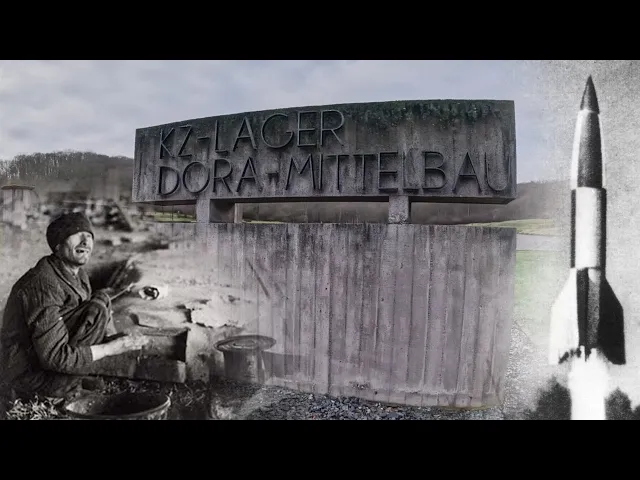
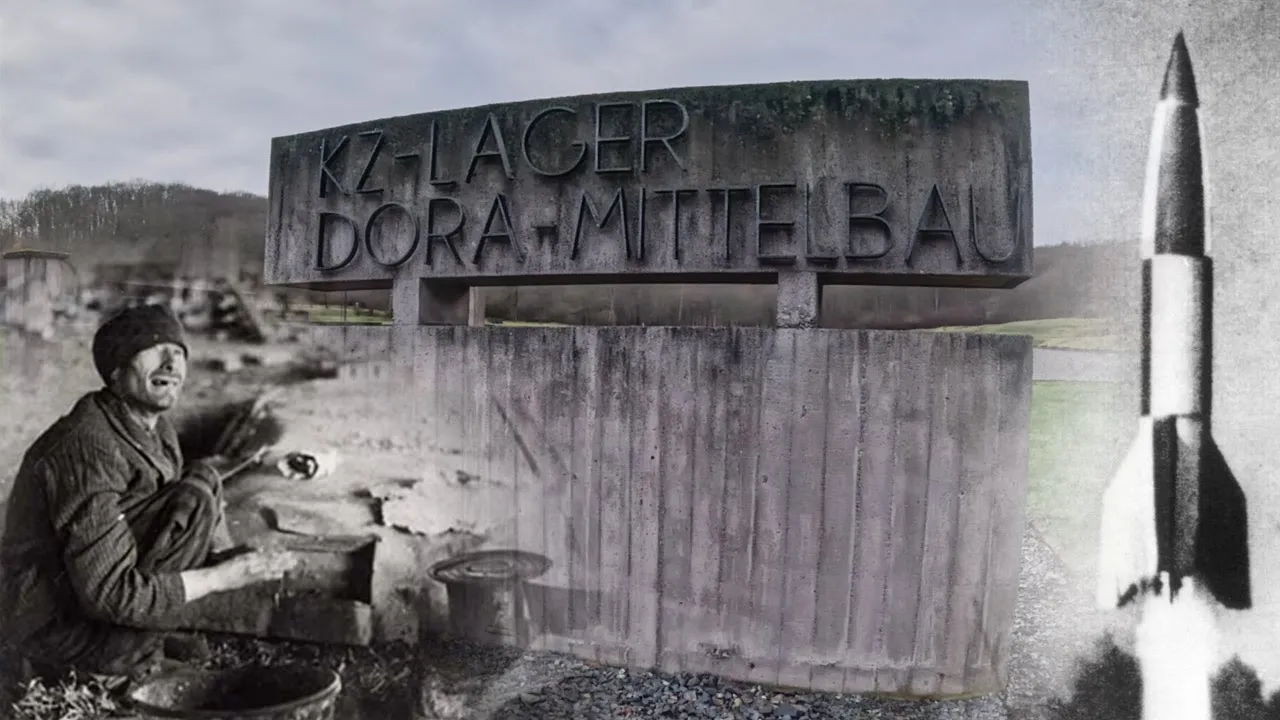
Hello and welcome to a new video on my channel, I'm Stefan aka OneEyeBlind. Today I am at the Mittelbau-Dora concentration camp. Mittelbau-Dora was the production site for V1 and V2 rockets, i.
e. retaliatory weapons. They were produced here by Wernher von Braun, who developed them.
They were first developed in Peenemünde on the Baltic Sea. After Peenemünde was bombed out by the Allies, he relocated the production of the V1 and V2 rockets here to the Kohnstein in Thuringia in the southern Harz. Production was started here by concentration camp prisoners.
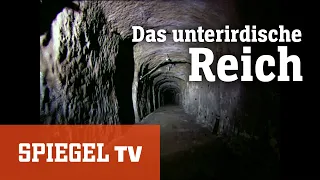
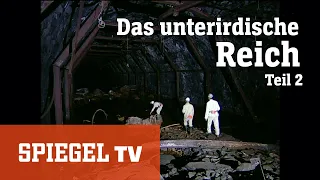
Behind me you can see the former main entrance to the tunnels. Production took place here in the tunnel, which was expanded by the prisoners. Around 60,000 prisoners passed through the camp here, 20,000 of them died here under pretty bad conditions, which means that for the first few months - I'll tell you a little more about that later - they worked and lived underground, that is to say also lived where they further advanced the tunnel.
They had rooms where they slept, which meant that they had nothing but constant noise for 24 hours - they worked in two shifts. There was blasting here, there was drilling here, and that's where they lived and slept. So they didn't see any daylight for the first few months.
The camp was run by the SS or the area, so of course no emphasis was placed on anyone surviving here. People simply worked here until someone fell over, which means that in the end, even in the tunnel, you could almost say it's a cemetery because from stories from documentation or from employees on the site here it was also said that some of them died there. They were simply concreted over, and that happened too.
This means that in the end the tunnel is even a cemetery. From mid-1944 onwards, a concentration camp was built approximately outside the tunnel. Barracks were built and the camp was taken by the US Army on April 11, 1945 and production ended here.
I'll show you the camp again later, so we'll walk around the area a bit. Apart from the crematorium, which can actually be visited, there is not much left here, but you can see all the foundations that have been uncovered. You can clearly see the dimensions of the camp and you can even go into the tunnels and you can still see a lot of relics there.
There are actually still whole V1 hulls, parts of the V1, parts of the V2 lying around and I'll show you a little bit later. Have fun with the video! But I'll start right at the entrance when I'm standing here.
As I said, that was the main tunnel, the main entrance to the tunnel, so there are two parallel tunnels with connecting passages. This was the main entrance to the first tunnel, which was opened by the Americans after they gutted the tunnels, i. e.
everything usable - rockets out - the rockets were then shipped to the USA for testing purposes, because as I said, it was the first long-range rocket, the Wernher von Braun built here. The "Aggregate 4", V2 it was called, was actually the start of the Apollo program, i. e.
for the moon landing. Wernher von Braun actually made the moon landing possible, which is why this is called the cradle of space travel. Wernher von Braun did research on the Saturn 5 or developed it himself, which then brought the Apollo 11 crew to the moon - and that was ultimately a bit of the starting signal here.
And as I said, this is the entrance tunnel. You can even still see the rails that ran in here and the rails are a bit bent from the blasting, they are still in the ground, you can still see that quite clearly. There are also original photos where you can see the entrance where the Americans liberated it.
This should be the start of the tour and then I'll take you straight to the camp. This is now the entrance area to the Mittelbau-Dora concentration camp; this is where the concentration camp was built. I'm now ultimately heading towards the roll call area.
Up here is the roll call area, Roll call was always held here in the morning and evening, counted and counted until everyone was actually there or until the deceased were found in the tunnel or in the barracks - and until then we just stood here and waited, what Of course, in the winter it sometimes lasted for hours, which, as everyone can imagine, wasn't exactly a pleasant thing. The roll call area was slightly redesigned during GDR times. So the memorial was set up here during the GDR era and has been redesigned, that's just the way it was from the GDR era.
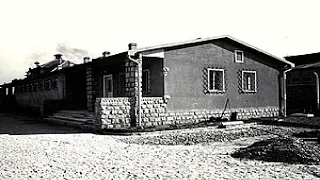
In front is the grandstand where memorial events were held. The barracks up there are original barracks that have been rebuilt. So the barracks didn't always stand there, but it was rebuilt true to the original size and up there, you can maybe see it a little bit, up there in the forest is the crematorium, which is still original - I'll show you that in a moment still.
This is the only original building that has been preserved. I've now moved a bit up the terrain from the camp, this is the main camp area here, the SS camp area was a little bit off to the side, where the tunnels are. I mentioned it before in the video from Bergen-Belsen, where I didn't know exactly whether the place was right where I was standing.
But this is not big, but this is actually a brothel. Here, female prisoners were forced into prostitution - and it's really not a big deal. This was everywhere in the larger camps and these are the remains of the foundation of the brothel.
Here you can - I'm on the way to the crematorium right now - here you can clearly see the dimensions of the roll call area. You imagine that you had to stand there for quite a long time in the morning and evening to count. This is exactly where the storage area is located.
Up ahead is the direction of the kitchen. There is a fire-fighting water basin in front here. There was also a cinema here but I'll show you that later.
Now I'm on the way to the former crematorium. Now I'm pumping a bit - a lot of stairs up the mountain - but now I'm here at the former crematorium. The windows and the roof were of course renewed to protect the whole thing from the weather, but they are still in their original form and the cremation ovens can still be seen in there, the original ones and the remains - the ashes of the dead - which were simply taken from here Window tilted.
As crazy as it sounds, this area is considered a cemetery because all the ashes were simply dumped here. This has been marked here with stones to make it a little clearer that the ashes of the dead from the crematorium are here. Now let's just go in - that's even for me - I've been here before - but even I find it depressing and I'm just not going to shout around here.
There's no one here right now, so it's very empty today, but of course we still want to maintain a bit of piety. Okay, that was loud, that wasn't good. But I can't do anything about it.
There are even inscriptions here, I think from survivors who have immortalized themselves here. I can't read it - something with: anti-fascist, anti-fascism, etc. I think that some survivors immortalized themselves here afterwards, i.
e. according to the motto "Never again war", which is completely fine. Now we come to the room with the incinerator, logically I don't want to put the camera in here.
As sensation-hungry as I sometimes am when it comes to Lost Places, there is no room for it here. I don't even want to think about how many lives have been lost here and who, to put it in German, went down the chimney. Even I find that very depressing every time I'm here.
I also think it's really nice to see all the memorial plaques here, put up by relatives, I guess. It's just a place of remembrance and I would like to treat it with the necessary respect. Here is the pattern the wall, with the flowers - whether that is original or not, I can't say now.
A quick mention: maybe someone saw it in the corner, the camera. The area is of course under video surveillance, which I can understand very well. You can't just film here and upload it to YouTube just for fun.
I have applied for approval for this, I would like to say that again. So if anyone here comes up with the idea of coming here - which of course everyone is warmly invited to do, because that's really "impressive" in quotation marks. The terrain is very interesting - but please don't just upload it to YouTube, that can cause a lot of trouble.
Therefore, simply obtain permission to film from the Mittelbau-Dora Concentration Camp Memorial and then you are on the safe side. I'm now on my way back from the crematorium. For me it's straight into the tunnel.
I think for many of the I don't want to say "most interesting" area - the one behind me is just as interesting, although the atmosphere in there is much more depressing, the storage area is also super interesting to walk through and take a look at the dimensions . I don't think you can see it that well from here, I think I'll show it a little better below, so what was uncovered here, the area that is now a grassy area where you can see the foundations is approximately which is only half of the storage area. The camp itself went much further into the forest, a bit up the slope.
Many of the foundations are actually still preserved between the trees, so you can hike the path, so to speak. There are paths through it, but at first glance you can't see how far the camp actually goes back into the forest. And there you can still find remains of foundations and the camp was much larger than the area I showed you at the beginning.
A quick reference to the crematorium: the Dora camp, as it was actually called here (which produced for Mittelwerk GmbH), which was set up by the SS , existed since 1943. When the deaths began to occur here, they were. .
. In 1943 the dead were brought to Buchenwald to be burned there. From the beginning of 1944 there was a mobile incinerator - you have to imagine - a mobile incinerator that was probably set up in the open air - I don't know exactly - and then from around the middle of 1944 - please don't nail me on that exact date - the crematorium upstairs was put into operation sometime in the spring/summer of 1944.
And as I said, the ashes of the dead - I showed you - were simply dumped at the back, are now used as a mass grave and were designed in 2013 as we have just seen them. I still have a bit of time before I go into the tunnel, so a few small details first: the fire extinguisher pool down here, which I already mentioned before and you can really, I think that's quite good, you can really see a bit of the infrastructure. Here are the ditches, sewers, etc.
There are also new additions here, for example this was the fire station, where this is the basement area - although no, this won't be the basement, this will be the actual fire station. There is a small extension here that is now used for special exhibitions - I think it's great that people still use something like that and here we see the storage area. In the end, what you can now see a bit black on the foundations in front was the kitchen area.
Back there, which I'll go past again later, is the detention area and the execution site, which is where prisoners were executed as punishments. The detention area is only the foundation, but a relatively high foundation can still be seen, but we'll go there again later. Here you can now clearly see what I just mentioned: the exposed storage area, which is mainly used.
There At the back is the entrance area with the SS watchtower and in this area back there you can actually still go into the forest until you can still see the foundations up there. The area went much further, that was also the limit, but it went a lot further further back. I don't know exactly but I would say approximately half of the area is now wooded, but is still very walkable, so I can only recommend it if you ever visit.
Just go a little further into the forest, there are hiking trails everywhere, just take a look. I also have a foundation on the barracks, which now looks like - at first glance you would almost say it's a fountain - there 's something like that at the front - of course it wasn't in barracks. To be honest, I ca n't tell you exactly what it is, but I suspect that since I've seen something similar in other camps, it could have been a sink for me, but I don't want to pin myself down to it.
But that could be because they look about the same. Now I've gone a little closer, as I said, this is the area of the kitchen - the kitchen barracks that stood here - and as I said, here, in contrast to Bergen-Belsen, I don't want to make things bad, but you know it Maybe in my video, here you can see a lot more remains, although as I said, not many whole buildings that are still standing as they were, but you can see it quite well here - there are still a lot of foundations to be found here. As I said, here is the kitchen area, which was the former kitchen.
And if you look around the area a bit : lots of information boards, foundations. There's also a small shed in front, I don't know if that was part of it. This is a container for ash, so ash from the heating stoves was stored here - shoveled in, so to speak.
Now we can perhaps walk towards the prison and the execution site again before finally heading into the tunnels. We are actually at the sports field which is next to the execution site and the prison. This was really a football field that was created by the SS just for privileged prisoners.
And this wooden barrack here is the former carpentry workshop, I can't say for sure whether it is in its original condition, perhaps it has also been reconstructed from original parts. I assume it's been reconstructed, but that was the carpentry shop and now I'm heading towards the prison and execution site. You can also go in there a little bit, here is the football field again.
It's really hard to believe that a sports field was created for prisoners. In the end, this is the prison area, so you can imagine - there are still sewage pipes or heating pipes - how big a cell was. These were the prison cells.
There are often pipes coming out of the ground, including in the front - yes, these are heating pipes or water pipes. You can still see it there - heating pipe in the cell, at least. I wouldn't have expected that either , there's even a water connection, so I wouldn't have expected that either.
The execution site itself was here. The main execution here was on the gallows with nooses. You can see it here - there was actually brickwork in here , it was probably plastered later in order to preserve the wall for the memorial.
And in here there were gallows with nooses for execution. That surprises me, however, because we have often heard that executions tend to take place in public, i. e.
in front of the inmates. I can't say exactly whether this was also done here - maybe down below - but in other concentration camps, for example, public executions were carried out simply to demoralize, intimidate. .
. that's why I'm surprised that a wall has now been built around it is. But that is the place where the executions took place.
However, the exact number of those executed by the SS is not known. But before we actually go into the tunnels at the front, here's some very brief, rough information about how it was created and how the liberation took place. As I said, Wernher von Brauen was only able to advance his development of rockets in Peenemünde with funds from the SS and developed the various rockets there.
The V1, the retaliation weapon 1, which had no real aiming device, was launched via a launch pad and could - I do n't know exactly the range, I should have read it beforehand - was then fired via a launch pad and therefore had to be much closer than that V2 - the unit 4 - is at the finish line. It had a pulse jet engine - the thing made a lot of noise when it flew in, you could actually hear it - and it had wings at the back like an airplane. It was even manned at one point, the Japanese took the concept - I don't want to say copied it - but they also got a few rockets for further development and research from the Germans officially and manned the thing as a kamikaze weapon and it was used here produced.
V2 was developed in Peenemünde, where the test starts were also held; this was the pure production facility. Wernher von Braun was not arrested here on site - or became an Allied prisoner of war - but it was, I think in Austria or Bavaria - I think it was in Austria - he was arrested or interned there with his staff and was relatively quickly in brought to the USA because they knew what kind of know-how he had, that he was the developer of these rockets and then helped to develop or developed the Saturn 5 for the moon landing. So it was actually a relatively big number in the USA for NASA etc.
It was known that he used prisoners of war in the camps and that many died for his production. People knew that, but they apparently accepted it with a wink or ignored it. Because he had a relatively high level of know-how, that was pushed to the side a bit.
Of course, the Americans got a lot out of the mountain here - finished V2 rockets, engines, etc. , but of course they grabbed everything as quickly as they could because the Russians were also nearby. They also marched up the mountain .
Of course, that used to be in Russian hands, so during GDR times it was a Russian occupation zone and of course they didn't have much left to get out of here. But even they looted the last leftovers, took the machines with them to pay reparations, etc. so that they could continue producing.
Attempts were also made to blow up the mountain , or the tunnel was tried to blow up. However, I would say that the blast was relatively unsuccessful, the tunnel did not collapse completely, but rather the explosion fizzled out relatively badly through all the exhaust shafts etc. because the system was so large.
So in the end they simply blew up the corridors, which were then uncovered again at some point for documentation and research - and now you can still walk through a very small percentage and I'll show you that in a moment. I am now here in one of the cross tunnels that connect tunnels A and B. This is tunnel 45, there were a total of 46 cross tunnels that connected tunnels A & B.
You can see it quite clearly here, there is still the original writing on the wall. And there are still original parts from the V1 lying around here. These are really original parts from V1 production.
You can no longer enter the V2 area, the production or testing area of the V2, as it is either blown up or completely under water. But I still find the relics you can find here pretty impressive. There are actually still many, many production parts here.
These are fuselage parts of the V1, there are still many parts of the gyrocompass at the front to control the V1. The V1 had rudimentary control via a compass and the parts are still lying around on the floor, I'll show you that again in a moment. You can clearly see it here, this is the cross tunnel 44, and there is also the original inscription on the wall.
I can shed some light on it. So the flashlight really throws good light, but you can get a little idea of the dimensions of this cross tunnel. In the end, we are now a bit away from the main tunnel where I have already examined and this cross tunnel is actually used for V1 production.
So the V2 or the A4 has not yet been produced here, but this is actually still a V1 stud. Here and you can perhaps see a little bit up here on this line that was a working level, which means that production took place on three floors in the tunnel. The lower one is here, so here are these steel girders that you can see here, I'm actually already on level 2, which means that under this steel girder was the first floor, here is floor 2 and then you can clearly see from the line that there was another one Floor moved in - the fact that I worked on three floors can probably be clearly seen here on the connecting tunnel.
There was a floor up there, a floor there and it went on even further down there. This is now effectively the end of the accessible area, the rest is either blown up or under water. It's already been submerged, but there's no longer any interest in researching it because the facility is still there, but it's blown up and under water.
Here you can also clearly see that there are actually still structural relics in the water. And these are now 3% of the complex that I can walk through here or that you can walk through here in general. That means 97% are no longer accessible, at least not for the public.
There are also a few relics that are still lying around here, these are gyrocompasses that were built into V1 to provide rough directional control. How it works exactly - I'm not 100% familiar with everything, don't hold it against me, but I don't know exactly. But as I said, that was there for the navigation of the V1, for rudimentary navigation, they were built into the top at the front, which is still rotting away here.
Here I am in the last connecting tunnel, here in tunnel 45, and there are still quite a few relics here. There's still wood there. Looks like a workbench.
Up here . . .
it really looks like wood! I don't know for sure whether that was a workbench. As I said, here are also V1 parts, tank parts, many electronic components that I can still see here.
There's still a lot lying around on the floor here, and you can still see something here. It's impressive and as I said, I'm only in 3% of the area that can be accessed. Here you can also clearly see the support pillars for the next floor.
There was an intermediate floor here in order to produce on several floors and the V1 production was really just a by-product in this area, which is actually a V2 area of production, which you can no longer recognize or even see anymore. You can also do it quite well at the front. .
. there's a fuselage of a V1, for example, and this piece here at the front. So the rear wings are missing, but this is still a V1.
Here is part of a V1, in here you can clearly see the built-in gyrocompass. As I said, there is so much scrap here that you can no longer differentiate exactly what is now V1, what belongs to the production system. Carriers were subsequently brought in here - and these gyrocompasses here are lying around everywhere.
Here's a piece that seems to be a lore or something. It looks a bit like it was driving on tracks, it's hard to say now. Here at the front, for example, there are gyrocompasses in there again.
As I said, everywhere you walk through the tunnel, there are legacies everywhere. There are only heavy steel beams here that are probably from the ceiling construction, etc. , but you can see legacies everywhere here.
. . even if you look between them, which is difficult to see on the video, but there are small pipes everywhere, Nails, production parts, etc.
, there are still parts everywhere in between which I find really impressive. Despite being blown up by the Soviets, there is still a lot to see here. Now that I have left the tunnel again, I would like to say again about the area of the tunnel, i.
e. anyone who visits this concentration camp memorial: the tunnel was of course officially open, so that means I wasn't in there illegally, logically. First of all , it's not possible, you can't get through the gate, the thing is secured with a camera.
The main entrance was built right next to a main tunnel that was blown up and then went across into the next tunnel, so that was only built later in the 90s. Don't even try to get in! Apart from that, it won't work and of course everything was official and registered, so no one thinks that anyone wants to get into Stollen and drive off - that won't work, I'll give you a letter and seal on it.
So much for that. What I think is really great now - I am now in the area of the memorial, I have now left the open area where there are no trees, which means that the area is now wooded and some of the trees were already there beforehand At times when the concentration camp was still "in operation" in quotation marks, it was already covered in forest. Not as heavily wooded as it is now, but even that wasn't entirely open space and what I think is a good thing is that foundations are uncovered here again every year in work camps run by students from other countries, for example .
No foundations have been uncovered here, but the site of the former barracks that once stood there is marked with stones and the trees are painted white at approximately the same height as the barracks once stood. I think it's really great that it's still done like this. This way you can imagine a little better where all the buildings stood and this is now being pushed further and further here in the wooded part.
I think that's great, but there are still structural remains here too. For example, there are now signs here indicating what kind of block used to be here. There are even some - no, the photo is V2 production from the tunnel - but I think it's good that there are information boards on every block here, telling you which block that was.
I think that's really great, so I miss that a bit in Bergen-Belsen, for example, where I made a video that was relatively. . .
there are also information boards with history at prominent points, I think that's great too, but here It really is on almost every building. I think that's great, so that you know exactly which building stood here. For example, the former boiler house stood here.
And relatively strong remains of the foundation are still there. Sometimes even metal residues. And that was the former boiler house and I'm just trying to find the cinema again, so there was actually a cinema here and I'll look for that too.
By the way, I'm also running on foundations, I think there are even stone slabs here. I thought they were tiles, but you can still see a lot of the former warehouse here. That's really interesting, especially here in the back area most of the buildings were - in the wooded area - and that's why exploring is relatively fun.
Just a little bit of information by the way: the watchtowers for the Mittelbau concentration camp were not in the camp grounds, but were outside the fence, which means that the camp was ultimately managed by the prisoners themselves. So the guards actually only entered the camp for roll calls in the morning, evening or when a shift was out and back in again. Otherwise, the camp itself was guarded, so prison functionaries actually took over the guarding inside and the guards only came in here for roll calls.
That was the effects room, which means there was clothing etc. here - the original stairs are still there and relatively easy to see, I have to say. But I'm still looking for the cinema that I can hopefully show you right away.
Also a little bit of information on the side: the normal permanent occupancy was around 15,000 prisoners, which reflected the occupancy here, so in total there were 60,000 prisoners, but the standard occupancy was around 15,000, guarded by around 1000 guards. 1,000 guards for 15,000 inmates here. And even if the camp or production facility was from the SS, only about 5% of these guards were members of the SS.
About 45% were former Wehrmacht soldiers, mainly from the Luftwaffe, who served here and about 50% were ethnic German guards , that is, they came from occupied countries and volunteered to guard the camp. So despite the SS camp, there were only 5% who were actually full-fledged SS members. Now I've arrived at the cinema and even there there's a little bit more than just the foundation .
Well, you can't guess where the screen was or chairs or projectors, but I'm in a relatively large one now Cinema hall. And there are still structural remains here too. And even if it looks like it 's about to end here and now even deeper forest begins up there, the terrain up there is still something that belonged to it.
There's even a bit of legacy left here. Up in the forest behind me, there were barracks there too. In the area towards the crematorium, a bit towards the main entrance, was the sick camp, so to speak, which was also self-managed, so there were no official doctors etc.
and that was part of the sick area. Here behind me up in the forest there was a specially fenced off area, a camp within a camp, so to speak. It was called the “Pigsty” back then.
It is not known exactly who was imprisoned there and who was treated as a special prisoner. It is most likely - there is talk of political prisoners that they were divided up or housed separately . But it is not exactly recorded.
But just calling this area a pigsty is. . .
okay (no words). Yes, my dears, I will slowly walk towards the car again. I hope you enjoyed this little excursion to the Mittelbau-Dora concentration camp.
I've been here for the third time now and I always find it really interesting - especially in the tunnel area, and of course the camp, which is also interesting to know the history of. I don't think there is any need to mention the suffering and inhumane conditions that went on here. I would just like to think about the tunnel system alone, I have read a lot about it from stories about this cross tunnel alone - so in the area of V1 production alone there were around 10,000 prisoners in the first few months, when the camp was not yet in existence housed in the tunnel, which means they worked, slept, ate there, there was no sanitary facilities - they had sawed-off oil or gasoline barrels to do their emergency work.
If you imagine that people worked in shifts there, they blasted there, they drilled there - now try to sleep in a tunnel like that - how it sounds and echoes, so there is no thought of relaxation and of course there are a lot of them Out of these 10,000 people died in the tunnels when the camp didn't exist yet - how many people died there, you don't need to talk about it and just keep in mind: they Prisoner clothing, the kind you might know from films or photos, this blue and white striped prisoner clothing. . .
it's 8 degrees Celsius in there. That might not sound super cold, but I was freezing and I still had a sweater underneath. Now imagine doing that with prisoner clothing.
Day and night. At a constant temperature of 8 degrees Celsius, 80% humidity - that's it It's also clear that you won't get dry and it should also be clear that you won't be able to endure this for months. Therefore: at what cost were rockets built and then fired here?
Around 6,000 V2 rockets were produced here, a third of which were not even ready for use. Now keep in mind that during production here and also in Peenemünde, but mainly here in Nordhausen in Mittelbau-Dora, more people died during the production of the V2 than from rocket attacks - which is of course just as terrible that people die from rocket attacks . But just here with the.
. . the use of this rocket.
. . More prisoners died during its production than from the attacks!
So the purpose of this V-weapon remains to be seen. And yes, this is often referred to as the cradle of space travel or the cradle of the moon landing. Wernher von Braun did, at what cost did he use this facility here for production?
He was just young, dynamic, aspiring, had ideas, wanted to push his rocket ideas forward. . .
his idea was to fly into space with it and not use it as a weapon. But what do I need to realize something like that? Money!
Who gave the money? Yes, quite clearly: the National Socialists. So he probably closed both eyes, accepted what happened here and that he wasn't held accountable for it back in America.
. . yes, even then they turned a blind eye - the man finally opened up to us brought the moon!
The cradle of the moon landing or space travel lies here on, yes, the corpses of inmates. You just have to keep that in mind when you march through here. That's how much it is said to have been.
I can't say it often enough in my videos, but I also want to say it again here: I think why you have to do this is bad enough, but I still want to distance myself from the third party's attitude in all forms Distancing myself from the rich, my political views have nothing to do with this at all. I'm just obsessed with history, I think that's already come through well in other videos or people know that, but you still seem to have to mention it and I actually think that's a shame. Just because I'm interested in history, I have to mention that I didn't end up in a brown sauce or something like that, which is complete nonsense.
So much more, I hope you enjoyed the video, I was able to show you a little something. If not, please let me know in the comments. Write me in the comments if you thought something was good, what I could do better, etc.
, give me a thumbs up. Of course I would be very happy about a subscription, so subscribe to my channel so that you can see the next videos - you can also click on the bell next to it so that you will be notified. .
. And again: hopefully you enjoyed it and see you again in the next video. Until then: ciao!