In this video, you will FINALLY know how to ask a question in French like us native speakers. Not as we unfortunately learn too often in books, not as is the case in reality. Today, I present to you 4 different ways to ask a question in French, and you absolutely must know them all.
And I'm sure that the 4th, at least, will surprise you. . .
Hi if you don't know me my name is Nathan, I'm here to help you improve in French, just before you start don't forget to subscribe and activate the bell for the next videos, and of course if I speak too quickly, you can activate the French subtitles, let's go. First, to start, I have to be honest with you. When you speak in French, there is one thing you must forget, and that is the inversion of the subject.
This is the rule we all learn for asking a question, the verb first and the subject second. Do you eat at a restaurant? Are they leaving for France this evening?
Honestly it's weird, orally we almost never say it, it's extremely rare, except perhaps in a very very formal context, professional too but that's it so forget it. Instead, when you speak say Is that, that's the most common form of asking a question, everyone says that, you go into a restaurant, you're going to say do you have a table In my opinion ? Could I have a glass of water please?
Can we sit here? Etc. etc.
So, you can put this formula at the beginning of the question but also of course in the middle. Actually it depends on what you mean. I think about where, when, how.
As I told you, in writing or in formal French, we say: When are you going to France? But actually speaking, I'm going to say: when are you going to France? It's in the middle huh.
Another example, in writing: where are you going this weekend? Well in spoken French: where are you going this weekend? where are you going this weekend?
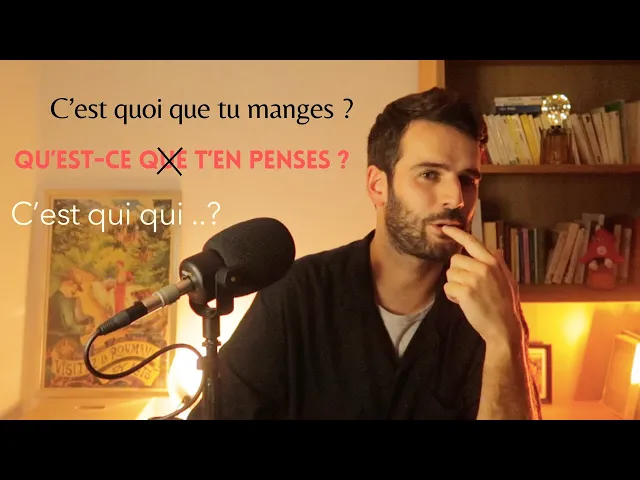
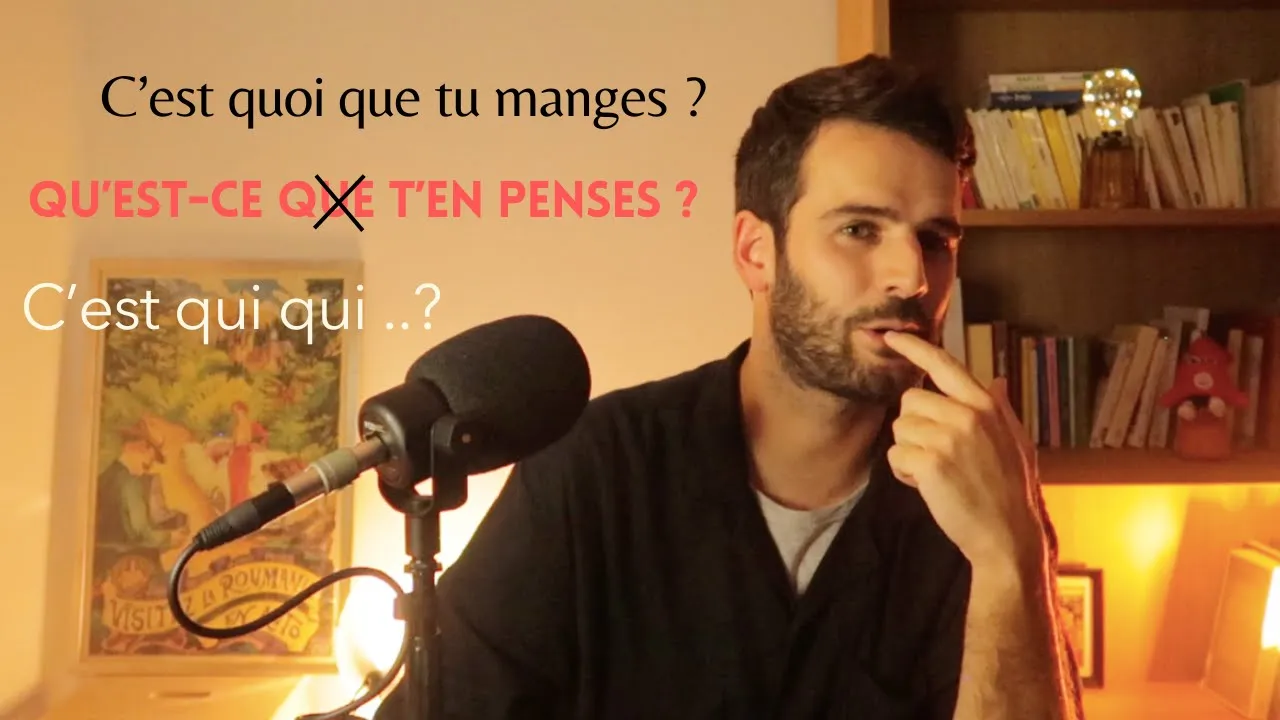
And I'll even go further, you must know that sometimes we eat the “that”, we delete it. What are you doing ? will become: What are you doing?
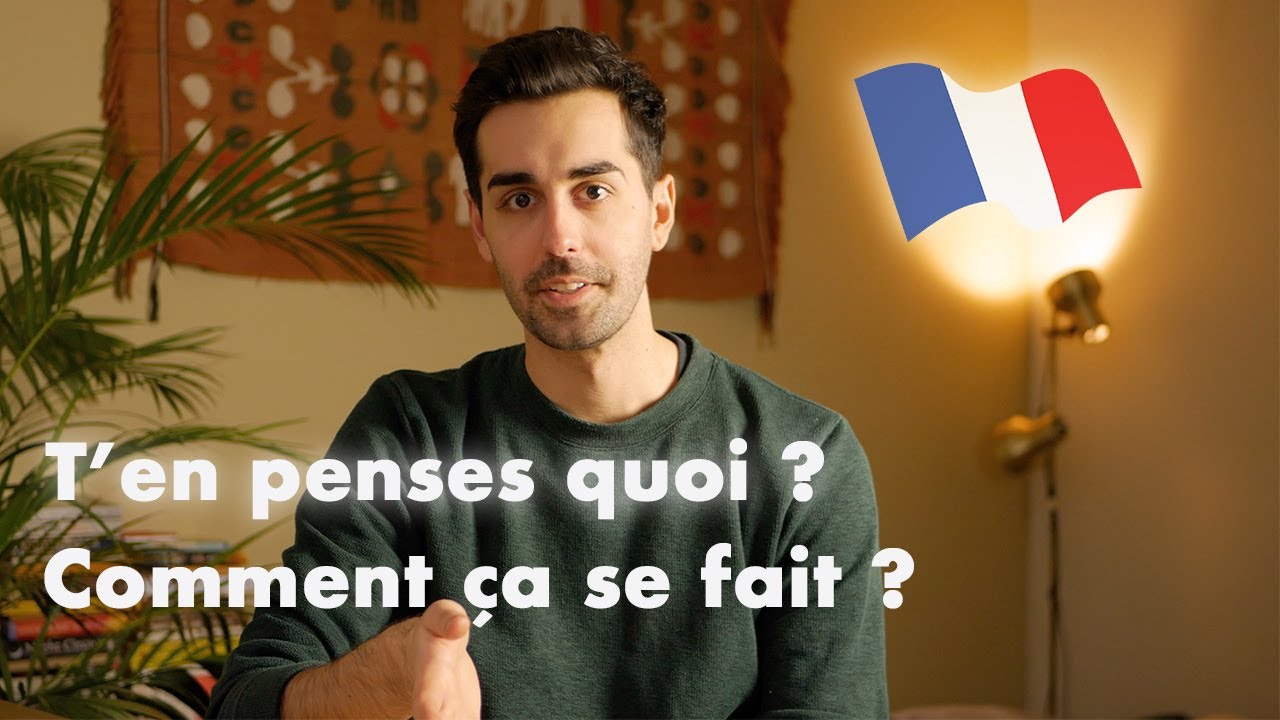
and very often when we speak quickly, I realize that we say “what are you doing? ” So just a little clarification, it's true that it works especially for “you”, the second person singular and there is a very used phrase that we hear a lot in French, it's what is t' what do you think? What do you think?
becomes what do you think? Orally. So we removed the “que”.
I think it's good to know, you just need to practice pronouncing it, and saying it exactly like that and you'll see it will be super effective. Just let me take a sip of water and we can continue. .
. We move on to the second case, and here again another very common way of asking a question in French is the use of c'est. .
. . that/it is….
Who. I'll take the example from earlier. When are you leaving?
If you want to be more familiar, if for example you are with your friends at the café, at the restaurant I don't know where you want, you can say when are you leaving? Take a good look at the construction. Here's another example, I thought of another very common phrase, that the French often say: What are you doing?
It's like What are you doing? The “what” becomes whatever, it’s just more familiar. What are you reading?
What are you cooking? What are you watching on TV? What are you drinking?
It's whatever you eat, etc etc. And since I want to be complete on this, that you are really the best. If in your question you want to use “who”, you are looking for the subject.
We are not going to use it’s… that but it’s… who. So we are going to say “who” twice in a row. To make it clear, look at the example.
Who is working today? you are looking for the subject, very good. In colloquial French it is possible to say “this is who is working today”.
So repeat “who” twice. So, on the other hand, be careful when I give you my opinion, my feelings. It's very very familiar so some people, linguists in particular could say that it's not very pretty or that it's incorrect so you don't have to say it on the other hand, I'm warning you, it exists and so I find this very good to know it, because we hear it in the mouths of the French, in series, in films of course, so even if you don't want to say it at least you know how it works and when you go hear someone speak, it's sure and it's sure it will help you.
Then, the third way to ask a question in French is perhaps the easiest to memorize. Actually, it's simple. You take the affirmative sentence and that's it.
The statement turns into a question. Example: It’s raining in Lyon. That’s the affirmation.
And if I want to ask the question, I will say: Is it raining in Lyon? . .
So what is the difference between the two? how do I know if it's a question or an answer. Well it makes sense, I think you heard it, it's in the intonation.
Is it raining in Lyon? We move upwards at the end of the sentence. Is it raining in Lyon?
Do you have brothers and sisters? Shall we play tennis tonight? This is another possibility for asking a question which is very effective, which I personally use a lot because it's short, it's quick, it's dynamic and it's super common.
The biggest example I think is this question we all ask ourselves when we see each other, it's the first thing we say to each other: are you okay? How's it going. The same words, the same letters, except the intonation is different and therefore question/answer.
How are you ? How's it going. 4th case and if you stayed until then, it's great and I'm sure you won't regret it.
I'm just taking this opportunity to remind you to subscribe if you haven't yet, I know that in general a lot of people watch videos without subscribing. Yet it's quick and it's especially very important for us. .
. 4th case then and do you know that to ask a question in French, we native speakers sometimes mix structures orally. I'll explain to you.
Earlier, we saw the form with “is-this” which is the most frequent in oral language. We also saw “it’s. .
that”. What are you doing? When are you leaving?
Where are you going? etc. Well, in a familiar register, it is possible to mix these two structures, or rather to add the two.
And of course, in one and only one sentence, that's what's nice. Look at these different examples that I give you, and we will try to understand together. In normal, standard spoken French, we can say: When are you going on vacation?
But here in a more familiar way, to your friends, to your loved ones, it is possible to say: When are you going on vacation? Another example: where did you eat last night? That 's standard spoken French.
Where did you eat last night? Do you see the difference? Listen carefully to the pronunciation.
So first “is that” then “is that”. In that order. It's not easy to pronounce it all together so practice.
When did . . .
? where is that. .
. . ?
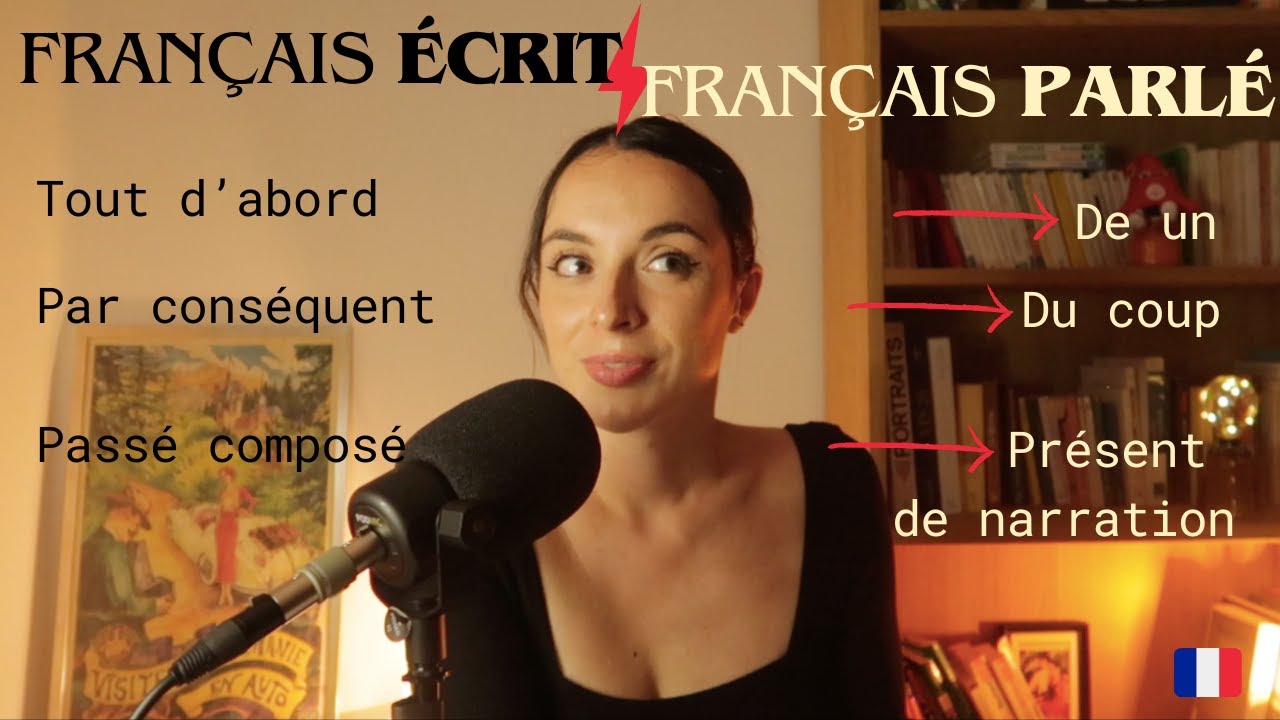
Not easy but it will do with a little practice. In short, as we have just seen, it is sometimes day and night between written French on one side and spoken French on the other. tell me in the comments, leave me a little message if you know other ways to ask questions in French, I'm interested.
And if you don't understand some things I said in the video or if you have any doubts, don't hesitate, of course, I will answer you. I'll leave you and see you next time. Hi !