hello my name is Matthew Hunter with Legacy Wilderness Academy and I'm on a mission to document every edible and medicinal plant in the Southeastern us so Southerners can have greater access to nutritious food and free medicine in today's video we're going to be looking at one of the top survival Foods in the Eastern and Southern us it's called a Sugarberry or Hackberry now there are a lot of so-called survival Foods in the world of foraging but I think that Hackberry truly ranks among the top not only is the fruit of Hackberry high in calor this
is also an abundant and widespread tree that can be found throughout almost all of the Central and Eastern us as well as throughout big chunks of the western us so after 10 years of foraging experience over 10 years of foraging experience under my belt I think it's safe to say that this is one of the plants that can truly and realistically provide for you and your family in the event of an emergency and there are a couple caveats to that statement that we'll go through in the video but this is truly a survival food if
there ever was one so in this video we're going to look at how to identify the hackberry tree I'm going to harvest some of the fruit then I'll take it home and I'll show you how to prepare it stay tuned by the way if you enjoy this video and you also want to learn more about medicinal plants make sure to download yourself a copy of my free guide to medicinal plants of the southeast which you can find in the link in the description below this video the easiest way to recognize a hackberry tree is by
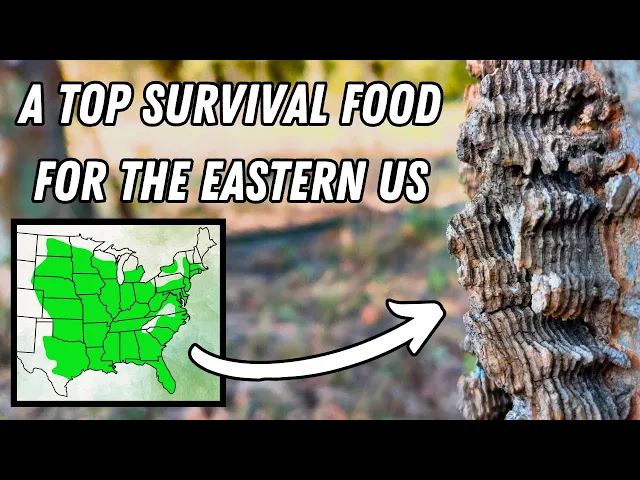
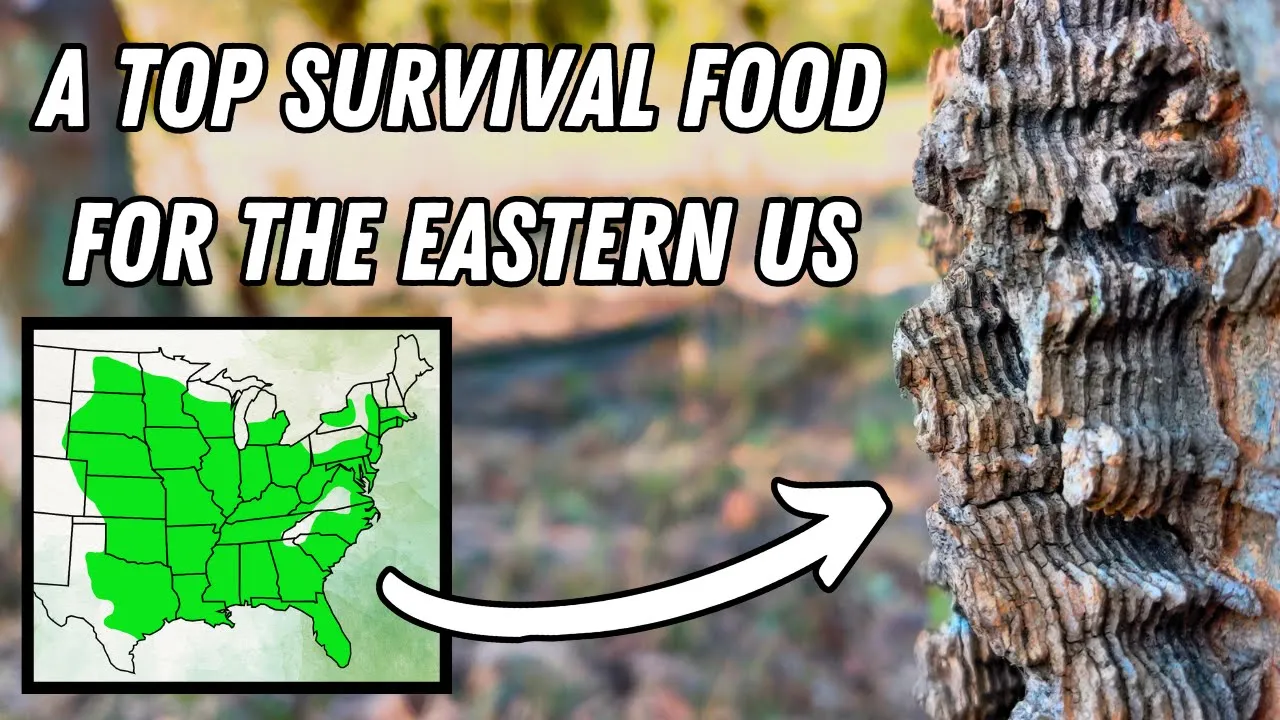
its Gray Bark that is covered in warts or bumps now there are actually four different different species that this video applies to the identification of all four of them is going to be very similar and their food use is virtually identical so we're going to talk about those four different species but keep in mind the features we're about to look at are going to apply to all four species they're only slight variations from species to species and maybe the exact size of the leaf or some uh little small features on the leaves but really if
you can identify one you can identify all four and they're very very distinct trees so let's take a closer look at the bark if we take a close-up look of the bark of this hackberry tree you can see that the little warts or bumps coming off of it are comprised of layers so if you look really close it has these layered bumps that look a lot like sedimentary rock so this is an extremely distinct feature that you can really recognize from a distance and then all you have to do is walk up and take a
closer look and if you see these distinct layers along with some of the other features we're about to look at you can be sure that you have your identification correct next we'll look at Hackberry leaves so here I have a Hackberry leaf and we want to keep in mind that from species to species the size may vary so some may be smaller than this we also want to keep in mind that the uh edges of the leaf may vary even within the same species as to whether or not they are U smooth on the margins
or whether or not they have teeth so this one has no teeth uh and really what we want to do is look at the back because there's a couple features I want to point out that are easier to see from the back the first is that Hackberry leaves all have three three primary veins and so one of the trees that can kind of get mixed in with Hackberry is Elm but elm leaves only have one primary vein so you'll notice three primary veins originating there from the base you're also going to notice that the leaf
base is asymmetrical often times on hackberry leaves so you'll notice that this um side comes down further than this side so it's like lopsided or asymmetrical another feature commonly seen on hackberry leaves are these little bumps which are actually caused from an insect and these are called Hackberry nipple Galls so the insect comes to lay its eggs in the leaf and the tree response to that is to create this little bump okay and these bumps are so common that they can actually be oftentimes used as an identification feature in some areas the trees are just
covered with them and you may actually think that the tree has sort of a disease look like there's something wrong with it but it's just caused from an insect it's the trees response to the insect and the good thing is that they do not affect the fruit at all so even if you see these all over the leaves don't worry the fruit is still going to be perfectly fine the fruit of Hackberry ripen around the month of September they're small about the size of a pee they don't look like a survival food I know you'll
have to trust me on that they have a large seed surrounded by a thin sweet flesh they're usually a reddish color depending on the species they can be a somewhat purplish color and they can often be found months after they ripen so they are are high in sugar and they're also have some oils in them and so because of that they really preserve well and they they tend to not fall to the ground very often so really I mean even months sometimes after they ripen in September you can still find them preserved uh perfectly good
to harvest on the trees so an excellent plant in that regard and uh next let's talk a little bit more about these fruit then we're going to harvest some take them home and I'll show you how to process them so like I said there are about four species of Hackberry that are identified very similarly and are used similarly so let's look at where they grow the first one we're going to look at is known as Sugarberry or Southern Hackberry it's celus leata it's the Southeastern species you can see where it grows on the map that
I'm showing you here there's another species that is also in the same range I'm not going to show the map but it very closely mirrors the range of the Sugarberry it's called the dwarf Hackberry and it is very similar it's just a little bit smaller and it tends to grow on the drier sites where Sugarberry is very much a bottomland species you're going to see it growing um almost in the swamp not quite in the swamp but really wet areas often times maybe like next to a pond in some of those lower wet areas the
next species we're going to look at is the common hackberry or celus oxident Talus you can see that this species is much more of a Midwestern species you can find it sort of in the uh northern half of the Eastern us and then we'll also look at a western species called the Western hack Berry or celus reticulada this species again is very similar to the other two and it's going to be found it's the most drought tolerant so it's going to be found more in like West Texas Central Texas Oklahoma Kansas throughout parts of New
Mexico throughout the higher elevation areas in Arizona oftentimes along waterways and then even in some of the drier parts of Oregon so here are where these different species grow as you can see just about anywhere you live in the US especially in the eastern US you're going to be able to find these trees Okay so I haven't really found an especially fast way to harvest hackberries a lot of times you would put a tarp down underneath the tree and shake it and all the berries would fall off for different you know fruit species in this
case hackberries tend to hang tenaciously onto the tree so the only thing I'm going to do that's going to speed up the process is wear a little Berry bucket or blicky as they're called and that's going to enable me to pick with both hands at the same time instead of just holding a bag and doing one hand so that's hey twice the speed not too bad and then I'm going to situate myself on the underside of the branches if possible because hackberries really hide underneath the leaves so if you're facing the tree you won't see
a lot of them but if you're coming on the UND side of the tree then uh you're going to see a lot of them so I'm just going to be picking these one by one dropping them in the bucket and getting as many as I can you're not going to really get um a huge amount doing this it won't look like a lot but because they're so high in carbohydrates um it's still going to be a very much a calorie efficient food it's amazing how important this tree was in time times past and in contrast
how little people in the modern day know about it so not only do we have numerous Native American records of people utilizing the fruit the fruit of Hackberry have actually been found in archaeological sites all around the globe there's different species and different parts of the world but Hackberry fruit have been found in archaeological sites in North America in Central America in the Mediterranean Basin in parts of Africa in parts of Europe and in parts of Asia this suggests highly suggests that people all around the world have been using the fruit ever since mankind was
expelled from the garden so there are a few different things that you need to know to be able to utilize the fruit like I said there are some caveats to this being an important survival food a few things we need to know first off is that not all hackberry trees set fruit um there is some element of Randomness to which one's fruit and which ones do not but in my experience it's usually the ones growing in full sun or at least with a decent amount of sunlight that are going to fruit the best and that's
really with any fruit or nut tree you'll notice that the ones growing in a lot of shade or in like the Deep Woods set almost no fruit uh whereas ones in full sun produce a lot of fruit so this makes it to where um really a small percentage of hackberry trees in a given area are actually going to have enough fruit to harvest the second big issue that you're going to run into is the fruit being way up in the tree so a lot of times the branches are not low enough to be able to
pick the fruit uh so and I'm going to show you a scene here where the ones are grown out in the open have branches that are really low so what happens when a plant is growing in full shade it tends to grow up towards the light and because it's reaching up it doesn't put out a a lot of low branches but the ones that are growing in full sun are going to have branches that are a lot lower down and so searching for a hackberry tree that actually has fruit on it and that is low
enough for you to harvest is really like a treasure hunt which all foraging is but once you do find one it'll often times have hundreds and hundreds of fruit on it the third problem you want to be on the lookout for is this black mold that can sometimes grow on hackberry trees it's called the black Sy mold fungus and it can affect the fruit so uh be aware that this can be a problem in some areas more than others so if this ends up being a problem in your area and you want to use Hackberry
as a survival food make sure that you scope out multiple different stands in different locations to increase your likelihood that you will be able ble to have access to mold-free fruit finally let's look at how to process the fruit so one of the reasons that Hackberry has not been given a lot of attention is because at first glance it's just a tiny little psize fruit with a rock hard seed the sugar berries in the South have really hard seeds you could actually crack your tooth on it the uh common hackberry that's more of the Midwest
species has been reported that the seed can be a lot softer to actually chew through it but here in the South what you have to do is crush it up in some way way before you consume it and there is a lot of sugar in the Hackberry so once you crush it up it turns into this sort of sweet granola bar and so I'll show you here how I crush the seeds up in a mortar pestle I used to do it in a coffee grinder but the seeds are so hard that it really makes the
coffee grinder do some work and it's not good for anything other than a very small amount and even that I'd rather just have a mortar pestle so you can form it into these bars and actually make granola bars and if you grind them up enough the little bits of seed are not going to be too annoying to sort of chew around and you can also add things like peanut butter and chocolate chips really just make homemade granola bars now if you really don't like the feeling of those little bits of seed you can also make
what we call Hackberry milk and you make that by boiling the Hackberry uh mush that you've just crushed up and whenever you boil it it turns into this almost orange-ish drink it's really thick it tastes good and it's just like nourishing it you could just tell it's really got some weight to it as far as uh being a food source and so obviously in survival mode we want to eat the plant get as much of the calories as we can but if you're just wanting to enjoy the plant you can also make this Hackberry milk
add a little bit of honey if you want to add a little bit of cinnamon and it's a nice holiday drink so that's how we use the Hackberry again this is a very much a calorie efficient tree if you can find a tree with limbs that are producing a lot of fruit that they're in reach it's not moldy you can do it so this is a plant that you can rely on to feed your family in an emergency if you can find the fruit well guys I hope you enjoyed learning about the survival food potential
of the Hackberry or Sugarberry tree if you want to see more videos like this make sure to subscribe CU I going to be continually releasing videos on edible and medicinal plants and if you want to get my free guide to medicinal plants of the southeast you can also find that in the link in the description below this video again my name is Matthew Hunter have a great day