in the early 1960s when my doctor said I only had months to live there were still photo projects I wanted to do like documenting the unionization of Migrant workers in California or creating a fullscale photo documentary of people in America's largest cities but if you want want to know the truth my real passion was to produce portraits of all my children and grandchildren I had neglected them terribly while traveling all those years for the government and magazine assignments and while writing books with my husband Paul Taylor looking back it still makes me sad none of
those projects was ever completed instead like all artists with big egos I jumped at the chance to work with a major Museum to mount a retrospective of my life's work what artist wouldn't do that but to tell the truth I had mixed feelings about the project from the start on the one hand it would cement my reputation as an artist particularly a woman artist but on the other hand the amount of work involved just might kill me nevertheless Le in 1964 when John Sakowski Director of Photography at the Museum of Modern Art called me about
the retrospective I said yes against my better judgment and the advice of my husband Paul Taylor how could I refuse it would be a great honor only four photographers ever had a retrospective at the M Walker Evans HRI Kier Bron Paul Strand and Edward Weston this show would put me in the company of those great artists and I would be the first woman so over the next two years I devoted myself to assisting Mr Sakowski going through the huge file of Depression era photos I hadn't seen in decades and agonizing over selections even though I
exhausted nearly all my remaining energy I must tell you the work was pure joy those images created in me the most intense feelings I recalled all the miles in the car across the West the South and America's drought and wind wasted hotland the hundreds of stops at migrant camps country stores and sharecroppers Shacks the barefoot mothers and their children the painfully brief visits with those dignified middleclass families walk in the roads in search of work carrying suitcases or pushing carts filled with their belongings all the images of needy people in their children people ask me
how I coped with those feelings there are two answers to that question every time I pressed the shutter and smiled in gratitude at those penniless families it helped me to think of myself as a social scientist an observer of people you see Paul and I had written a book about the migrants from the Dust Bowl called an American Exodus Paul was a University of California Economist and taught me how to make objective and accurate captions of my photographs Sometimes using a subject's own words we were dedicated to documenting the great erosion of people from America's
Dust Bowl but academic objectivity only went so far the other way I coped with the human tragedy I saw every day was to make sure I captured the authentic heartbreak in the faces only a photographer with a pure Soul can do that a photographer without guile a cunning who wishes only to capture the truth and what is the truth the truth is no matter how destitute people look you must capture their dignity two events shaped my life childhood polio left me with a partially paralyzed leg and a damnable limp something that tormented me the rest
of my life I have to say polio was the most important thing that happened to me it Formed me guided me instructed me and humiliated me all those things at once and I never got over it the second event was my father's desertion a successful attorney Henry noorn abandoned our family without explanation and my mother determined to put his betrayal behind her change the family name to her maiden name of Lang finding work as a librarian in Manhattan's Lower East Side mother easily supported my brother and me with a library's generous salary in 1895 the
year I was born Jacob Reese a Danish American Social reformer and Muk ring reporter published images of the desperate Poverty of New York's Lower East Side in a book he called How the Other Half Lives now right smack in the middle of all that squala was public school 62 every day I walked to class past destitute men and women sitting on Stoops looking at me in my clean clothes and tidy books tucked under my arm the families of the kids at ps62 were ambitious hardworking immigrants who couldn't wait to leave the slums and move Uptown
later on at Manhattan's Elite Wadley High School for Girls I found I didn't fit in with the other students and had no interest in marrying a rich man and becoming a society matron instead I was drawn back to the slums because I found them more interesting even back then it was clear I had a stubborn streak of liberalism my friend FL olstrom enjoyed walking with me we'd cut classes and poke around the bowy just to experience the noisy crowds and the rich diversity of immigrant life on those walks there were times I wished I had
a camera and could tell the story of these people with photographs after graduating from high school I wanted to learn the basics of Photography so from a string of lovable hacks I took jobs in several new New York Photo Labs learning the techniques of negative developing Printing and retouching I also absorbed lessons of portrait photography including posings set design and lighting eventually I felt I needed more formal training so I enrolled with Clarence white at Columbia University now he was a great teacher and knew his stuff but he had a shooting architecture and graphic design
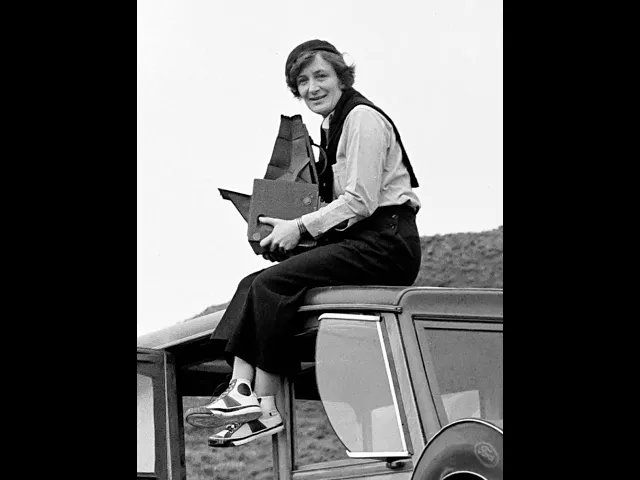
when all I wanted was to photograph people with White's blessing I left his class early bought a large camera and two lenses and began taking portraits of my family I had learned that formal schooling will only teach you so much no one can show you how to photograph a person's soul but good photographers can do that and it has nothing to do with technique it's simply a con connection you make with people so they feel your respect only then will they trust you enough to reveal themselves to you in the best portraits you will see
that connection in January 1918 when I was 23 Florence and I boarded a steamship in Hoboken and set off for what we hoped would be a grand adventure around the world our first stop was New Orleans where we caught a train for San Francisco our plan was simple when our initial money ran out I would work in a photo lab while Florence worked as a telegrapher for Western Union she was so good they promised her work in any Western Union office in the world with funds restored off we'd go again but in San Francisco we
hit a snag a pickpocket robbed us of all our money forcing us to start over but it turned out this bad break was lucky for me I found a job retouching portrait photos in a local lab and was so good the owner helped me start my own photography business in 1919 I opened my own Studio on Sutter Street next to a fashionable art gallery and almost immediately became successful making portraits of wealthy Jewish families who were were big patrons of the San Francisco art community I was soon a financial success and well-known among the photographic
Elites of San Francisco including anel Adams and igene Cunningham one day I was in the basement Dark Room of my studio on Sutter when I heard the distinctive clumping of cowboy boots above me I climbed the stairs to see a tall middle-aged man in two old leather boots a three-piece suit a blackf cowboy hat and carrying a gold-headed cane as I approached him he was busy examining my portraits and without looking up he asked this your work the man had the aloof aspect of a bird of prey with a hatchet nose and a narrow face
he gave me to feel I should know him or at least know of him he kept his Distance by leaning away from me on the cane and appraising my work with pursed lips names dorthia Lang and you are there was an awkward pause before he answered Mana Dixon he snapped and fixed on my eyes with contempt our love affair started the way most of the romance novels say they do with the two lovers having a nasty first encounter as a cover for their mutual attraction I married Maynard in 1920 and for 15 years we struggled
as two artists frequently do with clashing Egos and conflicts over mundane domestic responsibilities we had two sons Daniel and John I was an attentive mother but must admit I dragged my unwilling kids with with me on Photo assignments they spent a lot of time waiting for me in the back seat of a car mayard spent most of his time with other women and his circle of Bohemian artists he became a well-known local Dandy and a renowned paint artist of the Southwest but in 1935 I couldn't stand his womanizing anymore and got a divorce a lot
changed after the 1929 Wall Street Crash but you should understand the effects of the depression were gradual there wasn't this big all at once disruption in the whole economy by 1933 I was starting to feel an economic impact on my business I was angry I had to lower my standards like mounting portraits on plain white boards instead of on that wonderful handmade Japanese rag paper with deckle edges I was now also 38 years old and getting restless a successful business gave me time to think about my career as a portrait photographer was that what I
wanted or had it simply been the expedient thing to do when I married and had children mayard was free to come and go but I was trapped in the conventional role of wife and mother always independent as a child and young adult I wanted to move my art Beyond making portraits of San Francisco Elites Success With The Wealthy had led to my isolation from the middle class values I had absorbed in New York I remember one day after school I strolled from 100th Street to the battery taking in the sounds sights and smells the perfumed
matrons with their Furs the sour odor of destitute men sleeping in the doorways and The Grubby children shouting to each other playing stickball and hanging from street cars there it was life in all its diversity as a teenager I had been thrilled to take it all in and to think someday I might take pictures of it in those contemplative moments I realized how far I had strayed from my values from my San Francisco Studio window the sight of unemployed men smoking and loitering in small groups on the street made me aware of how woefully ignorant
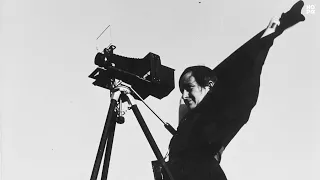
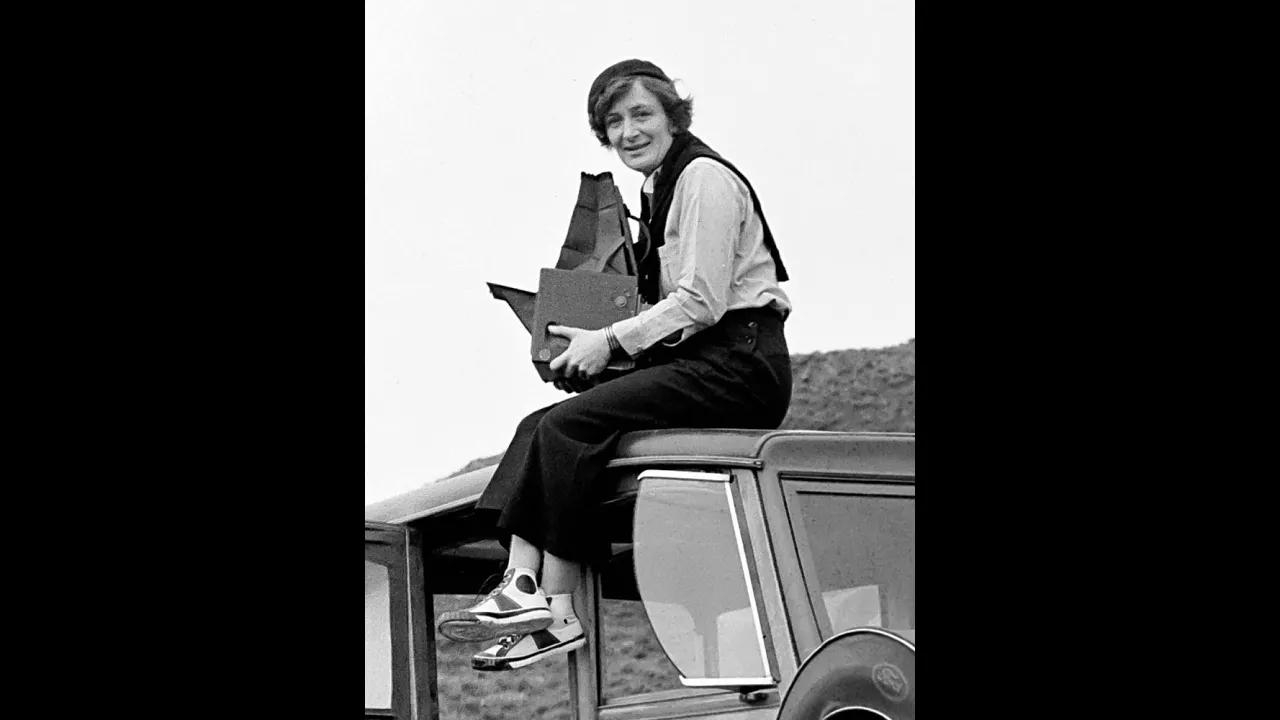
I was of California's social problems I simply had to get out of my studio and make a connection again with people the only way to do that was to get back on the street Tre with my camera and see with my own eyes how the Great Depression had changed my city as with a lot of my big decisions I trusted my feelings and simply jumped in as I entered the rough world of the city streets an anxious chill running up my back quickly vanished the first time I looked through the viewfinder and clicked the shutter
in an area not far from the studio I made my first first photographs of people impoverished by the depression it feels strange to say after all my years taking pictures but that day in San Francisco was the first time I had ever been on the street with a camera I remember an interview in 1964 with the Smithsonian where I said that first day taking Street pictures changed my life I was excited but friends warned me they said don't go there it's too dangerous but I ignored them I remember a rich woman they called the white
angel ran a breadline that morning as the men queued up for handout I took one of my most famous photographs an old man with a Tin Cup I just saw the shot and snapped it back home I put his picture on my studio wall it wasn't until months later later I noticed a man in the background with a white mustache looking directly at me he was clean and well-dressed and made for a strong contrast with the man and his cup for me the image of the two men summed up the Great Depression for months I
struggled with what those photographs meant to me my portrait customers would come in glance at my little gallery of Street photos and ask what are you going to with this kind of thing what do you want to do this for that was a question I couldn't answer I didn't know I knew I wanted to earn a living put it that way I was married I had two children and I could have stayed home but I I felt differently I wanted to be independent and earn money so that was the question how could I make it
all work sometimes it's just luck that makes a choice for you for me it was a chance encounter with politics during the height of the Great Depression the American public became deaf to the promises of politicians in Washington the public craved immediate action to relieve the spreading economic collapse stalinist Russia showed outward signs of progress with its massive industrial building programs and seemed to be the alternative to America's failed capitalism communist political cells proliferated in the United States and elsewhere around the globe social and Union agitation was in the air politicians were fearful communism would
take over America well it's true there were communist demonstrations going on and a good deal of social ferment the Communist Mayday celebration came along and I heard there was going to be a big demonstration more confident now carrying a camera on the street I thought I'd better go see what people wanted I set a go I would go there photograph this thing come back and develop it I would print it and put it on the wall all within 24 hours once my photographs of the labor demonstration appeared in major publication s and in Washington DC
a friend contacted survey graphic this was a social welfare magazine more concerned with settlement houses and social welfare problems not political commentary so much someone at the magazine bought one of my demonstration photographs and printed it full page the photo showed a street speaker talking into an old-fashioned microphone it's still printed occasionally underneath the photo they printed the slogan workers of the World Unite that caption was no favor to me but that's what they did made me a communist overnight luckily a professor at the University of California who wrote the article accompanying that picture telephoned
me he had a grant from the state to investigate agricultural labor and if I could do field work he could use my photographs as visual support for his articles he couldn't get me hired as a photographer so I took a job as stenographer we made several field trips where I took notes and shot photographs of what the professor and his crew were investigating this was the first time I saw how trained people operated the leader of the team was Paul Taylor who would become my second husband once Paul's report was filed in Washington the connection
was made with xford tugwell of the resettlement administration and with Roy Striker head of its historical division in 1935 Striker asked me to join his photography section once on the team I lobbied him hard for an assignment to Southern California's Imperial Valley I convinced him the valley was a flash point for labor unrest the daily surge of dust ball family into this region created an enormous labor and housing crisis harvesting peas and lettuce didn't provide enough work to sustain these families and wages were so low they couldn't meet basic needs but migrants poured in anyway
on arrival they sought immediate shelter in temporary government camps constructed near the Harvest but these camps filled quickly forcing many families to live in their cars or camp in the open local officials were hostile fearing such concentration of workers would lead to violence unionization demands for higher wages and even communism local sheriffs looked the other way as thugs hired by The Growers attacked the camps beat up and killed suspected agitators in those brutal assaults women and children also died at first it was hard for me to understand why Growers would beat up people who harvested
their crops then I realized the Growers feared the tremendous surplus of labor would drive down wages and create conflict unless the Growers asserted their dominance Striker sent Paul and me into the Imperial Valley me as photographer and Paul as notetaker and bodyguard but there really was no danger to us I had a way of putting people at ease almost most immediately you know so often it's just sticking around and being there not just swooping in and swooping out in a cloud of dust I sat on the ground with people and let the children handle the
camera with their grimy little hands and put their fingers on the lens and you let them because you know if you behave in a generous manner you're apt to receive it here's a good example of the way I worked I would shoot a sequence of images designed to story take for example the photographs of my visit to one such migrant camp in California the day I arrived in this temporary Government Camp for migratory workers set up near Broly in California's Imperial Valley there was a sense of organization with neat rows of tents and smoking campfires
indicating food had been cooked and consumed there was a bath house and laundry off to the side as I walked in the well-ordered appearance of the camp at first gave me an optimistic feeling but this gave way to an anxious butterfly sensation as I got closer to the tents not knowing how people would react to someone from the government my worst fear was getting shot each family dwelling consisted of a raised platform with a wooden skeletal frame covered by canvas with no windows no lighter air except through the front and back flaps as I approached
one of these tents a flap was pulled back revealing an older man I introduced myself and said I'm from the government that Mr Roosevelt had sent me without waiting for a response I asked about the Harvest where they came from what happened to the kids during the day do they go to school as I'm going on with my usual chatter the mother appeared at the opening with a large family now visible inside there's more conversation and the father emerged carrying his youngest son I can hear murmuring inside then the entire family's out immediately I'm drawn
to the mother's Solen expression and take a shot of her with father I can tell all's not right between them I think maybe I can find out what's wrong after photographing the family I sat in my car and wrote down everything thing using as much as possible the family's own words here's my caption from the Broly visit Broly California Imperial Valley 1939 in a farm Security Administration migratory labor camp family of mother father and 11 children originally from Oklahoma where he had been a tenant farmer came to California in 1936 after the drought since then
families been traveling from crop to crop following the Harvest six of the 11 children attend school whenever the family stops long enough five older children got work in the fields along with father and mother February 23rd two of the family are lucky get a day's work picking Peas on the Sinclair Ranch father earned about $173 for a 10hour day oldest daughter earned a125 from this they must pay for transportation to the fields 20 M away mother wants to return to Oklahoma father unwilling she says I want to go back where we can live happily live
decent and grow what we eat he says we can't go back the way I am now we got nothing in the world to farm with I made my mistake when I came out here my driver Mr Partridge and I logged thousands of miles over roads heading west from the dust ball and north and south across the Imperial Valley every day we saw families walking the roads pushing carts filled with belongings and young children mothers carried infants on their hips as the sun set families moved off the road to Camp before Sun rise they began another
day on the endless Road often with aching stomachs it was a dangerous life the rural Highway exposed them to attack from other vagrants looking for food or cash women walked the roads but almost always in the company of a man who could offer protection in return for sexual favors women bore the responsibility for The Unwanted infants as most of the fathers would simply run off camping on roadside exposed families to middle of the night attacks by thugs hired by local Growers who thought these vagrants were the scum of the earth The Growers hoped news of
the attacks would get out and discourage others from entering the Imperial Valley what astonished me was many of The Drifters while penniless didn't wear Rags some of my photos clearly show mothers well turned out in simple dresses sweaters and skirts there were men in three-piece suits and a fedora the clothing and suitcases made them appear middle class I wondered if photos of middle class vagrance would arouse more sympathy in Congressman so I made the decision to photograph the families to preserve their dignity shooting them from a low angle so they look down on me men
walking in small groups or alone were called hobos or bindle stiffs They carried everything they owned in small sacks over their shoulders even though they were social outcasts these men were critical to the Harvest in California depending on the crops they'd walk from Farm to farm looking for picking jobs abuse was common the men knew not to camp together in large groups because the Growers henchmen would bloody them and drive them off for safety hobos generally walked alone or in pairs to attract minimal attention Mr Partridge often got impatient with my wanting to stop the
car so often to speak to the families and to the single men but I must say these conversations on the side of the road were pricess so I made sure they got into the captions but what those captions failed to reveal is how it felt first to learn so much personal information about these families than simply to drive off in a cloud of dust in my opinion women do such a better job talking to people than do men the mothers and even the single men would tell me their whole life stories in the first five
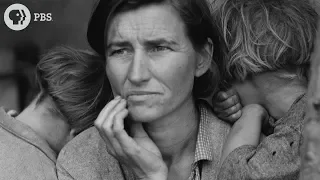
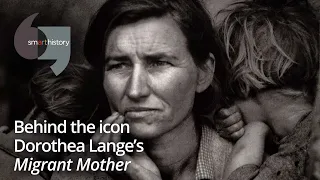
minutes so in many ways I made a unique contribution simply by being female that pleased me more than I can tell you looking back on them now I wonder what these photographs could possibly mean to someone who wasn't there who never heard the voices of the parents and their kids and years from now would anyone care Migrant Mother the most iconic photograph of the Great Depression was almost never taken at the end of a long day photographing migrant workers I was satisfied with my work all on my own I had spent a month photographing and
had plenty of negatives the sun was low and it was rainy and cold facing seven more hours of driving before I made it home I was completely exhausted driving along US 101 in February 1936 I spotted a migrant camp near neomo about 2 hours north of Santa Barbara a small handlettered sign said Pecker's Camp I drove on Beyond it for about 20 miles until I started to have an argument with myself Dora theia what's going on in that camp back there what's the situation nobody would ask this of you now don't you have plenty of
negatives already on the subject and isn't this just one more of the same besides you take a camera out in this rain you'll be asking for trouble I turned around after driving into the camp I learned a freeze had killed the peas so there was no work I spotted a woman and her children in a lean to the woman was Florence Thompson whose image would be immortalized in my photo of the Migrant Mother Thompson's grandson recalled the day I pulled up in the car the look of hunger was in the camp within a week death
would be there too first the very young and the Very Old soon the locals would descend on the camp arresting s and beating others scattering all to the Four Winds Thompson told me her family ate Birds the children killed and frozen vegetables stolen from the fields 32 at the time I arrived Thompson like most women on the road during the Great Depression needed to attach to a man for protection and sustenance with no contraceptives women had many children sometimes with several so-called husbands Thompson had 11 children by three such men some of the children weakened
by malnutrition had died when I arrived Thompson's current man was off trying to get the car repaired tired and cold I cut short my usual warm-up banter and quickly identified myself as from the government and began to pose mother and children they were all so listless from Hunger they complied easily with my every request I shot four photos before I finally positioned mother and two children the way I wanted I moved dirty laundry out of the way and eliminated the oldest daughter from the final photograph I knew from experience small children would make the image
more poignant the final photo showed two daughters turned away from the camera but leaning on mother a swaddled baby in Thompson's lap people ask if I intentionally posed the mother with hand on her cheek yes I admit this gesture was not spontaneous and purus I know will object but I sensed the mother and children were tiring rapidly and I wanted some way to convey the mother's dignity it was a spur of the- moment decision driving away devastated me I knew the final photo composition was excellent but I couldn't shake the feeling I had exploited the
mother with that hand gesture and all my fussing about with the kids in the laundry was the photo the truth or my truth I cried all the way home fretting about it many times I had posed people in the studio and in the migrant camps with a gesture just like that it was my signature but was it the right thing to do the Migrant Mother experience became a cautionary tale about how much the artist should affect the subject of the photograph I suppose it's impossible not to but from that moment on every time I snapped
the shutter I thought about it in the end it was clear to me the more a subject grabs my emotions the more I am pulled in and liable to shade the truth for my own purposes photography after all is a conscious Act of selection not a passive recording in a good photograph you should always feel the presence of the artist when I returned to Berkeley and developed the negatives I knew I had some special photos I sent the Thompson prints to the editor of the San Francisco news who published two of them and $200,000 in
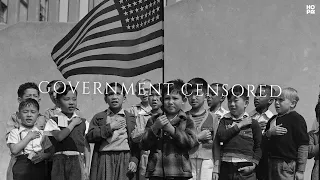
contribution to help napo's destitute migrants quickly flowed into the newspaper Florence Thompson became the icon of the Great Depression and my guilt was partly relieved lateer in my career I had one last chance to confront the question of what is propaganda and what is truth two months after after the Japanese attacked Pearl Harbor Franklin Roosevelt signed an executive order requiring the military to send to internment camps anyone perceived as a threat the president's order didn't mention Japanese Americans but local authorities freely interpreted the order to unleash their pent up racism in San Francisco any person
with at least 164th Japanese ancestry was SA to the camps Roosevelt's order also became an open invitation to loot and sell the homes and businesses of Japanese Americans these local regulations bore striking similarities to the racial nurenberg laws used to oppress Germany's Jews the war relocation Authority assigned me to photograph the transfer of families from San Francisco to the manzanar camp in the Sierra Nevada mountains the camps hastily built tar paper Shacks were freezing in Winter and stifling in summer their evacuees received minimal rations and protective clothing fences of bobbed wire surrounded the camp and
people trying to escape received two orders to Halt before guards shot them Army escorts also controlled where I went they wanted me simply to document fair treatment but they couldn't control the story I wanted to tell just look at the grandparents kids mothers and fathers all tagged and ready for shipment this was gross Injustice American style these families had made a decent life for themselves had deep attachments to American culture and to their Community they had businesses celebrated American holidays flown the American flag and donated money to American causes but after the racial Feeding Frenzy
in San Francisco had run its course they knew there would be nothing to come home to every bit of me was ready for this assignment and my blood was up I would not simply record I would tell an unabashed story of American Injustice here I was a tired old woman on her final project lugging a heavy camera intending to capture the Heartbreak of these beautiful people if there was ever a chance for me to put my core feelings into my work this was it I had devoted my entire professional life to capturing the humanity of
my subjects and to preserving their dignity I had shot them all from fancy Studio portraits of bored Society matrons to hurried photos of desperate migrants huddled in the rain under a flimsy lean to while I stood in the mud with a camera and over the years working for the government I had shocked everyone with the truth of what Americans could do to each other from the brutal and deadly suppression of Migrant pea Pickers to the scorn of negroes in the South to the racist prison at manzanar American Injustice found its clearest voice in a contempt
for its own people my relocation photographs were never published in my lifetime because the Army thought them too inflammatory they impounded the whole lot for 30 years it's easy to understand why the Army had wanted propaganda but I wanted the truth at least least my version of it but the photographs were published in 1972 when my Japanese American relocation images appeared in a traveling show this was the first time Americans became aware of this egregious wrong to our minority citizens and were forced to look them in the eye after the war my health declined further
I spent much of my time at home with many visits to the hospital to deal with abdominal pain even though my doctors told me I had terminal cancer of the esophagus I was determined to live as normally as possible I willed myself to have the energy to make trips to Asia Egypt and South America with Paul and to Ireland with my son Daniel I managed to collaborate on several magazine articles confer with Edward styken on the family of man exhibit film an interview with San Francisco educational television and teach photography classes at the University of
California but before long even the simplest task exhausted me when John zakowski curator of Photography at the Museum of Modern Art asked me to do the retrospective I put all my remaining energy into helping him select and organize the photographs my retrospective opened January 26th 1966 I didn't see it I died October 11th 1965 surrounded by Paul and all my children and grandchildren I must tell you there were were exhausting days when I felt uninspired and defeated by the long miles and the endless repetition of camps and destitute people and despite all the recognition I
received during my lifetime and all the thousands of photos I shot only two Stand Out think of it only two images from thousands of negatives and countless miles in the dusty heat and freezing cold but you can't judge a life that way ask me now and I'll tell you it was worth the trouble why because the search for truth is important whether you find it or not and I'm proud there were times I came pretty close for