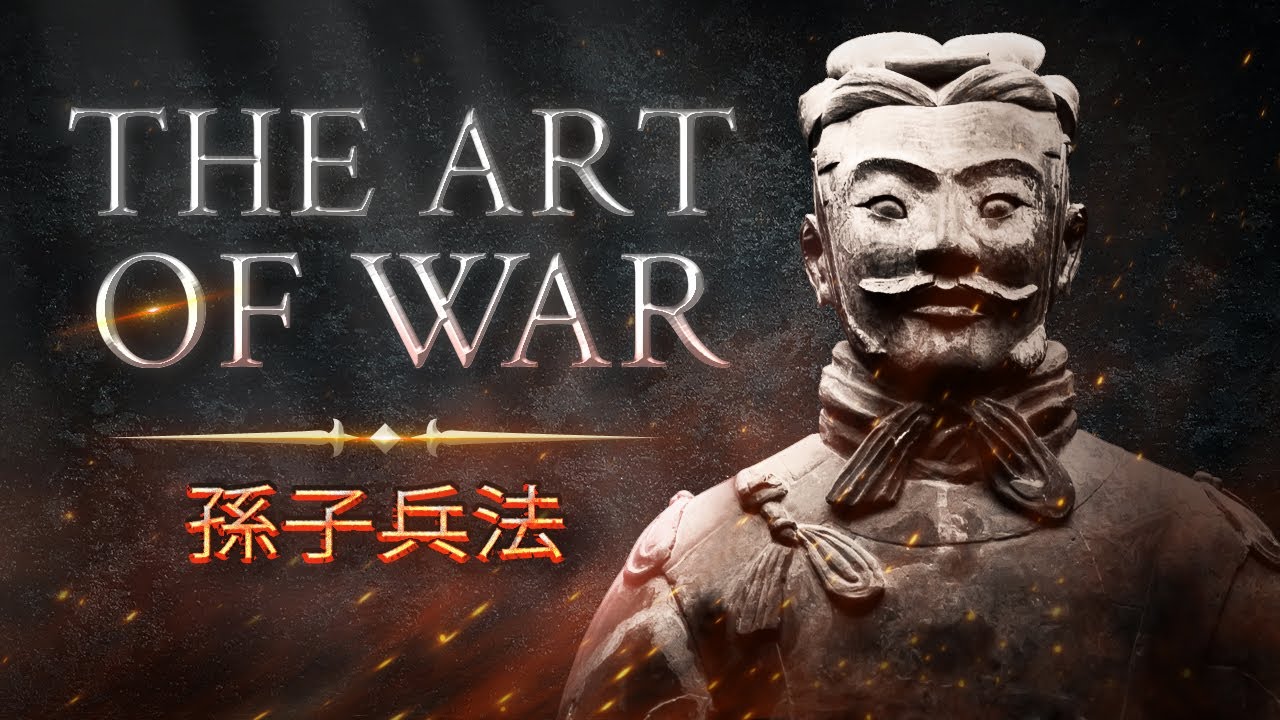
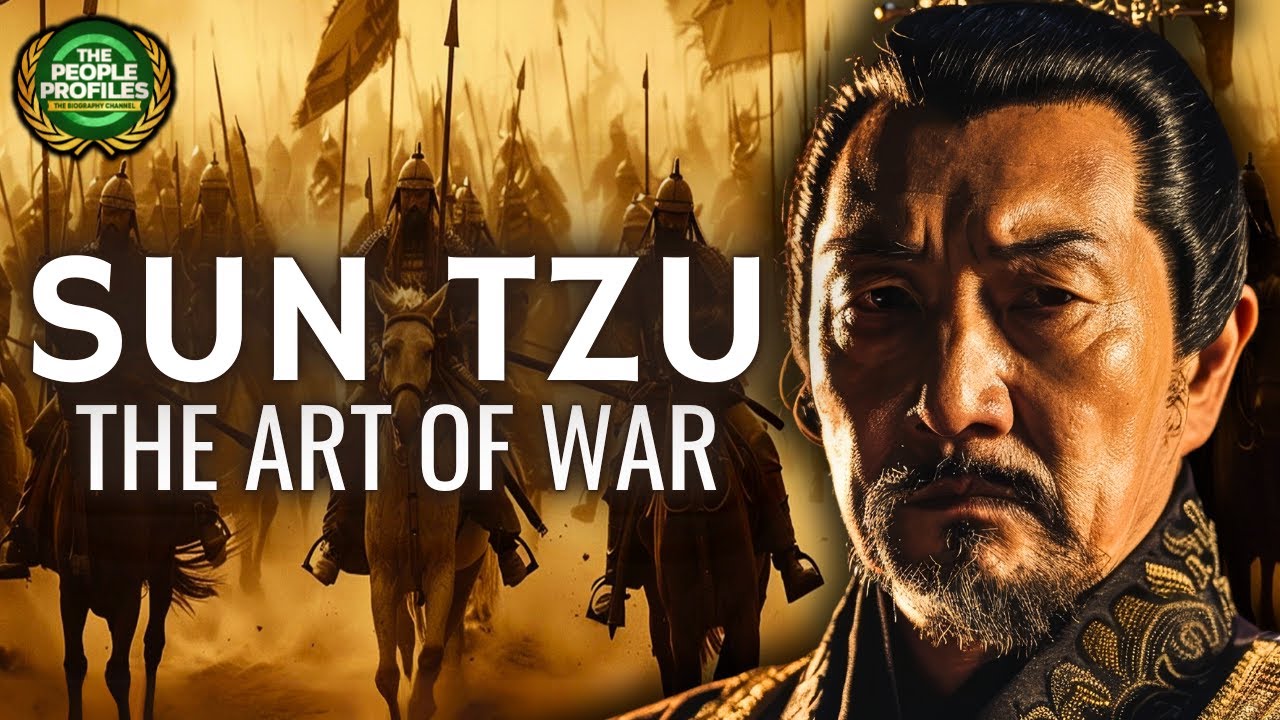
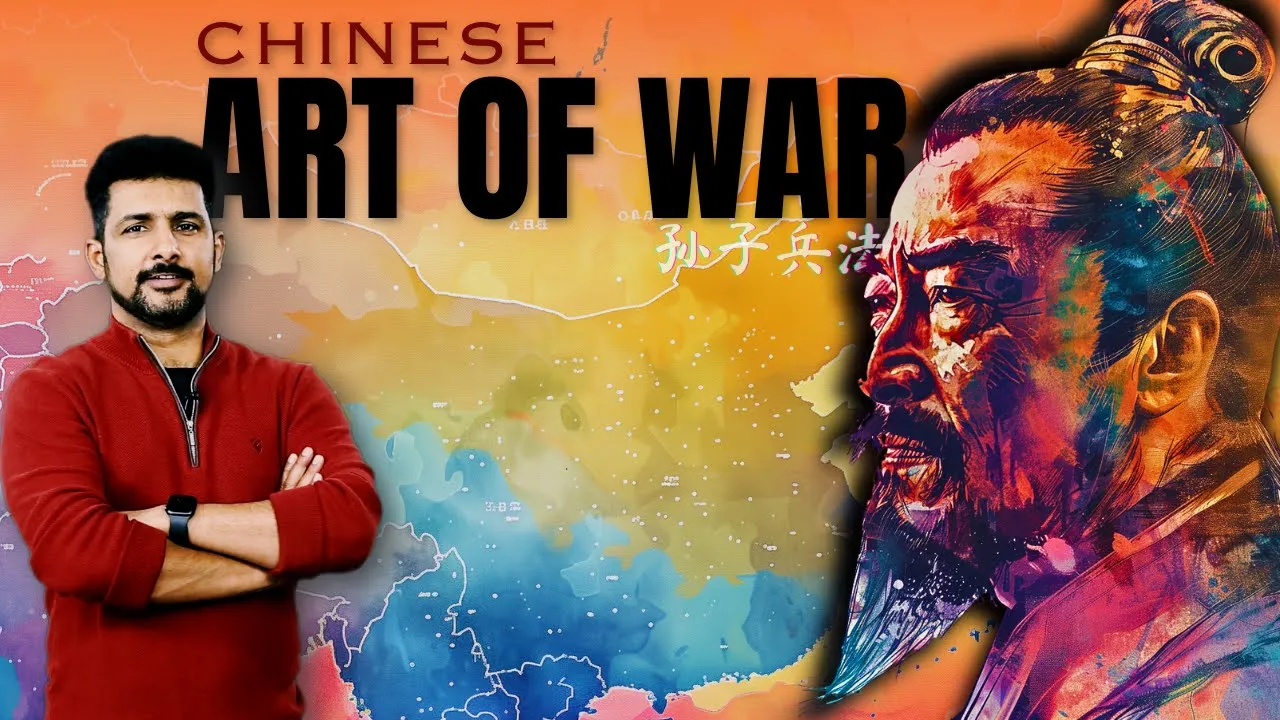
How are you, friends! This statue is of Sun Tzu, the world's first-known military strategist. He was the Chinese commander who for the first time.
. . .
. . wrote down the rules of war in book form.
This book is popular worldwide called "The Art of War". There is no military mind who has not read this book. Sun Tzu is said to have written The Art of War sometime between 475 and 221 BC.
This was a period in which China was divided into many states. . .
. . .
and there given to fierce among themselves. Four of these states were named Chi, Wu, Chu and Chin. Sun Tzu was a native of the state of Chi.
Whatever information we have about his living conditions is post-fame. How was he able to write such a grand book before? No one knows this.
When his book became popular King Hulu, the ruler of state Wu, read it. He called Sun Tzu and said I have read your book. Can I test your army organizing theory?
It was because Sun Tzu had written that any man could become a soldier. . .
. . .
through discipline and training. By that means soldiers can form an army certain to win a war. He meant that the army was a form of strict discipline.
. . .
. . and with military discipline, any group of men could be turned into an army.
Sun Tzu said in response to the king's question, "Of course. . .
. . .
you can test this theory on any group of people. " The king asked whether the ordinary Chinese women living in the houses also? "Yes, the same rule applies to women," Sun Tzu said.
This was a big surprise for the king. So he asked Sun Tzu to demonstrate this to him. The king called 180 concubines from his palace.
Sun Tzu divided these women into two groups of 90 each. He then made the two concubines closest to the king a group commander. He then gave these women weapons.
. . .
. . and told them that when he ordered them to "go forward,.
. . .
. . turn right, turn left,.
. . .
. . move back.
. . .
. . they would all obey the order without question instantly.
The commanders were to act first. All the women said in unison. .
. " Okay, we'll do it. " When Sun Tsu lined them up and called out for the first time, "Turn right!
". . .
. . .
The women began to laugh at the order. . .
. . .
and looked at each other to see if anyone else was turning around. They were blushing and hesitant. Sun Tsu shouted again, "Perhaps you don't understand my order properly.
. . .
. . Listen again.
. . .
. . Go straight.
Everyone began to move straight. A few moments later he repeated the previous order, "Turn right". .
. But this time the girls looked left and right and started giggling and frolicking. .
. . .
. as if a game was going on. Sun Tsu then repeated the same orders, but the women did not take him seriously.
Here Sun Tzu issued the order. He said that if the discipline of the soldiers is rough. .
. . .
. the responsibility will be none other than their immediate commander. Therefore, the head women of both groups should be given the death penalty.
Now the king was watching the whole scene by pitching a tent on a high place. When he saw that it had been decided to kill his favourite concubines. .
. . .
. he immediately issued an order. .
. . .
. not kill these, because without them he cannot have even a bit of meal. And the pleasure of eating and drinking will end.
Sun Tzu did not care about this imperial order. . .
. . .
and said some orders of the king are such that. . .
. . .
I cannot obey as a commander. It means that I will not accept any order that will spoil the discipline of the army. So Sun Tzu beheaded these two maids in front of all the girls.
In their place, new concubines were given the leadership of the groups. Seeing this action, all the girls were shocked. .
. . .
. and scared that now they must obey the command of Sun Tzu. .
. . .
. immediately or they could face the consequences. So now, whenever Sun Tsu gave them order, they would immediately follow it.
. . .
. . paying full attention to the order and carrying it out.
Soon they began to move with discipline just like military troops. When all housewomen had adapted to one discipline. .
. Sun Tsu said, "Now this is a military one. " Sun Tsu then invited the king to come and inspect his troops.
Because now it has become a regular army. . .
. . .
and if the king asks them to jump into fire or dive into deep water. . .
. . .
they will do it without hesitation. Now the question of disobedience does not arise. But the king was very saddened by the death of his beloved maids.
The king put an end to the whole process. He went to his palace. After a few days, when his grief subsided.
. . .
. . he was convinced Sun Tzu was the best commander and his theories.
. . .
. . could be used to build an army that would really win wars, and that.
. . .
. . his strategies could be implemented.
So he appointed Sun Tsu as the military commander of his state Wu. Sun Tsu took command of the army. .
. . .
. and upgraded the army into a formidable military machine. He won one battle after another with this army.
First, he defeated the Chinese state of Chu and conquered its capital, Ying. He defeated the Chi and Chin kingdoms and inspired his influence in them. Apart from this, not much information is available on Commander Sun Tzu's life.
It is still debated whether Sun Tzu was the name of a real character. . .
. . .
or just a fable. That is, this book was written by someone later. But it is a fact that many copies of this book, written on bamboo tablets.
. . .
. . remained popular in China for centuries.
Chinese leaders and military commanders. . .
. . .
used to learn military strategies from these tablets. . .
From China, this book also reached the neighbouring Korea and Japan. The oldest version of it in Japan dates back to the 8th century, i. e.
1200 years ago. The samurai of Japan especially studied the book "The Art of War" thoroughly. .
. . .
. because war and fighting skills were everything to them. They worshipped this art like religion and culture.
The samurai had kept alive the art of the sword and spear in Japan for centuries. . .
. . .
and until the invention of firearms, etc. . .
. . .
they were considered the greatest warriors. This was their masculinity, bravery and achievements. Now let's come to the techniques mentioned in this book.
The Art of War, say learning the art of war is of great importance for any state. This art is a matter of life and death for states. For any reason, no State can disregard this art.
In 'The Art of War' two things are most emphasized about war. Commander's combat skills and intelligence. It writes the entire security and military success of any state rests.
. . .
. . in the hands of a single person, that is its military commander.
It is the protective wall of any state. If it is strong in every mental and physical sense, the state is strong. If there is any weakness in this wall, the state will be weak.
According to Sun Tzu, the quality of a commander is. . .
. . .
to control his anger strictly. He should consider all war situations with a cool heart and mind. .
. . .
. and take such decisions which are best for his state and army. If it is not necessary to advance in a combat situation,.
. . .
. . then do not attack unnecessarily just to be a hero.
Similarly, if it is necessary to retreat in a battle it should be done. . .
. . .
without caring the world will reproach hm for cowardice. The commander should retreat to protect the interests of his army and the state. A commander who thinks a lot before a battle.
. . .
. . is more likely to succeed.
A commander who does not do much research, is defeated. Sun Tzu says that an army is not strong or weak. .
. . .
. but a commander turns people into a strong or a weak army. According to Sun Tzu, in order to win a war, it is also necessary.
. . .
. . that the army officers and men are equally enthusiastic.
That means their morale is very high and they are ready to fight or die. Keeping the morale of the soldiers high is a prime duty of the commander. For this purpose, Sun Tzu advises luring soldiers into loot if it is necessary.
According to Sun Tzu, a commander must know when to fight and when not to. When he knows that war will bring victory, he should attack anyway. .
. . .
. even if the ruler of the state, the commander's boss, does not allow it. If there is a fear of defeat in a war, it should be avoided despite the king's order.
According to Sun Tzu, the king should not interfere with the commander's work. The commander should be allowed to act freely. According to Sun Tzu, the best leader is that commander who.
. . .
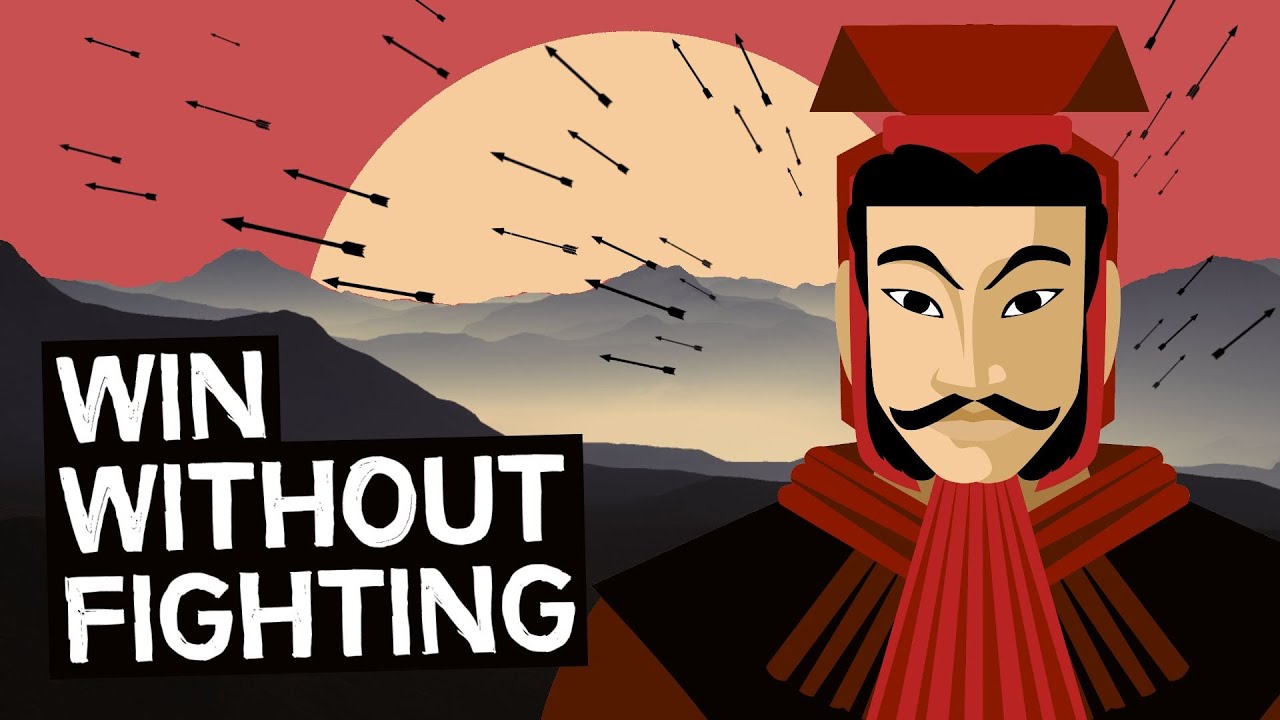
. . can force the rival to surrender without a fight but through the fear of his power.
He should not shed blood unnecessarily. He writes that a commander should neither act in haste. .
. . .
. nor fight for long. In particular, high-walled, fortress-style cities should not be besieged.
As it wastes military power and equipment and weakens the state. Sun Tzu explains that the sooner the war is ended the better. Protracted battles reveal the failure of a commander and his weakness.
No state has benefited from a long war. A long war benefits the enemy with multiple opportunities. .
. . .
. as well as to muster up its strength. While the invading army is weakened by long sieges and attacks.
Which ultimately results in the invasion army and. . .
. . .
and the state has insurgency within. It gives the enemy more opportunities to strike. When such a situation arises, no commander, no matter how wise,.
. . .
. . can save his state from destruction.
The best commander achieves his objectives in a short battle and retreats. . .
. . .
and failed commander fights long without clear objectives. Another quality of a good commander, according to Sun Tzu, is his. .
. . .
. complete awareness about his strength as well as that of the enemy. A commander who understands his and the strength of the enemy.
. . .
. . will not lose even in a hundred battles.
A commander who knows his strength but does not of the enemy has half a chance. . .
. . .
of victory; and defeat after a victory. But a commander who does not fully understand both his own strength and. .
. . .
. that of the enemy loses every battle. The Art of War clearly says not to underestimate the power of the enemy.
A commander who mocks the enemy's combat power. . .
. . .
is soon defeated or forced to surrender. He writes that a good commander wins a war without making mistakes. Sun Tzu believes that in war it is not only necessary to win.
. . .
. . rather to win easily.
A war won after a lot of hardships and losses is of no use. The best is an easy victory that saves the military strength from being depleted. As per Sun Tzu, understanding the enemy's intelligence is most important.
This is because no commander, no matter how clever he is,. . .
. . .
can by himself form an idea about the enemy. For this he needs intelligence. For example, what is the number of the enemy's army?
What is his position? What are his intentions and what are the ways forward? Without this information, the battle cannot be won.
For this purpose, the commander has to rely on spies. Sun Tzu calls spies the most important pillar of war and the best asset of a ruler. He says the commander who does not spend on the spying system.
. . .
. is actually doing an inhumane thing, making a huge mistake. Because without a strong intelligence system.
. . .
. . commanders will not be able to do actionable planning.
He will carry out long pointless operations, which will weaken the state. Sun Tzu divides spies into five categories in the intelligence system. The first type of spies are recruited from among the people in the war zone.
They know the geography of the area, important routes and water reservoirs. . .
. . .
and can provide all the information in this regard. Other spies are those who are part of the enemy's army. .
. . .
. especially military commanders. These officers are bought to get important information about the enemy.
Third spies are those who were previously enemy spies. . .
. . .
but somehow happened to be in your custody. These spies can be brainwashed or lured to join you. These people can provide more important information about the enemy.
A fourth kind of spies is called a double agent in the present sense of the word. These are people who apparently spy for the enemy. .
. . .
. but work for their own forces. They mislead the enemy by giving it wrong information about their forces.
The fifth type of spies are those who are loyal to the state. . .
. . .
and infiltrate the enemy's army to obtain information. They pass classified or secret information back to their commanders. San Tzu says that as important is to have a strong spying system, it is.
. . .
. . equally vital that the enemy is unable to spy on you.
Particularly, the commander's war plans must be kept secret from everyone. A good commander keeps his plans secret while changing them all the time. Thus he keeps the enemy constantly deceived as to his intentions.
The commander knows before the people which battle will be won. A commander who cannot foresee victory is not a good one. Sun Tzu also set the rules for testing the strength of an army before a battle.
He says from two armies it will be seen which has a capable commander? In whose favour are geography and weather? Which army has better discipline?
Whose army is more powerful in terms of weapons and numbers? Whose military officers are better trained? Which army was penalised strictly for breach of discipline.
. . .
. . and greater reward for better performance?
The army which is better than the other in all these matters will win the war. Sun Tzu advises the commander to treat his soldiers well. .
. . .
. rather treat them like his own children. Thus these soldiers will always support him in the campaign of life and death.
However, too much leniency by the commander towards his soldiers. . .
. . .
may lead them to disobedience of his commands. The commander should also be strict. .
. . .
. and punish the soldiers as needed. The strategist Sun Tzu also advises the commander not to engage in battle.
. . if the enemy is outnumbered.
Rather, get away from him if possible. . .
and even run away, and not fight till a favourable situation. Sun Tzu believed that no matter how bravely a small army fought. .
. . .
. the enemy would eventually overwhelm it. So attack when you are outnumbered and the geography and weather favour you.
He writes that before an attack you should strengthen your defences. . .
. . .
to preclude any chance of defeat. Then San Tzu also writes a strange thing. He says it is within the power of a commander to strengthen himself.
. . .
. . but it is not within his power to defeat the enemy.
For this, you have to wait for the enemy to make a mistake. That will give you a chance to win. According to The Art of War, the commander who is an expert in defence.
. . .
. . hides in the secret depths of the earth.
That is, he positions himself best everywhere especially forests and hills. It becomes impossible to find and overpower him. While one expert in offences.
. . .
. . breaks down on the enemy from the heights of the sky.
That is, he uses every place for attack. . .
. . .
and destroys the enemy by opening every front. According to Sun Tzu, the whole war is an art of deception. That is, you delude the enemy about you at all times.
If you are strong, make it appear that you are weak. . .
. . .
so that if the enemy attacks you, he will do it with the wrong planning. . .
. . .
thinking you are weak but get badly beaten. That is, he gets into your trap. If you are away from the enemy, delude him by showing your forces close to him.
. . .
. . and able to attack at any time.
If you are close to the enemy, pretend you are far away. This will not let the enemy get fully alert to react to your attack. Try to always make a surprise attack so as not to let the enemy stop you in time.
Never let the enemy sit comfortably during the battle. . .
. . .
but constantly upset him with your attacks. Do your best to create confusion in the enemy's ranks. He says to constantly act in a way to make the enemy commander perturbed,.
. . .
. . furious which leads him to make a hasty mistake.
The more mistakes he makes, the better your chances of winning. Tzu also advises the commanders to reach the battlefield before the enemy. In the war areas, they should.
. . .
. . occupy high positions.
. . .
. . and prevent the enemy from taking such positions.
So that you can see the geography better to easily navigate from top to bottom. Let me tell you another surprising and interesting thing. That is, Sun Tzu had given the idea about 2500 years ago.
. . .
. . that prisoners of war should be treated well.
He believed that if prisoners of war were treated well, it was likely. . .
. . that some of the enemy would join you.
Thus, Sun Tzu was not at all in favour of destroying the entire enemy army. He believed that capturing the enemy alive is better than destroying it. Similarly, without annihilating the enemy territory.
. . capturing it is beneficial both economically and militarily.
According to Sun Tzu, three things can cause disaster for any army. Firstly, the army is immobilized. .
. . .
. and is ordered to advance or retreat. So this army will be destroyed.
Secondly, if the army is run like other state institutions, it will be destroyed. Its administration should be outside of civilian institutions. Thirdly what can be disastrous for an army is the neglect of merit.
If such people are given important military positions. . .
. . .
who are not qualified for it, there will be a disaster in the army. Sun Tzu's principles of war, written in The Art of War,. .
. . .
. are still used around the world. But his book is read not only by military minds.
. . .
. . but also by businessmen, market strategists and political leaders.
Because he actually gave the eternal practical principles of winning. . .
. . .
which are also applicable, with slight changes, to market competition. . .
. . .
such as those for war and espionage. Mao Zedong, who brought the revolution to China, would say. .
. . .
. the arts of Sun Tzu also shared in his political and military success. It meant that he also read this book.
Sun Tzu and his book remained hidden from the world for centuries. Only people in China and its neighbouring countries knew about them. But when the European countries started to set up colonies in Asia.
. . .
. . they came to know about Sun Tzu.
For the first time in 1782, a French priest living in China. . .
. . .
translated this book into French. French general and emperor Napoleon Bonaparte is said to have read this book. He was the first in Europe to apply the military techniques of Sun Tzu.
. . .
. . to European and African wars.
Then, at the beginning of the 20th century, English translations of this book began. By this, this book spread all over the world. .
. . .
. and today it is considered as the pioneer book of military strategy. Its sales never stop, but new editions come out every year.
It is printed and sold in every style, from elegant and classical to comic. That's why in our vlog "100 Books," which must read, this book. .
. . .
. has also been included. This vlog is a summary of this book.
. . .
. . but the book is not too long for reading in a day or two even if you go in for it.
You may recall that Sun Tzu advised the commanders on wars. . .
. . .
similarly Macaulay guided rulers on the art of governance. His timeless book Prince is well-known in history. We have also prepared a summary of the book which you can view here.
. . .
. . here is the Evolution series.
. . .
. . and here is the story of the rise and fall of the Muslim Golden Age.