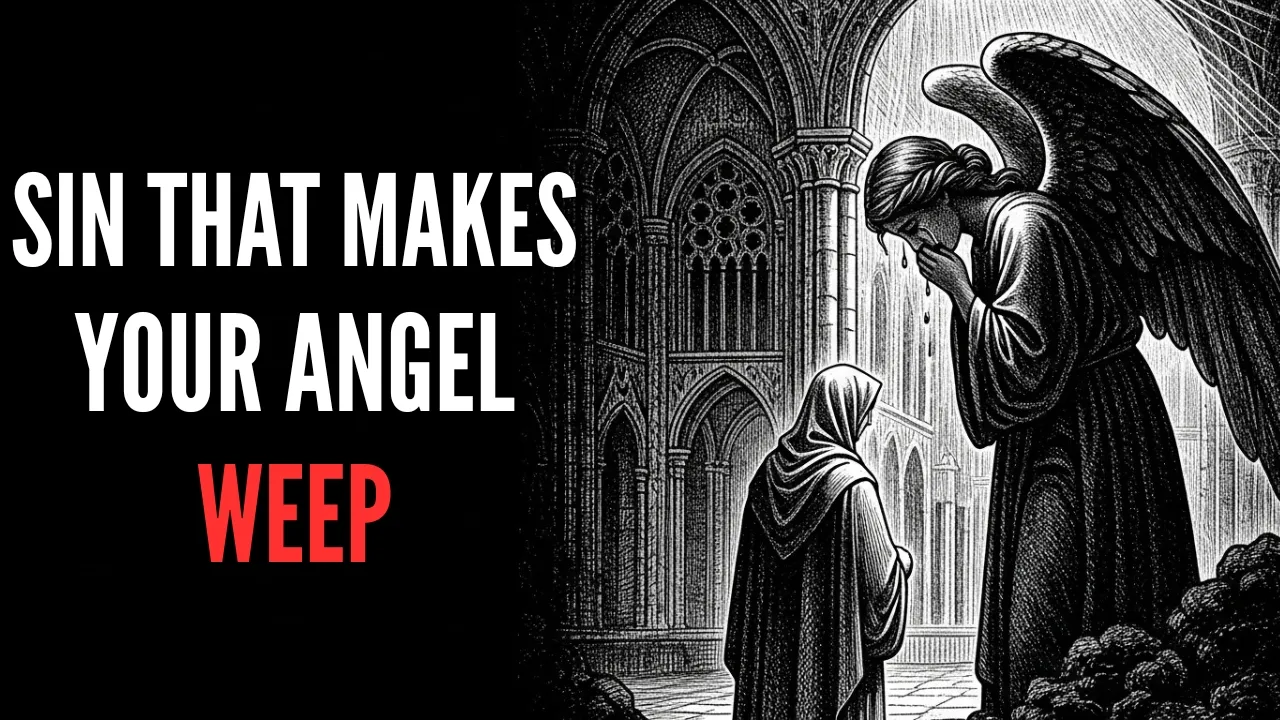
A woman walks into Padre Peio's confessional on a Tuesday morning in 1947 and she is nervous because she has heard that this priest can see things that other priests cannot [music] see. She kneels behind the screen and begins to confess her sins in order. But before she can finish her list, Padre Peio interrupts her.
[music] He does not raise his voice and he does not scold her for the sins she has already named. [music] Instead, he says something that stops her completely. He tells her that there is one sin she has not mentioned.
One sin that she commits every single day. And it is the sin that makes her guardian angel weep. She is confused because she does not know what he is talking about.
She has confessed everything [music] she can think of. Every lie, every unkind word, every missed prayer. But Padre Peio is not talking about any of those things.
He is talking about something deeper. something so common that most people do not even recognize it as a sin at all. And what he tells her next [music] will change the way she lives for the rest of her life.
But before we can understand what that sin is, [music] we need to understand something about Padre Peio and guardian angels that most people have never been told. Padre Peio had a relationship with guardian angels [music] that was unlike anything documented in modern Catholic history. This is not [music] speculation or legend.
It is recorded in the testimonies of those who lived with him, [music] worked beside him, and observed him daily for decades. He could see guardian angels as clearly as he could see the people standing in front of him. He spoke to them.
He received messages through them, and he encouraged the faithful to send their own guardian angels to him when they could not come in person. Multiple witnesses confirmed that Padre Peio would sometimes respond to messages [music] he had not yet received because the guardian angel of the sender had already delivered the message before the letter arrived. [music] This was not a performance or a trick.
It was a consistent pattern observed over many years by skeptics and believers alike. The church investigated these claims thoroughly during the canonization process and the consistency [music] of the testimony from dozens of independent witnesses made fabrication essentially impossible. [music] Padre Peio treated guardian angels as real beings with real feelings and real responses to human behavior.
He did not speak about them as abstract [music] theological concepts. He spoke about them as companions who walk beside every human being from birth to [music] death assigned by God himself and deeply invested in the spiritual welfare of the soul they are sent to protect. And this is what makes his statement about the sin that causes them to weep so [music] significant because he was not speaking theoretically.
He was speaking from direct observation of what he saw happening between souls and their [music] angels. The sin that Padre Peio identified is ingratitude. Not ingratitude toward other people, although that is serious enough.
He was talking about ingratitude [music] toward God. The failure to recognize, acknowledge, and [music] give thanks for the countless gifts that God pours into every human life every single day. This may sound mild compared to the dramatic sins that most people think of when they hear the word sin.
[music] It does not carry the shock of violence or theft or adultery. But Padre Peio understood something about ingratitude that most people never consider. [music] He understood that ingratitude is not merely a failure of manners.
It is a failure of sight. It is a blindness to reality itself. Because the truth is that every breath we take is a gift.
Every heartbeat is sustained by God's will. Every moment of consciousness [music] is an act of divine generosity that we did nothing to earn and cannot sustain on our own. The food we eat, the people who love us, the beauty of the world around us, the grace of the sacraments, the gift of faith itself, all of it comes from God, and all of it is given freely.
[music] And when a soul receives all of this and responds with nothing, not even a [music] simple thank you, something happens in the spiritual realm that Padre Pio could see. and that most of us cannot. [music] The guardian angel assigned to that soul grieavves not with human tears because angels do not have bodies [music] but with a spiritual sorrow that Padre Peio described as real and visible and deeply painful [music] to witness.
The angel grieavves because it can see what the ungrateful soul cannot see. It can see every gift that God has given. It can see every grace that has been offered.
It can see every moment of protection and guidance [music] and intervention that the soul never noticed and never acknowledged. [music] And it watches as the soul it loves walks through life treating all of these gifts [music] as though they were nothing, as though they were owed, as though they appeared by [music] accident rather than by the deliberate and personal love of an infinite God. St.
Thomas Aquinas taught that the angels rejoice when a sinner repents. The logical correlary which Padre Peio confirmed from his own experience is that the angels grieve when [music] a soul fails to respond to God's love with even the most basic recognition of what it has received. This teaching carries a weight that goes far beyond simple etiquette because [music] ingratitude when it becomes habitual does something dangerous to the soul.
It closes the soul to further grace. A soul that does not [music] recognize the gifts it has already received becomes increasingly unable to receive new gifts. The hands that refuse to acknowledge what they hold eventually lose the ability to hold anything [music] at all.
Padre Peio saw this pattern repeated in thousands of souls who came to his confessional. They would confess sins of anger and lust and dishonesty. But beneath all of those surface sins was a deeper root that fed them all.
They had stopped seeing God's goodness in their lives. They had stopped being grateful. And once gratitude dies, everything else begins to die [music] with it.
Because a person who is truly grateful to God does not easily fall into serious sin. Gratitude creates a relationship of love. And love is the strongest protection against the sins that destroy the soul.
Padre Peio's remedy for this sin was remarkably simple. He told his spiritual children to begin and end every day with thanksgiving. Not elaborate prayers or lengthy rituals, but genuine honest acknowledgement of what God has done.
He told them to thank God for the small things, the ordinary things, the things that seem so routine that no one thinks to be grateful for them. the ability to see, the ability to hear, the ability to walk, the presence of [music] people who care, the fact that they woke up alive one more morning. He told them to thank God for suffering, too.
Because suffering united with Christ has a purpose that gratitude helps the soul [music] to see. He told them to speak to their guardian angels daily, to acknowledge their presence, to ask for their help, and to thank them for their tireless [music] protection. And he promised that when a soul begins to live in gratitude, the guardian angel does not weep anymore.
It rejoices. [music] And that rejoicing opens channels of grace that the soul never knew existed. The saints who [music] lived the holiest lives were not the ones who avoided the most sins.
They were the ones who recognized the [music] most gifts. They walked through the world seeing God's hand in everything. And their response was constant, [music] quiet, and transforming.
and gratitude. Padre Peio lived this way himself. [music] Despite bearing the stigmata for 50 years, despite constant physical pain, [music] despite the exhaustion of hearing confessions for hours every single day, he gave thanks.
He gave thanks for the suffering because he understood it as participation in the cross of Christ. [music] He gave thanks for every soul who came to confession because he saw each one as an opportunity [music] for mercy. He gave thanks for his guardian angel whom he spoke to as naturally as he spoke to the friars who lived beside him.
[music] And his gratitude was not a performance. It was the foundation of everything he did and everything he was. The question this teaching leaves us with is simple and uncomfortable.
When was the last time we genuinely thanked God for what we have received? Not out of obligation or routine, but out of real recognition that everything we have is a gift we did not earn. Padre Peio could see our guardian angels.
He [music] could see their joy and their grief. And he told us clearly what makes them weep. The question is whether we will keep making them weep or whether we will begin today to live differently.
If this video helped you see something you had not seen before, please consider subscribing to this channel and leaving a like because these teachings from the saints deserve to be shared and your support helps more [music] people discover them.