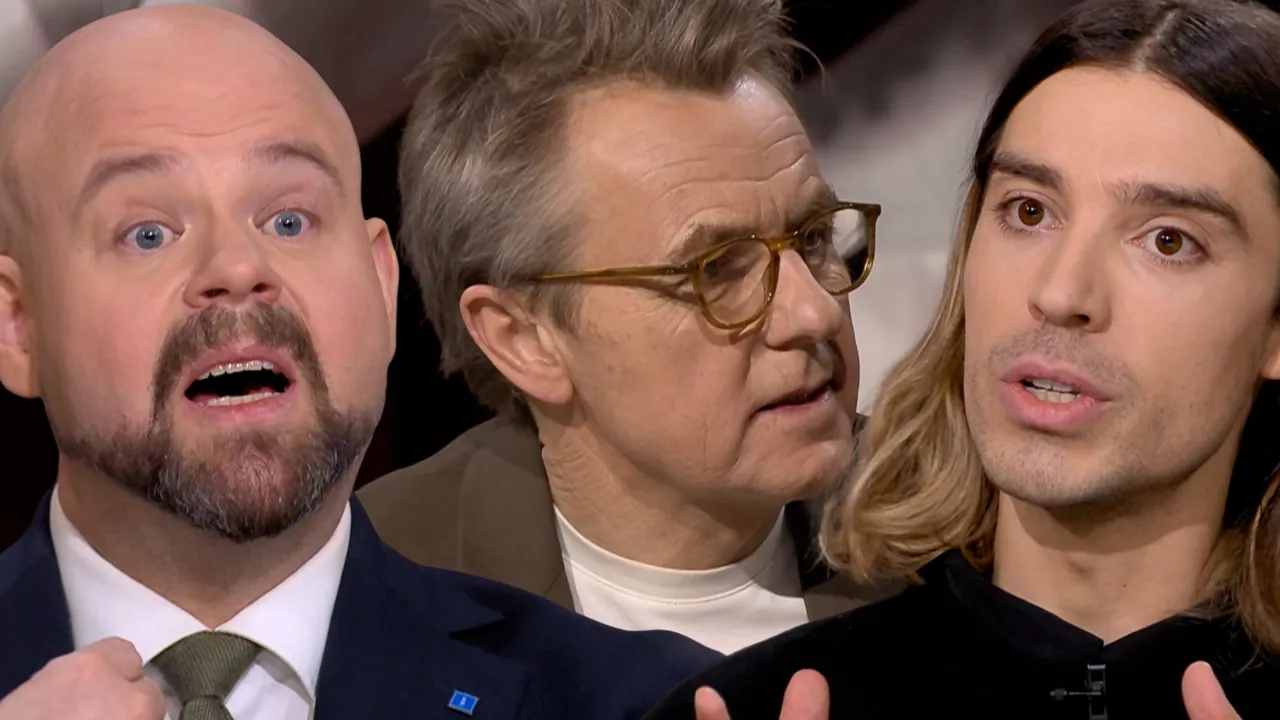
Ed Winters, thank you. I I I read that you said somewhere that vegans might have an optics problem, right? What do you mean by that?
Well, I think that one of the biggest hurdles to people thinking more favorably of veganism is how people think towards us. I think often what happens is people shoot the messenger because it's easier to do that than maybe argue against the message of veganism. And so I sometimes think that when people think of vegans, the first thing they do is sort of roll their eyes and think, "Oh, these people again, they're going to force their views down my throat and tell me I'm an evil person because I'm not vegan.
" And I just think that it's really important for us as vegans to to hopefully present our arguments in in a logical, rational way, but also come across as as nuanced, reasonable people. And I think doing that can go a long way in convincing people of of the merits of what it is that we try to represent. So, but do you think that that as some of us eat meat here?
Yeah. Do you think that we need some kind of denial just to be able to not not look at these uh I mean, is denial the premise for for eating meat? I think it's willful ignorance and denial is part of that.
I I think it's I think it's also the case that people don't know. I mean, for example, almost 100% of pigs in Sweden are killed in gas chambers where they're they're forced into a chamber that's filled with with carbon dioxide that causes them to hyperventilate, have the fear of people know that. That's the problem because if you do know that, you've then got to come to the conclusion that either that's ethical to force animals into gas chambers or it's not.
And if it's not ethical, then you have to change. But first of all, Peter, is this is this the right description of of Swedish meat production? Well, firstly, uh in Sweden, we in opposite to a lot of other European countries, we have a we have a pretty high animal welfare.
Of course, I don't think we will uh agree on that because in the end uh the animal will be uh uh killed and will be food. Uh but on their way there uh for me and for for the government it's uh of course important that we have uh have as good journey as as possible. But do you accept that those animals end up in gas chambers which does cause them unnecessary suffering?
You talk about the journey but what about when they're there? That's uh one of the methods. It's not the method in in every slaughter house, but for almost every pig in Sweden, it is.
Yes. And we are actually looking into that. Uh and we have given uh giving the authorities uh the possibility to to change this as well.
Do you think it's unethical? Well, that's actually a bigger question. Uh I eat meat.
uh and and of course you can always uh end up in a conclusion that uh that kindling an animal uh for the purpose to eat it is unethical. Uh but uh that's the way uh it is. If we are going to eat them, yes, we will have to kill them.
But of course, the question the question was, do you think that gas chambers are unethical? I I want I want slaughter houses to have the best uh most effective That's not the question. Do you think that gas geners are unethical?
I think I think it was a yes or no question after all. Yeah. And I'm a politician, so uh please let me uh uh we are looking into it.
Uh I'm not What do you think? I'm not the expert. But what do you you pay for it through your everyday choices?
Then then I would ask him because he's he's the chef here. He buys a lot of meat. But then also Peter's in government and he's the one who makes decision.
That's why you can't get a yes or no. But is that does that not make a mockery of the whole system that that politicians who are representing these industries can't answer simple questions? If you can't even say yes or no, how can we trust you to legislate effectively?
The main purpose for me uh is that we do it as effectively as we can. uh and we are actually looking into uh just this issue. But just for the record, do you don't want to answer his question, right?
I don't think it's my role to say yes or no before because before I have privately just privately, not in your role, but that's easy to say. Uh I'm never private. But you're the Minister of Agriculture.
People turn to you. You've sat here tonight and you've made claims about the meat industry, claims that Swedish farming is ethical, that you like meat and a meat is an okay product to eat and you don't find it immoral. But I'm asking you a very specific question and because you don't want to answer it, all of a sudden you can't speak about your own personal opin opinion, but you've done that all throughout this show so far.
But I can I say something? Um, I think it's so good that that guys like you help uh the industry to become better because I I'm not an expert of of guessing uh the pigs. Uh I don't know.
Uh I heard from Heliana that um they are feeling uh feeling a lot of things during the gas process and I think of course we shall not do that. We so it's so good that you are here to help us improve uh stop serving it. Will you stop serving pig meat then?
I I I I I actually uh don't serve that much pigs. But you do serve pigs. So will you serve?
Absolutely. No, I will not. So it's wrong.
We should improve. You're grateful I'm here, but you're not going to do anything about it. Yeah, we are.
We of course we are going to do something about So you're going to stop serving pig meats? Can I ask? You know, I cannot win this this this.
It's not about winning, it's about consistency. And I think if we sit here and we acknowledge there are problems and we acknowledge there are things that need to change, that the least we can do is then own up to our our own responsibility in that change. And if you sit here and you say, look, you're not happy with it.
You weren't aware of it. You've you've maybe learned some things. The question then becomes, well, what do you do with that new information?
Is there a better way to kill the pigs? And which way is that? Well, it would be not killing them, not farming.
That's okay. But if you have to kill them, what's the We don't have to kill them. But if you have to, if you want if you want to kill a pig, but if you want, let's be let's be clear here.
Some people want to eat meat. Some people want to So, how should they kill the pig? Well, they shouldn't kill the pig.
Exactly. But if they really want to kill that pig, they shouldn't kill the pig. I mean, this is the thing we've got to you keep using the word want, and that's the most fundamental word in all of that, want.
We want to do these things to animals. We don't have to. We don't need to.
We want to. And I think it's I think it's quite scary when we talk about causing so much suffering, so much harm, so much pain, so much fear for a want for for for a meal, a 15minute meal, a a a taste bud sensation, a sensory pleasure moment. Alexandra, are you back at vegetarianism now?
Yeah, I kind of want to. It feels so bad that I'm going to the store and buy some ham just like you're saying for 15 minutes of fun or whatever. Yeah, I'm a hypocrite.
I I I I think that it's fair to say though that the trend is not in your direction now. People are eating more meat and here in Sweden obviously young people are also tend to eat more meat. Yeah.
What do you think about that? Well, I think there has been a little bit of push back in in more recent years. I think that ties into sort of a wider push back against a lot of maybe quote unquote progressive woke things, you know, things that kind of go against maybe some of the more populist right-wing governments that are that are finding themselves in in in Europe and elsewhere.
Do but do you think that u a person uh who's a vegetarian is living an ethical life? No, I I mean I advocate for veganism because I think dairy and eggs are just as immoral as meat. is just as bad as just as bad.
Yeah. It's the same thing. It's exploitation of animals.
There's slaughter houses at the end of their lives. And within that, there are there are a number of cruel practices. Dairy cows forcibly impregnated that their babies taken away from them almost immediately after they've been born.
Mother cows calling out for their their offspring that have been taken from them so that we we can drink their milk, the milk from from a different species that's meant for their offspring, but we take their offspring away so that we can breastfeed from their mother instead. I it it it's absurd, but it's also just deeply wrong. And that that's why veganism is is the ethical conclusion, not not just vegetarianism.
I mean the tribes in in in Africa that lives with the cows uh you don't think and and a part of of of of them living with the cows is that they during the the cow's lifetime they give them the family milk and in the end uh when it doesn't give them any more milk they kill it and eat it because they need it they need the energy because otherwise probably they they they don't have food on the table. What do you think about that? Well, the word that you used then was need it.
And that that sort of goes what I against what I was saying earlier, want it. There's a difference between a need and a want. There are undeniably people in this world who can't be vegan, who rely on animal protein for survival.
I'm not here to argue against those people. I'm here to make the case that those of us who can should feel morally compelled to do so. Could this be like it's um like it's a part of a culture war?
Yeah, maybe. uh and and like like a statement uh like you began with uh a lot of people I think have felt that that uh um from the vegan side uh it has been a lot of uh demanding uh and actually I I feel it a little bit like that uh here even if you started the way you did uh that you are right and and uh 95% of the Swedish people are are wrong with eating meat eat uh and and and maybe that's a reaction uh to something uh like that because uh food is very political uh in Sweden we have for uh for decades have uh political influences who has driven like the school lunches in in Sweden to be more vegetarian. Uh it started with a day per per month maybe now it's one two three days uh every week.
Uh and and of course and this was not your idea. That was not my idea. Uh and maybe uh you have you have pushed it a little bit too much.
Uh and then you you get a reaction. Uh that's is this the optics problem? Well, I think to be fair, I don't think that 95% of of people in Sweden are wrong in the sense of that they're bad people.
And that's what I think is really important to sort of say about this. someone isn't a bad person because they they eat animal products. You know, animal products are marketed to us all the time, every single day.
We were raised eating animal products. It's legally allowed for us to eat animal products. So, I'm not here to argue and and try and position myself as being the good person.
Everyone else is the bad person. That's that's not the point. But it's also really important that we do come to terms with the truth and reality of this because then we can make better decisions.
And just the point on the school meals, you earlier you were talking about going to experts, going to to to advisers, but the Swedish Food Agency advocates for people to eat fewer animal products. They're part of the the school meals that that you're against. And so on the one hand, you were saying earlier about going forward with with evidence and with advice, but on the other hand, you're rejecting the evidence and you're rejecting the nutrition guidelines that your own food and nutrition authorities in this country are advocating for.
you now you are putting words in my mouth. Uh I I haven't said that. Uh I wanted a broader perspective when we uh uh outlined these uh these guidelines and that's a difference.
Uh but but my point here is that political views has changed the way we are serving meals in school. That's not driven only by by experts saying this or that. It's it's driven uh by a political view from do you agree with that that it's it has to become politicized.
I think it's only become politicized if you think that science is politicized. If if we take the the Nordic uh guidelines we are we are doing this in a Nordic perspective. uh the task that the that scientists were given were given by government in that time it was almost uh green uh green government so you don't believe in that science absolutely I do because I I I believe from uh from the mission they got from the governments yeah but you say that the mission was politicized right yes of course mission itself but that would be fine if it only in Nordic countries, but we're seeing the same in the UK, we're seeing the same in Canada, we're seeing and we have and we have the guidelines.
Uh and and we have the knowledge, but from from my political perspective, all I'm saying when it comes to school meals, I want the children to be able to choose. And that's the thing, you know, sometimes we think about going vegan and we think that it means giving up on on some of our, you know, favorite foods and it means that we won't enjoy food. But that's not the case.
There are plenty of delicious plant-based foods, and it's actually an opportunity to discover new flavors, try different ingredients, and expand your your pallets. I love vegan food also. Yeah.
Yeah, it's good. Um, but I have to have a little of the romantic side also. I I think there is nothing better to eat than a piece of grilled grilled steak.
Is is sensory pleasure, so taste enjoyment, does that morally justify what we do to animals? And here we go again. But thank you so much, Ed, Ed Ed Winters, ladies and gentlemen.
Thank you so much.








![Lazy Sunday 💤 [lofi hip hop]](https://i.ytimg.com/vi/zFhfksjf_mY/mqdefault.jpg)