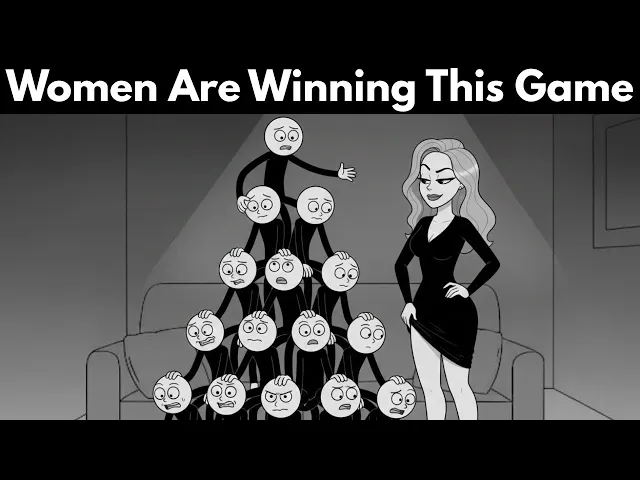
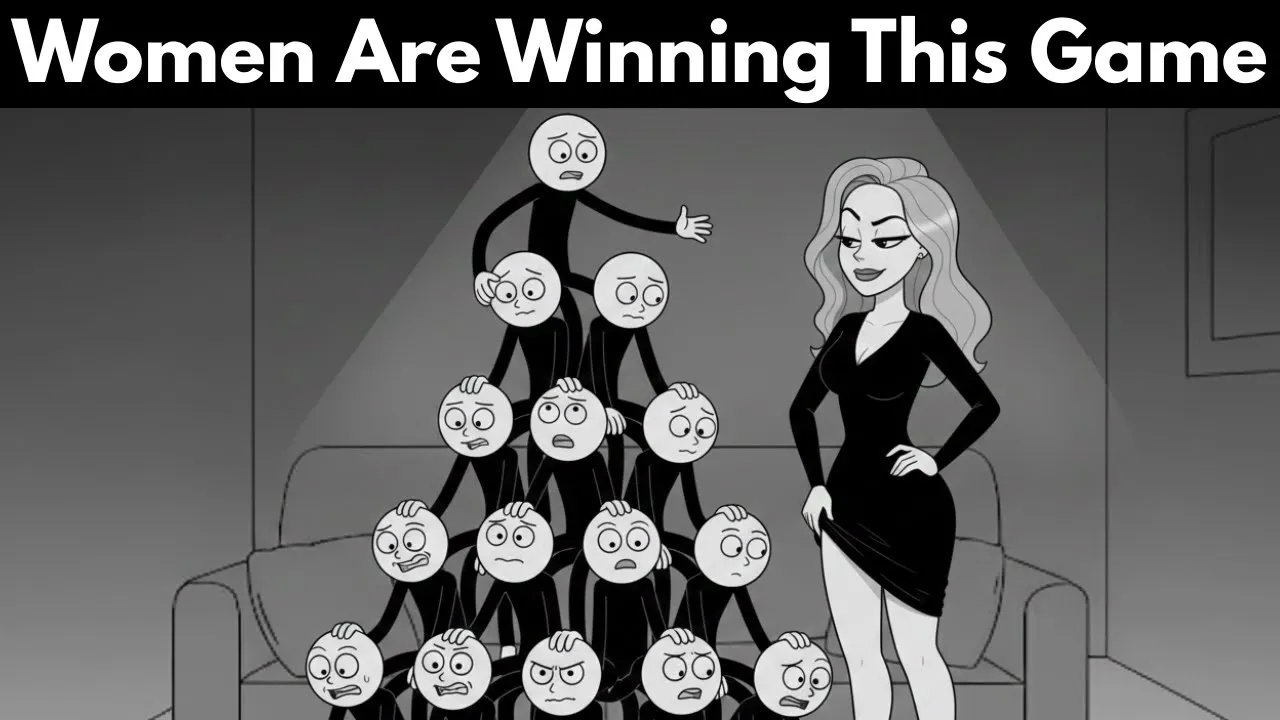
There's an invisible economy running beneath every interaction between men and women. And most people don't even know it exists. Every text message, every date, every compliment, every relationship, they're all transactions in a marketplace where the currencies are completely different.
Men trade resources for access. Some women trade access for resources. But here's what nobody talks about.
The exchange rate is rigged. And men don't even know they're playing with counterfeit money. Let me explain how desire itself has become weaponized and why men keep losing a game they don't understand.
Relationships are value exchanges whether we admit it or not. This isn't cynical. It's observable reality.
Every relationship involves trading something you have for something you want. The problem is that men and women value completely different things. And pretending otherwise has created a massive imbalance that nobody wants to acknowledge.
Men primarily trade resources. And I'm not just talking about money. Resources include time, attention, emotional labor, protection, problem solving, validation, effort, commitment.
These are the chips men bring to the table. Some women bring sexual access, emotional intimacy, companionship, beauty, status. These are their chips.
But here's where it gets interesting. The value of these chips isn't equal, and it changes based on who's holding them. I had a client who mapped out his relationship like a business analyst.
He calculated he spent 30 hours a week on relationship maintenance, planning dates, listening to problems, providing emotional support, handling logistics, earning money. His girlfriend, she showed up. That was her contribution presence.
And society told him he was lucky to have her. The exchange rate was 30 to1 and he was supposed to be grateful. The term resources needs redefining because some women have figured out how to extract resources most men don't even know they're giving.
Attention is a resource. Validation is a resource. Emotional availability is a resource.
Mental space is a resource. These aren't free. They cost men energy, time, and opportunity.
But we've been programmed to see them as obligations rather than contributions. Think about the attention economy for a moment. A man gives his attention to one woman, texts her good morning, remembers her stories, plans thoughtful dates.
That attention has value. Meanwhile, she's receiving attention from him, her 500 Instagram followers, her orbiters, her backup options, her male friends. She's attention rich while he's attention poor.
But nobody talks about this wealth inequality. Sex and attention operate as reinforcing goods, but they work completely differently. For men, sexual access is the primary reinforcer.
It's what motivates much of male behavior, drives competition, fuels ambition. For some women, attention is the primary reinforcer. It validates, energizes, and motivates.
Understanding this difference explains almost everything about modern dating dynamics. Here's where the imbalance becomes obvious. Some women can get their most reinforcing good, attention, from unlimited sources without giving anything in return.
Social media provides endless validation. Orbiters provide constant attention. Male friends provide emotional support.
She's getting her needs met from a dozen sources. Meanwhile, men in monogous relationships get their most reinforcing good, sex, from exactly one source. See the problem?
Modern dating dynamics reflect this imbalance perfectly. Men jump through increasingly elaborate hoops trying to meet stated preferences. Be emotionally available.
So they open up, show effort, so they plan elaborate dates, be supportive, so they become emotional tampons. But these behaviors don't actually lead to sexual access. They lead to friend-zone, to you're like a brother, to I'm not ready for a relationship right now.
Meanwhile, men who ignore these stated preferences often succeed. The guy who doesn't text back immediately gets responses. The guy who doesn't plan elaborate dates gets second dates.
The guy who maintains emotional distance gets pursued. Some women claim to want one thing but respond to another. And men who notice this pattern are called misogynists for pointing out observable reality.
I counsel men who've spent years trying to be what women say they want, only to watch those same women choose men who embody everything they claim to hate. She says she wants emotional availability but dates the guy who won't define the relationship. She says she wants consistency but chases the guy who disappears for days.
The gap between stated preferences and actual behavior isn't a bug. It's a feature. The asymmetrical value exchange in relationships is staggering.
A man commits his resources exclusively to one woman. His money, time, attention, effort, all focused on her. She commits her sexual access to him, but her attention that's spread across social media, male friends, orbiters, backups.
He's all in while she's diversified. It's like comparing someone with their life savings in one stock versus someone with a balanced portfolio. This creates a fundamental power imbalance.
If the relationship ends, he loses his only source of sex and intimacy. She loses one source of attention among many. He has to start from zero.
She has a safety net of validation already in place. The risk isn't equal, so the power isn't equal, but we pretend it's a partnership of equals. The optionality and monopoly dynamics are brutal for men.
In monogous relationships, men grant exclusive sexual access, a monopoly. Some women grant what exactly? Partial attention.
They maintain Instagram followers. Textmail friends keep orbiters warm. They have options while demanding exclusivity.
It's like signing an exclusive contract while the other party remains a free agent. A client discovered his girlfriend of 3 years had seven guys she regularly texted for attention and validation. not cheating, just friends.
When he expressed discomfort, she called him controlling and insecure. But imagine if he had seven women he texted for sexual validation. The relationship would be over instantly.
The double standard isn't just accepted, it's enforced. Relationship boundaries reveal power dynamics clearly. Men's sexual exclusivity is non-negotiable, monitored, enforced.
Even looking at another woman is betrayal. But some women's attention seeking, that's just being social or having friends. She can pose thirst traps for thousands of strangers, but if he likes another woman's photo, it's a relationship crisis.
The boundary conversation itself is telling. When a man tries to establish boundaries around external attention seeking, he's labeled controlling, insecure, toxic. When a woman establishes boundaries around sexual exclusivity, she's just having standards.
The same protective instinct is pathized in men but celebrated in women. Social reinforcement of these dynamics is everywhere. Movies, TV shows, social media all reinforce that male jealousy is toxic while female jealousy is justified.
A man uncomfortable with his girlfriend's male friends is insecure. A woman uncomfortable with her boyfriend's female friends is protecting her relationship. The narrative is consistent.
Male concerns don't matter. Some women have weaponized this social reinforcement. They know society will support their right to unlimited attention while condemning male attempts to limit it.
They can maintain harams of orbiters, backup options, and emotional validators while demanding total exclusivity from their partners. And if he objects, he's the problem, not the imbalanced arrangement. The implications for modern romance are staggering.
Men enter relationships thinking they're trading exclusive resources for exclusive access. Instead, they're trading exclusive resources for partial access while competing with unlimited sources of attention. It's like paying full price for a time share while being told you bought the whole property.
The sexual marketplace has shifted dramatically because of these dynamics. Some women can access attention from thousands of men simultaneously through social media. They're attention millionaires.
Meanwhile, average men struggle to get matches on dating apps. The wealth inequality in the attention economy makes financial inequality look balanced. A young woman today can wake up to hundreds of likes, dozens of messages, constant validation.
She's experiencing attention abundance that previous generations couldn't imagine. Meanwhile, the average man experiences attention scarcity that's also historically unprecedented. This imbalance shapes every interaction, every relationship, every dating dynamic.
The practical insights from understanding these dynamics are gamechanging. First, recognize that equal doesn't mean fair. Trading exclusive resources for non-exclusive access isn't equal.
Second, understand that some women's primary need, attention, can be met without you, while your primary need requires her participation. This asymmetry defines the relationship's power structure. Here's what a balanced arrangement might actually look like.
Exclusive sexual access for exclusive attention. No Instagram validation seeking, no orbiter maintenance, no backup emotional support from other men. But suggest this and watch the outcry.
That's controlling. No, that's equal exchange. The fact that it seems extreme shows how normalized the imbalance has become.
Men need to understand that attention is currency and some women are extracting it without reciprocating value. Every good morning text, every emotional support session, every validation you provide, it has worth. Stop giving it away for free to people who wouldn't give you their equivalent currency.
The broader economic principle here is simple. Scarcity creates value. Men's attention has been devalued because men give it too freely.
Some women's sexual access maintains value through scarcity. But here's the shift. Some men are starting to understand this and adjusting accordingly.
They're making their attention scarce. And some women are panicking. I see this with clients who implement attention restriction.
They stop texting first, stop providing constant validation, stop being always available. Suddenly, women who took them for granted are interested. Women who had them in the friend zone are reconsidering.
Why? Because scarcity created value where abundance created indifference. The validation economy particularly benefits some women.
A woman posts a photo and receives hundreds of likes. Each like is a micro dose of validation, a tiny hit of attention. She's getting her emotional needs met by strangers on the internet.
Meanwhile, her boyfriend, who provides actual support and resources, gets taken for granted because his attention isn't scarce. It's guaranteed. The economic principles at play are fascinating.
In any market, whoever has more options has more power. Some women have effectively created attention monopolies while maintaining sexual scarcity. They're the OPEC of the dating world, controlling supply while demand remains constant.
Men need to understand they're negotiating from a position of manufactured weakness. The nice guy phenomenon makes sense through this lens. Nice guys flood the market with free attention and resources, hoping for sexual access.
They're giving away their currency while hoping for reciprocation. But why would someone pay for something they're already getting for free? The nice guy isn't actually nice.
He's economically illiterate. Meanwhile, bad boys understand the economy intuitively. They make their attention scarce, their commitment uncertain, their resources conditional.
They're not giving away value for free. And surprisingly, they're more successful. Not because women like being treated badly, but because scarcity creates value and abundance creates indifference.
The orbiter phenomenon is particularly interesting economically. Some women maintain multiple men who provide attention, validation, emotional support, sometimes even resources without providing sexual access. These men hope proximity will eventually lead to opportunity.
They're investors hoping for returns that will never come while she's collecting dividends without selling shares. I had a client who was orbiting a woman for 2 years. He calculated he'd spent over $5,000 on dinners, gifts, and experiences as friends.
She knew he wanted more, but kept him around for attention and backup. When she started dating someone else, she still expected the friendship to continue unchanged. He finally understood he was subsidizing another man's relationship.
The backup plan dynamic is crucial to understand. Some women maintain multiple men at various stages of romantic potential. The main boyfriend, the work flirt, the gym crush, the ex who still texts, the friend who's waiting.
She's diversified her emotional portfolio while expecting his complete investment in her. It's hedge fund management versus putting everything in a savings account. Social media has transformed these dynamics exponentially.
Instagram and Tik Tok have created attention inflation. What used to require actual interaction now happens passively. A woman can wake up to more validation than her grandmother received in a year.
This abundance has devalued male attention while maintaining female sexual scarcity. The dating app data reveals the imbalance starkly. Some women swipe right on less than 5% of men while men swipe right on 50% of women.
Basic supply and demand tells us who has more power in this market. Yet we pretend the playing field is level, that everyone has equal opportunity, that the market is fair. The marriage market reflects these same dynamics.
Some women's requirements have increased, height, income, status, looks, while their offerings have decreased. Many modern women can't cook, don't want children, aren't interested in homemaking, yet expect traditional provision. They want 1950s male investment for 2024 female contribution.
A client recently showed me his girlfriend's requirements for marriage. He needed to make six figures, be over 6 ft tall, own a house, drive a nice car. Her contributions, she'd be there for him.
The exchange rate was so imbalanced, it was almost parody, but she was serious. And because of the attention economy, she could maintain these standards. The commitment paradox is real.
Men commit resources hoping for exclusive access. Some women accept resources while maintaining options. He's building a life with her while she's keeping her options open.
He's investing in the relationship while she's hedging her bets. The asymmetry in investment creates asymmetry and power. The emotional labor gaslight is particularly manipulative.
Some women claim they provide emotional labor that justifies the resource imbalance. But examine it closely. Whose problems are being discussed?
Whose emotions are being processed? Whose drama dominates the relationship? Often the emotional labor is just her talking about herself while he listens.
I see men who become emotional support systems while receiving no emotional support themselves. They listen to her work drama, friend problems, family issues, but when they need support, you need to be strong. Man up.
I can't handle this right now. The emotional exchange is as imbalanced as the resource exchange. The friend zone economy is brutal.
Men invest resources, time, attention, emotional support, hoping for romantic returns. Some women extract these resources knowing romance will never happen. It's like selling lottery tickets you know will never win.
The hope keeps them buying, but the house always wins. The transformation happens when men understand the economics. Once you see relationships as value exchanges, you can't unsee it.
You start evaluating what you're giving versus what you're getting. You start recognizing bad deals. You start walking away from negative ROI relationships.
Some clients implement what I call attention austerity. They dramatically reduce the attention they provide while maintaining their standards for what they receive. No more good morning texts without reciprocation.
No more emotional support without equal exchange. No more one-sided investment. The results are immediate and telling.
Some women who took these men for granted suddenly become interested when attention becomes scarce. Women who had them friend-zoned suddenly see them differently. Why?
Because scarcity created value. The same man providing the same resources becomes more valuable simply by making those resources less available. The cultural programming that enables this imbalance is profound.
Men are taught that providing resources without reciprocation is being a gentleman. that expecting equal exchange is transactional, that wanting their needs met is selfish. Meanwhile, some women are taught their presence alone is sufficient contribution.
Movies and media reinforce this constantly. The man who gives everything and expects nothing is romantic. The woman who demands everything while giving nothing is empowered.
We've romanticized imbalanced exchange and demonized equal expectation. The programming is so deep most people can't see it. The biological argument is often used to justify the imbalance.
Women risk pregnancy, but we have birth control. Women are more vulnerable, but we have laws and protection. Women have limited fertility windows, but men have limited resource-building windows.
The biological arguments made sense 10,000 years ago, less so today. The real power dynamics become clear in divorce. She gets half his resources plus ongoing support.
He gets nothing. No ongoing access, no return on investment, no compensation for resources provided. The exchange that was already imbalance becomes complete extraction.
Yet men are still lining up for this deal. Young men are starting to recognize these patterns and adjust. They're seeing the math doesn't work.
Exclusive investment for non-exclusive return. Bad deal. trading appreciating assets, resources for depreciating assets, youth, beauty, bad investment.
The new generation is doing the calculation and walking away. The where have all the good men gone articles miss the point entirely. Good men haven't gone anywhere.
They've just recognized bad deals. They're not avoiding commitment. They're avoiding exploitation.
They're not afraid of strong women. They're aware of imbalanced exchanges. Some women who understand these dynamics do something interesting.
They provide equal value. They offer exclusive attention along with exclusive access. They reciprocate resources with resources.
They create balanced exchanges. And unsurprisingly, these women have no trouble finding or keeping high-V value partners. I know a couple where both partners understand the economy.
He provides resources and attention exclusively. She provides access and attention exclusively. Neither maintains backup options.
Neither seeks validation elsewhere. It's balanced exchange and their relationship is rock solid because both parties are getting fair value. The solution isn't to stop all exchange.
That's impossible. Every relationship involves trade. The solution is awareness and honesty about what's being exchanged.
Stop pretending resources don't matter. Stop pretending attention isn't currency. Stop pretending the exchange is equal when it's clearly not.
Men need to start valuing their resources appropriately. Your time has worth. Your attention has value.
Your emotional support isn't free. Your commitment costs something. Stop giving away premium goods at discount prices to people who don't reciprocate wholesale.
The market correction is already beginning. Some men are becoming attention scarce. Some women are panicking about no good men.
Dating apps are seeing engagement drop. Marriage rates are plummeting. The market is correcting from decades of imbalanced exchange.
And those who benefited from the imbalance are upset. The entitlement revelation is harsh but necessary. Some women feel entitled to resources without reciprocation because they've always received them.
From childhood, they've been given attention and resources just for existing. The idea of equal exchange seems unfair because inequality has been their norm. A client's ex-girlfriend perfectly exemplified this.
She expected him to pay for everything, plan everything, provide everything while she existed. When he asked what she contributed, she was genuinely confused. Her presence was her contribution in her mind.
She'd never been asked to provide equal value and saw the request as insulting. The social proof economy adds another layer. Some women's value increases when high-v valueue men invest in them.
His resources become her status symbols. His attention becomes her social proof. She gains value from his investment while providing minimal return.
It's value extraction disguised as relationship. The Instagram boyfriend phenomenon shows this clearly. He becomes her personal photographer, content creator, validation generator.
His resources, time, effort, creativity become her social media capital. She gains followers, likes, validation from his investment. The return she allows him to continue investing.
The attention arbitrage some women run is sophisticated. They collect attention from multiple sources, aggregate it into social and emotional capital, then leverage that capital for more resources. It's brilliant economically but devastating relationally.
Men become unwitting investors in a fund that never pays dividends. The exclusive versus non-exclusive dynamic needs to be addressed directly. If sexual access is expected to be exclusive, attention should be too.
If resources are provided exclusively, they should be reciprocated exclusively. The current model, exclusive male investment for non-exclusive female return, is unsustainable. Some women who complain about modern dating created the very dynamics they hate.
By maintaining attention her, they taught men that attention has no value. By demanding resources without reciprocation, they taught men to withhold investment. By creating imbalanced exchanges, they inspired men to seek balance elsewhere, often through withdrawal.
The optimization strategy for men is clear. Make your attention scarce and valuable. Invest resources proportional to return.
Demand reciprocal exclusivity. Recognize bad deals and walk away. Understand the real economy underneath the romantic facade.
Stop subsidizing other people's attention wealth while remaining attention poor yourself. The behavioral economics are predictable. When men provide abundant attention, its value drops.
When some women restrict sexual access, its value rises. But men are learning to restrict attention just as some women restrict access. The game theory is evolving, and those who played with house rules are finding the house odds changing.
A client implemented strict attention economics. Every text she sent, he matched but didn't exceed. Every emotional support session she provided, he reciprocated but didn't overgive.
Every resource he invested, he expected equal return. His girlfriend initially resisted but eventually respected the balance. The relationship improved because exchange became fair.
The cultural shift required is massive. We need to acknowledge that relationships are exchanges, that attention is currency, that resources matter, that exclusivity should be reciprocal, that equal exchange isn't transactional, it's fair. But this challenges narratives that benefit from imbalance, so resistance is fierce.
The false romanticism needs to die. The idea that men should invest everything while expecting nothing isn't romantic. It's exploitation.
The notion that some women's presence alone is sufficient contribution isn't empowering. It's entitlement. Real romance exists within balanced exchange, not despite it.
The validation economy has created attention inflation. What satisfied previous generations doesn't register now. A loving husband's attention can't compete with hundreds of Instagram likes.
A committed partner's validation pales against thousands of Tik Tok views. Some women are addicted to attention at levels that no single man can provide. This creates an impossible situation.
Men compete against not just other men, but against the entire internet's ability to provide validation. It's like a small business competing against Amazon. The scale difference is insurmountable.
Yet men are expected to satisfy attention needs that have been inflated beyond reasonable provision. The practical advice for men navigating this economy is straightforward. First, recognize the exchange dynamics.
Second, value your resources appropriately. Third, demand reciprocal investment. Fourth, walk away from bad deals.
Fifth, find partners who understand and respect balanced exchange. Some women reading this will be angry because it exposes comfortable imbalances. Others will recognize truth and adjust accordingly.
The smart ones understand that balanced exchange creates sustainable relationships while imbalanced extraction creates resentment and withdrawal. The generational impact is already visible. Young men who watch their fathers get destroyed in imbalanced exchanges are choosing differently.
They're protecting their resources, restricting their attention, demanding reciprocation. They're rewriting the rules because the old rules led to exploitation. The marriage strike isn't about fear of commitment.
It's about recognition of imbalanced exchange. Why enter a contract where you provide everything and receive partial return? Why invest in someone who maintains other options?
Why commit resources to someone who won't commit attention? The math doesn't work. Some successful women complain they can't find partners, but look at their offer.
They want traditional provision despite having their own resources. They want exclusive investment while maintaining attention options. They want commitment while keeping backups.
They're offering 2,24 terms while demanding 1950 benefits. The resolution requires honest acknowledgement. Relationships are exchanges.
Attention is currency. Resources matter. Exclusivity should be reciprocal.
Some women benefit from men's desire through imbalanced exchange. Recognizing this isn't misogyny. It's mathematics.
The sustainable model is simple. Equal exchange of primary currencies. Men primarily value sexual access and should provide resources.
Some women primarily value resources and attention and should provide exclusive access and attention. Both parties invest exclusively and receive exclusively. It's balanced, fair, sustainable.
The current model where men invest exclusively while some women maintain options is dying. Not because men are weak or afraid, but because they're recognizing exploitation. They're understanding the economics.
They're seeing the imbalance and they're walking away from bad deals. The correction will be painful for those who benefited from imbalance. Some women who extracted resources while maintaining options will find themselves without either.
Women who demanded everything while providing little will discover men have stopped offering. The market will correct as all markets do. But for those who embrace balanced exchange, the future is bright.
Relationships based on fair trade last. Partners who invest equally stay committed. Exchanges that benefit both parties create stability.
The economy of desire doesn't have to be exploitative. It can be equitable. The ultimate truth is that some women have weaponized men's desire to create imbalanced exchanges that benefit them disproportionately.
They've turned the attention economy into extraction while maintaining sexual scarcity. They've demanded exclusive investment while providing non-exclusive return. But men are waking up to the economics and the game is changing.
The message to men is clear. Understand the economy. Value your resources.
Demand reciprocation. Walk away from exploitation. The message to women is equally clear.
Balanced exchange creates sustainable relationships while extraction creates withdrawal. The days of imbalanced benefit from men's desire are ending. I want to hear from you guys.
What imbalanced exchanges have you experienced? When did you realize attention was currency? How did recognizing these dynamics change your relationships?
Drp your stories in the comments. Let's expose the real economy of desire and help men understand their true value in the marketplace. Because once you see the game, you can choose whether to play, how to play, or whether to walk away entirely.