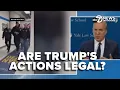
. And back now to the U. S.
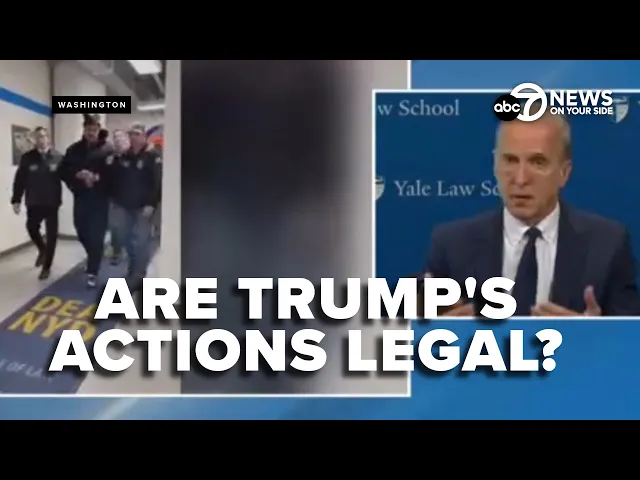
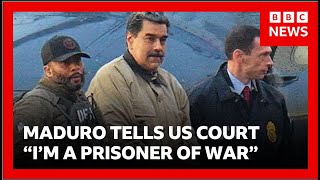
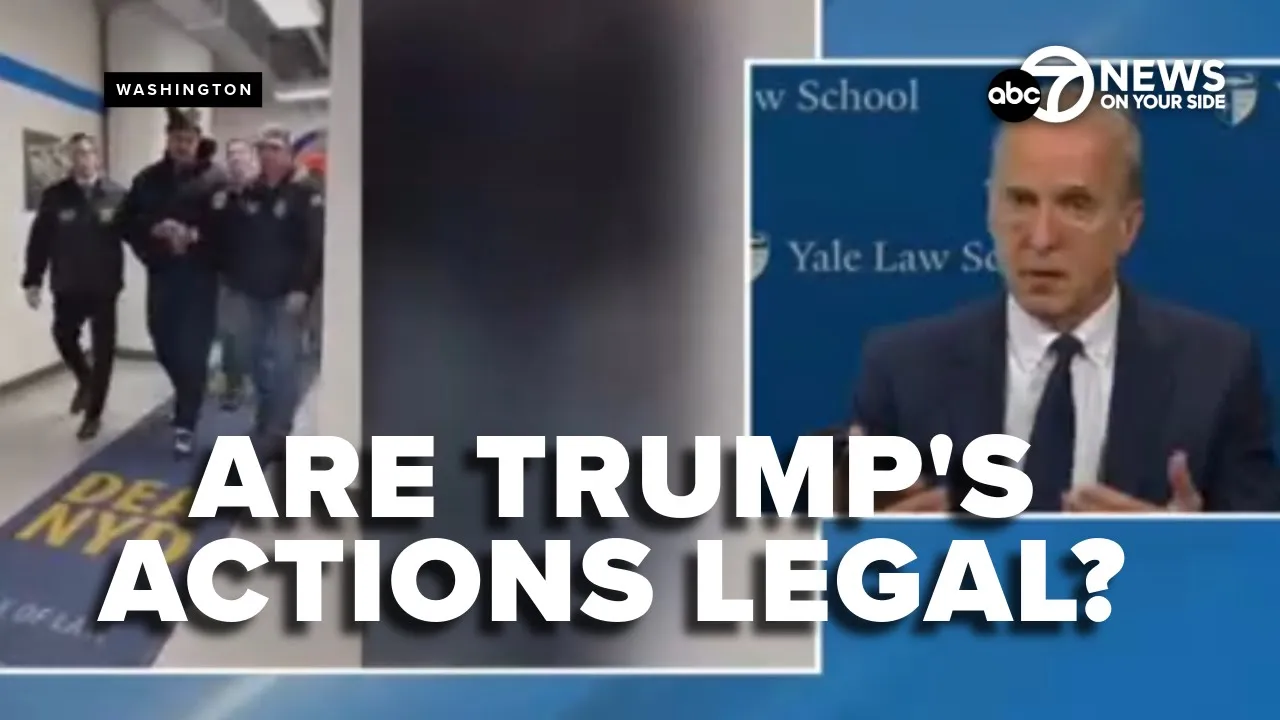
attack on Venezuela and the capture of the country's president, Nicolas Maduro and his wife, Maduro, who is being held in jail in New York City, made his first court appearance today. This afternoon, facing drug trafficking charges and more than 48 hours after the operation was carried out, one question that's being debated is whether President Trump's actions were legal. And our next guest says the answer to that question is almost certainly yes .
Joining us now is Jed Reuben, professor of constitutional law at Yale Law School. Professor, thank you so much for taking the time to be with us this afternoon. Thanks for having me.
Glad to be here. And first, you have a piece out in the free press. You explain how the move has already drawn ire from Democrats who are calling it a legal.
You write quote. But what does the law actually say? You compare this to Panama.
Please explain the similarities for us, professor. Well, you know, people may have forgotten, but the parallel with with Panama is just so striking. So back.
I guess it was like 1989. Uh, Bush , the first President Bush sends troops into Panama, grabs the dictator of Panama, uh, Noriega. And, uh, pulls him out of the country, sends him up here to be prosecute it for drug trafficking.
It's so similar. And, you know, Noriega made every argument he could think of his lawyers. Did you know you're violating a treaty?
I'm a head of state, so I'm immune. You know, the my arrest, my was a kidnapping. It was an abduction .
He made all those arguments same arguments for sure that Maduro was going to make. And the courts rejected them all and said, no, no, no, none of those arguments work. So I think, uh, Maduro is kind of dead in the water from that point of view.
I don't think any of his arguments to get out of get out from under this prosecutor can possibly succeed. By the way, it doesn't mean the government still has to prove its case. They got to prove beyond a reasonable doubt.
Uh you know that that he trafficked in drugs. But just terms of all these arguments you could try to make to get out from under the prosecution. I think he's dead in the water.
Uh, all that's different from you could ask question. Yeah but does the president have the power to, uh, the constitutional authority to go into a country like that, to go into Venezuela ? La can he send troops in?
And, you know, that's that's a, uh and does he have the power to stay there and run the country as he said, those are are murkier questions. But, you know, under existing precedents , presidents have been doing this kind of thing. I mean, engaging in hostilities against foreign countries for decades now with no congressional approval.
I mean, again, folks might not remember, but Clinton bombed Yugoslavia. Obama bombed Libya all without congressional approval. Basically for the last hundred years, presidents have been doing this more and more.
And whatever you might think about what the Constitution should be read to mean, you know, nowadays that's the norm. Presidents can, uh, uh, engage in hostilities against foreign countries kind of with legal impunity without Congress's consent. As long as, you know, they don't engage in a war and send troops in and stay there for a long time.
Now, if, if Trump tries to do that, that's and, you know, uh, he said they're going to run the country for the foreseeable future. Then we got a different question, and he's got to get congressional approval under the War Powers Act. So that's going to be a different matter, different question in different definitions.
And you go into this, uh, in your piece you talk about and you mentioned it there, the rule of recognition when it comes to any foreign government, which leaders the U. S. recognizes as legitimate, why the US can't just go in and unseat any ruler of any country.
We want, you know, talk to us about what you write there. And you kind of alluded to it about how recognition factors and will factor into this case. The argument the U.
S. is making for this. Yeah, what's going to happen is Maduro is going to say, you can't prosecute me.
What what are you doing? Everybody knows that heads of state are immune from prosecution. That's been a principle for 200 years in America.
Ahead of state cannot be prosecuted criminally in a foreign country. So Noriega said that. His lawyer said, then you got to let me go.
You can't prosecute me. But the government said, what are you talking about? We have never the United States has never recognized you as a legitimate leader, has never recognized your regime as a legitimate government of Panama.
And the court said, well, the president gets to make that call. We judges don't make that call under long standing principles. The president has the power to recognize or not recognize a government as the legitimate government of that country.
And, of course, the United States has not recognized Maduro as the legitimate head of state of Venezuela for years. Biden didn't, uh, Trump didn't early on, but Biden didn't either. So that's what they're going to say.
They're going to say, well, it's up to the president, not up to courts to make that call. And, you know, for years, presidents of both parties have not recognized Maduro as a legitimate ruler, legitimate head of state of Venezuela. So he's not going to get anywhere.
I don't think with that claim. And now you know, you talk about these realms, profess, ah, U. S.
law and the Constitution, and then we have international law. And those are different things. And you argue that the law may have been violated internationally.
So talk to us about that. And then what repercussions, if any, exist in that realm besides maybe just, um, geopolitical condemned nations, what you are asking a great question. First thing folks have to understand is you got the US Constitution here.
International law is not above the US Constitution, it's below it. So if the UN charter or any other treaty or international law violates the US Constitution, the Constitution wins. Not the not international law, but you know, a lot of folks are jumping up and down and saying that, uh, this, uh, operation, uh, in Venezuela violates international law.
And you know what? They might be right. They might be right.
But if they are right, so did, uh, Obama's bombing of Libya. So did, uh, you know, the bombing by Clinton, of, of Castro. So, of course, so does, you know, Russia is invasion of Ukraine violates international law.
What we got here is a system of laws, what calls itself a law that isn't enforced. There is no enforcement mechanism for this piece of the UN charter. And, you know, a lot of people think, look, law without enforcement, that's not really law.
It's aspirational. But, you know, it's not really law. The whole Iraq war was probably a big violation of international law.
So people are going to jump up and down and say this violates international law, but you know that that piece of international law is, you know, kind of a dead letter. It's not enforced. There's no mechanism for enforcing it.
So I really don't think anybody in the administration is too worried about that. And finally, professor, you know, you talk about the murkier side of this. Uh, you write that we'll likely see more upheaval over what happens now.
And if the U. S. stays in the country and that congressional approval would be needed in that case if that were to happen.
You know, what do you predict to see playing out over the next few months? And is there a timeline on when congressional approval would be needed? Yeah, there is, but, you know, I mean, so many of the questions here, real questions are political, not legal.
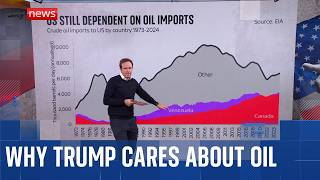
I mean, in my opinion and it's just my opinion, if we do get control of the Venezuelan oil fields and if we do get U. S. companies to run that, the U.
S. got to make sure that the benefits, the money from that, uh, exploitation of that oil that visibly benefits Venezuela and Venezuelans, they got to make sure that otherwise it's going to look like we're just plundering the country. So we got to make sure that money that comes in from that, some of it a lot of it's got to go to Venezuela and benefit their citizens right now in terms of in terms of the legality.
Yeah If, if, if our, uh, if our troops are still there in Venezuela after 60 days, there's an initial deadline that can be extended to 90 days. But under the war Powers Act, you've got to get approval from the Congress. This is a, uh, under the statute that we call the War Powers Act.
Uh, uh, Trump will have to get approval from Congress. Now, you know, with a majority, uh, Republican majority in the House said he might get it if he doesn't get it, that's going to be a real a real problem. I know president has ever formally acknowledged that the war powers Act is constitutional.
It's never been finally adjudicated by the Supreme Court. But, but, but presidents have always complied with its requirements. I doubt very much Trump would, would, would just choose to ignore it.