In this video we’ll show you 10 best things to do in Paris. And don’t forget to like this video and subscribe to our channel. And share your own Paris experience in the comments below.
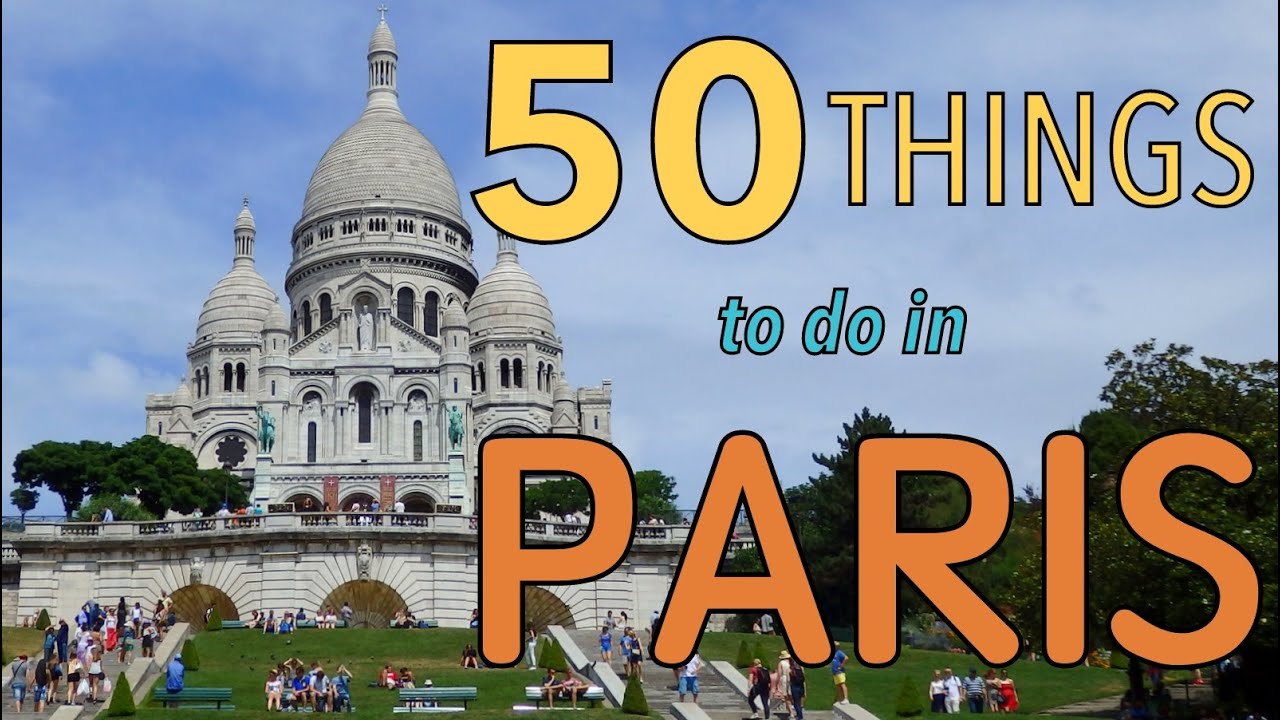
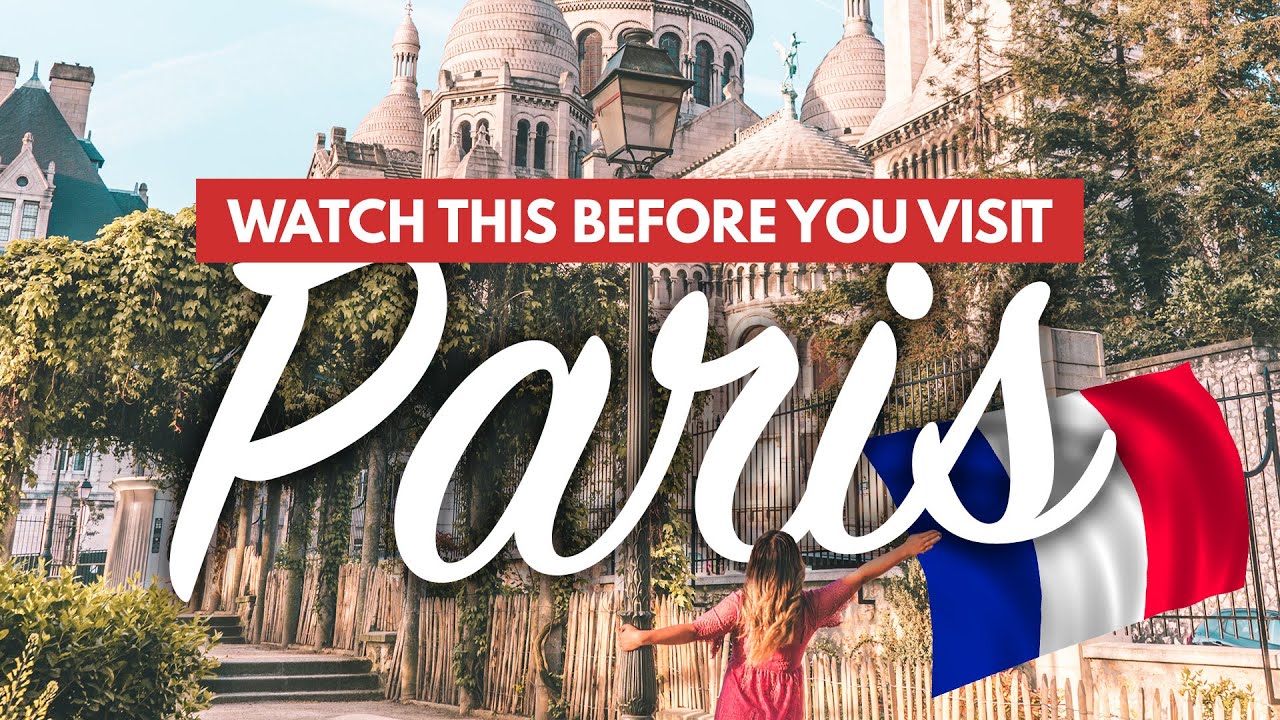
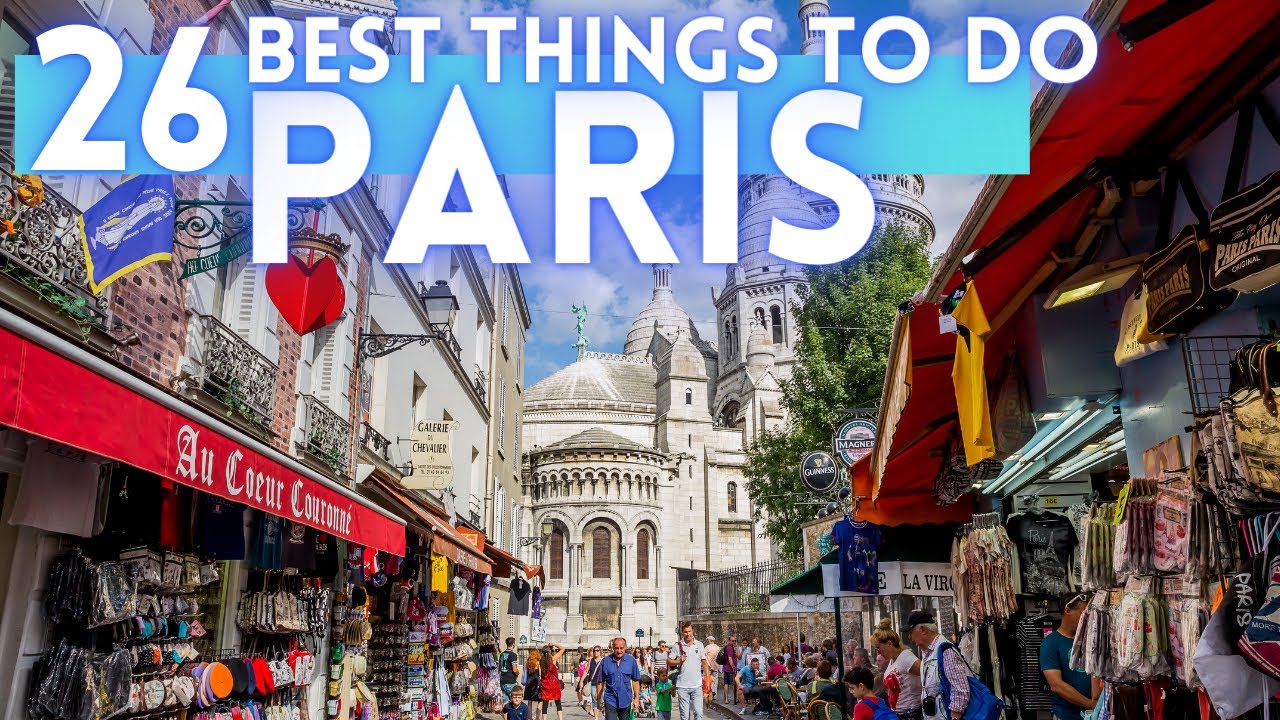
The suggestions are based on our exciting trip to this beautiful city. Here are our top 10 picks: NUMBER 1: MONTMARTRE Montmartre is a charming hillside neighborhood with amazing views of Paris. It was a popular spot for world-famous artists who worked and lived in Montmartre and around.
Artists such as Picasso or Van Gogh found inspiration in beautiful streets and atmosphere of Montmartre. Even today you will see painters and other artists working on their next work of art. At the top of the hill you will find the famous Sacré-Cœur basilica, an important political and cultural monument and an architectural marvel.
Don’t miss the Church of Saint-Pierre next door and adorable small vineyards close to the Montmartre Museum. At the foot of the hill there is a famous Moulin Rouge, the historic birthplace of French cancan dance. Moulin Rouge is now a popular tourist attraction, offering musical dance entertainment shows.
NUMBER 2: NOTRE-DAME Notre-Dame de Paris meaning "Our Lady of Paris" is a famous medieval gothic cathedral located on the island in the center of Paris called Île de la Cité. The cathedral is full of impressive gothic elements and architectural details. Notre-Dame was largely completed in 13th century and was badly damaged during the French Revolution until it was rescued from destruction by Napoleon who used the cathedral to crown himself emperor of the French.
The cathedral is widely known for the story of Hunchback of Notre-Dame by Victor Hugo. Don't miss the nearby Conciergerie, a former medieval royal palace and a prison during French Revolution, now mostly used for law courts. It was also the last prison to hold Marie Antoinette.
You can walk around the island and imagine what life in Paris was like centuries ago on its beautiful authentic streets. NUMBER 3: CATACOMBS OF PARIS Discover the impressive underground Paris by visiting the Catacombs of Paris, a shadowland of underground tunnels and galleries underneath busy Parisian streets. The ossuary known as the catacombs date back to the 18th century when the remains of over six million people were moved into underground tunnel network of former stone mines to reduce the growing number of cemeteries in Paris.
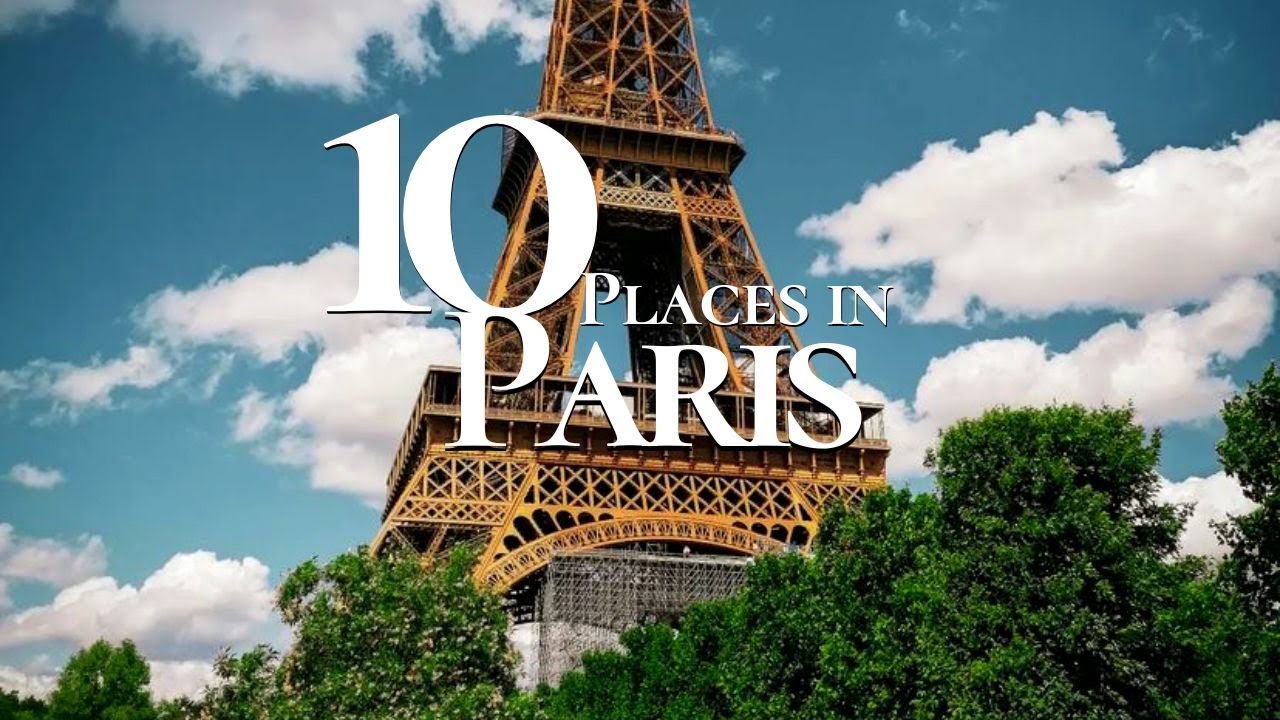
While you walk through the tunnels you will see the signs of the streets you are under as well as the names of the original cemetery locations from where the remains were moved. NUMBER 4: EIFFEL TOWER Eiffel Tower is one of the most recognized world attractions and most-visited paid monument in the world. Including the tip, Eiffel Tower is 1,063 ft tall and is the tallest structure in Paris.
It was constructed in 1889 by the company owned by the engineer Gustaf Eiffel as the entrance to the 1889 World’s Fair and was originally supposed to be demolished after. It has initially met with criticism from many famous Parisian artists. The tower offers three floors and to reach the second one you can even climb the 674 stairs if you don’t feel like taking the elevator.
Did you know that there is a small secret apartment at the top of the Eiffel Tower? It build by Eiffel for himself and to entertain the science elite such as Thomas Edison? NUMBER 5: MUSEUMS Paris is home to over 100 museums.
The most famous museum in Paris is Louvre, which is the world’s largest art museum, featuring permanent displays of the most famous world artists, including Leonardo da Vinci’s Mona Lisa. You can start the tour by entering through an impressive glass pyramid. Les Invalides is a complex of buildings and monuments relating to military history of France including the tomb of Napoleon.
Pompidou Centre, designed in the style of high-tech architecture houses the largest museum of modern art in Europe. Don’t miss the nearby Stravinsky Fountain. Musée d'Orsay is located in a former railway station and houses a large collection of impressionist and post-impressionist masterpieces.
There are plenty more to discover. We created a Google map with more suggestions. The link is in the description.
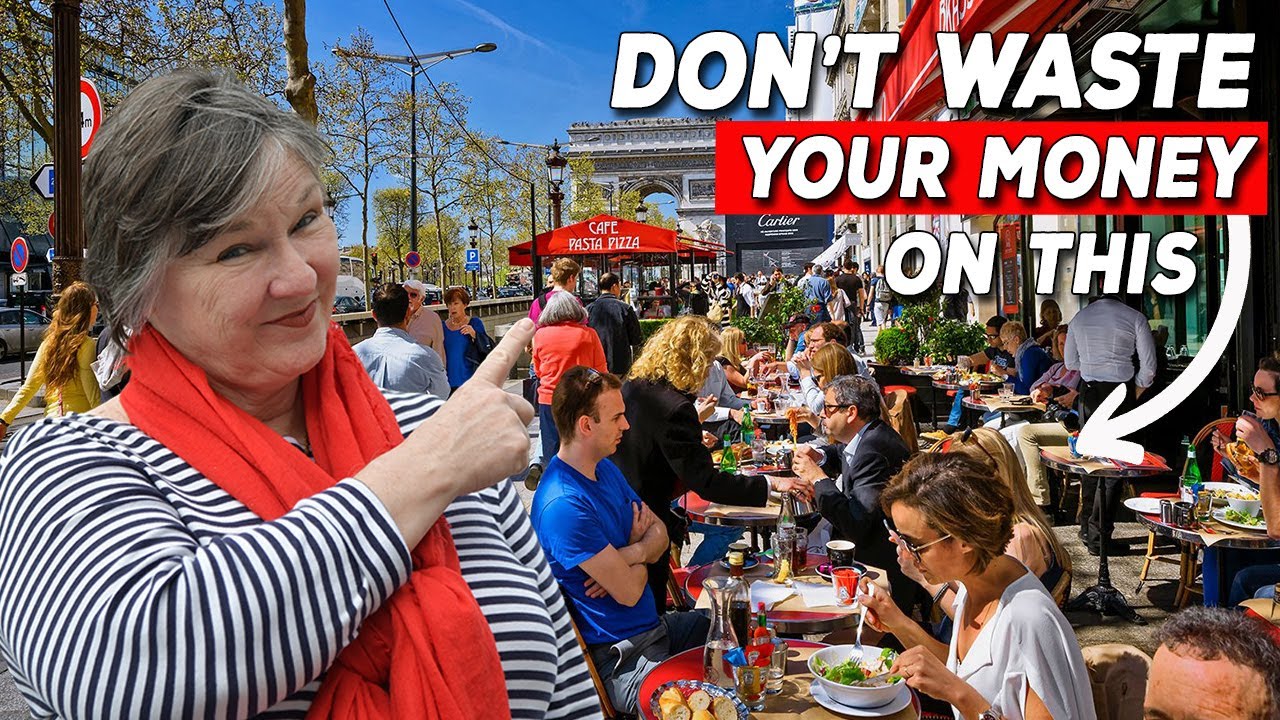
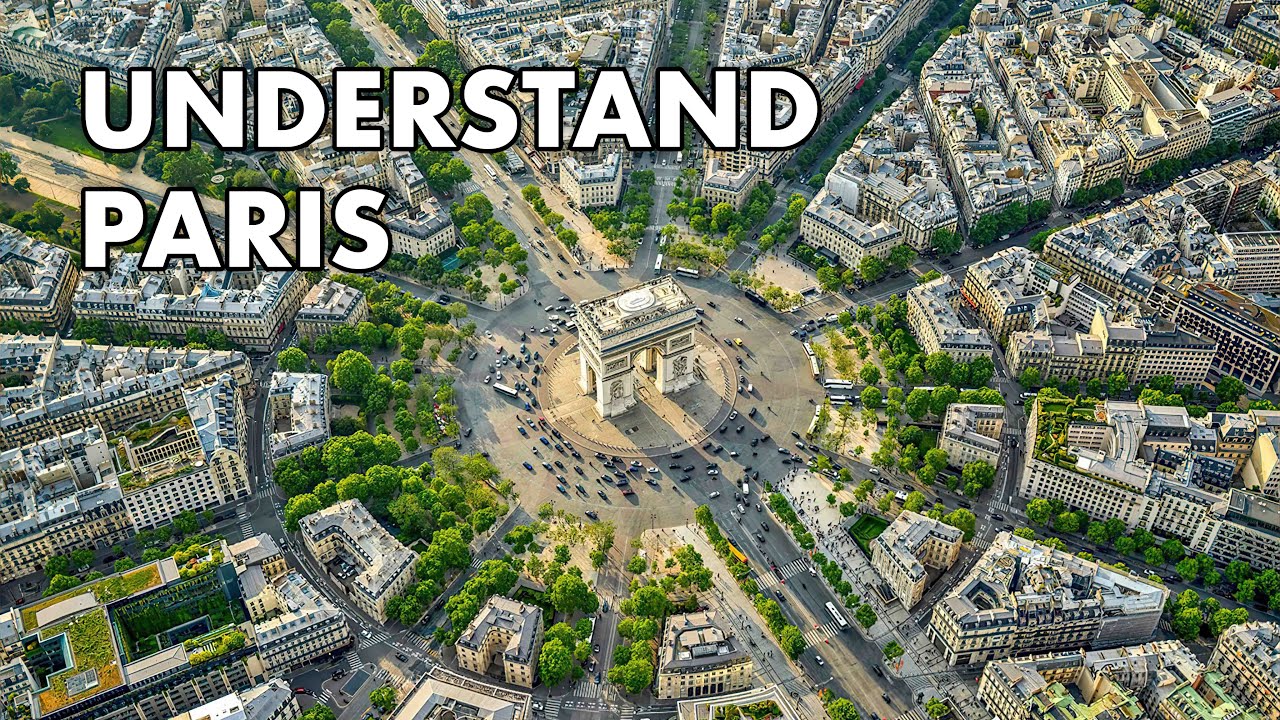
NUMBER 6: CHAMPS-ÉLYSÉES The Avenue des Champs-Élysées is a 1. 2-mile-long street located in the center of Paris and is considered to be one of the most recognizable avenues in the world. It features numerous luxury shops, theaters and cafés.
Champs-Élysées is the location of the annual Bastille Day military parade, and the finish line of Tour de France cycling race. Before it became a fashionable avenue in the late 18th century, the location was mostly occupied by fields and gardens. At the west side, Champs-Élysées ends with Arc de Triomphe, commissioned by Napoleon in 1806 and inaugurated in 1836, dedicated to the armies of the Revolution and the Empire.
Beneath the arch there is a Tomb of the Unknown Soldier, added in 1921. NUMBER 7: PARKS AND GARDENS Paris is full of beautiful city parks and gardens where you can walk, jog, read a book or simply soak in the atmosphere and experience the Parisian lifestyle. Some of the best gardens include: Tuileries Garden is located just next to the Louvre museum and was a popular meeting place for Parisians in the 19th and 20th century.
Luxembourg Gardens were created in 1612 as a garden of the Luxembourg Palace, which is now the seat of the French Senate. Bois de Vincennes is the largest public park in the city featuring lakes, gardens, zoo, a botanical garden, castle and other attractions. Paris offers many other parks.
We created a Google map of interesting parks and gardens in Paris. The link is in the description. NUMBER 8: PÈRE LACHAISE CEMETERY Père Lachaise Cemetery established in 1804 is the largest cemetery in Paris and is supposed to be the most visited cemetery in the world.
The cemetery is a resting place of numerous world-famous figures including Jim Morrison, Édith Piaf, Balzac and Oscar Wilde. Take a walk and explore numerous streets of this vast over 100-acre cemetery full of Gothic graves, burial chambers and ancient mausoleums. The cemetery contains 70,000 burial plots.
NUMBER 9: LA DÉFENSE BUSINESS DISTRICT La Défense is Europe's largest business district containing many of Paris tallest buildings and a large shopping mall with numerous restaurants and movie theaters. La Défense features an impressive modern architectural masterpiece La Grande Arche, a 364 ft tall cubical high-rise mimicking the shape of Arc de Triomphe. You can visit the observation deck and see that the building is perfectly aligned with the Arc de Triomphe located in Paris city center, over two miles away.
NUMBER 10: VERSAILLES Palace of Versailles is an impressive royal residence of the king of France from 1682 until the start of the French Revolution in 1789. Château de Versailles is located about 12 miles from the center of Paris and is now a UNESCO World Heritage site. The visit offers an insight into the abundant lifestyle of the French royalty before the French Revolution.
Walk through the royal Hall of Mirrors, royal apartments, Royal Opera and extensive Gardens of Versailles. The history of Versailles does not stop with the French Revolution. Part of the Peace Treaty of Paris by which Britain recognized the independence of United States and The Treaty of Versailles, which formally ended the First World War were both signed here.
We created a Google map with all the suggestions. The link is in the description. Do you have a favorite place in Paris?
Share it in the comments below. And don’t forget to like this video and subscribe to our channel. Champs-Élysées with Arc de Triomphe (if you continue straight, you can see La Defense – sort of modern Arc de Triomphe) Museums: Louvre Museums, Musee D’Orsay, Centre Georges Pompidou, Galeries Lafayette Haussmann, Les Invalides, etc.
Eiffel Tower The Catacombs Gardens: Tuileries Garden, Luxembourg Gardens (+Beehives), Gardens of Albert Kahn, Parc des Buttes-Chaumont, Bois de Boulogne, etc. Beautiful streets and shops: Rue Crémieux (barvne fasade), Au Vieux Paris d'Arcole (romantična ulica), Rue Denoyez (graffiti), Quai de Jemmapes (ob Seni), Cour du Commerce-Saint-André, Rue des Rosiers, etc. Versailles Pere Lachaise Cemetery ALI namesto ulic damo business predel Pariza!
Marche Saint-Germain Galeries Lafayette Haussmann, etc. There are thousands of things to see and do in Paris. What is your favorite spot in Paris?
Best city view: https://www. talkinfrench. com/best-views-in-paris/ https://www.
ratp. fr/en/titres-et-tarifs/paris-visite-travel-pass Other: Pantheon, Montparnasse (view) Rue de la Butte aux Cailles, Belleville, etc. Montmartre, a large hill in Paris and the district is a former artists' village.
During the Belle Époque, many notable artists lived and worked here or around Montmartre, including Picasso, Monet, van Gogh, Modigliani, and others. Montmartre is also the setting for several hit movies. The charming hilltop Montmartre district is home to the domed Sacré-Cœur basilica, a political and cultural monument.
There is an amazing view of Paris. . .
See also Church of Saint-Pierre, small vineyards in the Rue Saint-Vincent (Vignes du Clos Montmartre), Musée de Montmartre, etc. And don’t miss Moulin Rouge: Moulin Rouge is best known as the birthplace of the modern form of the can-can dance and led to the introduction of cabarets across Europe. Today, the Moulin Rouge is a tourist attraction, offering musical dance entertainment for visitors from around the world.
Notre-Dame de Paris meaning "Our Lady of Paris is a medieval Catholic cathedral on the Île de la Cité. The cathedral is widely considered to be one of the finest examples of French Gothic architecture. The cathedral was completed in 13th century.
In the 1790s, Notre-Dame suffered desecration during the French Revolution when much of its religious imagery was damaged or destroyed. Soon after the publication of Victor Hugo's novel The Hunchback of Notre Dame in 1831, popular interest in the building revived. Interesting facts: http://mentalfloss.
com/article/556629/facts-about-notre-dame-cathedral Underneath the avenues and boulevards of southern Paris sits a shadowland of underground tunnels and galleries. Catacombs of Paris are underground ossuaries which hold the remains of more than six million people in a small part of a tunnel network built to consolidate Paris' ancient stone mines. This ossuary was created as part of the effort to eliminate the city's overflowing cemeteries.
There are signs that indicates the names of the streets you are under and signage indicating from which Parisian cemetery the bones originated. There is also a fountain of the “Samarinaine”, a well providing access to a small groundwater table. The crypt of the passion is a supporting pillar hidden by skulls and tibias that form a barrel shape.
Interesting facts: http://listverse. com/2018/05/14/10-bone-chilling-facts-about-the-catacombs-of-paris/ The Eiffel Tower is a wrought-iron lattice tower named after the engineer Gustave Eiffel, whose company designed and built the tower. Constructed from 1887–1889 as the entrance to the 1889 World's Fair, it was initially criticized by some of France's leading artists and intellectuals for its design, but it has become a global cultural icon of France and one of the most recognizable structures in the world.
The Eiffel Tower is the most-visited paid monument in the world; 6. 91 million people ascended it in 2015. The tower is 324 metres (1,063 ft) tall and the tallest structure in Paris.
Did you know that High atop the Eiffel Tower is a small apartment built exclusively to entertain the science elite and make the rest of Paris jealous? Interesting facts: https://www. discoverwalks.
com/blog/top-5-fun-facts-about-the-eiffel-tower/ There are around 130 museums in Paris within city limits. We recommend visiting at least one of them. Here are listed just few of them: Louvre Museums: is the world's largest art museum and a historic monument in Paris.
In 2017, the Louvre was the world's most visited art museum, receiving 8. 1 million visitors. The museum is housed in the Louvre Palace, originally built as the Louvre castle.
Leonardo da Vinci's Mona Lisa is the Louvre's most popular attraction. + PIRAMIDA Les Invalides: it’s a complex of buildings containing museums and monuments, all relating to the military history of France, as well as a hospital and a retirement home for war veterans, the building's original purpose. The buildings also house the tallest church in Paris at a height with the tombs of some of France's war heroes, most notably Napoleon.
Don't forget to visit also Centre Georges Pompidou that is also home to the largest museum for modern art in Europe and nearby Stravinsky Fountain or perhaps Musee D’Orsay which was an ex railway station that houses the largest collection of impressionist and post-Impressionist masterpieces in the world. We created a Google maps with more suggestions. The link is in the description box.
The Avenue des Champs-Élysées is 1. 9 kilometres (1. 2 mi) long and 70 metres (230 ft) wide.
The land where the Champs-Élysées runs today was largely occupied by fields and kitchen gardens. By the late 18th century, it had become a fashionable avenue. Today it is known for its theatres, cafés, and luxury shops, for the annual Bastille Day military parade, and as the finish of the Tour de France cycle race.
Champs-Élysées is widely regarded to be one of the most recognizable avenues in the world. The Champs-Élysées ends at the Arc de Triomphe, built to honor the victories of Napoleon Bonaparte. Posnetek iz preteklosti 😉 There are numerous parks and gardens all over Paris.
Tuileries Garden is a public garden located between the Louvre and the Place de la Concorde. In the 19th and 20th centuries, it was a place where Parisians celebrated, met, strolled and relaxed. Luxembourg Gardens (Jardin du Luxembourg): It was created beginning in 1612 by Marie de' Medici, the widow of King Henry IV of France, for a new residence she constructed, the Luxembourg Palace.
The garden today is owned by the French Senate, which meets in the Palace. Bois de Vincennes is the largest public park in the city. It was created between 1855 and 1866 by the Emperor Napoleon III.
There are many more, for example Bois de Boulogne, Parc des Buttes- Chaumont, Gardens of Albert Kahn, etc. We created a Google maps with more suggestions. The link is in the description box.
With 110 acres (44 hectares) and Père Lachaise Cemetery is the largest cemetery in Paris and with more than 3. 5 million visitors annually, it is the most visited cemetery in the world. The cemetery is a mix between an English park and a shrine.
All funerary art style are represented: Gothic graves, Haussmanian burial chambers, ancient mausoleums, etc. It is the first garden cemetery, as well as the first municipal cemetery in the city. It opened in 1804.
It is the permanent resting place of a variety of famous figures, for example, Jim Morrison, Édith Piaf, Oscar Wilde, Balzac, Molière and others. It contains 70,000 burial plots. La Défense is Europe's largest purpose-built business.
It contains many of the Paris urban area's tallest high-rises, a large shopping mall in La Défense, has 220 stores, 48 restaurants and 24 movie theaters. La Grande Arche is a 110-meter-high cube, La Grande Arche is part of the perspective from the Louvre to Arc de Triomphe. The distance from La Grande Arche to Arc de Triomphe is 4 km.
Axe historique… Château de Versailles, also called Palace of Versailles was the principal royal residence of France from 1682 under Louis XIV until the start of the French Revolution in 1789 under Louis XVI. It is located about 20 kilometres (12 miles) southwest of the centre of Paris. The palace is UNESCO World Heritage site.
Zgodovina Versailla ? SLIKE Public Domain Two treaties of the 1783 Peace of Paris treaty, by which Britain recognised the independence of the US, were signed at Versailles. The Treaty of Versailles, which formally ended the First World War, was signed in the Hall of Mirrors.


![[4K] PARIS 2024 🇫🇷 1 Hour Aerial Drone Relaxation Film UHD | FRANCE](https://img.youtube.com/vi/WHNNHAoaZD4/maxresdefault.jpg)