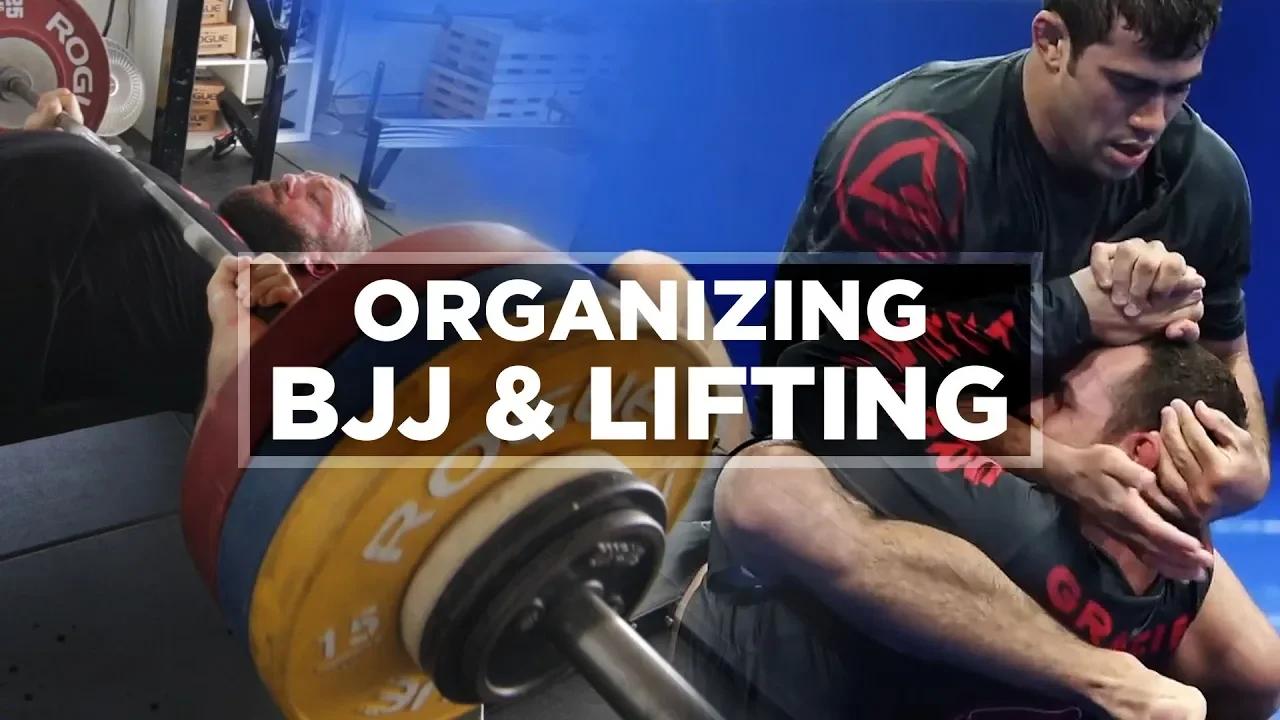
everybody welcome to the juggernaut training systems YouTube channel I'm Chad Wesley Smith owner and founder of Durga non-trained systems also a blue belt at Gracie Baja headquarters in Irvine California third at the 2019 Worlds and Pan Am's and ultra-heavy division but more importantly than that also served a strengthened auditioning coach to such you two athletes as Honolulu Baja Filippo Pena Octavio Sousa Karin Gracie and a lot of other ones gonna be trying to do more and more jujitsu related content here on the channel to help you better understand how to organize your strength and visioning
training produce jutsu to maximize your performance make sure you're staying healthy and just be the best athlete that you can so make sure you subscribe to the channel like this video and this will be the first in again what I hope to be a lot of digit jujitsu related content and we're gonna be talking about how to organize the training week which is one of the most common questions I see people struggling with on reddit and our youtube comment section all that so if you have questions ask me in the comments if you have you
know other topics you're interested in let me know follow along on social media as we're on instagram as well add juggernaut training and at Chad Wesley Smith so let's dive into this the idea of organizing the BJJ training week starts with really identifying what skills we need to develop what physical traits we need to develop first and most important for any jujitsu competitor is going to be to develop your jujitsu skills so that's definitely number one has to be the highest priority after that we could look at pretty much two A to B to C
would be strength and power endurance and then mobility and flexibility as we talk about endurance that's not just the endurance for you know a specific match or a series of matches of the tournament but also the endurance and capacity to do a lot of hard jujitsu training coming from a powerlifting background like I did I didn't have a very good cardio and that was really the most challenging part of jiu-jitsu right off the bat and trying to improve was being in good enough shape to do the amount of training to do the most training that
I could in a given session and the most quality training that I could so we're talking about both you know both contexts of endurance they're both you know being able to go hard for five or six or eight or ten minutes however much you have in the match but also be able to do a lot of quality training and the priority of two A to B to C you know the order that ends up for you is going to be dependent on some the style of game that you play you know if you're an ultra
heavy athlete and you're trying to play from the top a lot strength and power is gonna be a high priority if you're a guard player the flexibility is gonna gonna be a higher priority maybe and then what you currently are good at and lacking in should also help guide those priority decisions again coming from the powerlifting background that I had squatting over 900 pounds benching in the mid 500s dead lifting over 800 pounds putting a lot of attention towards strength and power training for me probably not a great use of energy but for you it
might be very important now that we understand you know a big overview of the skills that need to be developed the next piece that you need to understand when organizing your training week is understanding who are you you know we're gonna have a lot of people at different levels of competitors and and different levels of jujitsu watching this video so are you a you know serious competitor like you know a world level competitor at whatever belt level you have is this the biggest priority in your life where you're training you know six plus sessions a
week of jujitsu like daily or you know double days of training while also being able to make time for you know three to six sessions a week of extra strength and ition work are you more of a recreational competitor you know you have a regular job but you know you're still wanting to do tournaments you're wanting you know maybe you're competing at masters you're trying to be the best edge itsu you can but it's probably not the number one priority in your life and then finally are you more serious about lifting but still want to
do some jujitsu so basically your digits ooh is complimentary to more recreational jiu-jitsu with syrup more serious lifting whether that's you know you're a powerlifting power lifter weightlifter strongman competitor who also wants to do some jutsu on the side I'll try in and give some context for all three of those scenarios then finally we also need to understand what is your training background if you haven't done much in the way of strength in auditioning training prior to this doing a little bit is going to be really beneficial to you if you've been training you to
you know six seven days a week with no extra strain conditioning adding in one session of strengthen auditioning is is a big improvement from what you've been doing already well and a little bit will go a long way now if you're already really well developed in one of these areas whether that's you know strength endurance flexibility whether that you've done that through your jujitsu training and complementary training to that or you're coming from another sport like me a strength sport hopefully you have well develop strength and endurance sport maybe we're a triathlete or CrossFit or
something beforehand and you have really good endurance or perhaps you were a gymnast and you're super flexible as you transition to jiu-jitsu you're not gonna have to dedicate a lot of energy towards your you know your strong area to maintain that considering that you probably are already good enough in that room to be more successful than you currently are as a jiu-jitsu competitor you need to bring up the other the other components to match and the idea of being really well developed in one area also pertains to jiu-jitsu skill if you're a brown belt who's
never done in these strength and conditioning training and you trained jiu-jitsu six days a week you're probably not gonna forget how to do in jiu-jitsu or have a degradation of your Jiu Jitsu skill if you go from training six days a week of jiu-jitsu to only four days a week but you add in to strengthen auditioning sessions if you've never had any background in that you're going to get a huge benefit from those training auditioning sessions while at worst being able to maintain your jujitsu skill and then with your newfound strength power speed flexibility maybe
even enhance aspects of your game so as we begin to be able to organize the week the next thing we need to do is classify our stressors so by stressors I mean each component of your training is going to have different levels of fatigue that it generates on your on your body and higher stress activities are going to generate more fatigue and what ultimately what we're going to try and do is organize these stressors in a way that you have days that are very challenging to you and other days that are you know pretty light
and reserved for recovery and I think that's the the big problem that people face as they try and organize their week for jujitsu is you know they train really hard to get so on Monday and Tuesday and they're like man there's no way I could lift on Wednesday so maybe they just take that day entirely off where they just do more jujitsu training but being able to identify what is the most fatiguing less fatiguing and organized those strategically is what I'm going to try and help you accomplish here so first we need to look at
what our high our highest stressors are most fatiguing activities so that's going to be live training you know near maximal efforts five-minute rounds six minute rounds eight minute rounds ten minute rounds whatever your training you know what I'm talking about live training the hardest stuff you do at your school outside of that from a string the auditioning standpoint our high stressors are going to be maximal effort sprinting jumping and throwing very explosive efforts and then our primary lifting done at maximal efforts and we're going to say that's eighty five percent plus weights or weights below
85% done to failure or very near failure and and big compound movements I'll have videos in the future that talk specifically about exercise selection and you know what those different primary lifting movements could be and should be but want to make this particular video several hours long so I'm gonna split these up over the course of a lot of different content so those are our high stressors live training sprints jumps and throws and our primary lifting done at maximal efforts our medium intensity stressors be more like specific training so you know you start in half
guard and if you you know pass or get swept or submit from there you know you and your partner switch and you keep going back and forth therefore whatever extended period of time it you know it's probably pretty pretty challenging you're going at a relatively high intensity but it's not going to be as taxing as fatiguing as you know full go-live training especially a training that starts from the feet keep in mind with all these in the from the jiu-jitsu standpoint is that modifying controlling modulating your effort you know how hard you're trying can be
a big a big difference in something being a high medium or low stressor you could do live live training and just not try it very hard and then it's probably not a high stressor you could do specific training as hard as you possibly can and then it is probably a high stressor so I'm speaking you know in generalities here but generally specific specific training I would put as a medium stressor as well as primary exercises done at submaximal efforts so being further away from failure let's say three or more reps and reserve meaning that you
know as you do that set you finish the set and feel like you could have done at least three more reps before failing and then also lifts being done for more speed type of training so list being done at a high velocity the other medium stressor in the weight room are gonna be accessory weights done too near failure so smaller exercises no more body parts specific exercises done to at or near failure and finally our low intensity stressors are going to be drilling again controlled effort here going through you know probably 60 70 percent effort
on drilling controlled effort rolling so submaximal effort specific training or live training aerobic capacity training I'll have again a totally separate video about that but there I'm talking about you know running biking rower jump rope any submaximal like low intensity steady-state cardio or tempo type of intervals submaximal intervals not high-intensity interval training as in the name high intensity would be a higher stress activity as well as accessory weights done you know away from failure 3 plus reps and reserved for smaller accessory movements prehab restorative mobility type of training those are gonna be all of our
low stressors our low intensity stressors and finally we also need to account for non training stressors and your body doesn't understand it doesn't know what live training jiu-jitsu is or a squat or a deadlift or you know yoga or you know a hard day at work or finals at school or argument with your significant other it just knows stimulus and stress and those non training stressors like work relationship school kids those all need to be accounted for because if that the stress from those is higher something's got to give so you got to bring down
the stress levels being generated by your training a little bit and obviously those are you know hard things to plan for sometimes you know you probably can't period eyes arguments with your with your girlfriend but it needs to be it needs to be accounted for and so if you work you know a very physical job a manual labor type of job that's gonna impact what you can do training wise you know jiu-jitsu and in the weight room so now as we look at laying out the week with a couple of these example scenarios we have
our very serious competitor you know they're training six plus days a week of jiu-jitsu maybe some double days in there and then also you know complimenting that with a four or five days of strengthing auditioning work when I worked with Hummel about how he was doing about 18 training sessions per week so that was I think 12 jujitsu sessions and then 3 certainly auditioning sessions with me and three extra aerobic capacity and conditioning sessions on his own so that's probably about the the peak of the amount of training that anyone's going to be able to
tolerate but for the purposes of this example you know we're gonna have day one is a high intensity jujitsu session you're coming into the week fresh so you're gonna do some of your hardest jujitsu training on that day and we're gonna complement that with high intensity strength and conditioning work and I know that seems a little bit counterintuitive why would you do your hardest jujitsu and your hardest lifting on the same day and hopefully that becomes more clear as we go on with the video and with this series but the purpose behind that is going
to be if if we were to take all of our high intensity stressors and spread them throughout the week so we train hard jiu-jitsu on Monday and then hard string the initially on Tuesday and hard jujitsu again on Wednesday and hard something auditioning on Thursday then every day is high stress and there's no recovery built into what you're doing so by putting your high intensity jiu-jitsu and high intensity strength conditioning on the same day we allow the subsequent day to be lower intensity and to facilitate some recovery with that in mind these high intensity days
don't mean that you're gonna have necessarily long workouts now the Jiu Jitsu workout may be you know an hour hour and a half two hours a lot of that's going to depend on your fitness levels but don't conflate a long workout with a high intensity high fatigue generating workout you really want to be looking more at like quality and intensity of effort rather than just necessarily the duration particularly on the strength in addition you know side of things because as we said developing jutsu skill is a number-one priority and if you're a serious competitor you're
trying to qualify for a DCCC or doing super fights here you know in upper belt divisions at IBJJF Worlds you're gonna have to do a lot of jiu-jitsu training of course so that high intensity strengthening auditioning day it might not be a big long workout because you're not trying to be a power lifter you're not trying to be a weight lifter we're trying to just complement your jujitsu so that that high intensity training auditioning day might just be two exercises it might be you know some kind of squat variation and some kind of you know
pressing variation bench press inclined bench overhead press but done with relatively high intensity to pretty near failure with a big exercise so maybe it's it's those two at two big movements and then some abs or some some work for your neck but it's not going to be a workout that you're in there for you know two hours with like a powerlifter weightlifter might be who's preparing for competition because the strength at the the weight room is only a piece of what you're doing to get to get ready so those high strength high intensity high stress
during the auditioning days doesn't mean a long workout so after Monday's really big day high intensity Jiu Jitsu high intensity strength auditioning now we need to have a lower intensity day following that so I'm day to medium intensity Jiu Jitsu yeah maybe some specific some specific training some lower intensity live rolling whether that's you just controlling your efforts with someone you know the same skill level the same belt or let's say you're a purple belt and you can kind of modulate the intensity of things by rolling with you know someone who's just not as good
as you a lower a lower belt where they can get some work in and you can you know practice your game but not have have to expend as much energy and then we're gonna complement that with some low intensity strength the auditioning work so that could be you know an aerobic circuit where you're going on the bike and mixing in some you know smaller accessory work with that like you do one minute on the bike hop off do some ABS back on the bike off do some you know work for your neck back on the
bike off some prehab exercises for your shoulders a lot of different ways to organize that I'll get into that in future future videos but in in doing a tempo circuit like that a low intensity strength conditioning workout you're not only you know building up some aerobic capacity getting those the work done for those smaller muscles which just don't demand is high intensity of work it's also helping facilitate recovery because you're getting you know blood flow through through your whole body so now as you've recovered some from day to day three we can have another high
intensity Jiu Jitsu workout and for a serious competitor you're gonna have to have this huge gas tank so you could complement that with another low intensity strength auditioning workout just a pure aerobic workout whether that's you know a run or a longer bike ride or another tempo based circuit because we had high intensity Jitsu on day three we're you know and really know certain conditioning to pair with it that's probably going to be your biggest jujitsu training session on day three we're gonna another low day on day four so here we're doing the low intensity
Jitsu just going in for some drilling with some medium intensity storm conditioning work you know sort of secondary movements so you know maybe some stuff like pull-ups or dumbbell rows complemented with a secondary type of hip hinging exercise and again I'm just throwing out examples here future videos we'll get into more specific you know do this on this day choose these exercises but a secondary complementary type of movements for the posterior chain like a like a back raise or a GH are coming off this low intensity relatively lower intensity day on day four now we
can go back to a high intensity day for both jutsu and strengthen auditioning on day five very similar organization to day one because that's such a hard day we now need a little bit of a stress reduction on day six medium intensity to do low intensity strain conditioning and finally day seven day off from jiu-jitsu just doing some some aerobic work I'd highly encourage you towards some aerobic work that's you know it doesn't feel like you're doing a workout necessarily whether that's you know you go and play a game and pick up soccer or basketball
you go for a run go for a bike ride down the beach whatever it is it's got some relaxation to it which is gonna be good for recovery as well as still getting a little bit of a road capacity in now looking at the next one the recreational athlete you can see the the week laid out here not too dissimilar from the the serious competitor we have the high intensity Jiu Jitsu high intensity strength conditioning paired together on day one day two just some low intensity BJJ with no strength conditioning that day day three no
Jiu Jitsu just strengthen auditioning day four back to high intensity jujitsu so very similar to the serious competitor just not as many double sessions not as not as much doubling up of jujitsu and strengthen dishing on the same day and I'm I'm doing that because I know that there's gonna be people who even see that this schedule for the for the recreational competitor and say well that that doesn't work for my schedule or I can't do you know lifting and Jiu Jitsu on the same day and to that I would just say like sorry sorry
that I can't account for every single you know person daily schedule in this YouTube video but hopefully or you can take away the concepts of it and keep in mind that you know when I say high-intensity some conditioning session that's not a long workout that can be one or two big exercises and then a little bit of smaller accessory work that you can probably finish in 30 to 45 minutes unless you're very strong you know you're squatting five six hundred pounds you don't need a ton of warm-up sets to get there you know when I
was competing in powerlifting squatting nine hundred and fifty pounds for me to just squat was like two hours or two and a half hours because to get to 900 pounds when you start at the empty bar and I had eight or nine warm-up sets at least of adding you know a plate every time to get up to the top weights you're probably not dealing with that that same issue and hopefully your your fitness levels your general fitness levels are high from Utsu so you can move pretty quickly through the workout at least through the warm
up components of the workout and then get a couple high quality sets in you know it might be that high intensity jujitsu workout and you grab some food and you and you go to the gym and get a 30-minute workout done where you just do one big exercise you you know you go up and do three or four hard work sets the deadlifts then do a quick circuit of like abs neck and some back raises and then you're out of there you're back home see your kids you know live your life do what you're going
to do there so the stuff it doesn't have to be big workouts they can be you know small workouts even for the high intensity days it can be short those lower medium days you can organize them into a circuit you can do them pretty quickly not necessarily quick to make them like a conditioning piece like you're going to CrossFit metcon but just moving at a good pace building up some more capacity while you're getting the exercises done that you need to do and those can be 20 or 30 minute workouts with minimal equipment like you
know you finish a jiu-jitsu class and you've got a kettlebell you know in your car and some bands or something and you just go through a quick session of kettlebell swings push-ups kettlebell rows and you know go through that circuit four or five times and you're done in 20 minutes and you've got quality work done especially for for people who are you know balancing real real jobs you know nine to five jobs with family and kids trying to do jujitsu trying to get some extra lifting in as well I understand you got a lot of
stuff going on but getting that 20 30 minute workout and it's so much better than just saying I don't have time and doing none so some is pretty much oh he's gonna be better than none in this situation finally if you're in the more you know lifting is your priority group and yours doing jiu-jitsu as a complement that really shifts the whole idea from these these previous to where you're gonna want to be spreading out your stirring the auditioning work a bit more throughout the week still keeping with the theme of consolidating your highest intensity
stressors to the same days so you can see like day one medium medium intensity jujitsu with your hard strengthening so maybe you know that's gonna be like your squat day then day two you're off from jujitsu and maybe just going in and do some accessory weights day three would be high intensity jujitsu where you're gonna get some live training done and you're complimenting that with easier lifting workout which you know if you're preparing for powerlifting you know that squat and deadlift training is pretty much always harder than benchpress training so day ones workout was probably
squadra deadlift workout and day three is maybe a benchpress workout because no matter how hard your benchpress workout is it'll pretty much never be as fatiguing as challenging for you to do as a even moderate to hard squatter dead before account day four totally off day five similar to day one and that you're gonna have another big probably lower body lifting workout with some low intensity Jiu Jitsu to complement it day six off from jiu-jitsu day seven more accessory weights or a smaller upper body training session and then day seven totally off so hopefully this
has given you some ideas of concepts of how to organize your week sorry that I couldn't you know go through every possible scenario of how many days a week you want to Train jiu-jitsu and how many days a week you want to lift but the principles should help guide your decision making process make sure you subscribe to the channel like this video and look for more jiu jitsu content from me chad wesley smith and jeremiah training systems coming up in future weeks thanks for watching see you next time you