Trump, confronted by a woman veteran at a live press conference, what he does next shocks everyone. "Have you ever felt like the world has abandoned you when you've given everything—your sweat, your tears, even your blood—only to be met with nothing but closed doors? " Sophia Walker, a brave veteran, once faced bullets on the battlefield, but she couldn't win the hardest battle of all: finding a decent job after leaving the military.
Rejected over and over again, she had only one thing left: determination. That determination pushed her to make the boldest, craziest decision of her life. In the middle of a high-profile press conference, surrounded by hundreds of journalists, she stood up, locked eyes with the President of the United States, Donald Trump, and spoke the words that made an entire nation hold its breath: "Mr President, I need a job.
" Trump's response didn't just change Sophia's life; it ignited a revolution for thousands of American veterans. What happened next, and why did the entire country stand still in shock at his decision? Stay with us, because what you're about to witness will leave you speechless.
The bitter winter wind howled through the streets of Washington, D. C. , sending dry leaves swirling across the sidewalks.
On a worn-out wooden bench in Lafayette Park, right across from the White House, Sophia Walker sat in silence, hands shoved deep into the pockets of her thin jacket. She curled into herself, not just from the cold but from the emptiness gnawing at her soul. One year ago, she was First Lieutenant Sophia Walker, a decorated military officer leading combat logistics operations.
She had commanded a U. S. Army unit in Afghanistan, coordinating supply lines, rescuing comrades from life-threatening situations, and making split-second decisions that determined who lived and who didn't.
She had once given orders to hundreds of soldiers; now, she couldn't even get a hiring manager to read her resume. On the day she left the military, Sophia believed that her years of service would open doors to a bright future, but reality was harsher than she ever imagined. Dozens of job applications were rejected without a single meaningful explanation.
The moment companies saw the word "veteran" on her resume, they didn't hesitate to turn her away: "We're looking for candidates with industry experience. Your resume is impressive, but we're concerned that military culture may not align with our corporate environment. " The same responses over and over—like a silent verdict passed down to her and thousands of veterans just like her.
Her savings were running out, bills piled higher every week, and three days ago, her landlord left an eviction notice taped to her door. Sophia Walker—a woman who had once led soldiers through the chaos of war—was now struggling to make the most basic survival decisions: buy food or pay rent? That night in her empty apartment, she turned on the TV.
A live press conference with President Donald Trump filled the screen. He spoke about the economy, about job growth, about America's future, but none of it mattered to her. She was a forgotten soldier in a country that had moved on without her.
A thought flashed through her mind—a crazy thought—she was going to go there. She was going to find the president, and she was going to ask him one question: "Mr President, can you give me a chance? " Sophia stared at the screen, her heart pounding with a mix of fear and adrenaline.
She knew this could be a terrible mistake. Security would be tight; she could be thrown out or, worse, arrested. But she also knew one thing: if she didn't do this, she had nothing left to lose.
As the clock struck midnight, Sophia rose to her feet, her eyes filled with determination. Tomorrow, she would walk into the biggest battle of her life—a battle with no bullets, no visible enemies, but more obstacles than she had ever faced before. She pulled on her worn-out coat, gripped the strap of her bag tightly, and stepped out of her apartment for the last time.
Her fight wasn't over; it was just beginning. Sophia pulled her thin coat tighter around her as she walked briskly through the bustling streets of Washington, D. C.
Her breath formed small clouds in the freezing air. Towering buildings loomed overhead; strangers rushed past her, lost in their own lives. The city had its own rhythm, a structured order, but she felt completely out of place in it.
She had no invitation, no press credentials, no official reason to be anywhere near the president's press conference, but she had one thing no one else did: unshakeable determination. The crowd grew denser as Sophia approached the hotel hosting the press conference. Police cars lined the streets; security officers monitored every entrance with strict precision.
Journalists and photographers pushed against each other, all fighting for the best position. Camera flashes lit up the night; voices clashed as reporters fired off rapid questions at officials entering the building. Sophia took a deep breath—if she walked in unprepared, she would be stopped immediately.
She needed a plan. A group of local reporters had just arrived. They wore press badges around their necks and carried small cameras.
A thought flashed through her mind. She straightened her posture, adjusted her tone, and walked toward them with quiet confidence. "Excuse me, are you with The Washington Post?
" she asked, pretending to check a list. The man in the center turned to her, caught off guard. "No, we're from The Baltimore Sun.
" Sophia nodded, keeping her demeanor professional. "Perfect. I'm assisting with media coordination.
Do you have your press passes? " The man instinctively lifted his badge—a small laminated card complete with a newsroom logo, a photo, and the bold word "Press. " "Great," she said smoothly.
"The press entrance is over there. Move quickly, or you'll lose a prime spot. " She pointed toward a different entrance farther away.
Security checks. As they turned to leave, Sophia seized the moment; she slipped into the moving crowd, blending in with the flow of journalists heading inside. She walked quickly but not too quickly; no one noticed she was in.
But before she could exhale in relief, a deep voice cut through the noise behind her. "Where's your press pass? " Sophia froze.
A tall security officer, his sharp eyes locked onto her, stood just a few feet away. She knew that if she hesitated even for a second, it would be over. So she didn't flinch.
She didn't panic. Instead, she smiled slightly and gave a slow, steady nod. "I don't have a press pass," she said, her voice firm.
The officer narrowed his eyes. "Then what are you doing here? " Sophia met his gaze without wavering.
"I'm a veteran. I'm here because I need to speak to the president. " He studied her, arms slowly crossing over his chest.
"A veteran? That's a nice story, but do you really think the president has time for just anyone who shows up uninvited? " Sophia's hands clenched into fists at her sides.
She could feel her pulse quicken, but she didn't back down. "Did you serve? " The officer hesitated.
Then, after a moment, he gave a single nod. "Eight years in the Marine Corps. " Sophia inhaled deeply.
"Then you understand. I'm not here to cause trouble. I'm not a politician.
I'm not a journalist. I'm just a soldier who once risked everything for this country, and now, when I need a chance to survive, no one will give me one. I'm not asking for money; I'm not asking for favors.
I just need a job, and I will not leave until I say those words to the president. " A long silence filled the space between them. Then something completely unexpected happened.
The officer let out a deep sigh and took a step back. "Last row. Don't cause a scene.
" Sophia couldn't believe what she had just heard. She gave him a grateful nod. "Thank you.
" Her heart pounded wildly as she stepped inside the Press Room. She had made it, but the battle was far from over. Inside, dozens of reporters had already taken their seats.
Cameras stood poised, ready to capture every second of the event. On stage, the iconic White House emblem was displayed against the backdrop, and at the center of the room, the empty podium waited for the arrival of the most powerful man in the country. Sophia clenched her fists; she had only one shot, one moment.
If she didn't speak at the right time, everything would be over. She took a deep breath, forcing herself to stay calm because when the president walked out, she wouldn't just be facing him; she would be facing the eyes of an entire nation. She had come too far to turn back now.
The press conference was about to begin. Sophia sat in the very last row of the Press Room, gripping the hem of her coat, her heartbeat pounding in her chest. Around her, journalists adjusted their cameras, checked their microphones, and prepared to capture the president's every word.
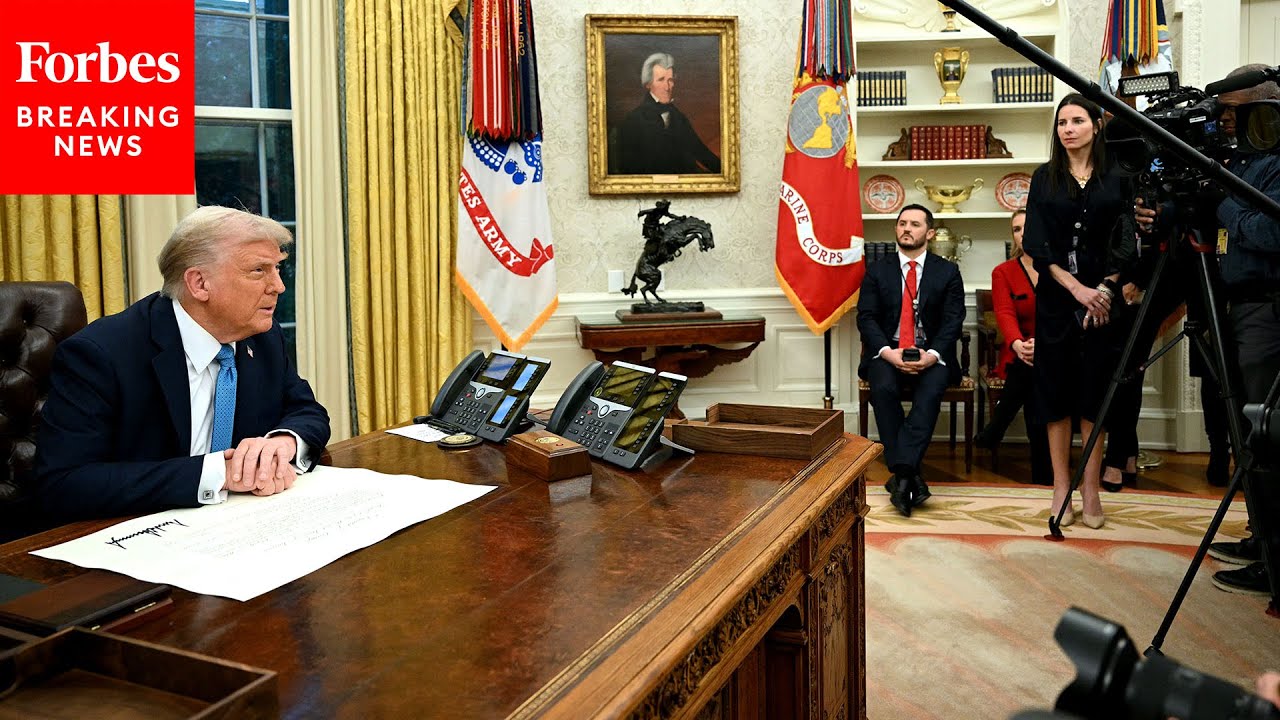
Then, at the podium, the backstage doors swung open, and Donald Trump stepped in. A flurry of camera flashes erupted; the quiet murmurs in the room vanished in an instant as he walked confidently to the podium with his signature presence. He gave a slight nod to the audience, scanning the room before speaking.
"Thank you all for being here today. We have many important issues to discuss, ranging from the economy and foreign policy to jobs and social welfare. " The rapid clatter of keyboards filled the room as reporters rushed to take notes.
Sophia swallowed hard, her throat dry. She didn't care about the economy; she didn't care about foreign policy. She cared about one thing: her chance and the thousands of veterans just like her.
The press conference dragged on for over 30 minutes, filled with questions about national issues. Sophia listened, but deep down, she knew that if she didn't act now, she would remain invisible forever. A male reporter stood up and asked the final question, something about international relations.
Trump responded briefly and then glanced at his aides. One of them gave him a small nod, signaling that the conference was over. "Thank you, everyone," Trump said, preparing to step away from the podium.
This was it. Before she even realized what she was doing, Sophia stood up. "Mr President!
" The packed room fell dead silent. Every head snapped in her direction; cameras whirled around, focusing on the unexpected voice. Some journalists blinked in surprise while others leaned toward their colleagues, whispering in confusion.
On stage, Trump raised an eyebrow. No one, not even seasoned reporters, was allowed to blurt out a question like that. Immediately, Secret Service agents moved, ready to intervene.
Sophia took a deep breath, feeling the weight of the moment pressing down on her. There was no room for hesitation. She lifted her chin, stood tall, and spoke—not as a desperate job seeker, but as a soldier giving an order on the battlefield.
"My name is Sophia Walker. I served as a first lieutenant in the United States Army, and I need a job. " The room froze; no one spoke.
Some reporters whispered in disbelief; others frantically typed, realizing they were witnessing something unprecedented. Cameras zoomed in, capturing every flicker of emotion on her face. On stage, Trump crossed his arms, studying her with sharp eyes.
Then, after a few beats of tense silence, he spoke, his voice low, commanding, and unreadable. "What did you just say? " Sophia clenched her fists, steadying her breath; her voice did not waver.
"I served this country for ten years, but when I came home, I realized something: no one wants to hire a veteran like me. I've sent out dozens of job applications; every single one was rejected. I'm not here.
. . " Asking for pity, I just need a chance to prove that I am worth something.
A ripple of murmurs spread through the room; some reporters exchanged glances, others turned to one another with intrigue. This had never happened before: a complete stranger, a veteran, standing up in the middle of a high-profile press conference, challenging the president of the United States to give her a chance. Trump tilted his head slightly, his eyes scrutinizing her.
"You’re telling me you can’t find a job? " Sophia nodded. "No one wants to hire a veteran.
Some think we can't adapt; others are afraid we’re damaged. But do you know what hurts the most, Mr President? " She took a steady breath.
"We gave our youth, our strength, our lives for this country, and when we come back, this country turns its back on us. " A heavy silence fell over the room. Even Trump's closest advisers, normally quick to prep responses, glanced at each other, unsure.
This wasn’t just a political question; this was a cry for help, a public challenge broadcast live to millions. Trump’s gaze sharpened. "What do you want?
" Sophia's fists clenched at her sides. "I want a job. Not a favor, not charity; I want the chance to prove that veterans are not burdens.
We are this country’s greatest asset. " Trump fell silent for a moment. He tapped his fingers lightly against the podium, his eyes narrowing in thought.
Then without warning, he sat down, his briefing papers planted, both hands on the podium, and locked eyes with her. "Come up here. " The entire room jolted; a few reporters inhaled sharply, others scrambled to flip open their notebooks, desperate to record every word.
Secret Service agents stiffened, their bodies tensing as if preparing for the unexpected. Sophia's heart slammed against her ribs. For a split second, she hesitated, then, like a soldier responding to a direct order, she stepped forward.
She moved past rows of stunned reporters, past curious, skeptical gazes, past cameras that captured every single step. This moment—this very moment—would change her life forever, and no matter what happened next, she would never regret speaking up. Sophia walked forward, feeling the weight of every single eye in the room on her.
The press conference fell into absolute silence; the only sound left was the steady, deliberate echo of her footsteps on the polished floor. She had faced bullets, led rescue missions, and survived the battlefield. Yet, standing before the most powerful man in America, in front of millions watching at home, made her heart race like never before.
Trump remained standing, both hands planted firmly on the podium, his sharp gaze locked onto her as she approached. No rush, no hesitation; he was assessing her, measuring every word she had just spoken. Sophia stopped a few steps from the podium.
She stood tall, shoulders squared, her eyes unwavering. "I served this country for 10 years. I led a logistics unit in Afghanistan, ensuring that hundreds of soldiers had the supplies they needed to survive on the battlefield.
I've worked under unimaginable pressure; I've made life-or-death decisions in seconds. But when I came home, no one needed me anymore. " Trump slowly folded his arms across his chest, nodding slightly.
"You’re telling me you can’t find a job? " Sophia swallowed hard. "No company will hire me.
They look at my resume and see one thing: veteran. And just like that, they assume I can’t adapt. They're afraid I have psychological issues; they think I can’t work in a team, that I don’t know how to function outside the military.
" The room went silent; cameras zoomed in, capturing every flicker of emotion on her face. Some journalists typed furiously, realizing they were witnessing a moment that would be talked about for years. Trump tilted his head slightly.
"So, tell me, what do you want? " Sophia didn’t blink. "I want a chance.
Not a handout, not charity—just a job. An opportunity to prove that I am not worthless, that veterans are not a burden to this country. " Trump was silent.
He turned slightly, glancing at his advisers; some of them exchanged uneasy glances, clearly thrown off by the situation. This wasn’t a question they had prepared for. This was real; this was raw, and millions were watching.
After a long pause, Trump turned back to Sophia. His voice was steady, slow, but commanding. "You’re right about one thing: this country has a serious problem with how we treat our veterans.
We honor them when they go to war, but when they come back, the system forgets them. " Sophia didn’t break eye contact. Trump planted both hands on the podium.
"You led a military unit; you handled logistics, personnel, crisis management. Do you think you could work in the government? " The room erupted in hushed whispers; a few reporters gasped audibly, others exchanged stunned looks.
This wasn’t what anyone expected from today’s press conference. Sophia froze for half a second. She had prepared herself for rejection, for someone to tell her she didn’t belong here.
But this question—this changed everything. She straightened her shoulders and met Trump’s gaze head-on. "If you give me a chance, I will outwork everyone.
I will prove that veterans are more than just soldiers. We have discipline, we have loyalty, we have a sense of duty that doesn’t end when the uniform comes off. We don’t need pity; we just need a way in.
" Trump nodded as if he had made up his mind. He turned to one of his advisers. "Do we have an open position at the Department of Veterans Affairs?
" The adviser hesitated, adjusting his glasses. "We could look into it, sir, but the hiring process is complicated; there are protocols. " Trump cut him off.
"She’s a veteran. That’s the only resume I need. " The entire room held its breath.
Sophia felt her heartbeat thundering in her chest. Was this really happening? Trump turned back to her.
His voice firm, leaving no room for doubt: "On Monday, you will report to the Department of Veterans Affairs. We need someone who understands the problems inside the system so we can fix them, and I believe no one is better suited for that job than someone who has lived through it. " The room erupted.
Journalists raced to type, cameras whirled, and reporters exchanged stunned glances. This was history unfolding in real time. Some sat slack-jawed in disbelief; others whispered, barely containing their excitement.
Sophia felt her legs wobble. For a split second, she had come here ready to fight, to debate, to plead; she had never expected to win right here, right now. She swallowed the lump in her throat, then straightened her posture, eyes locked onto the president.
"Thank you, Mr President. I won't let you down. " Trump gave a slight smirk.
"Good. I expect you to keep that promise. " The room exploded into a frenzy.
Phones rang off the hook, and news outlets rushed to break the story: "Breaking news: President Trump hires veteran on the spot at press conference. " Sophia took a deep breath. She knew this was just the beginning.
She had won the opportunity, but now she had to prove she deserved it. The air in the press room was electric; President Donald Trump's words hadn't just shocked his advisers—they had stunned the entire country. Hiring a veteran on the spot without any formal hiring process was a bold, unprecedented, history-making decision.
A reporter in the front row shot up his hand, his voice a mix of disbelief and challenge. "Mr President, are you certain about this decision? Can someone with no prior government experience handle such an important role?
" Trump didn't flinch. A small smirk crossed his lips, his eyes gleaming with confidence. "She's never worked in government, but she's served this country on the battlefield, and I trust the judgment of someone who has risked their life for America more than I trust half the bureaucrats running this town.
" A senior White House adviser leaned toward a colleague, whispering, "Should we put a stop to this? This is too risky. " But Trump had made up his mind.
He turned back to Sophia, his voice steady and commanding: "On Monday, you will report to the Department of Veterans Affairs—not as a favor, not as a publicity stunt, but because you stood up and demanded what should have been yours all along. " The room buzzed with an unrelenting wave of whispers. Cameras whipped around, capturing every angle.
Reporters scribbled furiously, some exchanging skeptical glances, others debating whether this was a genuine moment or a political move. Sophia stood frozen in place; a storm of emotions raged inside her—shock, disbelief, but above all, an overwhelming sense of responsibility. She had never imagined getting this opportunity, especially not like this.
But now, with millions of eyes locked on her, she couldn't back down. She took a steady breath, looked Trump directly in the eye, and spoke with unwavering resolve: "Thank you, Mr President. I won't let you down.
" Trump nodded once before turning back to the press. "Any more questions? " A reporter immediately shot up, his voice laced with skepticism.
"Is this just a political stunt? Do you really believe that someone with no prior government experience can make a real impact? " Trump smirked, crossed his arms, and delivered a response that made the room explode.
"Good question. When she was out on the battlefield, no one asked if she had experience; they only cared about one thing: could she complete the mission? And I believe she can.
" The room erupted. Keyboards clattered at lightning speed, journalists leaned into hushed, frantic discussions. This moment—this very moment—would dominate the headlines.
A chill ran down Sophia's spine. She had never been trusted like this, never been handed a responsibility this massive. But that also meant failure was not an option.
That night, the story of Sophia Walker's confrontation with President Trump dominated every major news outlet. Headlines blared across TV screens, newspapers, and social media feeds. Some hailed it as a bold step toward fixing a broken system that had long neglected veterans; others dismissed it as political theater—an impulsive move with no real strategy.
But to Sophia, none of that mattered. She knew only one thing: on Monday, she would step into a new battlefield; no guns, no enemies in uniform, but a battle just as brutal—the fight against bureaucracy, a fight to bring justice to the forgotten soldiers who, like her, had been cast aside. Monday morning, Sophia stood before the towering headquarters of the Department of Veterans Affairs, inhaling deeply.
The building loomed over her, a fortress of government bureaucracy, but what concerned her wasn't its size; it was what awaited her inside. She had heard the stories: endless backlogs of claims, veterans waiting years for benefits, men and women trapped in a system that was supposed to help them only to be buried under its weight. And now she was no longer an outsider looking in; now she was inside the fight.
She pushed open the heavy glass doors and stepped in. Bright overhead lights, employees hunched over paperwork, phones ringing non-stop—at first glance, it looked like any other government office. But as Sophia made her way toward the front desk, she felt it: the stares.
Heads turned, eyes lingered, a mix of curiosity and doubt. Then, a man in his 50s wearing silver-framed glasses stepped toward her. There was no warmth in his expression.
"You must be Sophia Walker. " She nodded. "Yes, the president appointed me to work here.
" The man folded his arms across his chest, his eyes scanning her with quiet skepticism. "I'm Richard Coleman, Head of Human Resources. Let me be clear: this isn't a battlefield, and we don't operate on orders and obedience like the military.
" Sophia held her ground. "I'm not here to give orders. " "I'm here to work," Coleman smirked, unconvinced.
He turned in motion to an assistant. A moment later, a towering stack of files was dropped onto the desk in front of her. "Good, then start with these.
" Sofia grabbed the files, but the moment she flipped through the first few pages, her stomach twisted in anger. Some applications had been gathering dust for over three years; some veterans had been denied benefits for reasons as vague as incomplete documentation or lack of sufficient medical proof. One case caught her eye: a soldier who had served in Iraq, injured in an explosion.
His request for medical compensation had been under review for over two years. Sofia looked up, her voice sharper than before. "Some of these veterans have been waiting for years.
Why haven't these cases been processed? " Coleman shrugged. "That's the system.
Everything needs to be reviewed properly. " Sofia pressed her lips together, inhaling deeply, but when she spoke, the frustration in her voice was impossible to hide. "That's not a system; that's a failure.
" A few employees nearby glanced over, sensing the tension. Coleman crossed his arms, raising an eyebrow. "You may have the president's backing, Walker, but you're not going to change the way things work here overnight.
" Sofia locked eyes with Coleman. "No, I can't change everything overnight, but I can start today. " Without waiting for a response, she grabbed the towering stack of files and marched toward her newly assigned desk.
Later that afternoon, Sofia buried herself in the backlog of veteran claims, analyzing each case. A pattern quickly emerged: the more complex the case, the longer it had been delayed. Severe injuries, psychological trauma; the veterans who needed help the most were the ones waiting the longest.
Enough was enough. She picked up the phone and dialed the number of one of the veterans on the list: Michael Turner, 67 years old, a Vietnam War veteran who had filed for disability benefits in 2019. Still no response.
The phone rang several times before a voice answered, rough, tired, worn down by years of waiting. "Hello? " Sofia straightened in her chair.
"Mr Turner, my name is Sofia Walker. I'm with the Department of Veterans Affairs. I'm reviewing your disability claim, and I see it's been delayed for three years.
I wanted to reach out and see how I can help. " A bitter laugh echoed through the line. "Three years, sweetheart?
I've been waiting 15. " Sofia gripped the phone tighter, a wave of anger and helplessness swelling in her chest. "Have you ever received any response at all?
" Turner let out a dry chuckle. "At first, yeah. They told me I needed to submit more paperwork.
Then, after that, nothing. I called hundreds of times; every time, the answer was the same: 'Your file is under review. ' At some point, I just stopped calling.
" Sofia clenched her jaw, anger burning in her chest. Men like Michael Turner had given their youth, their strength, their very lives to protect this country, and now, when they needed help the most, they were abandoned. "Mr Turner, I promise you, your file will not be ignored for one more day.
" She hung up, then without hesitation, she turned on her heel and marched straight into Coleman's office. Coleman looked up, raising an eyebrow at the fire in her eyes. "I need to know why a veteran has been waiting over a decade for benefits and still has nothing.
" Coleman let out a sigh, leaning back in his chair. "Like I told you, the claims process is complicated. We receive thousands of applications every year.
" Sofia slammed a stack of files onto his desk, cutting him off. "These people are not numbers on a spreadsheet; they are human beings fighting every single day just to survive. They deserve better than a system that treats them like they don't exist.
" Coleman narrowed his eyes. "Do you really think you can change this system? " Sofia didn't blink.
"I don't think; I know. " Coleman studied her for a long moment, then he shook his head and let out a quiet chuckle. "I've seen people like you before—fired up, determined—but then they realize something: Washington doesn't change just because one person wants it to.
" Sofia's fists tightened at her sides. "I don't need Washington to change overnight. I just need them to know they can't ignore me.
" She turned and walked out, knowing full well she had just made a powerful enemy inside the Department of Veterans Affairs. But that didn't matter; she hadn't come here to make friends; she had come here to fight. Her first day had been anything but easy, but she knew this was only the beginning.
She was no longer on a battlefield with bullets whizzing past her head, but here, surrounded by bureaucratic red tape and a system that resisted change. She was still in a war, and this was a war she intended to win. Sofia once believed that the harshest battlefield she had ever faced was one where an explosion could take a life in an instant.
But now she realized there was another kind of battlefield, one where the enemies didn't carry weapons; instead, they hid behind expensive suits, polished desks, and stacks of paperwork. They controlled the fate of thousands of veterans—not with bullets, but with bureaucracy. She had a plan.
Step one: she needed allies. Sofia began reaching out to veteran support organizations, listening to the stories of those the system had abandoned. She met with former service members—men and women still fighting a different kind of battle every day, a battle against red tape, endless paperwork, and an indifferent system.
One of the first veterans she spoke with was Hank Lawson, a Vietnam War veteran. He had been waiting for disability benefits for 15 years; his claim had been delayed and denied repeatedly over a simple excuse: insufficient documentation. They met at a small, quiet café.
Hank took one look at her. let out a dry chuckle and shook his head. "You really think you can change the system, kid?
" His voice was rough, likely from years of smoking in the service. Sophia didn't flinch. "I don't think," I know," Hank took a slow sip of coffee, squinting at her.
"People before you have said the same thing. Then they gave up. " Sophia stayed silent for a beat.
Then she reached into her bag and placed a folder on the table. "I reviewed your case. I found three letters dated all the way back to 2010, saying your claim was under review.
But the truth is, no one has touched it in over a decade. " Hank let out a bitter laugh, but there was no humor in it. "Same old story, and you think you can change that?
" Sophia nodded firmly. "Not just for you, but for thousands of other veterans like you. But I need your help.
" Hank raised an eyebrow. "Help with what? " "I need you to tell your story.
The more voices we raise, the harder it will be for the system to ignore us. " Hank studied her for a long moment, then slowly he nodded. "All right, kid.
If you're willing to fight, then I won't sit back and watch. " English adaptation: forcing Washington to listen. This was just the first step.
Next, Sophia needed to make Washington listen. She reached out to the media, sending emails to journalists, sharing stories like Hank's. At first, most ignored her; they had heard stories like this a thousand times before.
But Sophia refused to be ignored. She called, she left voicemails, she even waited outside newsrooms, hoping to catch a journalist in person. Finally, a reporter from The Washington Post agreed to meet with her.
Rachel Miller sat across from her, arms crossed, skepticism in her eyes. "What do you want from me? " Sophia met her gaze.
"I want you to expose the truth. This system is failing the very people who once risked their lives for this country. I have evidence.
I have witnesses. I just need you to help bring their stories to the public. " Rachel was silent for a long moment.
Then she reached forward and took the folder of documents Sophia had brought. "I'll look into it. " It wasn't a promise, but it was something—a first crack in the wall of silence.
Meanwhile, inside the Department of Veterans Affairs, Sophia kept pushing from within. She demanded a review of the longest delayed cases, working directly with staff to expedite the process. But not everyone welcomed her presence.
Richard Coleman, Head of Human Resources, called her into his office. His irritation was barely concealed. "You're causing a lot of trouble.
" Sophia didn't flinch. "If fighting for just veterans is causing trouble, then yes, I am. " Coleman let out a dry chuckle.
"You really think you can change a system that's been in place for decades? " Sophia's voice was steady. "I don't think I know.
" Coleman smirked, leaning back. "Let's see how far you get. " Sophia knew this wasn't going to be easy, but she also knew one thing for certain: a soldier doesn't retreat just because the enemy is stronger.
She had started this fight, and she wasn't backing down. One year after Sophia set foot inside the Department of Veterans Affairs, America witnessed a transformation no one had thought possible. From a forgotten soldier to a leader of reform, she had become one of the most pivotal figures in overhauling the veteran support system.
Processes that once took years were now streamlined; thousands of backlog cases were finally processed; veterans who had lost all hope were finally receiving the assistance they deserved. But the road wasn't easy. Sophia had faced invisible barriers—resistance from career bureaucrats who didn't want to see the system change, isolation, intimidation, and constant warnings that if she kept stirring the pot, she would lose her position.
But she never backed down. She used the power of the media to expose the truth. She met with struggling veterans, documented their stories, and turned public pressure into an unstoppable force.
She partnered with nonprofits and rallied private sector support to create job opportunities for those who had once served their country. In the end, her relentless fight changed everything. She used the media to bring the truth to light; she met face to face with struggling veterans, documenting their stories, applying public pressure on the system.
She partnered with nonprofits, rallied private sector businesses, and created job opportunities for those who had once served their country. Her relentless fight changed the game. Today, she stood on a stage inside the White House, side by side with President Donald Trump.
The room was packed with reporters; flashes from cameras flickered nonstop; millions of Americans were watching. Trump stepped up to the podium; his gaze swept across the room before he spoke, his voice deep, steady, full of authority. "One year ago, I met a woman at a press conference just like this.
She had nothing in her hands except courage and a simple question: 'Mr President, can you give me a chance? '" The room fell silent. Sophia stood tall, her back straight, her eyes fixed forward.
She did not blink. Trump's voice grew stronger. "Today, I stand here to tell you, she didn't just take that chance; she turned it into a movement.
Because of her tireless efforts, tens of thousands of veterans are now receiving the support they deserve. Those who were once forgotten are finally being heard. " Trump turned toward Sophia, a genuine smile crossing his face.
"And for her incredible contributions, I am proud to announce Sophia Walker will officially take on the role of Secretary of Veterans Affairs for the United States. " The room erupted; journalists scrambled to take notes; cameras zoomed in to capture every flicker of emotion on Sophia's face. Some clapped in admiration; others sat stunned, mouths slightly open in disbelief.
Sophia's heart raced. Pounded, she had never imagined coming this far. One year ago, she had been an unemployed veteran standing in the middle of a press conference asking for a chance, and now she wasn't the one asking anymore; she was the one leading.
She stepped forward, taking the microphone from Trump's hand. Her voice was strong but filled with emotion. "When I left the military, I felt invisible.
I didn't know what came next, and I wasn't alone. Millions of veterans face the same struggles—forgotten, abandoned. " She took a deep breath, then she looked straight into the camera as if speaking directly to every veteran watching from home.
"But I stand here today to tell every veteran listening: You Are Not Invisible. We will fight to ensure that every soldier who leaves the military has a clear path forward. This is not the end; this is just the beginning.
" Applause thundered through the room. That night, news of Sophia's appointment dominated every headline and social media feed. Veterans from across America flooded her inbox with letters, emails, and messages of gratitude.
One young soldier about to leave the military wrote to her, "Because of you, I'm no longer afraid of what comes next. " Sofia held the letter in her hands, her vision blurring with emotion. She knew the fight wasn't over, but this time she wasn't fighting alone.
She had started a movement, and it would only grow stronger. Sofia sat alone in her new office, gazing out the large window of the Department of Veterans Affairs. Outside, life continued as usual; people rushed through their daily routines, unaware of the quiet revolution that had taken place.
But she knew. She knew that because of the relentless fight over the past year, thousands of veterans had found a new path forward. She picked up the final letter of the day, a handwritten note from a newly discharged soldier: "I thought my life was over when I left the military, but because of you, I have hope.
Thank you for fighting for us. " Sofia set the letter down, closing her eyes for a moment. She had once been the forgotten one, unseen and unheard, but now she had not only reclaimed her own future; she had helped thousands of others do the same.
She turned back toward the cameras; a group of reporters stood ready, their lenses focused on her. This wasn't just another interview; this was a chance to send a message. "I am not the only one who has ever felt forgotten.
Millions of veterans out there are facing the same struggle. They sacrificed; they fought. But when they came home, they had to start over from nothing.
No one should have to go through that. " She paused, her voice lowering but filled with unshakable determination. "But we can change this.
We can create a future where every soldier leaving the military has a clear path forward—a future where they no longer have to fight just to be recognized, but are welcomed with gratitude and the respect they deserve. " She looked directly into the camera as if speaking straight to every single person watching. "If you know a veteran who is struggling, listen to them.
If you have the chance, help them. And if you believe that those who gave their youth to protect this country deserve a second chance, then stand with us. Share this story, raise awareness, and most importantly, never let those who served be forgotten.
" A heavy silence filled the room. Reporters nodded slowly; cameras kept rolling. Sofia took a deep breath, then smiled softly.
"My story is not just mine. This is the story of millions of veterans across America, and I hope with your help, we can write a new chapter—a chapter of hope, of change, of justice. " She stood up and walked out of the room, ready to face whatever came next.