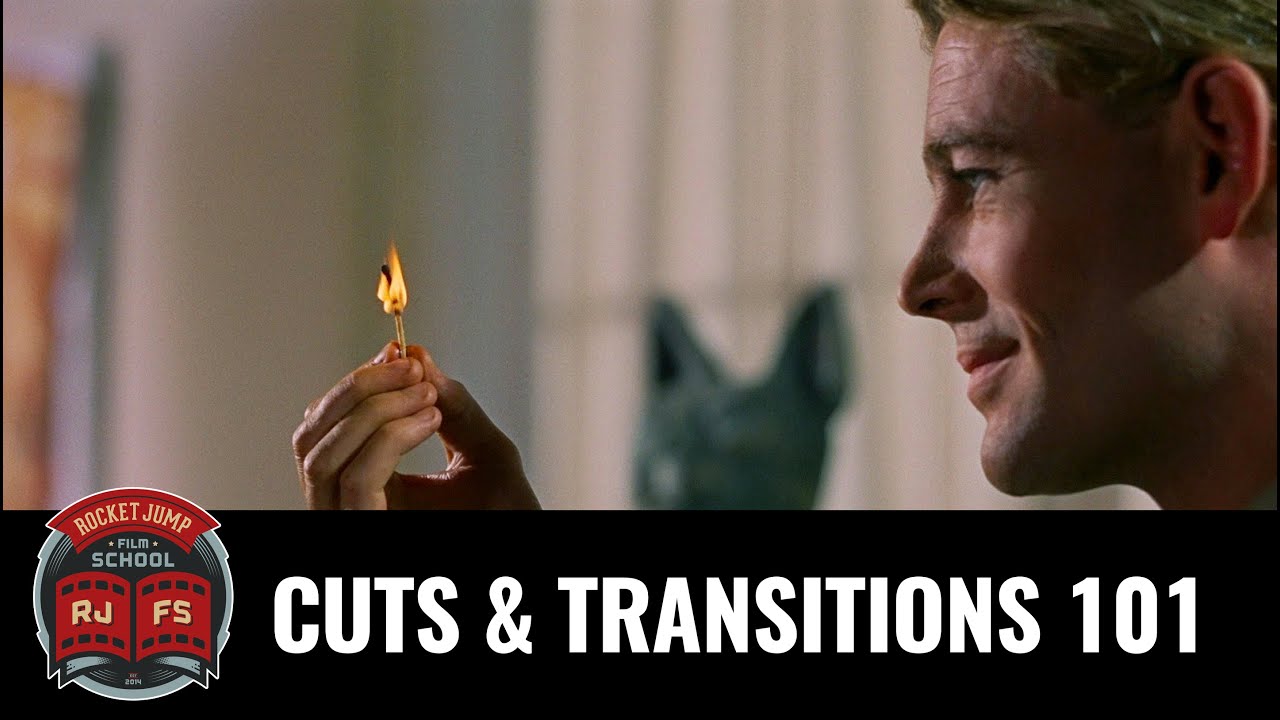
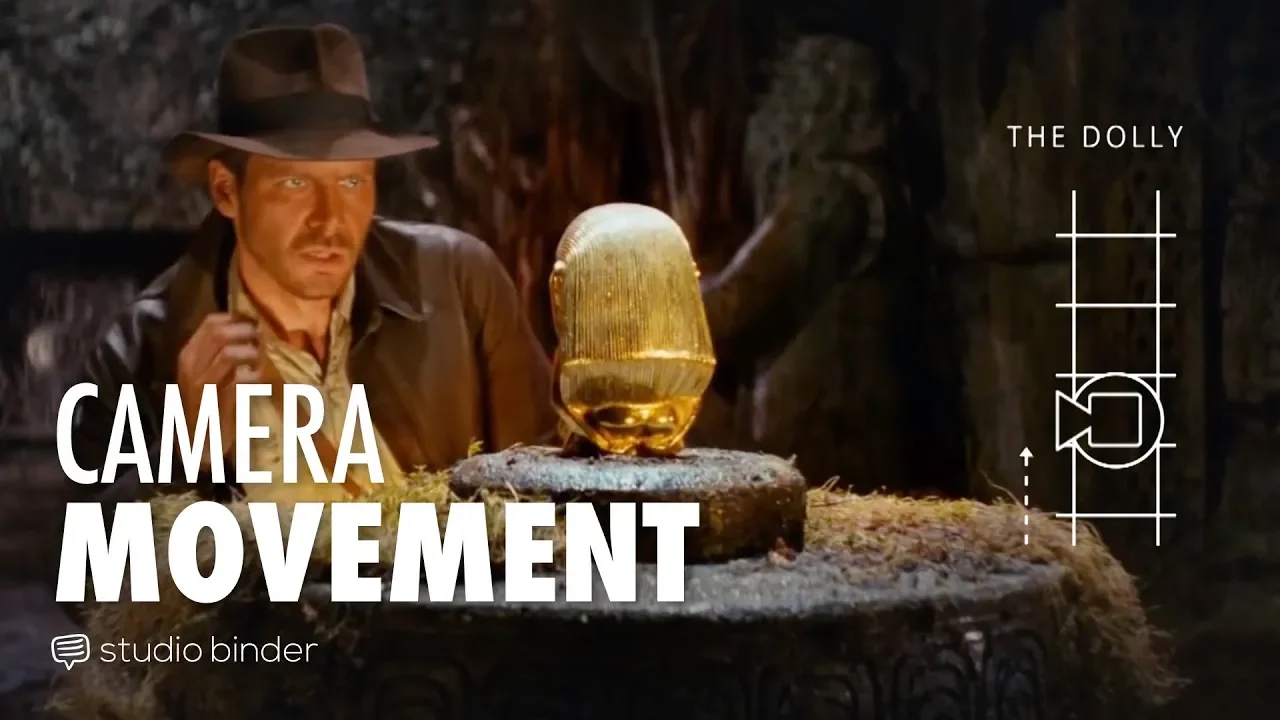
When we think about directing camera movement, we may think of those high up crane shots, or elaborate long takes, or robot arms. Why do we really move the camera? When is a slow push in on a character more effective than a static shot or vice versa?
Why would this shot. . .
-Shit just got real. -Not work for this scene. -She's been murdered and you think I did it?
-Next to directing actors, directing the camera can be one of the most challenging tasks that director takes on. So it's important to know what tools are available to tell your story visually. So let's fill up your tool kit with the most common and not so common ways of directing a camera.
Let's start with some of the basic camera movements in any cinematographers arsenal. First up — the Pan. The pan can be a fast-paced whip pan, like Paul Thomas Anderson is fond of using.
It`s the equivalent of quickly turning to see something. It creates a jolt of energy. Conversely the slow pan gives us time to take in the landscape.
Next up — the Tilt. You may not realize it, but one of the most effective opening shots in history is a tilt. Tilt often reveal something to us, suddenly redirecting our attention.
Next up — the Zoom. Zoom can be a funny kind of punctuation because of its sudden nature. Our next shot is — the Dolly.
A smooth movement often on a track which moves the camera through a space, creating a different type of visual experience than the zoom or pan. "Vertigo" was the first film to ever combined the dolly and zoom at once. This is called — the Reverse Dolly Zoom.
It's become a favorite of many filmmakers, to show a character having an intense internal experience. Next, let's look at the Pedestal shot which moves the camera up and down. Here, it's used to reveal the stakes of a scene in "Inglourious Bastards.
" Another impressive three-dimensional move is the Crane or Boom shot which might also tilt the camera, and use a larger range of motion. The showdown is coming, and sheriff Will Kane is left alone to protect the town. [Music] Next, the Steadicam or Gimbal.
Steadicam or gimble shots, like this one, can have the same effect as the dolly, but because the camera is stabilized on the camera operator, it gracefully glides within a space. You can take that even a step further with the Handheld shot. The handheld shot moves the camera through the space much like the steadicam or gimble, but it also has a roar, shaky feeling that creates more anxiety in the viewer.
And lastly, we'll take a look at a type of shot that doesn't physically move the camera, but moves the lens. The Rack Focus. By racking focus, you bring something to the viewers attention.
All of those camera moves a fairly common knowledge. What really makes a great filmmaker is how you can combine them in unique ways. if you shoot scenes on sticks, but then go handheld for a sudden violent fight scene, well, then you got everyone paying attention and literally feeling the camera choices.
Take a look at this shot from "Straight Outta Compton. " The shots slowly ventures through the party, starting up above the party then lowering down to a camera operator, who then takes it into a swimming pool. And then hands it off to another operator.
The effect? We the viewers, feel like with their. How about this shot from the circle?
It starts as a drone shot, but it's soon handed to an operator who glides the camera through the sequence. By combining shots in unique ways, you can direct the camera to create an engaging experience. Free shot listing software, like Studio Binder, makes that part much easier.
It lays out all of the most common, shot, angle, equipment, and gear choices for you as checkboxes. So you can think more creatively and combine them in new ways. Yes, there are a lot of camera moves and a lot of ways to combine them.
But before you strapped a camera operator to a drone, and fly them off a cliff, ask yourself one important question. Do you have insurance? But then ask yourself another question.
How does this support the story? You don't want the viewer to notice the cinematography, you want them to notice something in the story. The visual language is always evolving, and filmmakers have new tools available to them every day.
But in the end, they're just tools, designed to move something else. The viewer's point of attention. When filmmakers rack focus or dolly in, all they're really doing is directing the audience's eye to something.
If you start thinking about where the audience's eye is pointed, then you're truly moving the camera with a purpose. Watch the sequence and notice where your eye is throughout it. - Without anybody gettin` wise, the IRS or anybody.
Now, notice how in a court rooml nobody ever seems to see anything? Somehow, somebody's always lookin` the other way. Now, look at these guys.
They look busy, right? They are counting money. -This sequence is about following the money.
And from shot to shot, we do this with our eyes, our point of attention, from hand, to briefcase, to table. What's moving across the frame and through the sequence isn't just the camera and the objects and frame, but also our eyes. Now, check out this sequence.
The energy of this moment is frenetic because Quran has us looking all over the frame. Our point of attention goes from one upper corner to the opposite lower corner, as we try to follow the subject, as she's hurtled through space. We don't even know where to look.
It creates, chaos, anxiety. Both sequences are excellent, and so their stories in different ways, by understanding how to manipulate a viewers point of attention. Thinking about this one show you won't use any unmotivated camera moves.
However, you choose to move the camera, the real object you should be focused on moving is your audience's attention. -Boo, mummy. -Think about what you want the audience to focus on in each shot, and why it serves the story?
Then think about what devices and movements can help you achieve that. Because if you're moving the camera without thinking about where the audience is looking, they probably going to start looking at their phones. -Really?
- If you like the video, make sure you share and subscribe. See you in the next video.
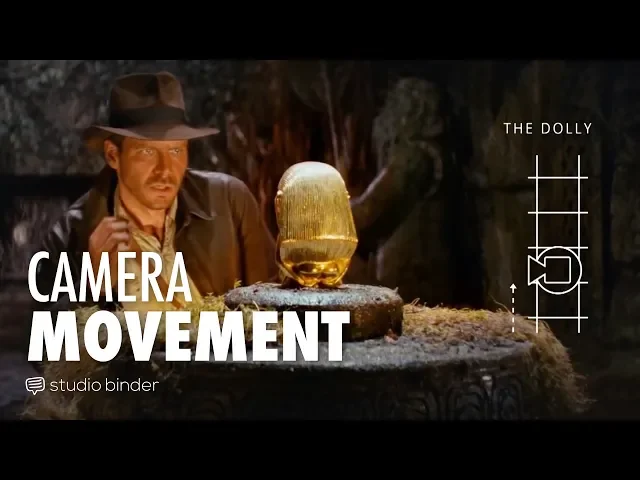
![Ultimate Guide to Camera Movement — Every Camera Movement Technique Explained [The Shot List Ep6]](https://img.youtube.com/vi/IiyBo-qLDeM/maxresdefault.jpg)
![Ultimate Guide to Film Composition & Framing — Key Elements Explained [Shot List Ep. 11]](https://img.youtube.com/vi/hUmZldt0DTg/maxresdefault.jpg)