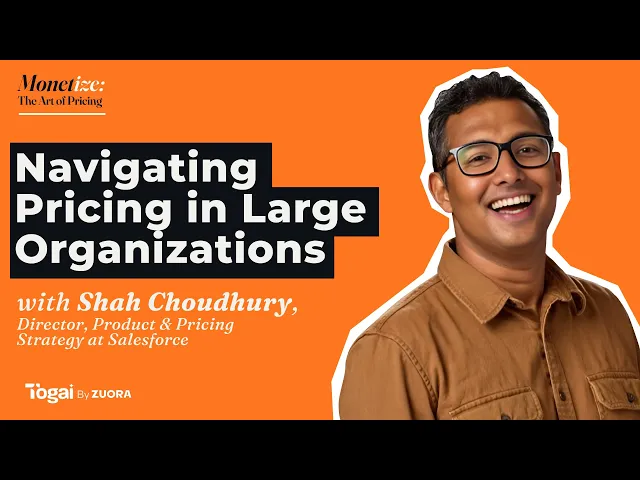
what is the return on investment how much I'm going to spend and what's the value I'm getting out of it in those instances you want to drive adoption right you want to get the solution in the hand of people now to get the in the hand of people you want to follow a land and expand strategy you're now listening to monetize the art of pricing welcome sha uh and uh I'll probably start off uh checking in with you for a quick introduction on a backr about what you do and then maybe we can get deep
in and start talking about interesting things in the world of pring thank you abishek again pleasure to be here hello everyone I always love speaking about pricing and pricing strategy so again you'll hear me nerding out a lot all throughout this podcast so first of all what I do I do pricing strategy at sales forces as abish mentioned I am the monetization lead for our service Cloud portfolio so if you use service start or you're using agent force today or tomorrow you will see that some of my work is kind of like what you're paying
for so I've been working in pricing strategy for quite a while I've been at Salesforce for almost three years I worked across different clouds started off with marketing Cloud then I was the monetization lead for Commerce cloud and now service Cloud so it's been pretty interesting going across different clouds and learning about the different parts of the businesses I have been working in pricing even before I was in Simon coer people familiar with with it one of the world's leading pricing strategy consulting firm and also an expert in growth strategy so I was there for
three years did a lot of work in terms of stas pricing working with unicorn seriesa Enterprises and a lot of pricing around restaurants so I've done a lot of pricing in terms of burgers fries and Shakes and you will be surprised there's a lot of similarities and I use a lot of fast food analogist to expand pricing so as we progress in our conversations today beware that is coming so yeah all of that six years in terms of pricing strategy I love the work I feel it's super interesting it's very complex as well in today's
world with all of these things unit AI consumption subscription what is the right what is the Silver Bullet to make money it's a burning question but again it's interesting and keeps us uh up at night so again back to you abishek and I'm looking forward to all the questions you're going to ask me thanks for the introduction and uh you know especially with your background uh you know with in pricing Consulting and having worked on non-software pricing as well that's something very interesting and we are going to be touching into how that works and maybe
you know draw correlations with software right but just starting off from the start right like and uh getting right into the key aspect or the interesting thing that's happening around us today so of course Salesforce uh recently moved uh or recently came up with pricing that's based on conv conversation or conversion right like essentially moving a value value metric uh from what's been subscription to this so let's talk about that a little bit right and maybe the first thing was what led to the change or when did this thinking around changing this start right like
and how did how does how did that come about okay so let's take like a step back and think about like the changes in the industry and the direction you needed to take as an organization and it's not their Sal were specific but every kind of like organization was working in the realm of generative Ai and kind of solutions which are more autonomous and everything so the first thing is that you have a lot of cost in today's world AWS cost Computing cost llm Gateway cost and everything so when you are you when you are
kind of like selling your solution or people are using your solution the cost are also scaling so when cost scales it becomes very difficult to create subscriptions right so then you kind of like start thinking about how do I scale my pricing in terms of the usage which takes care of the cost itself so that's one of the let's say key principles or reasons why you will see consumption based or hybrid kind of like pricing becoming more popular the second thing is when you have Solutions which are revolutionary let's say technology which is going to
change the whole Arena of how we do work how we think about things how we think about a solution how we think about cost even right that's that's where people are more skeptical about the solutions because they don't really know what they're going to get out of it what is the return on investment how much I'm going to spend and what's the value I'm getting out of it in those instances you want to drive adoption right you want to get the solution in the hand of people now to get the in the hand of people
you want to follow a land and expand strategy generally product that drove uses V pricing all of this play into that realm and helps you to kind of like get in that regard so I would say that's the second thing and the third thing which is also very important that companies have been successful doing consumption on users based pricing look at the snowflakes of the world the AWS of the world right like they have figured out a way they have made the market also adopt right the way they go to market the way people think
about like Technical Solutions and everything so that's another thing so if you take all of these three in account like cost fees Market expectation the solution but they're more revolutionary now than before and it's more of a let's say Green Field and then the third one is there have been PE like companies who have done this very well and have been able to drive the market confidence so taking all those three things together I believe that it is at right time to make this shift and it is a necessary shift and it is a pivotal
moment as well right absolutely right I mean we see that happening quite a bit in the market right now over the past few years right like but each company has its own journey of making that pricing change right like uh the market definitely is indicating the direction so and especially at very large companies um you know there's always u a slight distinction between what the CFO of the company who's thinking from predictability perspective and then there is a significant change that somebody else is thinking of with respect to changing pricing so typically what is the
inflection moment right is it externally driven or does it come from an internal driven and how was that at say for did a customer come up and is was it like looking at the market how does that inflection point come about in this journey very good question so there's two pieces of how to think about it right so the one thing is when you have billions of dollar right in a business through a revenue model or a business model it's very hard to risk it right let's say Google they made their move to Germany and
everything but when after Chad GPT and open AI kind of like pushed them towards that so that's one thing so we are a $35 billion company so every decision you will have to be thinking through what is the implications or risk to our revenue cannibalization and everything so that's one part that is super important the second part is again what is happening in the market right like what is the trends telling us how fast is the change happening and if we don't move what is going to happen we don't want to be the codak of
the future right I mean so that's another thing so Innovation speed and then also like how fast and how like how are you competitiv reacting so all of these things will go to like push and pull in different directions so yes there is an internal challenge of course there are people who will think about changing it quickly of course there are people within different business units who do think this is a risk right because it's a huge company like not just salesp every company like Microsoft and all of these World they have different business units
everybody has their revenue targets and everything suddenly generative a you're changing the price Model there are implications right some might win some might lose not everybody's going to win in that big change so that's one internal challenges and then to the external challenges if you don't move if you don't making progress enough if you're sitting everybody's noticing investors right like there was a lot of initial excitement around generative AI when kind of like open Ai and chat GPD came out soon we saw like articles coming out is hey this is great but how do we
make money with this AI thing and now we're at that inflation point of figuring out how to monetize all of these use cases all of this value this productivity gains and everything and it is going to happen somebody is going to do it so the Smart Companies I would say is the ones trying to do it at the at the Forefront right so you know right you're right in the sense that this move that came about was slightly on the news because it was a pivotal shift in terms of have you price right so everybody's
been talking about it but taking a step back I'm sure there are more simpler changes to pricing that happens on a more regular periodic basis right like that must have happened in your journey so as someone who does pricing like I mean of course we talk about the Highlight moments like we changing a whole pricing model but on a daily basis or on a on a quarterly basis how does somebody within a company think about pricing right or pricing and packaging if they can kind of extend that right and I'm just not talking about pival
changes but even incremental changes or smaller changes yeah a very good question abishek I would like to explain it at let's say let's kind of divide it into two pieces right so and I this is kind of like my day-to-day job and so I'll go slowly about it so the first part is let's say I work very closely with product managers I work with a bunch of product managers across service cloud and they're all working on different features different products which they want to launch right so they will come to me I am kind of
like the commercial gatekeeper they'll come to me hey sh I want to launch this product or this feature and everything and then we start our assessment the assessment is in terms of understanding is this product going to make us money is this feature going to make us money is it going to make our portfolio stronger is there upsell potential cross sell potential what are the jobs to be done right so is this something sales can sell so I will going I'm going to do a assessment in terms of the the feasibility of the benefits and
then an assessment on the aort side right I mean we're not going to launch something which is going to make us a few million dollars with using all these resources so I would say that's the first thing should we launch a product or not and if we launch it should it be an add in or an addon what it means that should you bundle this feature into an existing product to make it stronger right or should it be a separate product of its own does that mean like when the product team comes to you their
often than not coming to you at a planning stage like even before they're thinking of launching a product is that so you get to have all of these Insight exactly so you've read uh there is this book about Maan wrote about monetizing Innovation he's a partner from Simon Kutcher and his book if you read it it talks about doing this research thinking about what the customer needs even before you build a product because you don't want to build a product with 10 features where customer requires six features or one six and are willing to pay
for six and then what do you do with the rest of the four right so yes we do have this discussions very early on as before even like the product work and the hypothesis building and everything in terms of the pricing and packaging is happening and after a project is approved then we start working on the commercial framework and all so awesome yes I mean I have read the book like and I've had a chance to meet MN very briefly once as well and very fascinating thoughts right like in terms of uh how to think
about pricing but how does it get implemented in reality right like so uh you know for example many many early stage companies I have built a couple of early startups myself right theoretically what what what what you saying makes sense right like but more often than not till you reach a certain stage right you're primarily worried about Gathering logos getting customers trying to get feedback and very difficult to think of pricing um as a lead were very very early right maybe very seent companies do that so how do you kind of like think through that
right like on a practical level when do companies should be thinking about it uh from implementing pricing right because let me put in a different way a company who thinks about pricing very very strategically very early at an early stage is still going to give fairly large discounts of work around if you have a big customer coming and signing up with you right so how do you work through this U Paradox in a certain way no very very good question so first of all we were talking about like products right like okay we approve or
we don't and then let's say from a list of 10 there's two or three which get prioritized or re like resources allocated and then we start building the pricing and packaging which is obviously the research and all of that now going back to your question when how do we do it smaller company and everything and bigger company I would say the biggest challenge for there's two pieces of it if when you're a large organization like the Salesforce and the Microsoft of the world you can actually do a lot you have resources right you have 10
pots you can take so it's more about should I build this feature first because it helps my product today or should I build this feature first because it is going to help me gain customer uh Acquisitions and everything so that is a very important thing how you prioritize projects at large Enterprises because you have resources when you go to the small scale or let's say down Market you already have a market leader right let's say you're going into the Comm e-commerce world you already see Shopify is there they've done all these 50 features and everything
and you know out of those 50 20 are must haves right so then the prioritization and project approvals and everything becomes a little less important because you know already what you need to do and then how do we get them so it's execution and implementation becomes a little more important so I'm just saying like yes there is a strategy big part but then again for the bigger companies it's more of the choice you don't want to make the wrong choice got it got it but that makes sense right like so sorry I'm just going to
go back to the early conversation which we kind of moved away where you said you were talking about how a pricing Team Works within the AUG right so you spoke about the product working with you very early and you said there were two parts so I'm just going back to that because I think that's an important aspect to understand how pricing teams function within a large organization yeah yeah so we we talked about projects coming in we we do an assessment then we work with our execs like the CPO and people were reporting to about
different GMS and all and then we get projects prioritized so let's say out of 10 three projects on products got prioritized which we are planning to launch in the next three to six months right then I start working on the real pricing and packaging work right so you build your hypothesis in terms of what is there's three pieces when you were doing pricing the first piece is packaging what is the offering that is going out to the customer right so you want to make sure you have all these must apps the customer really needs your
packaging includes those if you are targeting different customer segments you make sure your product or packaging is aligning to those different customer segments so very important piece we spend a lot of time creating hypothesis around those the second piece which is very important is the price Model or how you charge your customers so whenever people think about pricing they're like oh what's the price the number I mean yes it's important but the more important part is how do you charge your customers so what is your price Model is it a subscription is it pure consumption
is it hybrid very important question today and then the second piece is what is that price metric right so what how does your value scale for your customer and when that value scales how do you get a cut of that kind of like the value your customer is realizing and also how do you make sure it's something simple and predictable so if you have those two pieces sorted you are kind of like sorted on how you charge your customer and you've made sure it's a win-win situation and then the last piece is okay we have
to figure out the price how do you figure out the price you price is a result of the proceed value right in the market so you want to understand the proceed value of your solution versus the proceed value of your competitor so you have that and then the second piece is your strategic objective right so you can have a lot of value but you can price yourself low because you want to gain market share but you can have the a certain amount of value and then charge a premium as well because you want to maintain
your price premium and brand premium so that's like the last P so if you think about pricing packaging first price Model how you charge your customer and the last and important piece is what you charge your customer this is how I would say generally the work goes in so you do the hypothesis building you create the hypothesis around all of these three pieces you go into market research again very important talking to customers talking to sales talking to people on the ground and you validate these hypothesis you gather the insights which helps you to finalize
and craft the final pricing and packaging recommendations so I'll would say that's kind of like the process takes around four to six weeks and then in the final uh two weeks or one week you do like a lot of modeling in terms to I understand like what happens if you go into this new pricing and packaging what is the impact your existing customers new customers and the end goal is always to make more money so if you're making more money so it's good absolutely right so you're right so this essentially what you're saying is it's
something that that takes about two months and on an average to kind of like change right like so what's the operational lift behind that right like so yeah of course the product and the pricing works very closely but who else is typically involved in this process every time you do like something you're looking at something like Price Right who do you need to buy in internally like for example does the finance team figure in right is there like a business team or a business case that you have to go make right so who are the
different stakeholders that have a say in it and who needs soft or hard influence when it comes to pricing and I asked this because you know because we've built like a pricing Building Company and many times we talk to customers and we ask them hey who is responsible for pricing all right and many times till a certain scale it's always the answer is like it's something that we do together it's just different people involved like of course at companies of scale that is a pricing team but I'm sure even you need Buy in because such
a key you know like thing about the entire company this pricing aspect so yeah so how does who all do you need to get in how does your job work as a diplomat within the company if I might put it that way now very good question and this is one of my favorite questions because when you're working in pricing strategy or growth strategy you're working across the organization so yes I in Salesforce the pricing organization is part of corpor strategy which reports to our CPO so we working closely with product yes that's there are key
stakeholders they are partner in crime and everything but then we work with very very important stake other stakeholders who are critical to the whole process so let's go one by one we work on the Strategic part right like oh I'm like this is the strategy and everything but is this strategy something that can be implemented can this be something delivered to the customer there's a lot of nuances there product operations is our partner in time there so every time I build a strategy I would reach out to my product operation Contra like hey man I'm
putting this together does this like work are these skes available does this work with this solution does this work with here and there so that's definitely the feasibility of your strategy needs to be figured out so they important go to market is super important go to market is the ones who help us in terms of we we are targeting different segments right so are these the right segments is this the right bull side is this the right ECB up uh let's say Revenue uplift we're projecting and everything so they help us in that regard and
doing helping us with some of the modeling and making sure we target the right segments and everything then we have Revenue recognition so when we're creating I'll take like different solutions we have different clouds within Salesforce right like as I was mentioning they operate like different companies and then there is a revenue attribution recognition pce so I have to work with them very closely in terms of making sure that the pricing and packaging works in the way it's expected to recognize the revenue in the appropriate way so there another one Finance again very critical right
I mean we have cost we have margin targets so you have to go to finance every time and try to understand what are their expectations and you aligning like your product and pricing strategy your discount approval Matrix and everything accordingly then we have another team which is renewals so again you're bringing a new solution but then again you have existing customers how does it impact them what do we do with them how what is the migration strategy and everything we work across that and then last I would say is product marketing super important right we
are doing all this strategy but how and we are thinking this is the value we want to communicate to the customer then our amazing product marketers are the ones who are able to translate our thoughts into let's say promotions marketing materials stories and narratives which help in that regard so yes I'm working very closely with all of these teams most closely with product of course but as we move from the strategy part into like hey this is what we want to do that last two months of the product launch we're working all together fair enough
right that that brings me to two actually very interesting uh problems that I've faced and like you know many many people who who have speaking with speak about right maybe it go one by one right the first aspect is respect to the timing of it right like because you just spoke about it is this something that it seems like such a large large lift right like so let's take the example for example agent force right like when you move for that big hey we're going to do $2 per conversation kind of price is that I
mean this sounds like this could this could be something that takes 6 months 12 months like the from the way you talk about in a large company right and once that kind of becomes the timeline then are we only looking at pricing lesser than we should right because there is the school of thought where hey pricing should be something that you look at every day it could be it should be super granular it could be different for different customers different segments but just the lift associated with that is so large it makes it infas right
so how do you brid this Gap about wanting to be uh very flexible and think about price ing more regularly and the time taken to just simply Implement any change or operationalize this change no very I mean that's a very logical question and you're right pricing should be iterative you should be keeping an eye out we should like try never all of those yes that's exactly correct all of those things so when you think about a large company yes it takes a long time to launch our price thing or let's say launch a product or
everything because again you you have prioritization all of these different stakeholders and then you want to button it up before you launch it right we have more flexibility as well in terms of different things so let's say you send out something it's you priced it maybe the price is not right how do you you notice that the first thing it's not selling as much what you'll do is you change your discount approval Matrix you make it loser so that is easy that doesn't take two months to change that is something I can do in two
three days I'm just saying so then you have more flexibility and you're driving that and then you're doing some more research in terms of figuring out the price and everything there there are other ways you can cons provide concessions to the customer so going back to your original question is yes it takes time to fix things obviously a larger company but we also have more things we can play with so even if the price is something uh I I am anticipating is not correct I can have the time doing fixing some other things like making
the discount approval Matrix more uh flexible providing some promotions or swaps or something else I can buy some time in order to fix the pricing and packaging so just like yes it is iterative something you should look at but then again at larger companies you have that flexibility and another thing is larger companies things move slower right like even if it's a deal the deal is going to be huge right like and it's going to take six to eight months to happen it's not like somebody's going into an app and buying something right so that's
another piece as well you know like like there famous dialogue in Dune right where they say like you know we planed centuries so you know that kind of like is applicable to pricing in a certain way right because you plan something that's going to take a fairly long time to even I understand whether this is right or not right so as someone doing pricing how do you measure success in smaller intervals right because it could take you've done something it would take 2 years 3 years five years for you to actually see the impact of
it but how do you know you're on the right track or how do you measure like okay this is what uh needs to be done in in a shorter time frame so one of the key things in these instances is setting the kpis accordingly because when you are sying right from a portfolio standpoint a product standpoint there's a long-term view that okay I'm going to do this maybe I'm not going to get any benefit in the next 12 months because it's going to increase the value of my product it is going to create like some
perception and everything but then the next year onwards I'm going to include this add-on and they're going to sell like hot cake together so having those incentives like shortterm longterm what are your goals you set those up and then measuring accordingly so is your goal regarding cross sell is your goal regarding upsell is your goal regarding getting more new customers or a particular segment of customer is your goal improving price realization so I think people have a challenging time setting up the goals and what they want to achieve with the monetization strategy I think that's
the first piece and a lot of more focus should be going in there and then the second piece is obviously you should look that this was what I was planning to achieve and to achieve this this this was the strategy I was taken and so you do like that backtrack calculation or look back and why it's not happening so yes I would say it is challenging but you we should set up the goals in in the right way so we can measure that yeah so maybe can can we go a little deeper into that right
like because this is something that fascinates me a lot about pricing right like so because end of the day there's a lot of data that you use to kind of like take a decision but then you have to make that case to somebody who has to see it right in this case it could be the CPO or like or off in which way where you're saying okay and somebody has to buy into that and then wait for it to play out over a longer time right so maybe in your experience like maybe even one before
Salesforce and one we can talk in Salesforce right like you uh can we take couple of projects or if I might say like some things that you can pricing change or a large thing that you did and how it worked out maybe we can go into what are the things like when you say the goal set a goal on make a plan how do you go about doing that how is research done with respect to pricing are there tools techniques to do that and can can we maybe use one example of a use case to
go through that in slightly more detail yeah yeah I mean let's let's do one like in details for sure sure so in Simon CER when we we used to work there one of the like key projects I would say is like a pricing diagnostic so what you what you basically do is let's say you hired me for your company I'm like a doctor coming in I do a diagnosis and I tell you these are like the 10 things you should do these and this will give you this bamet right so now let's kind of like
go through what are the things I as a pricing strategist would look at let's say I wish you hired me I come in first thing I would ask you is like for all your your transactional data right like all of your transactional data and everything in terms of Revenue and everything so then I'm trying to look at what I'm trying to look at okay you have these different products right I'll will look at what is your discounting Trend so if I see there's a lot of discounting happening and that gives me an idea okay maybe
the list price is not correct right or or you're you don't have the right discount approval matrixes of processes to do good price realization so then you look into the next layer of things maybe your list price is not correct because market research will tell me that we'll fix that or your discount guidelines or kind of like processes are not set up we'll set that up so that's one second thing you'll look at is okay what is your packaging structure right I will ask you abish who are you targeting and you will be like oh
I want to I I'm targeting small medium businesses and Enterprises with these two packages and then I will look at your package uh like the customers who have bought it if I see all the Enterprise customers buying your small medium package that means your packaging is not correct you're giving away too much in this in your basic package and then Enterprise package is high price even more things which people don't want so then I we will work on fixing your packaging structure that okay let's go back let's look at all the features let's distribute them
again so we get the Enterprise customers to buy the Enterprise package so that's one of the packaging one the another thing we would look at is are there cross sell opportunities maybe you're selling burgers and then you're selling fries and drinks all together how do we create a Happy Meal right so you try to see which product is getting a Tas with which product what percentage how frequently and everything and that helps you to create bundles which promotes cross sell right so first you have to identify that opportunity for a cross cell and then you
try to grab that opportunity so I would say that's another one then if you uh if we kind of like continue so we talked about priceing uh the another one would be like say your win rate right win loss analysis I would look into that generally companies who have a recording like okay why did we lose this deal it becomes easier to dig into it if I see that we're losing deals against competitors because of price more than 20 30% of the time then let's dig into that like maybe our price and value like uh
uh uh so price and value that that is not connected or not aligned it's misaligned and that's why we're losing so many deals so these are like the common layers of things you'll be looking on like at instantly and making hypothesis around them you have an initial hypothesis right like oh win rate is lo uh declining that means there's a misalignment maybe and then you do a double click and when you do the double click you might see that oh it's not just you specific there is something happening in the market itself and that's why
this is happening so it's not related to your product or your value or your price it is mostly related to something else and it will pass within three to six months so just to give you an idea so generally in Simon CER I would go in to a company and we will run a diagnosis at the end of the they will come out and saying like hey you have 10 issues your pricing is not right here so you're fix this this is a 10 million doll opportunity your packaging is not right so you're missing out
on this customer segment who you were supposed to Target you fix this this is a $5 million opportunity and at the end of the day you see like 10 effort uh sorry 10 initiatives you can run which will give you this amount of impact and even in Salesforce this is how you do it as well but then then we're not like a consultant right now you don't look at the overall portfolio every day and do diagnosis you know the initiatives that are coming in different directions and you try to drive them that's fair right and
so the same example if you had to take it from let's say some and put it to Salesforce right like within a bigger company How would how would that that work right like in terms of like I mean however specific whichever we can talk about right like in case of a price changing happen and how go about that and maybe even talk a little bit about the result of it like if there's something that b could go back and say hey we did this and this is how it eventually help right or even a failure
this we tried this but it didn't work out because of some reasons right so yeah yeah I mean eventually there's two ways I I would say with thinking about pricing is and one is when you are like a Consulting from like culture you're going in you're thinking about how do we improve Revenue how do we increase it what are the revenue Le KES and then how do we stop them we make the company grow and everything so they're looking at a holistic like the portfolio and our organizational standpoint we can we do the same thing
in Salesforce as well we have a different like team which works across the different clouds and does companywide initiatives and then there are people like me who are more focused on new product launches right so and I don't look at like okay this is the overall Salesforce portfolio we make $5 billion today I'm just making up numbers but we're missing out of 500 million because of these these things are misaligned so there is a team who's working on that and they do those diagnosis and they're thinking about companywide initiatives how do we do a companywide
price increase how do we uh monetize something across the overall uh organization and everything so those are more companywide initiatives in terms of my day to-day as you were asking how do I use those Frameworks on a on a day basis yeah definitely like when you are thinking about pricing and packaging I was just talking to a friend today about a different discussion and he was asking me the exact same thing he works in Consulting and he's like man what research and everything do you do and all that so I was like one of the
things you have to understand the difference between Consulting and corporate is in Consulting you're trying to prove your value prove your worth and prove that I have looked at all these 10 things and this is the right answer in corporate you're using common sense a lot as well how I why I'm saying that is that let's say you have an anchor solution right which you charge $100 for now you're bringing something incremental it's like you have a car these are heated seats now you don't need to do all the research in the world to come
up with a price of a heated seat you already know that nobody's going to pay 10% more than the car value right so you already have your upper limit and then it's more about like what is the relative value compared to the Anchor product itself so let's say when I'm pricing it I already know that this $100 product I can charge something between five to $10 and now let me try to fine tune this if you are like a consultant you're like let me do all this research and I'll come back and this is the
right right answer so nothing wrong with that it's just that how you're the work you're assigned to do so that's why I was telling my uh uh Co like friend was talking to that whenever it's a revolutionary thing right like it's very native where there is no common sense to Prevail right it's so new I think it's right to do a lot of market research and everything and you also have the flexibility to do so but when you are in kind of like launching products every now and then and you really know the portfolio you
know the market Trend and everything common sense is what actually helps in terms of making a lot of decisions so yes you might think oh you're doing all these things and numbers and all of that Art and Science yes but common sense is also very important like I said I agree right in the sense in more often than not in a category that uh that exists so that is not too new right I mean more often than not common sense prevails in terms of how do you want to price like you have data for examp
force is completely new right I mean generative Ai and everything thing totally new right so yeah so in terms of like exactly so in an existing thing it makes sense right but let's take agent force for example or any new revolutionary uh technology or just something new where the value metric is not that evident right you want to iterate and say okay should I be charging based on how much it costs me should I be charging based on what the eventual customer is finding value or an agent force itself right how is it different does
the process change or does it become different in terms of how you go about doing that for a new versus an existing system right by there's competitive data that is an understood mechanism where the customer comes and says hey you know this is the need and this is how I get buil so tell me your pricing is very different from when a customer comes in and how are you going to price me why are you pricing me on this metric and not on this metric right did you face customer backlash for example when positive or
negative I would say backlash wrong word a positive or negative feedback from customers with respect to age INF for maybe uh some uh you know some stories on how web I mean custom price is something everybody complains about right I mean so that's like yes but I'm just kidding so but going back to your overall question right I mean how do you do we do it differently so obish the answer is simple if it is something new you just talk to customers more right I mean you do more market research if you let's say it's
existing I talk to five sales people I figure out I talk to five product people two interviews with customers done if it's revolutionary let's do focus groups let's do service let's talk to customers more let's see what the experts are thinking right like what are the generative AI exper what are the Consultants of the world so we do a lot more research we do a lot more kind of like information gathering I would say that is the biggest change in the process and then also when you have a lot more information how do you align
people to that information how do you make decision so everything gets a little bit elongated right in terms of the depth of how you are looking into it but other than that the principles are the same you still need a packaging you still need a price Model and you still need a least price so these are your three pieces you were trying to answer this large compan also you you mentioned about like having a lot of information right so talking to experts so do large companies also use external cons for example do you work with
external Consultants on projects where you being the internal Pro the pricing team or is it more often than not Beyond a certain scale something that becomes in-house oh of course I mean we are like Consultants where where are they going to work I mean of course large companies hire Consultants yeah yes we do work with Consultants of course I mean it depends on the initiative depends on the corporate goal and everything what are the answers we're trying to answer like questions we're trying to answer but yes of course we work with them fairly closely they
and definitely they answer like high level questions and we take parts of that all those insights and build on top of it fine- tune it and go to the final level so but again to answer your question yes they work with us of course it's not like inhouse like all the time but it's Case by case specific initiative specific outset is it a fair to say that external Consultants bring in like the market perspective because they have data across a wider variety of this thing uh of of the market kind of customers and then the
in-house team can then put their needs onto that model M certain way to find what's the best pricing is that is that a fair summary I would say yes I would say there's two pieces of it one is they have expertise of like best practices right they have been implementing they know like they worked across different companies they have their own benchmarks and all of that and Al also that their own processes which have been successful as a consulting firm so I would say that's one thing and the second piece is yes they have Market
insights but at the same time let's say you want to run a large scale Market study right so you can Engage The Consulting you can do it in-house like hiring vendors and everything and doing it yourself or you can put like use the consulting firm to run it generally they will be able to run it in a proper way get the right insights and everything because they're doing it much more regularly but then again is there is no like right answer but generally consulting firms they have best practices they're used to running market research market
large scale Market studies and that's why they're able to answer some questions or give some insights which are very valuable awesome so maybe you know thanks thanks for that right like and maybe a couple more questions before we kind of wrap like one question that's been something that I have given a lot of thought about right like and um is that how does this affect sales right like so uh so for example let's say somebody's been selling in a product that is on a fixed plan right like and they have the sales teams have inent
that alled to it now suddenly with the with the change to more of a usage or or a hybrid kind of model right now your entire incentive structure is changed right so how does somebody now now the question then becomes the second order fix rather right hey do I send to this customer or do I send to One customer who probably is going to use me more and so on and so forth right so how does incentives and sales of field teams sell differently because of pricing change have you seen that happen in Life or
have you seen kind of questions that comes back from there with respect to this oh definitely this is like so when you think about pricing growth strategy they're all kind of like connected so when I was in Simon ccher we were always like we work on packaging and pricing we work on go to market and then we work on sales Effectiveness which is basically you you need to structure your sales incentive and everything in such a way that you get your price like all these strategies getting implemented in the way you you want right so
very important question you ask here because let's say you're compensated in one way right and you're used to one way of selling and then there's a big shift now previously you would be like oh I sold 1 million it's predictable Revenue because it's subscription I'm going to make 10% of that everything is great now you're selling something worth five bucks and then you expect them to use up to 1 million and if they do you're going to make that money so that is the big disconnect and it is something that we are working through and
I think because the whole or like the whole industry is Shifting towards so you're looking at Best Practices what the snowf Flix of the world have done right like in it's not like Salesforce or others who are moving into consumption based pricing at the first mons to do it so what have the others done how have they structured it even the way you go to market becomes a lot different right because previously yes customer success is very important but it's not as important as it is today because unless your customer you can't have shelfware anymore
I mean your customer needs to use your solution so so you can compensate yourself so all of those pieces very I would say fluid right now people are trying and thinking through them like how do we make it predictable not just for like the sales people but also for a customer because at the end of the day you can go and give them a big surprise as well like oh you were supposed to spend $1 million but for some reason it became 2 million so still fluid and still to be worked through yeah fair enough
and one last question before before we kind of like wrap this right is uh we've spoken about like you know what happens before pricing changes and how does somebody working in a big company or the pricing team think through pricing right so we to leave an audience with one thing would be like what happens after so a pricing implementation is done you've changed pricing right so what is it then also the pricing teams responsibility continuously be and track that right so do you what happens after a pricing change how do you evaluate success failure of
something that you've uh implemented perfect so first of all as I was mentioning you have a set of objectives right so for example I launched a product the main goal was we wanted to increase the our used let's say our customer count in a particular segment so we when we did the packaging we increased the features or the value in that particular uh segment specific package so we can kind of like Drive ad auction more in that in that use case so now you have a specific objective you have also made sure like what are
the different things you're going to look at like win rate you're going to look at that you're going to look at Price realization for that particular segment all of the things and then after 3 months or two months you make that time period right like what is your deal velocity and how frequently you want to look back maybe every quarter then you look back like is that being met if it is not working the way you want it then there is something happening so then you have to double click and figure that out so that
is the responsibility I would say for pric and strategy team setting up the objectives the monetization objectives what you are really trying to achieve there might be like there can be 10 things you're trying to achieve and it is not just specific to only Revenue people like become very like siloed onto like Revenue uplift and everything yes that's important but that's the most tangible thing but there are a lot of intangible things you can also be playing with set that up and then go and track every quarter look back if you see things are not
working accordingly do double check awesome uh thank you sh thanks for your time I mean I really enjoyed this conversation and speaking about uh you know pricing specifically in big in big companies and it's it's been something that I've grown to like a lot and I think uh adds a lot more value that companies realize so uh thanks thanks for this conversation and hope you enjoyed uh speaking speak with me as well no loved it abishek thank you you asked tough questions but then again was the fun if you didn't so always love talking about
pricing and everything it is super important getting more complicated day by day with everything that's happening and all of these shifts and everything so again thank you for uh inviting me and let giving me the opportunity to speak about a topic I love