did you ever wonder what the world looks like through your dog's eyes we've all heard about their black and white Vision a myth that recent Studies have debunked but that doesn't change the fact that our furry friends perceive colors and movement very differently from us humans in this video we're going to talk about the quirks of dog vision and how you can use that knowledge to build a stronger bond with your Furry Friends also you'll find out if your beloved companion has any genetic sight issues that you should worry about but first how much do
dogs actually rely on their Vision some might say dogs view the world through their nose their sense of smell is so powerful that they can detect a teaspoon of sugar in a million gallons of water which is roughly equivalent to two Olympic Siz swimming pools their next strongest sense is an incredible ability to detect frequencies up to 65,000 Herz which means they can hear sounds that are entirely inaudible to us such as the tiny rustling of a mouse in the grass so what about their Vision how much do our furry friends rely on it and
how similar is it to the vision of us humans dogs and humans have a similar position of the eyes and the size of the eyes in proportion to the head is also quite similar this makes dogs more like us than other animals such as Horses birds or insects still researchers have found some fascinating differences in the quality of dog's vision when compared to humans let's settle once and for all which colors can dogs actually see generally speaking there are two types of light receptors in the eyes cones and rods humans have three types of cone
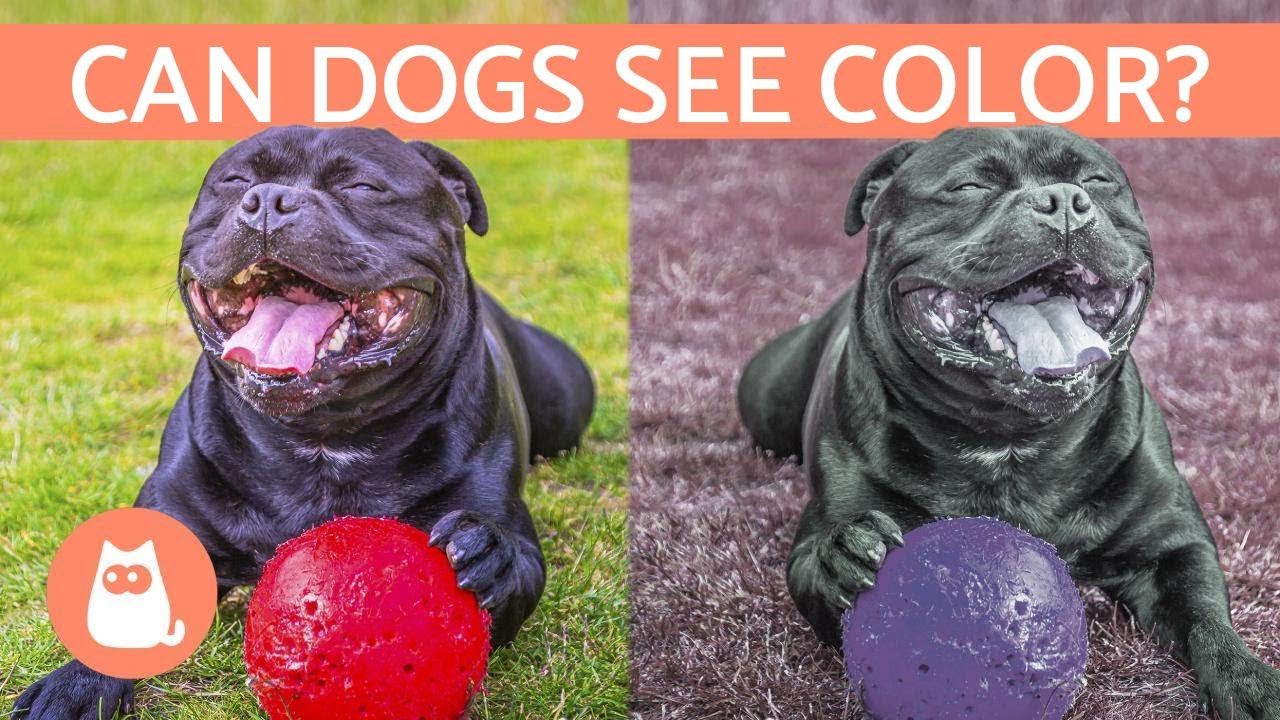
cells in their eyes each sensitive to different wavelengths of light red blue and green this Vision enables us to see a wide spectrum of colors including the vibrant Hues that make our world so colorful however dogs have just two types of cone cells this means that dogs don't perceive the world in the vibrant colors that we see for example they don't notice the difference in the colors of grass that they enjoy so much and that bright red ball you're throwing to them it's more like a shade of brown or gray interestingly a lot of dog
accessories are made in the exact colors that dogs absolutely cannot distinguish green red pink and purple they are supposed to catch our eye not that of our dogs so what colors do our furry friends actually see recent studies suggest that those colors are quite surprisingly blue and yellow so next time you're picking a toy or accessory for your furry pal to really grab their attention stick to shades of blue or yellow these colors stand out to them the most making playtime more exciting and engaging from their perspective while dogs might not see a rainbow like
we humans they have a unique way of differentiating between certain shades of colors during a fascinating study researchers presented dogs with three light panels two of the same color and one different they trained the dogs to choose the different colored panels by rewarding them with treats through this experiment it was discovered that dogs can reliably tell the difference between shades of colors for example they won't mistake a light yellow object for a dark yellow one unlike cones rods the other light receptor is more abundant in a dog's eye than in a human's a higher concentration
of rods in their eyes gives dogs a remarkable ability to distinguish between different Grays in one fascinating study researchers tested dogs by showing them images on screens gradually altering the Shades of Gray the dogs were able to pick out even the slightest differences in shade much like how we might spot a friend in a dimly lit room here's a fun life hack when playing hideand-seek with your dog indoors hide in a spot with varying Shades of Gray like near a gray sofa or on a patterned rug it it'll be a fun challenge for them to
use their gray detecting skills to find you and here's another fun fact their grayscale Vision helps dogs immensely in low light conditions like during Dawn or dusk making them excellent companions for night walks this is because of a special layer in their eyes called the tapetum lucidum which acts like a mirror reflecting light at the back of their eyes ever notice those glowing eyes in your nighttime photos that's the tapetum loose them at work when we talk about visual Acuity we're essentially discussing the clarity or sharpness of vision dogs have only about 20% of the
visual Acuity that humans do this means that what we see clearly they see more like a blurred image think of it this way if a human can clearly read the letters on an ey chart from 20 ft away a dog would need to be just 4T away to see the same level of detail their world is a bit like looking through a lens that's not quite focused but why is this the case it's all about survival over the years a dog's vision has adapted to be more efficient in detecting motion and seeing in low light
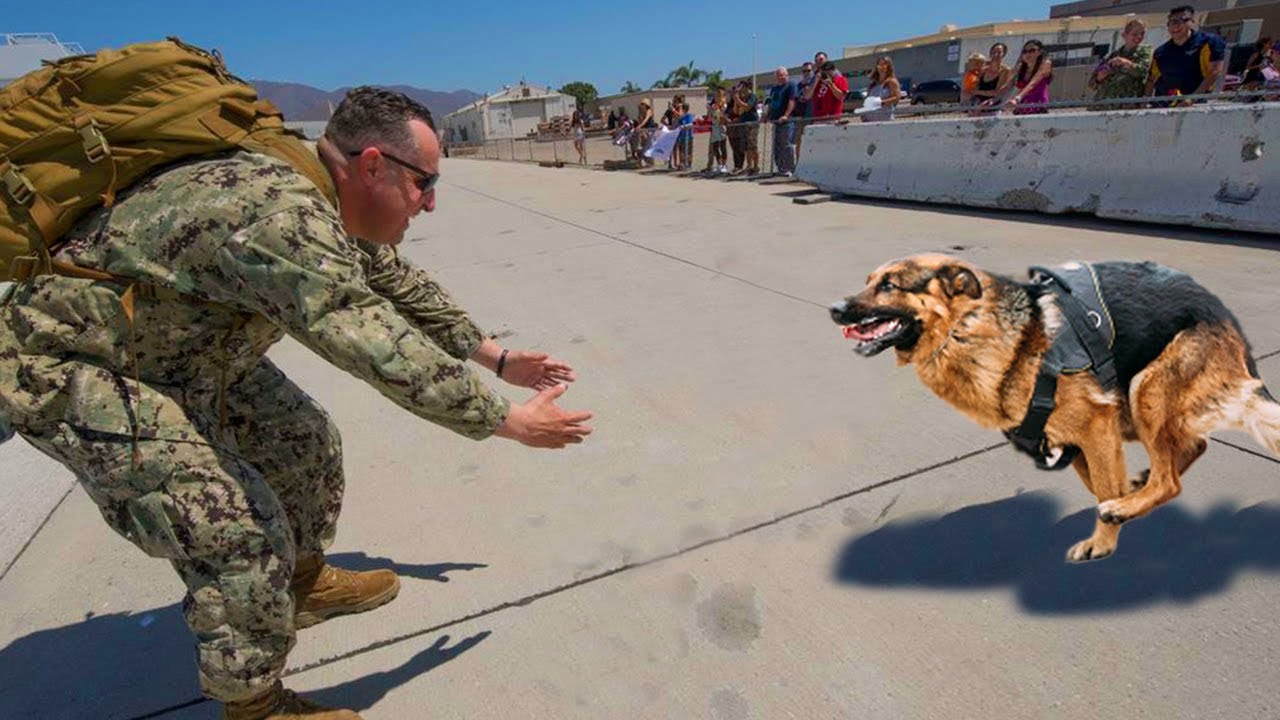
rather than focusing on fine details for instance if your dog doesn't immediately recognize you from a distance it's not that they're ignoring you but rather that they might not see you clearly until you're closer but wait till you find out about the dog's incredible ability to detect motion scientists tested dog's ability to distinguish between objects at various distances they found that dogs are much better at noticing moving objects than static ones especially at a distance this ability comes from their days as Hunters where spotting and tracking subtle movements of prey was crucial for survival so
if your dog suddenly starts sprinting for something they might have detected a squirrel or another small animal that our human eye would have no hope of detecting but how can we use this knowledge to form a better bond with our furry Pals when playing with your dog or training them use large moving toys they're much more likely to catch your dog's attention than small or stationary ones also use toys that move unpredictably this will stimulate your dog's natural hunting instincts and keep them engaged during playtime did you know that the quality of vision can vary
significantly among different dog breeds it's a fascinating aspect that often goes unnoticed for instance breeds like Greyhounds and Siberian huskys known for their speed and endurance typically have better long-distance Vision this trait was essential for their ancestral roles in hunting and sledding where spotting objects from afar was crucial also take the Border Collie they have excellent visual Acuity particularly for moving objects which is essential for tracking and hurting animals labat doors and retrievers popular for their roles as hunting and service dogs also exhibit impressive long-distance Vision on the other hand breeds like pugs and Bulldogs
with their shorter snouts and more forward- facing eyes might have a wider field of vision up close but they can be more prone to nearsightedness or myopia the reason behind the predisposition of certain dog breeds to myopia is not entirely clear but it's believed to be related to the specific tasks and Environ these breeds were historically developed for German shepherds renowned for their roles in police and military work possess a remarkable balance of both distant and close-up Vision their eyes are Adept at following fast moving objects which is crucial in high-stake situations like search and
rescue operations or tracking or take Rottweilers they were historically trained as guard dogs to detect potential threats or changes in their immediate environment so this focus on close Vision Acuity might be the reason behind their nearsightedness so what's the life hack here for dog owners if you have a breed prone to nearsightedness make sure their play area is well lit and their toys are large and close enough for them to see clearly for breeds with better distance Vision engage them in activities that involve spotting or fetching objects from a distance this understanding can help you
tailor your interactions making your dog's daily life and playtime much more more enjoyable we love our furry friends but sometimes without realizing it we might be doing things that rub them the wrong way what we perceive as affectionate Behavior can sometimes be uncomfortable or even distressing for our dogs so check out this video where we are exploring eight common human behaviors that our dogs secretly hate and be sure to subscribe to our Channel and join our doggy loving community