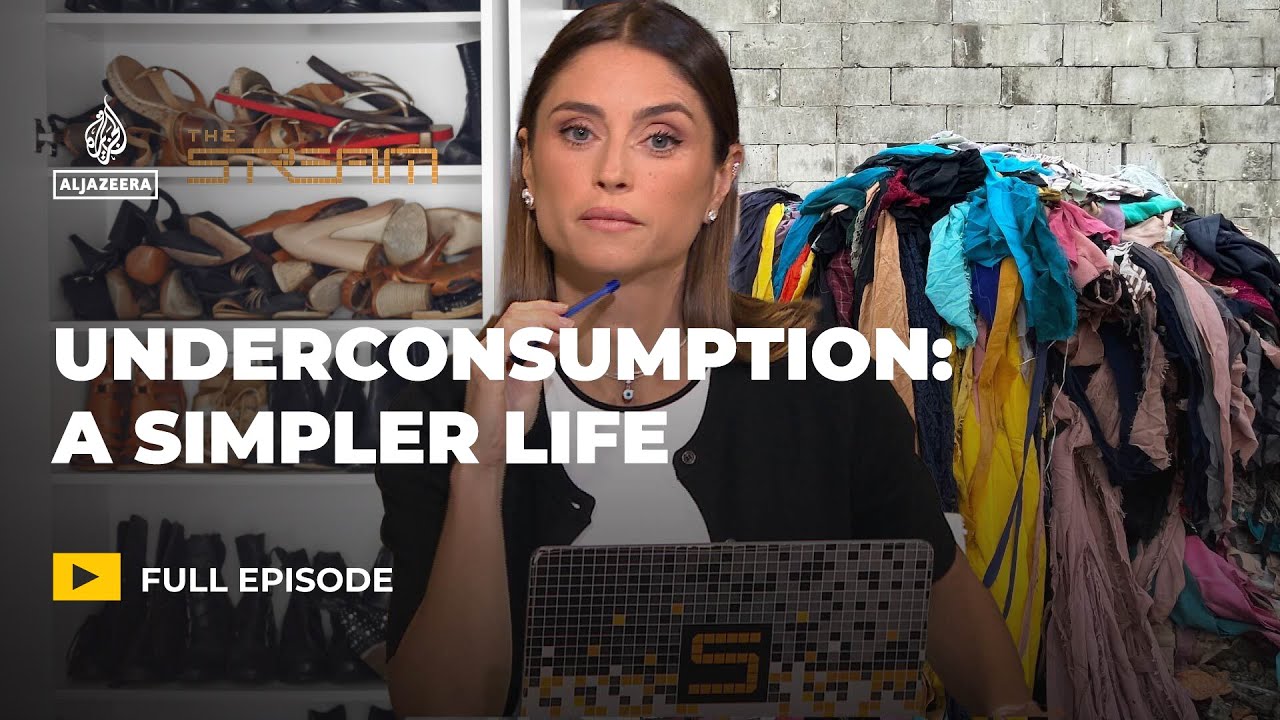
what if I told you there is one industry responsible for around 10% of greenhouse gas emissions currently polluting more than all international flights and Maritime shipping combined you would probably like to stay away from it what if I told you you and I are at the heart of the problem because of what we wear I'm anaise boures and on this episode of The Stream we ask what's the real price of fast fashion this is polyester this is polyester this is polyester this is polyester this is polyester much like the rest of you as soon as
I saw this look I immediately went to the H&M website and I do what I always do which is look at the materials and composition and lo and behold much to my unsurprised this is completely polyesters fast fashion from China buy online now style for Less way less unbeatable prices dress $10 shoes $5 how so cheap don't worry about it oh I'm asking baby please please please don't right [Music] many of us find it hard to count the number of outfits we have in our closets clothes have become so cheap pretty much all of us
have fallen into a trap of wearing something only once before losing interest and buying something else and while fast fashion has democratized style some are helping us understand the true price we are paying for it in terms of environmental and ethical implications among them are our guests today waldom lamb the co-founder of fashion tech company unspun Venicia Lama a fair fashion campaigner and content creator Kata o a bioengineer and Project Lead at the or foundation and joy Buchanan she's an associate professor of Economics at Sam Ford University thank you all so much for your time
and so Venicia I would like to start with you what would you say is the real price we're paying for the cheap clothes we're buying as Citizens we have been conditioned to believe that clothing should cost the same price as a coffee or the same price as a sandwich especially as fast fashion has got faster over the past five or so years but the true cost of our clothes is much much higher firstly it's costing the lives and dignity of garment makers and I want to say from the outset of this conversation that it is
garment makers who are leading the charge for a fair fashion industry and it's it's also costing our environment it's costing our precious ecosystems the impact of our clothes is so so high especially at the rate at which big fashion is churning out clothing and I should also say that you will hear me refer to big fashion in this conversation because big fashion as a term includes sportsare Brands it includes luxury Brands and I'm not here just to point fingers at fast fashion it's the entire multi conglomerate industry that really needs to be held accountable so
we really do need to consider the impact of all of our clothes and it is much much higher than what we might think big fashion as big Tech uh have some questions to to answer I guess Walden before we talk about unspun and I want to hear much more about it can you help us understand what makes the fashion industry so prone to polluting so much yeah um so basically I think the the first factor is that business model uh effectively all of the big fashion companies that are mentioned the business model is a volume
driven business so there's a very high incentive for the businesses to be driving desire and incentive to be for consume consumers to be consuming more and more um so so that's one um two is the supply chain is highly fragmented we have different parts of the geographies participating in different parts of the supply chain which makes it very hard to predict uh what consumers would want and how to supply accurately uh most brands are looking at 9 12 sometimes even 18 months of supply chain so if you have forecast that much into the future inevitably
you are producing more than um what consumers want in the right place right size right style right materials um and I think in general as consumers we we are spoiled into this behavior of thinking um garments as disposable as you know um the the opening has highlighted M um it is fascinating because so much of what you just described then ends up in in landfills and and and in countries that didn't ask for it Kata I want to share something with you and then get you to talk about your work with the or Foundation because
while we have some idea of how huge the waste problem is in the fashion industry as Walden was just talking about we might not fully understand what this waste actually represents in developing nations Rema cheer explains when you clean out your closet or buy your latest outfit online you might be supporting colonialism waste colonialism to be exact it's when wealthier countries send their secondhand clothes to developing nations and make it their problem it follows the same Roots European powers sailed to export tea coffee and goods from former African colonies centuries ago the difference is clothing
waste is being sent to the global South and countries like Ghana Nigeria Kenya and Tanzania are being hit from two sides the fashion industry produces around 100 million tons of clothing a year and 92 million tons are sent to landfill that's according to the nature journal and only up to 30% of secondhand clothing actually gets reused with 70% of it going to waste it's a profitable example of how systemic racism holds up a multi-billion dollar industry from underpaid garment workers making your clothes to Fashion waste washing up ashore ruining coastlines people in the global South
pay the price for your wardrobe K you were nodding throughout uh this video can you share with us your thoughts based on your experience with the or Foundation yeah I think that was a very clear and succinct way to put it all the fact that you know this model and this fast fashion model when I say fast fashion I'm for referring a bit to what we were talking about with big fashion but also this economic model so the combination of all of this all of the different moving Parts the truth of the matter is that
is it is inherently unstable inherently unviable and inherently unprofitable in the long run unless it finds this cheat Cod that is shipping the waste elsewhere because this model has just grown to be dependent on the idea of the disposability of the clothes either trying to keep you on a subscription versus you know buying an individual garment you know they're designing their garments so they last only a few wear so that you're back after a while to buy a new version of the same top and you're stuck in this endless cycle the thing is clothes are
one of the hardest things to dispose of one of the hardest things to recycle and one of the hardest things to decompose in the environment so if all of these clothes were to day in these nations and these communities where they're bought and consumed and used it would become evident how unviable and how frankly ridiculous this system is so they have to find the shortcut of shipping it somewhere and thankfully colonialism did a lot of the heavy lifting and set up all of these channels and means to ship these clothes somewhere for cheap and ridiculous
prices mind you the women and like the retailers in Aura are buying this waste from Europe from North America and wherever it's coming from so because of all of the Dynamics left over from colonialism they're able to manipulate a system and it create a secondhand Market trade in such a way that they can actually package these bundles and bundles of clothes and these giant bales that the retailers in Acra aren't even allowed to open before they purchase and yeah funnel all of this waste to Acra by the time it gets to AA I mean there's
only so much treasure you can find in another men's waist so it just overwhelms our entire ire waste management system basically it's one way of of of again as you said the global North not seeing what is actually responsible for or at least trying not to see and and preventing people from realizing the impact of their decisions um Joy you come from a different perspective in the sense that you're an economist and and um you mentioned during our chat before the show that in many ways the fashion industry could be perceived as a success story
C can you talk to us about that perspective sure um I appreciate all the other guests and that they are kind of um working on solutions to brand new problems and um I really respect that and I think we need that um I think that if you're going to say that the fashion industry is a success story it helps to put it in a more historical perspective um historically people didn't have a lot of clothes they didn't have a lot of the the textiles that they would need to uh you know meet their basic needs
even and so the fact that we're here having this conversation about clothing being too abundant and too cheap is really incredible and I think um some people have called it you know an emergency and a disaster and I think it's very important to consider the environmental impact that uh you know we're talking about here today um but the fact that everyone in the world you know billions of people have more clothes than they can use um is incredible and and I think that sometimes it gets lost in the conversation that there is a good aspect
to this so through basically the the basic channels of globalization specialization trade we've we've lowered the cost of production so that consumers can have you know much more than they used to and in fact perhaps they have more than they should have um which you know that's that's a new problem and so I think we do need some new Solutions and I think it might help uh if we had a new kind of information that came along with clothing purchases about you know how long the Garment is expected to last um so one one place
I look for Solutions is potentially artificial intelligence that can help us deal with a a new system that's so complex and has so many moving Parts um but I do think sometimes it gets lost in the conversation that the the production price of clothes going down and you know the abundance aspect of it uh does have a good side for consumers um venisha some people many people uh will say that they find it hard to avoid fast fashion in a way because of many barriers including High Cost of Living um the price really is a
very appealing argument in all this do you find any Merit in this concerned um and and and do you see um many of us kind of trying to blame ourselves consumers and not really um holding those in power to account you got to love capitalism hey for convincing us that we as individuals are the problem rather than systems and Colonial systems of repression and Big Industry I think this is a really valid argument you know it is more expensive to live than ever the cost of goods is higher than ever but I've been campaigning for
a fairer fashion industry for about seven years now and the longer I do it the less I actually focus on individuals and their consumption when I in 2020 I co-founded a campaign called remember who made them where we spoke to garment workers across the world and they weren't too concerned about how specific individuals were shopping their advice was consistent they said Hold Brands accountable because it's brand who hold the power it's Brands who set the Garment worker wages it's Brands who are refusing to tell us how many items of clothing they produce every year so
while I think this is a really viable argument for people I consistently and always will try and punch up at big fashion big Brands and hold the system to account and I I do find that that tactic actually has quite a positive impact on consumers who I like to refer to as Citizens the more we know the better choices we we can make and and and more we can align those those decisions and our purchasing decisions more with our ethics but overall I think we really need to understand the system that is at play here
and anytime we feel like blaming ourselves we should be thinking hang on is this me or is this the system yeah and and the answer is is is often the latter I'm afraid but as Citizens as individuals there are things of course we can do when it comes to potential Improvement to the industry towards more sustainability the conversation has been around components a lot in one material you have probably heard about is polyester hi guys my name is polyester I don't know if you really know me but you may know some of my friends like
Styrofoam plastic bottles and a lot of other stuff you can find me in your dresses pants oceans brain literally everywhere let me explain that part you see some people don't get this okay anytime you like wear me wash me or like just leave me there to sit which a lot of you do I release microplastics and nanoplastics they're they're a lot smaller but but they're cool they're cool okay they're fine I mean we all come from different places but me and my buddies always find our way into the ocean and like we're having a good
time my buddies that were made in 1950 still kicking it and recently we have been making appearances in human bloodstream and let me just tell you guys we are never going away we are here to stay literally we can't biodegrade we we can't we just can't bye um Walden when we spoke before the show you talked about something very interesting you said um there are certain dangers when it comes to this pursuit of of being sustainable and you gave the example of recycled polyest from unused plastic bottles um can you talk to us a little
bit about that and how um again this this attempt to uh be more sustainable or at least use this label sustainable recycled can be a trap right I I think the the conversation around sustainability typically is around materials and it's it's very easy to understand right like when you're going out making a purchase you look at the the the hangtag and you look at oh wow recycle content and immediately you feel a lot better about your consum consumption of that item um but the the the devils are in the details right like how how does
the recycling process look like what are the feed stock that goes into the recycling process and PO is is a is a very good example in our industry because um a lot of the recycle polyester actually come from uh plastic bottle in the foot industry where the recyclability um can be can go through cycles of of recycling versus within the apparel industry you you might you know go through two or three or four times of of recycling and uh the material is downgraded to to a level that you can't use it within the industry again
so are we recycling upcycling are we down cycling um and that's why um I think a lot more about the system and can we consume better making more cons intentional consumption producing exactly what's needed versus just single-mindedly thinking about material as the umbrella sustainability in conversations and can you talk to us about unspun um you describe it as a fashion tech company can you tell us what this is and and what you doing in terms of U notably your efforts to reorganize the supply chain right um Onan is is a crazy ambitious attempt um we
have created a set of technologies that enable um Brands companies to cons to produce on demand effectively created this 3D weaving machine that converts yarn into 3D garments um and so we don't we're not no longer planning an 18 month cycle um and because of of this technology and automation we can bring that supply chain closer to where consumption happens um and so we're thinking about planning cycle in weeks and days so that we don't have to throw so much garment to landfill um the industry on average because of the difficulty in matching demand for
Supply we're generally throwing around 25% of all the G ments um to landfill even before they consumed or or used so this is our attempt to try to at least solve for that you know 25% of unused garments that are produced with no consumption no cons final consumer in mind um Kya talk to us about possible solutions again at the aura Foundation you have several campaigns um including one that uh caught my attention speak volumes can campaign talk to us about what what can be done um to address this issue from a consumer's perspective but
also what we should be doing what kind of pressure we should be putting at big fashion yeah of course just to speak more on the speak volumes campaign I know earlier we talked about how disconnected and fragmented the fashion industry is or big fashion is you know you have the uh people making the clothes in Bangladesh and you have the actual consumers in concentrating the global North event ually shipped to the global South for Waste Disposal so it's a very fragmented system and I dare say it was intentionally buils to be fragmented because of all
of these moving pieces were in actual communication with each other we would realize how messed up and unviable this system is but it isn't so at the or Foundation we really want to understand the full scope of the problem because it really is a secret right now as to how many clothes are being produced not even like the quantity or the makeup or anything like that like if you called a rep for Nike right now and asked how many shirts do you produce they would not be able to answer that question so we want to
try and close that Gap a little we're trying to reach out to different brands to try and figure out how many clothes are even entering the circulation to be able to figure out how much we really need to scale up Solutions I really like the fact that we talked about polyester because it really is a nice little loophole that a lot of people found because the truth of the matter is the recycling technology that we have right now was disposal technology it just cannot keep up with the volumes of clothes being produced like it just
cannot even the most advanced economies in the world could not recycle all of the clothes they're producing and the reason they're able to keep doing this is because they're a little shy with their numbers right they're not telling us how many clothes they're producing so we don't we're not in the place where we can ask the questions about scalability of solutions so that's the first thing we're trying to do trying to get that information public trying to get that information known so we see the scale of the problem and the second thing is I like
as I said right now we can see that this fashion industry is offloading the burden that is Waste Management onto other countries where it's not as regulated or really there's nobody checking the environmental damage as much and they can do this because of colonialism and the legacies left behind but the truth of the matter is if the industry were to actually account for the processing and Recycling and Disposal of all of these clothes it would collapse in on itself it's impossible you just cannot keep up with the numbers they're making with these clothes in and
so at the or Foundation we know that capitalism is going to capitalism it's going to always follow those ch ch um channels of exploitation because they're just easy to exploit so we want to make these channels of exploitation less profitable for the system that is always trying to maximize profit and so it's just adding extra regulations say even extra fees that they would have to incorporate into their pricing or manufacturing Etc to make sure that the ecosystems and the communities etc etc that are being damaged in the global South are being compensated for this problem
because if they actually had to compensate the global South it would cease to be profitable and in the process you're making everyone much more aware o of of what's actually going on Venicia one final word from you where do you see this going and what would you like for people to have as the main takeway away from today's episode well firstly I'm just such a huge advocate of the all Foundation speak volumes campaign and it's been very interesting watching how few brands are willingly going to disclose their annual production numbers so currently we think that
big fashion produces between 80 and 150 billion items of clothing every year but that's a data discrepancy of 70 billion and if we're going to create globally accountable extended producing a responsibility we need to close that data Gap so as a citizen watching this what you can do is count the number of clothes in your wardrobe and share that on social media tagging your favorite brands do the same now Brands if you're watching I know it's scary to be out front about this I have 179 items of clothing in my wardrobe if I can count
why can't you that's fascinating Joy I do want to bring you in for one final word um from again from an economic perspective is this model salvageable in the sense of the costs uh that we are seeing to the environment and to these people producing the clothes that we wear can we find a fairer treatment to the people to the planet um and still keep um wearing nice clouds um yeah again like like I said I think that it's really great that um the guests here are working on solutions to what are essentially you know
brand new problems and people um are now used to the idea that clothes are so cheap that the cost of buying them isn't really a a barrier to uh you know creating them and and getting them and so I think we've developed some habits where people expect the people around them to come up with a you know a t-shirt that's branded for every new club even a one-day event uh you know you're you're expected to wear something new to every party because everyone else can do it so I do think raising awareness is really good
and uh hopefully as a society we can come to recognize that you know yes clothes are cheap but that doesn't mean that uh you necessarily should should run out and buy new clothes every week I'm so sorry we're we're out of time but I would like to thank all our guests for joining us today Walden Venicia ktia enjoy thank you so much for your time thank you for being part of the stream today and thank you all for tuning in keep the conversation going online for that you can use the hashtag or the handle AJ
stream take care and I'll see you soon [Music]