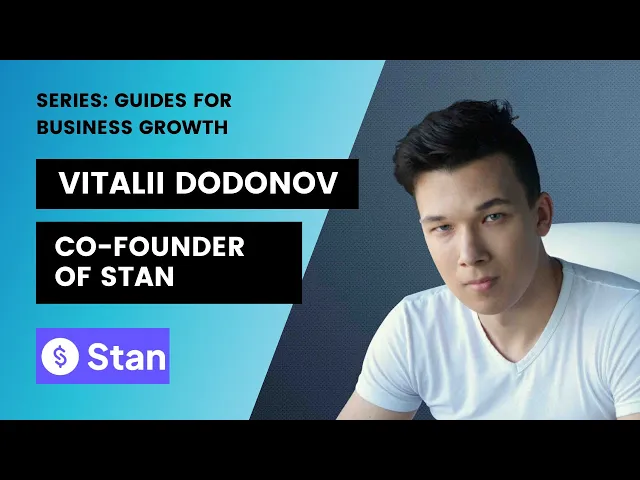
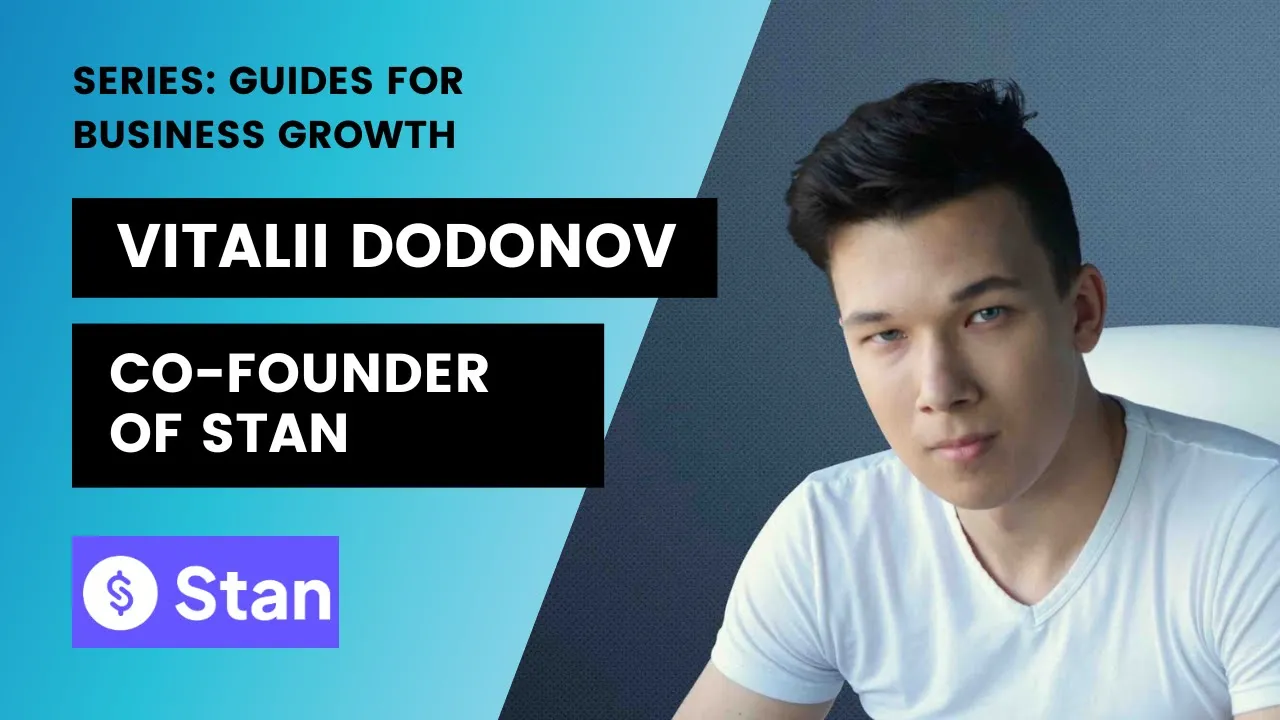
[Music] welcome to the Illumina Universe podcast the cast get it the cast my name is Alina and I'm the founder of illuminate where we Mentor job Seekers and help employers Fast Track their business goals I interview a celebrity cast of incredible individuals who have truly inspiring careers we're talking about the work Journey the process of taking the leap to create a life and career they love and what happens when they push aside their fears and delts to unleash their fullest potential today we speak with Vitaly dodenov who is the co-founder and head of engineering at
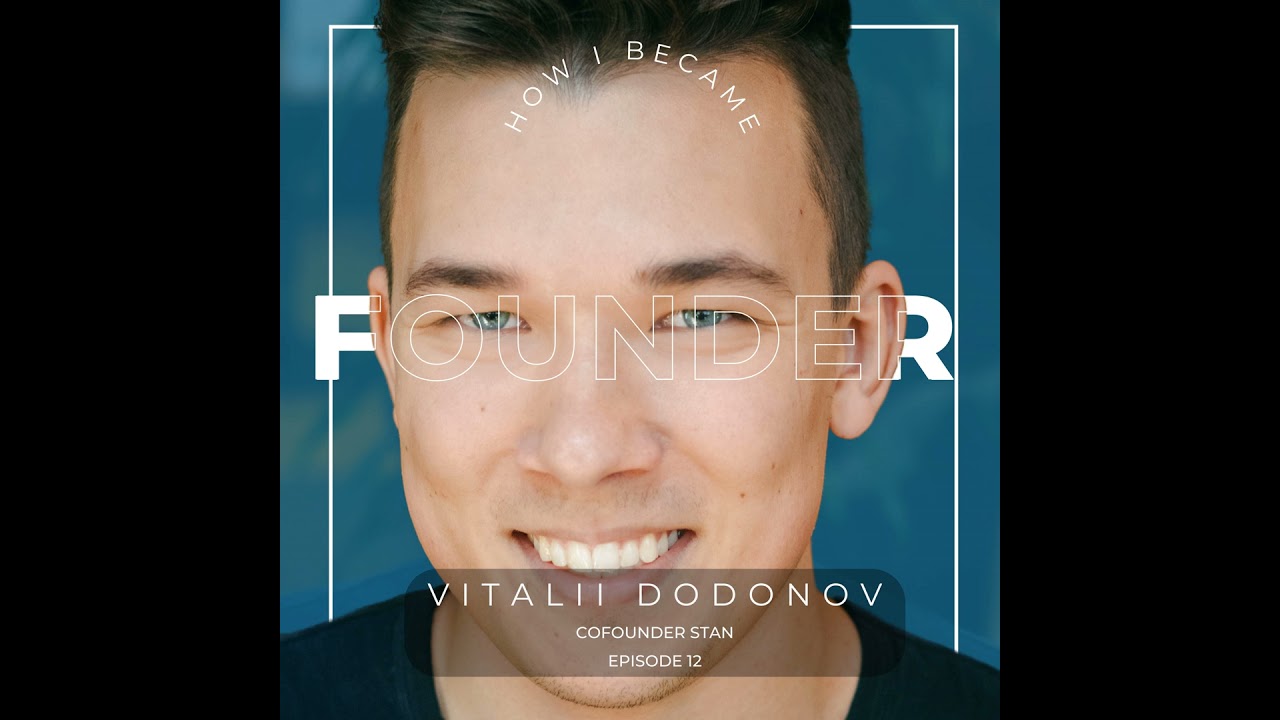
Stan Stan has raised over 8 million in Canadian dollars and is the only Creator monetization tool built for creators by creators empowering them to become entrepreneurs before Stan Vitale worked as a senior software engineer at eBay and a data scientist at Deloitte hello Vitali welcome to the show welcome on to the cast it's such an honor to have you here my first question for you is tell us about your story about coming to Canada being in Canada where are you originally from right I'm originally from Russia I came to Canada 2014 to study chemical engineering
I have an interesting story of coming into Canada and the long story short the idea came a year ago before I actually relocated and I didn't speak English like at that time at all one of the interesting things about me I I've done in my childhood I've been doing skydiving that was my job jumping with people and shooting videos of them as they Free Falling one of my clients my dad is also in skydiving asked my dad when I was in grade 10. it's like Hey where's Natalie going to school and I was like well
one of the Russian universities is supposed to plan at a time he's like well why don't you assign him to Canada and I thought about it and it was completely like outside of you know reality opportunities that we thought was possible but then once someone asked the question you're like well how far can you take it then we thought about it and he said that we can make it happen so it's one year remaining I don't speak a word of English this is like completely new thing too so I got into this challenge of learning
a foreign language and moving so I came to Uganda 18 years old finished the university and now pursuing entrepreneurship and as you always know that you were going to to be an entrepreneur one day I I wouldn't say you always know that you would be an entrepreneur one day but one of the things that set the course of my path towards is I think it was 16 at the time and I was on trained reading a book the book was called how to become a millionaire by Authority by photoshopper I don't know whether he is
a popular author or anything of the sport but but the book was interesting and I have read it and one of the things that the author convinced is number one becoming a millionaire is possible and he just needs to you know understand the game and move towards it number one thing you need to do is to really get a firm group on money and number two is to do your best to do your own thing because the money isn't compounding and then you know returns as I posted in the monthly paycheck so that kind of
get me into thinking of Entrepreneurship and every single day like since then it's just the background team that goes in your mind is like okay I'm doing this now but what about my own thing I'm doing this now but what about my own thing and then going into the university I was like chemical engineering like whatever this is like a good job I'll get you know some savings and one day maybe I'll start something and then I go through the university and kind of you keep asking yourself the question like but what about my own
thing and then you try different side projects and I tried a bunch of the University I tried a bunch while I was working back in Delaware while I was working like at eBay and then eventually one of the side projects I was working on I turned into him were kind of a four-monal startup Journey where now I get to I run a company with my co-founder and you know building the future Creator economy that's phenomenal and I feel like I have a question that I should be asking you but did you work on Stan while
you were at Deloitte was it in your heart back then I didn't work on the stand while I was a dude but I was working on a project that led to stand so there's there's an interesting transition that happened but but basically everything that I do now has nothing to do with my degree or with with Deloitte for that matter the reason I went into programming and Engineering in general is like again this thing of what about my own thing kind of pleasing to try to think about what can you do by yourself that doesn't
require people that doesn't require like Capital as an immigrant to Canada you owe a lot of money to someone who paid for your you know degree and then you have a lot of responsibilities and it's like it's not like you can stop everything and go start a company so in the realm of personal projects programming was was the thing to do so I was always learning it on the side and trying to create something from nothing I was working on my own project that was called beanie at the time that had a very similar premise
where let's work out a way for someone to monetize something digital I was pursuing membership I built many things that Stan currently has like one-on-one meetings courses what have you so I worked out the entire technology landscape that powers Stan at this point but I'm an engineer not to necessarily A salesperson or marketer so I was able to build a great thing I wasn't able to sell it and this is where I met my co-founder John who kind of came to division and said hey there's all these people who need it who don't have it
yet can we do this together and we kind of yeah 100 and that was a time where I stopped doing what I was doing and focused on this full time I love that answer I love it I think my question to me was a bit of a trivia question because we also have to be careful about who's listening to this podcast too because to be honest a lot of Founders a lot of Founders who I've interviewed a lot of them started the idea of their business wow they're working for you know fortified and sometimes I
think being in an environment so stimulating like Deloitte it actually gives you a lot of great ideas and provides you the experience to actually move those ideas to the next stage into your own business so this leads me to my second question how does your post-secondary experience lead you to where you are today tell us about the creation of Stan I can't say that University was too much helpful to be honest I think it was a good you know context for you to acquire knowledge get credentials and establish yourself like a safety net one of
the things that you learn in the university for the most part in my opinion is like the work ethics and you know in my case scientific Foundation that I don't use besides you know the basic path at this point but it's like it's something that gets you to become you know intellectually let's call it sophisticated to a degree where it's like enough but all the things that came to me that I consider valuable right now actually came from self learning courses that I've kind of took because I was curious about from various sources online or
just reading Googling youtubing and whatnot so everything I know and one of the kind of things I leave with them that Define me as a professional is engineering I'm a very strong systematic thinker and I break down problems very efficiently and I think like in systems as opposed to kind of one of ideas and that is something that that everyone from YouTube that is something that I've learned from Google that is something I've learned from Coursera courses pretty much fully driven by Natural Curiosity and it's like I want to do this how do I do
this you start googling you're like okay this is not enough maybe I should go take a course and then you spend 20 hours working through throughout online course like okay well now I'm better positioned to do it and then you do it and this is how you learn and you build on it that's so funny because sometimes I think the world of Entrepreneurship it doesn't necessarily require you to have a fancy degree sometimes I think Google can literally be your go-to for everything right there's like nowadays there's nothing you can't find on Google yeah what
are your thoughts I'm a big supporter for this if if I was to make like a radical statement that maybe it'll change my opinion as I grow older but when I'm thinking for example my own kids when they come I'm I'm really not solving the idea of even sending them to the university just because knowledge is so much like it's so easy to learn something with this and I think when we were in 1900 when you're in the library and you need a professor and you need a bunch of books and you need someone to
like Walk You by the hands through the knowledge then this is helpful and if you're kind of your purpose is to is to get a job University is also helpful because like credentials are worth a lot and that can get you into many conversations but having gone through the Journey where everything I'm doing now is literally the result of self-learning as opposed to credentials I'm at a place where if I can save for years and instead focus on something that is actually building towards something I'm truly passionate about pivoting as many times as it takes
without you know needing to change the program get into more debt and all the overhead I don't think it's a bad path to take and in fact I would rather consider it a more I honestly feel like I shouldn't be saying this on our podcast but I didn't really learn anything when I was in university it well I I'm sure I did at some point but I don't actually remember anything and I think my University degree wasn't vacation was a four and a half year vacation with you know some travels to hackathons across North America
taking a lot of time to be curious and self-learn and build illuminate so but but like you said for a lot of careers it also requires the credential right for example if you're going to become a doctor or a lawyer those things you definitely do need a credential but the world of Entrepreneurship is just a little bit different and I think it's very cool yeah just to clarify that point is everything I'm saying applies into non you know professions that like if you're Jewish to become a doctor clearly you can't Google that and you better
take a traditional class but it's something more abstract than the the question of whether you need education is much more important so funny somehow we have to clarify understands you know it's all good okay my third question for you so the talent landscape is very interesting in Canada right now right now what are some tips you have for Founders to hire and retain the best talent and what are the most well what are the three most important traits that you look for when you hire right so what should Founders do in the trades that that
I look for I can cover it's it's very interesting being an entrepreneur hiring is is by far the hardest things I've ever done some people will say you know building a product coming up with an idea finding a co-founder which is an extremely hard and I've been very lucky in that way but if there is one thing that makes or breaks a company that would be the team and being able to number one identify people that should be part of it and number two convincing them to join is is very very difficult there are a
few things that I've seen done for posting a job post on indeed doesn't work posting a job on LinkedIn doesn't work either basically what happens with all the inbound driven sources is a lot of average candidates for either out of a job or desperate to find a job or applying and you end up dealing with like very average or South Park Talent basically no one who is I think the general philosophy that I I see being true more and more going doing this is that every people that are worth your attention and worth being part
of the team are going to be busy with something and it will take like you actually reaching out to them convincing them having someone introduce you to them that's what it's going to take to to find Talent so the advice there would be to look into your own network and look into people that are next to you and asking them to introduce you to people that they think highly of many people that work for my well not many people but another portion of the people that work for my companies can right now come from either
my network or a secondary connection from a person that I trust and I at some point yourselves almost like hey I'm hiring for this role is there someone in this field that you think I will and then being introduced and then you start a conversation and then either they would work out or you can ask them the same question and then you kind of follow this this chain and find talents another one is to again all the great people that that I know that I would love to work with really comes from meeting them in
person or through an introduction from someone so going to real life events for example Toronto and Vancouver they have an organization called tecto is is in Toronto that pretty much the hub for for the technical community so just hanging out in events and the topic doesn't matter I'm actually going to to the water today I don't even know what they're going to be talking about but what I do know is that there's plenty of people that are in second I may meet someone that I'd like to work with so that's advice to Founders but as
far as the qualities that I search for when when I'm hiring and it's kind of informed by a lot of literature in this subject there are three trades that that are important to screen when when you're hiring someone number one is they have to be humble never want arrogant people like on your team it comes down to like a human being understanding that they are part of something bigger and it only works if everyone is in this together so there's the community component there is a hunger one of the reasons I don't hire from B
Tech is because people are not hungry enough to actually go after something it's like once you are financially sustainable and then there is nothing pressing you and you don't want to stretching something because like you are good that's that's not a trade that is a founder of a company you want to be on your team you want like the opposite of it and the third component is smart and smart not IQ smart but more of an EQ smart because you want to be working with people who you would kind of enjoy you know hanging out
on the couch and having beers together and like genuinely enjoying your time and that comes with level of like emotional maturity and then being with you on the same page so when I'm doing interviews those are the three qualities that I screen very hard for in the first 30 minutes the emotional intelligence piece humility peace oh my goodness those two pieces resonate with me so much it's like at the end of the day no matter how smart or capable this person is if they can't interact with a human being very in a very pleasant way
you know it just ruins the whole whole game right everyone's the whole employee employer experience so I totally agree with you also you know it's something that's interesting is when you said indeed and Linkedin doesn't work for us maybe because we're in a different field without you're in more of a technical like engineering like code you know real stuff like it kind of feels whereas our company's more Communications event planning marketing to be honest for the roles that we hire as long as you can use canva or Wix or have some kind of logic common
sense you can thrive in this role so so for us LinkedIn and LinkedIn actually we haven't tried indeed but we our two hires right now they're both from LinkedIn and they're phenomenal isn't that interesting yeah I think I think the context changes and kind of for what I'm trying to do I we've tried and it didn't work as well but it's totally possible that you you're looking for a different profile and maybe people that fit your profile are there and it's a viable platform okay well interesting learning every time we talk and learn about some
dignity which which I love absolute love now the last question I have for you following up to the three traits you're looking for in the individuals that you hire how would you recommend someone to develop these skills or traits yeah this is very interesting I actually I would rather put them in the realm of like traits of a human being that say if if what you're screening for like is a programming language or any other skill that is that is trainable then I think there would be a solid answer and a recommendation but when we
are saying how can you develop humility I'm a reference was like I have no idea the person that I have or they aren't done this is as far as it goes okay so humility emotional intelligence I guess just in general comes from spending time with people and being you know good partner in the conversation and yeah another thing that I don't think can be developed like that easily so you either are that or not in develop you can feel just take probably years of of dedicated effort one of the interesting books that I would actually
recommend on on emotional intelligence specifically is called non-violent communication that kind of helps you get into the mind frame of like thinking with empathy in mind uh and kind of try to connect emotionally to like talk in a way that doesn't hurt other people which was helpful for me earlier in my career I don't know whether it would make a non-high acute person wouldn't say a high EQ person but I think it will certainly help so sorry I think this is this is as much as they come on as I don't know whether you can
actually develop those uh besides just trying to be a generally great human being helpful at work I think if that is your objective from kind of early on then over time you'll become that I think I threw some really hard questions at you in our podcast yes one thing that came to mind while you were talking about humility and also EQ is the term servant leadership don't you think that when we place ourselves in the position to serve others even when you're in a leadership position you're thinking about hmm how can I serve my company
how can I serve my employees so they have a better experience and from an employee's perspective they could think how could I serve my company's objectives how can I serve the company's culture what can I do to adapt and to contribute I think once you know individuals are placed in that mentality the world of EQ just suddenly opens I agree with the concept of serving I've never thought about the concept of serving from you know the EQ lens on this but I can see how it's connected and I think in the end of the day
all of us are serving something or someone for example like leadership team serves the customer and then employees serves the companies and then people inside the company serve their own team or internal functions like in the end of the day the process of creation of value which is pretty much the core of most of the things we do isn't serving someone or something that you feel deeply passionate about and if you stay true to this it does lead to humanity empathy thank you I love it stay true to yourself stay true to your values value
and think about how can I serve and contribute and give instead of thinking about how can I take you know how can I get the most out of this I think it's a win-win situation that's always the best for both parties and the last piece that I think is super important is being comfortable with change I think you know a lot of individuals are afraid of change and when change is being thrown at them it's so different from their own pace or or you know from their normal life it kind of throws them off but
I think change in it in a sense can also be perceived as Adventure oh hey let this new change more and you can think about it as oh hey I like this new adventure coming my way I think that changes our mentality of things yeah I agree with that as one of the people who is like naturally resistant to change because I like consistency and I like being systematic about it changes hard it's one of the hardest things but as long as you keep in mind and you keep your ice on the ball from the
standpoint it's like this is what's really important and sometimes you need to change yourself to get there once you realize that who you are or what you're doing no longer fits what's required to be there you'll only be able to do that if you consider changing your realm of possibilities and you're open to actually going through the difficult process of adopting to it all right I love it and thank you sharing your wisdom today until next time [Music]