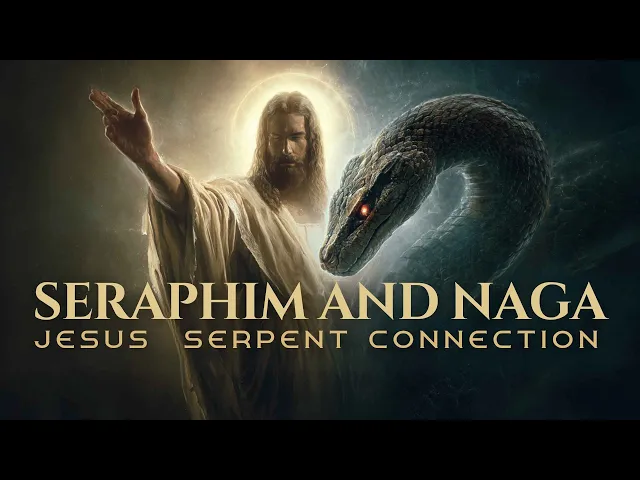
[Music] What are the Seraphim? Burning serpents? Celestial guardians?
Fiery beings who stand closest to God? Or could they be something far older, far stranger—beings whose origins trace back to humanity's earliest myths and the gods who once walked among us? The Seraphim, as described in the Bible, are radiant, six-winged creatures blazing with divine fire.
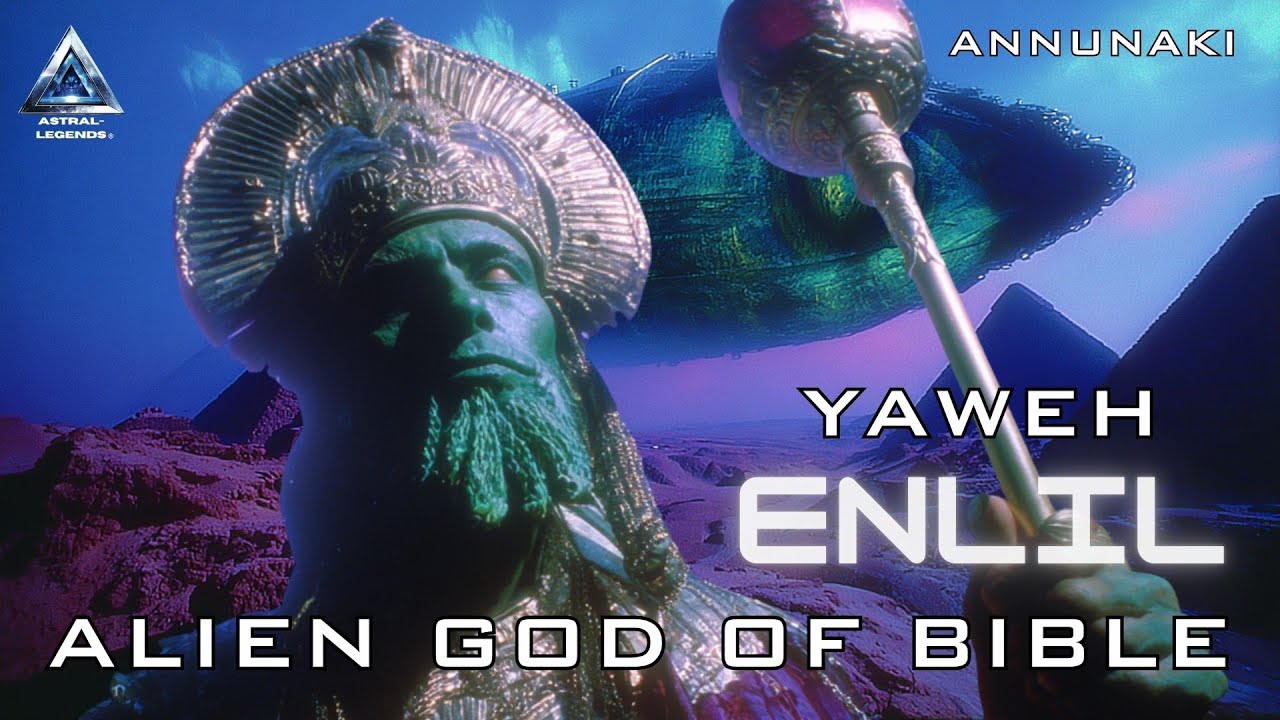
They are the burning ones—heavenly beings of immense power, fiery, serpentine entities whose imagery stretches across ancient cultures and beliefs. Could the Seraphim—these fiery beings—be the same shining ones spoken of in the myths of Sumer? Could they be connected to the Anunnaki, the radiant gods of Mesopotamia who were said to descend from the heavens, shaping the destiny of humankind?
And was Jesus Christ, the central figure of Christianity, a descendant of these shining beings? Could his lineage, meticulously traced in the Gospel of Luke, carry echoes of divine ancestry that reach back to the Anunnaki? [Music] [Music] [Music] The Hebrew word "sarif" means "to burn.
" This word "serif" doesn't exist in a vacuum; its parallels in older languages hint at a deeper connection. Ancient Sumerian texts, some of the oldest known writings, describe the Anunnaki—divine beings who were often referred to as shining ones. The Sumerian word "sha"—meaning shining or radiant—mirrors the fiery brilliance attributed to the Seraphim.
The Anunnaki, often depicted as luminous and celestial, bear a striking resemblance to the fiery, radiant Seraphim of later biblical tradition. In Sumerian, "uruk kin," meaning "flaming star" or "fiery being," evokes celestial power and brilliance, much like the Seraphim's fiery nature. In Akkadian, the word "sharpo," meaning "to burn" or "fiery," connects linguistically to the Hebrew "sarap.
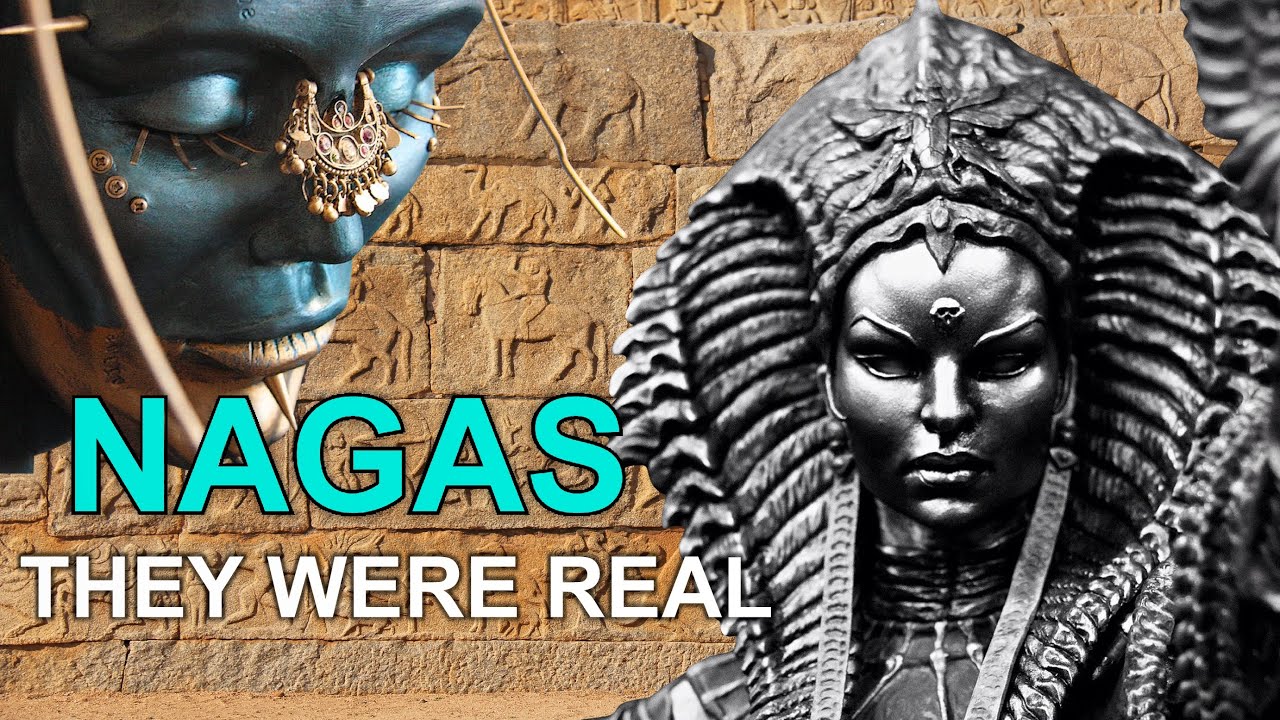
" It is entirely plausible that the fiery brilliance of the Seraphim is a cultural evolution of the radiant celestial beings described in Mesopotamian mythology. In Hindu and Buddhist traditions, we find the Nagas, serpentine beings revered as protectors of wisdom and treasures. These beings, often described as divine and radiant, share key traits with both the Seraphim and the Anunnaki.
Across cultures, serpentine imagery becomes a recurring symbol of knowledge, power, and divinity. The Anunnaki, the Nagas, and the Seraphim all embody this archetype, pointing to a shared symbolic thread that transcends time and geography. In the Hebrew Bible, the prophet Isaiah provides the most detailed depiction of the Seraphim in Isaiah 6:1-7.
He describes a vision where he sees the Lord seated on a high throne, surrounded by Seraphim. Each Seraph has six wings—two covering their faces, two covering their feet, and two for flying. They continuously proclaim, "Holy, holy, holy is the Lord of hosts; the whole earth is full of His glory.
" One Seraph touches Isaiah's lips with a live coal from the altar, symbolizing purification. The term "sarif" appears in other parts of the Hebrew Bible, typically referring to fiery serpents. For instance, in Numbers 21:6-8, the Israelites encounter fiery serpents in the wilderness.
The imagery of winged serpents in Egyptian iconography, such as the Uraeus—a symbol of sovereignty and divine authority—is strikingly similar to the depiction of Seraphim. The Book of Enoch, dating to the 2nd century BC, mentions Seraphim alongside Cherubim as celestial beings standing near God's throne. Artifacts from ancient Near Eastern cultures, such as Egyptian amulets and carvings depicting winged serpents, have been discovered.
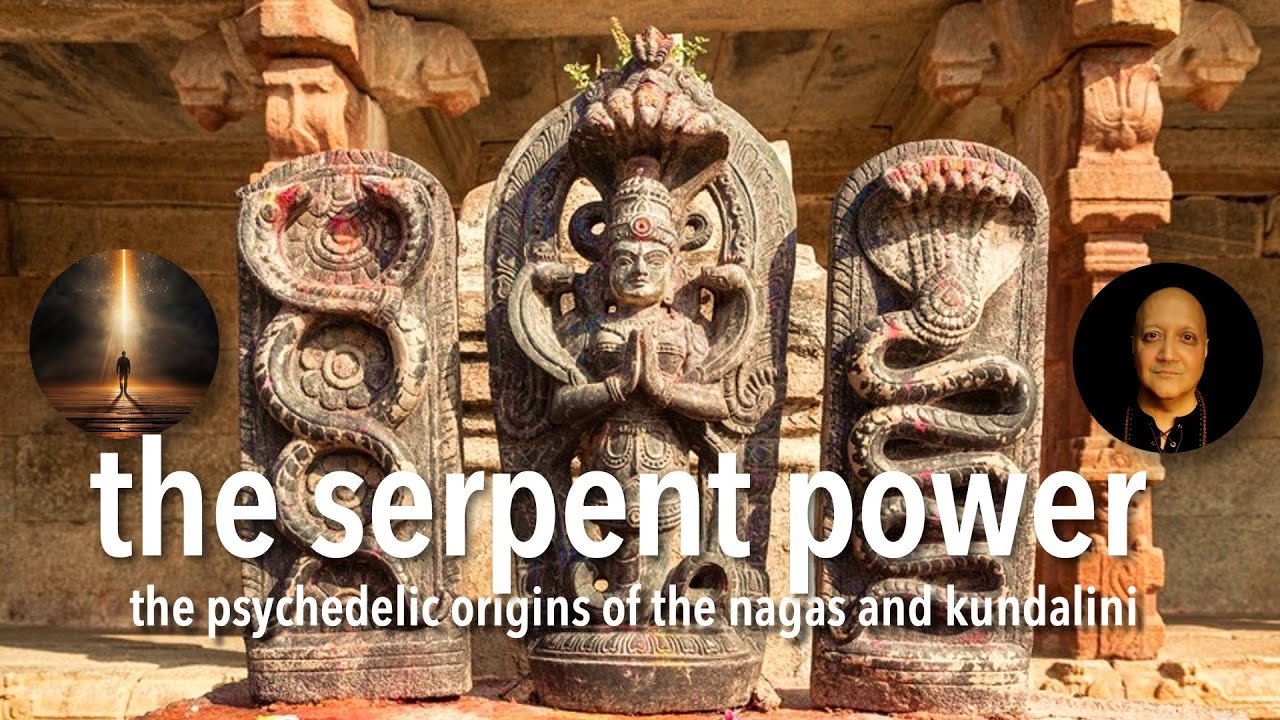
In Hinduism, Nagas are considered semi-divine beings, often depicted as half-human and half-cobra. They possess the ability to assume either a fully human or fully serpentine form, residing in an underground kingdom known as "Naga Loka" or "Patala Loka. " This realm is described as being filled with resplendent palaces adorned with precious gems.
Some notable figures include Shesha, the first king of the Nagas, often depicted as a massive serpent supporting the universe and serving as the bed upon which Lord Vishnu rests; Vasuki, the second king of the Nagas, known for his role in the churning of the ocean (Samudra Manthan), where he served as the churning rope; and Manasa, a goddess of snakes revered for protection against snake bites and for fertility and prosperity. In Buddhist traditions, Nagas are also significant. One well-known tale is that of Mulinda, a Naga king who protected the Buddha from a storm by sheltering him with his hood.
Archaeological findings suggest that Naga worship dates back to at least the 3rd century BC. Sculptures and inscriptions from this period depict serpent deities, indicating their revered status in ancient societies. For instance, artifacts from the Indus Valley Civilization, circa 2500 BC, include snake-shaped objects pointing to early serpent worship practices.
In regions like Sanchi, India, Naga sculptures have been discovered in association with Buddhist stupas, suggesting an integration of Naga worship into Buddhist practices. These sculptures often depict Nagas as protectors of water sources. In Cambodian Cham culture, Nagas are considered ancestral figures.
A legend speaks of an Indian prince marrying a Naga princess, leading to the establishment of the Funan Kingdom. In Javanese and Balinese traditions, Nagas are depicted as giant serpents, often crowned and sometimes winged. They are associated with water and fertility and are commonly featured in temple architecture, such as in the temples of Borobudur and Prambanan.
In Thailand and Laos, the Nagas are believed to inhabit the Mekong River and are revered as guardians of the waterways. [Music] In the harsh, endless wilderness, the Israelites wandered, their patience worn thin by the scorching sun and the endless journey stretching before them. They had escaped the chains of Egypt, but freedom, it seemed, came with its own trials.
"Why have you brought us out of Egypt to die in this desert? " they demanded of Moses. "There is no bread, no water, and we detest this miserable food!
" The manna, the miraculous sustenance from heaven, had become loathsome in their eyes. Their complaints, their doubt, their ingratitude—it all rose like smoke to the heavens. And then, without warning, judgment came slithering into their midst: venomous serpents, fiery.
. . And Swift went through the camp, striking down men, women, and children alike.
Their bites burned like fire, and death followed swiftly. Cries of pain and fear filled the camp as the people fell, writhing in agony. Panic seized them, and their rebellion turned to desperation.
They rushed to Moses, their voices trembling with regret. "We have sinned," they confessed. "We spoke against the Lord and against you.
Pray to him; ask him to take away the serpents. " Moses, weary but ever faithful, lifted his heart to the heavens in prayer. "Make a serpent of bronze," God said, "and set it high on a pole.
Whoever is bitten, when they look upon it, shall live. " Without hesitation, Moses went to work. He forged the bronze into the likeness of the deadly creatures that plagued them.
When it was finished, he lifted the bronze serpent high upon a pole so that all could see. One by one, the bitten approached. Some came crawling, others stumbling; yet when their eyes lifted to the serpent, something incredible happened.
The poison's grip loosened, strength returned, and life, once slipping away, was restored. The people stood in awe; a lifeless image of their suffering raised above them had become their salvation. Years passed, and the bronze serpent remained among them, a reminder of both their rebellion and their redemption.
But in time, they forgot its meaning. The symbol became an idol, and so, generations later, King Hezekiah, seeking to restore true faith, destroyed it, calling it Nehushtan, nothing more than a piece of bronze. Yet the story endured, passed down through the ages, and centuries later, a teacher named Jesus would speak of it again.
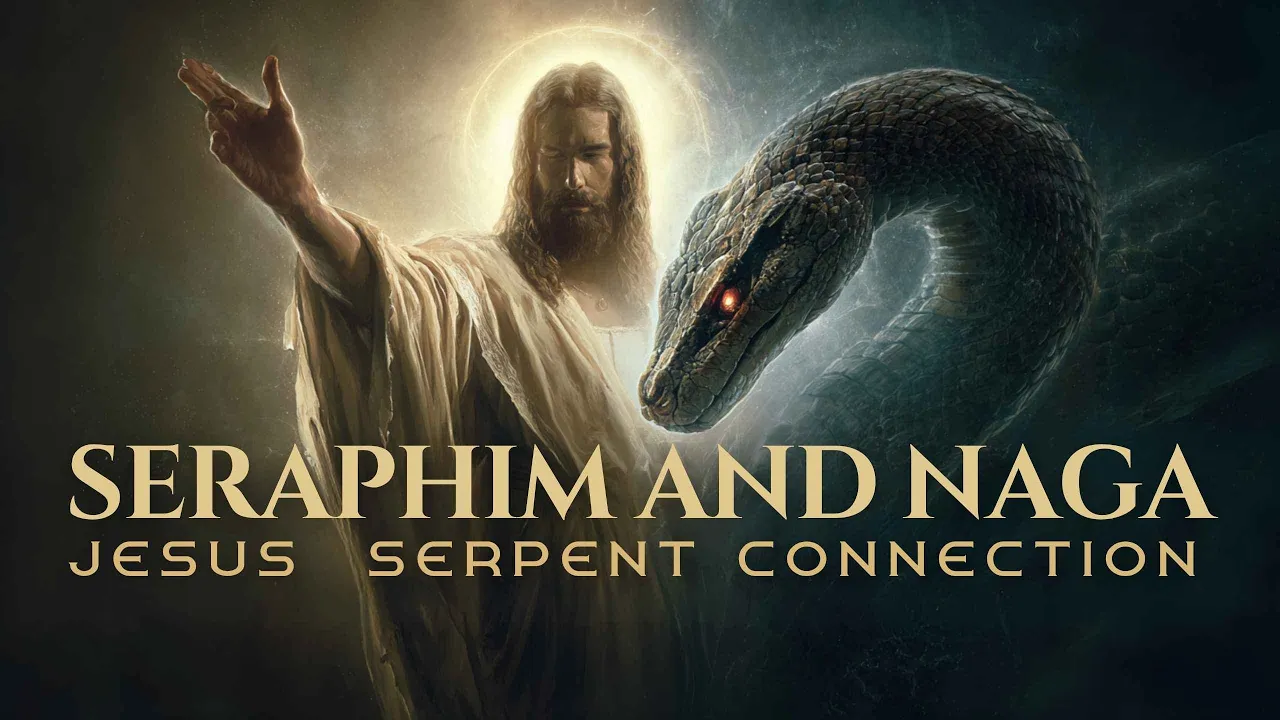
"Just as Moses lifted up the serpent in the wilderness," he said, "so must the Son of Man be lifted up, that whoever believes in him may have eternal life. " In Christian theology, Jesus compares himself to the bronze serpent lifted by Moses, saying in John 3:14, "Just as Moses lifted up the serpent in the wilderness, so must the Son of Man be lifted up. " This startling comparison ties Jesus to the fiery serpentine imagery that resonates across cultures—from the nagas of Hindu and Buddhist traditions, serpent beings who guard divine knowledge, to the radiant Anunnaki.
The serpent has always been a symbol of wisdom, power, and transformation. Could Jesus be the culmination of this ancient archetype—a figure who bridges the divine and the human, the celestial and the terrestrial? The Gospel of Luke offers us another clue.
In Jesus's genealogy, we find the name Nagi, derived from the Hebrew NOA, meaning splendor or brilliance. Now, Jesus himself was about 30 years old when he began his ministry. He was the son, so it was thought, of Joseph, the son of Healy, the son of Matat, the son of Levi, the son of Melki, the son of Janii, the son of Joseph, the son of Matathias, the son of Amos, the son of Nahum, the son of Esle, the son of Nagi (Luke 3:23).
"Nagi" speaks of celestial radiance, evoking the same divine light associated with the Anunnaki. In Sumerian terms, words like Nam Gala—great brilliance—and KN—shining—describe the luminescent nature of celestial beings. In Akkadian, the word "nagu," meaning bright or shining, reinforces the connection.
Could Jesus' lineage preserve a symbolic link to the Anunnaki, who were said to guide and shape early humanity? The Anunnaki established a divine kingship on Earth with rulers who were believed to carry their bloodline. The idea that kingship descended from heaven was central to Sumerian cosmology, and it influenced later cultures in profound ways.
If Jesus is connected to this lineage, his role as the King of Kings may clue us in to the continuation of a royal bloodline tied to the heavens themselves. The Anunnaki, like the fiery seraphim, were often depicted as radiant beings with serpentine symbolism. The nagas, protectors of sacred wisdom in Hindu and Buddhist traditions, also share this archetype.
Across cultures, the serpent has been both a symbol of divine knowledge and a representation of transformation. Jesus, described as the bronze serpent in John's Gospel, brings healing and redemption and a connection to an ancient truth—one that humanity has carried with it for millennia. The stories repeat: beings who came from above ruled as gods and left their mark on humanity.
The Anunnaki, the seraphim, the nagas, the lammasu, the Sphinx—different names for the same presence. Were they gods or something more? Ancient texts speak of rulers who descended from the heavens, bringing knowledge and order.
The Sumerians believed kingship descended from heaven, a direct link to those who came before. Were they advanced beings wielding technology or spiritual power beyond comprehension? We see them in myths and monuments: winged figures guarding gates, celestial beings described as radiant, serpent-like teachers guiding humanity.
Did our ancestors record real encounters, shaping their understanding of the divine through the lens of what they saw? The OFM, described as wheels of fire full of eyes, sound less like angels and more like technology. The seraphim, fiery serpents, suggest something beyond human comprehension.
Could they have been both technological and spiritual, blending science with the divine? If these stories come from the same source, what does that mean for us? Were they here once?
Are they still watching? And if they left, will they return? The symbols remain; the questions persist.
Maybe we're not just uncovering history; we're remembering it.