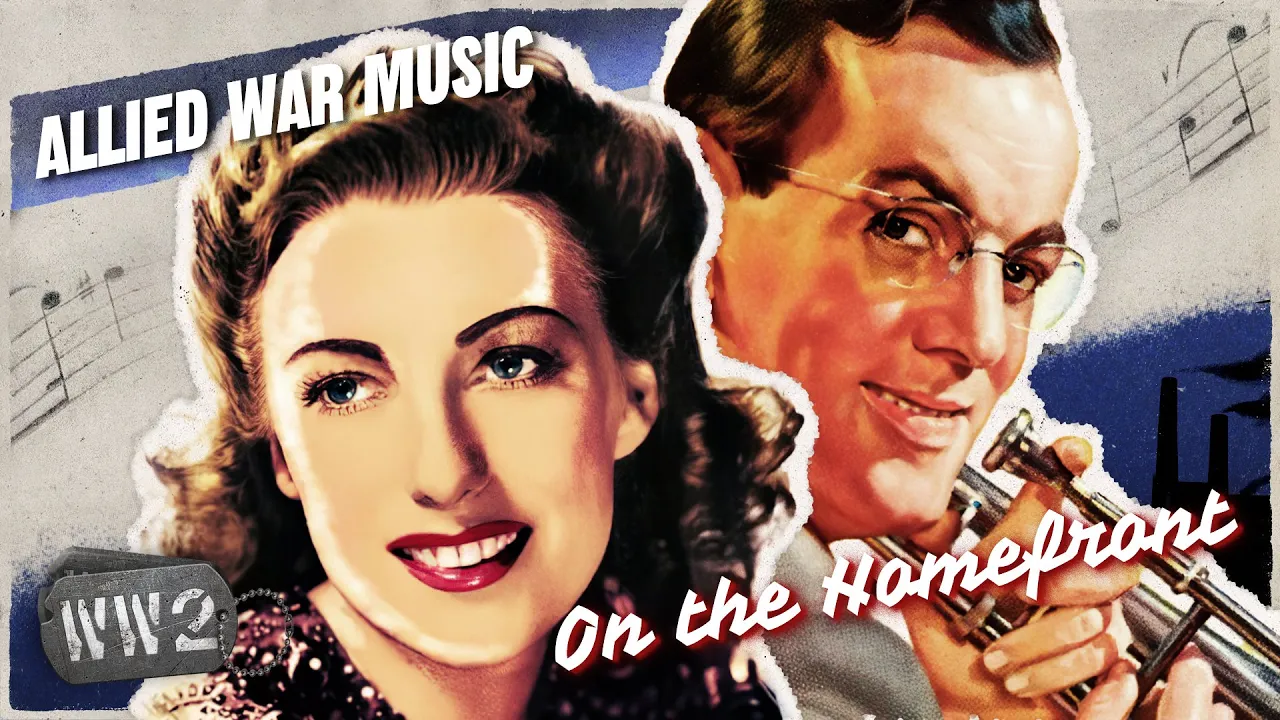
Do you have your own soundtrack? Well, I do, and doesn’t everyone and everything? WW2 is arguably the first major war to have its own recorded soundtrack, and the countries at war are not shy to use the power of music to help people get through the war, and keep them motivated - both on the frontlines and on the home front.
I'm Anna Deinhard. This is an On the Homefront World War Two special on popular music in America, Britain, and the Soviet Union. Music has always been part of war, but with the fairly recent introduction of recorded music, and broadcast radio beginning only two decades earlier, WW2 is the first time in history when people can be instantly united by musical experiences across the globe.
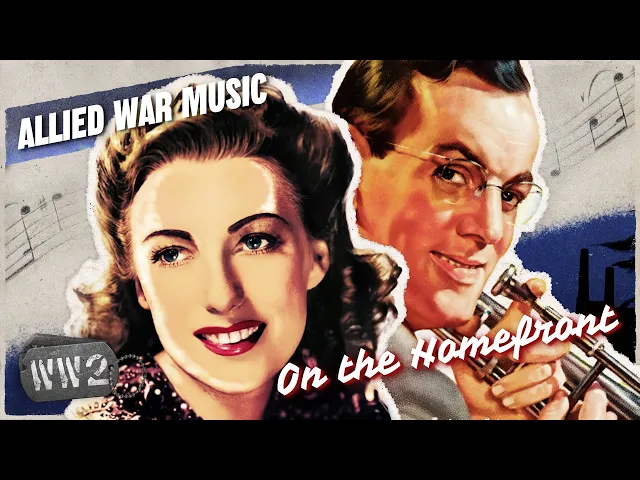
Pop stars is also a pretty new thing in the 1940s, and WW2 will have their very own. In Great Britain the first of them will be Vera Lynn. Performing since the age of seven, she records her first hits age seventeen in 1937 - “The Little Boy That Santa Claus Forgot" and "Red Sails in the Sunset.
” It’s music by a young person, for young people, so it’s perhaps no wonder that in a newspaper poll just after the war begins, the servicemen rank her as their favorite entertainer – naming her "The Forces Sweetheart. " That year, she records two songs that will define the British experience of war. First is "There'll Always be an England" written by Ross Parker and Hughie Charles for the film Discoveries made in the summer when war was looming.
It’s a big call for patriotism, with the refrain "There'll always be an England//And England shall be free//If England means as much to you//As England means to me. ” When war breaks out it becomes a symbol of British defiance against the Nazi threat. During the Blitz, newspapers report of plucky Brits spontaneously breaking into its chorus in the bomb shelters.
In one widely circulated news item, children escaping a torpedoed ship calmly settle into their lifeboats and begin singing the song as they sail to safety. It becomes such an iconic song that the Sex Pistols will use it, perhaps punk ironically, for their entrance song in their reunion tour in the 21st century. Its fame is matched only by Vera's second-biggest hit of 1939, “We'll Meet Again" - also written by Parker and Charles.
It’s pretty obvious why people relate as it’s about the hope that anyone seeing their loved ones go off to war will have, with the refrain; “We’ll meet again//Don't know where//Don't know when//But I know we'll meet again some sunny day. " The BBC rotates it constantly, and in 1943 a movie is made with the same name. It stars Vera Lynn herself, performing as a singer for civilians and troops in Blitzed London.
Her next big hit comes in 1940 and is more about escaping the horrors of war. “A Nightingale Sang in Berkely Square” is a romantic number about a couple's perfect night in London. Now, this song travels across the Atlantic, when in October 1940, the famed Glenn Miller records it with his band.
Miller is the biggest star of the main pop genre: Swing music, a form of jazz that dominates the dance halls in America in the 1930s and 40s. According to a New York Times article in November 1939; "Of the 12 to 24 discs in each of today's 300,000 U. S.
jukeboxes, from two to six are usually Glenn Miller's. " But in 1940, pop music in America has few reminders of Europe’s war. Making it no wonder that it’s the romantic tune “A Nightingale Sang in Berkely Square” that joins dance hits and love songs in the jukeboxes That’s what Americans want, and they decide what they get.
It looks a bit different when you can control the media… In the Soviet Union as tensions rise in the 1930s, the authorities deliberately try to make the prospect of war look less threatening. In the 1938 widely played song, "If There Is War Tomorrow” the lyrics say "If tomorrow brings war / the country will be stirred up […] so that it'll be able to/ make the enemy surrender cruelly. " I hope the lyrics sound better in Russian [roll eyes].
Anyway, the officially approved popular genre is called Soviet Estrada. It is a musical blend of styles that draws inspiration from everything from Russian Folk to Western Jazz. It’s almost always performed by a huge orchestra, with a large wind section supporting the singers.
The lyrics are subject to censorship and are mostly about Soviet values like camaraderie and patriotism. There’s a whole system behind what music Soviets are allowed to enjoy. Some weeks before Germany invades on June 22nd, 1941, the poet Evgenii Dolomatovskii and several of his colleagues are called to a meeting by the editor of the musical division of the radio.
They are to decide which songs the Red Army will take into battle in case of war. Already in the first few days after the German attack, hundreds of them are composed and published. The Orgkomitet, the Organizing Committee of the Union of Composers, listens to around 75 songs and approves around 50 every day for performance, publication, and broadcast.
Not to anyone’s surprise the songs are calls to patriotism, praise of the USSR, and calls for victory. One anthem "The Sacred War" “Sviash-chennaia voina. " comes out on June 27th and proclaims "Arise huge country.
Arise to the fatal battle with the fascist dark force, with the accursed horde. Let noble rage build like a wave. The People's War, the Sacred War is being waged.
" With wartime resources scarce, records are hard to produce, so new radio programs are created instead , like "Slushai, front" "Listen, front" that premiers on June 23rd, 1941. And as the world goes up in flames, the war also starts to creep into popular culture of the US. The first major hit in that direction is “Boogie Woogie Bugle Boy” by the Andrew Sisters.
Released in January 1941, it is written for the movie Private Bucks, a comedy about two American boys enlisted into the Army under the Selective Training and Service Act of 1940. The song is nominated for the Oscar for "Best Original Song" but loses out to, another reminder of the war “The Last Time I Saw Paris” from the movie "Lady Be Good. ” First recorded in 1940 it laments the loss of beautiful Paris to the Nazis.
And as the war edges closer, US performers start to adapt. On August 30th, 1941, Miller premieres a new weekly program: “The Glenn Miller Sunset Serenade. " The show allows five army training camps to vote for their favorite songs of the Miller Big Band to be played live in a radio broadcast with studio audience.
The audience votes on their favorite, and the camp which proposed the song is awarded a record player and 50 records. Glenn Miller, a self avowed patriot pays for all this himself, dishing out around 1,000 dollars per broadcast - close to 19,000 dollars in 2021. I don’t want to be cynical - but it’s good marketing as well - the same year, one out of every three records played on a jukebox is a Glen Miller piece.
Back in Britain, Vera Lynn also gets her own radio show. The Army's Sweetheart has a broadcast on the BBC. every Sunday evening called "Sincerely Yours," reaching around 20% of all British Households.
It’s broadcast to the soldiers in the field as well, so between songs Vera tells news from the home front. One highlight is when she announces the birth of babies to their fighting fathers in faraway places of the world. In a time when direct communication is difficult at best, she becomes the go between, or as she says herself in 1942: "When I sing for the boys I feel as though I'm the sort of in-between.
I mean that I sing to her from him and tell one what the other wants to say". In the US too, music changes when America joins the war, but here it is the musicians themselves who react. The day after the attack on Pearl Harbor - December 8th, 1941, the Miller Big Band is scheduled to record six new songs.
Miller decides to rename one tune originally called "That's Where I Came In" to "Keep 'Em Flying" to celebrate the US Army Air Force. Other musicians even record aggressively anti-Japanese, to not say downright racist songs, like country singer Carson Robison’s hit "We're Gonna Have to Slap The Dirty Little Jap. ” But music is mainly still about escapism.
An official from the Wurlitzer Company, maker of Jukeboxes, comments: "Troops on leave—defense workers off duty—a whole population reading, talking, hearing little but national defense—the critical necessity of it—the wallet-walloping cost of it—the sacrifice necessary to accomplish it—all America needs is to temper the tenseness of the time with moments of relaxation. And that calls for music! ” But later in 1942 the music company bosses will adapt to the demand for something more related to the actual war.
There’s a growing demand for spiffy calls to arms, and where there is demand, there is money. One classic in that genre is "Praise the Lord and Pass the Ammunition," a song about a military chaplain who says exactly THAT while manning the guns. It’s credited to an actual Navy chaplain Howell Maurice Forgy,.
Allegedly he said it on the heavy cruiser U. S. S.
New Orleans during the Pearl Harbor attack. Within the first two months, after its recording in 1942, 450,000 copies are sold. Other songs celebrate the efforts on the home front.
A famous cultural icon is created by Redd Evans and John Jacob Loeb's song “Rosie the Riveter” Recorded by numerous artists, it’s a call for women to join the war industry: "While other girls attend their favorite cocktail bar /Sipping dry Martinis, munching caviar / There's a girl who's really putting them to shame / Rosie is her name. " But while the changes in the US and Great Britain are mostly market driven, censorship also plays a role as the war progresses. In February 1942, Singapore falls to the Japanese, and the BBC decide to cancel Vera Lynn's “Sincerely Yours” broadcast.
Apparently, its sentimentality is un-British and damaging to the masculinity of the men on the front. It’s not the end of Vera's wartime career though, and she will support the troops throughout the entire conflict, even giving live concerts for soldiers in Egypt, India, and Burma. The fear of sentimentality damaging motivation also hits songs in the USSR A very popular song is "V zemlianke," "In the dugout" from early 1942, about a soldier hidden in his winter dugout, drawing strength from the memory of his love at home.
The lines: “It is not easy for me to reach you/ but death lies only four steps away” are thought to be too destructive to the nation's morale, and the song is banned in summer 1942. That doesn’t stop soldiers from constantly requesting it in letters to the radio though. Music helps us cope, and it can even transport us to a better place in our minds.
Two nurses in a mountain division recall: “We had an old pathephone and several records. The soldiers would come from different battalions to the dugout. They came under fire, in the rain or in snowstorms.
[. . .
] We crowded around the pathephone and glued to it. As we heard the old favorite songs, everything turned over inside. We remembered our homes and dances in the park.
” Art is mirror to the times and artists react like everyone else. To Glenn Miller reacting to the war through music isn’t enough. He is at the top of his game with an income of 15,000 to 20,000 dollars a week, and has just starred in two hit films with his band.
But he feels a deep need to do his bit in the actual war. But he’s 38, too old for the draft, and has no military skills. So he’s rejected by the Navy in August 42.
Miller won’t have it though, and writes a personal letter to Army Brigadier General Charles Young, head of personnel for the Army Services of Supply. “By appropriate planning, programs could be regularly broadcast to the men in the service…such programs might put a little more spring into the feet of our marching men and a little more joy into their heart. .
. I should like to go into the army if I could be placed in charge of a modernized army band. ” On September 8th, Glenn Miller is then accepted into the Army Specialist Corps as a Captain.
He plays one last civilian concert and issues a press statement, stating:: "I, like every American, have an obligation to fulfill. That obligation is to lend as much support as I can to winning this war. ” On October 7th, 1942, he reports to duty and will proceed to form his new band, the "418th Army Air Force Technical Training Command Band".
On December 15, 1944, traveling from Bedford England to Paris France to arrange for his band to move there, his plane disappears over the English Channel to never be seen again. Although the source of many conspiracy myths, it is by all probability just another tragic accidental death in this war. Vera Lynn on the other hand will not only survive the war, but live to the age of 103.
She will record her last album to make the charts age 100, and once again become the best selling female recoding artist in Britain that year. Her last public performance will be a virtual duet with Katherine Jenkins to celebrate the 75th anniversary of V-E Day during the COVID Pandemic. She dies of natural causes only a month later.
On July 10, 2020 she is buried with full military honors, including an escort of all branches of the armed forces, and a Battle of Britain Spitfire flypast. And if you want to make sure that “we’ll meet again” join the TimeGhost Army on Patreon or TimeGhost dot tv, Subscribe and Ring That Bell!