hello and welcome to the review of chapter 73 of guyton hall's medical physiology textbook in this chapter we're going over metabolism it's a nice and quick and easy chapter for you guys we've gone over some of these concepts before and we're also building on some other concepts as well if you enjoy the video please don't forget to give it a like and subscribe as it does help the small channel grow so it starts off by talking about atp or adenosine triphosphate as our energy currency in our body and it is an energy currency because it
contains these phosphate bonds triphosphate meaning three phosphate bonds these phosphate bonds are high energy bonds that when broken liberate a lot of energy for our chemical processes now although there are three phosphate bonds all three of them typically aren't broken unless you're in an energy star state instead you'll just break off one of those phosphate bonds form adp and then adp typically gets replenished back into atp as you'll see coming up here now we get atp from the combustion of our foods our food products being carbohydrates fats and proteins carbohydrates through the process of glycolysis
and then eventually into oxidative phosphorylation and then our fats through beta oxidation and then proteins once again through the oxidative phosphorylation as well so importantly carbohydrates have that little extra step of glycolysis that we'll get to shortly and why that is an important extra step to keep in mind so atp is used for just about everything in the body as you could imagine so it's used to actually create the bonds between your peptides or those peptide linkages to create a protein since proteins are so heavily made in the body a lot of energy is used
just for that it's also used for the synthesis of glucose from lactic acid and then also the synthesis of fatty acids from acetyl coenzyme a but just about all substances in the body so cholesterol phospholipids hormones etc are all created by using atp as energy now more obviously we also use atp for muscle contraction so using that energy creates a muscle contraction so we can move around atp is used to transport ions across membranes against the concentration gradients and it's also used for glandular secretions and then lastly here for nerve conduction just through the active
transport of ions to allow action potentials to spread across the nerves phosphocreatine is a very important little molecule here which also contains a phosphate bond so phosphor creatine contains a phosphate bond but we can't actually use that phosphate bond for chemical reactions instead that phosphate bond can be liberated to give a phosphate bond to adp so you can see down in this reaction here phosphorous creatine plus adp turns into atp and creatine so phospho-creatine is not used as an energy currency it's purely used as a phosphate bond holder to give to atp once atp is
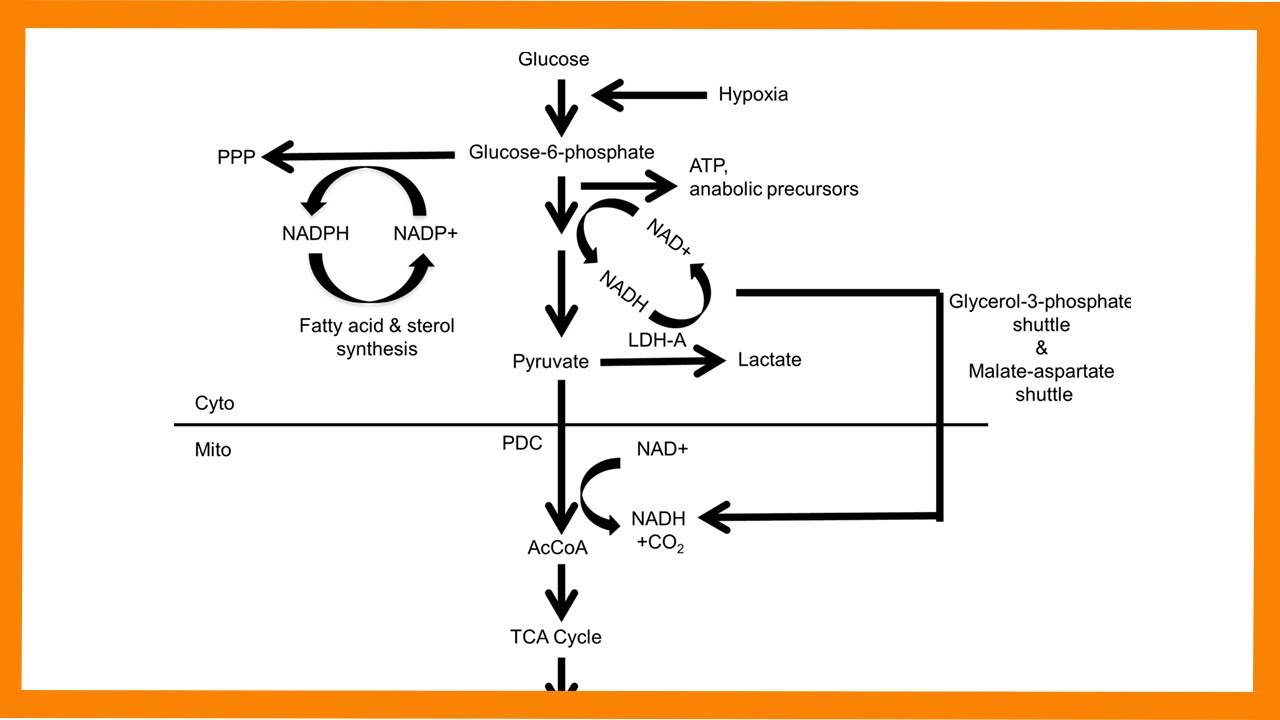
being used so it's this atp buffer so as soon as atp is being used in a cell that's using a lot of energy phosphocreatine then resupplies atp by handing over a phosphate bond and then next we start to describe anaerobic versus aerobic respiration or anaerobic versus aerobic energy anaerobic just means without oxygen aerobic means with oxygen so using oxygen to create atp or not using oxygen to create atp now carbohydrates are the only food group that can create energy or create atp without the use of oxygen and that's because of that pathway we were talking
about before the glycolytic pathway so breaking down glucose or glycogen into pyruvic acid which liberates a very small amount of atp but nonetheless liberates atp without needing to use oxygen at all if that pyruvic acid builds up then it's going to get turned into lactic acid so then more atp can be produced by the breakdown of glucose if there is no oxygen if there is oxygen around this pyruvic acid goes and enters the krebs cycle and goes on to do oxidative phosphorylation so during hypoxia at any point when you don't have enough oxygen in your
cells let's say because you can't breathe or because you're just utilizing so much energy that there's not enough oxygen replenishment so you're using too much energy than oxygen supply then you start to increase glycolysis or the breakdown of glycogen in your muscles or any glycogen stores to create pyruvic acid and lactic acid to liberate a little bit of atp that's just to supply some atp to allow you to continue doing whatever activity you need to do and allow the chemical processes to continue for a short amount of time until hopefully oxygen comes back and is
able to replenish that glucose as we'll get to so the three steps in anaerobic respiration or the three steps in anaerobic environments where we don't have enough oxygen the first portion is that the atp in the cell gets used up and obviously that happens pretty quickly you need to continue your chemical reaction so atp instantly gets converted into adp and that lasts only a second or so phosphocreatine then kicks in replenishes the atp that's used to resupply your atp and then eventually your phosphate creatine will be will run out after about five to ten seconds
or so so your phosphocreatine kicks in second and then lastly the last portion of anaerobic respiration is glycolysis creating lactic acid which gives you the burning sensation but also creating a little bit more atp and that lasts for a couple minutes and then eventually the lactic acid builds up to a point when you actually need oxygen to come in and then resupply your energy supplies so that creates this oxygen debt the oxygen debt is just oxygen coming in to replenish all of the glucose from lactic acid you know converting lactic acid into glucose replenishing all
the adp into atp replenishing your phospho-creatine replenishing your oxygen down to your hemoglobin and also replenishing the oxygen in your lungs so restoring the balance so then you're able to continue your chemical processes if you do not restore oxygen at that time then you're going to start to have tissue death so for instance if you have a myocardial infarction meaning that a portion of your heart muscle has now lost its blood supply anaerobic respiration will kick in for a second here try to supply some energy keep the heart pumping but if the oxygen doesn't replenish
then those cells are going to start to die in the situation of exercising when you're exercising you don't have enough oxygen getting to your muscles you go through anaerobic respiration and you provide that extra bit of energy lactic acid builds up eventually you start to fatigue the muscle doesn't die you just fatigue so then you no longer can do that high energy work anymore you start to slow down oxygen is able to resupply some of these energy supplies and you're able to continue going at a slower rate that's why you can't do 100 activity for
a prolonged period of time because you need to replenish all of these stores of energy you need to replenish your atp using oxygen the next concept we're going to go over is the actual rate of a reaction or a chemical reaction how it's determined by two concentrations so your substrate concentration the thing that's getting broken down and then your enzyme concentration so the thing that's actually breaking down the substrate so as you can see both factors influence the rate of reaction on the y-axis here so if we have enough substrates let's say we have high
substrates we're operating on this end of the graph here then the thing that is determining the rate of reaction is the enzyme concentration so these numbers here correlate to the concentration of the enzyme if we have two times the enzyme concentration we will obviously have double the rate of reaction if we have four times we've got four times the rate of reaction eight times eight times the rate of reaction what you'll notice is that if you have a high substrate concentration if you reduce that substrate concentration a small amount it doesn't really change your rate
of reaction until you start to hit the point where you start to decline so when you have a relatively low amount of substrate suddenly there's not enough substrate to actually bind to the enzyme so your rate of reaction starts to reduce because you don't have enough substrates so at this portion where you have low substrate concentration then your rate of reaction is dependent on both substrate concentration and your enzyme concentrations as you can see here if you have a higher enzyme concentration yet a small substrate concentration it's still going to be a faster rate of
reaction than a lower enzyme concentration but as you increase your substrate concentration both will increase the rate of reaction it's a little confusing there but basically when you have adequate substrate concentration to bind to all of your enzymes then the rate limiting step is how much enzymes you have when you get to a point where you don't have enough substrates to bind to all of your enzymes then clearly increasing your substrate will also increase the rate of reaction because you're increasing the amount of substrates that can bind to the available enzymes that are around and
break up so at low substrate concentration increasing substrates will increase your rate of reaction but at a high substrate concentration only increasing your enzyme concentration will increase your rate of reaction it's important to also know that the body doesn't just have one chemical reaction typically it's multiple chemical reactions in the series that results in an eventual outcome so you know you have that hormone signaling on the receptor of a cell that then activates an enzyme to then create a product which then reacts with the nuclear receptor to then increase transcription translation creation of a protein
that protein then goes over and then breaks down another chemical and so on and so on so our chemical reactions are in series one step influences another step that influences another step so obviously the overall rate of a chemical reaction that entire process from hormone a being released to product b being produced is determined on the slowest step in that pathway if i'm going to draw out how a rate limiting step works if this is the slowest step in this entire process increasing the speed of every other step will not increase the speed of the
product b being produced in order to increase product b being produced we need to increase the slowest step so increasing the slower step will then increase the overall reaction here so this is the rate limiting step and the rate limiting step in most chemical reactions or at least in some chemical reactions is adp adp is required for instance glycolysis to occur we touched on this in the carbohydrate metabolism chapter so if you don't have any adp then you're not going to break down glucose but as soon as adp becomes available because atp is being used
up there's an energy use in the cell then that increased adp is going to increase that rate limiting step and then increase the breakdown of glucose which is helpful because you're only going to need to break down glucose when you need energy and that's going to be sped up once you're using energy so increasing atp usage increases adp adp then stimulates glucose to be broken down essentially then that comes down to metabolism metabolism is just describes the chemical reactions within the body and then metabolic rate just really expresses how much heat is liberated during these
chemical reactions because remember heat is a byproduct of just about every single chemical reaction and anytime energy is used or produced only 27 percent of the energy from food is actually finally used for functional systems and we can go through all these examples so protein degradation muscle activity etc etc but heat is ultimately produced and that's where the calorie comes in one gram calorie is just the quantity heat required to raise the temperature of a gram of water by one degree so if you have a molecule that contains one gram of calorie breaking that down
will liberate enough heat to raise one gram of water by one degree that's by far too small unit for our body so we times up by a thousand to make it more appropriate so killer calorie just means a thousand calories it's just a method of being able to actually identify how much energy is within the food group and how much energy is liberated by work and that can be measured by the direct collimatory which just literally means physically measuring the amount of heat that comes off the body versus indirect kilimetry which is indirectly counting how
much calories are being burned by knowing how much oxygen is being utilized remember oxygen is required for the majority of just metabolic activity so if you know how much oxygen is being burnt then you know how much calories roughly are being consumed so if we get into energy output we know what does the body use energy for there are four main categories here we've got just metabolic functions of the body so general chemical reactions so that's our basal metabolic rate we have physical activity as a pretty obvious one here if you increase your physical activity
you're going to increase your energy output number three here is digestion absorption and processing of food and then number four here is maintaining our body temperature so going through each one really quickly here our basal metabolic rate accounts for the majority of our daily energy use in the sedentary person so if you're not doing much a physical activity then the majority of the energy that is utilized from your food is just for your basal metabolic rate the general kinema cultural reactions keeping you alive keeping your organs functioning and that's represented as the yellow box down
the bottom here as you can see physical activity constitutes the next highest group but this can obviously change if you're a highly active person then maybe the majority of your energy is going into your physical activity but as a kicker if you have more skeletal muscle you're going to have more chemical reactions when on the day-to-day so then your basal metabolic rate is going to increase as well so if you have a higher proportion of muscle in your body maybe because you do more physical activity your basal metabolic rate's also going to increase but then
if you're a very sedentary person or if you're older you're going to have a lower amount of muscle in your body you're going to have more fat which is a lower metabolic rate so then your basal metabolic rate is going to reduce the amount of energy you use just on the day-to-day is going to decline and that's shown over here in figure 73 4. so you can see as the age goes higher on the right then our basal metabolic rate on the left here starts to reduce as our muscle reduces relative in our body as
the main determinant now females are slightly lower than males because they have slightly less muscle and they don't have testosterone in their body which slightly increases the metabolic rate even further now there are some other hormones that can increase your metabolic rate like thyroid hormone growth hormone and then also a fever can increases your metabolic rate and then sleep actually reduces your metabolic rate because we're obviously not using our muscles as much and there's a depression in your central nervous system as we're sleeping so you're not using as much for the nerve signals firing around
your brain physical activity is pretty easy to explain or understand i would hope so if you do more physical activity or is going to burn more energy when it comes to processing food that relates to the thermogenic effect of food so actually trying to digest your food and then package it away and then use it requires energy you know we need to move our guts we need to absorb that food we need to send it to the right area and then process it effectively interestingly protein has a higher thermogenic effect we're able to increase the
thermogenic effect from food by 30 by eating higher proteins because they require more processing than fats and carbohydrates which just get packaged away for energy liberation later on so this higher metabolic rate for digesting and absorbing and processing proteins is the specific dynamic action of protein and then lastly here we have non-shivering thermogenesis non-shivering meaning that you're obviously not just constantly shivering to keep your body temperature at a certain temperature this non-shivering thermogenesis means that as your body temperature slightly reduces then your metabolic activity actually increases to increase the heat liberation from all those chemical
reactions yes of course you can shiver when you're cold and then that will increase your heat but you've got this non-shivering mechanism as well just by increasing metabolism there's a little portion here about brown fat which actually contains large amounts of mitochondria and smaller globules of fat and this is typically what we see in neonates and very young animals where this brown fat is able to metabolize fat into purely heat so it has all this fat here and it wants to turn into heat rather than producing atp so then you're able to maintain your body
temperature and then that really summarizes our chapter for today i hope you enjoyed it feel free to leave a comment and we'll see in the next video