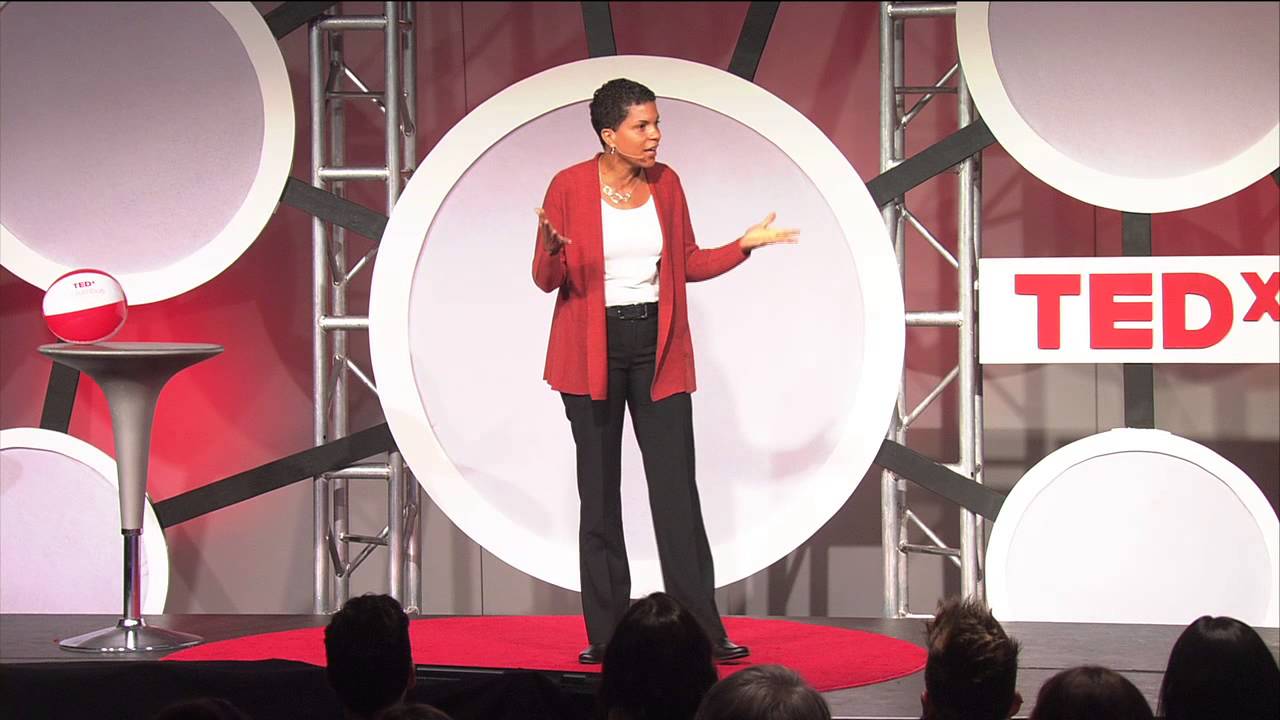
hello everybody wow there people up in the balcony too I am delighted to be here today uh you've heard that I you know I'm in health and my a lot of my work is on addressing naming measuring and addressing the impacts of racism on the health and well-being of the nation but what I'm going to do today is Empower all of us with tools for communicating about race and racism I see the world in allegories sometimes I just look at an ordinary situation and I get some insight about how to communicate about very complex ideas
so today I'm going to share with you four allegories on race and racism that I hope you will understand remember and then pass them on the first story Japanese lanterns colored perceptions was sparked by my own real experience back in the day when I was at this uh very nice Garden Party in the evening in California and I had had my turn with chitting and chatting and I was just sort of tired and I wanted to just sit back in the corner of the garden and relax and listen to the conversation and music just wash
over me and as I sat there in the garden I became fascinated by a group of pink moths and then I looked a little further on and I saw a group of green moths and a group of blue moths and so Not only was I fascinated by that I was fascinated by how they naturally were sorting according to their kind and then I looked over my shoulder and I saw wow and there's some yellow moths and some purple moths and some orange moths too and the scientist and me was getting very excited about this until
I was like oh of course there is no such thing as purple or pink or blue or green or yellow or orange moths moths are different colors yes but they're different colors of brown and tan and speckled and splotched but the colors that I thought I was seeing and the colors that we think we see every day are actually due to the lights by which we look these colored lights distort and mask our own true variability which can only be seen under a universal light that allows all possibility so when I remembered this image I
started thinking what is race and how do the racial categories that we construct color our imaginations of who we are and in my mind race is clearly a social classification not a biological descriptor it is the social interpretation of how one looks in a race conscious Society so here in Atlanta in the United States by the colored lights that we look at I'm clearly black but in some parts of Brazil with different colored lights I'm clearly colored clearly white actually and in South Africa I'm clearly colored and so we need to challenge ourselves to understand
the impact of these different colored racial categories that we construct and how it's limiting our understanding of Our Own True variability the Second Story dual reality a restaurant Saga this was also from my time back as a medical student in California and I have been studying with some friends it was getting late we missed dinner and so we went into town to get something to eat and we walk into a restaurant and we sit down we order our food our food is served and here we are eating and that's not remarkable many of you have
had that experience and I wouldn't have thought anything more about it or be talking about it today except that I looked up and I noticed a sign and that sign was a profound provided me a profound insight about racism so what did the sign say the science head open now you know I could have thought nothing more about that right I was sitting at the table of opportunity eating with a sign that proclaimed open to me but because I knew something about the two-sided nature of those signs I realized that in fact people who were
hungry but just a few feet away from me on the other side of the sign would not be able to come in because in fact now the restaurant was closed due to the hour and I realized that racism and other systems of inequity structure open closed signs in our society and it's important for us to know something about the two-sided nature of these signs it's important for us to understand how these signs how racism and all the other isms create a dual reality where on one side people who are in the side any of us
it's difficult for us to recognize any system of inequity that is privileging us so for example it's difficult for men to recognize male privilege and sexism it's difficult for white people in this country to recognize white privilege and racism it's difficult for all Americans to recognize our American privilege in the world context yet for those on the other side of the sign they are very well aware of the two-sided nature of the sign because they are it's proclaiming close to them and yet they can see through the window and see that people are eating on
the other side so back inside the restaurant I understand that people might ask does racism really exist is there really a two-sided sign because in fact it's hard to know when all you ever see is open it's a privilege in fact not to have to know about the two-sided nature of the sign but once you do know you can act you don't have to act but you can choose to act and the knowledge about racism and its continued existence and profound impacts on the health and wellbeing of the nation is actually empowering the third of
my oh let me just before I get off of that now provide you with a definition of racism that Evol evolves out of this understanding and I'm really clear that racism is a system it's not an individual character flaw or a personal moral failing or even a psychiatric illness as some people have suggested but it's a system of power and a system of doing what it's a system of structuring opportunity and of assigning value and on what basis is that opportunity structured and on what basis is that value assigned it's based on the social interpretation
of how we look which is what we call Race and what are the impact of this system of power well it unfairly disadvantages some individuals and communities but it doesn't take very long to recognize that every unfair disadvantage has its reciprocal unfair Advantage so that it's also unfairly advantaging other individuals and communities and then even as it's unfairly disadvantaging or advantaging individuals and communities this system is sapping the strength of the whole society through the waste of Human Resources my third story levels of racism a Gardener's tale comes from my experience when my husband and
I uh newly wed bought our first freestanding house with a big wraparound porch with flower boxes all along the porch now when we went to plant our merry gold seeds we saw some of the boxes had dirt in them and some of the boxes were empty so my husband beautifully goes to the gardening store and he's hauling big old bags of potting soil and we fill up the empty boxes and we put equal numbers of seeds in all of the boxes and we water all of the boxes and I'm not the gardener so I sit
back just going to enjoy and 3 weeks later I walk out of my front door and I stopped in my tracks because it looked to me like we had planted completely different species in some of the boxes versus others in some of the boxes they were full of plants tall and vigorous looking plants and other boxes just had a few plants in them and they were scrawny and scraggly and then I realized what had happened that potting soil was rich fertile soil so that in the potting soil every single seed had sprouted with a strong
seed growing very tall and vigorous but even the weak seed making it to a midling height but in that old soil that poor rocky soil that we had found there the weak seed had died and even the strong seed had to struggle to make it halfway up and if you guys Garden well maybe you've composted half of your garden and you've seen the same thing this image is about the importance of the soil the importance of the environment and I'm going to make it a story about racism but before I do that I want to
talk to you just a little bit more about racism because in the story I'm going to illustrate three different lels of racism institutionalized personally mediated and internalized and so you know sometimes I have an hour to talk about these things I don't today but I'm just going to quickly Define each of them make some important points and then share the story institutionalized racism what is it it is that system that results in differential access to the good services and opportunities of society by race this is the kind of racism that doesn't require an identifiable perpetrator
this is the kind of racism that's been institutionalized in our laws and our norms and actually often shows up as inherited disadvantage these are some examples of how it can impact you sometimes people look at my top bullet of housing education employment and wealth and they ask isn't that social class why you have this on a slide about racism to which I respond it doesn't just so happen that people of color in this over in this country are over represented in poverty while white people in this country are over represented in wealth that's not just
a happen stance but for each Mar alized or press stigmatized group there's been some initial historical Injustice so for American Indians for example it was The Taking of the land and the genocide and then the moving of the survivors to the reservations for people of African descent it was the kidnapping of West African people and then our importation across the Atlantic with tremendous loss of life in the Middle Passage and then for the survivors what I describe as the coerced Usery of our unpaid labor for centuries to build this country but then people stopped me
there and they say well you know what Dr Jones you're talking about slavery but the enslaved people were emancipated by 1865 and that's fully 149 years ago now so all else being equal don't you think the impacts of slavery would have washed out by now but the key phrase there is all else being equal and all else has not been equal since 1865 and all else still is not equal today and there are still what I describe as contemporary present day structural factors that are perpetuating the initial historical insult and so when people ask me
am I talking about racism or social social class I say that institutionalized racism explains why we even see an association between social class and race in this country before I get off of this I need to also say that institutionalized racism can be through acts of doing as well as acts of not doing and often shows up as inaction in the face of need the second level of racism personally mediated racism I Define as differential assumptions about the abilities motives and intents of others by race and then differential actions based on those assumptions so so
here now we're talking about what people what most people think of when they hear the word racism somebody did something to somebody it includes the Prejudice and the Discrimination lots of ways that it can impact your health and your whole well-being and like institutionalized racism it can be through acts of doing as well as acts of not doing but even more important it can be unintentional as well as intentional you don't have to in intend it to have a racist impact to do something racist to have a racist impact third level of racism internalized racism
I Define as acceptance by members of the stigmatized races of negative messages about our own abilities and intrinsic worth lots of ways that it can affect us and it's really about accepting the limitations to our own full Humanity of the box into which we've been placed so now with this background about what I describe as these three levels of racism let's go back to the story so here I have now two flower boxes but what we're going to introduce is a gardener a Barner who has two flower boxes one which she knows to have Rich
fertile soil and one which she knows to have poor rocky soil and she has seed for the same kind of flowers except some of the flowers are going to produce pink blossoms and some of the flowers are going to produce red blossoms and this Gardener prefers red over Pink So What does she do she takes the red seed and she puts it in the rich fertile soil and she takes the pink seed and she throws it in the poor rocky soil and 3 weeks later she sees in her garden what I saw in mine and
that rich fertile soil all of the seed has sprouted the strong seed has grown very tall and vigorous but even the weak red seed has made it to a midling height and the poor rocky soil the weak pink seed is died and here comes the strong pink seed just trying to make it halfway up and then those flowers go to seed and the next year the same thing happens and then those flowers go to seed and then year after year after year after year the same thing happens until finally 10 years later the gardener is
looking at her flower boxes and she says you know I was right to prefer red over pink so we're going to pick interrupt the story there for a minute to say that this first part of the story tells us something about institutionalized racism where you had the initial historical insult of the separation of the seed into the two types of soil you had the Contemporary structural factors of the flower boxes keeping the soil separate and then through inaction in the face of need perpetuation of the inequity but okay well let's pick the story back up
where is personally mediated racism in the garden well now The Gardener is looking at Red thinking that red is mighty beautiful she looks over the pink flowers and she says oh they sure are scrawny and scraggly so she plucks off the pink blossoms before they can even go to seed or maybe she sees that a pink seed has blown into the rich fertile soil and she plucks it out before it can establish itself which is some of the anti-affirmative action stuff that still goes on and where is internalized racism in the garden well the red
flowers are just living their lives enjoying being red many of them not even understanding that they're benefiting from enriched soil the pink flowers are looking over at Red thinking with all wishing with all their hearts that they too could be red and here come the bees minding their own business collecting nectar but of course pollinating at the same time so here comes a bee and then up to another pink flower and then it comes toward this other pink flower and that pink flower says get away from me be do not bring me any of that
pink pollen I prefer the red because the pink flower has internalized that red is better than pink so now the question arises what do we do to set things right in the garden well let's start with addressing the internalized racism so we can go over to the pink flowers and we could say pink is beautiful power to the pink right and that's an important intervention that's an important intervention but as you can see even if you do that that's not going to change the situation in which they find themselves or maybe you say okay let's
deal with the personally mediated racism so let's have a conversation with the gardener or better yet let's have a workplace Multicultural workshop for the gardener it's all good so we have our workshop and in the workshop we say dear Gartner would you please stop plucking those pink flowers and maybe she will and maybe she won't right but even if she does it still won't change the situation in which they find themselves I think that if we really want to set things right in the garden we need to address the institutionalized racism which means we have
to either break down the boxes and mix up the soil or if we want to keep separate boxes too that's all right too but if we do it means that we need to enrich that poor rocky soil until it's as rich as the rich fertile soil and when we do that the pink flowers will flourish they'll be looking beautiful Grand and glorious as the red and in that intervention we might also address the internalized racism pink will no longer be looking over at Red thinking red is better wanting to be red and in that intervention
on the institutionalized racism we also might address the personally mediated now the original Gardener may have to go to her grave preferring red over pink but her children who grow up and see the flowers equally beautiful will be less likely to have that kind of attitude so in this story I've actually Illustrated these three levels of racism institutionalized personally mediated and internalized and very strongly suggested that if we want to set things right we have to address the institutionalized racism good if we address all the levels at the same time but the most important question
is one that I haven't raised yet and that is who is the gardener right because the gardener is the one that I gave the power to decide the power to act and control of resources which in my mind are the elements of self-determination well who is the Garder The Gardener clearly includes government as well as media as well as foundations and corporations and even communities to the extent that they have self-determination but whoever the gardener is it is dangerous when the gardener is allied with one group I painted her red that's why she prefers red
over pink right and it's also dangerous when she's not concerned with Equity when she can look at her flower boxes and think that her flowers her garden is beautiful because she's not even really keeping the pink flowers as part of her garden and our challenge is what to do about the gardener do we make the gardener striped or polka dotted or fuchsia lots of different questions that can come out of this story but I'm going to close in this last minute with one last image and this image is not from my own real experience but
actually this is taken an image taken from the book by Dr Beverly Daniel Tatum why are all the black kids sitting in the cafeteria and other conversations about race and in that image she presents racism as a conveyor belt on which people are just living their ordinary lives not really understanding that they're moving to and through racism but just living their ordinary lives and contributing to racism by their benign in action so I'm going to build on this story get back on the conveyor belt over here to help us know how can we act so
here we are on this crowded conveyor belt and we're just living Our Lives most of us not even paying attention or even wondering where we're going but say one of us looks up and we see racism well one reaction is to close your eyes that's denial right or another reaction is to turn around you're still going in the same direction maybe you're color blind but if we do not and you know what that shows you that shows you that racism is most often passive most often shows up as inaction in the face of need but
if we're on this conveyor belt and we don't want to go there then what we have to do is start walking backwards right and we need to walk at least as fast as it's going not to go that way but now we have to start walking faster if we don't want we really want to get away from that and what happens when you start walking backwards on a crowded conveyor belt you bump into people and they say hey buddy watch out where are you going and this is your opportunity to do the first of three
steps in terms of being actively anti-racist and that is to name racism you say look do you see where we're going do you want to go there and most people will say just stop bothering me but maybe one or two will turn around with you so now you're two or three walking backwards on this conveyor belt and now where are you headed you're not just going away from racism but now you're actually going to understand the con conveyor belt motor and now you're going to do the second of the three stages of anti-racism which is
to ask how is racism operating here and so maybe one of you thinks it's a lover and you pick the lover up and the belt jolts because the lover is part of it but it's a very smart conveyor belt so it reconfigures itself and keeps going so now you have to do the third thing to be actively antiracist which is to organize and strategize to act with others who are on the other side try find this dial or trying this button and I believe that we together can dismantle the system and put in its place
a system in which all of us can know our full potential and have the opportunity to develop to our full potential so I have shared with you four allegories Japanese lanterns talks about race as a social construct dual reality illustrates racism as a system that creates a two-sided sign a dual reality levels of racis M illustrates three levels of racism and highlights the fact that if we want to set things right we have to at least address the institutionalized racism and life on a conveyor belt motivates us to act I hope that you've understood these
stories I hope that you'll find them useful tools and I hope that you carry them out into the world thank you very much [Music]