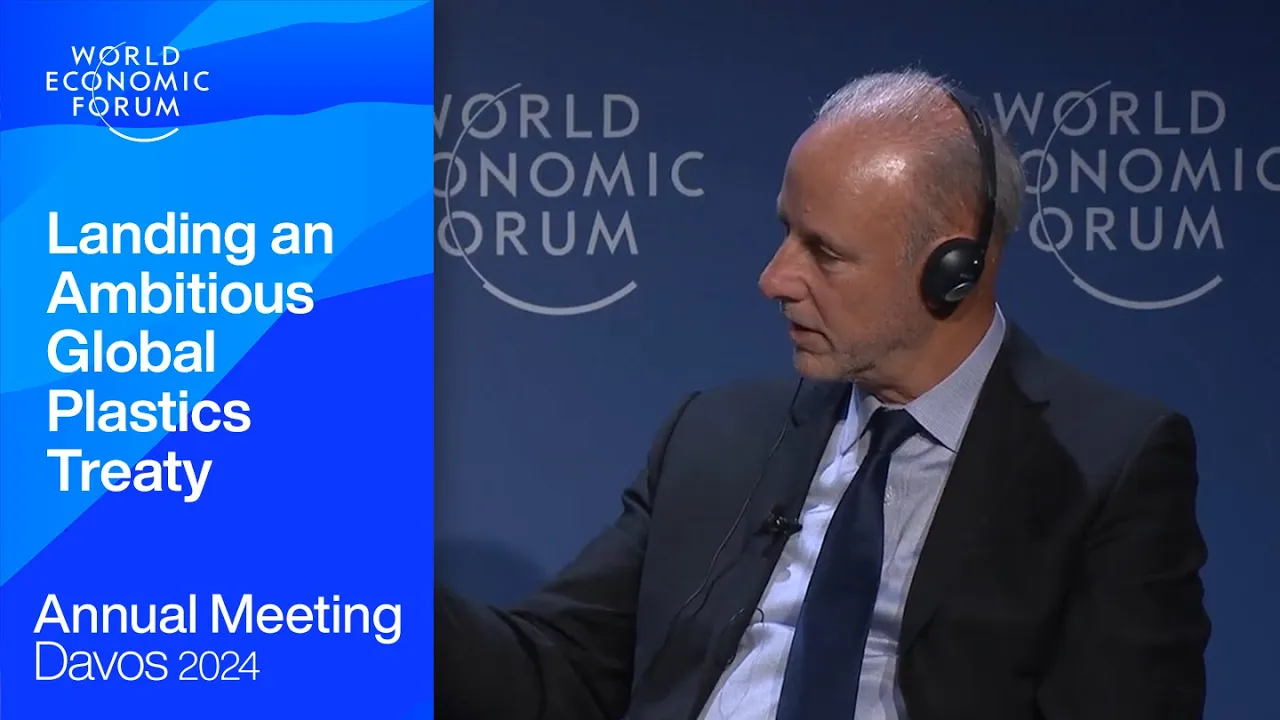
Nice good afternoon and Welcome to our panel we have a very exciting conversation so I want to Dive Right In on Landing an ambitious Global Plastics treaty my name is Douglas mcau I'm a professor at the University of California Santa Barbara and I run a group called the benoff ocean science lab there at UCSB um I'm going to invite our panelists to come and join us please uh On the stage as they're coming up in fact I'll introduce you once you you're here with us but I believe I could invite you to come right up
um I would love to bring on to the uh onto the screen invitation for all of you to participate in the conversation so we have a very engaging conversation about an opportunity that's in front of us in 11 months to negotiate a treaty which could bring an end to plastic pollution an end to plastic pollution Forever so I'm going to ask our panelists the very same thing but I want to begin by asking you to engage by asking or answering for me what you think would be the most impactful action or policy that you'd like
to see in a treaty in order to again get to this goal of ending plastic pollution forever well as you're engaging our panelists I like to invite the stage Dr Leila benali um Dr benali is the president of the sixth session of the UN environment Assembly Min also the minister of the energy transition and sustainable development in Morocco uh minister Javier Gonzalez o Franco is the Minister of Foreign Affairs at the rep in theu of Peru welcome I may welcome to the stage hin schum marker CEO of unver H to the stage also very glad
to have remarks from Inger Anderson executive director from the United Nations environment program and Jim Fitterling chair and CEO of Dow well thank you all I know that you're here on the stage for the same reason that we are all here engaging in the conversation both live and virtually which is that we're committed to solving This Global problem of plastic Fusion so we have plastic pollution that's ending up in our rivers in our fields in our forests and our oceans um to bring forward an image here uh that was taken on an island where I
had the privilege Of spending a a a few months of a happier portion or exciting portion of my youth in the middle of the Pacific it's an image of a albatross chick that died after ingesting plastic pollution that was fed to it by its parents and the tragedy of seeing an image like this really only kind of hits home for you if you have that special opportunity as I had to be a roommate for two million Albatros in a special place like that in The Pacific now these are animals that again the tragedy becomes realized
when you get to learn that they live as long as humans live they fall in love like you do and actually maintain relationships as long as we do stay committed to the ones that they fall in love with they're better dancers than I am which perhaps is not saying very much but nonetheless uh a truly majestic animal that again when you see a an individual like this lost makes the loss Of that family significant but this is not just an issue uh for Al R for sea turtles for whales it's an issue for us as
well plastic pollution is a human Challenge and human issue so probably some of you as you are inbound coming into Dava saw research that came out from Columbia University last week using different methods and Laser spectrometry they estimate that 240,000 pieces of tiny tiny plastic are found in every liter of bottled water there's a Statistic that I just could not get out of my head on the plane every time the flight attendant refilled my my cup of water on the plane so a human health issue it's also a climate issue and also a climate Opportunity
sotic by some measures um has the emissions footprint of Aviation and brain shipping combined so to the conversation at hand the treaty we've had um we have as I say 11 months ahead of us to negotiate to The conclusion could end all of these challenges environmental ch es the human health challenges um and these issues about climate challenges in the plastic system we have 60 countries that have come to the stage and already said we want to zero out in this treaty zero out plastic pollution by 2040 now as I said I'm a scientist we're
a little bit of a skeptical crowd the first thing that we did was we did science we spent a year with our Labs at UC Berkeley and UC Santa Barbara trying to understand is that even a realistic possibility can we actually get to zeroing out plastic pollution businesses usual to give you a sense of the gravity of where we're headed but happily we're here to talk about business as unusual business as usual would create a pile of plastic pollution that would swamp the entire island of Manhattan and raise a pile up into the sky that
would disrupt Aviation and touch the clouds um when we engaged This modeling exercise what we found was we could actually get a very very exciting result we could get to zero it was possible by 2040 in fact it was possible with just five po action do a combination of different policy actions but we can get there the research was powered by artificial intelligence so the artificial intelligence is saying we can solve this now the question in essence for us today is do we have the human intelligence do we have the Political intelligence to solve this
problem and that is exactly what I have in great Supply here on the panel a great deal of human intelligence and political intelligence so I'd like to turn over to our panelists to engage the same question about about uh how we end this problem together Mr Bali if I can begin with you so as I mentioned your introduction you're president of the UN environment assembly they're convening the assembly in just a matter of weeks Next month in February can you share with us a little bit more about how you see the assembly fitting into this
process of coming to a just and robust Equitable treaty well thank you I think we're you've highlighted very well that um the Inc on plastic pollution really is a is a liftime opportunity to uh end uh the the issue of plastic pollution as we enter this print to finalize uh the negotiations on the instrument by the end of 2024 I think the role of uh of Unaa 6 is really to show that sense of of urgency so strong and ambitious and bold statements bold leadership is going to be really more essential than ever um in
the negotiations process we've noticed that countries several countries have uh uh made it very clear that they wish to have a bold commitment that addresses well First the full life cycle of plastics uh not only parts of the value chain um protects the environment but Also protects human health and I and I'll I have special uh gift for you on that one um and also because it's a like a conference of parties where we have to find consensus we have to pay ATT attention to the unique circumstances of uh every country uh we want to
reach and that's the the latest latest draft of the ministerial declaration that we are working on and hopefully we will have a bold draft uh by the end of February when We Gather in Kenya for unaa um that this draft is really pursuing uh the a common ground for a fair effective balanced and ambitious legally binding agreement through the Inc by the end of 24 2024 so that's the Target that we set for ourselves the impact of plastic pollution and that's the reason why I I I wanted to give some some some numbers there the
plastic we produce 46% end up in landfills but only 9% is actually recycled after losses um you talked a Lot about the impact on birds fish that we end up eating they they have plastic particles in their stomachs but the issue of microplastics is definitely an issue that is really under researched and in unaa we have developed this keychain which is the quantity of microplastics and nanoplastics that 20 people inhale in one week these are being found now in human blood and the accumulating organs now we can wait for science to tell us what Will
be the impact of inhaling I'm not even talking about drinking I'm just talking about inhaling here the impact on our health of inhaling this quantity every week that's why I wanted to insist on in addition to tackling uh pollution there are a few strategic goals that were uh that can guide uh we think circularity is very important there um definitely ensuring that uh Plastic Products are designed designed To be circular at the production level manage the Plastics that cannot be reused or recycled in an environmentally uh responsible manner but I really want this discussion today
to take us to standards for uh plastic recycling and all those agreed measures in product design this year because we really have by the end of the year to come up with a legally binding agreement on plastic pollution the other message that I wanted to leave with you here is that Indeed endan plastic pollution is not a job of government only we'll have to do it together private sector industry but also Civil Society Academia the youth and the informal sector in Morocco in the Kingdom of Morocco we have a large informal sector that needs to
be uh embarked in the issue of plastics recycling a few National actions that we took at at the level of Morocco um we as you know we are deeply committed to Environmental Protection and sustainable Development we are became very were aware very early on the impact of pollution uh on natural ecosystems and on our health so we took a number of legal regulatory measures I don't want to bore you with the details we have a law Banning the manufacturing and Import and Export and marketing of plastic bags we adopted an eot tax uh on the
sale and import and production of plastic products and we are currently as we speak revising the law on waste to Introduce the principle of extended producer respons responsibility and the adoption of plastic free Coastal strategy and action plan well thank you for that leadership and thank you for the forthcoming leadership there in Nairobi at unaa I want to keep going a little bit from the theme that you opened on human health with a question for Minister Gonzalez OA um Minister uh there's been a great deal of new science Leila highlighted a bit Of this there's
more out there about the impacts of plastic pollution on human health and as you said a lot yet to be learned how do you see the future of this Plastics treaty playing a role in protecting human health first of all I would like to thank you and Mr moli for your invitation I'm honored to participate in this panel discussion along with Mrs Anderson uh benali and Mr Shak and fitling thank you So much what is Peru think well just like any other human being which is affected by a reality that seems to be reversible but
as bre said after said do not approach the disorders of nature as something usual do not uh be shy on efforts to fight against this because there's a will if there's a will there's a way and in this case uh Political will does exist and there's a growing consensus in and a growing political will among countries which um reflects what the largest majority who are affected affected think and say my children young people my grandchildren those who are here they all want a healthy life and of course health is already being affected and that has
happened for many years already health and human bodies have been historically affected By harmful treatment that food staff have received so this is an old story a new reality with new challenges and we are optimistic about this if the agreement is binding and if it forsees monitoring the compliance of what has been agreed in the treaties just like in any other internation in many other International treaties to avoid these double standards whereby one signs a binding agreement and then When you do reviews in different countries authorities uh do not do not report on this are
not accountable for what they do so we need to have a faithful monitoring of the compliance of the new standards because it is young people besides us who have responsibilities it these young people who are mostly aware of the deep ecology and uh the keen on healthier Lives uh free of plastics and pollution in general like so many of these conversations I appreciate that you're highlighting the importance of thinking about next Generations because that is indeed our responsibility in this decision making um H if I can come to you next uh Unilever is a large
Global business any large global business has a large Global footprint which leaves you with a lot of authority I think to offer a vantage Point here on the treaty so from your desk at Unilever what do you think an ambitious treaty should look like what what should we be prioritizing as we're in these next negotiating sessions sure you know first of all I mean it's it's good that um you know I'm representing unever here but importantly also the uh the business Coalition um you know towards an international treaty and like there were 60 countries which
I just just learned uh you know talking but Actually there's been 170 uh organizations from the private sector who are gathered in that in that Coalition un liever is chairing it or coaching it I should say but also other companies where as Nestle Walmart and so forth are in there so I think that's that is important so quite a critical mass actually and we are very keen uh to progress this um you know in fact if you if you look back over the last couple of years many of us have signed up to Pledges uh
they were voluntary uh you know the El MacArthur Foundation obviously very important to us wanted to make progress and the great news is all these organizations that have signed voluntary pledges actually have made progress but but we are not as far as we would like to be and it's fair to say that most of us including us are somewhat behind our internal Ambitions on the on the topic so I think that's the good Bridge uh to uh you know to to To an international treaty and what that should look like and I very much want
to build on the comments that uh that were made earlier um you know it has to be a binding agreement um that that is super important for us um you know it the goal has to be an end to the pollution um and achieve a more circular economy uh through and three things are important it's reduction it's circulation and recycling but also prevention and well I'll come back to That we also expected the treaty to build on to be for the full full uh life cycle you know it cannot just be on uh recyclability and
downstream only that is super important to us because don't forget that the costs in our system are very much born because of differences in recyclable recyclability systems and therefore the design of our products is a very fragmented exercise leading to unnecessary costs we also believe as I said binding Because National plans in themselves are good but they have proven to be insufficient um I come personally I'm from the Netherlands um and we've been working on this and it's quite unbelievable to say but if we are working on certain packaging solutions that are fully recyclable in
the Netherlands and you know we can use the PCR for our products actually just across the border in Germany it's a whole different system and that Fragmentation even within economic blocks as as the EU we should absolutely uh counter I think um you know um that doesn't mean by the way that we shouldn't allow for National Flex exibility there are of course National circumstances that we should uh that we should honor um I I think those are probably the most important points I just wanted to uh to uh to to make now so I think
importantly moving from voluntary to a treaty is super crucial Um and once again I think business is is having a strong voice here we are pleading for this for a while and we're very keen for inc3 now to move on after the draft text and go to inc4 in OTA so I'm having great expectations well thanks for Shar those perspectives and for communicating the same ambition for the Coalition you're bring together the special thing about Davos of course is that we have those ingredients that you mentioned or At least some of those many of those
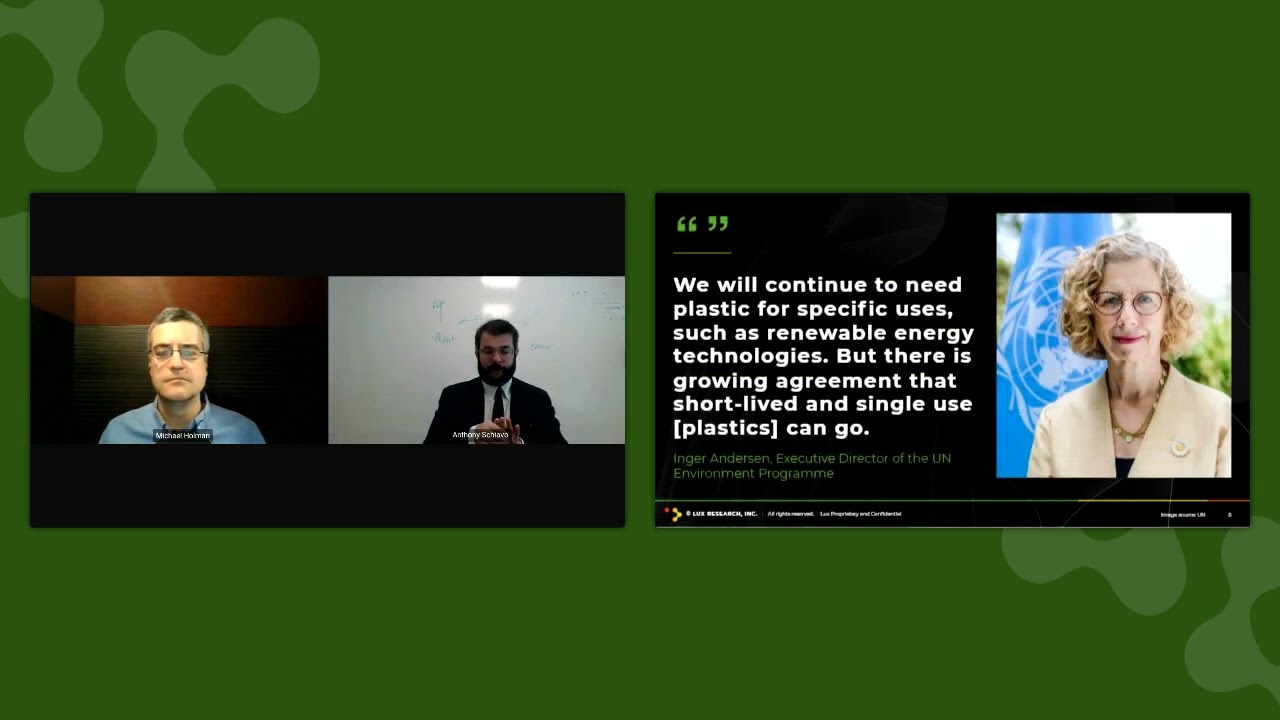
here we have business and not just one business multiple business a coalition of businesses behind you policy um other voices youth that need brought in but thank you for that voice I do want to maybe sample some perspectives as we get closer to policy from iner iner can I can I ask you well a thanks is first in order so thank thank you for for the leadership from unep in this process and and thanks to the team as well all of The folks there that bringing this forward it absolutely is not an easy challenge right
but when was anything that we ever try to do for the environment for the planet easy so thank you for that um I'd love if you could tell the folks that are here on the panel if you could tell the folks in the audience the folks that are watching virtually what sort of concrete steps do you have for all of us similar Vantage similar question but from your Vantage Point what concrete steps do you have for us to in these next two negotiating rounds for the treaty one in Ottawa in April later in the year
in South Korea what concrete steps do you have that we can do to help support a successful treaty well thank you and this is really a a great conversation look um it we obviously would like to see that governments because this is amongst governments uh first uh as you know but that they listen to the broader Community uh that that is part of their their remit and that includes the noos but it certainly includes business it includes science and so on and so forth um so that we can yes get ambitious right an unambitious treaty
will not be accepted by the populations that vote because they have ambition in heart do they understand what ambition looks like no not exactly but nevertheless but what it have has to therefore do and when we look at all other treaties that we unip Have under our belt it has to have some timelines for certain things to happen um elimination of the unnecessary the short shortly short used uh kind of plastics that frankly are a complete waste of his precious resource um will will be absolutely critical and engaging and understanding that and businesses can lean
in and are already lean in on okay so how do we replace how do we reinvent our our product does it have to be enveloped in plastic does it have to Be liquid can it be deified is there another way of delivering it uh etc etc this is a very interesting space that the brand owners are in and one that we really think that there's a lot that can be done here um I think um uh for for um for the recyclers you know help po policy makers understand the difficulties some of the barriers that
are real right it's not as simple as okay everybody gets different colored waist bins and then they don't It's complicated and getting compliance or doing it in a central spot the com the those issues are are clearly uh at play but then I think also very much um everyone has said it but it means pushing past voluntary action we are are going to deal with the entire life cycle national action plans are fine and dandy but that will not be what will deliver this um and so um because we have to sort of have this
Level Playing Field and get everybody on board so that Businesses don't feel that just because my community of countries is going this direction I am ending up my the price for my product is higher than another community and this there is there's a reality here because um you know there is also um uh countries where you have Mom and Pop kind of soda companies and and they will have I mean smaller companies they are not the Unilever of this well they're not the Pepsi and the Coke and for them this is very difficult And so
having an understanding of those companies that might be smaller but are providing an important but how do they then move into this so um I think that's something that we clearly have to deal with with and then be mindful that um I think uh plastic jobs jobs in this sector are not uh we can't discard and say oh it's only in this and that country it is a global phenomen every country has this but we all want to move away from the scourge of plastic in the Environment so how do we make that happen while
being very mindful of these jobs and these development opportunities that these jobs bring and how can we ensure that that transition has a degree of Justice within it I think these are in large part some of the issues that we would like to highlight um and then maybe just finally to say that industry can truly enable this I mean be the enabler and I'd like to think that the industry that is present here is part of That enabling um but um the the way that we will get there will be by understanding that there's a
popular demand on dealing with the entire life cycle and on ensuring that we tack tackle it from every perspective uh and yes some will have to focus more on the recycling bit but the elimination bit is is a thing that will actually take plastic out of the environment thank you thank you here let's keep going with that thought of Industry as an enabler To another voice from industry gy if I may so your company is a major producer of plastics so what elements I'll give you two questions what elements do you think will answer we
got perspectives from others what elements do you think will be most important for a treaty and then as Inger noted it's governments that are negotiating this treaty how can we support governments in this process as they move ahead on the treaty Journey right well I um speaking for Dow and and Obviously the broader industry we're heavily engaged in trying to make sure that we do reach a global treaty that can be legally binding and to do that we want as many countries as possible to be party to that um that means a change in the
way we do things that's transformational circularity is a big part of that uh reuse of materials uh different forms getting designed standards up front on refillable reusable types of Packaging more recycled content mandates so that can be done at a country level uh we know from a voluntary basis working with our partners in the brand industry they have voluntary targets many of them 30 to 50% postc consumer recycle content and we are gearing up with investment to try to be able to meet that demand but there needs to be more systematically to support that there's
been a lot of discussion around the elements of good enhanced producer Responsibility schemes which will bring in the funding that's necessary to move to a circular economy that helps us to make sure that the waste doesn't end up back in the environment and we know that at some point we're going to have to tackle pictures like the one you showed and we're going to have to come up with a funding mechanism to be able to address that as well you you can't just clean up without changing the system and you're going to need to do
both to have A long-term sustainable solution I think the other thing that's important and Inger mentioned it is the importance of science to this life cycle assessment is critically important one of the reasons Plastics is grown is because it provides a lot of value in protection of packaging could be food products could be medical applications it could be lightweighting for automobiles and and other devices that we use in many of the industries um Automotive industry even is working working towards circular cars and how do we recycle the contents and 40% of a typical vehicle today
are polymers to make them lighter weight so we know these things can be done but we have to have some impetus to move in that direction and I I think we've got good alignment across the industry from a producer standpoint and we have organizations that have been put together on a voluntary basis which Bring together the entire B chain which is trying to tackle how do we move from a linear to a circular economy um inger's right it's not just waste management although we know from going into the developing World many times when we're going
into the developing world to tackle these challenges we're confronted with a number of people who have no access to any waste management at all I'm not talking about just Plastics I'm talking About any Waste Management so somewhere along the way between industry and governments and using science we're going to have to figure out ways to tackle how we have access to waste management for three billion people that don't have access to that today and it's you know that there's a cost to that and we have to navigate through this how we're going to be able
to tackle that you've brought up many things that I'd love to Circle we will Circle back to here in the panel I your suggest question that uh these things can be possible with the right kind of um stimulus for Innovation from the treaties what makes me that really resonated the thought that if we look at that treaty as a organism for for putting to work the I don't know how many thousand phds are sitting there clever folk in doubt if you create the right regulatory environment they can innovate I love that thought um Minister Gonzalez
l i me come to you again we've talked a little bit about about the um multinational complexity of this issue so we have what 193 states in the United Nations each of those countries with their own perspective their own relationship to plastic production we of course remember plastic is an oil and gas product have their own relationship with oil and gas own relationship unique relationship with a backend from plastic pollution so a whole sweat sweet of Different diverse perspectives they negotiating this treaty love your perspective on cooperation so what role do we see do you
see cooperation playing and taking us further forward to the kind of treating we're all imagining here together an effective treaty for plastic pollution well when it comes to cooperation in humankind history well this started from the outset We walked and started gathering in small groups to go with heat or cold many million years have passed and cooperation is still as important as before for our survival but it's not sufficient uh having a good will is not sufficient even if there is this legally binding treaty and I would like to make a Remark and it's nothing
new I'm just saying what has happened with other International treaties for instance in the ILO there [Music] are9 something International multilateral treaties there's a priodic Reb the main eight Covenants well all the countries need to report and in that review and whenever there is A New Covenant there is a first review and they need to respond to a very detailed survey and we want to achieve even more with this treaty what we're asking is to set up a sort of survey every year then every three years and then for each country to explain what they
did for instance what did Peru do to abide by The Binding conditions in the treaty a very straightforward question Why did they managed to do so or why not and if not what was the reason and then the for instance the organization of the treaty would ask how can we assist you or accompany you in order to fulfill those criteria and not to punish them but to support them in the process so that they can achieve what they set themselves to do they may require technical expertise in certain specific areas because governments will continue changing
politicians will change the Ministers will change and ideologies will change in our governments but when a state uh aderes to um binding treaty we should provide the necessary instruments so that this obligation become State policy and that's why we need this periodic review with specific questions about what did they manage to achieve during the first year or after three years and they could set up a a timeline let's say the Philippines in 2025 let's say or 2020 before they will sign the treaty and the periodic review will be in 2026 for instance and this way
each country will know when they need to uh take part in this periodic review which will take place every year every two years every four years and this will respond to this logic what did they manage to achieve what did they didn't manage to achieve and why and how can these organization that take in the treaty support them not As a punishment but rather to support them and to find out what they need in order to provide the necessary technical expertise and only by doing so these legally binding instruments can succeed many other us uh
always always have these double standards whereby countries abide or or or or sign the treaty but they know they do not observe the conditions and this periodic review should be made public it should be Published we're not talking about black listing or red listing the idea is that a country after signing you know after 10 years we could see what they have been doing for instance Burma 40 years ago they would recruit children for the military Serv and at the time they monitored what happened and then changed and the system can be more powerful if
there are if it Is consistent and it has the necessary instruments to carry out this monitoring an active monitoring because there'll be a point where a government will say yes you're right Plastics do pollute Plastics are harmful for health for human health and Plastics go against human rights and the right to life even to those that haven't been born yet because if a woman is pregnant and she's becoming polluted this is harming their unborn child thank you thank you for That indeed uh there is something historic about this opportunity very much historic and new yet
thinking about recalling some of those models and those structures for cooperation I think can give us confidence that we can move into this Brave New Brave new space successfully um Minister benali I'd actually like to put a question to you that Jim raised in a way so Jim you raised this question About investment um and there's a lot of parallels I think we're already trying to draw lessons from other kinds of examples of multilateralism but there's a lot of parallels that can be drawn between the plastic treaty process and climate change negotiations one of those
of course is thinking about how do we invest as you asked Jim in h the global South in developing countries right that is every much a question that's gerain here in the treaty process I'd love your Your take how can we support developing countries as we move forward with this treaty I think it's a very um interesting question intellect and I think the challenge that we have this year is to bring it from a nice intellectual question into a practical intellectual question because um I mean it's true I mean we there are a lot of
parallelism that we can draw from climate negotiations and uh at un6 actually we have uh uh thanks to uh inia Anderson in her team that raised the fact that we want to add more synergies between the different cops and the different multil multilateral environmental agreements because there are lessons that we can learn from each other so we have an mea day organized uh by unep at uh at uh at una 6 in uh in Kenya at the end of February I think from our perspective we tend to yes I mean usually there a few challenges
I mean The first one is that for countries of the global South you usually have the same negotiators um in in in climate negotiations as is in environmental negotiations and Plastics negotiations as well usually we try to carve out um a couple of uh uh public servants from uh the Ministry of Foreign Affairs or and the ministry of environment or energy or or whatever whoever is the champion on on the topic um however in front of us and and that's Really a key issue that we have in terms of capacity building uh there are are
uh there is a limit to what we can achieve in terms of uh uh taking advantage of some of the uh progress that we've made uh on climate negotiations for example having uh I think there is a consensus today that we need a carbon price uh or a valuation of carbon but I strongly believe and I think we had the discussion this morning um uh around that is that on plastic we've been a bit More advanced in terms of standards for um for plastic recycling uh much more than uh uh the the the the discussions
that we've been having uh on on carbon pricing and climate um and there are many reasons why that's the case and I think the complexity the over complexity of those questions those two questions uh makes it difficult to try and take the best out of these two worlds I think if we just keep it simple by saying hey today full life cycle uh of plastics Emits 4% of greenhouse gas emissions I know you don't like business as usual but that would increase in a business as usual uh to 19% 20% of greenhouse gas emissions uh
in the next 20 years if we just take that metric and use um the impact the bigger impact of of of the cops climate um to raise awareness on the things that I've shown because what one of the things that we that we are facing in in cops uh climate and cop Biodiversity is that there is limited space for environmental questions and uh same thing that's something that we have been discussing with Inger a lot um we cannot bring climate discussions into into the environmental discussions so this these are some of the aspects that we
are trying to um I don't want to say break the silos but increase the synergies between uh between the multilateral environmental uh agreements in general and also uh the different Cops so that because at the end of the day especially for for for uh for countries of the global South we are the same negotiators that are in in in these different rooms um you have the same public servants uh from either the Ministry of Foreign Affairs or or energy or environment that are in those rooms so um I think we need really to get Beyond
um those silos indeed well if ever there was a domain where we needed to get rid of those silos it would be in A space that's as complex as the plastic system the plastic economy Plastic industry so 100% agree 100% agree also with the idea of going from a theory of our conversations into practical matters so uh a lot of alignment um I want to talk about Recycling and Jim I want to ask you a recycling question hin you mentioned recycling Jim you also mentioned Recycling and the analysis the artificial intelligence work we've been doing
it's impossible for us to get to Zero plastic waste in 2040 without recycling but we need a lot more in that process with recycling but one of the points you made before what I'd love to give you a chance to dig down a little bit more on relates to actually the supply of recycled feed stock so what kinds of things do we need to do we talked a little bit of investment what do we need to do to make sure that that Supply if we make a big commitment for recycling feed stock that it's there
That it materializes yeah I think to um collection sorting um and and creating a high value waste stream and not letting it get into the environment is critically important if you want to have success in a circular economy a waist stream like the picture you showed at the beginning once Plastics gets to that level it's not recyclable right we we need to clean it up and deal with the waste issue what you want is you want your system to work So that instead of getting into the waste system it's sorted out before and you've got
a high quality stream that can be easily recycled to a specification a scientific specification where we know it's clean and we know it can be used in another reuse again so that's important and I you know I want people to understand that the industry is working on both sides of this equation I mean we're working on how to make Plastics with zero scope one and Two emissions right we know we can do this through the energy transition with Technologies like hydrogen and carbon capture through other uses of power and steam that are that are uh
friendly and green on the other end we also have to deal with the end of life and not let that get into the environment and bring it back and recycle it we can do a lot from a design standpoint uh so most there are today uh some plastic products that are hard to Recycle because of the way the structures are put together but there's a lot of work going on in companies today to simplify those structures that make them more homogeneous so they're easy to recycle the easier they are to recycle the less challenges that
we have in putting together that circular economy I would say the other uh whether it's a developed country country or a developing country that the challenges on collection and sortation are the same In a developed country where you might have a well-managed landfill system you still don't want to see that material get to landfill you'd still rather see it collected at the home or at the industrial use in many cases in industrial uses it's collected at at Walmart for example or buying Amazon from from Big bulk packaging that they use and that's high quality waste
that can be recycled when you get into a developing Country and we know because as a coalition we put together a group called The Alliance in plastic waste and we've done several public private Partnerships actually building fullscale murfs you have to deal with all the waste you have to deal with the biomass the construction waste the glass the metals the Plastics and you have to come up with viable economic uses for each one of those and when we're building that we're typically the good side is we're Not starting with an existing infrastructure we're starting with
a clean sheet of paper so we can build it in that way from the beginning when you're dealing with a developed economy you've got an ecosystem that's there and operating and generating a profit now you want to try to divert so much plastic away from a landfill back into a circular economy it's a different set of challenges so I think the treaty has to be able to have some flexibility for the Countries to do what fits their individual situation I think one of the good things that's happened through the Inc process is a tremendous amount
of sharing of best practices of what works and where Industries and where we feel like we play the most important role is our ability to scale up technology you you want recycling to have a lesser footprint than making virgin material so I don't we don't want to recycle Material and then create more environmental problems than we already have we would actually like to recycle it and create less use less energy create less byproduct waste and we think that's possible and our job is to help governments understand how we can scale that up faster I think
even brand companies we can help them understand how we can scale that up faster and so real investment is needed um we need internal Targets on how much recycled Content we want in our products but I also think we need those external mandates that say we're going to drive to that level because the whole system change requires those kind of hard targets thanks CH yeah I mean I think that I think that image of the albatross for example we've all failed right it's a failure for the albatross but as Inger said it's a failure also
because we have this material that we didn't want to get there not be recaptured and brought back In so some good thoughts and points about a strategy to to make sure that does come back in and and enabling conditions in the treaty that can make that actually truly possible we talked a a variety different ways about multilateralism but I dare say no one knows more about multilateralism than you and certainly unep in general they've brought all kinds of sticky challenging multilateral International agreements across the Finish Line what Do we had to learn from some of
that those past successes that we should draw into this process so I mean since 72 when we were founded the way that the world has looked upon environmental challenges is to find a way to come that are Global in nature is to sort of mimic what the epas do at the national Lev LEL right so what is it that what's the problem how do we get together around it and how can we solve it and um and Yip has been the conveyor Belt for practically all the the treaties conventions that you know of and to
whose cops you go some became so big that they no longer sit with us but that's a different story and so um this treat is it's not the first time nor will it probably be the last um but what's very clear here is that uh as everyone has said it shall have legally binding elements and it shall deal with the entire life cycle and so that's these are the parameters within which Negotiators are operating and and when once you have legally binding then it becomes so what does that look like right um and in other
treaties and I let me mention a couple Montreal protocol the one that deals with the with the hole in the ozone layer uh clearly there was a phase out schedule of the ozone depleting substances um the chlorinated gases and um and yeah there were some you know we're not we can't do it as fast as we Asked for an exception for U but on the whole this process has sort of marched forward um uh I could mention similarly the minamata convention for those of you who are familiar with it it's a convention that deals with
exit of mercury so therefore today you want to buy a thermometer it will not have mercury you want to light bulbs will not have even your dental amalgam will not have mercury a unip treaty not so well known but there you have it uh or you Are in the um pets trade and you want to sell certain fish for the aquarium well you know it is regulated by us there are 10,000 species that are listed some you can trade and some you can't and so that gives you a sort of up down no you can't
Maybe you can but then you have to apply for a license will'll give you a license and then you can move that particular thing across uh if member states have so agreed and all of this is based on science right it's not sort of oh I Think that this fish is pretty so therefore no there is an understanding that um science needs to tell us what's happening and so this treaty instrument agreement whatever it's going to have to be called will have to have some clear targets because there are some legally B binding elements and
it'll have to have some scientific Dimensions to it it will also have to have some financing attached to it and I think everyone understood but let's recall please that We don't get blinded by dollar signs in our eyes let's recall please that um private sector once a regulatory setting sets in they adjust and they will rarely need a subsidy from the government to make some of those shifts um some places would but other places would not um and so when we think about Montreal protocol what we had was um a fund that over 30 years
has dispersed some 4 billion so but 30 years 4 billion to help on refrigerants coolants um and of course Forms fire forms and other things that have uh chlorinated gases and and and and ozone depleting gases it'll have to have and this is what foreign minister was talking about some degree of Effectiveness review um that we will look at a compliance mechanism and if you read Montreal protocol the first chapter is compliance you know boom that's it how are we going to comply with this thing and so um we can say that the three R
treaties are much Softer there these Frameworks where we agree to have National plans and we add it all up and then we check are we doing and how are we doing I don't think the world has patience for this and anyhow you get very clear guard rails for there will obviously be national action plans don't get me wrong but that is not on its own enough and so the targets Etc will be clear and the effectiveness reviews will be clear so I think I mean Obviously and stakeholder engagement last point you have to have throughout
the process and here may be a really good example is biodiversity convention which has a very open engagement um much biodiversity is is in indigenous in indigenous people's lands therefore indigenous people are very present in that convention I think here we are seeing yes companies and yes science um but also others that are in the waste sector be they waste Pickers or be they Others who are clearly impacted by or affected by uh these issues so these are some of the issues that I would expect and um and and very much what we're already seeing
now in the Inc process thank you for thater H I want to come to a last at least a last final question for our pan I want some sum up thoughts from you all um but iner mentioned adaptation the ways that some of these businesses in particularly I think the context with small businesses Can be made to adjust to Provisions that come forward for the treaty so let me say when we pass we'll just go there when we pass a ro robust meaningful treaty you what kinds of things maybe I'll have you take on the
perspective of big business what kinds of things could Big B will big businesses need to do to adjust to comply with the treaties perhaps particularly in respect to supply chains or any kind of adjustments that you might forecast yeah Eng Expected us to be flexible and agile and respond and and in fact I think that's right but because on that one I'm look I don't want to be naive um but I'm very optimistic on that and let me just give you you three quick reasons why that is first of all we're a branded uh consumer
company so you know I'll talk through that lens we do a lot of surveys we do a you know consumer surveys and we ask consumers for their pain points and what they you know what bothers them let's Not forget uh whilst probably they're not always prepared to pay for it but Plastics and the way it's packaged and how their favorite Brands come across and when they look at all of that it is a very big pain point so it forces consumer uh companies and I guess any company to come up with solutions that are Innovative
that answer that issue and that paino and therefore that can contribute to the brand value uh you refer to um you know to the evolution of Laundry products it's absolutely true if you think about it um you know we started with a bar a soap bar to wash it then we moved to powder Solutions little bit of packaging in there actually on the bar very little then oh liquids is a great idea brought Plastics to it uh after liquid well the good news was we were able to downsize it again into concentrates and capsules okay
that helps a little bit now um the latest that we're we're adding just to answer All of these challenges is a small paper sheet that is you know dig gradable in a biodegradable and paper packaging part so you know it's sort of the it's all the way around um which is in a way a bit sad but I believe businesses will respond through Innovation so that's number one very important um I think number two we will not make the Plastics or we will not make our greenhouse gas emission targets that businesses also have issued for
themselves and will be Held accountable to if we don't solve the Plastics problem so yes there will be additional cost in the supply chain probably but uh we need it toh to to achieve other goals at un lever we we we we looked at it if we don't make our plastic targets it would mean a 10% problem on our greenhouse gas emission targets so that's number two then number three is the opportunity cost there's a significant opportunity cost you know we are collecting we're one of our goals is To collect more plastic um than what
we make and you know for example in India we're now at sort of that 100% level which is great news but then you don't tackle the root cost you know you're effectively adding cost to the system and it's much better to spend that money up front and having the right design I think what you already talked about uh so look not naive but but I believe there's a lot of opportunity uh to adjust quickly to to a treaty Um then let me go back to the treaty in itself I think businesses always do better when
it's a stable uh and and a clear and an oversee regulatory framework and I think therefore a treaty with binding elements to it and compliance to it I think will bring that stability and I think that's something that businesses generally like uh so we will adapt our supply chains to that um I think it's also important you talked about targets and the minister talked About targets you know um I think this is something for us to reflect on a hard target a very hard and an ambitious Target will also unlock something that is the hardest
thing for businesses to do and that is change consumer Behavior you know when you think of refill for example and refill of of products it's interesting when I go to and I was in India actually last week so I saw it once again refilling um washing uh powder or or liquid you Know with a you know a bottle that you have at home and then with another product is from an affordability standpoint it's used widely there it's it's done all the time it's much harder to to bring that solution to retailers in Europe and to
consumers in Europe or probably in the United States because they're not driven by an affordability question it's driven by a convenience question a hard target I think will unlock consumer uh Behavior change and That will also uh take money out of the system long story short yes it will add some complexity and some costs but there are so many offsetting factors that I think businesses will simply respond so I agree with in it thank you all right I'm going to absorb your optimism I want you all to absorb the same optimism bring your own optimism
to a one sentence answer we're just about out of time one sentence answer what's the most important thing to get right in this Treaty Mr benali oh apparently well in addition to the compliance the target the timelines Etc I was thinking whether we can have something similar to a not a loss and damage fund but some some sort of funding of especially the cleaning but we understand that we cannot there's no point in cleaning if we continue polluting right so some something similar to a loss and damage fund although it took us 30 years to
reach that in in the cup negotiations so uh I Don't think we can wait 30 more years I'll count that as a sentence thank you Minister Jim I think I think you have to keep science in the front I mean anytime you're moving one material to another material substitution there are scientific impacts you've got to look at that we also have to look at scientific uh data on the health impacts uh and so we need to keep science front and center and have the right peer reviews of that Science to make sure that we're actually
making a positive Improvement in the environment music to my heart Jim as a scientist H well said before but but I would say a full life cycle has to be in the treaty and it has to be top down and bottom up both hold on hanger I'll pick up on the full life cycle but then add to that with Innovation with boldness and with ambition perfect Minister the final thought perhaps a one sentence thought Most ambitious thing we should do the treaty Minister Gonzalez El this should lead us to understand and to realize that all
this transition and climate crisis requires ethics in capital letters and that it requires philosophers of life and humankind that think about uh the current and future Generations experts and technicians come to a limit politicians Change but we don't have cyber ethics or cyber philosophers who think about a better future and uh a possible future I also ask you I want to bring up to the to the screen very quickly the results of the same question that we looked at let's see if I can peer over in that direction so er a lot of support dominant
support for phasing out unnecessary single- US Plastics but I I would say it looks like with the exception of Our Last Choice Creating a global fund although I'd have to say I'm in complete agreement with our panel for this being essential that there's a lot of a diversity of opinions and votes that are up there which to me sounds like our collective intelligence suggests we need a lot of things there's no Silver Bullet to this the treaty well we'll have the opportunity not do this in the abstract but do this in real life in the
next two months my final thought for you all is that it's interesting you Should mention the Montreal protocol because last night to sort of show my cards for my level engagement in dava's night life I was watching a panel from 1986 on the Montreal protocol but this is before the treaty itself for protocol was past folks talking about the ozone layer and there were some similarities and some differences and happily some differences there was all men on this panel there were some bad Ties on this panel but some similarities they were Talking about the gravity
of a almost existential a truly grave problem in the form of ozone to the planet but they also talked about uh transitions for industry transitions with the impacts on economy some of the things that we spoke about here but my happy thought my encouraging thought and the one that I'll leave you with is that one year after that panel aired a treaty came to fruition that ended that problem we've talked about plastic it seems like Forever here in ad Davos what if this was the last conversation we ever had to have about plastic pollution because
in one year we end it take that thought with you thank you to our panelists thank you all for joining us