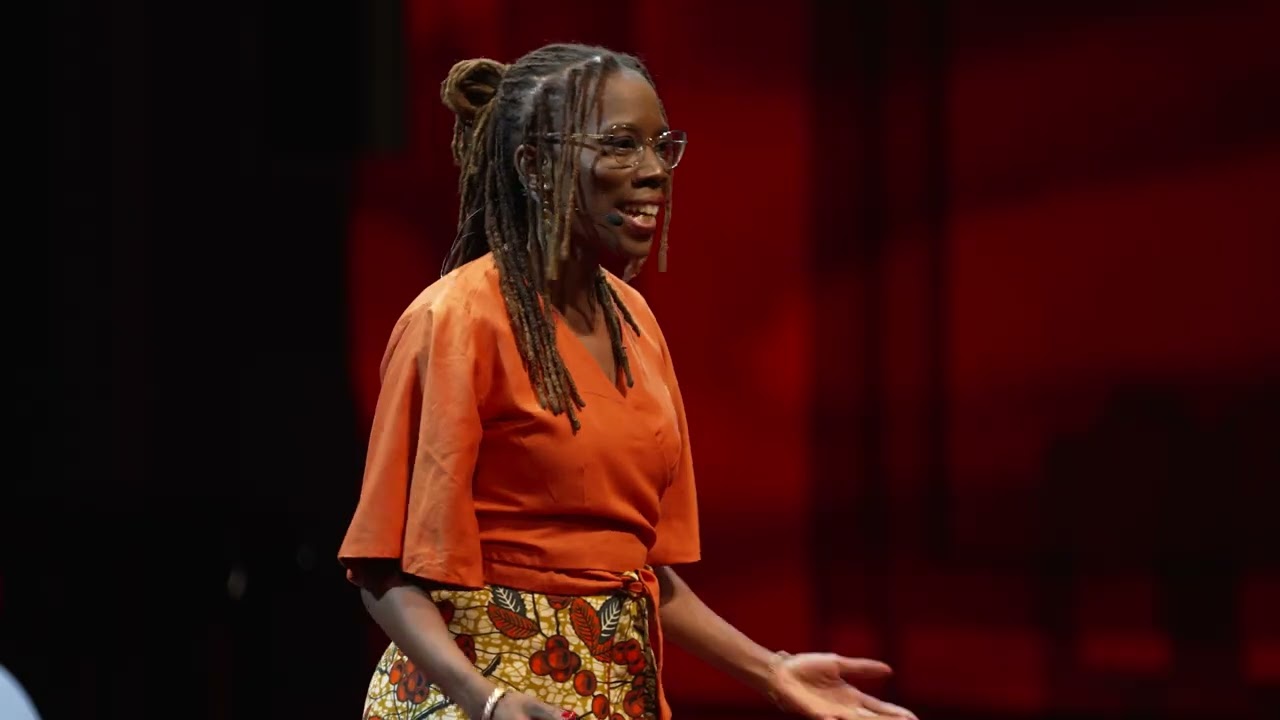
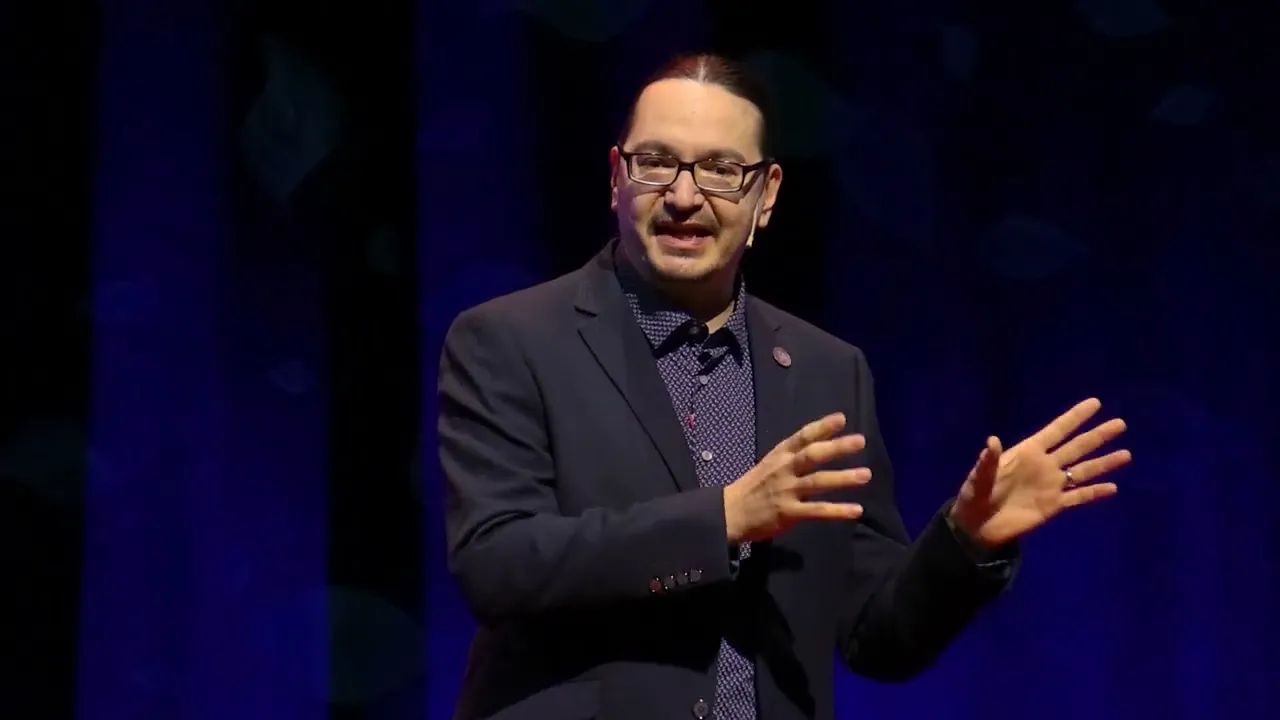
[Music] i want to tell you a story today about my grandparents i'm of mixed ancestry growing up in the 1980s in winnipeg in manitoba we would call that being a half-breed we don't use that language anymore but being of mixed ancestry growing up in the 80s i'm proud of it now back then it was not a good thing all that meant was that i had to fight with everybody growing up but being of mixed ancestry my father's people are ojibwe metis from treaty 2 in manitoba mary and eg there's actually a street in winnipeg named
after my grandparents i'm very proud of that and this is a story about those people and those communities long ago i'm told long ago that when it came time for people in that community to leave and go out hunting and looking for food it would be the responsibility of somebody in that community to sound the drum to play the drum and to sing as those hunters went off into the harsh manitoba landscape and it was understood that if that drummer played in just the right way and if the hunters listened in just the right way
in a good way no matter where they were in the manitoba landscape they would always know what direction home was no matter how cold it got how dark it was no matter how viciously the manitoba wind blew they would always be able to find their way back home by listening for the sound of that drum i suppose in the modern world we could receive a story like that in a number of different ways we could hear that and think that it's quaint we could hear that and think it's naive we could listen with respectful appreciation
but i think there's another possibility and that possibility for me is found in the spirit and intent of reconciliation more specifically decolonization which is not the same thing but necessary for there to be reconciliation now i know that those words can be very scary i understand that let's slow down here let's gear down a little bit i know those words can be threatening they can sound intimidating for many people but i don't think it has to be that way i don't think that these have to be scary words in fact i think that they can
be invitations for each and every one of us indigenous or otherwise to be a part of something good but we're going to have to come to some understandings first so let me speak about those two words first reconciliation that's a difficult one there can be as many definitions about reconciliation as there are people trying to define it i would encourage you to not have too strong of opinion yet if you haven't had a chance to read the 94 calls to action of the truth and reconciliation commission which leads out a pathway of healing for us
i also have to acknowledge that i have indigenous brothers and sisters who reject that term altogether let's be honest it's very difficult to talk reconciliation when we continue to find the graves of our children in unmarked hidden places behind schools but i don't think that word has to be scary two things i believe to be true about it the first is this i truly believe that we wouldn't be talking about reconciliation as a concept socially here in canada i wouldn't be doing this presentation many of those little children would have never been found if it
hadn't been for the courage and the strength and the dignity of residential school survivors that's what i believe if it hadn't been for survivors having the courage to share their stories stories that sometimes came with so much hurt and we know this we know that when we experience hardship when we experience trauma sometimes the best we can do is lock it in a box and push it as far away as we possibly can don't think about it don't look at it it's a survival technique and yet these survivors had the courage to open that box
up so that we could have an opportunity to talk about reconciliation as an indigenous person it makes me feel proud makes me stand up a little bit taller makes me feel grateful so that's the first thing i believe this is a gift given to us by survivors not that they did it for us not that they owe us anything at all but simply to acknowledge that we wouldn't have it if it wasn't for them the second thing i believe to be true about that word is this and this one's going to be a little bit
more difficult to understand i'll beg you to stay with me i don't think that reconciliation is something that we are doing out of pity for indigenous people here in canada in fact i kind of think the opposite might be true i think that reconciliation is a gift that was given to us so that we you and i speaking to you as brothers and sisters can be a part of healing this country to help canada be a better version of itself to leave behind a better nation for all of our children which leads me to that
word decolonization if you want to upset a dinner party bring up the topic of decolonization there's a lot of big feelings attached to this now that's a word that can sound threatening lots of misunderstanding about that term decolonization is about recognizing challenging and ultimately dismantling power structures that oppress the colonized it's about recognizing those tools of oppression and exploitation that continue to harm people in our country here in canada oppression is legislated through something called the indian act that's a very curious piece of legislation that still exists today that has kept indigenous people from being
able to fully experience vibrancy in this world that has been like a thumb on the well-being of indigenous communities there's a very famous activist a hero to many including myself named cindy blackstock and if you're watching this on a recording afterwards hit pause and go and find her first and she reminds us that here in canada we are the last country in the so-called developed world in the so-called first world that enforces federal race-based laws based on blood quanta we're the last country on earth that does that in the so-called civilized world every other nation
on earth has given up on that sort of a practice dividing our citizens according to who their parents are and says here's a set of laws that apply to you and a set of laws that apply to everybody else in canada unfortunately systemic racism is federal law and so decolonization is about recognizing challenging and dismantling structures like that there is no healthy future for canada that sees the continuance of apartheid-like legislation but i don't think the work of decolonization ends there i think decolonization is an opportunity for us to maybe look around at business as
usual in canada and examine those tools of oppression and exploitation that perhaps harm all of us in fact i believe that the grand narrative of colonization in canada has left many of us unable to fully thrive the way we would have otherwise now to explain that i'm going to have to talk about my other grandparents who come from europe i'm told that my mother's family came from ukraine and fled that country after world war one to escape the soviet union this of course was before holotamor and ukrainian genocide at the hands of the soviet union
i'm told that my grandparents like many europeans suffered in europe prior to coming to canada that the tools of exploitation and oppression were alive and well there long before being exported to colonized turtle island life was difficult for so many people back home i'm told that they risked the journey of fleeing across an ocean to find something different women weren't considered to be human beings children were pushed into the machinations of the industrial revolution poor people were locked in prison for being poor when people fled that reality to come to a new place here unfortunately
those same tools of oppression and exploitation were duplicated here the result of that was disastrous for indigenous people it was genocidal but the point i'm trying to make here is that the damage doesn't then end there that perhaps if we look around in the world around us we might find that there are still structures in place that we don't want to leave behind for our children nowhere is that more evident i think than in our relationship with the living world here in canada colonization was characterized by the taking of land of course decolonization is going
to have to be about writing those historical wrongs but underneath those activities underneath that taking of land was a mindset beliefs about extraction profit greed exploitation this belief that somehow as human beings were separate from the living world and hold dominion over rather than being delicate vulnerable pieces of a complex relationship of life hey those attitudes are going to have to be challenged if we move forward if we're going to leave behind a future for our children we're going to have to get to a place where we can begin to deconstruct some of those attitudes
about the living world now when we think about challenging these attitudes i think that every single one of us in this audience can relate to feelings of wanting to see sustainability we want to see environmental change we all believe that i don't think that there are many cogent arguments left that are rational against fighting climate change but i think that many of us feel powerless there's got to be something more than just taking our recycling out to the corner we think about where things come from how things are made and it feels so overwhelming so
quickly it's hard to know where to start i think many of us feel trapped hey some of us may feel like what i'm saying my hopefulness is naive but those feelings of powerlessness those feelings of hopelessness i think are evidence of those very power structures that i was talking about those attitudes and beliefs that have remained unchallenged for so long attitudes and beliefs still so well entrenched that now today we're seeing the ultra wealthy build tools new tools of colonization now for different planets as if we haven't learned anything about living sustainably here over the
last couple hundred years each pleasure cruise into space spewing poison into the air of those of us left behind i have to believe that we can do better and i believe that that hope for me is grounded in this idea of deconstructing challenging those power structures around us within business as usual in canada that have for far too long been left unchallenged listen i was driving home from a wedding one night many years ago on a dark highway and i got a call from my mother and she told me that my cousin's husband corporal christopher
cloat who served in the canadian military who was in a gun fight with the taliban had been horribly wounded when i got that call he was on a helicopter being flown from afghanistan to germany which are our closest allies with hospitals that could treat a wound like the one that he received and we didn't know if he was going to survive and if he did survive if he would ever walk again and so my mom asked me to hurry home as quickly as i could because my family was going to gather in my grandmother's church
to pray and so i rushed home with kilometers of highway disappearing behind me i pulled into winnipeg just before sunup and i went into that church where my family was gathered and i sat with them and prayed we each took turns going up and lighting candles with this hope of being able to see my cousin's husband again now i don't know if any of us in that church literally believe that lighting those candles was going to save my cousin's life i don't know but i don't think that was the point i think the point was
to come together to share in a moment of hope it was very scary not knowing if i was ever going to see him again for all of us i think that coming together and doing those actions was about creating a sense of hope and i think that's what the sound of the drum was in my other grandparents communities i come from winnipeg i know that the manitoba landscape can be very harsh it must have been very scary to see loved ones going out not knowing if they were going to make it home i think the
sound of that drum must have provided some comfort it must have provided hope and i think that many of us can relate to needing to feel hope when we can see each other in each other's stories we might find that there are teachings in those stories that might help us navigate the future that perhaps through good relationship with one another we might find a pathway forward for all of our kids thank you you