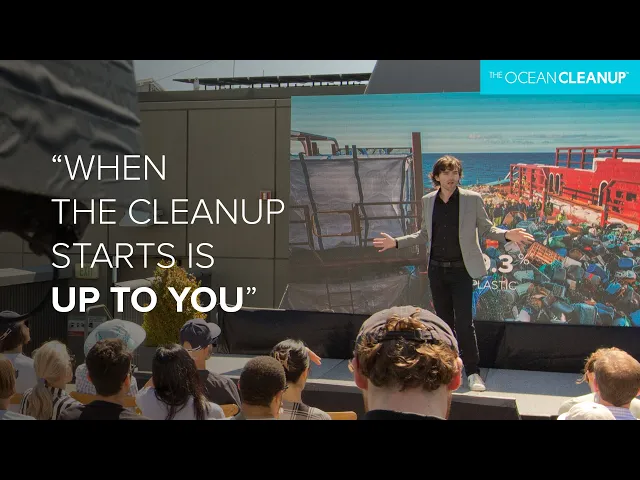
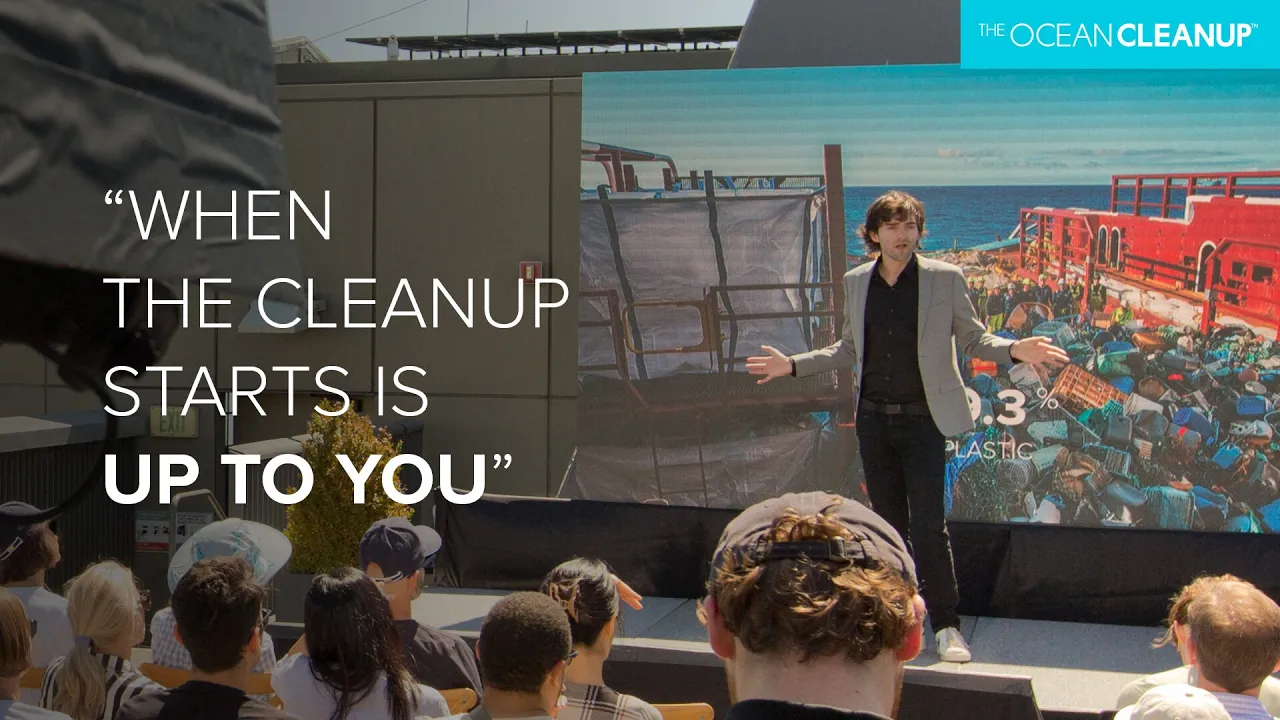
all right right well thank you thank you all so much for for being here today it's very excited to to be back here in uh beautiful sunny San Francisco it's been six years since we sailed out here through the gate with one goal to develop the technology to rid the world so of plastic and now we're back with tons of plastic on deck and uh some very exciting news to share with you today because today we can finally answer the question what does it concretely take to clean up the Great Pacific Garbage Patch so this
is um this is what we're talking about so out there really not too far away from here lies the largest accumulation zone of trash on Earth and this is an area where where currents converge creating a a giant Vortex of sorts where you know the plastic can enter but it can never leave it's like uh like the hotel California of the ocean and um we were the first at the or cleanup to to actually completely map the area from uh pieces small to large and what we found was that this area spans an area an
area twice the size of Texas and that it contains more more than 200 million pounds of plastic we also found that um we even found plastic that that actually dates back to the to the 1960s which which really goes to show how how persistent this this plastic is especially if you consider that we you know we didn't use that much plastic back then so of course to to clean the ocean to rid the oceans of plastic we need to prevent more plastic from from going into the ocean in the first place and this is something
um you know we are also working on but but if if that's the only thing we do the ocean will be polluted forever you know because of this persistency you know that's why we have to take it out that's really the only way in which we can get back to clean oceans and um so that there really shouldn't be any debate whether we should do prevention or cleanup we know we just have to do both and that's why at the ocean cleanup we have this two-prong strategy where on one hand we um deploy interceptors in
in rivers to to intercept the plastic before it can even reach the ocean but in parallel we're also working on cleaning up the 60 years of plastic pollution the Legacy pollution that's already out there and uh and doesn't go away by itself because every day this plastic remains in the ocean it can do a tremendous amount of harm now first of all of course there's the the environment Al impact where it's uh it's really ravaging ecosystems right now there are already more than 100 species threatened with Extinction in part because of this plastic pollution and
uh it's also an expensive problem actually so just in 2019 a study came out that shows that the the cost of having plastic pollution in the ocean is actually up to 2 and a half trillion dollars in terms of of lost ecosystem services and then there's also the um the time pressure because um you the longer so actually right now most of the plastic about 92% are are large objects but the longer the plastic remains in the ocean the more that stuff fragments down to to smaller smaller uh microplastics which are first of all pretty
much impossible to ever get out but also are much easier to to end up in in the food chain and that of course includes the the three billion people around the world that are um you know that are dependent on on marine life as or or fishing as their primary source of uh of of protein so it should be obvious that we must clean up the Great Pacific Garbage bench but how you know that is the question we set out to answer when we sailed out here six years ago with our very first ocean cleanup
system system one now it was beauti sunny day San Francisco just like today we took it out and then things didn't go exactly according to plan because first of all we weren't collecting plastic which as you can imagine is a pretty important requirement for an ocean cleanup system and uh if you thought it couldn't get any worse just a few months later the system actually broke into two and um you what followed then were were some of the hardest months we've ever experienced of course it was a struggle to get everyone and everything back to
land safely uh Team morale was at an alltime no and uh we were also pretty much running out of money at that that point in time so pretty bad uh and um but fortunately you know it was was great to see how the team you know uh came back together and uh went back to the drawing board and then uh we managed to actually get back to the patch uh just a few months later with a with a slightly modified design system 1B and with it we finally collected our first plastic but then we you
know we did the math and and it turned out that actually the the the rate at which we were collecting plastic was was so low that you would literally need hundreds of these systems to to clean up the Great Pacific Garbage bench uh which would just be of course an an operation nightmare these these things were were free floating so uh sometimes they would also float out of the patch it would be like hurting cats you know it would just be big mess so so we then decided to to go back to the drawing board
again which resulted in system two and with system two you know the the big change here was that we actually added vessels to to the system to to tow the system forth to which not only allowed us to to sweep a much larger surface area but it also allowed us to to steer the system to to where we want to go where where most of the plastic is and with it we were finally able to uh to repeatedly Harvest large amounts of plastic but um we also know that to to truly make the cleanup viable
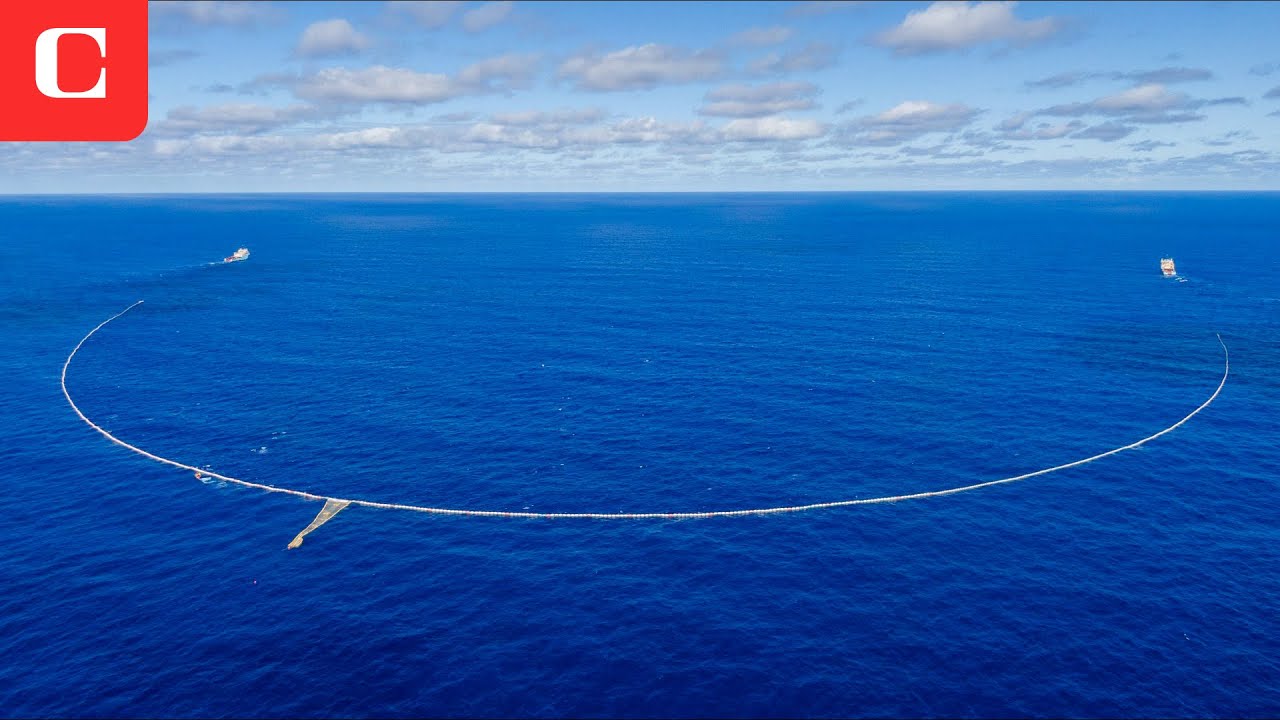
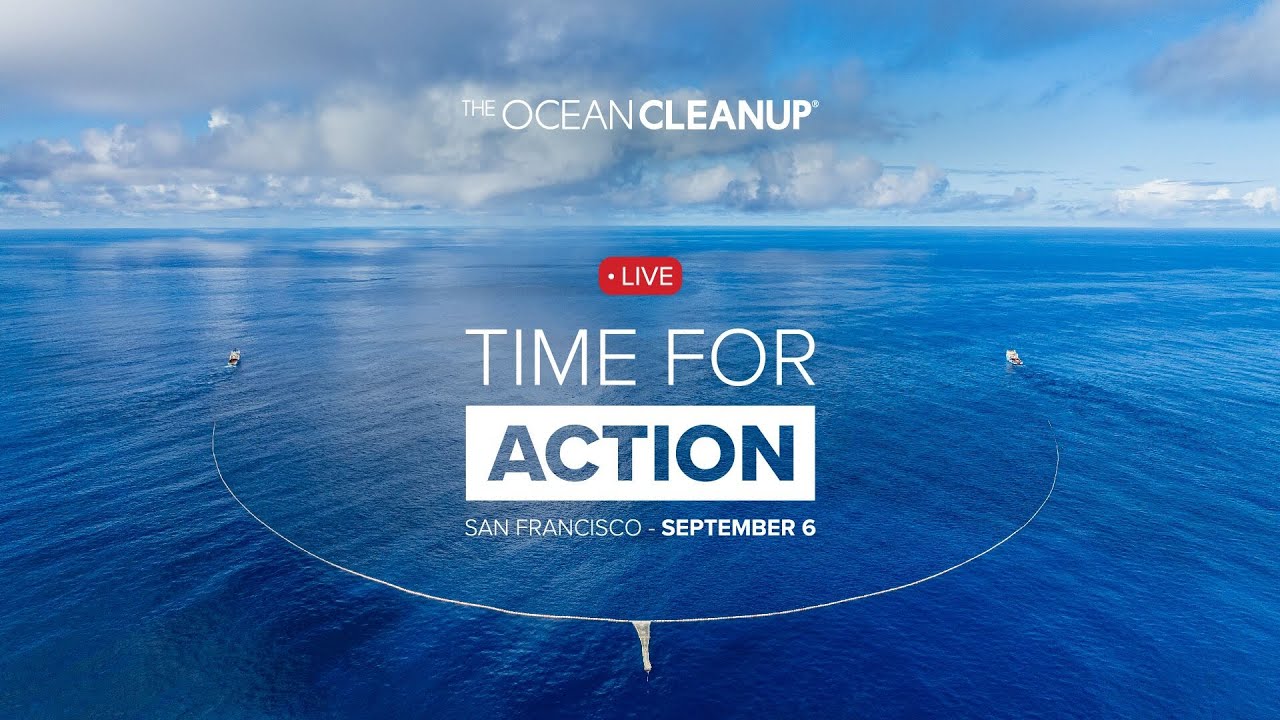
we we had to go much bigger and this led to to system 3 our our first fulls scale ocean cleanup system which we deployed for the first time about a year ago now system 3 is truly massive it's uh it's about 1.4 miles in length which uh is roughly the the same length as as the Golden Gate Bridge actually uh and when it's deployed in the in the ocean it sweeps an area the size of a football field every 5 seconds and um we now have um completed 22 trips 22 operational trips we've with that
cleaned up an area of 17,000 square k kilm which is roughly the size of the state of New Jersey we have uh cleaned with that we've removed uh more than 1 million pounds of of plastic which is roughly half a percent of of what is out there and um if we go to the video Yeah here this is um this is basically how it works so so we have this very long system we have these two wings that act like a funnel to bring the plastic towards the center where you have this um retention Zone
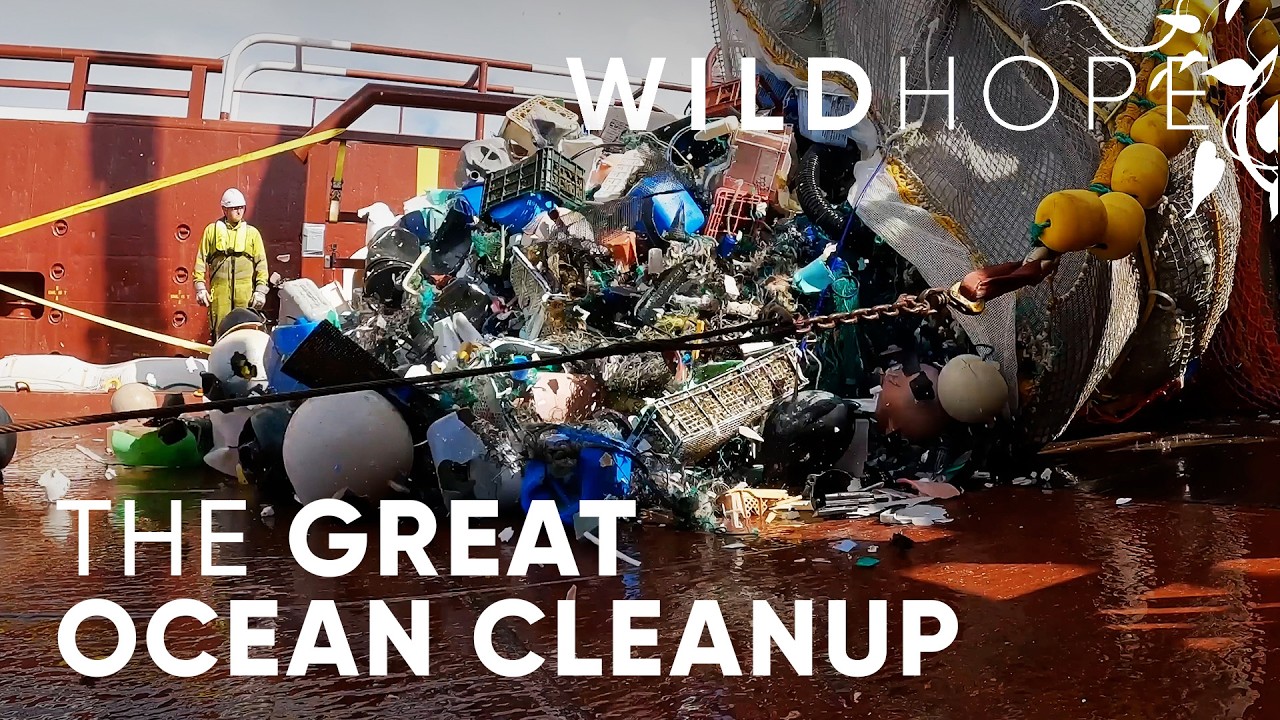
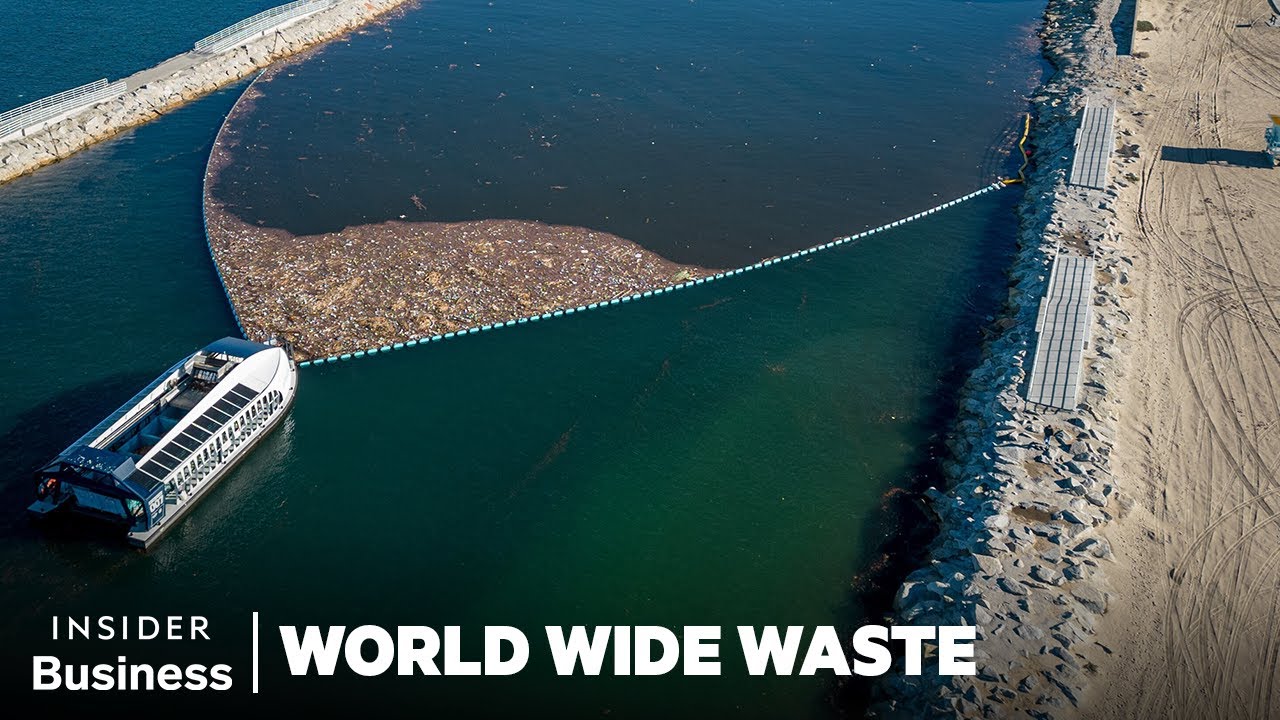
which is basically a giant giant bag of sorts where uh we funn all the plastic that's where it's retained before every few days we we bring it on deck and then we empty it and then sort it for for recycling and um I I don't think I ever get enough of seeing these these images it's uh and actually every time we post these videos they they always go viral so I don't think I'm the the only one that thinks this is extremely satisfying to to look at and actually this um the extraction you're seeing here
was uh was an 18 ton extraction so that means that you really just have to repeat this 5,000 times and then the gra pafic Garbage Patch will be gone so 5,000 times that's that's what we need to do so what does it take to to do that of course that's that's that's the real question here and um and actually you know today I'm I'm very proud and excited to to share with you that the the results of the past 12 months of operations have now proven that we can clean up the Great Pacific garbage patch
in a responsible way in 10 years time at a cost of 75 billion I realized there's a lot to unpick here so let's uh let's take a step by step let's start with the responsible bit so of course the ocean cleanup was founded you really with one reason so just to to solve an environmental problem so of course the last thing we want is create a new one in in the process so so that's why we have designed this cleanup system to be inherently safe for marine life you firstly it it moves through the ocean
at a very slow speed about half your walking speed which is slow enough uh so that marine life can you know can get out of the way we've also fitted the system with uh with acoustic deterrents with lights with um Escape Routes and we even now have a an an an activated hatch that we can uh activate remotely to to close the system in case we see anything enter that uh that shouldn't and all of this has has been paying off tremendously so so what we see is that with system 3 actually 99.3% of what
we catch is is the plastic and um most of that other 0 point 7% are are actually uh invasive species uh so so are really of of of lesser concern and and these results are currently uh undergoing peer review now the next thing is of course that when you tow these systems through the oceans you're going to require a lot of energy and in turn you know we do emit uh CO2 into into the atmosphere but here too the the numbers are actually looking very very good so um if if you so to to clean
up the whole of the Great Pacific Garbage Patch um turns out that that's going to result in a carbon footprint of around 90 kilotons of of carbon per year and to put this into context that's uh about the same amount and we look this up the town of Wheatland Wyoming which uh has a has a population of 3,300 it's um beautiful Town um but um you know honestly I think we we will be able to survive another weedland worth of of carbon emissions and um you what's more this year it's good to point out this
year there there were uh a few studies that uh that came out that um actually show that the plastic in the ocean is interfering with the ocean's ability to to take up carbon from from the atmosphere so it might actually even turn out that the cleanup is uh going to be carbon positive so and so this is something we're going to do more research on in um in the coming period and then when it comes to the the time and the money it would take I I I really want to make clear here know this
is what we can do right now you know so take the average performance of the past 12 months multiply that with a fleet of systems let them operate for 10 years and the patch will be gone so you know if we get the money we could do this today so so so fundamentally really the the only thing standing between us and clean oceans is is money so and that's that's you know a really big deal because until today you could be the world's richest person you could be the most powerful country on Earth but you
wouldn't have been able to clean up the Great Pacific Garbage badge but but now you can you know at a price of5 billion doar so that's what it takes to clean up the Great Pacific Garbage badge today however we're not satisfied yet you know considering the the urgency of the problem we we of course want to go faster and fortunately we we found an opportunity to to do just that and for this it's it's actually quite important to to Really to understand that the the Great Pacific Garbage Patch is is not a a homogeneous mass
of plastic it's uh it's patchy actually so um so if you uh were to uh take a boat through the garbage patch there would actually be quite a few days that you would see hardly any plastic around your boat and then there are days of course when you see tons and tons of plastic Around Your Vessel and um you know those are what we call the hotpots so the trick really is here to to consistently stare through those hotpots so you know if you for those who remember the the the noia phones it's a bit
like playing the world's largest game of snake or Pac-Man or or something like that so so this is kind of what we what we want to do and of course we have already been trying to do this on a on a rudimentary level but uh it turns out that we can actually do a lot better than that because if we truly know where the plastic is our computer modeling shows that we can actually improve the performance of every cleanup system that's out there by a factor of five but for that of course we need to
actually measure where the plastic is in in real time so so what we're currently developing our our methods to use uh GPS trackers to emulate how the plastic behaves through the ocean to thereby guide us to to the places where those hotspots are uh and we're also working on uh on drones that are fitted with AI powered cameras to directly measure the concentrations of plastic at Sea so these would be launched from the vessels and they would scan the surface around our operation to make sure we can do those those fine-tuned adjustments of of our
course so um and and actually we have already been doing uh trials with with both these GPS trackers as well as with uh with drones so now it's really about scaling this up and about integrating this into our operation now this this 5x Improvement that I mentioned you know that's really what what our model show can be done in in theory but to be on the conservative side we our working assumption is actually to uh to assume a factor of two and the reason for that is that we actually know that a factor of two
is possible because that is something you know in a way we're already doing at this very moment so so right now uh you know that's the the concentration that's the performance we see uh in our in our best extraction runs uh that we've already done so uh of the past half year so uh so it's really just about being in those concentrations consistently now so what this means is that when we take our current achiev level of performance and we add hotspot hunting to that um we predict it is possible to clear the Great Pacific
garbage patch in half the time at almost half the cost so that means 5 years and4 billion so this is going to be our Focus for for the coming year you know we're going to invest one year to save five you know it's a a no-brainer right and uh just to put this price tag into context you know this this $4 billion doll you know that's the same amount uh humans currently are is are spending on on Gourmet pet food every year it's it's less than half half this the amount that America is spending on
Halloween decorations every year it's it's the same amount as was spent on Military expenditures in just the last 10 hours uh it's less than a quarter of a percent of the net worth of the 10 richest people on Earth and it's under 1% of the net profits of the world's plastic producers over the course of the cleanup now I'm not saying to be clear that we shouldn't spend money on on Halloween decorations we you know we love Halloween uh but um I do think this goes to show that this that cleaning up the Great Pacific
Garbage Patch is something we should be able to afford and most importantly the cost of of cleaning up the the Great Pacific Garbage P the cost of solving plastic pollution it's really just a fraction of the of the harm plastic pollution is doing to our world year in year out so so what this means is that it's actually cheaper to clean up the Great Pacific Garbage Patch than to to not do the cleanup now with the clean up of the Great Pacific Garbage Patch I believe we humans have the opportunity to do something truly great
you know there is for for Humanity to thrive we we need to be optimistic about the future and these days you know there's just so much fatalism going around you especially about the environment especially amongst people of my generation I think once we have cleared up the Great Pacific Garbage Pates that's going to be the most inspiring thing it's going to be this thing you can point to not of how much we've we've messed things up but rather as an example that that we humans can solve the big problems of our time and we' have
we we will have done it not by by being angry against the things that we don't want to see but rather by building towards the future that we do want to see so over the past 10 years thanks to the you know incredible work of the team and uh the the support of everyone that have has backed us all around the world all our partners we have now been able to give the world the tools it needs to clean up the Great Pacific Garbage padge when this cleanup starts it's really up to you so we
now call upon the world the governments the companies individuals to make this cleanup happen thank you [Applause] [Music]