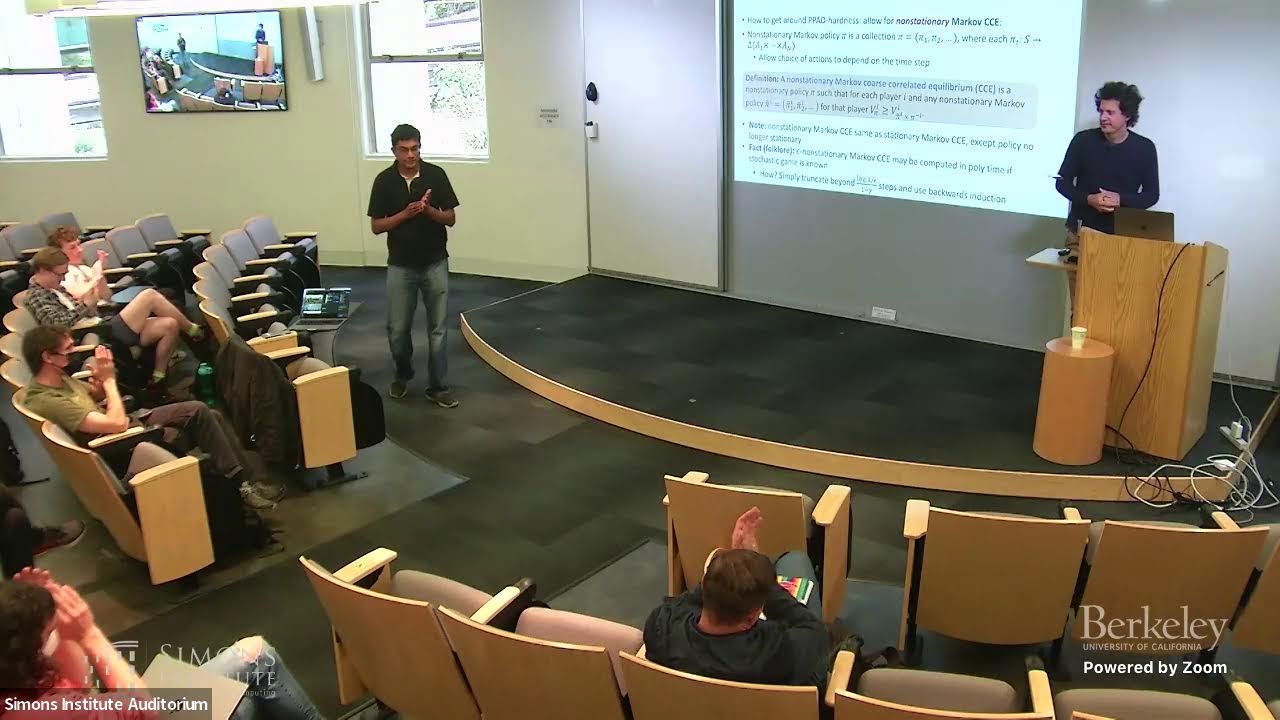
Hi hi everyone um I'd like to start a so good evening and welcome to today's theoretically speaking uh talk on what do the theory of computing and movies have in common I think you are the answer um anyway we'll see I'm Shafi goldwasser I'm the director of the Simons Institute for the theory of computing and just a few words about the Simons Institute we're an international Venue for collaborative research in theoretical pure science we're established in 2012 with a very generous Grant from the Simons foundation and our mission is to bring together world's leading researchers
in theoretical pure science and related field and with particular emphasis on the next generation of outstanding young scholars postdoc students to explore sort of laws of computation and the use of algorithms in science exact live social and Engineering and uh today's uh talk is part of our theoretically speaking series which reaches mostly to the public and highlights uh stories and advances of theory of computing uh for a broad audience and we're extremely fortunate to have Alvey today Alvey Ray Smith is our speaker and I'm going to give you a short description uh of what I
um of the highlight of his career what I'll brace myself you'll brace yourself Uh he actually uh got his PhD at Stanford University computer science department and then he was a computer science professor at NYU and also at Berkeley working on cellular automata Theory which is where our theory of computing the story starts and from there on he went on to New York Institute of Technology were invented really the first color pixels followed by a path that led him eventually to Lucasfilm where he was the Studio's first director of computer graphics and I think he
directed also the first computer generated animated short film called Adventures of Andre in Raleigh B which I understand was sort of a Prelude the previous name was my Dinner with Andre yeah one of the movies that I found very difficult to watch but in any case uh um but it's a personal thing and he went On to co-found Pixar and after that Altamira software which eventually was brought by Microsoft and I love a quote that I read actually in a New York article by Allison gopnick where she mentions Alvey and that when you left New
York then went to California I assume this is the correct uh quote you said something well something good will happen and that resonates with me personally the idea of going back from the east coast of California and RV Received the ACMC graph computer Graphics award to Scientific engineering awards from The Academy of Motion Picture Arts and Science he's a member of nae aaas and received the honorary doctorates from New Mexico State University and New York Institute of Technology and he's the creator co-creator of many pieces of computer art including Sunstone which is in the new
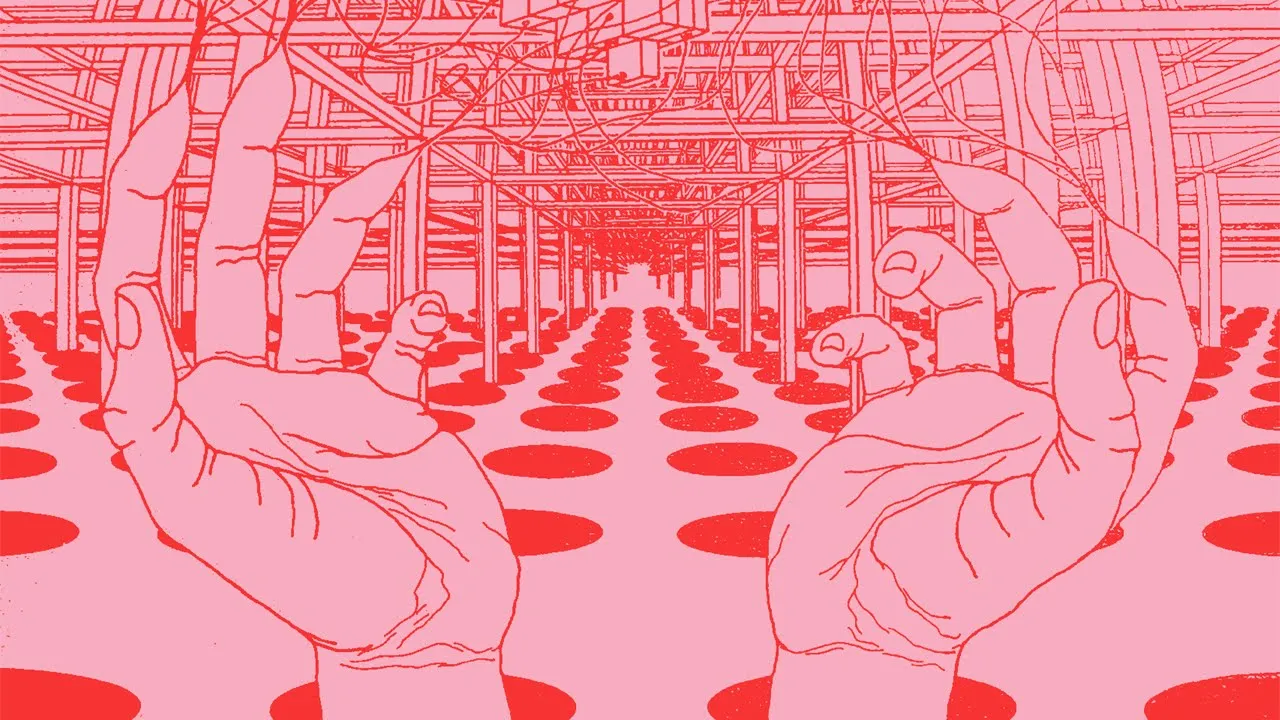
Earth Museum of Modern Art I published widely Both in thread computer science computer Graphics he's the author of a biography of the pixel and one of his face first and most famous pieces as far as I'm concerned is his drawing of synapse which was used as a cover of the fox proceeding for 41 years and for those who don't know Fox stands for foundations of computer science Symposium and I think it was the one first conference I've ever want gone to and that's the picture on our poster and I'm delighted to announce that Alvey has
generously gifted The Institute with their original artwork for this drawing and we will be installing This Magnificent contribution in our Institute later this year so we're deeply um grateful to you for your generosity and I know that for you it was like ah just take it but for us it means quite a bit and speak of generous generosity I also Of course want to thank the Simons foundation for their ongoing support and for our industry Partners including algor and apple Google JP Morgan and TT research VMware Rock 360 and they enable us to do this
programming like uh this evening's event and all our programs and finally uh I want to thank also people who contribute to our first annual fund which ended in December and of course we are welcoming all the gifts also in the future you don't have to wait for December so without further Ado please join me in a warmly welcoming Ray Smith thank you thank you and everybody hear me is this working it's all the sound working okay hi this is kind of a little different talk than I used to get so I'm looking forward to it
um you can't hear me not very well all right are we miked up should I talk into This guy that's it all right [Applause] um it's good to me that's me okay can you hear yeah can you hear it yeah yeah okay I'm supposed to be able to walk around you still hear me okay all right um I'm going to start off with three tributes one is to Art in general this is like the oldest piece of art I know right here Human Art it's also Animation isn't it astonishing that over 20 000 years ago
in Altamira cave somebody painted an animated boar so I use Photoshop to break it into two frames to see how how good a job you did and it didn't do too bad now for the life of me so I used to think well maybe they use the flickering fire to to animate it but I couldn't make any sense out of that but I think They just imagined my second tribute is to my Uncle George in Las Cruces who no longer with us but I grew up in Las Cruces New Mexico one of my two hometowns
in New Mexico and he taught he was a painter this is his piece a self-portrait he taught me how to paint with oils and acrylics when I was a little kid the only relative he would allow into his art studio if I was set on the floor and remained absolutely silent and it was torture but I did it And I learned how to stretch canvas and I learned to love turpentine and Lindsay at oil and all that to mix having mixed paints and stretch canvases so forth so I painted pictures for a lot of years
basically until I discovered the computer and my third tribute it's probably more meaningful than those two is to the late Martin Davis personal friend my wife Allison couldn't make it tonight Because of a traffic jam but Martin Davis and his wife Virginia were close friends of of Allison and me he left up on the hill here in Berkeley and uh I knew he was sort of my treat when I first moved to Berkeley to to to live with Allison the first day I was here at msri I met Martin Davis I said are you the
Martin Davis and he said what do you mean I said computability and unsolvability he Says that's me I said well I thought you lived in New York he said but I just moved here so kind of a wonderful welcoming gift to Berkeley who was to meet Martin in Virginia we just lost him both of them and uh but I learned in in New Mexico I I'm still kind of astonished I was at New Mexico State University where I did my undergraduate there was a I took a graduate seminar on girls incompleteness theorem we spent The
whole term going through this the proof and somewhere in there I stumbled on this book so I started learning touring and the Machine and all that so those are my three tributes I also mentioned I got started with computer Computing way back you know in in early in New Mexico in the 50s before I left there something else happened I was assigned the job of designing an Antenna for the Nimbus weather satellite that one right there it's it's a there's a there's a cone there you probably can't make out but there was an equally angular
spiral painted on there and that was the shape of the antenna and I was the the old Engineers thought they could keep me busy for a month drawing that antenna and I said but a computer can do that and they would nah yeah I'm pretty sure And sure enough I got the you know I wrote a little program and got the computers and do it overnight and turned it in so that was my first that was 1964 my very first computer graphic and also while I was still at New Mexico State roaming around in the
stacks I stumbled on this paper steps towards artificial intelligence by Marvin Minsky and I was just enthralled I said you Mean computers might be a model for this wow what a sexy idea I want to know more where do I go okay so Vietnam is Vietnam war is underway I have to go to graduate school or I get drafted so I decided to go to graduate school somewhere where they teach that I found two places MIT and Stanford Stanford gave me more money so that's why I went there Now I had some problems at Stanford
I won't belabor you with but had to do with the length of my hair but uh um but I stumbled into you know one of the so one of the older professors let's just put it this way I won't name him had a lot of trouble linking my hair because I was a full-blown hippie about one year after I arrived in California and uh but two of the younger professors took Me under their wing and said that wasn't fair what he did you and they they guided me through the The Perils of graduate school and
one was Michael larba probably know him and uh I learned he became my PhD advisor and uh I wrote my thesis on cellular automata and I the the specialty was my theorem that I was the theorem I was proudest of was I proved the existence of a self-reproducing self-reproducing computation Universal Cellular automaton and that's what this cover is supposed to represent that the concept was mine but the execution of it is rather poor and I was disappointed by it I didn't do it I did not do the execution of his book but I did publish
it in this proceedings the ninth switching an automata Theory proceedings and I also published the paper in the next one Or two later the 11th and the 12th also I'm not going to put that one up the reason I'm showing you this is because of this diagram and the paper I put into the 11th SWAT it's a real simple proof that a cellular automaton can recognize the palindrome in time equal to its length it's so trivial I won't bother you with it but just remember that space-time diagram because it led right to this Um after
my first job after Stanford was as a assistant professor at NYU in New York City and uh just after I'd arrived there so you know I graduated in 69 from Stanford got my first job immediately at NYU so about 70 I get my copy of scientific America I've been reading it since I was a kid Martin Gardner's column in particular and there was this column about The Game of Life And I read it and I said this is my thesis this is cellular automata theory he and Martin Gardner my hero doesn't know about it I'm
going to call him so I did he lived up the Hudson River I called and called him and by the way I should mention he was a underground hero to the acid generation in San Francisco because of his annotated Alice is De rigor reading by every asset head in the world I think And uh so I had two reasons to meet this guy and uh I called him up says do you know about Von Neumann and ulam and self-reproducing machines and Garden of Eden theorems anymore no I don't know any of this and it's such
a popular subject that the publisher wants to make it the cover story in the February 71 issue can I come down and spend time with you and find out what you know I said sure Sure I got to spend a day with my hero childhood Heroes just fabulous and uh he didn't have a clue about why annotated Alice was popular and this the culture Gap was so large I didn't bother trying to go across and explain it to him because of the rest of the conversation about math was so much fun all right he says
okay Ali called me I vetted his his calling for him and then he said you know what they want to make this the Cover story so I'm going to submit some stanislaw ulam designs come up with some two signs and submit them well I just published that theorem in Swat recognizing palindrome in real time with a cellular automata space-time diagram so I came up with a just a colorized version of it where I chose as my palindrome um Uh something I had found in the New York Times crossword puzzle a special puzzle devoted to palindromes
the clue was why don't owls live in the tropics and the answer is too hot to who which is which is a really nice palindrome because it's not only a palindromes literally because of the text but Spatially because the letters are all vertically symmetric so anyhow I'll back that off all right I won the competition for that cover why because the publisher of Scientific American was a palindrome freak so and that's and I told shoffy this one day I think that that was the first taste of any kind of Fame I had ever had in
my life was suddenly letters were coming in from all over the world Now they were mostly about the Game of Life which didn't particularly excite me but you know it I met a lot of interesting people that way and uh I started getting you know I had context in a lot of different countries all of a sudden it was it was a lot of fun and that led to this because for the I guess it's the 14th SWAT By the way SWAT and fox are the same thing it changed names early on uh SWAT for
the 14th SWAT all right so I had thought about going to IBM Watson Research Center rather than NYU gorgeous place if you've ever been there it's just an absolutely gorgeous research facility but I was a young guy and I wanted to live in New York City so I chose living in New York but I went up to Watson a lot hung out with the guys there and we did rock climbing with them and so forth Eric Wagner and Ernie Rosenberg and Jim Thatcher and I can't remember all the names A lot of people that I
approved theorems with and uh Arne Rosenberg said hey Alvey we'd like for you to design it's seen the cover I had a different Scientific American said we'd like for you to design a cover for our proceedings I went okay they sound like a good idea I like making pictures as much as I do math um and this came about one day and uh it was a terrible day in New York City it was deep winter it was the north Bronx in a in a blizzard horrible weather my car broke down I pulled into an Esso
station it was just a miserable it was an ugly Esso Station it wasn't red white and blue it was red dirty gray and blue and it was you know it was so ugly and I was so horrified I was gonna have to spend hours there where my car got fixed I said what can I do to escape this and I said design the cover and while I was sitting there in that horrible situation this came to me not completely but the idea of the my hands synapsing onto a cellular automata Like thingy was the basic
idea that I had it took me a month to execute it in India Inc on vellum using French curves and straight edges and rapidographs and even an exacto knife to delineate some of the inclines and it got used for the 14th and a whole lot of other in fact it got used For uh 38 Fox proceedings let's change this name you can see to foundations of computer science and then three more after that I don't think I have pictures of that when it went electronic and then they finally figured out oh we don't need a
cover if it's electronic so so for 41 years it got used you know it's by far my uh proudest achievement In theoretical computer science [Laughter] uh so you'll notice that between let's see the 15th and the 60s that's where it changes name so early on there um coincidentally the last one's in 2010 the last one shown is 2010. and the reason I say coincidentally is because that's when I began work on this book that I published last year or two years Ago now it took me 10 years to write this book I started in 2010
and published in 2021. and um the reason it took so long was every time I touched a subject that I thought I knew I was just going to write it down I found out no I don't know it and not only that but the histories had it wrong and it would take me a year to understand what the history really Should be of various Technologies and to get it right I think I do it right and then I'll go to the next one find the same problem okay um why did I write this book well
because something really amazing happened about the Millennium about the year 2000 and nobody paid any attention we have been waiting for this to happen For years amen came it went nobody paid it just was accepted I called it the great digital convergence when all old media types got swapped out for one the bit in the form of the bit takes and pictures is pixel and I remember we all knew it was coming that the videotape was going to go away film's going to go away chemical wet stuff was going to go away a ferromagnetic materials
are going to Go away pigments all this stuff are going to go away to be the bit it happened in 2000 nobody blinked so I wanted to celebrate that event that was one purpose of this book how did we get there and then the other other reason for it was I realized the pixel is the atom of the new picture universe and nobody knows what a pixel is I got I would ask people what a pixel I got all kinds of cockamammy answers and I realized nobody really knows and it's not that hard most most
people think those are pixels no they've never been little squares ever it's a total misrepresentation now it's kind of interesting why people think that's what a pixel should be if they're stiff and linear and squarish and maybe people early on at least thought computers were stiff and linear and rigid and therefore that's what the Pixels had to look like but of course we all know that the computation and the computers the most malleable tool of humankind has ever invented there's nothing keeping it making its pictures look like that I think that I think the the
the the villain here is the is the zoom feature really the zoom feature every app has a zoom every device has a zoom you know what does Zoom do it's a quick and dirty trick that made sense back when Computers were slow it does the following thing it replace it suppose we want to multiply you know magnify the screen by a hundred what Zoom does is replace each pixel with a 100 by 100 square of that copies of copies of that pixel so what does it look like it looks like that when you look at
a course this is if you're looking at Square arrays but you're not looking at the pixel left Plus it should be done away with it's absolutely false all right so what is a pixel that's I you know I've set out in the book to to explain it and without math by the way I wrote this book for uh just to do it intuitively so I avoid mathematical terms I may sneak one in for you guys uh it starts with Fourier Bridge Revolution that's Fourier on the left this is probably a more accurate picture of it
May contemporaneously um and Napoleon's is his Tyrant on the right so I kind of came up with this historical theme that seemed to be repeated when it comes to histories of Technology there's a great idea there's some kind of chaos that drives it into fruition and there's some Tyrant or Tyranny that does all the wrong things but somehow helps it happen anyhow and that's the case here Fourier was a well you know I grew up in double e we didn't have Peter science when I was a kid so I was a double e and we
learned about Fourier of course and I can knew all about this Theory but I didn't know a thing about him do you He's he was a French Revolutionary he got thrown in in jail because he came a foul of robespier and he was slotted to get his head guillotined and he was saved at the last moment by by rope spear losing his head instead and then he went off with his new buddy Napoleon Bonaparte who took a bunch of savants to Egypt where he was one of the savants and so before he was there when
the Rosetta Stone was discovered and later in his Life he uh he mentored champagne who cracked the hieroglyphics of Egypt using the Rosetta Stone he uh but he saw he saw the mistakes that Napoleon made in military mistakes that Napoleon made Napoleon got whooped in England and the last thing that Napoleon wanted was this loudmouth guy in Paris telling people what had actually happened there so he did the clever thing of making Fourier the governor of a Province the prefect of a prefecture the one in Grenoble 4A knew he was in Exile and in fact
he was there until Napoleon got sent off to Saint Helens Saint Helena and only then it was Fourier allowed into Paris took over the French Academy finally got the math straightened out of his great theorem which he had plenty of Time to work on there and in the provinces and this guy durclay helped him out to get the final final pieces of math into place and um I came up with a greenhouse effect any Champion Sophie Germaine first one of the most outstanding female mathematicians before anybody would imagine all it could do could be talented
that way this guy All right we all know his theory you add up I just call them waves sine waves of course you add them up different frequencies different amplitudes different phases how they're adjusted to relatively one another and you get any one-dimensional signal in the real world there are some mathematical beasts you can generate that that violate violate the theory but uh for anything In the real world like audio like what we're doing right here you can have these ways together and get that get that signal and it works in 2D as well multiple
multiple Dimensions actually you extrude these waves away from the screen you get corrugations and if you look down on those corrugations they look like this and the same thing if you add up corrugations of different frequencies and different amplitudes different Phases and different angles you can get any picture like these or any of the pictures I'm showing today you can get your picture of your kid any picture is a sum of corrugations kind of surprising in itself but that's not where the digital world came from that came from the great sampling theorem the sampling theorem
is sort of the centerpiece of this book my book And uh I won't explain it to people because it's just a piece of magic that makes the whole modern world go round as far as sound and pictures go anyhow the guy I was always told that first I was told that Harry Nyquist did it no I didn't and then I was told Claude Shannon did it no he didn't he never even claimed he did it Here's the guy that did it so you know this is one of my years I went on to figure out
who did the sampling theorem first and every country has a candidate and I went through them all and I became convinced this was the guy his name is Vladimir patelnikov he's a Russian he lived through now you may say by the way that's him Young when he proved the theorem that's him old when he's standing in in the Kremlin covered with all the orders of linen and Stalin and They read this and they read that and I cropped him out of the picture but Putin is right next to him I got this off of Putin's
website he's being knighted or whatever the equivalent is in Russia in the Kremlin for the sampling theorem on his 70th birthday and I I know some Russians here in town and they swear up and down oh yeah he's the guy you America's never you how come you always still you don't give him Credit I said well I'm going to I think he did it all right let me tell you a little bit about him his story is so amazing he he lived through the Russian Revolution the Civil War afterwards both World Wars the Cold War
and basically all the horrible stuff of Soviet Russia he sultanessa told us about the gulag Archipelago and you told us about these Paradise Islands located in the gulag call shiroshkas by the people who were imprisoned in them they were the intelligentia the idea being if you built a bomber or a bomb or a crypt you saw cryptanalysis you were in prison therefore the secrets were held by Mother Russia so this guy should have been in a swarovska he was the head of the space program and He had some and he was their crypto analysis expert
he wasn't his lab was it was I know where the Sriracha was located northern northern Moscow why was he not well because he had a protectorus a woman named Valeria golub Silva who had her own University she was first great intellect but the reason she could keep him out of The camp was because her family was close with Lennon's family and her husband was giorgi malinkoff the guy who took over from Stalin just as bloody as Stalin took over directly from a just as bad so that's what kept Him all right so wait a minute
we can't give a comedy credit for something as important as a sampling theorem but yeah we I think we have to he did it there's Only the only closest uh competitor I could find for was a guy named Whitaker in England but Whitaker didn't do the entire theorem for those of you speak band pass and low pass you got to do both of them to approve the theorem in my book this guy did it okay um what is this through it's a piece of magic uh okay if you think of a picture As being a
Rumple sheet so and you're looking down on to see the picture where the heights of the rumples are the brightness color brightnesses of the picture and you let that sheet settle down onto a bed of nails sharp nails regularly spaced nails here's what the sampling theorem says you only have to preserve to preserve the image you only have to preserve the samples at the tips of the nails You go what you can throw away that Infinity of other points if you do it right that's what the assembly there says apparently you're throwing away at Infinity
I'll show you why it's only apparent and we have a name for the sample and pictures they're called pixels there's the definition How do you get how do you get back from the samples to the image that they represent well that paper could tell the cost paper it's in the lower right there and you can see the what we call the sync function everybody calls it I don't call it that my book I just call it a pixel spreader because what the theorem says is take your samples put a copy of the spreader function at
Each sample adjust its height so it matches the height of the sample but the width stays constant add up the results you've got the image back so the magic the the infinity that we seem to have lost is carried in that that little mountain this is the two-dimensional version of that of the sink function if you I I dropped a yellow teeth through its peak so you can see that It's a peak and a and some negative lobes and stuff okay all right that's the magic of the modern picture world pixels you can't see if
you listen to me I've just told you it's a point I can't see a point so one of the first things I want you to go away with is you can't see pixels this is full of billions of pixels and you can't see any of them right they're all they're bits in a file If you want to see one you asked for it and something happens and there's the picture what's happened right there well what's happened is a very fast calculation because computers are now fast enough to do it fast and the little glowy things
the little Hills or the little glowy things are raised in rows and columns on the on your display device those aren't pixels those are display elements they're analog They're driven digitally but they're analog they have a shake more or less like that made of light so those display elements are the Recon or the or this are the pixel spreaders for the pixels that you can't see now if you put that in math form it just looks hairy as I'll get out all right so I brought up the next secret of the modern world as you
all know it's the computer um Yes leibniz did do something about it and Ada love listed something about it and babe it's just something about it but the guy who nailed it was Alan Turing just absolutely nailed it he not only invented the stored program computer but he showed us the weirdest weird things that are out there in computation land the fact that We can't even tell that I started to say he he showed us the halting problem no he didn't you know who showed us the halting problem Martin Davis now Martin's embarrassed to say
that yeah he knew he had done it first but he didn't want to take you know it was such a trivial modification of the printing problem that Turing did did solve that he would be was embarrassed for anybody To say that he did the halting problem in public but I don't have any problems celebrating my friend he named to prove the halting problem all right computations are deterministic in the small but undetermined in the large and we are just now I think in the world starting to encounter just what strangest us that's going to give
lead us to Connie will you for understanding what how it works All right so there was one guy in the world who knew immediately what Turing had done and it was Johnny Von Neumann he was one smart fellow he this is how smart he was he he happened to hear girdle present took incompleteness through and gotten good and he went to him the next day and said I've got an improvement for your theorem and girdle said no I've already approved That sorry and that and if I know I've been kind of showing you his personality
I think didn't do logic any refused to do any further logic he got out girdled by girdle okay but I love this picture which his daughter gave me because it shows him in a business suit the only guy in a business suit on a at the edge of the Grand Canyon with no hat and his mule is fake while he's sitting ass backwards right on the edge of the Grand Canyon but both of these guys he knew exactly what Turing had done and he knew as Turing did that the only way that you know attorney
oh I should stop him and show you something where is that yeah for this book I think I'm going to show you that next slide yeah I designed a universal turing machine as a business card I've got a bunch of Them up here if you want one later okay it'll compute anything that's computable in the universe very slowly the old compute Toy Story for example but it might take the lifetime of the universe to do it so he so these both these guys understood that and by the way I I said touring invented the stored
program Computer a lot of Engineers claim the engineers no this guy did it and I explained it in my book chapter three which Martin Davis helped me with um there it is program memory data memory programming CPU it's all there it was but it was software and it was awfully slow but he and far Norman knew as nearly everybody does so you want something in software to go fast you turn it into Hardware we all know that and they rushed off both of them to do that so I came up with two versions of this
turing machine here's my I don't want you to pay attention to the details here I just want to show you how I present history in my book it turns out the simple Narrative of some genius and does it all it just doesn't work it's always a family tree of people who borrow ideas from each other and stab Each other in the back and you know do all kinds of of things to to have the results come out as we know they do in this case yeah Alan Turing is up at the top on computable numbers
is more importantly is at the very top his paper 1936 paper and Von Norman is right there because he saw it almost immediately and uh everything desensitive right you follow tearing down you come to the hardware the first Computers and I mean stored program computers not calculating machines they don't count eniac for example is not a computer originally yeah it wasn't stored program there's an eniac plus up there it's a different thing but I know I haven't looked at any accidents if you add some Hardware to this thing it'll be stored program and there's the
actual so I celebrate baby This guy is the first computer uh I was kind of surprised when I wrote this book I couldn't tell you who had built the first computer really it's been all my life here and I don't know and that's because I decided it was just a matter of definition if you define it to be a star program computer it just falls out one two three four you can see who did it And baby was the first or perhaps eniac plus they're fighting there's a lot of battles but they're you know they're
within two or three weeks or months of each other they're really cool I just call it a tie the only thing that Turing worked on was a failure that he got fired from the job but Von Neumann influenced every other computer up there all right so I went to visit baby for my book baby was built in Manchester England it's in a the most Museum of Science and Industry in Manchester and uh this is how it greeted me and the word Pixar was scrolling to the right so the important thing is the first computer possibly
in a second half pixels and it could animate boy was that a surprise to me 1947 48. way before I saw computer Graphics has started okay here's the actual first picture first pixels that the Tom Kilburn who built baby took the first picture I call it first light the first digital image by the way no little squares right never have been and I found also Manchester the first game interactive game it's checkers And uh it's interactive because again this is this is 51. this is at least a decade earlier than the claims were about the
history of computer graphics and interactive computer graphics all right this chart again don't pay too much attention I just want you to notice the red arrow at the top that connects to the previous chart and I have a bunch of these charts they Just they're they're threads that you know integrate in different ways to generate the modern world and this one I just want you to look at I just want to pick out a couple of see her see the guys safer in the Nazis in the upper right one of them is Herbert whoops sorry
one of them is Herbert Freeman he was my chairman my first job at NYU it must have been amazing he turned out to be one of the founding fathers of Computer graphics he was saved from the from the Nazis by Adolf Hitler no no no no wrong sensor by Albert Einstein himself Albert Einstein wrote three letters in this kid's behalf and he managed to get him out of Germany in 39 just in time and I was working for this guy and he he knew I was an artist and he said Alfie why don't you come
join us in our computer Graphics research and I said This I'm still embarrassed but I said herb if you ever get color I'm there it was all black and white then so I kind of blew off an opportunity but the only thing I really want you to see the time is proceeding down here I want you to see that just barely there it says Moore's Law I want to make my Morris laws pitch because to me this is this is one of the most important things in our modern world Gordon Moore so we've been talking
about what I call Epic one you see maybe in the lower lower left this is the period when as the computers got more powerful they got larger and larger and larger until they were several stories tall and they weigh tons in costs today's money billions of dollars and they were really dumb really in today's standards and then in 65 the year I came to Stanford just made the picture for the newest weather Satellite Gordon Moore stood up at Intel and said something that was unintelligible to me so I put it in terms that are intelligible
to everybody I think he said you know the density of components on an integrated circuit ship will double every 18 months or so okay what's that mean uh it doesn't mean anything to me until I put it in equivalent terms so doubling in a year and a half is the Same thing almost exactly as an order of a factor of ten five years and everything good about computers is directly related to the density of components of an integrated circuit chip so my version which I think is much more meaningful and helpful is everything good anything
good about computers gets better by an order of magnitude every every five years and I say order of magnitude instead of factor of 10 because We puny humans max out at an order of magnitude we can't imagine Beyond an order of magnitude or maybe some of us can but not two orders of magnitude or three so it's a conception conceptions change at an order of magnitude and if you look at that curve we are now okay so Gordon Moore said he only had four data points and he says you know I think this might last
for for 10 years Well here we are 11 orders of magnitude away from Gordon War no genius can think that none of us none of you I'm sure some really smart people here can think I have an organism magnitude ahead and we're just we're a couple years now we're going to hit 12 orders what's that feel like you don't know until we get there It's like like the halting problem you know what their sea is going to Halt until you get there and find out that it didn't and you still still are asking okay by
the way the engineers making those denture chips are writing the same curve they can't see or magnitude Beyond either in my lifetime I've seen the I've heard the Moore's Law the death of Moore's Law prophesied four or five times But every time the engineers say they get the one order menu they went oh I think I see how we can push it on now we may really have reached there now to reached the limit but I I'm skeptical I want to repeat this because this is this this is the Supernova that has driven the modern
Digital World the revolution that we all everybody here has lived through and I use the word Supernova on purpose the Supernova is a star that explodes And becomes 10 billion times brighter than the original Star you see I'm talking about an explosion that's already a hundred billion times brighter than the original Star and heading for a trillion this is the PowerHouse that has driven everything that you and I do I've served this tour my whole life and I think I think there everybody living today will probably do the same Thing unless it dies all right
what did Moore's Law bring my particular field of computer Graphics it brought us color pixels they didn't exist and in 1960 I went in search of them and I found them here they are for my book I had to find them I found them and they happened seven years before I thought they did on the Simulator for the Apollo Moon Project and I found the tool Engineers who've done it and we spent a fabulous seven hours together in Salt Lake City until we nailed the actual moment that it happened and Not only was it the
first color of pixels but it was the first 3D shaded color graphics and only that but it was in real time because these were a simulator for NASA so Moore's law that was one of those first fruits all right again this chart joints to the last one I don't really want you to spend too much time thinking about it let me just at the very top on the leathers rod ruscello and Bob Schumacher those are the two gentlemen that brought us the color pixels okay um I really want to point to this Particular braid threading
of all those braids is the one I know best and I'll talk a little bit about that but if you read across the bottom you see Toy Story ants and Ice Age across the bottom all the other moving companies came alive about the same time that we did and they were just different threadings of these different braidings of these threads got us there All right this is this is the paint program at Xerox Park this is where I finally got my color pixels I broke my leg in New York skiing and while I was in
this full body cast for three months I decided that Academia wasn't the right thing for me yeah I was doing I was not honoring my art And that's the right thing to do and this shocked my academic colleagues that was to come out of the cast and announced that I was leaving Academia and I was going to California where something good would happen and it was that ill thought I really did I just I just did it I'm shocked at how lame that thinking was but I did it and what happened was came to Berkeley
Lived on the floor with Gene Lawler some of you may know him and uh uh hung out with pop Tartan I had room to Bob tarjan and you know I can't remember where I met all these the blooms I met all these people that you all know and uh you know it's what keep me in a sense kept me part of your community although I'm really not you know I was doing computer graphics and movies by then or I was on the path that would lead to that and the where it started was right here
at Xerox Park my friend dick shop had built a pay program painting that's me I looked at it and I said that's me it's painting it's color and I got myself hard on it as fast as I could at Xerox park it happened to be the Heyday of Xerox Park where the where the The desktop of computation as we now know it was being invented Mouse and windows based UI and laser printer and you know the whole thing and color pixels but Xerox fired me oh oh but I added the H RGB to HSP color
transform while I was there uh I couldn't think in RGB uh I asked my boss why are you firing he said well we we've decided not to do Color I said what yeah he says you you own it I mean I didn't know about the NASA guys here but I thought this was the only color pixels in the world says you own it completely and that's the future he says you may be right Alvey but we made a corporate decision to go black and white okay bye and I we had the so my buddy David
DeFrancisco and I had cast our Lots Together to to submit a proposal to the National Endowment for the Arts to to make art using this new we called it raster Graphics this new medium this new way of making pictures but we needed a frame buffer we needed a color pixel memory the first one had just been pulled away from me we had to find the next frame buffer and we found the next one hadn't been built yet but we found out that this rich man on the North Shore or Long Island not him but him
at a place called New York Institute of Technology his name is Alex sure the guy on the right had bought the next frame buffer and we got ourselves there as fast as we could this school is a this school in this man were amazing it's all a bunch of mansions on the North fabulous North Shore The Great Gatsby part of Long Island and he had a 100 person old-fashioned cell animation team there making tubby the tuba and he thought he could put computers in there and fire all the videos don't say that no you can't
do that it doesn't work like that and anyhow first thing he did for us was buy us the first 24-bit pixels in the world I had I explained to him and I don't know where he got it if you put Three of these 8-bit thingies together you have a 24 bit thingy by the way the 8-Bit thingies cost eighty thousand dollars each in seventy five dollars nineteen seventy five dollars and he I didn't know what he understood what I said or not he came and you go for 256 colors to 16 million as we could
do anything with 16 million dollars he came in one I said okay I've watched five more of those eight bit things so you'd have two of those 24 Bit things and basically he put us out in front of the world but we never looked back I met Ed catmore there he and I invented the alpha Channel because we could think about if we had enough memory we could think about adding a fourth Channel without any it was easy for us to think it and uh started making amazing amounts of Art I did this piece called
Sunstone there with Adam schwiller I'm the black-haired guy by the way This is sort of the limits of what we could do in 79 just six polygons texture maps and anti-alias but only six computers are really slow still and uh we decided that this guy was not the guy to pin our wagon to he he was tell me the tuba was terrible it was a flop so George Lucas called Sid come join me and of course we did we left there and waited for George to and I started hiring all the best guys in The
world and uh waiting for George to come and ask me to be in his next movie he never came oh my God he doesn't get it and it took Star Trek producers showing up and using industrial Light Magic as their special effects house for Star Trek II The Wrath of Khan to get I and my team on the big screen for the first time with a 60-second piece And this there's these are some frames from that piece um but George oh that so that came out and uh 82. Ed catmore and I uh who would
start Pixar together decided in 83 that we would be the first people in the world we should announce to the world that we did character animation not science fiction cowboy Stuff and this is where my my dinner with my breakfast with Andre comes in um this is four successive frames from this piece I just heard a first-rate animator Talent named John Lasseter and directed him in this piece but what I want to show you is we had solved motion blur we had to solve this we worked on it for years we knew if we didn't
solve motion blur we would never be success Because it's another it's another sampling problem if you don't sample correctly in time you get shaggies you get temporal jaggies your pictures jutter across the street and you can't stand looking at them some of the Geniuses that I had hired at lucasfilm solved that problem and here's our first time out and in this piece kind of is the holy Icon of that time it's called 1984 was completely fake but we had solved everything we needed to solve in order to go big time and uh for this book
I realized something else that we've been doing all along but nobody ever put into words before as we were honoring the central dogma what I call the central dogma we will model inside the computer using 3D euclidean geometry we will use Newtonian physics for gravity and Optics and we will take the 3D into 2D using Renaissance perspective now everybody just did that they didn't even think about it so but I came from the artistic world and we we're not bound by any of that and computers aren't Bound by any of those three things so you
know one of my jobs In the world is urge artist please break out of the central dogma and show us what else is out there and that and I use this picture in my book as an example of non non-renaissance perspective uh you know because the beam's been here here but they don't in a Renaissance perspective um I think I should start wrapping it up right okay yeah so Um I'll skip over the almost movie we didn't make but it was the movie uh it was based on The Monkey King literature of Asia that I'm
a particular fan of and I had to back out of it because I sat down and did the numbers right at the last minute and discovered oh we need another five years of Moore's Law we're still shy and that was good timing because right at that point George and Marshall Lucas got divorced George lost half his fortune overnight I went to Ed and I said Ed we've got to start a company and create a home for these for these geniuses George just doesn't have enough money to afford us anymore now this is two nerds talking
to each other we weren't business guys at all he said what should we let's show we what shall the company do we knew we couldn't do movies because we just had that Experiment with The Monkey King that said you we need five more years before Moore's law will be at movie level well well we had built a hardware machine called the Pixar image computer for George let's turn that prototype into a product and that'll make enough money to support our group long enough we think for Moore's law to it right and that's what we did
uh and you know the rest of the story Toy Story five years later Right on Moore's Law curve Disney knocked on our door and said guys let's make that movie you always wanted to make and of course it was Toy Story and almost it was almost exactly at the moment it's actually 95 so just shy of the Millennium and then ants came out from the DreamWorks group and Ice Age from the Blue Sky group also within pleasure mice a few years of the millennium um I can talk about the future but maybe I'll save that
for questioning I think I'll stop there and open it up for questions [Applause] microphones too run around here okay well let's put that up as maybe you'll wonder what that is uh you mentioned the story of the tyrants and the innovators As you've observed Computing turned into the internet where did it go wrong from your perspective uh I'm still watching and observing I'm not convinced that we can't bring it back under you know uh I I my wife and I talk about this a lot you know when the when the printing press first showed up
it was so disruptive just horrible stuff was being printed And some people say the French Revolution came right out of that there's horrible things that got said about Marie Antoinette for example um but finally you know mechanisms came into play they're not necessarily in play but there were mechanisms that came into play of editing and and selection by more talented people and where things were presented in a careful way and there was fact checking you know there came a way Now will the same thing arise for the internet I don't know but I still have
my hopes there uh I of course I've been tracking all this you know we back at New York Tech we had we had this new thing called email at one point and we thought it was the most amazing thing in the world we could write each other letters at different universities and just and we it was ours nobody else had it And then one day everybody had it damn and that's an awful thing you know I can't I'm starting through an email constantly I hate it but I have to have it right so um of
course we're all looking at well I guess we all are I am chat GPT and and the visual equivalent uh let me see let me show you oh I already took it down Um I I don't know where that's going I think it's a huge advance I think it's a lever of some sort that once we've wrapped our heads around it we'll do amazing things with it it's going to transform whatever happens from here on out a lot it's one of those things you could not see before or Moore's Law because you just had to
get there when the computers Got big enough and fast enough and the memories are huge enough you could put everything in the memory and look through it it took that before things like chat GPT could show up we're just there it seems like a nightmare right now but I'm more optimistic than that but let's hope it's true let's hope I can be uh so to follow up on that a little bit you Know as Moore's Law continue to improve more and more uh over here um we're here here oh there you are okay yeah um
so you know well potentially everything can be virtualized you know going to VR um you know very closely related to computer Graphics um really okay so what do you think about vrs our future Oh I think I think we're coming gone you know I mean it's just it's just one of the tools now uh three or four years ago I was totally excited about it in fact I am an advisor to a startup company in the valley called bail buff Studios is VR company and uh I put this picture up here because it's by an
older artist friend of mine named Darcy gerberg in New York who's been using my paint program for Decades and to tell you truth I didn't much like her stuff until she got to VR she started using a tool called tilt brush where you can paint in three space these Strokes you see here in the foreground are all painted in three space you choose the color and the paint Strokes honor the central dogma they're they have width and texture and they cast shadows in each other and all the Things that happen in central dogma land but
then she looks at the world like her Studio or her living room through the sculpture she's painted and digitizes that and brings it into Photoshop and does artistic things to it and gets things like this out of it and all of a sudden I find myself just sucked into her paintings for the first time and I'm really like them and if I got she just sent me this picture this Morning of another VR painting that she's made and she's looking through it at that picture I just showed you hanging on the wall in her you
know and she's being shown all over the all over the world she's you know all of a sudden she's really hot but that's that she was doing that now we got Chachi well uh let's call it Dali and that is stable diffusion or let me show you this One um this is uh damn well one not only that we've mentioned mid-journey thank you mid Journey version four um I'm I'm not I don't put this up because I think it's good stuff I put this up because I got it off of Twitter somebody just posted it
said they had mid-journey they gave mid Journey the instruction the U.S presidents to look Like Pixar characters and got this out and I'm you know whatever you think about them I'm looking at this and saying even one of those would probably take me a week to execute and this guy just sat down and and not only that so you see the top middle is Teddy Roosevelt he sent several variations of Teddy Roosevelt which case he had given extra Instructions make throw in a teddy bear And Teddy Roosevelt and Pixar character and you got sort of
a oh fast so it's an amplifier this is an amplifier and yes there's going to be lots of garbage comes out of it but there's lots of garbage that gets painted every day too but some of my art experience are extremely excited they said oh Elvis you can go through ideas at 90 miles an hour and ever saw your job as a artist as an editor a selector the person who Finds the jewel in all the all the crap and pulls that out and says take a look at this folks so I I think or
I think we're in I'm pretty sure where we're launched already into a major art explosion because it's all in the hands of individuals now who don't have to have Pixar to back them up I'm expecting garagebands now to do amazing to do movies because there's the Unreal Engine came out a few years ago Well the Unreal Engine can do in real time what we used to just dream of doing at lucasfilm 80 million polygons in a picture we thought that was the limit I mean if we could do 80 million polygons we were in the
right realm of making people happy in the audience and we would wait 50 hours to get one such picture real time on real dozen real time does all the lighting and the shadowing and Everything awesome now I could tell you by Moore's law that number would get there but what it actually feels like is a total surprise because I can't see I can't do that order of magnitude thing so put put tools of that kind of leverage into the hands of billions of artists I think amazing things are going to happen I know some of
the major museums are already gearing up for shows too years from now Where they want to show what generative AI does and so forth well let me get that off the screen the Darcy's picture back so one of your slides had uh billiard balls and they were so realistic I couldn't tell if they were computer generated they had the reflections of the overhead lights on them uh what was uh what's the real story behind those billiard balls all right so that's totally fake Uh it's modeled did you fall as a central dogma it's modeled with
very simple euclidean geometry we're using uh the motion that Newton would say would happen if one ball hits another ball there's the action reaction stuff and we've got motion blurs and we've got the Shadows from several light sources all doing the right things and yes if you look if you look at the close-up on the right side of the four ball you can see a guy holding pill cue in The window and there's a palm tree out the door and there's some beer beer signs on the walls you know once you get there you can
just do anything but we had to get there in 1984 it just suddenly Moore's Law suddenly got there and we were off and running uh you've mentioned a lot of like Moore's Law as well as things like AI uh in the last few minutes how much do you think the kind of future of graphics and Computing is dependent on that Hardware acceleration or on like software do you think it's just the hardware and the software catches up or do you think that the software no I think it's a storytellers you know a lot of things
are just tools it's the storytellers you know when I so okay I'm an artist of sorts yeah I thought I was an animator and until I found out I wasn't And how I found out was Andre and Wally B I drew the storyboards and I started executing the thing also I realized this is kind of boring you know and I and about that moment I met John Lasseter on a visit to Disney and we found out he was available and I snapped him up and he came to work for us and he said Alvin can
I make a few suggestions he looked at my storyboard yeah I said That's why you're here basically he took over he took over the animation of Andre and added wallaby to it and made him cued and animated and flexible and he could so what does the great animator have that I don't I can make things move but I can't convince you that they're alive and conscious and feel pain animators can do that I think they have the same skill as great actors in fact I've talked to both groups and They both say all right Brian
Cox the star of succession I had dinner with anyone I asked him about this he said oh yeah that's why I set up an animation studio animation class in my uh in Dundee where I'm from would you give a talk there yeah I will um you think about what an actor or actress an actor or actress does they convince you that their body is somebody else is completely different from who they Really are and the if they're good actors they're totally convincing if they're bad you pick it up in a moment same with animation if
the animator is good they're absolutely convincing and if they're bad you pick up it just doesn't work and I does anybody know how that works can you replace an animator or an actor I don't think so at least there's no Clue how you do it yet uh part of me says yeah we there's got to be a machine that works somehow that we can understand it just has to be but you know back at Stanford when I started yeah you know by the way I stopped studying hey after about two years I said this is
not going to happen in my lifetime I think I might be wrong there but maybe Not I still you know things are still kind of kind of weird I'm looking to use Theory guys to tell me what's out in this weird land of of uh you know where you know most of my career in computers in programming we were weren't allowed to compute on a program the system wouldn't let you do it while I'm pretty sure that's what these nets are doing is they're Computing on themselves and now we're off in these Really weird spaces
that give us GPT and Dolly and so forth let me give you an example hmm my wife and I were in Cambridge England on one of her sabbaticals at King's College tourings college wonderful sabbatical and my one of my old buddies walked up to me and he said hey Alvey we don't have to program anymore what do you mean he said read this paper And he handed me a paper which happens to be from Berkeley that I call the zebra's horses paper um which says take again a a neural net of a certain variety and
train it with 1 000 arbitrary pictures of horses and one thousand arbitrary pictures of zebras an efforts trained appropriately you can give it a picture like the one on the top left And it'll spit out the picture at the top right it'll replace the zebras with a horse sort of horse unless you look closely or vice versa give it a arbitrary horse picture it'll spit out that horse replaced with a zebra and I said well how does it do that that's not a more well-posed problem is it I what's a horse what's a zebra how
did they know he says that's what I'm trying to tell You we don't know how it works it just doesn't and it's too complex to reverse engineer it that's the part I want you Theory guys to figure out what's going on in there can we get better hold on that strange the strange the strange parts of computation Theory because I think we're there so regretting the the central dogma what Are some interesting ways that you've seen people break it in some ways in which people haven't broken it yet but you think would be cool to
explore well let me just start programs they don't honor the central government at all you can put any color in anything so you want to that's what painters always have done just anything they want on the canvas so to speak right so there's nothing about central dogma Uh hampering painting and that's that's one of the reasons I've had so back in the early days when I give talks people would say Ellie it's your goal to simulate reality I would no no reality is just interesting subject you know uh but no and then I realized you
know a lot of my colleagues actually are very interested in simulating reality so I had to kind of tone that down a little bit Um I had another answer for you let's see oh where's where it's broken uh so I said all whether I said this or not but in all movies that have been made so far uh are Central dogmatic except one scene in one Pixar movie breaks out of the central dogma it's Soul you've seen Soul there's a there's a pre-islander a pre-location Where the souls are before they come to be associated with
bodies on Earth and they wanted to show that that was a different kind of place and the way they chose to do it was have to violate Newtonian physics so the hidden Services don't hide each other they they show intersections and instead of occlusions yeah kind of worked it was a kind of nifty But that's the only place where the only purpose they violated it CAD cam which is the part of my world part of computer Graphics that is all about the objects not about pictures depends on central dogma because their picture their things are
going to exist in the real world I think that's why it was such a just assumption by so many people in computer Graphics because a lot of the people in The early days were doing cat cam designing airplanes and cars and so forth and those things have to work in the real world therefore they have to honor the central dogma um I guess that's enough of the answer a quick one hi um where do you see interactivity fitting in storytelling I'm not sure about that one you know you Know at bail Bob we had an
interactive you know that you put on the goggles and you can interact and you know for years I've heard about you know choosing different outcomes depending on interactivity and they never quite seem to work very well for one thing it's really hard to write the screenplay I mean one screenplay is hard enough but if if you don't quite know which path people are going to take then it becomes Well that's why these really successful games have been worked on for years to get all the possible to have something happen in all the possible uh branchings
but it's it's it's so hard to do I mean I guess the games are a good example for that where interactivity is everything and uh uh it controls gameplay I'm not a game guy so but all my grandkids are Fanatics so Um thank you for the talk that was amazing I was just wondering how you uh chose your area of um cellular automaton and your grad school where if you were interested in animation before or like yeah what kind of factory well uh tell you the truth I thought it had something to do with living
things I mean just punting on the word cell and cellular it's not a very good it doesn't really map on the living things but that's kind Of what inspired phenomena right and ulum to write their book in the first place was things floating in a sea of nutrients and they would come together and then he decided to so cellular automata formalism kind of captured the notion of a sea of nutrients in a controllable way that you could prove theorems about but in the process of doing that kind of lost all touch with real life but
I did I used to sit around and think About well maybe I could design an egg that was a cellular automaton that would grow and as far as I got with that idea was Stephen Levy put it in as a front of quote in one of his books and that was the end of that so I just haven't had a lot of ideas I just didn't pursue that was one I still think there's something there I grew plants using uh uh lindenmeyer systems which are They're not cellular automata but they're they're formal systems that make
pictures and you can grow plants and trees and things and I was fascinated by Linda Meyer systems for a long time in Houston animations oh uh hello um so um I guess currently I'm an undergraduate and I guess um I could definitely relate in the um being both in the artistic and academic field space Um my dad's a math professor and I grew up like with um a strong math background but I was also like really really interested in art so I guess my question is like a little more simpler but um I guess what
did you study during your undergraduate um education and also how did you balance that with your art and yeah I didn't do a good job I was a double e because the double e got more math than a math major and more Physics than a physics major and you can get a job that pays after you know I grew up fairly you know not real poor but poorly and I need to think about things like a job later and yeah I'm not doing a good job answering this what I want to say is math and
art really are kind of alike in a lot of ways they're absolutely stunningly gorgeous when you're deep in the heart of both of them You know what I mean those of you who prove beautiful theorems you know what I mean yeah thank you so much for that talk that was uh that was really wonderful um one question I had as you were talking um you brought up Moore's Law a lot and you said that there was at least one instance where I think it was after the uh you wanted to make Monkey King you realize
that you need to wait five years For Moore's law to catch up or be realized and it made me wonder whether like reflecting back whether there were many points in time where you reflected on Moore's Law throughout your career and um yeah I guess if you have anything to yeah Ed Campbell who's my partner the co-founder of Pixar with me and I used compute more you know we we would use Warsaw all the time to see when are we going to get there I didn't have my really handy version order magnitude version until I wrote
the book darn it but I could I could figure it out the old-fashioned way even though it was painful um and I yeah I sat down monkey was a big disappointment because I'd gone to China in 1978 and I came back you know just after Nixon had been there basically and I came back with this many volumes of monkey stories and And artworks and when this Japanese firm came and said we want to make the first movie with you guys and want to base it on monkey I said somebody's just grabbed me by their neck
yes sir that's what we'll do uh I'm so disappointed we got a long ways John Laster started drawing sketches of what the monkey character would look like and it was only after several months that I sat down said well I better figure out what to charge this company And I sharpened my pencil and pulled in everything nobody ever costed a 3D computer Graphics movie before so I decided everything I spent Years Learning put a price to it put a time to it come up with a reasonable number to charge this company assuming that we were
there and I was really disadmillion when I found out we weren't it was going to take Three years to compute that was the killer they didn't they couldn't wait three years for anything and it's going to cost twice as much as it as they could possibly afford and so I I bit the bullet took the loss of face myself and just said we can't do it yet sorry backed away my question was also about Moore's Law and kind of how you like waited five years to make Toy Story until the Technology progressed there was like
a clip of like Hayao Miyazaki at CEO Ghibli and he's shown like a CG animation and saying that that's kind of the death of animation and that he prefers hand-drawn so I was kind of wondering like how you balance um like advancing technology and also like keeping like the touch of a human artist and like traditional artwork as well well I probably very highly uh in fact I'm kind of one of the things that makes me kind of sad with my own technology this 3D computer Graphics is old 2D cell animations just died you know
that's a beautiful art form and it it shouldn't die that should be exploited in fact one of the things I didn't tell you about we one of the first relationships we had with Disney was to digitize the cell animation process Ed and I used to go on pilgrimages every year to Disney Center you guys ready for us yet and they would always say no because they were run by a football player for many years Los Angeles Ram he married Disney's daughter that was his qualification and they would always always say no they would say can
you boys do bubbles and we would that you're no can you next year can you do smoke well no you know they didn't get it there we could do anything Sooner or later pay for us to get there and they they could have had us for nothing and he ended up paying 7 billion I don't get it you know [Laughter] we're kind of coming to the end of the talk I actually have a question uh you know you spend a lot of time uh beautifully sort of showing the history in the sense of where is
the first place that something was invented you know the Software the hardware and so forth but you know one of the things that's happening um is that an artist is using these programs in what's whose is it do they own it anymore are they the first uh well I've actually thought about this for many years and uh remember the picture I showed you of the first RGB pictures the guy who bought us the you know basically pay two million dollars on my say so to get us enough Memory to make RGB um damn I lost
my track there yeah Who's the artist okay now I've got it okay see the upper right picture it's my piece but it's made from the UFOs by Jim Bland uh David DeFrancisco took the photograph of us Stonehenge that I use Paul sander was a painter that used my paint program To paint the clouds and the grasses uh Lance Williams contributed the Chrome piece another guy wrote the function generator that I used for the streaking glass I put it all together it's my piece I call it a one frame movie I called it back then I
called it a one frame movie if I give credits for this thing it's like a movie you gotta list off every machine you use and every artist and their contribution but there's no Doubt in my mind or any of my colleagues that this is my piece I was the one that arranged it and got the pieces together I directed this one frame movie it's my piece and I think we're going to start applying that idea again thank you to an amazing thank you [Music] [Applause]