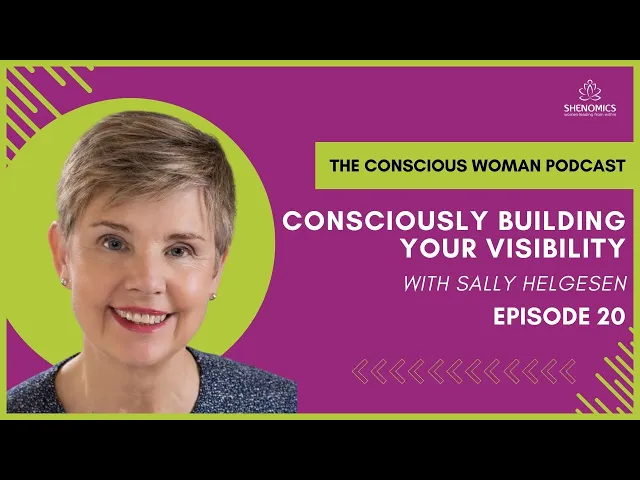
Sally helgason thank you so much for joining me for this conversation on conscious visibility let's Dive Right In Sally I'd love to actually begin with the why of visibility which I know is something you talk about in both of your books which I've read cover to cover how women rise as well as rising together and what I'd love to know at the outset is what would you say to a woman who right now is thinking why do I need to make an extra effort to build my visibility I'm sincere I'm committed in the way I
do my work why can I not just keep my head down focus on doing great work and let my work speak for itself because your work usually doesn't speak for itself unless you speak for it as well you know in my experience great careers satisfying careers are built on three legs one is expertise so that is being able to do your job well skillfully the other is connections who you know and who you're connected with but the third is visibility and it is absolutely essential in order to become recognized for what you contribute and the
reason I always say to women who may be reli reluctant to do this or think you know I think if I do a great job it it will be noticed or it should be noticed is that if you don't find a way to bring attention to what you contribute you will feel underrecognized you will be undervalued and over time you will disengage even from a job you love so in order to prevent that you have got to put some effort and some time into cultivating visibility conscious visibility as you said intentional visibility you have to
have a strategy for getting noticed absolutely and incidentally recently uh in the research we had done asking women why they leave organizations whether it's leaving the workforce alt together are moving from one organization to another the number one reason that came up is feeling undervalued exactly exactly and it is within your control to not be undervalued but in order to do that you have to find a way to let people know what you're contributing and and and and become visible that you don't have uh and you guess what they'll go to another job and if
they don't have a strategy there for becoming visible then they'll come to feel undervalued there as well yes one idea that I really like that you and Marshall Goldsmith share and and talk about in Rising together is the authenticity trap and I'd love for you to say a little more about that because in my work I have seen this word authenticity come up and cite it as a reason for not doing something that might make you feel uncomfortable for example I have heard women say oh but you know talking about my work and my accomplishments
feels very self-promotional it doesn't feel authentic what would you say to that well I would say one thing anything anytime we practice a new Behavior it feels uncomfortable it feels risky and of course it feels inauthentic because we haven't done it before so I think we've gotten a little bit overly invested sometimes in the idea that we have to be authentic in every possible situation and occasion uh Marshall who did not by the way collaborate with me on Rising together he did on how women rise but I did Rising together by myself but oh always
influenced by Marshall and in his wonderful book what got you here won't get you there he calls what I call the authenticity trap an excessive need to be me and I love that phrase so we don't you know I think that it's more helpful to think in terms of being a professional and reaching our full potential rather than am I being authentic in every single situation because if we are overfocused on that we'll never try anything new we won't change and grow because it won't feel authentic to us at the start the other thing Sally
that I've seen gets in the way that I know you talk about in Rising together is managing perceptions and and as you said it is it is a question that keeps coming up and I have heard women women wonder and ask um okay fine I can put myself out there but then how do I stop people from looking at me as someone who's being too pushy or how do I stop my colleagues from thinking of me as a threat so what what would you say to that I would say two things the first thing I
would say is your priority should be doing a great job and becoming recognized for what you're doing rather than what anybody might think of you so of course you know none of us want to offend people or uh you know be seen as overly pushy or what this that or the other but we can't we can't control what other people think so if we're putting all our energy into trying to manage people's perceptions we are putting our energy into something that lies outside of our control maybe we remind someone of their ex-wife maybe we remind
them of their mother or their mother-in-law or their daughter or daughter-in-law we can't control that they may be reacting based upon that so we don't want to put our energy into that which we cannot control we want to put it into what we what we're being intentional about but the second thing is this people change their mind as we practice a new Behavior or as people get to know us they will change their mind about us they'll think you know I really at first I thought she was being very pushy I was surprised it wasn't
how I thought she was I wasn't used to it but now I really see that she's made some great points there and she's a very warm approachable person so I realized I you know need to let that thinking go I use an example in Rising together that has always uh shaped my thinking about this and that is when I was um when I was working in the 1980s in corporate Communications there weren't very many women and in one of the companies I was part of I was sitting in I went to a meeting I was
the the only one there and I was the most Junior person in the room and as the guys were talking about a challenge we were facing I shared an idea that I had about it and no one responded at all no one said anything so I thought okay I guess it wasn't a bad idea I guess it wasn't a good idea but as I was walking out afterwards my boss's boss came up behind me and said well I see you aren't afraid to share your opinion in a really nasty way and I don't know why
but what I said was no I'm not I didn't say oh I'm so sorry I maybe I shouldn't have spoken I didn't do that but I also didn't say I have a perfect right to speak up I just said no I'm not and what was interesting was about a month later I happened to be in the hallway and I heard that man talking to a colleague in an office and what he was saying was this you know what I like about Sally if she's not afraid to to speak her mind in other words he got
used to me he got used to me and we want to give people a chance to get used to us and we don't want to be trapped by perceptions that they might have had because of old behaviors that we practiced so I believe that women can benefit a lot by not putting too much too much energy into trying to manage people's perceptions guess what men don't they don't and it gives them a lot more energy so true and I think the more and more both individually and collectively as women we do speak up more do
put ourselves out there more that is how we are bringing about a wider cultural shift and like you said giving people a chance to adjust their thinking and their perceptions around this new Norm um so absolutely I fully agree with you Sally one of um coming to your book how women rise I know you talk about 12 internal barriers that women face ways in which they might be getting in their own way if you will so when it comes comes to visibility what would you say is the biggest barrier that comes up that we can
be more mindful of I think the internal barrier that's in how women rise that is most related to the issue of visibility well there are two of them but one is really direct and that is expecting others to spontaneously notice and value our contribution and this is basically the idea of almost Outsourcing to other people the job of positioning ourselves to be visible it's rarely successful and it's O often very disappointing because I I've heard women say I've said it myself you know I thought that they'd noticed that what a good job I did how
much effort I put into preparing that report or delivering that paper whatever it is and guess what you know people don't notice that much they just don't they're thinking of their own work they're thinking of their own lives and unless you have a way to draw their attention to it they just don't notice that much so it is a really bad not I I don't want to say bad but it's an ineffective approach to to hope that people notice what you do or to expect it you know I believe people um should notice if I
do great work well yeah they probably should but they don't so that's that's the primary one but there's another one and that is overvaluing expertise because that's where we expect that you know doing a great job will lead us to what we want it'll lead us to promotion it'll lead us to recognition it'll lead us you know to being acknowledged for for what we for what we do and it it often doesn't it's one part of the puzzle but as I said great careers built on three level three legs expertise visibility and connection yeah absolutely
so now coming to the how of visibility Sally you've been doing this work for over 35 years I believe and you've had the opportunity to coach women leaders from around the world I'd love to know in your work what have you found are the top two or three strategies proven strategies that any woman can adopt to make herself more visible well first of all it's really helpful I mean women are often uncomfortable uh talking about their achievements because they've seen it done badly or they've seen somebody being obnoxious and they can't imagine themselves being like
that so they just kind of back off what one of the top things that I recommend for women is to use what I call call the language of contribution and that is whether talking about achievement I did this I I got that you know I was recognized for this or the client told me I was X to talk about it really in a a language of contribution I was able to contribute this I was able to contribute that I felt that the contribution that I made was this because when you use that kind of language
you really almost embed it in the the larger context and and acknowledge that it's not just you you contributed rather than necessarily achieved so if you're uncomfortable talking about achievements I really strongly recommend uh talking about contribution the other thing is is not to think that it's an either or between you or your team this is one of the most common things I hear from women well I don't want to talk about what I did because we do our work in teams and we're supposed to be you know team oriented and you know this saying
have there is no I and teams all of that kind of stuff okay fine but what we want to do is we want to it's not an either or we can talk about what our team did but we always want to talk about what our contribution is as well and this is another way in which using the language of contribution uh can be so so helpful it is you know it my my team was able you know we had these results this was the response from the client uh this was the you know amount of
work we brought in or whatever you know whatever your purpose is on your team uh this is we were able to be really successful here my contribution was that that's very useful because on one hand you're acknowledging the team but you're always sure to add what you contributed because after all you did contribute something you were part of the team and for some reason a lot of women have gotten stuck with the idea that you either talk about yourself or your team there's no way to talk about both it's a both and it's not an
either or so those are very very uh very helpful things to do and finally let me just also say that if you are not accustomed talking about this your contributions it it you need to think about how you can take a risk to do it it'll feel risky it will feel uncomfortable you might practice with somebody beforehand you know get some trusted person uh that you work with or even a friend and say you know I I need to get better at doing this how about this here was something I was thinking of saying how
does that sound I I want to do a good job and then once you've said it just say it don't keep you know like well that may not be important or whatever you know just say it let it let it l there I I love the language around contribution I think that's so helpful and and and Powerful because when you're speaking in terms of contribution it's also what it also indicates is that you're very mindful of what is the larger goal that that you are contributing to which which really positions you as as a more
effective and strategic leader as well and and your point on sharing the spotlight if you will with your team also I think makes it so much more manageable uh especially for women because we do like uh that that that that Collective sense and talking about we instead of instead of I so I I love both of those points um Sally you wear so many hats you are an author you're a speaker you're a facilitator and coach in your own Journey what have you found has been that one thing that has helped you the most in
building a visible brand for yourself well I think that what's helped me most is really being very clear about what my my mission and purpose is and I have have you know I've done a lot of different things so it's easy to to feel kind of all over the map you know when you do a lot of different things well how does this relate to this how does this relate to that but I have been clear about what my purpose is what my contribution to the world is for for at least 30 years and it
is very simple it's to help women to to recognize articulate and act on their greatest strengths and to help organizations become more inclusive places that value the contributions women and others who may have been outside the leadership uh mainstream can make so that's basically it and that helps me to evaluate various opportunities because I can say how does that further the mission this is not something I made up this is something I really got from my mentor uh Francis Hessel Bine who was one one of the most intentional leaders I have ever known and she
would always say over and over and over manage to the mission know what your mission is and then everything all your decisions will be fairly easy and that's what I found I I grabbed that from Francis it's been with me for 30 years the mission hasn't changed the intention for whatever the project changes my intention right now is to bring as much visibility to Rising together as I can but that is in the service of those other two go of that of that Chief mission of mine yeah it's so helpful to to know one's purpose
and and have that as a nordstar for all your all the decisions that that you may be making that's that's wonderful Switching gears now to organizations and and and speaking of visibility do you think it the onus of making ourselves more visible as women lies mostly on us or do you believe there's a role there's a meaningful role that organizations can also play in amplifying the contributions and work of women and if so what what would that look like well I absolutely believe that um we can't rely on it you know an organization can be
very good at doing that and then get new leadership team in and it's not you know those things change often in response to what's going on so we can't just rely on it but certainly there are many many things women uh that organizations can do and one of them is helping men have a better understanding of what women can contribute and what some of the internal barriers are that get in their way I know from having written how women rise and having written it with Marshall that there were so many of those intern barriers that
men say oh oh that helps me understand why she didn't do this or that helps me understand why I told uh you know recommended this woman for a new position and she said oh I'm not quite ready yet they said you know understanding these things is really really helpful so I think there's a lot more organizations can do to help um to help educate men about what some of the things that stand in the way of women really are because since there has been a lot of progress and there certainly has I mean anybody who's
been around well 35 years I've been doing this but I've been in the workforce for over 50 so I've seen a tremendous amount of positive change but often you know men who aren't immersed in it will think oh well there are plenty plent of women here who are doing really well you know this work is done so I think that that that would be would be helpful and then I think that creating a culture in which women have greater Comfort to be themselves to share the spotlight to demonstrate generosity to communicate across levels to build
relationships that are you know sort of friendships and professional relationships all of those things that women women do very well uh creating cultures in which women are really comfortable that's the number one thing organizations can do absolutely the the other thing that you talk about in your book uh that I think is is is is also uh quite insightful is when you talk about the confidence competence conundrum because as much as women are faulted for not being confident enough to put themselves out there equally what is important is also recognizing that it's not it's not
just the lack of confidence that could be that could be a problem we equally need to be mindful of The Perils of overconfidence especially when it doesn't match up with with confidence um so please say a little more about that well you know it's it's really interesting there a a fellow who's been very influential in my thinking toas uh uh PR music tomorrow who is at London School of Business and a couple other places and his whole research base shows according to him the biggest leadership challenge is that companies are do a very poor job
these are his words of identifying overconfidence in math because women are rarely overconfidence if they are they're you know it's like Elizabeth Holmes who started that uh thos and it's really kind of a scam but women are rarely overconfident women rarely go into a situation say I got it I can handle it don't don't worry about it the the details will take care of themselves I'm the Savior here there are men who do this all the time go to Silicon Valley you see them coming out of the work uh that overconfidence that you know I
am the answer I have extraordinary skills that may be completely untethered to their actual competence and when you get that situation organizations will undervalue competence you hear it all the time she was merely competent no competence is a big deal so it's very important I think and and and uh for music tomorrow says that one of the best things that organizations can do for women and for men who are not overconfident but who are competent is to learn to recognize how overconfidence uh manifests and one thing that I think is really important is that women
have been urged to be confident you know as if this is something you can just tell someone you know be confident you've got to stand up and be confident it's very hard to be confident when you know you're fully competent and your competence isn't really valued so you know that's a a lot to put on people and people don't just become confident your confidence needs to be rooted in your own expertise and your own competence your ability to do the job so on one hand it's an organizational task to recognize that there's nothing meere about
confidence it is extremely important and and the other thing is for women to take more have more confidence in their own competence and recognize how valuable a resource that is and be a be able to talk about it yes yes Sally when you look at the future world of work and the future of leadership in particular what role do you see women playing in that world I I'd love to know how you see women showing up in the future world of leadership what I have noticed watching this up close for the last 35 years is
that women have really redefined how organizations not all the time and not every organization but in general how we perceive excellence in leadership when I got started in this field a terrific leader was considered somebody who was the toughest meanest boss well he's he's you know an SOB but he gets results and often those results were very very shortterm because the people in those organizations tended to be fairly miserable and their talents if they were in any way unorthodox were not valued and they were often hounded out but but that was considered outstanding leadership back
in the 80s and what I believe is that that model began to change and changed for number of reasons having to do with technology but to me the chief reason it changed was because of the entrance into women of women in large numbers into the workforce and they're beginning to achieve positions of power and influence I'm not saying every woman is a wonderful leader we've all seen and probably work for women who were not but in general what women contribute and what they value in in organizations has come to be the dominant way we Define
Excellence so it's a big big change and when I look forward I see that continuing more and more women are rising to high positions there are there are fewer uh structural and cultural barriers and I would also suggest that the internal barriers are becoming less of a problem as we move along so I foresee women having far more influence and authority and I foresee that continuing to change how we perceive excellence in leadership as something that's more inclusive more oriented toward listening rather than telling more collaborative um more more skillful at motivating people and more
under and with a greater recognition of the importance of motivation to creating cohesive cultures and teams and and bringing in more compassionate and mindful leadership as well I would I would add which is something we talk a lot about at genomics Sally on that extremely positive and optimistic note I think we can conclude this conversation I want to thank you for joining us for this conversation your work is so powerful continues to be so relevant and so impactful so thank you for doing the work that you do and here's wishing you all the very best
oh thank you BNA it was been such a pleasure to be with you thank you