Being attractive will make you more successful. But I'm not talking about being hot. The most successful people I know treat attractiveness like a skill to show up as their very best self in every room and be magnetic and respected.
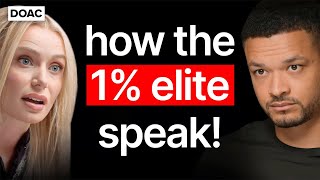
So, here are the five principles [music] to become the most attractive version of yourself and how it can bring you massive success. Principle number one, certainty is the new charisma. I was recently on one of the largest podcasts in [music] the world, Diary of a CEO with Steven Bartlett.
And before I went on, I kept trying to get nervous. I kept waiting for that feeling of panic [music] to kick in, the imposttor syndrome, what if I mess this up thoughts, but it never came. And it wasn't because I'm some naturally confident person or [music] great storyteller.
I'm honestly not. It's because I knew my material inside and out. I had clarity on what I think, [music] why I think it, and the impact that I want it to have.
So, when he starts off the whole episode by asking, "Why should somebody listen to this conversation? " I already know why somebody should listen to this conversation because I'm talking to a very specific person who has likely not heard my message before. If they knew that there was a different alternative.
If they knew that success [music] was actually available to them, they should pay attention. I'm not nervous about talking [music] to them. I'm not uncertain about talking to them.
And I can't even make myself get nervous while talking to them about what I want them to know because I am [music] so convicted and certain in my own beliefs and in the success that I want them to have. You see, when you have that level of certainty, you show up differently. You're not scrambling for validation or trying to prove [music] yourself.
You're just there. You're present. You're clear.
And this is what makes you attractive. Now, if we reverse the clock to five or even 10 years ago, that version of Natalie would have been incredibly nervous and probably would have even self- [music] sabotaged the opportunity because of the nerves, because of the lack of confidence, because I wasn't certain. But I'm clear on who I am today and my point of view because I'm certain of the work that I've done.
I'm certain of the results that I achieve. And so today, I don't get nervous when people put me on the spot with [music] 20 questions about my most core beliefs around work and relationships and money and success and [music] investments because I've had to put in work on myself to get clear for me first before I could ever even be of value or of asset [music] to anybody else. And here's what most people don't understand.
Charisma isn't about being the loudest or the funniest person in the room. It's about certainty. It's about knowing who you are [music] and what you stand for so deeply that people feel it when they're around you.
They can disagree with you, but you know who you are and you know what you believe. And this is the important part. People want to be around somebody who feels good about themselves because that energy is contagious.
And so few people actually feel good about themselves. They never challenge their own [music] views to a point where they feel good and are able to defend their views. They just have their own thoughts and aren't [music] certain of them.
So, if you want to become more magnetically attractive, stop trying to be charming and start building your certainty. Pick one area of your life where you want to command respect. [music] That could be in your career, that could be in your health, that could be in your relationships.
And become undeniably knowledgeable in that area. Read the books. Listen to the podcasts.
Have conversations with people who are better than you. Then force yourself to articulate what you think and why. Write it down.
Say it out loud. Practice forming your point of view. Then the next time you're in a meeting or on a date or in a social [music] setting, focus on being clear and certain rather than trying to be liked.
You'll notice that people start leaning in. They'll start asking you more questions. They'll respect you differently.
Next up is that attractiveness starts with effort. For years, I was the person who rolled out of bed [music] and acted like I was too cool to care. I had goals and was ambitious, but I didn't think I needed to care about certain things as it relates to my [music] appearance.
I wouldn't dry my hair. I definitely wouldn't style it. I would just roll out of bed a little disheveled.
My outfits weren't put together. I wouldn't even iron my clothes. I would still do my makeup because that felt like the bare minimum.
But everything else, I just wanted to seem like I just woke up and wasn't [music] too high maintenance. But the reality was I was lazy and I [music] was insecure. I thought if I didn't try, then it wasn't my fault that I wasn't successful [music] because I didn't give everything that I had.
And then I could feel good about not hitting [music] targets and not becoming the person that I wanted to be because there's always some extra thing that I wasn't willing to do. [music] And because I knew I wasn't willing to do it, it was okay that I didn't quite get to where I wanted to go. Even though I wanted to go there, I was very confused.
But then I started paying attention to the people that I looked up to, the women I admired in business, the executives, the leaders. They all put effort [music] in. They weren't the most naturally gorgeous people, but they showed up polished, intentional, [music] and put together.
And then it clicked. Effort radiates. Effort isn't [music] embarrassing.
It's actually essential. When you don't put effort into how you [music] present yourself, you're signaling something to the world. You're saying, "I don't care enough about the situation to show up fully.
" And whether you mean to or not, that signal affects how people treat you. They do take you less [music] seriously. They don't give you the same opportunities.
They assume that you're not that invested. On the flip side, when you show up with effort, [music] when your hair is done, your outfit is intentional, your presence is polished, you're prepared, people notice. They treat you differently.
They assume that you're competent, professional, [music] and actually worth listening to. Now, this has nothing to do with being vain. It's about respecting yourself and the people around you enough to show up fully.
So, [music] start it tomorrow. I want you to commit to putting in 10% more effort than you currently do. If you usually don't do your hair, dry it and style it.
If you don't, iron your clothes, start. Set your outfit out the night before [music] so you're not scrambling in the morning and looking like a hot mess. Look at yourself in the mirror before you leave [music] and ask, "Would I take this person seriously?
Pay attention to how people [music] respond to you differently when you show up with more intention. " The next principle is one I see few people talking about. Style is [music] communication.
My color of choice used to be cream. There were these very classy, sophisticated women that I admired, women who shopped at St. John's [music] and wore cream everything.
So, I started buying cream pieces. I'd go to outlet stores and invest in one item at a time, slowly building this wardrobe that made me feel like I was becoming the woman I wanted to be. But then I realized that cream gets spaghetti [music] stains that never can be removed.
It gets coffee stains. There are a thousand [music] different shades of cream, which actually make it hard to create a truly unified look. So eventually I switched [music] to black and everything clicked.
Black is clean. It's powerful. It's consistent.
It became my signature. Now, when people see me, they know [music] what to expect. My style is part of my brand.
And here's what most people miss. [music] Style isn't about fashion. It's about consistently.
When you dress inconsistently, [music] one day casual, one day formal, one day trendy, one day frumpy, people don't know who you are. They can't place you. They can't remember you.
You blend into the background. But when you have a signature style, a [music] consistent way of showing up, you become recognizable. You become consistent.
[music] And consistency over a long period of time actually creates trust. People start associating you with a certain level of professionalism, a certain energy, certain standard. That's [music] branding.
And it works the same way for personal style as it does for a business. Think [music] about the most successful people you know. They all have a look, a uniform, [music] some consistent way of presenting themsel.
And that's not at all an accident. It's intentional and it's magnetic. So look at your closet right now and ask yourself, what story is this telling?
[music] Is it consistent? Is it aligned with who you want to be? Pick one signature element, a color, a style, a type of accessory, [music] and build around it.
For me, it's black. For you, it might be a specific silhouette, a certain type of jewelry, or a consistent level of formality. And moving forward, only [music] choose pieces that fit that signature and get rid of the things that don't.
Over time, you will start to create a uniform that makes getting [music] dressed easier and makes you instantly recognizable. People will start saying things like, "That's so you," or, "I saw this and thought of you. " That's when you know that your style has become part of your brand and that your brand is actually working for you.
Principle number four, alignment is the real secret. I used to think I needed to be different versions of myself depending on the environment. There was professional Natalie at work, casual Natalie with friends, polished Natalie online, but keeping up with all of those versions was exhausting.
And honestly, it was confusing. When I was in college, there was a specific meme that was going around that showed the difference in the profile pictures from Facebook to Instagram to Snapchat versus LinkedIn. It was a [music] super trendy meme and everybody showed the different versions of themselves.
And when I went to do it, it really had me look at how I position myself differently to different people. And it made me uncomfortable. I felt like I was too casual with my friends and I wanted to be more professional.
I wanted to be thought of as somebody who had their together. But then I would get in this environment [music] with my friends and I almost felt like I had to pretend like I didn't know what was going on and I wasn't very confident and I was go with the flow when really I liked structure and I wanted to have a successful career and I wanted to be taken seriously but I didn't take myself seriously in those environments and I would undermine myself by making jokes that were inappropriate or encouraging people to just do dumb things. And this made me realize that the most attractive, successful people I know are the same person everywhere.
They don't switch. They don't pretend. Who they are online is who they are in person [music] and same person that they are in a boardroom.
And that alignment creates trust and it creates consistency and it makes everything easier. It makes you know what you can expect from that person. See, when you're not aligned, people can tell.
They might not be able to put their finger on it, but something feels off. You seem performative, inauthentic, trying too hard. And that lack of alignment doesn't just affect how [music] others see you.
It affects how you see yourself. You start to lose track of who [music] you actually are. You're so busy managing different personas that you forget what's real.
And the most important part of this is to create your environment to set up your environment in a way that allows you to decide who you are in that environment. Not what the environment wants of you, but who are you? And when you come from that place first of getting clear on who you are, [music] then you're able to redirect.
And when you're aligned, when the way that you dress matches how you speak, matches how you [music] make decisions, you become magnetic to the right type of people. There's no friction. There's no second guessing.
You show up the same everywhere. And that consistency is incredibly attractive. The people you want to trust you trust you faster.
[music] People you want to respect you respect you more. and you stop wasting energy trying to keep up with all of the [music] versions of yourself that don't even exist. So, I want you to do an alignment audit this week.
Look at how you show up at work versus at home versus online. Are you the same person? If not, where's the disconnect?
What are you hiding? What are you overcompensating for? Start collapsing [music] those personas.
Bring more of your authentic self to work. Bring more of your professional self into [music] your personal life. The goal is to create a life where you don't have to coat switch.
that alignment will make you more attractive than any outfit or hairstyle ever could. Now, the last lesson is the most important. Presence doesn't fade, but pretty does.
Let's be honest, very few people are stunningly gorgeous. [music] Like maybe 1% of the population. And if you're in that 1%, congratulations.
You won the genetic lottery. But here's a problem. That won't last.
One day, you'll wake up and realize you're not 25 anymore. And there are plenty of attractive people who are younger and more attractive than you are. So if you've built your entire identity around being attractive, you're going to have a crisis.
I was friends with this girl who was stunningly gorgeous. And everybody from a very young age told her constantly how pretty she was, how pretty she was. And as we grew up, I watched her go from a little girl who was also incredibly smart and precocious turn into somebody who was entirely [music] obsessed with her weight, with the way that she dressed, with her exterior appearance.
So the lens that she viewed herself through was how attractive [music] she was or wasn't on any given day. And as she continued to get older, she became more and more [music] self-conscious, even though she actually was becoming more and more physically attractive. and she became self-conscious because she knew that that was going to fade.
Yet, it was the only thing that she was obsessing over was how she could be thinner and prettier and tweak and fix and adjust and do all of these different things. [music] And honestly, it was very sad for me to watch because she could never get herself out of this cycle. She could never reassess the additional assets that she had, which is how intellectual she really was.
She got lost in how [music] attractive she was. the more attractive she was, the more self-conscious she became because she knew this was something that she couldn't control. You see, you don't want to build your confidence on something that you can't control.
You can't control whether or not you're in a relationship. [music] You can't control how pretty you are. You can't control all sorts of things [music] around you, but you can control how you make yourself an asset.
You can control [music] the topics that you learn, the information that you put in your brain, the people that you spend your time [music] around. You get to control you yourself as an asset. And looks certainly are an asset.
[music] And if you have them, use them, rock them, appreciate them. But they're not your only asset. The most attractive people I [music] know are attracted because of their presence, not because of their looks.
They walk into a room and people notice, not because they're the hottest person there, but because they carry themselves with [music] confidence and intention. They keep their promises to themselves. They show up for others.
They built something that can never be taken away. [music] That never fakes. If anything, it gets stronger with age.
The most magnetic [music] 60-year-olds I know aren't trying to look like they're 30. They're owning who they are and showing up with a presence that commands respect. So, never put your value in how you look.
Invest in how you show up. And do this by asking yourself, what do I want people to remember about me when I leave a room? Is it that I was attractive?
Is it that I had a nice outfit [music] on? Or is it that I was present? I was engaged and made them feel seen.
I added value [music] in some way. Build your presence by keeping your promises to yourself. If you say you're going to work out, work out.
If you say you're going to finish a project, finish it. Every time you follow through, you build internal confidence. [music] And that confidence translates into presence.
And finally, remember, your looks are temporary. Your presence is forever. Invest accordingly.