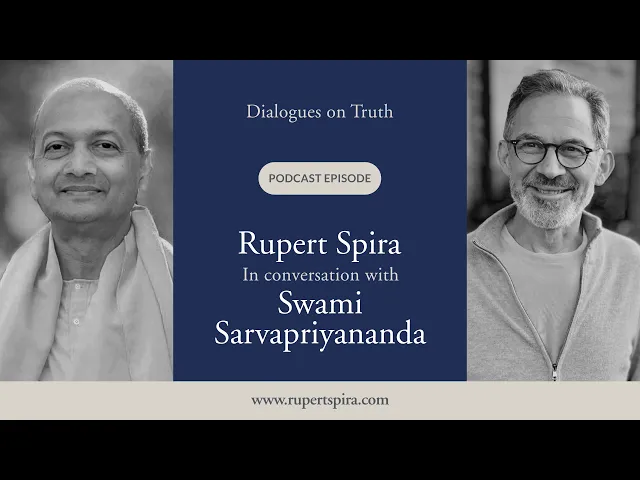
Welcome everyone from around the world for this uh inspired and exciting event that was uh both of these uh these guys uh said yes to I'm so happy and it's so timely to have a conversation with uh Rupert and Swami G and um I want to thank you all for being here for our first session of awake in stillness conference the end of dreaming. This is the title and theme that was inspired by A poem by Helen Chuckman in the gifts of God and it it became the theme that we use to invite our conference
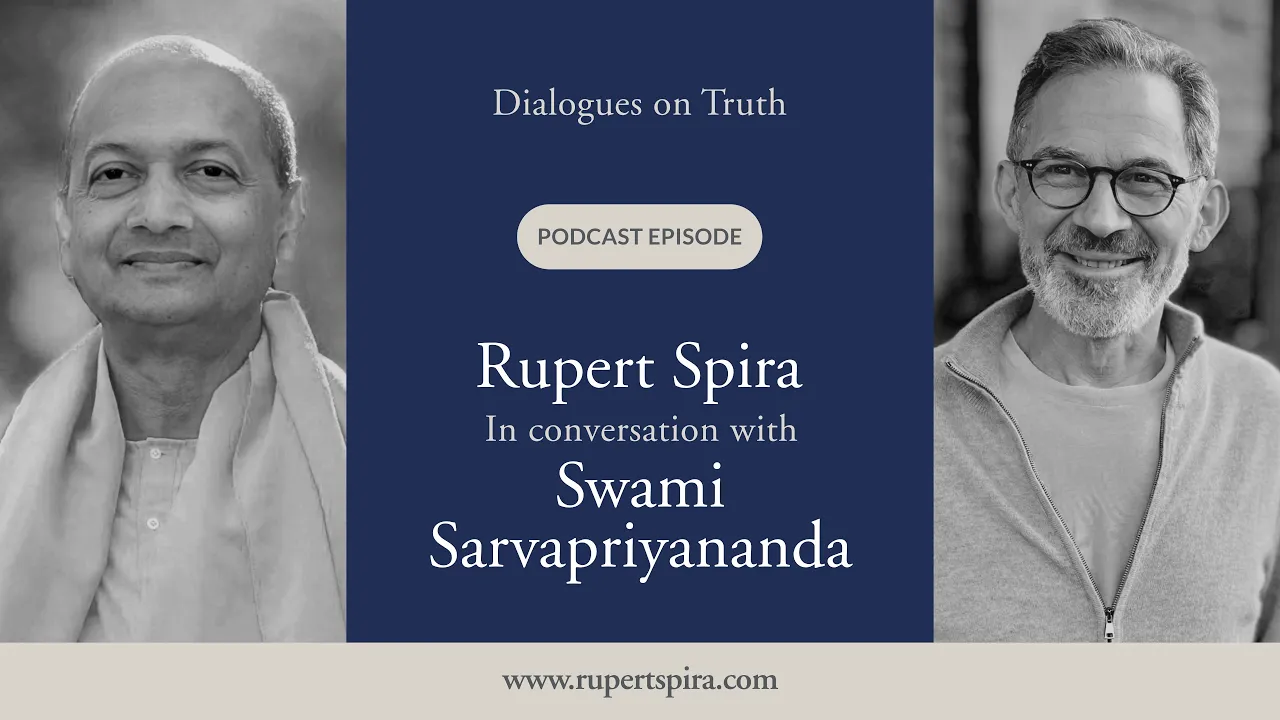
uh teachers and and speakers. And we're we're so happy to have all of you here. And we're excited to introduce our first teachers, presenters, and uh both authors and well-known leaders in the understanding of Advita Vanta among many other traditions and uh a vast amount of wisdom comes with these Two uh men. So without further ado, I'll introduce our speakers and ask them their first question. Rupert Spyra teaches a non-dual approach to spirituality rooted primarily in the teachings of advite vanta the direct path and influenced by perennial philosophy. Rupert's approach is also informed by the
teaching of Kashmir shyism, Sufiism and the teachings of Christian of the Christian mystics. His Core teaching revolves around the nature of awareness and consciousness emphasizing that one's true identity is not the body, mind or personality but pure infinite awareness. From an early age, Rupert was deeply interested in the nature of reality and the source of lasting peace and happiness. After spending 20 years immersed in the teachings of classical advite vanta, he met his teacher Francis Lucille who Introduced him to the direct path approach whereby one may recognize the source of peace and happiness in oneself.
Rupert has written several books and holds regular meetings and retreats online as well as in Europe and the United States. He is also a noted potter trained in the British studio pottery school with work in public and pro private collections. Thank you Rupert for accepting this invitation to be Here. Thank you Bill for inviting me and pleasure to be here. Swami Sarva Priyanandanda also is known as Swami G or Swami. He teaches a spiritual philosophy also rooted in advant a non-dualistic tradition within Hindu philosophy. As minister of the vidanta society of New York since 2017,
Swami G provides a contemporary approach to the ancient teachings of the Great advita masters like Adi Shank Shankara and uh as a monk of the Ramachrishna order Swami Sarva Priyanandanda is greatly influenced by the teachings of Shri Ramakrishna and Swami Vivec. Cananda as well as from classical texts like the Yupanachads, the Bhagavagita, the Brahma Sutras and others. He joined the Ramach Krishna Math in 1994 and received Syasa in 2004. He has served in various capacities within the Ramak Krishna mission including as an achara at at Bour Math as assistant minister in Southern California. Thank you
Swami G for accepting this invitation to Thank you for having me Bill. Great to be here with you Robert and everybody else. Awesome. Thank you. Okay, let's get started. Uh the first uh question that I have for the both of you is could you both summarize in three or Four sentences the most important points from your teaching? And whoever wants to go first, Robert, let me summarize it in two ways, Bill. One a little one very practical, one a little more philosophical. Peace and happiness are the nature of our being and we share our being
with everyone and everything. And a second formulation which which Says exactly the same thing in different terms would be that there there is a single infinite and indivisible reality whose nature is being consciousness. spirit love from which everyone and everything derive their apparently independent existence. So those would be two formulations that really say the same thing in slightly different ways of the the essence of not only what what I Speak and write about but I I would suggest what the great spiritual traditions all the traditions essentially say. Thank you Swami. Um I'll also present it
in two ways. One the classical formulation from um adita vanta the adita vanta tradition and the same thing again from swami viveananda adita vanta has the advantage of you can express it very elegantly and succinctly. So In in a formulation attributed to Adishankarachara the teachings of Adita Vanta would be in Sanskrit Brahma Brahman is real. Jagat Mitya the world is an appearance. Ja Brahanapara the individual sentient being you or I anybody we are that Brahman and nothing else. Or you could make it even shorter. Um from the upanishads there are these sentences which are uh
which you know summarize the entire teaching very famously that you are Tatwamasi from the chandoganishad orham brahasmi I am Brahman uh from the brahanopishad and a number of other such statements. You can make it even shorter just that tells you the all of the teaching but you have to unpack it and you can make it even shorter. Adita says the best teaching is in silence but I promise not to use the best teaching here. I'll speak um Swami Viveanand's formulation of the same thing was um um Each soul is potentially divine and the goal of
spiritual life is to manifest this divinity already within us. Or he put it in another way. He said, "My mission in life is to teach unto humanity their inner divinity and how to manifest it in every movement of life." Um he summarized Vanta as saying that our inner reality is divine, our true nature and we are all one existence. Yeah. Thank you. So from the perspective of the direct path, how do each of you interpret the so-called process of awakening in stillness and the idea of remembering your dreaming? Do you want to go first Swami
G? Okay. In uh Adita Vanta, the spiritual journey is a journey from ignorance to knowledge, from not knowing to knowing or from not realizing to realizing. Um so you can distinguish this from a say a Journey in space or time. You know it's not about going from here to some heaven or not waiting from now to something will happen in the future. Maybe um God will come again as an avatar or maybe the millennium will come or maybe I will get some extraordinary experience and then I will attain to this promised spiritual reality. It's right
here right now. If it's right here that we are Brahman, we are the limitless awareness existence, this one Existence which is the uh reality of this entire universe, we are already that. Then the question arises, if we are already that, why don't we seem to uh experience it? Why don't we see why isn't doesn't it seem to be real? It just seems to be words. And the answer would be ignorance. We are not aware of it. We have not been introduced to it. And in spiritual life in in the vantic path we have to move
from not knowing not realizing not seeing it to knowing It realizing it seeing it and beyond that to to living it. Um so it is the the theme is very beautifully put dreaming it is awakening from the dream and awakening from the dream is awakening from ignorance to knowledge. You know when we use the dream metaphor one has to be careful as one has to be with all examples. Examples, metaphors, analogies are very powerful in the spiritual path but they also require a skillful teacher to see What is being said and what is not being
said. Um so when we wake up from a dream our usual dreams at night when we sleep and we dream we wake up we go from an a state a dream state to a waking state. The whole state changes. The dream world disappears. the people and the actions and whatever's going on in dream world that all just disappears and you have this you sit up on the bed and say oh I was dreaming whereas in enlightenment in the adita enlightenment uh this world Doesn't disappear one has to be very careful here this is where language
fails basically you still see the same thing you still see the same people you still have the you experience the body the mind um but as Viveand said it's not that vanta dismisses the world for the first time. We understand what it truly is. So this is the awakening from the dream. It's not going from one state to another state. Uh but you realize what is the Truth of all of these states. Whatever is here in the waking is also in the dream is also in the deep sleep. There is one reality shining forth as
various kinds of states. I mean I love the the gold and ornaments metaphor uh where ornaments you can have the same gold you can make it into a necklace and then you melt it down you make it into a bracelet or a ring. Now the name has changed the form has changed the use has changed also but it's literally the same reality The same gold which is appearing and being called appearing in different ways and being called by different names. The universe is just like that. There is this one fundamental reality which is being which
is awareness and which is limitless which appears as the subject and the object which appears as all our various experiences or appears as the absence you know which is also a kind of experience in deep sleep or anesthesia or whatever and that reality we are That's our our real reality so to say this is the awakening from the dream. I I would also like to add that the Upanishads use this metaphor of awakening from the dream. If they say uh um arise, awake, um go to the enlightened ones and learn from them the truth about
yourself. It's a very famous quote from the Upanishads. Thank you. Does uh Swami G does does stillness have a place in this experience? Yes. Um, where to start? Uh, let's start at the heart of it all. Stillness is the reality. And that stillness is a stillness which cannot be disturbed. It never becomes restless. It's always there. It's undisturb. It cannot be disturbed. It's um it's at the heart of all reality. It exists right now. Even in the midst of apparent restlessness, apper apparent turmoil like the eye of the hurac. It's always still atman, Brahman, pure
consciousness, primordial ground of being the Buddhists would say, whatever you call it. Um, it is still. The upanishads, the mandukanishad, for example, calls the ultimate reality stillness, shantam. It's not peaceful. It is peace itself. And it is in the biblical language, it's the peace that passeth understanding. So it's that stillness is always there. And and that's the nature of ultimate reality and it's our own nature. We are that Stillness and stillness also forms a part of spiritual practice. We need there. It is something to be done or cultivated and it is very helpful in two
ways. The stillness in spiritual practice is helpful in two ways. One is it helps us towards enlightenment. So still in body. You need to be still in body for meditation for example and still in the speech and still in the mind. the stillness at the body verbal mental Level then only meditation is possible. um this stillness you can uh also expand it further you know if you want to take a deep dive into it look at ethics or morality in one sense you can understand ethics or morality as stillness what I mean by this let
me expand a little bit um there's this quote I read which is beautiful which says one can fall down in a hundred ways but one can stand straight in only one way. One can be um Dishonest in a 100 ways, a thousand ways, but the truth is one. You can see the truth as the stillness of all dishonesty. One can see um self-control as the stillness of the thousand different ways of indulging and dissipation. One can see for example frugality as the stillness of the multifarious tendencies to accumulate. Um one can see nonviolence as the
stillness of the 100fold thousandfold impulse to Violence. So ethics also can be seen as stillness. So this stillness at the ethical level, uh the stillness at the physical, verbal, mental level, emotional level, this is all very useful in attaining to that capital S stillness which is our real nature. And afterwards when we realize our real nature that we are at Brahman whatever you call it then to manifest it to live it to live that realization stillness is again useful I'll leave it at that we can expand later thank you Rbert uh should I restate the
question or please do thank you okay uh from the perspective of the direct path Vanta, how do you interpret the so-called process of awakening of of awake in stillness and the idea of remembering that you're dreaming? Everything We experience we experience through the finite mind. That is through the faculties of thinking and perceiving. And the faculties of thinking and perceiving refract the unity of being reality and make it appear as many things. Therefore, it is not possible to approach reality through the finite Mind because everything we know through the finite mind appears in accordance with
its limitations. And therefore on the direct path in recognition of this, the very first thing we are asked to do and in fact this is also true of many spiritual traditions. The first thing we are asked to do is to turn our attention away from the content of experience. Content of experience, thoughts, images, feelings, sensations, Perceptions and so on. So as a first step on the direct path, one is asked to turn one's attention away from the content of experience. And this could be initiated by a question such as what is it that knows or
is aware of your experience. This question takes our attention away from what we are aware of that is the content of experience and it draws our attention inwards towards the fact Of being or being aware or awareness itself. And this is the first, we could call it the first great recognition that I am essentially nothing that I am aware of. I am that which is aware. This is not yet the recognition that is traditionally referred to as awakening or enlightenment, but it is a an important step on the way. The second question having established what
I essentially am is the fact of Being being aware or awareness itself. The second question is what is the nature of the awareness that I am? And this requires some further investigation. I I won't go into the details now. I'm just giving you a broad outline of the the path to awakening on the direct path in response to your question. So this second question, what is the nature of the awareness that I essentially am? It is uh inherently peaceful. A peace that does not depend On what is or is not taking place in the content
in our experience. As Swami G said, the peace that passeth understanding, it is um it it is it is full lacking nothing, needing nothing. And in in common parliament, this this planitude, this self-sufficiency is what we refer to when we speak of happiness or quiet joy. So the nature of the Awareness that I essentially am is inherently peaceful, unconditionally fulfilled, not not fulfilled by something that is taking place in our experience, fulfilled inherently fulfilled prior to experience. Um it it is loving and by loving I I I define love in this context as the felt
recognition of our shared being. In other words, we experience love when we feel That the being that I essentially am and the being that you essentially are are the same being, one being. So it it is inherently loving. In other words, the the awareness that with which each of us is now currently aware of this conversation, it is the same awareness. And I would go even further to suggest that awareness is not just shared by all beings, people and animals, but all things. that the ultimate reality of not Just everyone but everything is the same
shared being shared awareness. Just two more comments about the nature of awareness that is recognized in this investigation on the direct path. It is ever present. The content of experience are always coming, changing and disappearing. That awareness is ever Present or eternal and it is without limits or infinite. And finally, it is self luminous. It is aware of itself in the same way that the sun illuminates itself just by being itself. So awareness knows itself just by being itself. So the these if if we can call them qualities these could be said to be the
the qualities of awareness. And it is this recognition not only that I am essentially awareness but the Recognition of the nature of awareness that is traditionally referred to as awakening. And then the last step which is a really an endless step that really never comes to an end is uh to live the implications of this recognition in all aspects of our life. our internal experience, thoughts and feelings and our external experience that is um activities, perceptions and relationships and that that Is what what is traditionally referred to as waking up. Why is it called waking
up? Because uh uh sense perceptions um as I suggested earlier they they they make what is one appear as many. So the English poet William Werdsworth said our birth is but asleep and a forgetting. What did he mean by this? He meant that as we're born he didn't really mean born into the body. He meant born into experience. When Experience begins, that is thinking and perceiving, we we um overlook our true nature of infinite being. Infinite being appears to us refracted through perception as 10,000 things. So what we consider to be being born or or
waking up is is in fact a kind of falling asleep to the reality and waking up to an appearance. So that is why it is this waking state is referred to Traditionally as a as a waking dream a dream of sense perception. So that the direct path and indeed all paths in one way or another are really really involve um overriding the apparent evidence of sense perception. Sense perception used to tell us the earth was flat. Sense perception used to tell us the sun went round the earth. Sense perception now tells us that reality consists
of many Things ultimately made of mind and matter. This is what the senses tell us. So that this great recognition that is referred to as awakening is really the seeing through the apparent evidence of sense perception, the illusion of sense perception to the one reality that lies behind it and indeed appears as it. Thank you. And Swami uh would you have anything you would like to add to uh anything that Rupert just uh offered uh Before we move to another question? Oh, where do I start? Uh just some footnotes on what Robert said. So um
the two fundamental steps of awakening which Robert mentioned first is absolutely crucial um a change a whole paradigm change in what we think of ourselves as right now we think of ourselves as this body mind personality and as Rupert said when attention is drawn to our experience we see that experience is happening in Awareness in consciousness if you will and I when I recognize I am essentially awareness. I'm essentially consciousness. Not a body with consciousness but consciousness in which a body, mind, personality appears as the world also appears. So that's the first step and absolutely
essential to uh awakening and then uh he went on to say that you appreciate the nature of this uh awareness. So then you get start getting the benefit of it. So I am Awareness. But what is this awareness like? Awareness doesn't become sick. Awareness does not age. Awareness is not hurt or cut or as the Gita says, it can't be cut. It can't be drowned. It can't be suffocated whatever. So awareness is always there. Um then awareness does not get hungry or or thirsty or doesn't starve. Awareness does not get um depressed or uh um
angry. those are in the mind. So what is in the body mind uh that's in the body Mind and awareness is free of those problems. So I as awareness am free of those problems. It's it's a huge huge load of our minds. It's a like a not just a dream. It's like a nightmare dissipating suddenly. So uh appreciating the nature of awareness one further step one more step like an addendum or like a footnote to this. What about the things which we are aware of? So I am awareness and awareness is this wonderful problem free
Thing. Great. What about the things which we are aware of which we have distinguished ourselves from the tables and chairs and bodies and even thoughts. So the um there a huge question comes up are there something external which we are some you know beyond awareness which we are becoming aware of our common intuitive understanding of the world is that um I am this person and the whole world is outside me outside this skin um it's an external world separate from me Which I interact with now that's because of our bodybound sense of self but when
I realize that I am awareness then uh we are invited to consider um what these things are what's this table and the chair is it really outside awareness what does what would it even mean to be outside awareness where are the margins the borders of awareness so then we begin to realize ada introduces us to this amazing fact the world is actually not outside awareness the world is Inside awareness um even space itself is something that appears in awareness. One good way of understanding this is our dreams. In our dreams, we appear to inhabit a
space. Maybe we are walking around somewhere enjoying a garden, meeting people and there's a sky and the earth and the river and when we wake up, we realize all that space in the dream and all those people and the sky and the river and whatever and the garden everything was in the dreaming mind. So Space itself is an appearance in awareness and therefore awareness is not limited by space. This is what this is in traditional text it's formulated as expressed as awareness is all pervasive. Um so when we read that we shouldn't think that awareness
is some kind of like a you know smoke or something which pervades a room. It's not like that. Uh it's rather space itself appears in awareness and therefore awareness pervades all of space and all of its Contents and then time itself is an appearance in awareness. In that sense awareness is eternal. So the universe itself appears in awareness. There's no thing which we are aware of which is other than awareness. So we come to this remarkable discovery that not only am I awareness but whatever I'm aware of whoever I'm aware of they are all this
awareness appearing to itself as if different there is no second thing other than awareness which you are and this is Nonduality no second in Sanskrit the word adwita means no two appears to be two appears to be billions of things or as Rupert said 10,000 things but there is only one without a second and that's awareness and that is you. So this sort of answers the question what is this universe? What is it that we are aware of? I think that'll do for now. There are whole textbooks on this uh question and as most of
us we know that multiple philosophies can be Generated with this question. If you think that the what we are aware of is an external separate independent universe, you come to a dualistic philosophy. For example, the ancient Sanka philosophy of India. There is awareness and a material universe. But nonduality says the so-called material universe is nothing other than the awareness. Universe is nothing other than you. Rupert, do you have something you want To add? Yes. Good. I'm not going to add anything. um to that of course I agree with everything Swami G says but that's a
a lengthy we could talk a great length of that and I want to stick with your with your question and one of you one of our attendees very reasonably asked why did Robert leave out the essential term in the question stillness well that's a valid question I did indeed leave that out why um well I thought I'd spoken for Long enough So I I didn't want to monopolize the conversation, but it's a a legitimate question because it it was essential to your original question. So let me just say something briefly about that. Um let's use
the analogy of the screen and the image as we are all now looking at a screen or let's use the analogy of the screen and and a movie. Um, awareness is in the same relationship to experience as is a Screen to a movie. So all there is to a movie is the screen. As Swami G just said, all there is to reality, both our internal experience and our external experience of the world is awareness. awareness is the the soul infinite and indivisible reality from which everyone and everything derives its apparent existence. So and the screen
the movie is is the Appearance the the the world as well as our internal experience of thoughts and feelings and these are always moving changing just as the movie always moves and change but the screen which is the sole reality of the movie never itself moves. The appearance always moves the screen never moves. So the this um absence of movement that is is the stillness that you refer to the the the very nature of awareness is is Stillness. Uh the nature of the mind is to alternate between movement and stillness. We all know that the
mind can be still in in a in a gap between two thoughts for instance. But the the the stillness that is the nature of awareness is prior to and independent of the movement and temporary stillness of the mind. And this is what is referred to in the Sufi tradition when they speak of the the passing away of existence and The passing away of that passing away the extinction of extinction in in some Sufi texts the passing away of existence that that's the the sessation of the mind the sessation of thoughts and perceptions no more experience
no world this is what we experience in deep deep um experience comes to an end. That's the passing away of existence. But the stillness that is the nature of awareness is not just an absence of Content. It it is the it is a presence that is prior to and independent of the content and the absence of content. So it is the stillness prior to the stillness of the mind. Um if the if you turn the movie off um close down all your programs, what you're left with is your screen saver. The screen saver is the
absence. Let's Imagine you have a a blank screen saver, the the pale blue screen saver that comes with an Apple Mac when you buy. Let's imagine you turn all your programs off and you're left with a still blue screen saver. That that is the absence of all your emails, images, and movies. But it is still um not the pure screen by itself. So the pure screen is prior to all the programs but also prior to the screen saver. So the stillness of the mind or The absence of content would be like the screen saver behind
our thoughts and perceptions. And then the true stillness of awareness, the absence of absence or or the presence of awareness is is still silent addressed. Um I just say one more thing in relation to that. Um strictly speaking it's very difficult to to speak about these things because it's not really possible to say anything True about reality. If we wanted to speak the absolute truth, we would just remain silent. So to refer to awareness as still is only true in reference to the content of experience which is always moving. So with reference to our moving
thoughts and perceptions, it is true to say that awareness is still. However, if we if we were to ask awareness, what is your experience of Yourself? Without reference to the content of experience, awareness, if it could speak, it would it would certainly not answer, I am moving, but nor would it answer, I am still because there would be no experience present with which to contrast it. The very best awareness would say is I am. And it is this reason that I am I if the absolute truth can be formulated, I am is the very highest
formulation of the absolute truth Because it it attempts to describe in words what is awareness's experience of itself rather than the finite mind's attempt to describe awareness from its point of view. Could I Thank you. Go go go go go ahead. Uh speak to something else that Rupert mentioned seeing through appearances because we are always dealing with appearances unless we are in deep sleep or anesthesia or coma or in samadi but We are dealing with appearances and uh vanta would have us see through these appearances. It's like seeing through the movie you know noticing that
there is a screen all the time. Um I'm just rem reminded of a monk in the Himalayas in foothills of the Himalayas in Hardoir. Um he was he was not well educated in modern science or medicine. So the first time he came became aware of X-rays. you know you can take a picture of your bones and Skeleton. Um he was so excited and he looked at us and said, "Oh monks, this is how your vision should be." As a non-dualist, as a monk, your vision should be like these X-rays. You know, it should penetrate through
the name and the form uh and the use and penetrate through to being itself to awareness itself and that's but it's a good example X-rays. Can I can I say something? Sure. Thank you. In response. Yeah. Um yes. Um the Swami G is referring to these two two steps. Um seeing through and seeing as. So the first the first step um I if we believe that the world that is presented to us by our sense perceptions is real as it appears to be then we have to see through that appearance to the reality behind it.
If we believe that the landscape we see in a movie is a real landscape, then we have to see through the landscape to the screen and And or we turn the we turn the movie off in order to see the screen. That's the first step. Then when we have realized no it it's a screen that I'm looking at or when as Swami G says we have as it were seen through the appearance of the world to the one reality that lies behind it then when we so to speak turn the movie back on again when
we when we return to our experience of the world we no longer we no longer see it as um as an Illusion. We we no longer see the landscape in the movie as an illusion because we we've seen through the landscape to its reality. Now when we look at the re the landscape again, it has lost its veiling power. The landscape in the movie that once seemed to veil the screen now shines as the screen. So at this stage we don't see through the the the movie to the screen. We look at the movie again
but all we see is the screen. It's The same with our experience. We we first X-ray the world as it were. We see through the appearance to the one reality and then we look at the appearance again. And when we come back to it in this way it it has lost its veiling power. The world which once seemed to veil its reality, infinite awareness, now shines as that very reality. It's what and of course it's what the Sufis say when they mean wherever you look there is the face of God that there is the appearance
of the one. Yes. I if I may respond to that add to that actually. Yes. The traditional formulation of advita vedant as Brahman is real and the world is false. That sort of puts a seed of a kind of duality in our minds. The teaching that the world is an appearance, it's false, it's an illusion. Is actually a methodological step. It's not a statement of a final position. So it's Supposed to help us to realize that underlying all of this is one reality which shines forth as all of this. As Rupert just said said I'm
reminded of one of the monks of our order asking this question to a very great monk Swami Turyan the disciple of Sri Ramak Krishna is the word false and his answer was um no why should it be false there is only truth it's not that there is a true reality and there is some kind of an appearance separately from it once you Realize the reality as Rupert said there is only that reality a one without a Then you don't have to keep on harping on the world is false and you have to see through it
and you have to get to the reality that reality alone shines forth as these 10,000 things. Yes. Thank you. Thank you both for this uh clear understanding. And I'm wondering uh we we have a few questions in the in the chat that we'll uh look at in a minute, But I'm wondering if if we could um if we could experiment with uh a sadena uh in in this experience where one might uh one of you or or both of you might might lead our audience in the experiment or the experience of of looking and and
and maybe seeing uh through uh an inquiry uh suggestion. Do you want to start Swami G? I'm happy to you you go first if you like. Okay. Um like a guided look at this. Let me just mention um couple of uh one point About sadhana. I all this discussion you know it reminds me of the ancient debate between the the uh advantins and the yogans the yogans who were the practitioners of patanjali yoga and their idea is that you still the mind and the truth will reveal itself. Uh yoga is defined as stilling the movements
of the mind and if you still the movements of the mind that's the second sutra in the yoga sutras yoga is Stilling the movement of the mind and the third sutra says what happens if you still the movement of the mind if you still the movements of the mind the truth which lies beyond the mind becomes clear becomes clear and the fourth sutra says if you do not steal the mind then the truth your real nature pure consciousness is always mixed up with the movements of the mind. So they this gives the yogic paradigm that
the problem is movements of the mind and the Solution is to still the movements of the mind then you grasp that you are this never moving ever still ever shining consciousness you are that in Sanskrit yoga yoga is stilling the movements of the mind the witness consciousness is then assertained in its real nature when the mind is still vitriaratra which means otherwise you the witness consciousness You are mixed up with the movements of the mind. So this is one paradigm and you can see it's essential to still the mind in this paradigm otherwise you don't
get to the truth you don't make that breakthrough whereas the adins they dispute it they say that um the sadhana the spiritual practice if there is a spiritual practice then it's not sitting quietly it is rather an inquiry into our own experience that is the nondual path our we immediately recognize Is it from The direct path? Um, so there's this old dispute the adwins charge the yogis with just sitting quietly. What's the point of sitting quietly? You have to remove ignorance. You have to generate knowledge insight. That removes your ignorance about your real nature. The
problem is ignorance and the solution is knowledge. And the yogans say the problem is restlessness of the mind and the solution is stilling the mind. In practice if you see the spiritual Practitioners in India I've seen the monks traditional monks in the Himalayas they combine both they are adwitans non-dwellists but they also regularly practice meditation it's stealing the mind is useful for a host of reasons so um if we want to do a practice right now I can uh um go to my favorite which is the insight into the the distinction between the seer and
the seer The driisha vivea this is a simple practice from a medieval non-dualist text called The assern the discernment of the seer and the seen. So when we start off we just start with the with the knowledge or with the understanding that what we see in a very naive sense what these eyes are seeing it's distinct it's separate from the eyes. So my eyes see the computer screen and they can see your faces there. And so that which I see here is distinct. My eyes are here and that is physically separate. We know the eyes
cannot see Anything unless they're at a little distance from the eyes. So the seer and the scene are two different entities. And this has makes solid philosophical sense because in philosophy we know self-reflexivity is not allowed. A thing cannot operate on itself. A knife cannot cut itself for example. So the subject cannot be the object directly. Now we start in a very naive way in vanta like in all good teaching the start starting is from what is very Obvious and then you go step by step into something that is subtler and subtler and subtler. So
four steps. The first step is let us notice that what these eyes are seeing the eyes are the seer and what they are seeing colors and shapes they are distinct from the eyes. There are many colors and shapes which we see but the eyes are the same. The seer is one, the seen are many and the scene are continuously changing relatively the eyes are not changing. They are more or less the same. So three insights the seer and the scene are different. That's one. The seer and the scene the seer is one. The scene are
many. And the seer is relatively unchanging. The scene are continuously changing. Now let's go to step two. When we consider the eyes themselves, we realize we are aware of the eyes. The mind is the seer and the eyes and the rest of the body is the scene. What about the world? That still remains as The scene. Now what were earlier the seer the eyes they become the scene. We are seen quote unquote seen. The mind is aware of the eyes. I'm aware my eyes are open. I am aware I can't see too well or I'm
aware my eyes are closed. The eyes are the object which is which is seen and the mind is the seer. Again we note the mind is distinct from the eyes. The mind whatever it is is not the eyes. So the seer is different from the scene. And I the seer I the mind am Aware of the eyes. The mind is aware of many many things. Still the mind. Seer is one. The seen are many. And the mind relatively unchanging in the sense mind changes into more mind. The world changes in various ways. The so the
seer is relatively unchanging and the scene are changing. Now we get into something very interesting. We are aware of the mind itself. We are all aware when we look in inwardly we are aware of thoughts. We are aware of emotional States. We are aware of memories. We're aware of understanding. We're aware of perceptions. All these thoughts, feelings, emotions, they're all coming into the mind. We are aware of judgments. All this is the mind. And we are aware of the mind. Now, if the seer and the scene are distinct, then I the one which is aware
of the mind. I am distinct from the mind. Just as the eyes are not the colors or shapes they see. Similarly, I The witness of the mind am not the mind. I am not thoughts. I am not memories. I am not emotional states. In fact, I am not what is called a personality. This is a huge breakthrough. Uh that what I took myself to be so far um unquestioningly that whole personality. It's mindbased and body based. It's based on memory and history and it's all seen. I am the seer of the mind. I'm the seer
of the Personality. That's step three. And finally, step four, that witness consciousness, our tendency is to well, that's interesting. Can I experience that? Can I see that? Quote unquote. That seer of the mind cannot be seen. It can never be objectified. You cannot make it an object to itself. uh it is always the seer never the seen. So we come to that that one that clearly It exists and clearly that one is aware or it is awareness. So this existence awareness I am and I'm aware of the mind and through the mind I'm aware of
the senses and the body and through the senses and the body I'm aware of this so-called world. So this we stay as that and you notice the next step of course would be what um RER described as the second state the step of appreciating the nature of the seer of the mind body World this witness consciousness the ultimate seer and then we realize that it is it's not born it does not die though that's the body it does not get upset or excited that's the mind it does not even wake dream and sleep. That's the
mind. So I am this evershining awareness and this I would urge us to you know see it as a fact not as a kind of teaching not as a kind of theory as vanta would say at every step that's the beauty of vant you know at every step You're just noting a fact when I say my eyes see the world it's a fact it's not theory it's not particularly a sortic philosophy it's just a fact stick with that you know what the Americans would say keep it real. So eyes are the seer the world is
seen. Yes. We say to ourselves yes the eyes are seen the mind is the seer. Yes I get that. And the mind is seen. I whatever I am the seer of the mind. Yes. And then I definitely The seer of the mind. I exist. I shine. And you know I'll just leave you with this uh very two powerful instructions. It's very simple but powerful instructions which you know masters give us when we enter into vanta. One is what I just called the Americans called keep it real. The the teacher the vanta teacher the monk said
when you ask a child what's a nose the child will not say the nose is the organ of respiration organ of smell the child will say this Is a nose be like a child whenever a teaching is given to you sear and the scene the three states of waking dreaming deep sleep the five levels of the human personality keep it real knows he when he say this body yeah this is the body when you say mind. Yes, this is the mind. Keep it real. Then as when we we're careful about keeping it real, the path
to enlightenment, path to the spiritual breakthrough is is it's very clear. Otherwise, what happens at some Point it becomes theoretical. So keep it real. Keep it like the nose. Here is the nose. That's one instruction. Second instruction is how do you get the benefit from this? One teacher said a monk keep things where they belong. Oh monks, keep things where they belong. Now keep things where they belong, which means old age, you know, wrinkles and the body slowing down. Where does it belong? Not in awareness. It belongs in the Body. Um misery, guilt, negativity, hatred,
irritation. Where does it belong? Not in awareness. Not in mere awareness. In the mind, keep things where they belong. Don't say if somebody says oh I'm obese I have to lose weight. I the witness consciousness cannot be obese. It's the body which is obese. So the problem is in the body. Problem is in the mind in the emotions in the personality. Never in the witness consciousness. And yes You can proceed to fix those problems as far as they can be fixed. But at no point as you the witness consciousness they are not in you. Keep
things where they belong. knows and keep things where they belong. You'll see vanta works wonders. Thank you, Swami. Can I add to that, Bill? Yes. Thank you. I'm I'm not going to um I'm not going to respond to your your question, Bill, because Swami G has just taken us on a very nice path of of Self inquiry. I just want to um just comment and add something. So Swami G you started by talking about the the yogic path sometimes referred to as as the progressive path where the purification or stilling of the mind is considered
a prerequisite to the recognition of our true nature. And typical practices in this involve um paying attention to a mantra or watching your breath of flame and and and so on. These practices are referred to as the As the progressive part, not in a derogatory sense in any way. These are beautiful practices, but they're considered to be progressive because we progress to our true nature, not not directly as in the approach that Swami G just shared with us, the direct path approach. But we go to our true nature via an object, via a mantra, a
flame, the breath and so on. And then at some stage we we ask ourselves but what is it that is aware of the mantra? What is it That is aware of our breath? And and we engage it in one way or another on the pathway that Swami G has let just led us on the path of the direct going directly from the content of our experience back to our true nature. um sometimes called self inquiry atma vijara and then there's a there's a third path which is very rarely spoken of it was um implicit in
what you said Swami G you touched on it briefly but didn't Elaborate it so I'd like to just say something about that we go from the progressive path to the direct path and the from the direct path to the pathless path which is really the culmination o of the direct path Once we have uh stopped giving our attention to something objective, the mantra, the breath, the flame, and we have inverted our attention so to speak, turned our attention around, traced our attention back to its Source as pure awareness. Once we have done this a number
of times, each time we take that pathway, it gets shorter and easier. We don't take so many steps all the way back until um after some time we don't just visit our true nature of awareness from time to time in meditation or when we're practicing self inquiry. We we begin to live there. It becomes our new identity. It it's it's we feel that it's who we are. And and from there there's No longer a there's no longer a pathway from our self to our self. And this is where the direct path turns into the pathless
path or when self inquiry turns into self-abidance where there is no longer an extraversion of the attention. There's no longer any introversion of the attention. We are simply being. It it's not a it's not a a it can't it's a kind of nonpractice a sort Of non-meditation simply being and I would suggest that simply being is really the the culmination of all spiritual paths and practices and it is in this context that Ramana Mahashi said don't meditate just be I just want to add to that I don't mean to imply by this that Raman Mahashi
did not approve of meditating either on the progressive path or on the direct path. He did. He advocated it and would Explained it at at great lengths. But there was one small part of his teaching which was just being on once you once you know by know I mean feel understand you you are that one reality you are infinite awareness that is the reality of all then there's really no path there's just a a an ever deepening into that an abidance a sinking into that remaining as that Um and just one last thing to say
about That. Why why can we say that simply being is the highest path or the culmination of all the paths? Because if we were to ask awareness, what is your experience of yourself? It would if it could respond it would respond simply being. So it wouldn't it awareness wouldn't say I practice self inquiry or Mantra meditation or indeed anything else in order to be myself in a in that's what the mind does. It practices the progressive path or the the direct path and and rightly so. But in awareness is experience of itself. It it is
just eternally being and knowing itself effortlessly. And therefore when we are simply being, we are being the one infinite reality in in religious terms. When we Are simply being, our being is God's being all alone. Thank you. Thank you both. for for all of that and it it stirred up a few questions in the chat. I'd like to uh grab a couple questions from the chat. One is from Selena says, "What happens when the pursuit of truth becomes a fixed identity within ourselves making it difficult to distinguish truth from personal convictions? Did you want me
to respond to that?" Yeah. Would you uh Yeah. Go ahead. Swami G. Okay, let me see if I've understood that. Um, let me divide it into two parts. What happens when the pursuit of truth becomes a part of your personal identity? If you say pursuit of truth becomes a part of your personal identity, well and good. Um, as long as we are we see ourselves as pursuing the truth, seekers of the truth, seeker of enlightenment, a spiritual practitioner, It's good. Um, it saves us from a lot of nonsense. See u long before enlightenment before you
become a jiwan mukta free while living or um a Buddha um until that point the identity that I'm a spiritual seeker a spiritual practitioner a seeker of truth is a great great protection and it's always orients us in the right direction it's good it's really good for us but probably that's not what you are asking Um how do you the Second part of the questions was how do we distinguish between our personal convictions and the truth. If that's the question in vanta or in philosophy in Indian philosophy for example the answer is pretty straightforward. Truth
depends on prammanas sources of knowledge not on personal convictions um feelings opinions. If my personal convictions, feelings and opinions are in line with what the sources of knowledge refer to What revealed to me. For example, the sources of knowledge, these eyes are revealing to me that there's a computer in this room and my conviction is also that it's yes, there's a computer in this room. It cannot be otherwise. But if my personal feeling is that no, there is an an elephant in the room. My eyes are not revealing that when I have to correct my
opinion that there's an elephant in the room. If for some reason I believe there's an elephant in the Room, I realize that there's no elephant because if there were my eyes would show that what I'm saying is sort of not very clearly is that u knowledge is produced by sources of knowledge. It could be perceptual knowledge. It could be inferential knowledge. Sometimes it could be wrong. But um knowledge comes truth comes from sources of knowledge. However, I'll end with this. It's the adwic truth or the vantic truth, the non-dual truth is prior to All of
this. Once we begin to inquire into vanta, we begin to realize that I the awareness it is to me the awareness that all sources of knowledge operate and deliver their results. I certify I as awareness certifi certify this is true. This is knowledge. That's an opinion. This is right. That's wrong. This is true. That's false. All of these come after awareness. First is awareness itself. No Source of knowledge can um either let alone falsify or is they cannot falsify awareness and they are not needed to prove awareness. In fact, it's awareness which powers all um
you know truth seeking and even all opinions and all um um you know personal identities whatever it is behind all of that is awareness selfshining which does not need any certification. I'm still not sure I got to the core of the question. Can I pick up where yours go ahead? Thank you Rupert. Um thank you Swami. I I if we want to say something that is absolutely true about ourself barring remaining silent um as we saw earlier the statement I am is is absolutely true. It's not relative to any finite experience. Everybody without exception all
eight billion of us or all all eight trillion of us if the animals could could speak as well everyone can say with absolute certainty I am. So the Expression I am doesn't represent a personal opinion. It is not a personal statement. It's a statement simply that expresses the awareness of being. And the awareness of being is the one experience that we have that is not filtered through the finite mind. That is not filtered through thought and perception. In other words, it's it's absolutely true. It's not relative to the finite mind. If we add anything to
the I am, Then it becomes a relative experience, a relative statement. Um, if the statement I am represents awareness's experience of itself, then I am this or I am that would be a finite mind's view of itself. It it's it's actually it's the it's what the ego is the the a qualification of the I am. If you add anything to I am then that becomes um ego the separate self. So the the question I'm referring to sort of the What I think is the essence of the question about um kind of becoming a spiritual personality
um using one's spiritual practice or or even one's spiritual understanding uh incorporating one's spiritual understanding in one's ego. using spiritual life to enhance the ego whereas of course its intention is is the very Opposite. So really if we say um I am a teacher, I am a spiritual person, I understand such and such a tradition. All all these statements qualify and therefore limit the I am pure awareness and and they are ultimately egoic statements. They don't pertain to awareness itself. They they anything that qualifies the I am limits the I am and is not therefore
true not absolutely true. And I think Um we may provisionally make such a statement about ourselves. I am a writer or I am a father or I am a it's fine to make these provisional statements in in response to our circumstances. But as long as we understand that they're only provisional statements relative to the circumstances in which we find ourselves. None of them even the I am a spiritual practitioner, I am a spiritual teacher, I am a student or all of these are um Ultimately egoic positions although I of course completely understand with um agree
with with Swami G that to be a spiritual seeker is a of course a very good thing but it's a it's a more refined form of ego than is the conventional egoic position and sooner or later it has to be abandoned. The even I am a student, I am a teacher, all these identifications have to be abandoned. Nice. Yes. Thank you. Thank you Both. There's a there's a a statement and a question from Fifi. Please very important have have an answer when do you stop the searching and all practices as the practices is to get
something or somewhere it's for to for achieve something right and truth it's here and now the realization that I am that here and now that I'm already enlightened is it a decision or it's something that I have to wait to happen. I'll respond very briefly to that first and then Swami G you can elaborate. When does the need to stop I think the essence of the question when when does the need to stop practicing occur? when that question no longer arises. Okay. As long as that question arises, then the question implies that you are projecting
enlightenment into the Future. In other words, you do not yet feel that you are this one infinite indivisible whole or reality. In which case the search is very important. Keep keep searching, keep seeking, keep inquiring. But when that question is brought to an end through understanding, then there's no there's no answer to that question. It simply ceases to arise. Thank you. So, so I'm going to ask both of you um a question. How does life change After uh realization? Should I go? You have to ask an enlightened person. Of course. But uh uh yes after
realization literally you know you have realized it's no longer you're not seeking anymore you have found it. It's a it's an unmistakable fact. One one sign of that is that realization it will not go away. There are genuine mystical experiences which Arise and disappear and they can leave behind profound wonderful memories which will maybe be the best experiences of our whole life peak experiences but that's not nondual realization. If it arises and disappears no matter how valuable it is, it is not the nondual non-dual realization. The non-dual realization is the realization about the fact that
I am Brahman. I am this limitless awareness existence right now for all time. And therefore when I come To that it will never go away. It will always be available. It's not that I'll always keep thinking I am awareness. I am awareness. For example, my identity as servaprianandha. I don't keep thinking about it all the time that I am servy. I'm not anxious about it that it'll slip away somehow. I don't practice it. I don't do a servaprian meditation 1 hour in the morning and 1 hour in the evening just in case the servy identity
is Fading away or getting rusty. No, I'm so confident about it. Although it's a name, it's a monastic name which was given to me um just a few decades ago. So uh I'm so confident about that and then just imagine our real nature eternally. So that you are limitless being limitless awareness. Once that becomes clear, it never goes away. You don't need any practice to maintain it. However, what will happen Is the practices which were going on earlier as part of seeking enlightenment. Now it could be that those practices continue in order to stabilize and
deepen that enlightenment. Still some doubts may remain in the mind. For example, um yes I have found it but my life the lived life does not match my realization you know. Um so I need to be centered in that I need to express it manifest it van's terms manifesting the Divinity within. So the practices continue after some time even those practices are not necessary. You are so comfortable in your skin as you know you're you are manifesting it effortlessly. Um so yes that would be my answer. Can I just add something briefly to to to
that? Thank you. How does life change after this recognition? The first thing to say um I just want to be really sure that that That we understand but by by this recognition something very simple nothing exotic. The words enlightenment particularly enlightenment and awakening they they have acred so much um false meaning and misunderstanding o over the years. I I had this misunderstanding for for many many years that enlightenment was an extraordinary exotic rare experience. And so by the term recognition, we're just referring to the recognition of our Nature that the recognition of the nature of
our being. It's there's nothing exotic about it. It it's it's simple just who we are at the deepest level. What changes um when we have recognized this that there is a a gradual realignment of the entire content of our experience, our internal thoughts and feelings and our external activities and and rel uh activities, perceptions and relationships. And Really this this realignment process uh really goes on forever. We can never say that it it comes to an end. The the the implications of this recognition that peace and quiet joy are the nature of our being and
we share our being with everyone and everything that that this this the truth of this just impresses itself on us more and more deeply the more deeply we sink into it. So there is um although al although the the Awareness itself never changes there is an experience of deepening into its innate peace and quiet joy. And we find that uh fewer and fewer experiences retain the power to take us away from this peace and quiet joy. And and likewise our our relationships become more more loving. Most people love the people they like and don't love
the people they dislike. But love has nothing to do with Who we like and who we dislike. Liking and disliking is a natural um quality of the mind. But it has nothing to do with love which is the nature of awareness. If we share our being with with everybody, this is a good time to be thinking of um certain people that we may not like. That's natural. But anyone on this path is called to love everybody unconditionally. And just as we find on the inside that fewer and fewer Experiences retain the power to take us
away from our innate peace, so we find that fewer and fewer people on the outside, fewer and fewer circumstances have the power to prevent us loving everybody unconditionally. Could I just add to that? Yeah, thank you. Swami G, go ahead. Yes. Um, one way of understanding enlightenment and this question about life post enlightenment is that enlightenment has these two sides. One Is what might be called a paradigm shift. I have now a tremendously different understanding and realization of who I am and what all this is. That this is one limitless existence, consciousness, place. That's the
paradigm shift. Earlier I thought I was this person, body, mind. But there is the other side of enlightenment which might be called ethical manifestation. I mean just to put it Bluntly if someone claims to be a Buddha, one would expect some Buddhaike qualities in that person. If you know or you know some saintly qualities in that person to put it that way. uh truth, self-control, uh compassion, selflessness, courage, uh freedom from personal gripes. Somebody put it beautifully that if you're enlightened, if you claim to be enlightened, beware, you give up all right to grumble. So
those qualities, ethical Manifestation, so paradigm shift and ethical manifestation, one would expect that and one would expect it especially of oneself. Now it's a good good practice that the ethical manifestation one does as a spiritual seeker one does practice it quite prior long time before the so the goal of enlightenment is approached or even reached. It's a good thing to practice that and it's good to manifest It post enlightenment. It's a good check and it's a good result to expect um inner fulfillment, transcendence of sorrow, unhappiness, transcendence of grumbling. That's for me personally. But also
uh the what Viveander called the manifestation of the divinity within there's a poem which Viveandanda wrote um it really pertains to this metaphor of dream and awakening. He writes be one with the Truth. Let vision seize. By visions he means dreams. Let be one with the truth. Let vision seize. Or if you cannot dream but truer dreams which are eternal love and servicefree. So that I think is wonderful advice. Whether I'm enlightened or not, let me try at least love and service. And if I think I am enlightened, I should manifest that love and service.
Thank you both. Um there's a there's A question that I think is uh is worthy. It's it's for Swami G, but I think it could be answered by both or either one. Is there any further to go when it's clearly seen that the final seer cannot be seen as an object but only be known as oneself? Certainly. Um when you put it that way what happens is sometimes the it might seem very dissatisfactory by putting it. The mind wants something to grasp you know this Is something real I want to grasp this or a wonderful
clever philosophy something real in my mind a wonderful idea or an ideal which I can grasp. This self we're talking about which knows but which cannot be known which is the seer but is cannot be seen seems like an abstraction seems like um a kind of a cop out a lot was promised not much was delivered that's the problem of the mind which demands um an object to hold on to whereas from the witness perspective That I am the witness of the mind that's perfect I um uh It clearly it cannot be an object of
the mind or of the senses but it is always the witness of the mind. It does not make it any less real. It makes it even more real. Um and then comes when I realize that then comes as Robert has already pointed out next appreciate that witness. Note I cannot die if I am that witness. There's no more death for me. I am forever beyond darkness and sleep And ignorance because I'm the ever shining consciousness. There is no more unhappiness or unfulfillment for me because I'm limitless. I I there is nothing in this universe which
is actually in a deep sense not me. So when we appreciate that that appreciation itself it reveals itself for over a period of time. uh it it takes some time to manifest itself and then living like that Rupert has Mentioned this so beautifully that living like that it blossoms forth it manifests over time. So all those things are there after you realize that I am the witness never the witnessed I am the real nature of the subject and of course also the real nature of the object but not an object. Yes. Thank you. So uh
I have another uh a question for both of you. Can can we choose how We behave or is everything that happens an act of God or universal consciousness? Shall I shall I respond? Um but I I would suggest both. Ultimately everything is an act of universal consciousness simply because that's all there really is that there is nothing else present or no one else present to whom any action or thought could be Attributed. So ultimately yes that the one does everything. However at a more relative level I would and and this is a practical answer rather
than a philosophical one. I I would suggest that um to the extent that we feel that we are an individual a finite mind we should behave as if we had free will. So ultimately that the freedom is the freedom of the one that that the Question there is only the one. There's no question of does the individual have free will. In reality there are no individual finite beings or selves or objects. There is just the one. That one does everything. But at a relative level, at a practical everyday level, we should behave as if we
have free will. And what is the best use of our free will? One, to explore who we truly are. And and to to Express having recognized who we truly are, to express the implications of that recognition in our everyday life. Thank you Swami G. Would you add to that before we go on? I would say what he said but uh I'll quote Viveandha and the philosopher Arindam Chakraarti Swam. Viveandhi said free will is a contradiction in terms the the one is free. So there is freedom and you are that. But once it Becomes will, it
is within the chain of it's determined. It's within the chain of cause and effect. It's which is in in the realm of appearance. Uh for practical purposes, as Rupert said, one must and in fact one doesn't have much of a choice there. You you you have no choice other than to be free. So you know that's that sounds very contradictory. Um and uh the philosopher Arindam Chakravarti in a beautiful article Called why pray to a god who can hear the anklets on an ant's feet. This is a quote from Sri Ramak Krishna. He says, "God
hears everything." And imagine little children, girls especially in India, they have little anklets on their ankle, little bells, you know. And so imagine if an ant how tiny those anklets would be if you put anklets on an ant's feet and God hears so so well that God can hear the sound of the anklets on an ant's feet. But then the philosopher Arindam Chakravati asks why pray to such a god who can hear everything who knows everything. And then he goes into an investigation of the question of free will. So he says there are three stages.
One is stage one it seems obvious we are free. Stage two upon inquiry philosophical inquiry nowadays neuroscientific inquiry and theological inquiry we begin to see that we are not free. We cannot be. Free will is contradictory Uh in this world. But there is causality. And then the third so what ultimately what do we do? What does it mean for all of us? The third stage is that we have this apparent free will. We cannot get over the freedom of have the sense of having free will. And yet we begin to understand there cannot be ultimately
any free will. So live in that knowledge that liinal space of it would practically mean being a spiritual seeker and continuously surrendering our So-called sense of free will. So three stages. Stage one we feel we have free will. Stage two there cannot be any free will upon investigation. Stage three use this sense of free will to continuously acknowledge the one the ultimate reality where there is no free will at all. that is basically be a spiritual seeker practitioner. Thank you. Um for those that are on the progressive Uh spiritual path whether it's Hindu, Buddhist, a
course in miracles uh teaching is it necessary to eventually let go of the progressive path completely to directly experience uh uh enlightenment or self-realization? Should I go first? Go ahead. Thank you. I don't think it's necessary to let go of the practices. Um, but one comes to an understanding that the practices themselves do not uh reveal our real nature which is always Self-revealed and ever shining. Uh what the practices can do is remove the obstacles to realization. So in vanta the practices ultimately lead to knowledge self-nowledge which removes the ignorance about ourself and our self
is always shining forth. It does not make you into infinite consciousness limitless being. We already are that. It's more like the sun is ever shining. A patch of dark Cloud comes and appears to cover the sun blocks our view. A gust of wind comes and blows away that patch of cloud. The sun is ever shining. Similarly, ignorance is like this dark cloud which seems to obscure our real nature which is always shining and all our practices ultimately culminate in self-nowledge which is like the gust of wind which blows away the dark clouds of ignorance and
we realize we always wear this this reality. Um but practices themselves, Meditation, service, devotion, philosophical inquiry, all of those things they uh first serve a purpose of taking orienting us and taking us to self-realization. Afterwards, many of those practices are retained as a way of manifesting that self-realization. So an enlightened being could very well meditate. An enlightened being could now study to teach. For example, um enlightened being could do all the spiritual practices Which we as beginners or seekers do. I remember um the story of this wonderful senior monk long before my time. He was
regarded as an enlightened person who had had the highest non-dual realization and a novice monk one day saw him um getting flowers from the garden for the shrine. It's something that the beginners noviceses we do. We you know clean the shrine, decorate it and get gardens and uh get flowers and put Incense and stuff like that. And to see this senior most among the monks and who is so highly regarded by everybody doing exactly what the novice is doing. So this novice out of curiosity goes and says Swami even now you are picking flowers in
the garden for the shrine. um you are a master of vanta and the swami it seems turned around to him with the sweetest of smiles and says then would you please tell me what I should do I that just shows that from that Person's perspective when you realize what you truly are every action shines in the light of that awareness there is no action which is um you know more advanced spiritual practice and more and you know initial or beginner it's all very beautiful all blazing with the light of that same realization can I just
add something yes please do really bill I I just want to share my own experience um in relation to this question about whether one Should continue on a progressive path if one's on that path for instance practicing mantra meditation or Um I I was on a progressive path indeed practicing mantra meditation for 25 years and I loved it. I was studying the classical advita tradition practicing mantra meditation. It was a devotional path really and I loved it. I um I love it to this day. Um, still sometimes now the mantra just comes up into my
mind spontaneously because I I I repeated it For for so long and I it always whenever it does it it comes with a it feels like a little blessing. Um, and I just allow it to repeat itself a few times. And but then there came a time after 25 24 years or or so that I'm I was beginning to feel that I had gone as far as I could go on that path that that's not a limitation of the path. It was a beautiful path, a complete path. But I had come to an end and
and I really spontaneously my life Circumstances changed and I embarked on the direct path not in opposition to or instead of the progressive path but just as a in my case as a natural evolution of it. I never had the feeling that I was stopping one path and starting another. The the question just started spontaneously arising in me. But but what is it that is aware of the sound of the mantra? And with that question, my attention was drawn away from the mantra and I my attention just began to sink Inwards to its to its
source, pure awareness. And and and that was my that was really my practice for the next 15 years. And then after a while that that practice I noticed it began to peter out. Not because I decided, okay, now it's time to stop doing this and start doing something else. I just found that being or being aware was just my was just my natural my natural Condition. There was no need either to investigate. There was no need either to give my attention to a mantra nor was it necessary to investigate. I just found myself abiding in
being but both in periods of formal meditation and out and about in my everyday life and but again I didn't make a decision okay now it's time to stop the direct path and enter the pathless path it was just a a in my case a natural and inevitable Extension of my previous practice and Um, I imagine that I'll spend the rest of my life on the pathless path, but but who knows? I'm I'm open to to what may happen in the in the future. So just to respond specifically to the question, if one is on
a progressive path and one is happy on that path and it's it's effective, you're you're you're getting what you want from it. I would never dissuade someone from Continuing on that path or or to feel that that path is for instance inferior or lesser than any other path. So um whatever path seems to you um easiest, most enjoyable, the most natural, that's the path you should be on. Thank you. Very helpful answers, both of them. And I purposely waited to the end of for this next question Uh because I didn't want to get caught in
this um uh in the idea of it. For an aspirant that's feeling or a seeker, many around the world that are here and and elsewhere are feeling anxious or fearful about the potential impact of the US election. on democracy and what practices uh and and and what's happening actually around the world with Israel and uh Ukraine, Russia and um just if you could answer for everyone What practices or perspectives from Advita or the the non-dual teachings would you suggest to help to manage the emot emotions and and stay grounded in uh in our our well-being.
I'd like to have both of you answer that please. Should I go first? Sure. Go ahead. Yes, I know this is a question. I'm here in New York right now in the midst of all of that, but unfortunately I don't have a very satisfactory answer. You see I'm from India and I begin to see uh that gives you naturally a perspective which may not be a very helpful perspective but a kind of almost a view from eternity. Let me back up a little and you know share with you my experience of India and the west
especially America especially New York. what I've seen in um in America and in New York is a kind of presentism uh is living here right now whatever is Happening right now in the news cycle on social media that's reality and we always have to react to that um philosophies and um spiritual teachings no matter how ancient have to say something about what's on Twitter or X right now and From my perspective, the answer is why why do I have to respond to that? Um see the in India there's a saying Viveand quoted it a thousand
years of City a thousand years of forest. Not that things cannot get bad they can they can get pretty bad but they can also get better. And a thousand years of city thousand years of forest that's the kind of perspective that Vanta takes on this a kind of eternal perspective. you if it's true that you are Brahman pure consciousness you have seen the rising and falling of universes not just uh cities or nation states or worlds Um you are perfectly all right yes things can get tough for a while things can get better now it's
not that this is a good attitude in India I've seen the problem is uh now I understand from this perspective which I've got from the west from America is this unwillingness to respond to real problems from the religious perspective, from the spiritual perspective because it's a very eternalist perspective. And therefore, what's happening right now is A minor passing phase, not to be really bothered about. And that can lead to accumulation of, you know, all sorts of huge societal problems, discrimination, castism, um, poverty, malnourishment, starvation, a colonized nation, and you are sitting in your eternal high
throne. So that can be a very serious problem of not being willing to respond to actual serious concerns in society. And this can be another problem which I see right here in in Manhattan of being a livewire Of trying to respond and set everything right or you know develop a new spiritual perspective or philosophy for the latest political social or entertainment trend on social media. That's it. Our world culture is founded on our current world culture is founded on a a paradigm of separation and we see this being played out um in extreme ways in
various parts Of the world. Now, so as as truth lovers, uh our our sacred duty is not in any way to further this paradigm, but to to live a paradigm of of unity. And and this means seeing everybody. And that means everybody. Not just the people we like and not just the people we agree with, but seeing everybody as our very own self, the one infinite being whose nature is peace and love. Now, if we cannot do that as So-called spiritual practitioners, we cannot expect anybody else to do that. So it is for us um
each of us uh in in this um in this particular moment to to ensure that whether we disagree with uh people's policies and of course it is appropriate to disagree with policies to debate ideas and so on but underneath all that the most important thing is to Feel, not just understand, but to feel that we love everybody, that we share our being with everybody. If we cannot do that as so-called spiritual practitioners, we cannot expect our world's leaders to come anywhere near that possibility. And as a as um as a practical exercise to to to
do this, I recommend um and this is something I do myself that um that you take in in your mind an image of someone you're very close to, a Companion, a child, a dear friend, and you hold their image up in your mind, and you feel the depth of love you share. In other words, you feel that that their being is is your being, the one infinite being. That that that's easy to do. We we already love them. And then to to bring up a second image in your mind alongside the image of your companion,
the image of a stranger, Someone you don't know, someone you meet at the supermarket checkout or the cab driver that you get gives you a lift or um someone you meet on on the street. You hold an image of a stranger in your mind and you you look at them. You look at this image and you go back and forth between the image of your companion and the image of this stranger until you not just you don't just Understand but you feel that you love the stranger with the same depth of love that you love
your your companion. And then you take a third image. The image of someone that you actively dislike. Take someone could be someone in in real life that you dislike that you have a conflict with. Or take someone from the news, an international politician. them. Someone that you really really dislike and you look at their image and you go back and Forth between their image and the other two images until you not only understand that you share your being with them but you feel it until you can honestly say that you can look at these three
people and feel the same depth of love. This doesn't mean that you have to agree with them all. That's that's agreeing and disagreeing is about the mind. Love has nothing to do with the mind. It is just this recognition that below the Mind, behind the mind, we we share our being. And I would suggest that this is an an extremely powerful practice in in the Tibetan tradition. advanced practitioners are given extremely um demanding unpleasant practices such as um eating rotting fish. The purpose of this is is for you to um face the experience that you
find the most distasteful and and and find inner Peace in the face of the intensity of that experience. Well, for some of us, holding up a character of someone maybe from the news that we dislike intensely is even more a and loving them unconditionally. That is uh even more demanding, more difficult than eating rotting fish. It is a kind of contemporary version of the same practice. It's tremendously powerful and I would suggest in the long term it is this Um this recognition of our shared being must be humanity's only hope that a society that is
founded on any other understanding other than the understanding that we share our being uh is a is a a a society a civilization that cannot that is not sustainable that cannot prevail and I feel that it is incumbent on all of us it is our sacred duty uh at this time perhaps more than ever uh to stand as This impersonal impartional love um towards everyone and I think that's enough I'll leave it there thank you thank you Rupert for that practice very uh useful and and practical and uh Swami G do you have anything to
add uh to to that or uh we have a final question in about 5 minutes left. Yes, I think it's a beautiful way to end With what Rupert said. This is really the manifestation of the divinity within us. this recognition of the oneness of all existence and as uh as love for all beings. Um Swami Viveanand said that the test of truth is oneness. That which unites is more likely to be true than that which divides. Uh another test of truth is strength. He said reject whatever weakens you physically, emotionally, intellectually, morally, spiritually. Reject it
as poison. Strength is the test of truth. Truth gives you strength. And another test of truth, he said, that which makes us selfless is likely to be true. That which makes us more selfish is more likely to be untrue. Wow. This has been a phenomenal uh session with the two of you and thank you for uh sharing your clarity and your wisdom with all of us and um it's amazing and I just want to uh say uh that you two are just really have Been such a support for uh everything that we do here at
Pure Presence Conferences and the Center for Awakening both Rupert and Swami G. Thank you both for uh being part of awakening mind films. Uh we're going to be interviewing Swami G on on Monday. Uh looking forward to that. And Rupert Spyra, you're just a great support for everything we do. We really appreciate it. And uh for our audience uh we have another session in uh in 30 minutes at at 12 Eastern with Dan Schmidt. It's a fivehour session. Uh so uh get something to eat and refresh yourself, go to the bathroom or whatever. Thank you
both for being here and everyone for being uh part of this conference and we'll see you uh soon. See you Swami G on Monday and see you the audience in 30 minutes. Robert, I'll see you when I see you. Love you all. Thank you. Thank you, Bill. It's a pleasure to be a part of the beautiful work you do. And thank You, Swami G. It's lovely to be with you again. And and thank you all all your all your attendees. And thank you, Bill. Thank you. And namaskar. Thank you all. Bye-bye. Bye-bye.