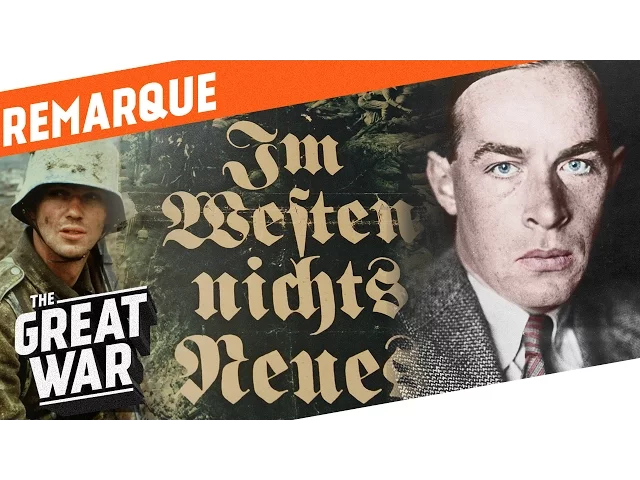
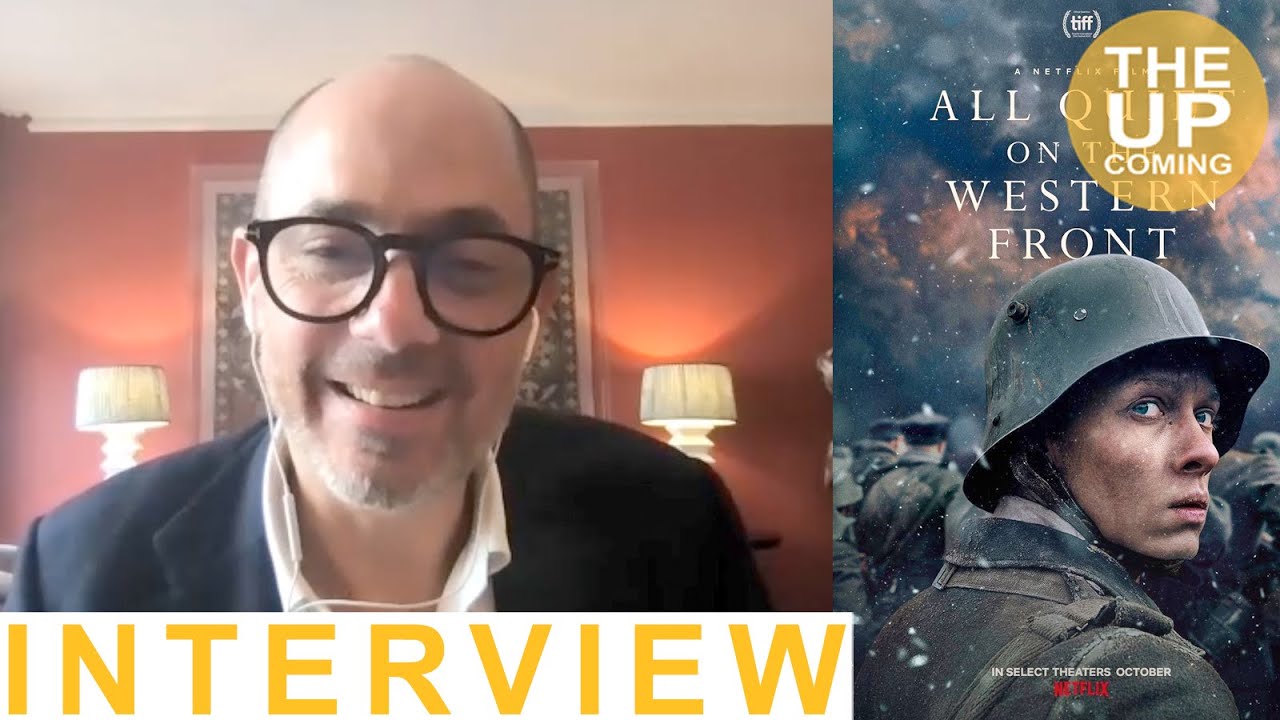
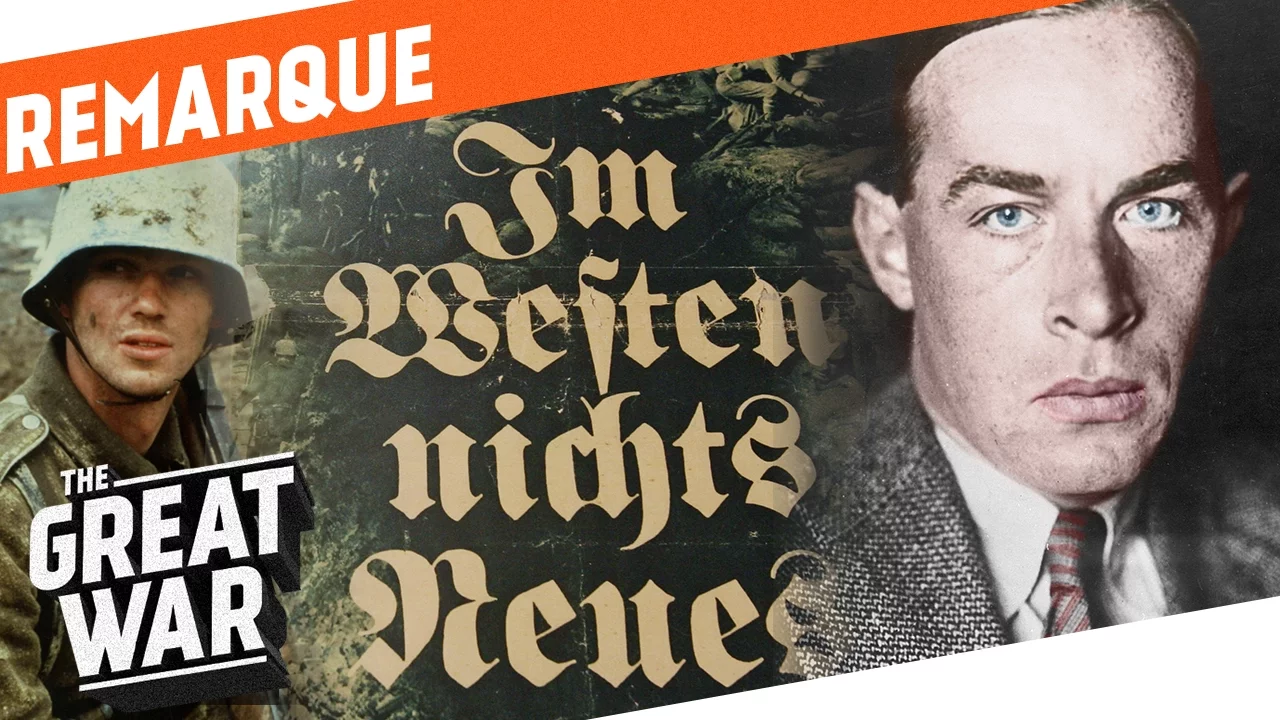
The novel “All Quiet on the Western Front” is seen by many as one large metaphor for the futility of war. It takes place during the First World War and the main character is stationed at the front, just as the book’s author Erich Maria Remarque once was, and it is Remarque who is the subject of today’s Great War Biography Special My name is Indy Neidell and welcome to our Great War mini series Who did what in WW1. Erich Maria Remarque was born Erich Paul Remark with a “k” on June 22nd, 1898 in Osnabruck, Germany to Peter and Anna Remarque.
His father was a printer and Erich had four siblings, though his older brother died when Erich was in his early teens. The family was Catholic and Erich attended the Johannes school from 1904 to 1912 after which he went to the Catholic teachers College, taking his exam in 1915. The following year, in November, he was called up for military service.
After six months of training, at the age of 19 in June 1917, Erich arrived at the Western Front to serve in the second company reserves. He fought there for just under two months before being badly injured with a bullet wound to the neck and shrapnel in an arm and a leg. He was taken to the military hospital in Thurhut and later to Duisberg, and after he began to recover worked as an hospital orderly.
In fact, it was well over a year later, October 1918, when he left the hospital and returned to his battalion in Osnabruck. It was during his recovery in hospital that Remarque began thinking about writing a novel about the war. He gathered material and personal stories sent by friends at the front, and interviewed wounded soldiers at the hospital.
He also used their diaries to come up with even more personal material. After the war, he worked as a teacher, librarian, a journalist, and an editor, and published his first novel, the Dram Room, in 1920. He wrote “All Quiet on the Western Front”, his third novel, in only a few weeks in 1927 but couldn’t find a publisher until 1929.
When it was published, Remark changed his last name’s spelling back to it’s 19th century spelling, ending in que, and took his mother’s middle name Maria as his middle name. Now, Remarque said himself that he never fully processed what he experienced at the front, even though he was only there for a few weeks, but the novel was an attempt to process the experiences of his comrades, all those soldiers he had interviewed and researched. He tells their stories passively, but the language is direct.
Big spoiler alert here- if you don’t want to know what happens stop watching now. He also overrides literary taboo with the death of his hero in what is a gripping tale of a lost generation. Really, I mean even though the soldiers may have escaped death on the battlefield, their lives were ruined.
Could they live a normal life afterward? Did they have futures? In many cases the answers were no and no.
They couldn’t return to an everyday life, not after seeing so much cruelty and death at such young ages. You couldn’t forget the war. And the story talks of the metamorphosis of a soldier into a human animal; fighting in ways no training could have prepared anyone for.
The constant death, endless battles, trench warfare, gas attacks, are repeated again and again until it becomes monotony, and only once is there a discussion about the reasons for the war. Everything else is apolitical; war is simply everyday business. That was intentional and outright; in the preface, Remarque states that the book does not accuse or confess anything in any way.
He considered himself apolitical. Public perception, however, considered him anything but that. The book was not received as a neutral report of what happened in the war; it was seen as an accusation against war and the military, the irrelevance of death, and against an older generation that seemed to not take any responsibility for their debt to the younger one.
So Remarque was considered to be a political author and political parties of all stripes tried to fit him into an -ism of any kind, but he refused to accept that throughout his life and, according to himself, remained staunchly apolitical. The novel was first published in a newspaper and then in book form. It was translated into 26 languages at the time, and is now available in over 50, and it was the most successful work of German literature ever.
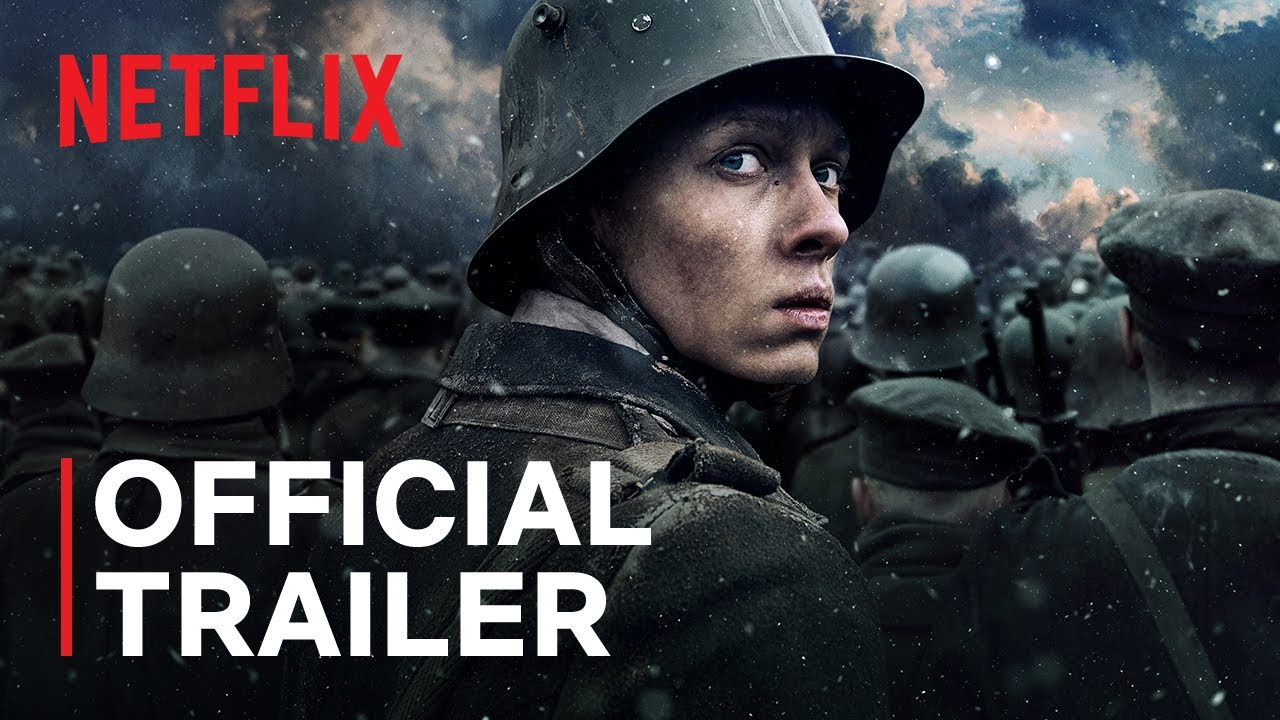
A film adaptation was made in 1930, which was promptly banned in Germany because it “impaired the German reputation”. It won the Academy Award for best picture in the United States. The book certainly made its fair share of enemies, the National Socialists- the Nazis- for one.
In 1933 they banned and publicly burned Remarque’s books and he left Germany for Switzerland and later the United States after World War Two. His personal life was quite stormy, his first wife was the actress Ilsa Zambona, whom Erich would divorce and re-marry, and in the 30s and 40s he had relationships with stars Hedy Lamarr, Marlene Dietrich, and Greta Garbo. His third and final marriage was to American actress Paulette Goddard in 1958.
They would remain married until Remarque’s death in Locarno, Switzerland in 1970. Remarque wrote many other novels besides All Quiet, but it is there that his reputation rests. His personal reputation as a man who stood for individuals, against institutional manipulation, and who was never bound to politics, even while his books mostly discuss German history.
He received several honors. In 1967, for example, he received the Order of Merit from the Federal Republic of Germany. His hometown Osnabruck introduced a peace award in his name and The Remarque Institute was founded in America in 1995.
Also, several places and streets were named after him, but when you see his name, you think of that book, “All Quiet on the Western Front”, perhaps the greatest anti-war novel of the 20th century, perhaps ever, and if you watch this channel, perhaps you then also think of the true horror and anonymous brutality of Modern War. Did you read All Quiet on the Western Front? What did you think about it?
Let us know in the comments. To learn more about another interesting personality of the war who had a very different experience in the colonies, check out our episode about controversial Paul von Lettow-Vorbeck right here. Don’t forget to subscribe and see you next Thursdays.