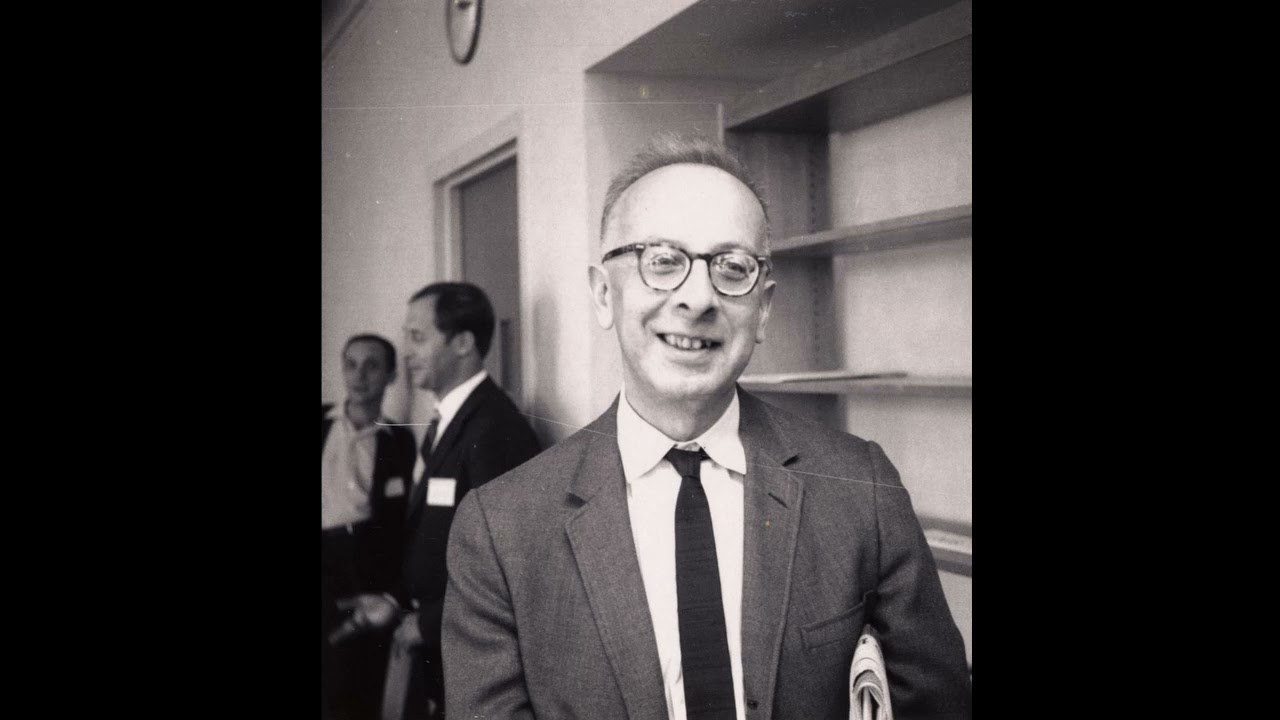
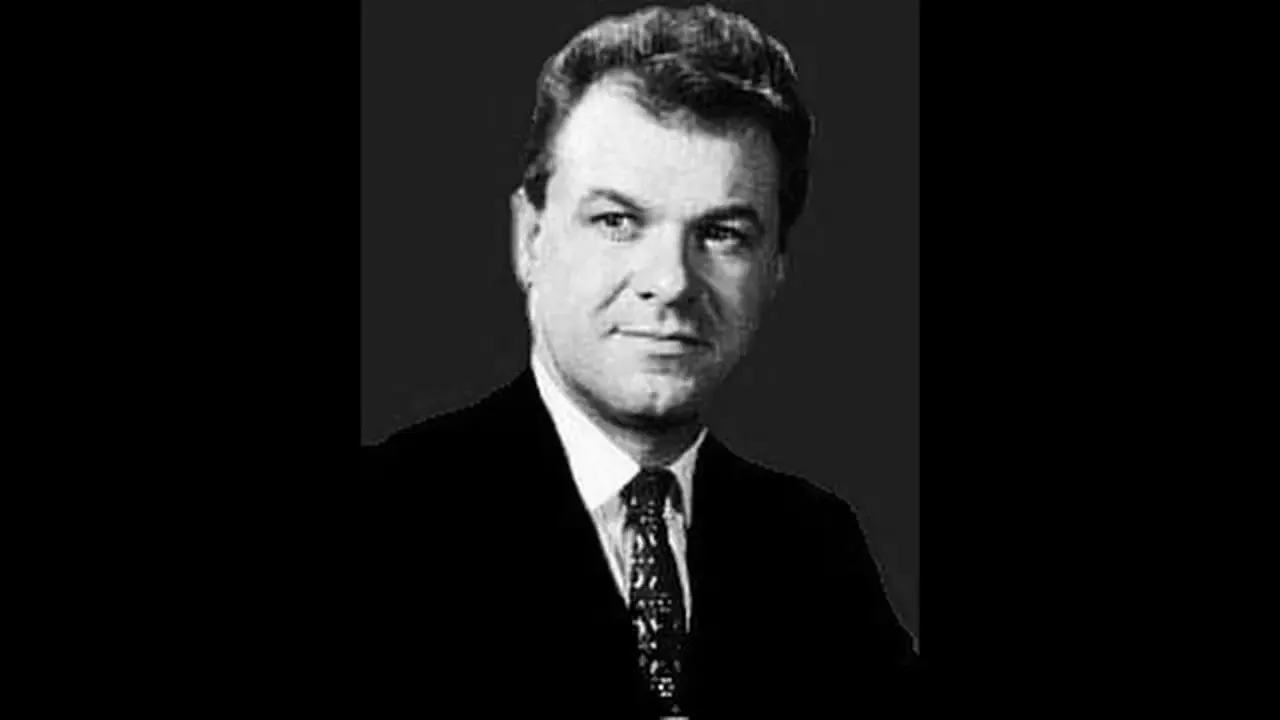
The Voice of America presents Forum the Arts and Sciences in mid-century America today Forum brings you the ninth lecture in the philosophy of science series planned and coordinated by Professor Sydney Morgan besser of Columbia University today's lecturer Norwood Russell Hansen is a distinguished scholar of philosophy of science he received his Bachelor of Arts degree from the University of Chicago in philosophy and logic he then obtained a Bachelor of Science degree in physics and a master of arts degree in Philosophy from Columbia University Professor Hansen holds a doctorate from both Oxford University and Cambridge University he
has received among many honors a full bright scholarship and fellowship a Ford Foundation fellowship and a Rockefeller Fellowship he has lectured at Cambridge and and Oxford universities and has been professor of philosophy at Indiana University since 1957 serving as chairman of the Department of history and logic of science since 1960 in September he will join the faculty of Yale University Professor Hansen will speak on observation and interpretation Professor Hansen philosophers often conjoin the terms observ and interpretation they go together like peaches and cream ham and eggs or fish and chips but familiar conjunctions like these
latter differ from observation and interpretation we can speak of peaches before the cream has been poured ham can be had without eggs fish are distinct from chips however what is an observation before or it is interpreted what could interpretation independent observations be like are the two separable at all I contend that observation and interpretation are inseparable not just in that they never do occur independently but rather in that it is inconceivable that either could obtain in total isolation from the other models more suitable than peaches and cream and ham and eggs would be pairs like
warp and woof lift and drag indeed matter and form there might be Arguments for conceptually separating the warp from the Woof in a fabric the lift from the drag on an air foil and the matter from the form of a statue nonetheless argument is required I place observation and interpretation into the same category of conceptual pairs just as separating the warp from the Woof destroys the fabric and separating the lift from the drag on a wing will render aircraft unflyable and just as separating matter from form in a statue describes nothing operationally intelligible at all
so also slicing the incoming signals of Sensation from appreciating the significant of those signals would destroy what we know as scientific observation the neop positivistic model of observation wherein our Sensational data registration and our intellectual constructions thereupon are cleft to Twain this is an analytical stroke tantamount to logical Butchery it results only in the failure of the heart of Natural Science whose very pulse is the struggle towards more intelligently encountered reasonably comprehended and theoretically appreciated observations many philosophers will even here have lost sympathy with me their analyses concern the data of scientific observation its cash
value where do people ER in reporting their observations usually just in exaggerating their description of what they encountered not in their having received the wrong sense signals from the outer World folks will speak of seeing water in that flask when actually wood decomposes if floated in it in fact it's a weak acid or they'll speak of seeing ice although it won't float on ordinary water it's frozen detarium in fact they'll speak of looking through ordinary glass not realizing that when turned 90° it becomes opaque it being actually polaroid so these descriptions of observations were in
error not because the observer's sense organs failed to pick up signals impinging on them rather the errors arose because of jumping beyond the pure observations to speculations by far surpassing what the basic data warrants if only observers would restrict themselves to the color patches they see the buzzes and Tinkles they hear the rough and smooth surfaces they touch and the sweet and sour tastes of things only then could the strictly empirical basis of an observation be detached from the theoretical embroidery attached there to only then can the properties of nature be demarcated from the properties
The Observer theories consist in about nature of course such a positivistic recommendation is compatible with the recognition that within contemporary science what are called observations are really intricate mixtures of empirical components and theoretical frosting what is called scientific observation is apparently genuine observation to but a very small degree so runs the recommendation unless we remain alert to this our philosophies of science May issue with the Apparently absurd suggestion that two reliable observers could encounter the same physical phenomenon and yet register different observations but if two well-made cameras were aimed at the same phenomenon they would
take the same picture and two tape recorders would record the same noises if similarly placed with respect to an acoustical Source similarly continues the recommendation two ideal scientific observers should make the same observations what they then proceed to make of those observations is another matter concerning which philosophers have also said very much but two observers especially when their theoretical commitments differ can make the same observations only in so far as their encounters with phenomena are described strictly in phenomenalistic or sense statim terms differences between them are manifested only after taking in the data so the
positivists motto is first observe then theorize in the interests of more realistic philosophy of science however I will press for the opposite conclusion I will even argue for what seems so absurd to the phenomenalist that two observers equally well equipped make an confront the same phenomena and yet make quite different observations this not because they are busily clamping different theories onto the otherwise pure data but rather because they are observing to observe X is to observe X as something or other that will be our motto observing is an experience a retinal reaction or an olfactory
or tactile reaction is only a physical state a photochemical or pressure sensitive excitation physiologists have not always distinguished experiences and physical States people see not their eyes cameras and eyeballs are blind attempts to locate within the organs of sight or within the neurological reticulum behind the eyes some namable called seeing or observing may be dismissed summarily there is more to seeing than meets the eyeball and there is more to Scientific observation than merely standing alert with sense organs at the ready consider the Necker Cube so familiar to psychologists on the page before you 12 connected
lines seem configured in the standard box-like way do we all see the same thing some will see an Ice Cube viewed from below others will see it from above still others will view the figure as a polygonally cut gem some see only crisscrossed lines in a plane others will see it as an aquarium a wireframe for a kite or any of a number of things do we then all see the same thing and if we do how can these differences be explained well here the phenomenalist form formula re-enters quote these are different interpretations of what
all normal observers see in common close quote retinal reactions to a NECA Cube are virtually identical so too with our visual sense data since our drawings for example on grid paper of what we see will have the same content they may even be congruent the drawn Necker cube is simply observed now as a box from below now as a cube from above one does not first soak up an optical pattern and then clamp an interpretation onto it but comes the phenomenalistic ret seeing a necer cube first as a box from below and then as a
cube from above involves interpreting the lines differently in each case close quote then for two observers to have a different interpretation of a NECA Cube just is for them to observe something different this need not mean that they see exactly the same thing and then interpret it differently besides the word interpretation is occasionally useful as we now employ it we know where it applies and where it does not fluidities presented the facts objectively Herodotus put an interpretation on them the word does not apply to everything that is it has a meaning can interpreting always be
going on when we observe things sometimes perhaps as when the hazy outline of a combine harvester looms up before us on a foggy morning and with some effort we finally identify it is this the interpretation which is active when bicycles and boxes are clearly observed is it active when the Necker Cube snaps into its other perspective there was a time when Herodotus was half through with his interpretation of the Greco Persian Wars could there be a time when one is half through interpreting a Necker Cube as a box from above or as anything else quote
but the interpretation takes very little time it is instantaneous close quote instantaneous interpretation hails from the same limbo that produced unsensed sensibilia unconscious inference incorrigible statements and negative facts these are Notions philosophers force on the World to preserve some pet epistemological or metaphysical Theory only in contrast to Eureka situations like perspective reversals where one has not even time to interpret the data only in contrast to these is it clear what is meant by saying that although FUSD ities could have put an interpretation on History he did not whether an historian is advancing an interpretation or
not is an empirical question we know what would count as evidence one way or the other but whether we are employing an interpretation when we see a necer cube in a certain way this seems not to be empirical what could count as evidence in no ordinary sense of interpret do I interpret the necer cube differently when its perspective reverses for me and if there is some extraordinary sense of the word it is not clear in ordinary language or in philosophical language to insist that different reactions to the NECA Cube must lie in the interpretations put
on some common visual experience is just to reiterate but without reasons that observing of X must be no more than the same sensation registration for all observers looking at at X but it will be countered I see the figure as a box means I am having the visual experience I always have when I interpret the figure as a box or when I look at a box close quote now really if I meant this I ought to know it directly I ought to be able to refer to that experience directly and not only by indirect references
to boxes this counter typifies what is meant by calling sense data logical destructions out of material objects everyday accounts of the experiences appropriate to viewing a necro Cube do not require visual Grist going into an intellectual Mill theories and interpretations are there in the observing from the outset consider further all those reversible perspective figures which appear in textbooks on gestal Psy pschology the tea tray the shifting staircase the tunnel each of these can be seen as concave convex or as flat do I observe something different each time or do I only interpret what I see
in a different way to interpret is to think to do something a Herodotus observing is the having of an experience the different ways in which these Gestalt figures are seen are not due to different thoughts lying behind the visual reactions what could spontaneous mean if such reactions as these are not spontaneous one does not think of anything special one may not think at all nor does one interpret one just observes now a staircase as from above now a staircase as From Below there is a range of other other variable figures those called variable aspect figures
the most famous is kers goblet and faces one can see a Venetian glass centered against a dark background or two profiles facing each other again we take the same retinal cortical sense datum picture of the configuration our drawings on grid paper might be indistinguishable yet I see an ornate goblet and you see two men staring at one another do we see the same thing yes in some Elementary sense do we observe the same thing perhaps not I draw my goblet but you say that's just what I saw two men in a staring contest now what
must be done to get you to see what I see when attention shifts from the cup to the faces does one's visual picture change how what is it that changes what could change nothing Optical or Sensational is modified yet one observes different things the organization of what one observes has changed imagine now a Glass and Metal instrument replete with wires reflectors screws clamps and push buttons imagine this instrument placed before a trained physicist one who at that moment is holding his two-month-old infant on his knee do the physicist and the infant observe the same thing
when looking at such an x-ray tube yes and no yes they are visually aware of the same object no the ways in which they are aware are are profoundly different seeing is not only the having of a visual experience it is also the way in which the experience is had this does not mean that the physicist is busy with intracranial activities absent in the child's case this may or may not be so both simply see what is before them the physicist sees a Glass and Metal instrument his child takes in precisely the same Optical data
but may be observing nothing in particular in college the physicist had gazed at this instrument each day returning now after years in industry and research his eye lights upon the same object does he see the same thing as he did then now he observes the instrument in terms of electrical circuit Theory thermodynamic Theory the theories of metal and glass structure thermionic emission Optical transmission refraction defraction atomic theory Quantum Theory special relativity and the problems of atomic energy and nuclear machines quote granted one learns these things but it all figures in the interpretation the physicist puts
on what he sees though the Layman sees exactly what the physicist sees he cannot interpret it in the same way because he has not learned so much close quote but is the physicist doing any more than just seeing no he does nothing over and above what the Layman does what he himself did as a young student or what his child does when he sees an x-ray tube what are you doing at this moment over and above listening to these words are you interpreting sounds on the Airways would this ever be a natural way of speaking
perhaps if English were not your native language which makes the same point in Reverse would an infant hear what you are now hearing when you hear words and sentences and he hears but noises and sounds one does nothing Beyond looking and seeing when he Dodges automobiles glances at a friend or notices a cat in the garden quote the physicist and the Layman see the same thing it may be objected but they do do not make the same thing of it close quote well the Layman can make nothing of it the child can make nothing of
it nor is that just a figure of speech I can make nothing of the Arab word for ice cube though my purely auditory Impressions may be indistinguishable from those of the Arab who hears his word for ice cube quite clearly I must learn Arabic before I can hear what he hears the Layman must learn some Physics before he can observe what the physicist observes as the great astronomer William hsel observed quote seeing is an art which must be learnt our motto now then is first learn then observe the creature that has learned nothing can observe
nothing and that's part of the semantical content of the word observe the visitor must learn physics before he can observe what the physicist observes only then will the context throw into relief those features in the phenomena which the physicist observes as indicating resistance this obtains in all cases of observation it is all interest directed and context dependent attention is rarely directed to the space between the leaves of a tree still still consider what was involved in Robinson cruso seeing a vacant space in the sand as a footprint our attention naturally rests on objects and events
which because of our selective interests dominate the visual field what a blooming buzzing undifferentiated confusion visual life would be if we all arose tomorrow morning with our attention capable of dwelling only on what had here to for been completely overlooked indeed our mental institutions are full of poor souls who despite having normal vision can observe nothing V is a rodic kaleidoscopic senseless barrage of sense signals answering to nothing the physicist baby and the Layman laboratory visitor they can see all right they are not blind but they cannot see what the physicist sees they are blind
to what he sees their eyes are normal but they cannot observe what he observes we may not hear that the OBO is Out Of Tune though this will be painfully obvious to the trained musician an Arab pronunciation of cat may clearly indicate a northern dialect to a native it may be a completely unintelligible noise to us incidentally the musician does not hear the raw tones of the OBO and then interpret them as being Out Of Tune he simply hears the OBO to be out of tune the Arab simply hears the word as indicative of a
northern dialect we simply see what time it is we don't visually remark the position of the clock hands and then clamp horological interpretations onto the sensations the surgeon simply observes the wound to be septic the physicist simply observes the X-ray tub's anode to be overheating the elements of the laboratory visitor's visual field though singly and severely identical with those of the physicist are not organized for him as they are for the physicist the lines colors and shapes are apprehended by both but not in the same way there are indefinitely many ways in which a constellation
of lines shapes and patches may be seen why a visual pattern is seen differently is a question for experimental psychology but that it may be seen differently is important for any examination of the concepts of observation and interpretation only by an examination such as we have just been through is it possible realistically to understand how two different scientific observers can encounter the same data commit themselves to the same descriptive statements and yet draw diametrically opposed conclusions as to the significance of what they encountered this long before the explicit theorizing Begins the issue is still what
are the data the simple phenomenalistic formula suggests that they took in identical data and then clamped welldeveloped but different theories onto them but surely it might be argued that since their total accounts of what they observe were so radically different there must be a sense in which they did not begin from the same observational data at all remember the necer cube was not the invention of a mischievous psychologist it dates from 1832 when the Swiss naturalist NECA described how certain rhomboidal crystals could be microscopically viewed obliquely such that their perspective could shift in the now
familiar way one need not work overtime to invent variable perspective and variable aspect figures to establish that observation and interpretation are inextricably intertwined such phenomena are to be found daily in the research work of observational microbiologists x-ray crystallographers bubble chamber physicists and so forth a meaningful scientific observation must be of something as something of some kind this requires appreciation of the data beyond anything a camera or an eyeball is capable of it requires indeed a scientific obs Observer again one cannot in principle heighten the lift on an aircraft Wing without generating an induced drag which
is but another aspect of that very air flow that produces the lift interrupt that flow to separate the drag from the lift and you destroy the lift altogether the matter and the form of a statue are inseparably intertwined a point which Aristotle commended to our attention over two Millennia ago by reflections of the same kind observation and interpretation must be seen as inextricably intertwined within Natural Science one can of course distinguish those cases of observation where in theoretical extrapolation dominates the empirical base from other cases within which the data appear to dominate but one cannot
in logical principle go to the limit of considering scientific observation as totally unformed by significance criteria I or on the other hand scientific theories as completely separated from questions of what actually happens hence scientific observation and scientific interpretation need neither be joined nor separated they are never apart so they need not be joined they cannot in principle be separated and it is conceptually Idle to make the attempt observation and interpretation are related symbiotically such that each conceptually sustains the other while separation kills both this will not be news to any practicing scientist but it may
seem heretical indeed to philosophers of science for whom analysis has become indistinguishable from division you have heard Professor Norwood Hansen of Indiana University speak on observation and interpretation next week profess Professor Hillary Putnam of the Massachusetts Institute of Technology will speak on probability and Confirmation copies of the philosophy of science series may be obtained by writing to the Forum editor Voice of America Washington D.C this is moris Joyce inviting you to join us again next week at this time for or Forum the Arts and Sciences in midcentury America


![Rick Roderick on Heidegger - The Rejection of Humanism [full length]](https://img.youtube.com/vi/sDqDJJcJAOg/maxresdefault.jpg)