so I started my game development journey in a pretty unusual way I think most people start making games because they have a bunch of ideas for a game that they'd like to make or ideas on how to improve one they're already playing I mean it's pretty tempting to sit down with the game and think I can do this better however I was completely opposite I'd never thought about game design or anything like that I just like making stuff and thought game development look fun so jump right from sandbox games into modelling coding and all that
good stuff but as time has passed and I started making my own games I realized just how important game design really is so no matter if you like me and have been making games for a long time or if you're just starting out I think these basic tips on game design are really good to know but first this video is sponsored by Dennis pan Judah Dennis is an awesome game dove to do who's just launched a new course on udemy the complete c-sharp master class this course will make you super comfortable writing code in c-sharp
and using it for programming your own games in unity it will give you knowledge on many different aspects of c-sharp and teach topics such as databases link in WPF and much more at the end of the course you will even have made three games on your own if this sounds like something you're interested in simply click the link in the description to get started and get a massive discount so often when making a game you start by setting a goal that the player has to achieve but how to get the player from the beginning of
the game and towards that goal and most importantly how to get the player to enjoy this journey is where the tricky and also fun part comes into play now when it comes to game design it's very hard to define rules and guidelines that apply to all games simply because games are so different design choices that work for a MMORPG might not work at all for a competitive FPS and now comes a very important point everything in game design must fit the player's intended experience first off every game needs a foundation and in game design there
are three main pillars that hold up this foundation player communication and appeal now this might seem obvious but understanding how to work with them is crucial really you can start by asking yourself what is the players role and how does he interact with the game the play always needs to have a purpose and it's extremely important that it's the player driving the game forward after all this is what distinguishes a game from if the player does not have a say an effect on the game he becomes an indifference simply completing tasks for the sake of
it now just as important as giving the player purpose is communicating this purpose to the player without any idea of what the goal is and how to achieve it the player will quickly start to feel powerless and become bored so try to use the environment or leave visual clues that communicate the objective of a situation I've talked about this before but I think one of the most elegant examples of communicating purpose to the player is the beginning of half-life 2 here the developers do an amazing job of showing a world of oppression and making the
player feel part of that world making him want to change it of course none of this actually matters without appeal which is why it's the most important pillar in the foundation if the game doesn't appeal to the player then what's the point and for me this is the hardest thing to consistently achieve because it's solely based on a feeling of being drawn to the game and if wanting to play more and I think this can greatly vary depending on the game and even depending on the individual player for some the appeal is action paced realism
with stunning graphics and heart-throbbing sound design for others the appeal lies in an interesting story or a well-thought-out puzzle and rather than try to make impossible claims as to how to make your game appealing I think this is a good place to stress just how important it is to start every game with the prototype to test out your ideas in a simplified format to see if the appeal is there of course if your entire game idea is based around stunning graphics and huge open world levels a simple prototype won't help you out much but if
that's what you're going for you should already have these principles under your skin along with 200 employees of course so with that you've now established the foundation of your game but that's of course still a bunch of design choices you have to make for example just like it's important to always communicate the player's purpose it's just as important to always guide to the main focus in other words you need to clarify what the players should concentrate on of course not all games lead the player straight from beginning to end when Stanley came to a set
of two open doors he entered the door on his left for these so called nonlinear games it's just as important that you leave the player with alternate choices like going on a little side quest detour from the main storyline and when it comes to guiding player through the game something I've realized is the importance of anticipation if used correctly anticipation will help prepare the player for what's coming this could be as simple as adding a charge of animation to your enemies allowing the player to react accordingly and not feel cheated by the game take for
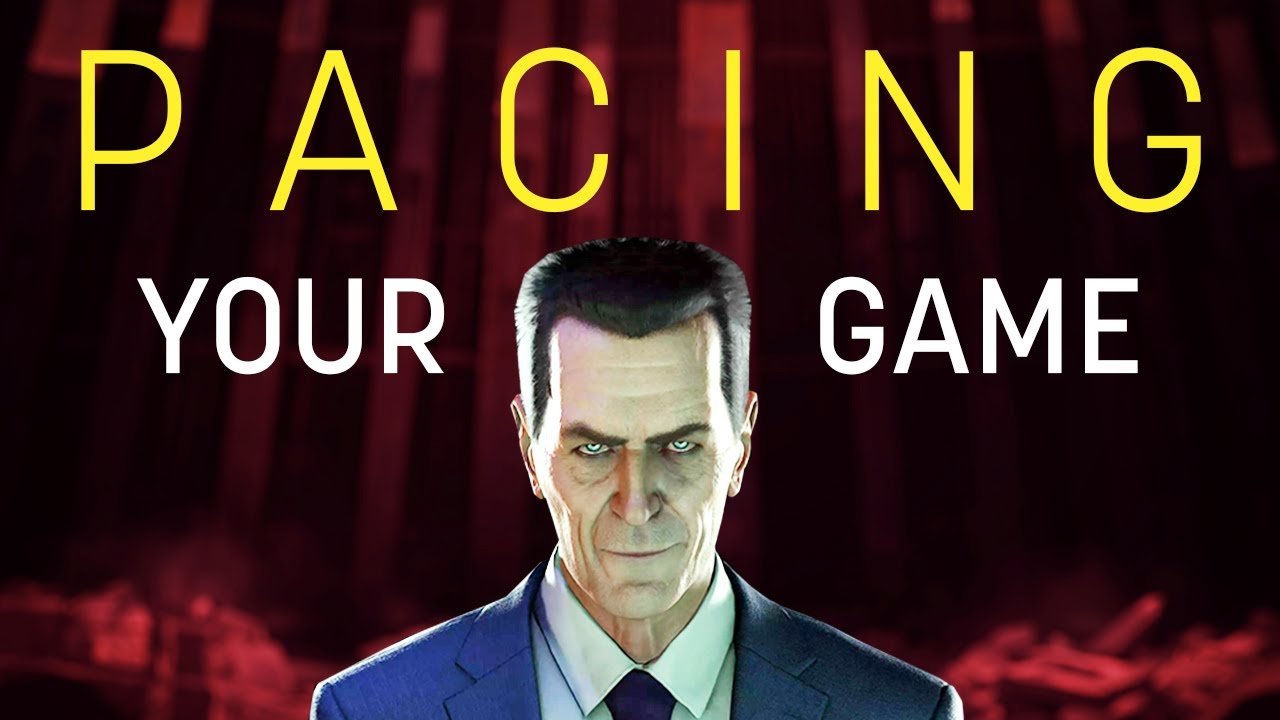
example the ending scene of half-life notice how sound builds up electrical sparks start flying and the camera starts shaking right before the explosion and actually the whole sequence with g-man talking to dr. Freeman can be seen as one long build-up and therefore anticipation to the explosion and end of the game another aspect that has the tendency to get overlooked since some might consider it obvious is that the events in your game have to behave in a logical way along with living up to the players subconscious expectations of the game a system design example of this
could be when shooting something bullet holes should appear otherwise it won't live up to the players expectations obtaining the right sounds of the physical events is also very important the more sound is considered the better experience for the plate the events occurring in your game should also follow general physics of course some games change the rules of physics but they do so consistently and that's pretty much all this comes down to rules are rules so once these rules have been established for a game stick to them however remember that games can cheat as long as
the player doesn't notice a good example of this is the AI in the Arkham games these guys are told not to turn around with Batman sneaks behind them so it allows the player to ambush them in general a lot of shooters will alter the AI to give the player some sort of hidden advantage that rewards a certain play style also it's generally good not to make them too sophisticated just in case they feel like turning on the human race now another important point is that dynamic is lost when only one change occurs at a time
for me this is what makes competitive games like counter-strike interesting to play again and again even though you're always playing with the same weapons and on the same maps for example in order for the attacking team to successfully plan the bar can we say can we say that without getting demonetised so in order for the attacking team to successfully plant the pineapple many things need to happen at the same time one guy might throw a smoke over the wall to cover off defending players another might start sneaking around to flank while the rest of the
team charges in each checking different angles in order to make sure everything is clear what the pineapple gets planted just as important as having enough happening in your game it's good to establish a natural sense of progression this means trying not to over stimulate or under stimulate the player to achieve this it's important to think about how you layout different events in your game one way you can do this is by spreading out the moments of high concentration vary between action-packed and more laid-back sequences and keep the number of changes happening according to the current
pace of this situation I think the perfect example of this is the tower defense genre your gameplay is spaced out naturally by alternating between waves of enemies and building new towers and on top of that many games will vary between large waves of weak enemies and small waves of strong enemies but spacing is not something that only applies to gameplay it's equally important when talking about environment creating areas for the player to admire the graphics and expansive view in creating tidal areas to obtain a more claustrophobic feel changes the pace of the game and this
in turn affects gameplay it's very important that you're aware of how much space you have in game and on screen to make sure you have the right amount of space for different scenarios this is also important if your game has AI or other players since they should be given the right amount of space so they can move around in a realistic way in fact if you want to get really nerdy about how you can shape your environments to help guide your player check out this amazing paper on structural composition patterns in 3d adventure games I'll
be a link in the description so if you take all these things into consideration you should be one step closer to designing your own game keep in mind though everything I've mentioned here is only guidelines and guidelines only there to steer our creativity in the right direction the rest is up to you on that note thanks for watching and I will see you in the next video [Music] thanks of the awesome between supporters who donated in September and especially thanks to Andrea Canning Co are arming true VR systems simmer IO extended player cheetah 3d Jeff
Johnson infinity PPR Sybok mummy Dennis Sullivan Chris sheriff Abdullah prism fi thanks along Lila set Fenton fence Cuba swears the Durham's Kirk Ronan team of holder back Bruins cat now Akiva sake girl appears Larry tweet James Rogers Rob Ferran become Vania Erasmus Robert bunker Jackson James P Anthony Patton q Swedish key and a breeze see you guys Ron