Have you ever wondered where our Solar System ends? Is it up to Pluto's orbit? The Kuiper Belt?
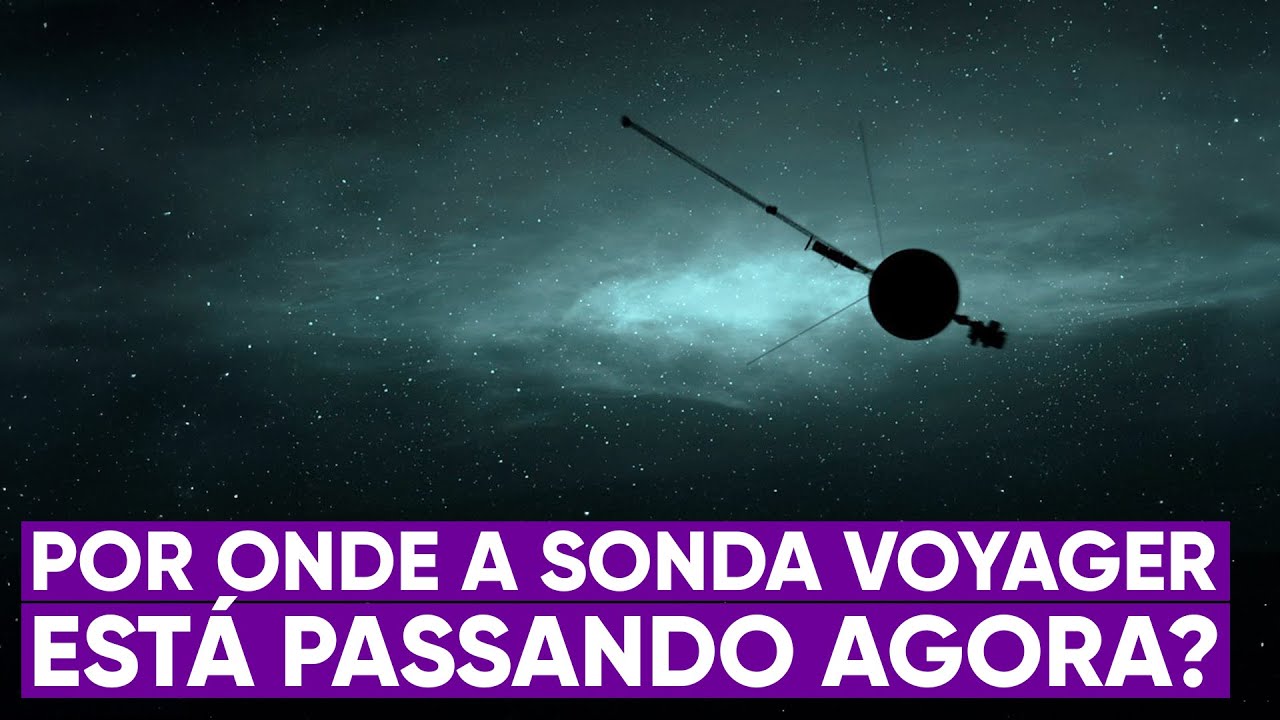
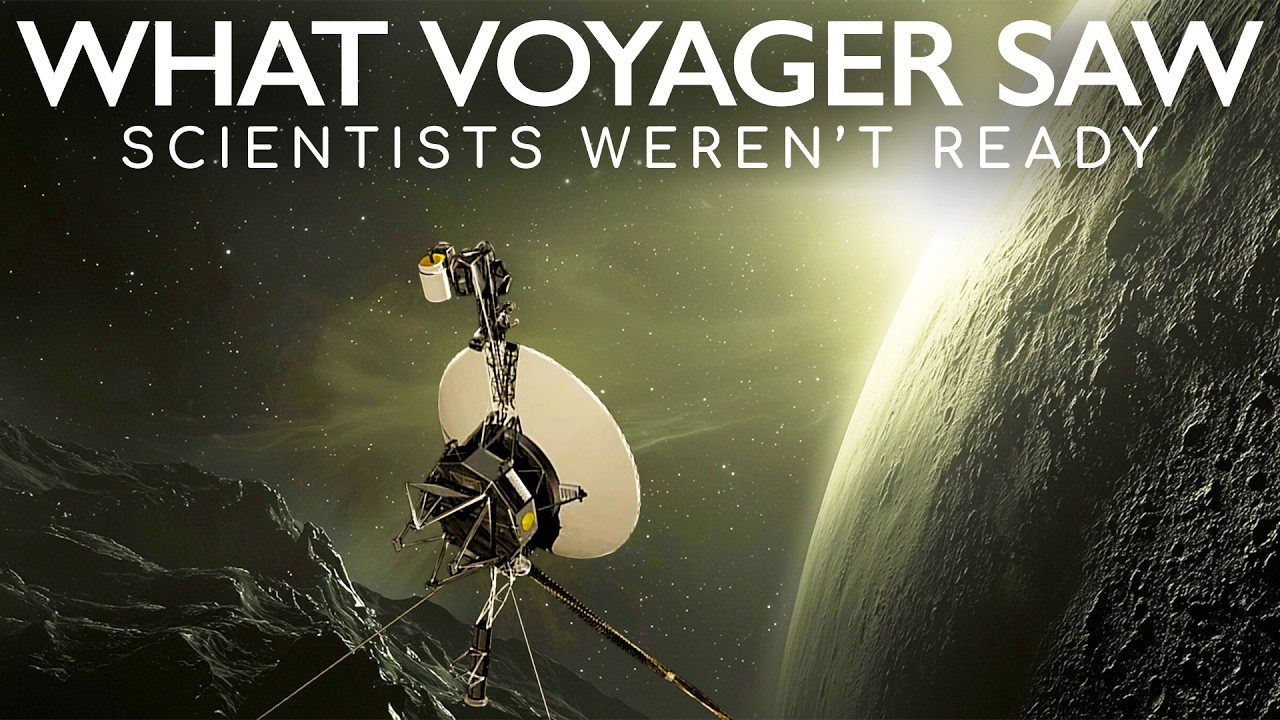
Beyond? You may have heard that Voyager space probes have already left the solar system, their current position places them far beyond Pluto's orbit. But in reality, saying that they left the solar system is not really true.
So how do we define the boundary of a solar system, and furthermore, how big can a Solar System be? My name is Dennis Ariel and you are watching Astrum Brasil. First let's see where the Voyagers probes are, and why some say they left the solar system.
Surprisingly, the Voyagers, launched in 1977, are still operational today despite their reduced capabilities. Its energy sources are radioisotope thermoelectric generators, which are great at supplying energy without the need for solar panels, however, with each passing year, the radioactive material degrades, producing less energy. They are currently operating on about half the energy they had at launch, with the result that some of their instruments had to be turned off.
What they are currently monitoring is the magnetic field environment of deep space , and their interactions with the solar wind. Of particular interest to scientists is the frontier where the Sun's magnetic field and solar wind are overcome by interstellar wind. This border is known as Heliopausa.
Scientists believe Voyager 1 crossed that border in 2012, and Voyager 2 crossed in 2018, both of which are the only spacecraft that have reached interstellar space so far. What they discovered on their journey is that this boundary is not a sphere around the sun, but has a fluid and asymmetrical shape. And just as planets facing the sun leave a "tail" behind them with their magnetic fields, because of interactions with the solar wind, the sun's magnetic field also leaves a tail due to this interaction with the interstellar wind.
As the solar system orbits the center of the Milky Way, it travels at over 800,000 km / h. As it moves, it passes through what is known as the Interstellar Medium at relative speeds of 80,000km / h. This creates a kind of wind effect in the sun's magnetic field, leaving a tail in the wake of the interstellar wind.
But, fantastic as the Voyager mission is, hitting interstellar space is not the same as hitting the edge of the solar system. The edge of the solar system is defined by gravitational influences, a boundary known as Hill's Sphere (although we should note that it is not exactly a sphere either, I will come to that in a moment). A Hill Sphere is the region around a body where the gravitational attraction of that body outweighs the gravitational attraction of anything else.
For example, the Moon orbits the Earth because it is within the Earth's Hill Sphere, and it is close enough that the Earth's gravitational pull exceeds the Sun's gravitational pull relative to the Moon. The satellites that orbit the Moon are inside the Moon Hill Sphere, where the Moon's gravity at this distance has a greater attraction than that of the Earth and the Sun. And everything that orbits the Sun is inside the Hill of the Sun sphere, where the Sun's gravity exceeds that of the nearby stars.
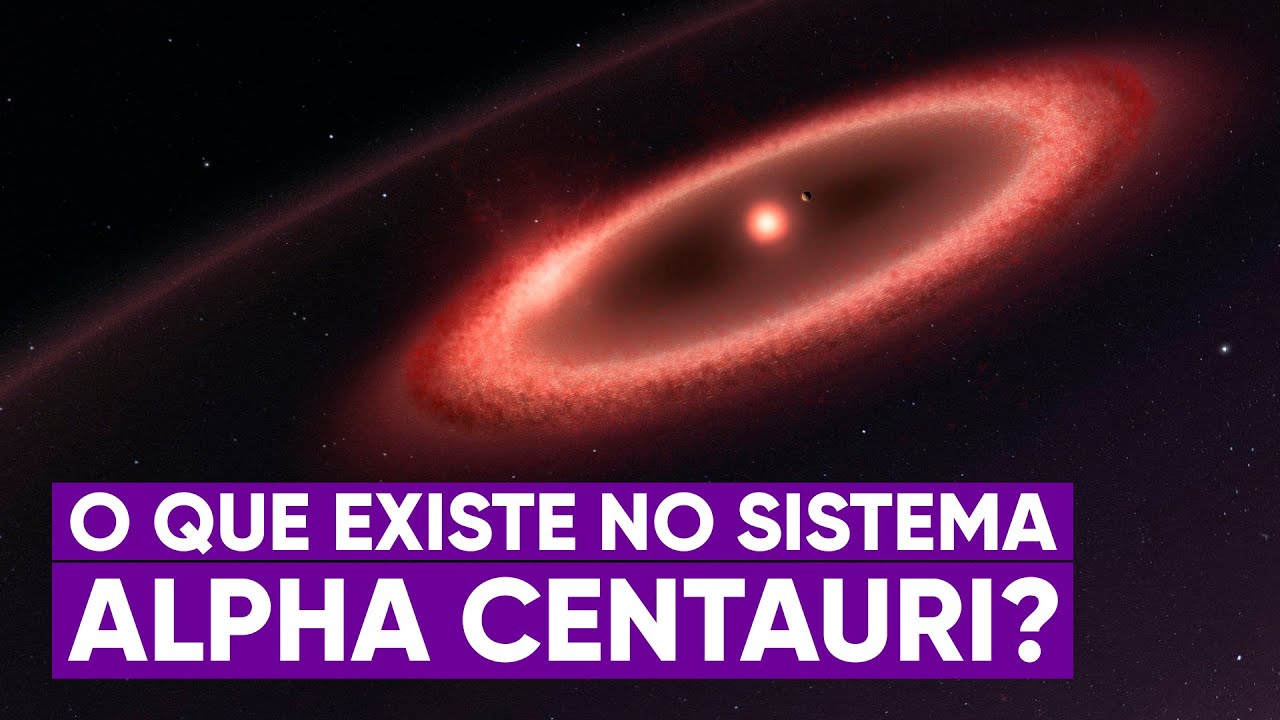
This is the real frontier of the solar system. Now, looking at our neighboring stars, we find that they are unevenly distributed around us, which means that the Hill's Sphere of the Sun is not exactly spherical. Take the Alpha Centauri system, for example.
It is approximately 4 light years away from us, however, Alpha Centauri contains two stars similar to the Sun, so its total gravitational influence will be greater than that of the Sun, pushing the boundary of that part of the Hill Sphere closer to the sun. . On the other hand, looking in the opposite direction towards Barnard's star, we have a red dwarf star that is 6 light years away and much less massive than our star, so the gravitational influence of the sun would extend much more in this direction .
And even if a body is orbiting within the Hill of the Sun sphere near the border, its orbit is very precarious. The Sun's gravity here is incredibly weak, the bodies' orbit would be very slow, and the slightest disturbance can take this body out of orbit. That is why astronomers now think that more distant bodies can safely orbit the Sun at a maximum distance of 1 light year, even though the sphere of the sun's hill can stretch for 2 to 3 light years.
So, what can you find at this distance? Nothing? Well, far beyond the Kuiper Belt, which is the asteroid belt beyond Neptune's orbit, up to a distance of about 1 to 3 light years there is a region known as the Oort Cloud.
We believe that the Oort cloud is a sparsely populated region around the Sun that contains billions or even trillions of icy bodies. We believe that it is from there that a small percentage of long-lived comets come from, comets that orbit from tens to hundreds of thousands of years. To give you a perspective on the size of this cloud, the Voyager 1 spacecraft would take 300 years to reach just the beginning of the Oort Cloud and virtually 30,000 to 150,000 years to traverse it.
Astronomical distances are simply stunning, and remember, at that distance we are still considered to be within our own solar system. Now imagine how many solar systems there are out there. Which brings me to the end of this video.
How big are Solar Systems? Well, it is something that we cannot know for sure, although we can have a good guess. We will stick strictly to the stars for this mental experiment, including black holes and also entire galaxies.
The theoretical limit of a star is about 150 solar masses, or 150 times the mass of our Sun. Although there are some stars out there that question this theory, like the most massive star we know, R136a1, which apparently has 300 times the mass of the Sun. Now, this star is found in a dense cluster of star clusters, and although it is so massive, its gravity competes with many nearby stars.
This considerably reduces the size of your Hill Sphere. Let us suppose that a star of this size was somehow ejected from its star cluster, even from its own galaxy, and is completely alone in space. With no other gravitational forces for many light years in any direction, the only other competing mass is the other galaxies.
This means that, without any other gravitational competition, this solar system can be hundreds to thousands of light years in diameter. Size comparable to a galaxy, depending on the distances involved. In a universe where only that star and a second smaller body exist, that second body could be billions of light years away and still be in orbit, because for gravity no matter how far the bodies are, they would still be under their influence.
In this universe, the only way for this second body to escape the gravitational attraction of a larger body would be to have an infinite distance between the two, which is impossible. So, that's basically it! Solar systems are already immeasurably large, and under the right circumstances, they can be much, much bigger.
The thought that remains with me after producing this type of content is that the universe is really a fascinating place. Thank you very much for watching Astrum Brasil. And if you think the content of this video is important, consider subscribing to the channel.
And also consider being a supporter of the channel. This allows me to make more videos like these in the future! And with that we come to the end of this video.
Thank you so much for watching, and see you next time.