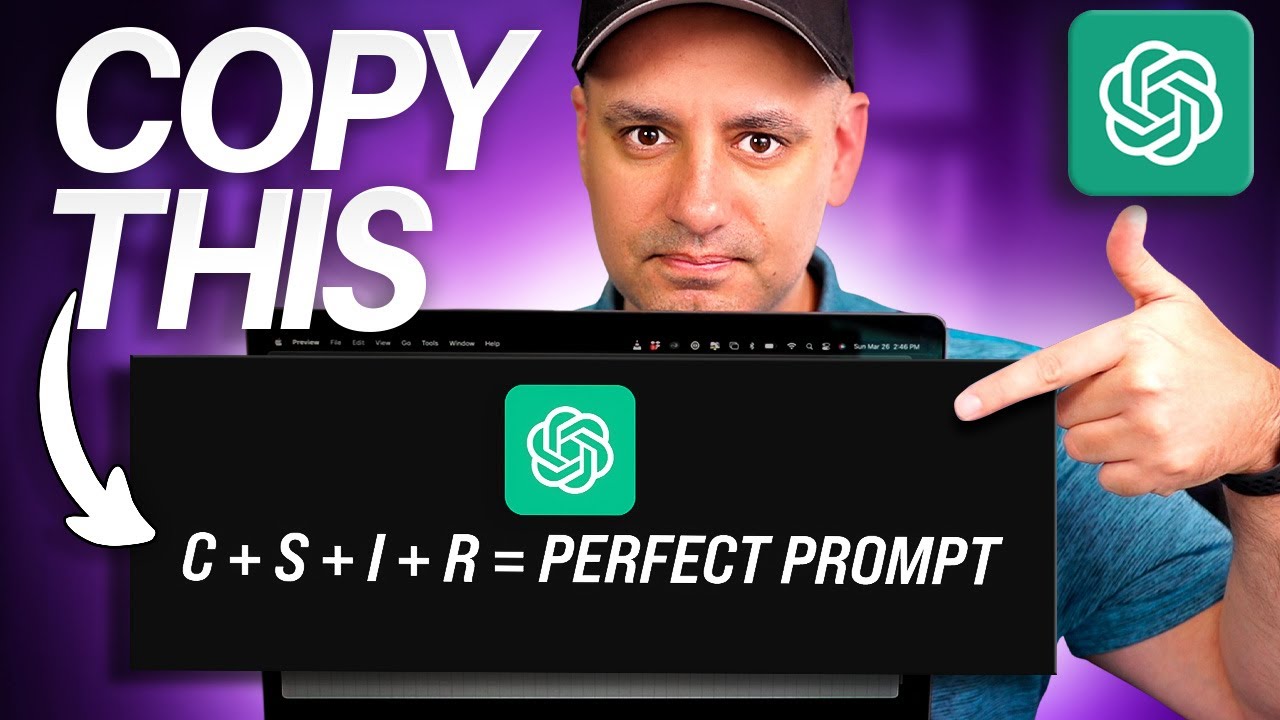
this prompt engineering formula for Claude is gold dust and all this is from anthropic itself in its documentation of how to use Claude so I've read do everything to give you the tldr just like the infinity gaet every stone or part of the framework adds value in its own unique way and yes I get it this is like the nerdiest thing that I ear but I just love the movie within the Sur framework C has four components the first of which is Clarity and this Probably sounds really obvious but being clear and direct to Claude
is really important anthropic actually is the example of pretending that clae is like a brand new super intelligent employee can do lots of stuff but unless you're really specific and direct he'll have no idea how to give you the output that you're looking for for example let's say we had this huge document here which is McKenzie's Global private markets review let's say we copied this then came over to Claude you could say hey summarize this for me and you can see Claude gives a bit of a preamble and starts to list out some key points
but I was very very general in the prom that I gave it but we can approve on this by providing context mean specific about what we're actually looking for and like anthropic suggests give it stepbystep instructions and specify how we'd like the output so by now being clear and direct this is what the prompt looks like this document is a report on global private markets I would like you to read through the report and make notes of any key insights or data consider additional data points from your knowledge base or critiques of those data provide
the output and numbered bullets and skip the Preamble and just provide the output and then we say here is the text and then we enter the text and then we push that back into Cloe the detail that we've got from clae is already significantly better it's giving us the data it found in with report but then also some caveat to that and it's giving us additional thought to the bottom like the denominator effect like they continued weighing out fundraising which is stuff that we wouldn't necessarily find within the article and so if you can be
anything with Claude be clear the next seat stands for contact in other words contact window now CLA has a contact window of 200,000 tokens which is enough to process a l of a Rings book so it's absolutely huge the benefit being that you can have a longer more detailed conversation with Claude rather than having to split it across different chat windows and an XC stands for prompt chaining which anthropic describes is almost like imagine Claude is juggling balls the more balls that you give clae the more likely it will be to make a mistake or
drop it so when you're trying to get clae to do something that's particularly complex or has many assets to it think about breaking it down into individual prompts rather than trying to create one super mega prompt that might just be a little bit too complicated and thropic says that this will improve the accuracy and the consistency of the output because we break it down into distinct steps and it makes it easier to troubleshoot by isolating specific subtasks that may be particularly prone to errors for example let's say that we're a digital marketer and we want
to create a Content strategy for our digital design agency business so instead of asking Claude hey you know create me a target market and then with that Target Market I want you to create this this and this we're going to break it into different steps so the first thing we might say is hey I'm a digital marketer and I'd love help crafting my target audience I'm looking to sell to 20 to 35-year-old mailes in London they like technology ask me more questions if you would like more context great to help you better Define your target
audience I'd like to ask a few more questions and then Claude has given us you know five six plus questions on how to answer that question better I've answered those questions and with that data it will start to create a really really specific target audience for us so then I say to clae hey using this target audience data create a table of 25 paying points for these users in the next column please phrase them as how-to statements and in the third column create content suggestions for it and then we hit enter and I think if
you just asked Cloe this by itself I don't think you would have gotten as good clear as an answer because what we've been able to do is pass out and get more detail on the target audience which will then improve the quality of this second part of the question and just like that we've got a full table of the pain points we've got that restate is howto statement so for example how to identify and Target your idea ideal audience on social media and there's some content suggestions and that brings on to our fourth seat which
is critique so in this case we're going to tell Claude hey critique the above table how could this be improved we hit enter and then Claude will self analyze its own work and then Claude immediately starts critiquing it it's pointed out on the prioritization so there's lots of statements but you know some are going to be bigger pain points than others specificity Variety in content formats actional insights personalization ESS optimation and call to action then we say to CL hey action a table with every one of our seven points and as you can see CL
has already implemented this including a prioritization column massively improved the qualed responses and your mind will be blown just how much the quality of the response can improve when you just say hey critique it or please improve it it's literally a sentence that can make a huge difference and now we've covered the C that brings on to the next stage which is the e and e stands for examples and according to anthropic examples are actually one of the most powerful ways to improve the output from clae specifically if it's a complex task or just something
that requires a lot of effort according to anthropic this will improve accuracy it will improve consistency and also enhance performance so check this prompt out so first of all context I'm creating a video about the new iPhone 15 release which has incredible reviews I would like you to create a YouTube title it must create curiosity be interesting be designed to be honest but create a unanswered question in the viewer's mind be 50 characters less and capitalize the first letter of each word and then you provide it with some examples which I totally just rip from
some of my favorite channels and just a YouTube trending and look at this iPhone 15 the one feature that changes everything is the iPhone 15 worth the hype I found out do you know I'm going to be so honest with you like genuinely speaking whenever I've tried to get uh titles from language models it's always always struggled but the quality of these are just insane and just to prove this to you I'm going to ask it the same question minus the examples you can compare the answers and see which you think is best the ones
we did without the examples is the iPhone 15 really worth the hype iPhone 15 The Good The Bad and The stunning unboxing the truth with my honest I15 review versus iPhone 15 the one feature that changes everything I switched the iPhone 15 here's what happen in my opinion the output where we gave it clear examples is just mind-blowingly better than when we did it and it's crazy to think that just something as simple as hey here's a few examples make such a big difference but it does and for some additional tips clae says to create
effective examples make sure that they're relevant to the one that you'd like so in our case we provide it with similar type of content then diversity give it a range of examples so we can kind of use all of that together to create something really magical Clarity so make the examples clear concise and really easy to understand and then finally quantity there's no hard rule on this but it suggests you know three to five examples can really enhance the output that then brings us on to R which is giving Claude a role so idea here
is that whilst clae is very very good it sometimes benefits from additional context and can help to constrict and shape its responses in a specific way which is why we can give it a role to play anthropic says that this can improve the accuracy and performance of clae especially in certain complex situations it's also really good for shaping clae style and approach or demeanor in the way that it responds to the questions that you're asking it for example I ask Claude here explain why motorcycles could be dangerous be concise and then CL basically says they
can be dangerous because they less protection for Riders compared to cars reduce visibility requires more skill vulnerability then I did the same prompt but I gave cot a role you are the number one high High School teacher on planet Earth when I gave CL that additional prompt it just added a little bit more context to each of the answers as you'd kind of expect a teacher to do and so the takeaway here is if you think there's a specific role archetype that would really nail down your particular question assign it to CLA just throw it
in there as a oneliner just to improve the quality of your responses one of the key things with all this is iteration and trying different things out to try and get the best prom possible and T the final part of the SE framework is thinking now I know you're thinking well what does that mean that thinking well we're actually going to prompt Claude to tell it to think about things step by step and you'll see how that makes quite a huge difference as you may know this technique is known as Chain of Thought prompting and
as anthropic points out it can significantly improve the accuracy and the Nuance of cla's responses anthropic use the analogy of imagine being in bed and you know your wife or your husband or whoever comes and shakes you up and says hey and these really complicated questions Jack and you're like whoa whoa whoa I need to buy coffee first well apparently it's exactly the same thing and by asking it to think about things step by step it will be more methodical in its processes so given this example we say to Claude how would you determine whether
or not your job is at risk of AI automation think about this step by step okay so when I asked cl to think about it step by step it added a few different things in there it said understand the nature of your job research AI capabilities assess your automation potential analyze industry Trends consult with experts quite unquote assess your job's overall risk and then develop a plan and obviously gave us detail within that now but when I asked Claude the same question but not asking to think step by step it gave us this response routine
tasks data availability creativity and emotional intelligence human interaction you know way way subar compared to this one this one actually felt like a list that you could work through step by step to really figure out whether or not your job was going to be automated but the other list is just kind of human interaction physical dexterity industry TR it's just a little bit all over the place and so Chain of Thought prompt in it just works and it's great for certain use cases now theer framework is obviously amazing but if you want to create really
high quality output from clae that you only ever need to change just a couple of variables to get something that's consistent and incredible quality i' recommend watching this video on creating a meta prom with Claude when I saw the result from it it literally blew my mind but in any case have a great week and see you next time