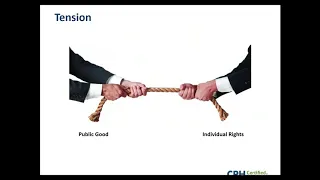
today we're talking about public health ethics ethics is the philosophy around how it is that we should live what is right in terms of the decisions and actions that we take there are a lot of tools that can be used to think through ethical issues ethical problems I put those tools into four buckets right and this is a framework that I've developed that I found quite useful in my career in public health to Think Through ethical problems right so we got to think through ethical problems with respect to individuals groups of people the nation state
and the responsibilities of the nation state and of course Global Civil Society okay I hope you find this useful okay so this is the overall framework this is the inner nutshell this is the bird's I view in this framework you can see a couple of words and ideas that you might not be familiar with don't worry Don't Panic we're going to go into each of these things individually one at a time and I'm going to explain each of them quite carefully to you just so that we can just quickly go through the the overall idea
with respect to individuals we're going to talk about bioethics I'm going to explain what is meant by bioethics and the principles around bioethics we're going to talk about human rights now human rights applies both to the individual but also to groups of people and they apply in different ways right so there are human rights called civil and political rights and they apply to individuals and there are human rights called economic social and cultural rights and they apply to groups of people so that's why that the idea of Human Rights spans both of these buckets right
in the groups of people buckets we've got this idea of deontological and utilitarian ethics right and that's a really really interesting conversation about what is right in terms of deciding what to do with groups of people extremely important in the context of Public Health so we really want to pay attention and focus on that part of the conversation then with ECT to countries we want to understand how it is that nation states and governments in nation states should make decisions about the people within the nation states especially this idea of distributive justice who has what
how much inequality and inequity is permissible in the context of a country right and we're going to distinguish between the idea of inequality and inequity so these are ideas and we're going to tease that out during the talk and that's super interesting and I know a lot of you might think well I'm not part of the government so why does that matter to me as public health professionals we need to advocate for good policies so understanding the arguments that underpin distributive justice extremely important for public health professionals and then finally we all form part of
a global Community Global civil society and there are some ideas and they fall under two ideas that I've kind of got to understand and and enjoy thinking about one is moral responsibility and the other is moral distance so we're going to talk about all of these things one at a time thanks for watching until now stick with me if you feeling a bit confused don't worry everything will be clear very soon okay so hang in [Music] there when we think about what is right and what is wrong with respect to individuals right we've got this
idea of bioethics and bioethics is something that applies obviously in the medical profession more broadly it's not just a public health issue but of course it does apply in public health it's also something that's used in medical research and bi biomedical research a lot okay in terms of clinical trials etc etc so what do we mean when we talk about bioethics firstly we're talking about these four principles that we've all agreed to in the medical world that we think these are what we think are important some people add to this this list isn't a definitive
list but these are the four most commonly ones that are talked about right these are terms you may not have heard before beneficence non-m autonomy and Justice beneficence is really the idea that we should be in the first instance doing what we think is in the best interest of the person in front of us right so they should benefit from whatever it is that they're participating in and the non-m feance is almost the other side out of the same coin we should not be doing something or taking an action that we believe or we know
or we even expect to not be in that person's interest to do them harm now where this is a little bit tricky is of course with any medical intervention there are always inherently certain risks that we need to take into account but at when we think about the balance of the risks and benefits we should draw the conclusion that we think that this person will benefit from it and we do not believe that it's likely that they will be harmed by our action notwithstanding the fact that of course things can go AR and with any
medical or public health intervention there is always an element of risk which brings us really to the next the next bullet point here which is autonomy the person needs to be able to engage with whatever treatment with whatever intervention that we're applying of their own valtion right they need to have the capacity to make a decision and they need to have the autonomy to say yes or no to that particular intervention and if they don't want to participate they should be given the freedom not to now there are exceptions to that there are times when
people don't have what we call capacity right there might be severe mental illness or neurological decline in which a person isn't able to take a decision on their own behalf under those circumstances their capacity to make a decision is something that is clinically evaluated there are very definitive criteria that get get get applied in those circumstances and making a decision on behalf of someone isn't taken lightly it's it's a very serious thing and there are ways of doing that but that you know but for the most part for most people we want to make sure
that they have autonomy and they can decide or decide to or not to participate in whatever it is that we're wanting to apply okay stop the video we're going to go back to talking about ethics in just one minute I just want to quickly say a big thank you to the University of lii for providing support to create this video one of the things that I absolutely love about the University of lck's Public Health program is that there's an emphasis on making sure that they're preparing you for the workplace in other words they are not
just teaching you the theory although of course you learning all of the public health Theory but they they're teaching you that theory in the context of making sure that you are following your graduation really able to make a real contribution in the public health space so if you're thinking of studying Public Health take a look at the University of lyri highly recommend it I think you'll love it okay let's carry on talking about public health ethics and the final thing is Justice we want to make sure that there's no unfairness that's being applied in other
words the treatment that we're applying isn't somehow being applied that people aren't being given access to it as a function of uh their gender or their ethnicity or their or some other reason uh we want to believe that there's an element of Justice we also want to believe that where people have for example participated in a trial that they also benefit from the re from the outcomes of the research of that trial okay and that's actually something that's become extremely important with respect to HIV trials that were done in Africa where there were people whom
if following the trial the treatment that they had spent their risk themselves in a lot of ways uh to prove worked was not made available to them that would have been considered to be a big Injustice in an actual fact with respect to HIV trials in Africa with anti-retroviral drugs for the most part those people were given anti- retrovirals for life even subsequent to the ending of the trial which I think was a real Boon and demonstrated a real understanding of this notion of Justice okay so that's bioethics I'm not going to carry on about
that because really there's so much more we need to talk about the next thing we're going to talk about is human rights now there's two types of human rights have alluded to that fact and when we talking about the individual we really want to talk about what's called civil and political human rights and these are rights that are applied to individuals so these are like uh freedom to vote freedom to assemble the right to be free from being tortured these are things that as an individual I can request that that right be protected right I
can ask that right be enforced and I can ask for it to be enforced now I can today ask that I not be tortured I can today ask that I have the right to be able to vote and the reason I'm making a big deal about the immediacy of the enforcement of that right is because it stands in jux AOS to the other kind of right we're going to talk about just now which can't be enforced in any immediacy right so civil and political rights these are individual freedoms and of course we believe that they're
enforceable they should be enforceable they aren't always enforced we agree as a global civil society that these are important and that they should be enforced and we bestow this right on one another in other words we agree Collective to protect each other's rights to access these freedoms and of course all of this has implications for health right if I'm tortured that's that's bad for my health if I don't have the right to participate in civil society and vote and assemble I don't have any agency then to have decisions about how Society is managed that might
affect my health I can't influence that I can't advocate for my own health environment so these all have implications for health okay we to now talk about groups of people and I'm going to start off that conversation just by continuing to talk about human rights and the aspect of human rights that pertains to groups of people and then we're going to get into the deontological and utilitarian ethics which is super duper interesting so stick with me for that when we're talking about public health ethics for groups of people again we want to talk about human
rights but this time we're talking about economic social and cultural rights right for individuals it was civil and political rights those with the freedoms of individuals these are rights of groups and of populations now these are rights like the right to access clean water the right to housing the right to education the right to the highest attainable standard of Health notice that it's not the right to health but it's the right to the highest attainable standard of health and that there's an important difference there now obviously these things cannot be enforced remember we said the
civil and political human rights are things that you could enforce now in the immediate effect you could have those rights respected those freedoms could be attained things like access to fresh water education housing the right to the highest sustainable standard of Health these are things that that take time to be put in place they're aspirational they're normative these are things that we work toward that we need to invest in and we and we kind of want to get to right so they can't be enforced in the immediate effect but there are things that we believe
that people should have at least most places around the world most countries and most governments believe in these economic social and cultural rights so they're very important their aspirational they four groups they have certainly have public health implications next we're going to talk about deontological and utilitarian ethics this is maybe the most important concept that you to get your head around and I'm going to just create a new board uh to talk about them because there's some interesting thought experiments that you can use to to Really better understand uh the nuances of deontological and utilitarian
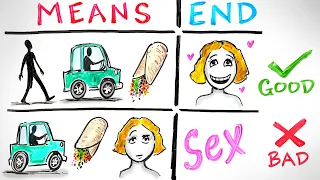
ethics okay deontological and utilitarian ethics these are two important Concepts and you're really going to enjoy this it's super interesting right geological ethics these were developed by Emanuel K and essentially the idea there was that there are absolute Rights and Wrongs there things that are wrong things that are wrong things that are wrong simply because we know that inherently morally ethically these things are wrong and they're wrong by definition right so you might say to kill a person is wrong no matter what the circumstances it's always wrong to kill a human being utilitarian ethics developed
by Jeremy Bentham and and John TR Mills said actually know uh what matters is the outcome of your actions you really want to do the thing that translates into the most good for the most people or you know sometimes it was framed as the most happiness for the most people but really you're trying to maximize the utility of humanity or of group of people and that's what defines what is right and what is wrong now interestingly when people are confronted with these two ideas for the most part most people immediately put themselves into one or
other bucket most people sort of have a knee-jerk reaction and feel as if they uh resonate with either uh Jeremy benam or Emanuel K and they they find themselves in one or other Camp Along Came Somebody by the name of Philip a foot and she said look it's not quite that straightforward and she developed a thought experiment to try and highlight how difficult it is to really distinguish right and wrong with respect to these two different Frameworks and the thought experiment went along the lines along I want you to do this with me use your
imagination and do this thought experiment and you'll see exactly what I mean right so she said look imagine a tram or a trolley and in this case you'll see I've drawn a little train it's not a very good drawing but you know it's the best I could do and it's going along a track and it's heading on the track its natural course is to go down this way and some evil villain has tied five people to the track and if it goes down that track the train or the tram or the trolley is going to
kill all five people for sure they they will not survive interestingly your standing a little ways off you're in the little Hut that the train people stand in and you've got a lever that you can pull and if you pull that lever the train will be diverted onto an alternative track and on this alternative track of course uh what's going to happen is there's just one person tied to the alternative track and that person will get hit by the train and they'll die but you'll have saved the five people and so the first question that
Philipa fooot asked is would you pull the lever and save the five people knowing of course that there'd be one person that still did die when asked and you might find this yourself as you listen to me most people respond that they would pull the lever and make that decision now interestingly that is a utilitarian decision right it's maximizing the utility of this particular set of circumstances it is killing a person so it's doing something that would would consider to be deontologically wrong but it is we're maximizing utility but then she said let's take this
experiment a step further and let imagine that you now don't have a lever but instead you've got a foot bridge and um I would try and draw the foot bridge for you but I really you know the train is the best I could do in terms of drawing I I wouldn't get this right but you've got a foot Bridge that's going over the track you do not have a lever to pull but you've got a foot bridge and on that foot Bridge there's a and you could push the off the foot Bridge onto the track
and that foot bridge that would would you would push him he would fall off and he'd land on the track and die and he'd be hit by the train but he would stop the train and of course the the five people would be saved so the question is would you climb onto that foot bridge and kill the push him off the edge and when the problem is framed like that most people overwhelmingly the vast majority of people say they they wouldn't do that they couldn't do that now strictly speaking those two scenarios are from an
ethics and moral point of view the exact same thing right you you sacrificing one person to save five but the problem is it's framed in a different way and our brain processes that information in different ways when you're pulling the lever the part of your brain that considers the ethical dilemma simply makes a calculation it's your sort of prefrontal Cortex it just sort of says five is more than one that's the better option let's save the five when you're thinking and imagining yourself on a foot Bridge actually getting up close and personal and killing a
person suddenly your emotional sense is are evoked and you make that ethical decision in a different part of your brain and under both circumstances you are quite sure that you're making the right decision and most people will swap and then of course the the trolley experiments can get changed in multiple ways you could say well on the foot Bridge the person that you're going to push off the foot bridge and they're going to die to save the five isn't a but rather it's the evil villain that tied the five people there in the first place
and then suddenly people are like oh hang on hold the phone we don't mind killing him or her uh let's you know that's fine that's justifiable so there are multiple versions and iterations there's versions of the trolley experiment where the track Loops back on itself and it gets more and more complicated but the point is every iteration of this thought experiment demonstrates to us that what we think is right and wrong is for the most part a function of how it is that the problem is framed and we need to think about that we need
to keep that in mind very carefully when we get into debates with people about moral and ethical public health problems and not fall into the Trap of Simply believing a particular Paradigm because it's framed in a way or is just sort of too sort of too much on the side of a pure calculation and doesn't take the humanity of a situation into account we have to be more nuanced than that now what does this mean have I taken away two two tools from from you or have I given you two tools that you can use
I don't know uh all I know is we can't go into these conversations without having that introspective Nuance that ability to kind of really reflect on our own position critically and make sure that when we go into an argument about ethics uh that we're aware that there's often another side of the story which may be quite compelling depending on how it is that that story is being R Okay so we've talked about the individual level we've talked about groups of people now we're going to talk about the nation state countries how it is that countries
and governments should apply the ideas of Ethics Public Health Ethics in decisions they make specifically with respect to this idea of distributive justice and inequity and inequality okay before we start talking about distributive justice and there's a fantastic paper I'm going to talk about by John rolls I want to talk about the idea of inequality and inequity these two terms get banded about they sometimes get used interchangeably they mean different things and it's really important that we understand them if we're going to really talk about the concept of justice and distributive justice okay so let's
just talk firstly about inequality inequality is when there is an uneven distribution of something across social delineations right it could be any delineation it could be gender it could be short people tall people uh Irish people South Africans any delineation any way of dividing Society up when there's an uneven distribution of something across those delineations we call it inequality right now not all inequality is bad so men are taller than women that's not necessarily a bad thing it's just a thing just happens it's just a fact of the matter Dutch people are taller than British
people again it's not a good thing it's not a bad thing it's just a thing and and we just we just live with it there are some inequalities however that exist because of pre-existing unfairness systematic unfairness in society and we call that unfairness inequity so inequity is a systematic unfairness that leads to inequality good example is a part South Africa had rules and legislation in place that meant that black South Africans had e e economic disadvantages and health disadvantages and and a whole and education disadvantages I mean a whole string of freedoms denied to them
there was a systematic unfairness in society and that led to inequalities so there was inequity that led to inequalities now importantly uh when we're talking about health there is a tendency to use this term Health inequities which are Health inequalities that are a function of an unfairness and and that's a real thing there are unfairnesses that lead to you know there could be economic unfairnesses there could be all sorts of unfairnesses in South Africa that have health consequences and there's this term there's this casual term called Health inequity that people try to use to capture
those things the Trap that people fall into is believing that those are and only those are the inequalities that we should be addressing and that's not true while it is the case that Health inequities these inequalities that are a function of some sort of unfairness have to be addressed at a social level we need to kind of make sure that we live in a fair society that doesn't translate into these sorts of inequalities it's also true that Health inequalities that have nothing to do with unfairness if it is possible for us to address them we
should okay let me give you an example as a Caucasian I'm more likely to develop skin cancer than somebody that's Darkly pigmented right that's not an unfairness I'm not being cheated by the world it's just a difference a biological difference between myself and my counterparts that are darker than me should we try and address that as a Public Health Community of course we should be telling people like me to wear sunscreen to stay out of the Sun and you know to avoid some of the the risks associated with skin cancer all right so it's not
just inequalities that are a function of unfairness that need to be addressed we need to address any health inequality where we are able to and of course it's true that where there's inequity where there's unfairness absolutely we have to address that that's you know that almost goes without saying but it's also true that it has to be said because we see examples of it all over the world where unfairnesses are not being addressed okay so that's that's inequality and inequity and that's important to understand that because next we're going to talk about this idea of
distributive justice and how much inequality in a society should we tolerate okay when we talk about distributive justice there was a paper written by somebody by the name of Jonathan rolls and he wrote this paper called a theory of justice and it was a very influential paper and it talked about the idea of inequality in society and how much inequality we should tolerate and the these are very badly drawn uh scales down here I'm going to get back to those in a second but really John rolls came up with a thought experiment and and again
I want you to do this thought experiment in your mind as as as I talk it through imagine yourself in the situation John said okay put yourself behind what he calls the veil of ignorance he calls it the original position it's you remove yourself from your life life imagine that you're behind this veil of ignorance and it's called the veil of ignorance because on the you don't know what your life was like on the other side you've been removed from life and the world and you don't remember whether you were black or white whether you
were tall short male female a South African or Irish you don't know anything about the life that you're going to go back to and you're going to go back to that life now given that you're going to go back to that life and you don't know who you're going to be what level of inequality would you opt for while you're here on on this side of the veil of ignorance what would you consider to be appropriate knowing that in that the world you're going back to could be dramatically unfair with huge inequalities and you could
be at the bottom end in fact in the world that we're living at the moment it would be overwhelmingly likely that you would be somewhere in the sort of bottom end you know the sharp end of inequality you know and we do live in a world where a very very few people you know kind of really control the vast majority of the wealth in the world so the question is from behind the veil of ignorance where would you how much inequality would you want in society when you came back it's an interesting question and he
came up with a way of thinking about it a way to kind of answer that question because it's you on the one hand you might say oh no I want to come back to a completely egalitarian world where there's no inequality whatsoever and he argued against that as well by the way and this is where our three little scales come in and here's here's what John rolls kind of suggested he said each of these scales represents sort of a certain level of inequality in society and he was saying look you could have a completely egalitarian
society where everybody has exactly the same amount of absolutely everything and you don't really have any uh any people that are are tremendously poor The Other Extreme you could have a situation where you have a lot of inequality but it might translate into a tremendously wealthy Society but there would in that Society be some people who are tremendously poor now John RS kind of argued that what you you don't really want that either although to a LGE extent that is the world that we're currently living in he argued that what you really want is a
world where there's some inequality but only inequality in so much as it translates into the least well-off being as well off as possible in other words in this scenario because of a little bit of inequality and sometimes a little bit of inequality could spur competition and incentives etc etc I mean there are reasons why some inequality in the world actually has economic benefit but he said you only want to tolerate as much inequality as translates into the least well-off so the people at sort of this side of the equation being as well off as possible
in other words where these people over here are better off than these people over here so if we were to draw a line a dotted line of their level of well-being let's assume that they're over here we're the least well off in society are the best that they could possibly be that's the level of inequality that we should Aspire towards more inequality could lead to the least well off being less well off than this completely egalitarian situation even if Society under those circumstances was a richer Society so he was saying let's not go for that
let's go for a sort of Middle Ground where the least well of are in other words he said The Benchmark for what we should tolerate and what we should Aspire toward is how well off or how are the least well off in society that's our barometer those are the people that we need to be concerned about not the overall economy not the wealth of the nation not the GDP per capita not the economic growth rate or none of that how well off are the least well off in your Society that's the measure of whether or
not that's the level of inequality that you should tolerate and that's in terms of distributive justice what it is that you should be aspiring towards okay I hope that was useful now we're going to go on to thinking about public health ethics from a global perspect Ive Okay so we've talked about the individual we've talked about groups of people we've talked about countries and so obviously the next thing to talk about is at a global level let's talk about moral responsibility and moral distance when we talk about public health ethics at a global level there's
two ideas that we need to think about one is moral responsibility and the other is moral distance now I don't have the answers to some of the questions that these ideas posed but I do think that we need to be cognizant of them moral responsibility is the extent to which we need to take responsibility for historic injustices that we have benefited from okay and there's lots of examples of that and the question that needs to be grappled with would be how far back do you go and to what extent do you take moral responsibility for
historic injustices and what does that mean how should you respond to that so there's this historic Injustice you're going back in time you're taking moral responsibility for things that happened in the past the other is physical distance and this is this idea of moral distance now Peter singer wrote a very influential paper called famine affluence and morality and in it he posed a thought experiment and he said look if you're walking down the road and you pass a child drowning in the mud and you're able to save that child you're just well able to save
that child the problem is that if you were to save that child the only way you could do it would be to get your feet stuck in into the mud and they you've just bought a very expensive pair of shoes and those shoes would be ruined I think most of us agree that you shouldn't care too much about the shoes but you should sacrifice the shoes and help the child out of the mud and save the child's life and that's my little diagram here by the way that's a shoe stuck in the mud I know
it doesn't look like it I'm not a great Artist as you've probably figured out by now now so we all agree save the child sacrific the shoes none of us have have a problem with that but something that Peter Singer pointed out is that in actual fact we are faced with that exact dilemma all of the time right there are reputable Charities out there to which we could give the equivalent of an expensive pair of shoes in full confidence that that might translate into a child's life being saved or perhaps a child being educated or
treatment for a child uh to be you know to be treated for some sort of illness but these These are children in Africa or in Southeast Asia or in some part of the world where they're so far away from us that it's easy for us to detach ourselves emotionally from their plight and we absolve ourselves of this sense of moral resp responsibility so Peter Singer was saying basically the distance shouldn't matter distance isn't an issue there's no such thing as moral distance essentially the responsibility to save a child's life if you're able to should apply
regardless of where it is in the world that you are so interesting idea interesting challenge to us all I hope you found this video useful please subscribe to this channel if you haven't already hit the Bell notification if you want to get notified of future videos like this you can join the channel as a member that's a slightly different thing and the members of course get access to different videos that's mostly about jobs and careers in the global and public health space um I've also got a website called learn more 365.com and I've got lots
more teaching material uh there in in a lot more detail okay thanks for watching hope you enjoy this take care