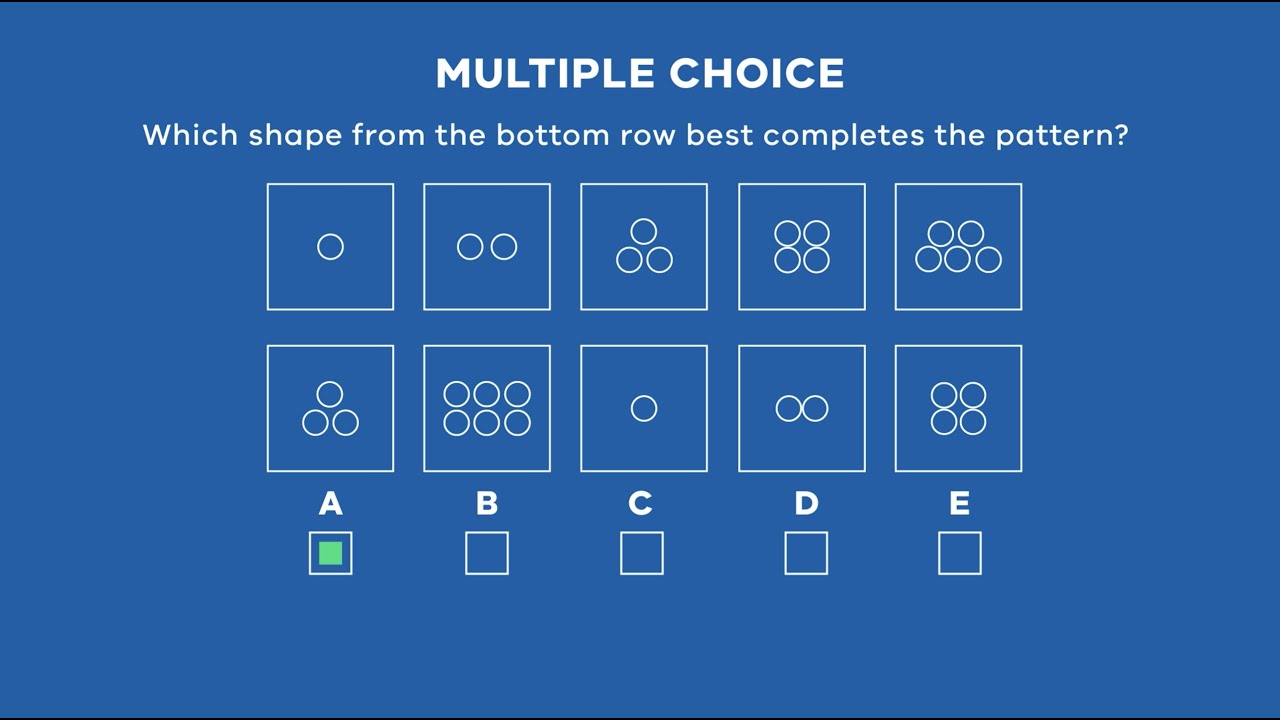
if you're sitting the Victorian selective entry exam then quantitative reasoning is one of the sections that's changed a lot in the last few years and so if you want to maximize a chance of getting into melbin high mcrob nosul or suzan Corey this is definitely a section where you want to understand what's changed so you can capitalize on it but also what stayed the same so you can make sure you're strong in those areas as well and so if we firstly get started with what is quantitative reasoning one big change is the number of questions
so last year they dropped it down to 45 questions in 30 minutes which means it's one of the least time pressured sections on the exam the counter to that is there is questions that take longer so there's a real mixture of questions in this section there's patterns questions which are pretty fast to answer and it really comes down to you either instantly can see the pattern you can get it right in a pretty short period of time or you can end up wasting a lot of time on them on the other hand there's also a
lot of worded problems which really test year eight year n math skills skills that you would have learned at school but in real life worded scenarios which do make it quite a bit more challenging to actually figure out what's being asked of you and so in terms of what success looks like on this section it's really very similar to other sections where you're ranked against every single other student sitting this section with the top score and the top the bottom score at the bottom and you want to be in about the top 10% so if
you can be in about the top 10% for three of the five sections on the exam that's going to set you up pretty well for success and the good thing is even though quantitative reasoning is a mass-based section and so you would think well do you need to be really good at maths at school the truth is that you can improve at this section really quite quickly even if maths isn't one of your stronger sections for example this section used to be called numerical reasoning when I sat it it was quite similar there was a
few differences but it was fairly similar to what we see now the first time I set the selective entry exam was when I was hoping to get entry into melbour high for year9 unfortunately that time I got a really low score in this section and it was actually my lowest per performing section I wasn't never really strong at Master school and so initially this section was one that I found a little bit more difficult but the next year I applied again for year 10 entry that time I luckily did get into a selective school I
got into melbour high and this was actually my best section and so went from being my worst section to my best section just through understanding the strategies and the techniques for how you can master all the different question types in this section so even if you sit a mock exam the first attempt is more difficult and you find it really quite hard that's okay it's a section you can improve very very quickly if you go through it you understand all the different types of questions that are in the section and you learn strategies and techniques
for becoming more confident in it and that really is one high level piece of advice across every single section of the exam you really want to avoid falling into the Trap of thinking I'm bad at quantitative reasoning I'm bad at math I'm bad at writing I'm bad at reading a lot of people fall into that category where they Al tell me look I'm pretty good at these three sections but I'm really bad at MTH I'm just not not a math person I can't do well in maths and the reality is that for every single section
of the exam there's about 10 or so question types some there're slightly more some there're slightly less if you focus on one question type and you ask yourself what strategy do I need to learn if I learn that strategy then I'll be able to answer that question correctly every single time there's always a strategy you can learn and I almost guarantee it if you focused on one question type for 2 3 4 days just obsessively until you've mastered it and you do that for every single question type in the section it doesn't matter what the
section is you can definitely become really skilled at it because reality is a selective entry exam it's not that difficult there's always going to be a strategy a technique a tool that's there if you learn it you'll be able to get the question right that's really the key thing and so there's two main types of questions in this section the first one being number patterns and patterns in general and the second one is word of problems in this video we're going to mainly focus on number patterns questions and the specific strategies that you can use
to get these questions right because the interesting thing is the number patterns questions they're kind of almost similar to what you'll see on an IQ test and so it's natural to think well these are probably ones where you can't really improve that easily and I've seen a lot of people say there's no strategy for these you just have to be good at them or you can't but the key thing is I I know from my own experience you can improve them I wasn't necessarily amazing at them at the start but I learned a few strategies
which made them pretty achievable and now I'd say they're pretty fun they're pretty relaxing to do because I know the strategies for how to pick them apart so number patterns questions what does that actually mean here's a few examples here really what they're testing is your ability to quickly find a pattern for example in example number one we can see 6 3672 3918 525 and something now this pattern is not too difficult I would say it's probably one that's fairly reasonable what we can see is that 6 multiplied 6 gives us 36 so 6 has
being multiplied by itself which gives us 36 3 multiplied by itself gives us 9 5 multiplied by itself gives us 2 so the first part of this pattern which I'll just quickly draw it here for us is essentially these first numbers here what's a pattern here the first number is multiplied by itself 6X 6 = 36 3x 3 = 9 5x 5 = 25 after that it's just simple they multiply by 2 36 * 2 is 72 9 * 2 = 18 25 * 2 is 50 now so the right answer here was 50 same
thing with this one here it just went 3 6 probably 12 24 both of these patterns were not too hard you might be wondering well how did you actually find those patterns CU maybe you found these patterns easily maybe you didn't but how do you find it systematically every single time it can't just be a game of luck otherwise you're not going to consistently get high scores there has to be a method or a system to finding the patterns if you want to get really good at these questions and the good thing there is a
system that you can follow to make solving these questions a lot easier the key thing to accept firstly is that there's always a pattern there there's always always a pattern that exists we just need to find it and so there's kind of two key steps to finding the pattern the first one is recognizing the pattern so looking at this example here and recognizing what you think is the pattern and so in this case we thought the pattern is probably the first numbers multiplied by itself and then it's multiplied by two the second step is then
utilizing the pattern so we think we've got the pattern there's always going to be a few situations where we can test it to see if you've got the right answer so that's the really good thing about number patterns in that you'll always know if you got the right answer or not because if you find a pattern you can test it a few times in a few different situations and you'll be able to figure out is it correct or not so in this case we thought based on this first row the first number gets multiplied by
itself to give us the second number second number then gets multiplied by two we can test that 3 by 3 = 9 so that's holding true this number multiplied by itself gives us 9 and then same thing again 9 * 2 gives us 18 same thing with this one here we thought the initial pattern was either probably plus 3 or * 2 now if it was Plus 3 that wouldn't work that there's just no way this would this series of numbers would work with plus three whereas if it's multiplied by 2 3 * 2 =
6 6 * 2 = 12 12 * 2 = 24 so it's kind of two key stages with these pattern questions step one look for the pattern try to recognize what the pattern is second step utilize the pattern test it in a few different situations you'll know if you got the pattern or not and the key thing with these questions is if you can't spot the pattern very quickly you do want to move on you do want to leave it until the end cuz you don't want to spend couple of minutes wasting your time on
these these are questions where it's very easy to waste time searching for the pattern getting all stress not finding it if you can't find it within a short period of time move on to another question leave it until the end you can come back and look at it later now let's have a look at a few different types of patterns that can exist cuz luckily there's four main types and understanding the types does make it significantly easier to find the pattern first type is increasing patterns this is is where the numbers are only going up
second type is decreasing patterns which is where the numbers are only going down third one is fluctuating patterns where the patterns really where the numbers are going up and down and then there's trick patterns which includes decoys or jumps so we're going to work our way through each of these in today's video Once you understand these four types of patterns for most questions you're going to be pretty covered it's almost always going to fit into one of these categories and if you're really fast at spotting them it's going to make it a lot easier to
understand and quickly see what the pattern actually is so first one increasing patterns what are they now as the name suggests these are just patterns where the numbers are increasing rather than decreasing each number is higher than the next for example 4 8 12 16 20 it's going up by four each time 100 110 210 220 320 this one's a bit harder it's going plus 10 plus 100 plus 10 plus 100 increasing patterns are generally fairly easy to understand understand and you might be wondering well why does it even matter calling an increasing pattern what
does that actually do to help us make it easier to solve it's important because if the numbers are always increasing it tells us two key things it means that either if the numbers are increasing by a small amount it's probably addition that's the pattern for example if the numbers are going from 2 to 4 to 6 to 8 to 10 could it be multiplication not really like it wouldn't really be possible we know the pattern has to involve addition it's probably plus two whereas if it's something like this 749 343 241 it's increasing by such
a large amount each time it's probably multiplication and so this is the really the key thing if you see numbers increasing by a small amount there's probably addition involved if it's increasing by a larger amount it's probably multiplication and if it's increasing by a weird amount that doesn't really seem that normal then it may be a mixture of both it might be like the numbers getting multiplied by three and then we're adding one or it's being multiplied by four and then we're adding one for example so let's take a look at a few examples this
first one here 6 24 something 384 now based on what we just saw we know that if the numbers are increasing by a massive amount multiplication is most likely involved here cuz sure the pattern could be+ 18 + 18+ 18 but that's not going to work and so it's probably going to be what 6 * 4 it's 24 24 * 4 is 96 and then 96 * 4 is is 384 so right away we know the pattern there is Time 4 the reason why we can jump that so quickly is we know numbers are increasing
by a large amount and so what's the likely pattern it has to probably be multiplication and so B96 was correct here same thing with this one here this one's a little bit different I would look at these two numbers straight away 105 to 122 and I'd ask yourself is it possible for multiplication to take us from 105 to 122 how possible is that and the answer is not that possible at all and so it probably has to be addition there what's 122 - 105 it's 17 and so my guess is the pattern is probably +
17 every time 71 + 17 = 88 88 + 17 = 105 105 + 17 = 122 and so again just by looking at the relationship between these two numbers they're going up so it has to be multiplication or addition or a mixture of both and is it possible for multiplication to be involved not really it would be a really really weird combination of patterns that's for sure so it had to be kind of be addition there which made it easy now we'll do one more what is a missing number in this sequence 16 33
something 135 now this one's a little bit more difficult because we can see the numbers are increasing by a lot pretty quickly but then it doesn't quite look like it's just multiplication like if it went from 16 to 32 then would know okay it's probably Times by two it could be Plus+ 16 but it's probably Times by two two but it goes from 16 to 33 and so what that tells me is there's probably two steps there my guess is having seen a lot of these patterns it's probably going to be * 2 + 1
16 * 2 gives us 32 + 1 gives us 33 Let's test it we've recognize the pattern let's utilize It 33 * 2 = 66 * 2 = 67 so my guess is that 67 is correct here but we can test it again 67 * 2 = 134 134 + 1 = 135 so that gives us a pattern there again so this was a bit harder the pattern was * 2 + 1 16 * 2 + 1 = 33 33 to 67 67 to 135 so this is probably the next step up in difficulty when
there's a mixture of both addition and multiplication does make the pattern a little bit harder to solve now we'll quickly have a look at these ones here CU these ones are a little step up again in difficulty because there's more information there they're in these are in these triangles so for this one here right away we can notice that if we look from this side here to this side here numbers are increasing 4 to 12 5 to 15 12 to it looks like time three is a pattern doesn't it it really does look like 4
* 12 4 * 3 = 12 5 * 3 = 15 so this one here is probably 36 realistically and so right away we know it's probably one of these two so I'd cross these two out and probably that one now we then know it goes 12 to 13 15 to 16 so it's obviously just going to be plus one is that next step of the pattern and so this numberers 37 obviously but then what's the pattern here it looks like time 2 * 2 so this one here is going to be multiplied by two
as well so it's going to be 3 six and then 26 which is this one here and so we can see when it's increasing this was fairly easy I'd say the pattern was * 3 + 1 * 2 so not too bad with these ones here these ones require a little bit of a different strategy what we want to do here is you want to look inside the triangle but then you also want to look outside cuz often the numbers outside the triangle some sort of calculation between them is going to lead to the one
inside in this case I'd say 12 + 3 + 3 = 18 22 + 14 + 6 gives us 42 and so looks like the numbers on the outside are just being added together 9 + 8 + 4 = 21 and so 21 would be correct here so that one was kind of easy cuz you just added the things that were outside the triangle together sometimes you might multiply them together sometimes you might multiply these two and then minus this one there's a few different ways that it could be but normally it's some sort of
arrangement of the outside ones leads to the inside one most of the time so that's increasing patterns so key thing with increasing patterns what do you need to remember increasing patterns are when the numbers increase every single time if it's increasing by a small amount probably addition if it's increasing by a larger amount probably multiplication if it's increasing by an amount that looks a bit weird it's probably a mixture of both so decreasing patterns now I think you understand how this is probably going to work so we'll only do a few practice questions on this
one but it's when the numbers are decreasing for example 20 15 10 5 5004 again these are pretty common and if I said well when numbers are increasing we look to multiplication and addition if numbers are decreasing what would we look at what would we look at in that situation and the answer is of course subtraction or division they're the two prime suspects for the pattern in this case so if the numbers are decreasing by a small amount probably subtraction 96 88 something 72 now is it possible to use division to go from 96 to
88 possibly would be very difficult not really at all and so it's probably this pattern's probably just going to be minus 8 96 - 8 = 88 88 - 88 = 80 80 - 8 = 72 whereas if the numbers decreasing by a larger amount then we know probably division probably division 640 to 160 to something to 10 division has to be involved there realistically and so same thing again if the numbers are then decreasing by a weird amount then it's probably a mixture of both subtraction and division let's look at two quick ones here
480 to 240 to something to 60 now the numbers are decreasing by a pretty large amount divided by two my guess is divided by two again divided by two that would work so it looks like the pattern here was a fairly simple one each number was dividing by 2 480 to 240 to 120 to 60 and so 120 is what we want for this one here what about this one here it's increasing by what I'd say is kind of a weird amount it would be what's that that's 21 minus 21 if we try that here
again we' get - 21 would get us 121 which would get us 100 and so the pattern in this case was - 21 163 - 21 gives us 142 142 - 21 gives us 121 and then 121 - 21 of course gives us 100 and so decreasing patterns it's the opposite of increasing patterns numbers decreasing we want to look at subtraction and division as the prime suspects to create the pattern now fluctuating pattern some of you might be able to guess what this means but a fluctuating pattern is where the numbers are both increasing and
decreasing the key thing with these we'll have a look at a quick example for example this one here 440 20 200 so a bit of movement there it goes from 4 to 40 back to 20 shoots up to 200 100 to 50 to 150 to something the key thing with these patterns these are slightly more difficult but if you know how to use and spot increasing patterns and decreasing patterns this is just using both skills together we want to isolate the movements so what you want to do is you want to have a look and
see okay this here it's increasing and over here it's also increasing and so you want to just look at the increasing pattern first 4 to 40 20 to 200 that's increasing by time 10 we then want to flip it and just look at the the reverse so in this case it went from 40 to 20 which is probably divided by two from two 200 to probably 100 divid two and so you want to just break it into a part look at the increasing patterns and then look at the decreasing patterns as well and that gives
you a lot of clarity about what the pattern actually is so that's kind of what exactly what it says here treat each movement separately when the numbers are increasing look at addition and multiplication when they're decreasing look at subtraction and division so let's do two quick practice ones for this one 220 up to 440 that's probably Times by 2 440 down to something then back to 220 then back to 55 now this one is a little bit more difficult at first glance because when you see 440 you think it should go straight back to 220
but let's just have a look at each movement in isolation so 220 up to 440 that's probably multiplied by 2 then 440 to something not sure what would 440 be going to not sure goes to 220 and then we can see here 220 back to 55 and so what I'd say is this looks like it's times 2 this looks like it's divided by four so that's the first stage I think I've recognized the pattern I think when the numbers increase they get multiplied by two I think when they decrease they get divided by four and
so now the second stage is utilize a pattern let's see if it's correct so this is multip by 2 so that's fine then I would think that if this pattern here which is divid 4 holds true it should go 440 down to 110 and then if this pattern holds true again of dividing it by two should go back to 220 and then back to 55 so we can see that was the pattern and so the pattern in this case was multip 2 / 4 multip 2 / 4 which gives us that correct answer of being
a 110 now one final fluctuating pattern this one here 100 to 20 60 to something to 36 and so in this case what it looks like is probably again ID 5 100 ID 5 gives us 20 20 * 3 gives us 60 60 / 5 gives us 12 and 12 / 3 gives us 36 so we can see that's correct as well correct one here was 12 so the pattern was essentially / 5 * 3 / 5 * three and so key thing with fluctuating patterns treat each movement separately like we did there you look
at where it decreases you think okay what's a pattern there you look at where it increases and you say okay what's a pattern there you look at find those two patterns together and that's your overall pattern now final things are trick patterns there's two major tricks that we see a lot on the exams the first one is a decoy number a decoy pattern and this just essentially means where I just add a number in there or a series of numbers that are the the same that are designed just to distract you they kind of distractors
so for example this pattern here 178 176 177 something 1732 looks slightly more confusing when you see this here because there's all these random 17s but in this case the 17 is a decoy and if we actually just ignore the 17 it just goes from 8 to 16 from 16 to something and from something to 32 and so it looks like the pattern's probably just Plus 8 8 16 probably 24 32 the 17s just confuse us we can just ignore them they decoys and we can just look at the pattern at hand which is simple
Plus 8 so really the key thing with decoys is decoys they normally happen in one or two situations either it's the same number repeating like this or it could be a number that is at the end or the beginning of a large number so for example if we had like 160 and then we just had one at the end 180 1 2001 in this case this pattern would still actually work but sometimes I might just put some random number at the end of a long number which then makes it seem weird but you could just
cut out that last number or very often it might just be something at the start it might be like this 0 2 4 6 8 what and so zero is just a decoy or it might be 6 36 something and so the zero here is just a decoy so sometimes there is like a zero one at the start which is a bit of a decoy if you see that it's probably a decoy the key thing is it's generally repeating at a regular and consistent interval or it's just at the start so let's have a look
at a few practices just to make it a bit clearer this one here 0 3 10 31 something as soon as I see a zero at the start I think it's probably a decoy number I'm just going to ignore it for now and see what the pattern could be 3 to 10 could be plus 7even but that wouldn't really work here so it's probably * 3 + 1 3 * 3 = 9 + 1 = 10 10 * 3 = 30 + 1 = 31 31 * 3 = 63 + 1 = no = 93
+ 1 = 94 so that would be our pattern here was * 3 + 1 same thing for this one here 0 99 so straight away that really tells us that zero is probably going to be a decoy number there 99 to4 it's probably + 15 114 to 129 probably + 15 129 to 144 probably would make sense another zero there at the end is a decoy and so 40 144 was correct the pattern was just plus 15 each time now one final one one that is a little bit more difficult how do you think
you would approach this one here this one does look a little bit more difficult I have to say does look a little bit more difficult so I'm just going to scan it now quickly now what I'd say is the two zeros in the corner are probably going to be decoy numbers for these types of ones you generally want to look down and up but also on an angle now when I look down and up I can't really see an obvious pattern there's plus 5 here plus three there don't really know there that's plus two plus
two not sure so it's not super clear so if we look on an angle this would be 5 to 6 would be + 1 7 9 to 11 would be + 2 if this was + 3 11 14 17 that would work plus four so what the pattern actually looks like which is a bit of an interesting pattern is plus one here plus two here plus two here this next row then was plus 3 11 to 14 14 to 17 yeah that works and then this final one here was plus 4 and so this number
should be 14 which is the answer good so in this case this was a bit of a trickier one you had to look on the diagonal you had to ignore the zeros otherwise you would have been in a bit of a mess when you see these like Grid or box ones just look straight up and down and then look on diagonal as well don't forget diagonal cuz can sometimes be where the answer is now the final trick is one that does look very confusing when you don't know how to look for it but once you
see it it makes complicated looking patterns simple and it's called pattern jumps and this is where there's two patterns within the one sequence and they're going back and forth between each other so for example this one here goes 2 3 4 12 6 48 8 and 192 now when you look particularly look at these first four numbers you would say my goodness what on Earth is a pattern there but if we actually just highlight this here two 2 4 6 8 so what we've see is there's a pattern here which is plus two plus two
plus two plus two which is a super easy pattern it's as easy as it gets it's just jumping a number which is why it's called a pattern of jump the other one is then just * 4 3 * 4 = 12 12 * 4 = 48 48 * 4 = 192 so these pattern jumps they do come up quite a bit and a big trick and a lot of people will get them wrong and so if you can spot them out quickly it's a big way to give yourself a bit of an edge on these
pattern types of questions the key thing is these patterns will always apply in a consistent interval it'll never like jump one and then jump six if if that's the pattern that you're seeing then it's probably not the pattern so we're going to have a look at a couple of these now key thing with spotting these is really just to try and isolate just think okay one 2 3 4 okay yeah that looks like a pattern 90 967 64 61 okay yeah so normally once you know what to look for if you look for a jump
they do normally jump out at you I would say so let's have a look at a few examples this one's kind of easy one 2 3 4 64 128 256 something so we can see there's really two key patterns here the first one is just going 1 2 3 4 5 6 7 8 and the other one is multiplying the numbers by two 64 128 256 512 so see for 512 is correct here and then final one 4 let's M this one out cuz it's slightly more harder 4 to 16 so probably Times by 4
16 to 64 * by 4 and so 64 * 4 would give us 256 so that's probably going to be the right answer let's check though 2 48 so this one looks to be Times by two so the next number would this would be 256 and then this one what would it be it would go 2 48 so they' be multiplied by two so it would be of course 16 so these pattern tricks look out for them two main ones are decoy numbers where there's like a zero at the start and the end or the
same number that's repeated which just kind of is there to distract you so you can just ignore it it's just not a part of the pattern you can ignore it completely or pattern jumps is where there's two patterns together that jump over each other so that's another thing to look out for otherwise the key thing with patterns is if you practice a lot of these questions you can get very good at them very quickly and so in terms of exam strategy how do you tackle this section of the exam specifically for pattern questions the key
thing is during your preparation you you want to focus on doing as many of these questions as you can and creating what I'd call a pattern Journal where every time you see a pattern you note it down because the reality is there's only so many patterns that can exist in the world in these types of questions and so if you note down every single time you see a pattern you're going to notice the same ones coming up again and again and again and that's going to allow you to get faster and faster at spotting them
because you would have seen all of them before after You' done 500,000 of these questions so that's the first thing create a pattern Journal during your preparation which will make it easier for to spot them in the actual exam essentially you want to be smart about it in that if you can't see a pattern quickly within the time that you have allocated to that question leave it and come back to it at the end if you have time because it's very easy to get stuck looking at one of these and just not knowing what the
pattern is and wasting way more time than what you have and so you want to be smart about it every question on the exam is worth the same amount of marks if you don't see the pattern with the time limit just move on that's okay in this section you probably need about 80 to 90% to get a superior or to be in the top 10% of students which is what we're aiming for like we said at the start of the class and so you can afford to leave a few of them until the end and
just guess them if you have to if you can't see the pattern right away and so that brings us to the end of today's quantitative reasoning training where we're really deep dived into the number pattern questions in particular hopefully you feel a bit more confident with these questions I'd recommend doing a bunch of them straight away after this video to practice some of these skills for yourself and the key thing is quantitative reasoning is a section where if you're really focus on each question type in a lot of depth there's no reason why you can't
learn the strategies and techniques you need to be to answer them very very quickly and easily and so just before we wrap up today's session there is some free practice questions below this video I'd recommend downloading them if you haven't yet otherwise if you want our help with tutoring you want to get tutored by me in the leadup to the exam there's a link below this video where you can book in for a call with us and get some more information about that as well and so good luck in your quantitive reasoning practice and I'll
see you back here in another video very very soon










![DAX Filter Context Basics [Full Course]](https://img.youtube.com/vi/Rpa8mDH7mes/maxresdefault.jpg)




![How To Get Into Top NSW Selective High Schools [2025]](https://img.youtube.com/vi/IbY3jqVaBJ0/maxresdefault.jpg)