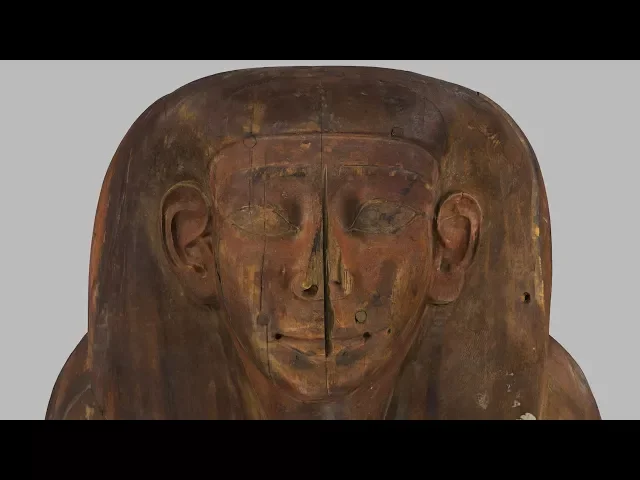
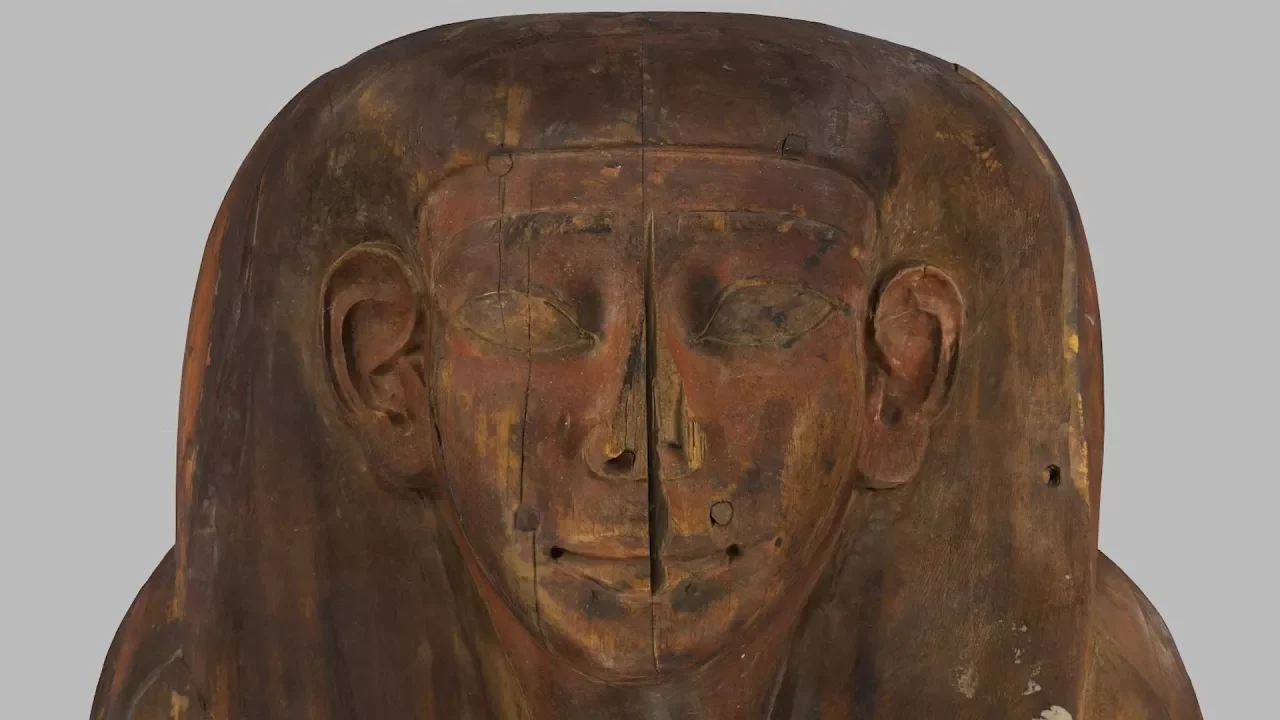
[Music] you this coffin was carved at the end of the Egyptian Empire more than two and a half thousand years ago but it's what's inside that's intriguing modern-day archaeologists the remains inside the coffin we don't know really anything about and so we're about to start a really detailed project to scientifically investigate this these remains in the coffin and asked a whole bunch of questions but really who is inside the coffin up until last year no one realized that it was full of human remains the coffin languished within the sandstone walls of Sydney University for more
than 150 years bequeathed by the Nicholson museum's founder Sir Charles Nicholson the latest modern technology is being used to try to solve this ancient mystery the first step is to laser image the coffin and its contents to create a high-resolution 3d model we have an archival record of the current situation the current configuration of every little piece it seemed that that's in the mummy before it's disturbed [Music] coffins don't always hold the remains that they were intended for often the mummies were discarded although Egyptian antiquities sellers would put another one in if a customer requested
it the hieroglyphics on this coffin say that it was intended for a priestess called miniatures do we have the remains of uni that s inside we don't know that's why we're doing this these days it's extremely rare that mummies are investigated like this archeologists usually consider it unethical to disturb human remains but these artifacts are in desperate need of preservation [Music] we can excavate in this coffin because it is so badly damaged that tomb robbers have really ripped it apart so we can't do anything more to the condition of the body then it hasn't been
done already the next stage is to take the coffin off site for a detailed cat scan I've never done anything like this before I've hardly got any sleep last night all this fiddling is to see that we could actually get the entire coffin in one go the scanner is designed for the bigger patient and also for the bigger profit this isn't professor John Magnussen's typical patient but he's finding clues amongst the jumble of remains well so you can see wrapping and bone and there's two knees and those feet finding the feet as well as the
sacrum bone which is part of the spine is a significant discovery we can start to make judgments about how old they are because once the growth plates fuse and you start to move into adulthood that becomes pretty obvious so it's older and it's got some degenerative some early degenerative changes on it and the sacrum is completely fused so we know it's definitely an adult so even though this is just very heavily disturbed and mixed up we can still enough clues that we can trace all this sort of veteran yep this is so exciting there we
know that many that s herself this priestess or this this woman for whom the coffin was made was an adult and that joins in those bones say yeah they're the remains of an adult and actually build the remains of an adult who sort of 30-plus a few weeks later back at the University of Sydney the physical excavation is underway the CT scans showed that part of the feet and possibly part of the ankles were there preserved within their bandages but today's the day that we actually Egyptologist dr. Connie Lord has been painstakingly sifting through the
layers of debris to reach the feet 1 2 3 [Music] there it is yep there is that is so amazing so it's really from the ankles down right yeah coming through yeah so there's the toes that should be the toes they could even be toenails which would be really thrilling it's weird to want that but that's what I want toenails are fantastic for radiocarbon dating little by little this excavation has really told us and more about this person in the coffin and hopefully given it some dignity that it lost when in ancient times it was
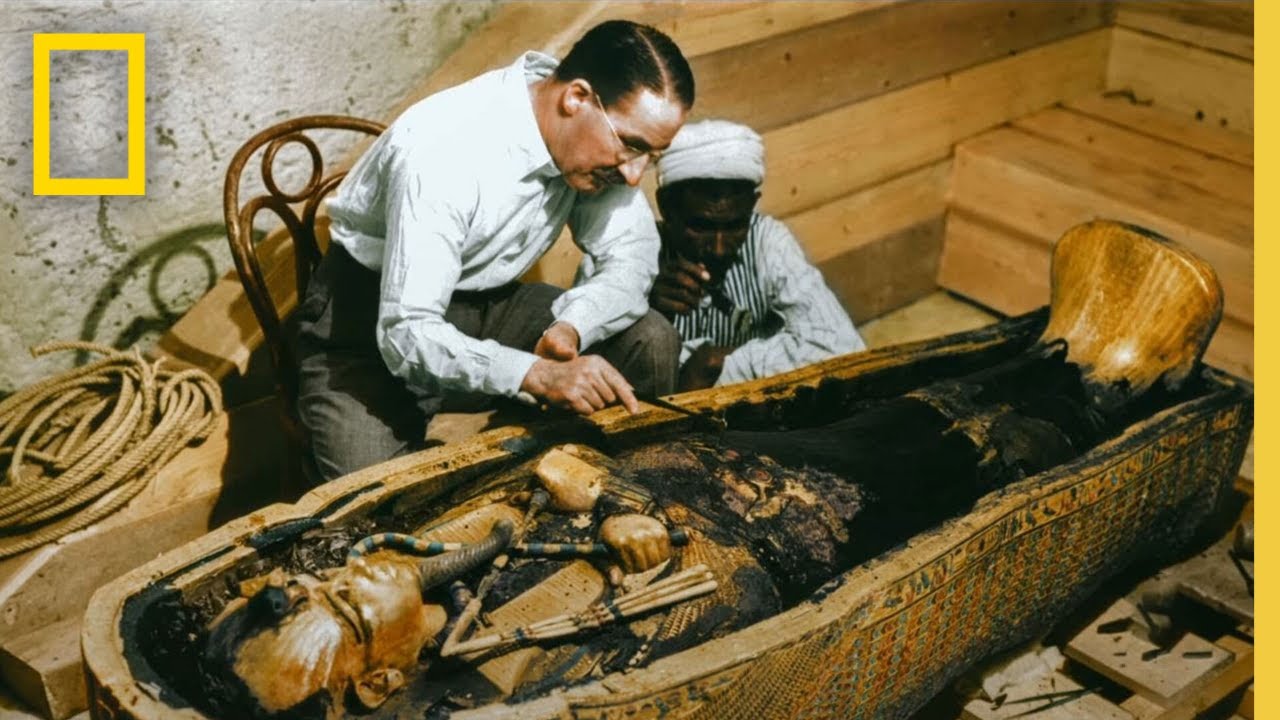
looted so badly after lifting up the feet dr. Lord makes another important discovery this is I'm pretty sure this is the resin they've poured into the skull after they've removed the brain a piece of bone that could be part of the skull appears to match the resin cast so this is like the the image you see of Tutankhamen skull with the resin line and it could tell us so much there's so much here that we need to think about it's just such an incredible find I don't remember anyone finding something like this it would have
to be rare there's months and maybe years of further analysis to try to definitively identify these remains all of these bits of information are starting to tally with what we would expect if that person was beneath the test herself we're never going to get the smoking gun we're never going to get a written bit of papyrus saying my name is beneath attest but by putting together this sort of picture we can start to refine down that sort of the possibilities [Music] maneet otis and three other mummies will soon be exhibited in a new Museum at
the University the egyptians often had a very common refrain that was painted on the inside of their tombs or written on that coffin which will translate as something like speak my name so that I may live again those four individuals will be able to be displayed and together asked about what were their lives like to speak their names so that they can live again [Music]