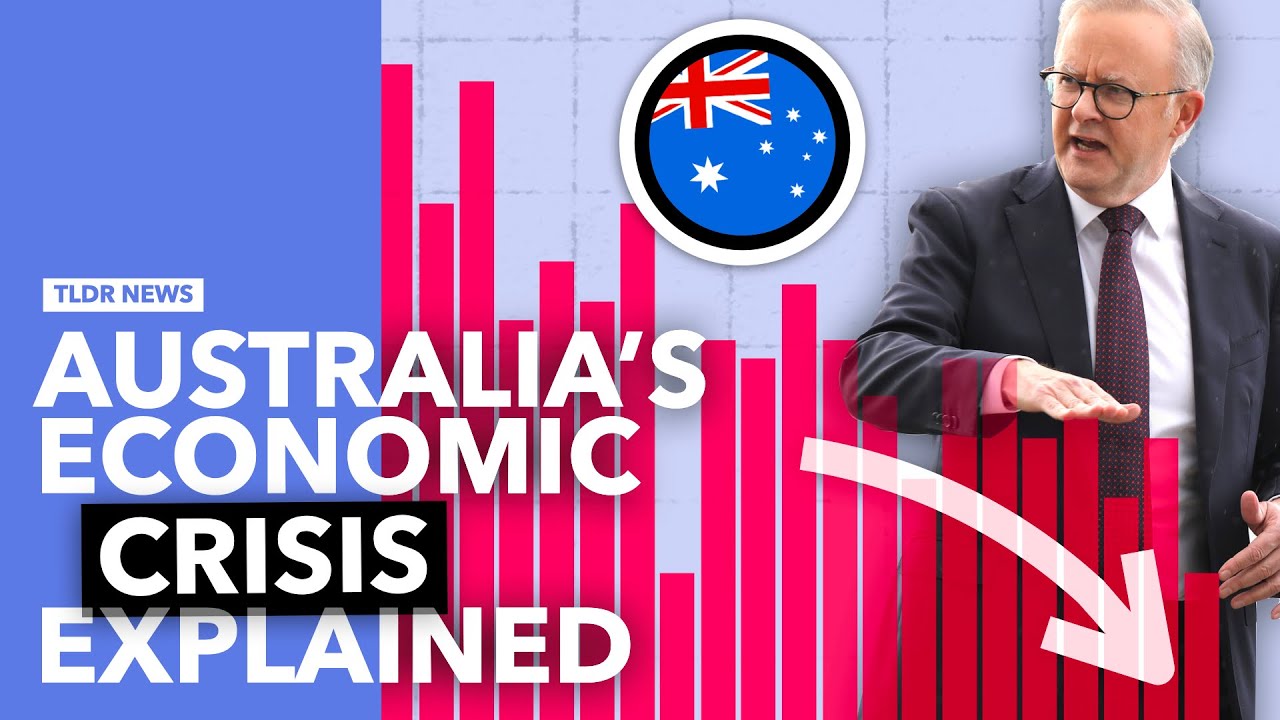
for well over four decades Australia has been one of the richest countries in the world because of this its friendly locals and good weather it's often portrayed as a paradise in the media but in the last 10 years things have started to decline what seemed like a recovery after Co quickly turned sour and the country has once again entered a per capita recession marking only the second time since 1991 ironically wages have actually been rising in Australia but this means nothing when inflation is rising even quicker making everything you want to buy more and more
expensive which means Australians are getting paid less each year relative to the price of goods and services adjusted for inflation wages have actually been falling for the last 3 years and even though this has slowed they remain roughly at the same level as in 2009 meaning the average Australian has lost out on 14 years of progress on living standards costing them $10 T of thousands of dollars cost of living is a term at the front of every Australian's mind as the country is facing one of the worst squeezes in its history Australia is a member
of the Commonwealth of Nations meaning it shares a colonial history with the United Kingdom it's maybe then not a surprise that Australia and the United Kingdom share a lot of the same issues both countries are seeing wages drop living standards fall and most importantly both are facing an issue with a fundamental aspect of daily life housing everyone needs somewhere to live but the problem in Australia is that no one can seem to afford it Australia's biggest city Sydney ranks as the second most unaffordable in the entire world and when we expand this list to look
at the top 10 Melbourne and Adelaide also make the cup with other major hubs Perth and Brisbane not far behind the prospect of owning a house is increasingly becoming a dream for many across the country especially for those entering the housing market for the first time unfortunately Australia's problems don't just end there as it stands even by 2028 real wages will be the same as what they were in 2014 and unless they grow faster than they did before the pandemic the Gap in living standards could persist until the 2030s what's ironic is that every year
hundreds of thousands of people move to Australia in search of a better life and this in some ways is contributing to the problem it's not hard to see why people want to come Australia is one of the most beautiful countries in the world but behind this picturesque postcard is a grim reality for many Australians so how did Australia get like this and will it get better soon an issue in the center of Australian media right now are recent measures to crack down on migration and there is often bias and misinformation surrounding this debate to help
me research this topic and other points in the video I've been using ground news and I'm really happy to announce that they are the partners of today's video the media today has become ever more polarized and falsified but with ground news when researching an article I can see the number of sources and also the distribution of the political bias each source is also given a factuality rating which feeds into the article's overall score and using this timeline and geography feature we can also see how journalists from different countries report on the source like India Today
leading with the headline that the visa fee will hurt Indians whereas Australian s SPS takes a different approach with over 50,000 sources you can find follow specific topics worldwide to uncover stories mainstream media may not be covering I'm really pleased to be sponsored by an independent platform that is leading the way in bringing back impartiality to the media so if you'd like to get a bias-free approach to news you can scan the QR code or go to the link ground. news/ invisible where our viewers will get a special 40% off the Vantage plan I use
to get unlimited access to all of their features click the link in the description to find out more Australia has been been a relatively prosperous country for most of its history ever since European settlement at the end of the 18th century in fact by the end of the 1800s incomes were around 40% higher than they were in the United States but Australia's economic fortunes really shifted in the 20th century with boom periods occurring in the 50s 60s and '90s but all for slightly different reasons it's no secret that much of Australia's initial economic success was
based around resource extraction being an island roughly the size of Western Europe and the United Kingdom combined Australia is of course littered with an abundance of valuable natural resources broadly speaking the three resources which have defined Australia's economic success have been iron or coal and natural gas but most notably irono widespread extraction began in the 1950s and 60s when a lift on an export ban flooded the area with private company looking to secure leases so they could begin extraction in the 60s these companies started exporting to countries all over the world particularly in newly industrialized
nations like Japan who were undergoing rapid growth and needed iron ore for production of Steel mining created thousands of jobs both in the extraction itself and in the surrounding Industries like building the railroads that connected remote regions to the coast and it also meant Australia could begin to invest in areas to diver I ify its economy money was diverted into education to ease the transition into a service-based economy which significantly expanded access to secondary and University education a new generation of Highly skilled educated Australians were beginning to enter the workforce which contributed to significant economic
growth at the end of the 20th century by the turn of the Millennium Australia looked like many developed European nations in that it was largely based on the service sector and once again they were well placed to take advantage of another economic growth miracle in Asia this time China Australia's share of iron or exports to China increased significantly from less than 20% in the late 1990s to over 70% by the mid 2000s the same was true for coal and is a large reason why Australia witnessed a period of rapid growth in the early 2000s which
proved a significant buffer against the 2008 housing crisis it's clear to see that Australia has a lot of strengths but as we've seen with other economies these can often mask some underlying even bigger weaknesses today the nation grapples with a number of severe issues including Rising inequality a housing affordability crisis and stagnant productivity all of which stem from past policies and require urgent attention to secure a sustainable future perhaps the most important issue for people living in Australia currently is housing not only are there not enough homes but the ones which exist have become unaffordable
for the vast majority of the population making home ownership for firsttime buyers nearly impossible without an income far above the average or financial support from the so-called Bank of M and Dad and this shouldn't come as a surprise over the decades the cumulative effect of not building enough homes has led to a significant Supply demand imbalance in the housing market it's worth mentioning that Australia has been dealing with a housing crisis in some some form or another for well over 20 years major cities like Melbourne and Sydney have always been expensive but it's in recent
years that this has become even more extreme to put this situation into perspective the most recent estimates suggest that to buy an average home in Sydney a family would need to earn around $280,000 per year compare this to the average annual income in Sydney of $120,000 per year and it's easy to see why many people cannot afford a home like any economic issue its causes are multifaceted but at the end of the day there are simply not enough houses to meet the ever growing demand Australia's housing supply of 420 per th000 people was low compared
to oecd standards and the shortage of housing stock has been making it more difficult to find a property to buy or rent meaning those which are available are taking up an even greater proportion of people's income as people now need to save for an average of 11 years just to make the deposit on a home the number of homes being offered for sale in Australia has fallen since 2015 and the number of homes for rent has been falling since early 2020 in 2023 170,000 homes were completed which marked the lowest number in a decade but
this isn't a recent Trend since the 1960s building rates in Australia per a th000 people have been falling and this has continued to get worse across the new century and into the 2020s part of this is to do with Australian culture which places a great emphasis on the Suburban environment and plenty of space to raise children in but opting for this approach over urbanization means fewer people live in any given area this is particularly a problem in cities where space comes at an even higher premium major hubs like Sydney and Melbourne are three times less
densely populated than London and 10 times less than Metro Paris to maintain this Suburban lifestyle planning permissions for many new homes are not being granted and combined with lots of government bureaucracy it means that receiving approval for home developments takes months instead of weeks it's therefore no surprised that it's nearly impossible to meet home building targets what's ironic is that Australia is an absolutely massive country and whilst it's true that large parts of it are completely uninhabitable this still leaves an enormous amount of space to build new homes but instead the price of land and
with at homes continues to increase an issue which some believe is adding to it is that of immigration each year hundreds of thousands of people come to Australia and they too need somewhere to live in fact in the last 3 years after Co this number has spiked as in 2023 Australia welcomed nearly 720,000 people the highest number in the last decade as more people compete for the same stock of housing prices will inevitably increase but this is an effect which tends to be greater on the rental market as those entering the country are usually on
temporary visas and there therefore don't have a large impact on housing prices and compared to Australia's population this level of immigration is in line with previous Trends and has actually been falling over time meaning the argument that immigrants are the sole cause of rising housing prices doesn't quite Stack Up what however does make it harder and harder for Australians to get by and afford Basics like housing is of course stagnant wages as we mentioned before when accounting for inflation Australians haven't seen a real pay increased since 2009 and this is due to productivity a fundamental
aspect of economic growth productivity is the rate at which goods and services are produced in an economy through inputs like labor and productivity has been weak in Australia for the last 20 years far below previous figures because of this economic growth has remained weak especially when accounting for a Slowdown in exports to China which drove this figure in the early 2000s across the economy in 202 2 productivity fell by around 4% as output failed to keep Pace with a record 6.9% increase in the number of hours worked in fact Australian incomes grew in the last
couple years mainly because they worked more hours but productivity growth is about working smarter not working harder or longer One Way Australian companies can work smarter is by investing in research and development to innovate on new ideas R&D spending on Australia is currently far lower than in most other oecd countries and far lower than developed countries like America or the United Kingdom while stagnant productivity is bad it's also a burden that is predominantly being felt by the average working Australian who are seeing wages remain stagnant whilst the price of everything else relative continues to increase
declining productivity has also allowed inequality to persist and deepen in terms of income inequality Australia isn't doing that bad as its Genie coefficient of. 35 ranks in line with other similar economies however when we turn to look at the Gap in wealth the picture becomes a bit worse in Australia nearly half of all wealth is held by the top 10% of households worth an average of $5.2 million each and they hold 15 times the wealth of the lowest 60% this shouldn't really be a surprise based on what we have described so far as when assets
like houses are appreciating far quicker than incomes there will inevitably be a huge gap developing between those lucky enough to own assets and those who do not in fact the senior Economist at the Australia Institute has described the country's growing inequality as on steroids this was based on a report which showed that 93% of the economic gains in the previous decade went to the top 10% whilst an overwhelming majority of Australians saw just 7% of the benefit a figure which is far greater than any other point in Australian history inequality slows down a country's economic
growth when this Gap widens people with lower incomes tend to spend less but they are the ones who would usually spend extra money if they had it unlike wealthier individuals as the rich get richer they often invest in things like the financial market and real estate and whilst they increase their wealth they are less likely to contribute to economic growth by creating new businesses or jobs at the same time people with lower incomes can't afford important things like a good education which limits their opportunities to improve their lives and contribute more effectively to the economy
it's worth noting that the level of wealth inequality in Australia is still far below the global average and Below countries like the US and the UK but this is an issue which gets worse every year and as any country becomes more unequal issues start to arise as there is a growing sense of discontent especially amongst the majority who feel downtrodden with economic issues especially surrounding housing and inequality it's easy to point the blame on a single individual or government but the reality is that these issues have been growing in Australia for decades and have been
consistently ignored by multiple governments on both sides of the political Spectrum these are issues which are in dire need of addressing and require cross-party collaboration to solve but given the current track record on housing and the current lack of urgency to do something about it it looks like this and many other issues will persist in Australia for many years to come