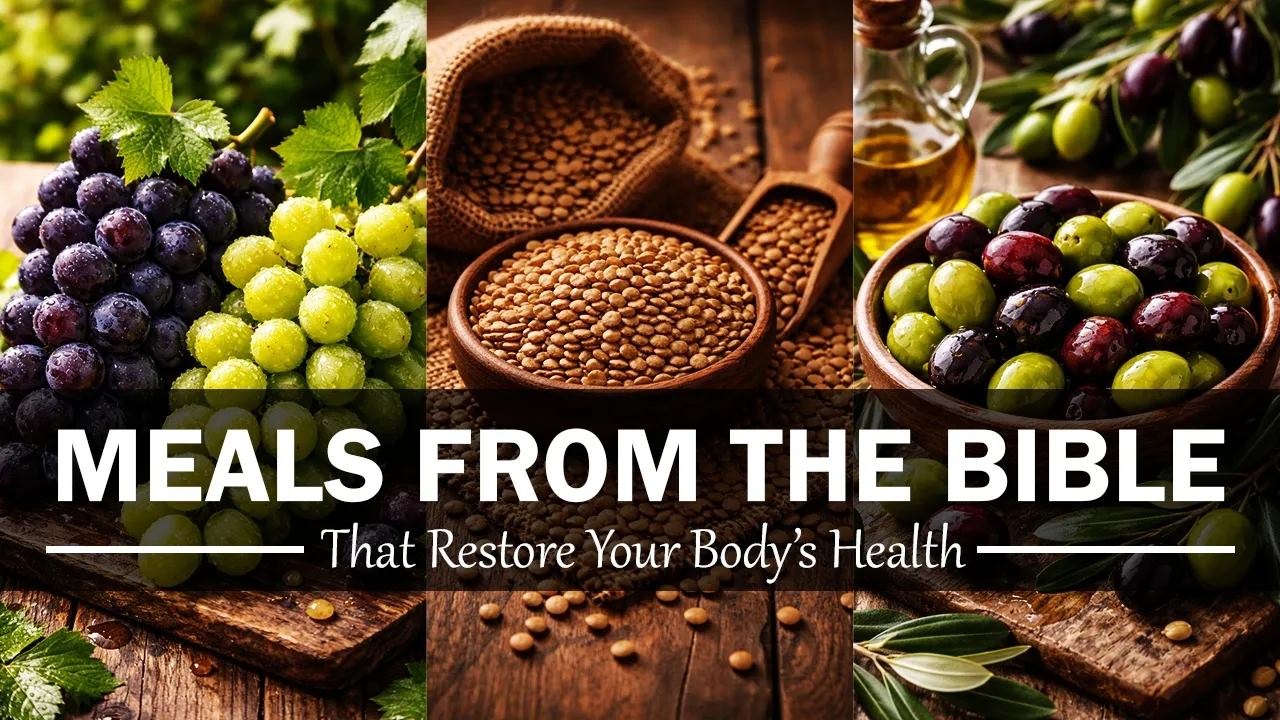
What if I told you that some of the most powerful healing foods you could possibly eat aren't locked away in some high-end health food store or hidden behind a supplement company's paywall, but written right there in the pages of the Bible? Meals that sustained entire civilizations. Foods that kept people strong, sharp, and healthy for centuries without a single processed ingredient in sight.
Most people don't know this, but while we're all reaching for the latest superfood trend or the newest diet craze, there are meals described in scripture that have been nourishing humans for thousands of years. Meals with actual clinical evidence backing them up. Meals that modern nutrition science is finally proving work exactly as our biblical ancestors knew they did.
And today, I'm going to show you 20 of them that will change the way you think about food and healing forever. Stick around because number 17 on this list was considered so sacred that it was reserved for temple worship, and modern research just confirmed it regulates blood sugar better than some medications. And number 20 isn't just mentioned once or twice.
It appears over 500 times in scripture as the ultimate symbol of life. And cardiologists are finally catching up to why. Make sure you hit that subscribe button because we post new videos every week on the Homestead Gardener that connect ancient plant wisdom with modern health knowledge, helping you grow, cook, and heal the way nature intended.
So, let's get into it. Here are 20 biblical meals that heal your body, ranked from remarkable to absolutely miraculous. Plant one, lentil stew, the meal that bought a birthright.
Let's start with the most famous meal deal in history. In Genesis 25, verse 34, Esau sold his entire birthright for a bowl of lentil stew. And honestly, when you understand what lentils actually do for your body, you almost can't blame him.
Lentils are nutritional powerhouses. They're packed with plant-based protein, fiber, iron, folate, and potassium. A single cup of cooked lentils delivers about 18 g of protein and 15 g of fiber.
Modern clinical studies show that regular lentil consumption significantly reduces the risk of heart disease, helps stabilize blood sugar, and supports healthy digestion. Researchers have found that the polyphenols in lentils have antioxidant and anti-inflammatory effects that protect cells from damage. Here's the traditional preparation that still works today.
A simple stew of red or brown lentils simmered with olive oil, garlic, and cumin. That's essentially what Esau ate. No preservatives, no additives.
Just pure, dense nutrition that sustained people through harsh desert conditions. Lentil stew got pushed aside by processed convenience foods, but it offers what it's offered for millennia. Complete, satisfying nourishment that your body actually knows what to do with.
Think of it as the meal so powerful it was worth a kingdom. And you can make it tonight for about $2. Plant two, unleavened bread, the bread of haste and healing.
In Exodus 12, verse eight, God commanded the Israelites to eat unleavened bread during the Passover. No yeast, no rising agents. Just flour, water, and fire.
And here's what modern nutrition science finds fascinating. Unleavened bread made from whole grain wheat is dramatically easier to digest than modern processed bread. It contains less phytic acid when prepared traditionally, which means your body absorbs more minerals.
The simplicity is the medicine. Modern bread is loaded with preservatives, added sugars, dough conditioners, and industrial yeast strains that many people's digestive systems struggle with. Unleavened whole grain bread provides complex carbohydrates, B vitamins, iron, and magnesium without the inflammatory additives.
Studies show that switching from processed bread to simple whole grain preparations reduces bloating, improves gut health, and decreases inflammatory markers. Traditional preparation is exactly what it sounds like. Whole grain flour mixed with water and olive oil, pressed flat and baked or cooked over direct heat.
It takes 5 minutes. The Israelites ate this bread because they had no time to let dough rise, but they accidentally created one of the healthiest bread preparations in history. A bread so clean your body recognizes every ingredient.
Plant three, barley bread, the soldier's superfood. Barley bread shows up in Judges 7, verse 13 as a dream symbol representing Gideon's army. And in 2 Kings 4, verse 42, Elisha feeds 100 men with 20 loaves of barley bread.
Barley was the grain of the common people, the soldiers, the workers. And modern science proves that was actually a good thing. Barley is one of the richest sources of beta-glucan fiber, the same compound that gives oats their heart-healthy reputation, except barley has even more of it.
Clinical trials demonstrate that barley consumption significantly lowers cholesterol levels, reduces blood sugar spikes after meals, and supports beneficial gut bacteria. The beta-glucans in barley have been shown to enhance immune function in published peer-reviewed research. A simple barley bread or barley porridge provides sustained energy without the blood sugar crash of refined grains.
The ancient soldiers who marched on barley bread had steadier energy and better endurance than they would have on white wheat bread. Barley got replaced by refined wheat because white flour looked more prestigious, but barley offers what it's offered since Gideon's day. Dense, sustained, whole body nourishment that keeps you moving.
Plant four, fig cakes, the ancient energy bar. In 1 Samuel 25, verse 18, Abigail brings 200 fig cakes to David and his men. And in 2 Samuel 12, verse 40, fig cakes are listed as essential provisions.
Figs weren't a treat, they were survival food. Pressed fig cakes were the original energy bars, and nutritionally, they're remarkably similar to what modern companies try to create with processed bars and synthetic ingredients. Dred figs are rich in potassium, calcium, magnesium, and fiber.
Studies show that fig consumption improves digestive health, supports bone density, and helps regulate blood pressure. The natural sugars in figs provide immediate energy while the fiber prevents the crash. Recent research has also identified antioxidant compounds in figs that protect against cellular damage.
The traditional preparation was simple. Figs were dried in the sun and pressed into dense cakes that could last for months without refrigeration. Perfect for armies on the march, travelers, and anyone needing portable, nutrient-dense food.
Fig cakes got replaced by sugar-laden granola bars and processed snacks, but they offer what they've offered since David's day. Real, sustained energy from a single ingredient. Plant five, pomegranate, the crown jewel of biblical fruits.
Pomegranates appear throughout scripture. In Deuteronomy 8, verse eight, they're listed among the blessings of the promised land. In Song of Solomon, they symbolize beauty and abundance.
The fruit was so revered that pomegranate designs adorned the robes of the high priest. And modern science has caught up in spectacular fashion. Pomegranates contain punicalagins, which are among the most potent antioxidants found in any fruit.
Clinical research shows that pomegranate juice lowers blood pressure, reduces arterial plaque, improves cholesterol ratios, and has anti-inflammatory effects comparable to pharmaceutical interventions. Studies have demonstrated that pomegranate compounds support heart health, brain function, and joint comfort. The traditional way to enjoy pomegranates was simple.
The fresh seeds eaten by the handful or the juice pressed and consumed as a drink. Some traditions mixed pomegranate juice with honey and spices. The fruit was considered so special that it represented prosperity and divine blessing.
Pomegranate got overshadowed by modern juice drinks loaded with added sugar, but it offers what it's offered since Moses described the promised land. Profound cardiovascular protection wrapped in a crown-shaped fruit. Plant six, olive oil with bread, the daily medicine of the ancient world.
Olive oil appears in scripture more than any other food product. From the anointing oil in Exodus to James 5, verse 14, instructing elders to anoint the sick with oil. Olive oil was central to biblical life, diet, and healing.
Extra virgin olive oil is one of the most researched healing foods in modern nutrition. It's rich in oleic acid and polyphenols, particularly oleocanthal, which has been shown to work like ibuprofen in reducing inflammation. The Mediterranean diet, built around olive oil, is associated with reduced heart disease, lower cancer rates, improved brain function, and increased longevity.
Clinical trials consistently demonstrate that daily olive oil consumption protects cardiovascular health, supports healthy cholesterol, and reduces inflammatory markers. The biblical meal was simple. Good bread dipped in olive oil, often with herbs and salt.
That daily practice provided steady anti-inflammatory protection throughout the entire body. Think of olive oil as the medicine that tastes like food, prescribed by scripture thousands of years before we had the science to explain why it works. Plant seven.
Grilled fish. The resurrected meal. In Luke 24:42, the risen Jesus asked for food and ate a piece of grilled fish.
In John 21:9, Jesus prepared a charcoal fire with fish and bread for his disciples. Fish was a cornerstone of the biblical diet, especially around the Sea of Galilee. And modern nutrition science confirms why this was such a powerful choice.
Fish, particularly varieties like tilapia and sardines common in ancient Galilee, are rich in omega-3 fatty acids, high-quality protein, vitamin D, and selenium. Clinical research has demonstrated that regular fish consumption reduces inflammation, supports brain health, protects cardiovascular function, and may reduce the risk of depression. The simple preparation matters, too.
Grilled over an open fire with minimal processing preserves the omega-3 content far better than modern deep frying or heavy batter preparations. The ancient method of cooking fish over coals with olive oil and herbs was actually the healthiest method available, and modern food science agrees. Fish got processed into sticks, nuggets, and fast food sandwiches that destroyed most of its nutritional value, but simply grilled fish offers what it's offered since the shores of Galilee.
Clean, brain-building, heart-protecting protein. Plant eight. Honey.
The liquid gold of scripture. The promised land was described as flowing with milk and honey. Samson found honey in a lion's carcass.
John the Baptist lived on locusts and wild honey. Honey appears over 60 times in scripture and was considered one of the greatest blessings of the land. Raw honey contains over 200 bioactive compounds, including enzymes, antioxidants, and antimicrobial agents.
Clinical studies show that raw honey speeds wound healing, soothes sore throats more effectively than some over-the-counter remedies, supports gut health through prebiotic activity, and has genuine antibacterial properties. Research has demonstrated that certain types of honey can inhibit bacteria that resist conventional treatments. The biblical use was straightforward.
Honey was eaten as a food, used as a wound treatment, and mixed with other ingredients as medicine. Proverbs 24:13 says to eat honey because it is good. The key is raw, unprocessed honey, not the commercial syrup that's been heated and filtered into nutritional emptiness.
Raw honey offers what it's offered since the promised land was first described. Nature's most complete healing sweetener. Plant nine.
Bitter herbs. The digestive reset. In Exodus 12:8, the Israelites were commanded to eat the Passover lamb with bitter herbs.
These herbs, believed to include chicory, dandelion greens, endive, and horseradish, weren't just symbolic. They were genuinely medicinal. Bitter compounds stimulate digestive secretions, including bile production and stomach acid, which improves nutrient absorption and supports healthy digestion.
Modern gastroenterologists acknowledge that bitter foods activate the digestive system in ways that sweet and bland processed foods simply cannot. Clinical research shows that bitter plant compounds support liver function, improve fat digestion, reduce bloating, and promote healthy gut motility. Swedish bitters and digestive bitter preparations remain popular in European herbal medicine for exactly these reasons.
The traditional Passover preparation included fresh bitter greens eaten alongside the main meal. This wasn't punishment. It was digestive medicine disguised as tradition.
Bitter herbs got replaced by sweet, palatable, processed foods that actually suppressed digestive function. But they offer what they've offered since the first Passover. A complete digestive reset that your body is designed to respond to.
Plant 10. Grape and raisin cakes. The celebration food that heals.
In 2 Samuel 6:19, David distributed raisin cakes to all of Israel during a celebration. Grape products, from fresh grapes to raisins to juice, were dietary staples throughout scripture, and the healing properties are extraordinary. Grapes and raisins are rich in resveratrol, quercetin, and other polyphenols that modern research has shown protect heart health, reduce inflammation, and support brain function.
Raisins specifically have been studied for their ability to lower blood pressure and improve blood sugar control. The concentrated nutrients in dried grapes provide iron, potassium, and boron, which supports bone health. Clinical studies show that regular grape product consumption is associated with improved cardiovascular markers and reduced oxidative stress.
The traditional raisin cake was simply dried grapes pressed together, sometimes with honey, creating a nutrient-dense portable food. Modern candy and snack bars try to replicate this convenience, but add artificial ingredients that undermine the nutritional benefit. Raisin cakes offer what they've offered since David's reign.
Concentrated plant healing in every bite. Plant 11. Cucumbers.
The cooling medicine of Egypt. In Numbers 11:5, the Israelites wandering in the desert cried out for the cucumbers they remembered from Egypt. This wasn't just homesickness.
Cucumbers were essential medicine in the ancient world, particularly in hot climates. Cucumbers are over 95% water, making them one of nature's most effective hydration foods. But they also contain lignans, cucurbitacins, and flavonoids with genuine anti-inflammatory and antioxidant properties.
Modern research shows that cucumber compounds have demonstrated effects against cardiovascular disease and have shown promising results for blood sugar management. The traditional preparation was simple. Fresh cucumbers eaten raw, sometimes with salt and olive oil, or fermented into pickles that provided probiotics for gut health.
In the desert heat, cucumbers were quite literally life-sustaining medicine. Cucumbers got reduced to mere salad filler in the modern diet, but they offer what they've offered since the Israelites longed for them in the wilderness. Deep cellular hydration and quiet, steady healing.
Plant 12. Garlic. The biblical antibiotic.
Garlic also appears in that Numbers 11:5 list of foods the Israelites missed from Egypt. And garlic, Allium sativum, is arguably the single most studied medicinal food plant in history. Over 3,000 clinical studies have been published on garlic's health effects.
The evidence is overwhelming. Garlic lowers blood pressure, reduces cholesterol, has genuine antimicrobial properties, supports immune function, and contains compounds that protect against certain types of cellular damage. Allicin, the compound released when garlic is crushed, is a powerful natural antimicrobial that has been shown to work against various harmful bacteria and fungi.
The traditional preparation was raw garlic crushed and consumed with food or roasted whole and eaten with bread. Ancient Egyptian workers building the pyramids received daily garlic rations because it kept them healthy and strong. Garlic got relegated to a flavoring agent in modern cooking, but it offers what it's offered for over 5,000 years of recorded history.
Broad-spectrum natural protection that your grandmother probably already knew about. Plant 13. Leeks.
The overlooked healer. Leeks round out that remarkable list in Numbers 11:5. Alongside garlic and onions, leeks were among the foods the Israelites desperately missed.
End quote. And nutritional science shows they were right to miss them. Leeks, Allium ampeloprasum, contain the same beneficial sulfur compounds as garlic and onions, plus significant amounts of vitamin K, vitamin A, folate, and manganese.
They're particularly rich in kaempferol, a flavonoid that research shows has potent anti-inflammatory and heart-protective effects. Clinical studies show that regular Allium vegetable consumption, including leeks, is associated with reduced risk of cardiovascular disease and supports healthy blood vessel function. The traditional use was leeks cooked into stews and soups, providing both flavor and medicine in every bowl.
The gentle cooking softens the fibers while preserving the beneficial compounds. Leeks got overshadowed by more glamorous vegetables, but they offer what they've offered since the Exodus. Quiet, consistent, whole-body healing from a humble plant that deserves far more respect than it gets.
Plant 14. Onions, the tear-jerking healer. Also from Numbers 11:5, onions were so essential to the Israelites' diet that their absence in the desert was cause for genuine complaint.
Onions, Allium cepa, contain quercetin, one of the most potent natural antioxidants available, along with sulfur compounds that have demonstrated antimicrobial and anti-inflammatory properties. Research shows that regular onion consumption is associated with reduced risk of cardiovascular disease, improved bone density, and better blood sugar regulation. During historical epidemics, people kept onions nearby, believing they provided protection.
And while the mechanism wasn't what they imagined, the antimicrobial properties are scientifically real. The traditional preparation was onions eaten raw, roasted, or cooked into every meal. The ancient world didn't treat onions as a garnish.
They treated them as a daily health essential. Onions are so common now that we forget they were once considered powerful medicine, but they offer what they've offered since the Israelites walked out of Egypt. Affordable, accessible, daily healing that belongs in every meal.
Plant 15. Almonds, the watchful tree. In Genesis 43:11, Jacob sent almonds as a gift to Egypt.
And in Numbers 17, Aaron's rod that budded produced almonds. The almond tree blooms first in spring, which is why its Hebrew name means the watchful tree. And modern science shows almonds are watching over your health, too.
Almonds are rich in vitamin E, magnesium, healthy monounsaturated fats, and fiber. Clinical research consistently demonstrates that daily almond consumption lowers LDL cholesterol, reduces cardiovascular risk, improves blood sugar control, and supports healthy weight management. The combination of protein, fiber, and healthy fats provides sustained satiety that reduces overeating.
Studies also show that almonds support gut microbiome diversity and may protect brain function. The traditional use was almonds eaten raw, pressed into oil, or ground into paste. Almond oil was used both as food and as a skin treatment.
Almonds got processed into candy bars and flavored milks loaded with sugar, but raw almonds offer what they've offered since Jacob sent them to Pharaoh, complete nutritional protection in a handful. Plant 16. Date cakes, the desert survival food.
While the specific word date is debated in some translations, dates and date honey are widely believed to be the honey referenced throughout much of the Old Testament. Date palms were so important that Jericho was called the city of palm trees in Deuteronomy 34:3. Dates are extraordinary nutritionally.
They contain natural sugars for immediate energy, fiber for sustained release, potassium for heart and muscle function, magnesium for nervous system support, and antioxidants, including flavonoids and carotenoids. Clinical studies show that date consumption supports healthy labor and delivery, improves brain function, and provides anti-inflammatory benefits without the blood sugar spikes you might expect from such a sweet fruit. The traditional date cake was dates pressed together, sometimes mixed with nuts and spices.
It was portable, calorie-dense, and could survive desert heat. Modern energy drinks and sugar-laden snacks try to replicate the quick energy of dates, but add harmful ingredients. Date cakes offer what they've offered since Jericho, pure desert survival fuel that tastes incredible.
Plant 17. Cassia and cinnamon-spiced regulators. And here's what I teased at the beginning.
Cassia appears in Exodus 30:24 as an ingredient in the holy anointing oil. Cinnamon appears in the same chapter. Both were so precious in biblical times that they were literally worth their weight in gold, reserved for the most sacred purposes.
Modern research on cassia and cinnamon is extensive and remarkable. Clinical trials demonstrate that these spices improve insulin sensitivity, help regulate blood glucose levels, and have powerful antioxidant and anti-inflammatory effects. Studies show that as little as half a teaspoon of cinnamon daily can meaningfully improve blood sugar markers in people with metabolic concerns.
The compound cinnamaldehyde and polyphenols are responsible for these effects, and they work at the cellular level. The traditional use included these spices in warm drinks mixed with honey, sprinkled over porridge, and incorporated into healing preparations. Ancient healers didn't know about insulin sensitivity, but they observed that these spices made people feel better after meals.
Cassia and cinnamon got reduced to cookie ingredients in the modern world, but they offer what they've offered since Moses received the anointing oil formula. Sacred metabolic healing that was literally reserved for holy use. Plant 18.
Mustard greens, the kingdom in a seed. In Matthew 13:31, Jesus compared the kingdom of heaven to a mustard seed, the smallest of seeds that grows into the largest of garden plants. And while most sermons focus on the spiritual metaphor, the mustard plant itself is extraordinarily healing.
Mustard greens are among the most nutrient-dense leafy greens available, packed with vitamins K, A, and C, along with glucosinolates, compounds that modern research has linked to cellular protection and anti-inflammatory effects. Studies show that cruciferous vegetables like mustard greens support detoxification pathways, provide cardiovascular protection, and contain compounds that promote healthy cell growth. The traditional preparation was mustard greens cooked with olive oil and garlic, or the seeds ground into paste and used as a condiment and poultice.
Mustard plasters were a common remedy for chest congestion throughout history. The mustard plant got reduced to a yellow condiment on hot dogs, but the greens and seeds offer what they've offered since Jesus used them as his most famous metaphor, small beginnings leading to massive healing. Plant 19.
Daniel's pulse, the plant-based experiment that changed history. In Daniel 1:12, Daniel asked to be tested for 10 days on nothing but pulse and water instead of the king's rich food. Pulse refers to vegetables, legumes, and plant-based foods.
After 10 days, Daniel and his companions looked healthier and better nourished than everyone eating the royal diet. This is essentially the first recorded clinical trial of a plant-based diet, and modern science overwhelmingly supports what Daniel demonstrated. Plant-based meals rich in legumes, vegetables, and whole grains have been consistently shown to reduce inflammation, lower cardiovascular risk, improve digestive health, and support healthy body composition.
Clinical research shows that even short-term shifts toward plant-heavy eating produce measurable improvements in blood markers, energy levels, and overall well-being. The message isn't about eliminating all other foods. It's about the extraordinary healing power of putting plants at the center of your plate.
Daniel proved it to a king. Modern researchers have proven it in thousands of studies. A meal of lentils, vegetables, herbs, and whole grains offers what it's offered since the courts of Babylon, visible, undeniable nourishment that shows in your face and your vitality.
Plant 20. The vine, the heart of scripture. And here we are at number 20, the meal I saved for last because it represents everything we've discussed today.
The great vine appears over 500 times in scripture. Jesus called himself the true vine in John 15:5. Wine was used medicinally throughout the ancient world.
Paul instructed Timothy to use a little wine for his stomach in 1 Timothy 5:23. And here's what modern cardiology has finally proven. Grapes and grape products contain some of the most powerful cardiovascular protectors found in any food.
The polyphenols, particularly resveratrol, protect heart health, reduce inflammation, improve cholesterol profiles, and support healthy blood vessel function. Clinical research shows that grape consumption is associated with reduced heart disease risk and decreased inflammatory markers. The compounds in grape skins and seeds have demonstrated effects on blood pressure, arterial health, and cellular protection.
The vine was so central to biblical life that it became the ultimate metaphor for connection, sustenance, and life itself. And that wasn't just spiritual symbolism. It was recognition of a plant that genuinely sustained human health for thousands of years.
For heart health and longevity, the vine offers what it's offered since ancient times. Profound cardiovascular protection that scripture recognized long before we had the research to explain why. If you made it all the way to the end of this video, you've just learned something extraordinary.
The Bible isn't just a spiritual text. It's also a nutritional guide that recorded healing food wisdom that worked then and still works now. These 20 meals aren't folklore or superstition.
They're legitimate nutrition validated by modern science. The ingredients are simple. The preparations are ancient, and the healing is real.
So, here's what I want you to do. Smash that like button if this video changed the way you think about biblical food and healing. Drp a comment below and tell me which biblical meal surprised you the most.
Are you team lentil stew, team Daniel's pulse, team the vine? I read every comment, and I love hearing from you. And if you haven't subscribed to the Homestead Gardener yet, what are you waiting for?
Hit that subscribe button and ring that notification bell so you never miss a video. We're connecting ancient plant wisdom with modern knowledge, and I'd love to have you on this journey with us. Remember, sometimes the most powerful medicine isn't in a pharmacy.
Sometimes, it's on your plate, just waiting for you to prepare it the way our ancestors did.