The coffee in Dr. Gregory Pierce's mug didn't just ripple. It danced violently across the ceramic rim, spilling onto his pristine white coat. The vibration rattled the tempered glass of the ICU windows, a low frequency thrum that felt less like sound and more like an earthquake in the chest. Chaos erupted at the nurse's station as monitors flickered and papers swept off the desk. This wasn't a standard medical transport. The distinctive, terrifying wump wump of heavy rotors drowned out the hospital alarms. Outside, blinding flood lights cut through the rain, illuminating the helipad where unauthorized landing gear was
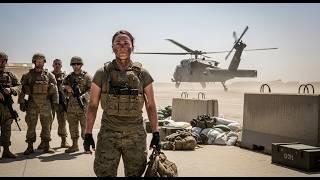
crushing the no parking paint. It was a Sakorski UH60 Blackhawk painted in matte stealth black with no tail numbers. As the side doors slid open and six armed figures in tactical gear fast roped onto the roof, Dr. Pierce realized with a sinking dread that the hysterical woman in bed four wasn't having a panic attack. She was the most important person in the building, and he had just signed his own professional death warrant. 2 hours before the windows shook, the emergency room at St. Jude's Medical Center in Seattle was operating at its usual chaotic rhythm. It
was a Friday night, which meant overdoses, car accidents, and the usual flood of flu symptoms. Sarah Jenkins sat in a plastic chair in the waiting room, her knuckles white as she gripped the armrests. To the casual observer, Sarah looked like nothing special. She was 42, wearing a faded gray hoodie, loose sweatpants, and worn out sneakers. Her hair was pulled back in a messy bun, and her face was pale, slick with a sheen of cold sweat. She wasn't making a scene. She wasn't screaming like the man with the broken ankle three rows back. Nor was she
demanding attention like the woman claiming to have a spider bite on her neck. Sarah was silent. But inside her chest, a war was raging. She checked her watch. Her heart rate was sitting at 140 beats per minute while resting. Her blood pressure, she estimated based on the pounding in her ears, was plummeting. She felt the telltale pressure on her chest, distinct from a heart attack, something sharper, more fluid. "Jenkins, Sarah," a triage nurse, called out, sounding bored. "Sarah stood up, swaying slightly. She steadied herself against the wall and walked to the triage booth. The nurse,
a young woman named Tiffany, who was chewing gum aggressively, didn't look up from her screen. "Rason for visit?" Tiffany asked, typing before Sarah even spoke. "Pericardial eusion," Sarah said, her voice raspy but firm. "Possible cardiac tamponard. I have a history of idiopathic scarring from chemical exposure. I need a bedside echo and a stat tropponin workup." Tiffany stopped typing. She slowly looked up, her eyes narrowing. She looked at Sarah's hoodie, her lack of makeup, the cheap sneakers. Then she looked at the screen where Sarah's insurance information, standard state provided care, was listed. "So, you're a doctor
now?" Tiffany asked, a smirk playing on her lips. "Or did you just spend all night on WebMD?" I'm a nurse, Sarah said, leaning heavily on the desk as a wave of dizziness hit her. I spent 20 years in trauma and critical care. I know the symptoms. My heart sounds will be muffled. My jugular veins are likely distended. Please, I need to see a physician immediately. Tiffany rolled her eyes. Look, honey, everyone who comes in here with chest pain thinks they're dying. Anxiety presents with shortness of breath and rapid heart rate. We're full. Take a seat.
We'll call you when a bed opens. This isn't anxiety, Sarah whispered, the room starting to spin. I have I have a specific medical history. Check the VA database if you have access. Or just listen to my heart. Go sit down, Miss Jenkins, Tiffany snapped, pointing to the waiting area. If you make a scene, I'll have security escort you out. We have people with real injuries waiting. Sarah gritted her teeth. The rage flared, hot and familiar. But she pushed it down. Getting angry would raise her heart rate, and her heart couldn't handle the stress. She nodded
slowly, turned, and walked back to the plastic chair. She knew she was dying, and she knew that in this civilian hospital, without her uniform, without her rank, she was just another hysterical woman in a gray hoodie. She sat down, closed her eyes, and focused on her breathing. In for four, hold for four, out for four. The tactical breathing kept her conscious, but barely. She watched the clock on the wall. 10 minutes passed, then 20. Finally, a spot opened up. Not a room, but a gurnie in the hallway, separated from the foot traffic by a flimsy
curtain. Sarah was ushered onto the bed. 10 minutes later, Dr. Gregory Pierce swept through the curtain. Pierce was the kind of doctor who looked like he had been cast for a TV show. Tall, silverhaired, impeccably groomed with a stethoscope that looked like it cost more than Sarah's car. He was the chief of emergency medicine, and he wore his arrogance like a suit of armor. He didn't introduce himself. He just grabbed the clipboard at the foot of the bed. "Sarah Jenkins," he read, his tone flat. "Complaint of chest pain. Nurse notes say you were insistent on
a diagnosis." He chuckled dryly, glancing at her. "Self-dagnosing is a dangerous game, Miss Jenkins." "I'm not playing," Sarah managed to say. "Dr. Pierce, is it? Please listen to my heart sounds." Beck's triad. I have low arterial blood pressure, distended neck veins, and muffled heart sounds. I need a pericardioentis before my heart is compressed to the point of arrest. Pierce sighed, the sound loud and theatrical. He pulled his stethoscope from his neck and placed it on her chest for all of three seconds. He moved it once, then pulled away. Your heart sounds are fast, Miss Jenkins,
Pierce said, folding his arms, which is consistent with a panic attack. You're hyperventilating. I am not hyperventilating, Sarah said, gripping the side rails. I served in the 75th Ranger Regiment as a forward surgical specialist. I know the difference between panic and tampenard. Pierce froze. He looked her up and down, taking in the gray hoodie and the sweatpants. He let out a short mocking laugh. The rangers? He scoffed. Sure. And I'm the surgeon general. Look, Miss Jenkins, stolen valor aside. You are wasting my time. I'm ordering 2 milligs of laorazzipam to calm you down. And then
we're discharging you. We need this bed for sick patients. If you discharge me, Sarah said, her voice dropping to a dangerous whisper. I will die in your parking lot. And when the autopsy comes back, it will show fluid around the heart, and my death will be on your license. Pierce leaned in close, his cologne overpowering the smell of antiseptic. Let me be clear. I don't like being threatened by drug-seeking junkies with a hero complex. You get the seditive or you get security. Your choice. He turned on his heel and walked away, snapping his fingers at
a passing nurse. Sedate her, discharging in one hour. Sarah watched him go. A single tear tracked through the sweat on her cheek. She wasn't crying from fear. She was crying from frustration. She reached into the pocket of her sweatpants, her fingers brushed against her smartphone. She didn't want to do this. She had promised herself she would live a quiet life after the Kandahar extraction. She wanted to be normal. She wanted to be just Sarah Jenkins. But Dr. Pierce had left her no choice. The nurse who came to administer the larzazzipam was named Chloe. She was
young, perhaps fresh out of nursing school with kind eyes behind thick glasses. She looked at the order on the tablet, then looked at Sarah. "I don't want the seditive," Sarah said, her voice weak. The pressure in her chest was building like a vice tightening around her sternum. "I have to follow Dr. Pierce's orders," Khloe whispered apologetically. She reached for Sarah's arm to check her pulse manually. When Khloe's fingers touched Sarah's wrist, the young nurse frowned. She shifted her position, checking again. Then she looked at Sarah's neck. "Your veins," Khloe murmured. "They're bulging." distended jugular. Sarah
corrected gently. And if you listen to my chest, it sounds like I'm underwater. Chloe bit her lip. She looked towards the nursing station where Dr. Pierce was laughing with a pharmaceutical rep, flirting openly. Chloe made a decision. She pulled her stethoscope out and placed it on Sarah's chest, listening intently for a long time. She pulled back, her eyes wide. It's It's so quiet. I can barely hear the beat, but the monitor says you're at 150. Fluid is blocking the sound, Sarah explained. The sack around my heart is filling with blood or fluid. It's squeezing the
heart so it can't pump. That's why my pulse is weak. I need to tell him, Khloe said, panic rising in her voice. He won't listen, Sarah said. He thinks I'm a junkie. Kloe shook her head. No, this is real. She turned and ran towards the desk. Sarah watched through the gap in the curtain. She saw Khloe approach Dr. Pierce. She saw the young nurse gesture urgently towards the hallway. She saw Pierce's face darken with annoyance. He waved a hand dismissively, not even looking away from the rep. Khloe persisted. She pointed at the monitor. Finally, Pier
slammed a file down on the desk and turned on Khloe. His voice carried down the hall. Am I the attending here or are you? I told you she is having a psychosomatic episode. If you bother me with this again, I'll have you written up for insubordination. Give her the damn Atavan. Kloe shrank back, humiliated. The other nurses looked away, afraid to challenge the chief. Pier stormed over to the hallway bed, ripping the curtain back so hard the rings screeched against the metal track. you. He pointed a finger at Sarah. You are disrupting my ER. You
are manipulating my junior staff. I am canceling the seditive. You are being discharged immediately. Get up. Sarah tried to sit up, but the world tilted violently. Her vision grayed out at the edges. I can't stop the drama. Pier spat. Security. I need an escort in hallway B. Two burly security guards began walking down the corridor. Sarah realized this was the end of the line for civilian protocol. She had tried to play by their rules. She had tried to be polite, but Dr. Gregory Pierce was going to kill her to protect his ego. "Chloe," Sarah whispered.
The young nurse was standing nearby, looking terrified. "Yes," Khloe stepped closer, ignoring Pierce's glare. "I need you to do one thing for me," Sarah said, her breath hitching. I need you to not let them move me for 3 minutes. I I can try, Chloe stammered. Sarah reached into her pocket and pulled out an old ruggedized flip phone. It wasn't her smartphone. It was a dense black device with no screen, just a keypad and a single red button. It was a relic from a life she had left behind. a secure satellite uplink given to tier 1
operators and high-v valueue assets who held information critical to national security. She hadn't turned it on in 4 years. What is that? Pierce sneered. Calling your dealer. Sarah flipped the device open. The small light on the top pulsed green, locking onto a satellite signal instantly. She pressed the red button and held it to her ear. There was no ringing, just a click and then a voice. Clear, cold, and immediate. Asset ID. Sierra Juliet 1 niner. Authentication broken arrow. Sarah's voice changed. The weakness remained, but the tone was pure command. There was a pause of less
than a second. Voice print confirmed. Major Jenkins. Status. Medical emergency. Critical failure. Civilian facility is hostile and refusing treatment. Condition: cardiac tamponard. I have maybe 20 minutes. Location: St. Jude's Medical Center, Seattle, er hallway. Hold the line, major, routing to General Davidson. Dr. Pierce stared at her. For the first time, a flicker of confusion crossed his face. The way she spoke, it wasn't the rambling of a crazy woman. It was the clipped, efficient dialect of the military. Who are you talking to? Pierce demanded. stepping forward to grab the phone. "Don't touch her," Chloe shouted, stepping
in front of the doctor. "It was a shocking act of defiance." "Get out of my way, you stupid girl!" Pierce growled. He shoved Khloe aside and reached for Sarah. Sarah looked him dead in the eye. "If you touch this phone, you will be committing a federal felony." Pierce hesitated, his hand hovering inches from her face. On the other end of the line, a new voice spoke. It was a deep, grally baritone that Sarah hadn't heard since the mountains of Afghanistan. Sarah, this is Iron Mike. General Michael Davidson, chairman of the Joint Chiefs of Staff. Mike,
Sarah wheezed, the darkness closing in on her vision. I'm going down. They won't treat me. They think I'm a junkie. Who is they? Davidson's voice was low and terrifyingly calm. Dr. Pierce St. Jude S. Sarah, listen to me. Keep breathing. Do not die on me. We are 40 mi out conducting drills at Lewis McCord. I'm redirecting the bird. I have a ghost team airborne. I don't have time for a transport. Sarah gasped. We aren't transporting you, Major. We're bringing the hospital to you, and God help anyone standing in your way. The line went dead. Sarah
let the phone drop to her chest. She looked up at Dr. Pierce, who was now signaling the security guards to grab her. "Get her out of here," Pierce ordered. "Drag her if you have to." "You're making a mistake," Sarah whispered, her eyes rolling back as consciousness began to slip. "The only mistake," Pierce said, grabbing her arm. "Was letting you in here?" As the security guard's hand clamped onto her shoulder, a sound began to build in the distance. A rhythmic thumping. It started low, vibrating the instruments on the trays. Then it grew louder and louder. The
glass of water on the bedside table began to ripple. The noise became a physical force. The entire emergency room froze. Patients stopped moaning. Nurses stopped typing. The vibration rattled the ceiling tiles, sending dust moes dancing into the sterile air. What is that? A resident asked, looking at the ceiling. Earthquake? Someone suggested. No, Dr. Pierce muttered, looking at the window. That's that's a helicopter, but the helipad is reserved for medevac only, and we have no inbound flights. He marched to the window that looked out over the ambulance bay and the lower roof structure. What he saw
stopped his heart. A massive black shape was descending out of the storm clouds. It wasn't the red and white of a medical chopper. It was a beast of war. A modified MH60 Blackhawk, bristling with antennas and external fuel tanks. It didn't have lights on. It was flying dark until the last second when blinding flood lights snapped on, bathing the hospital roof in pure white illumination. What the hell? Pierce breathed. Back in the hallway, the security guard, a man named Gary, who was just doing his job, looked down at Sarah. She was unconscious now, her head
lolling to the side. Doctor, Chloe screamed. She's coding. No pulse. Gary let go of Sarah immediately, backing away. I didn't do it. She just went limp. Pierce turned from the window, his face pale. The noise outside was deafening now. He ran back to the hallway. Get the crash cart. Epinephrine. Start compressions. You said she was faking it. Chloe yelled, tears streaming down her face as she climbed onto the gurnie and began chest compressions on Sarah. Crack, crack, the sound of ribs straining under the force. "Shut up and pump!" Pierce yelled. He grabbed the paddles. Suddenly,
the double doors at the main entrance of the ER, the ambulance bay doors, burst open. "They didn't just slide open. They were kicked open with such force that one of them shattered. The sound of the helicopter was loud, but the silence that fell over the room as the figures entered was absolute. Six men entered. They were dressed in full tactical combat gear, multicam black body armor, helmets with quad nocular night vision goggles flipped up. They carried shortbarreled rifles, not pointed at the patients, but held at the low ready with practiced ease. On their shoulders, they
wore no unit patches, just a sleek, simplified insignia of a ghost. Leading them was a man who wasn't in tactical gear. He wore a soaking wet flight suit and a bomber jacket with stars on the shoulders. General Michael Iron Mike Davidson. He looked like a man who chewed granite for breakfast. Secure the room," Davidson barked. His voice boomed without a megaphone. Two of the operators peeled off, blocking the exits. Two more moved to the nurse's station, their presence alone, silencing the phones. "Where is she?" Davidson roared, scanning the room. Dr. Pier stood frozen by Sarah's
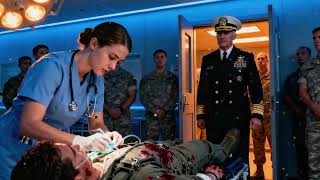
bed, the defibrillator paddles in his hands. He looked at the armed men, then at the general. "You You can't be in here with weapons. This is a sterile environment." Davidson didn't even look at Pierce. He looked at the woman on the bed. He saw Khloe doing compressions. "Doc," Davidson yelled to one of the men in tactical gear behind him. "You're up." One of the soldiers, the medic, slung his rifle behind his back and sprinted forward. He wasn't just a combat medic. He was a parescue jumper. PJ, one of the most elite medical providers on the
planet. He shoved Pierce aside with a force that sent the chief of medicine stumbling into a cart of gores. "Clear out!" the PJ growled. He looked at Chloe. "Good compressions. Keep going." The PJ ripped open a massive medical kit strapped to his thigh. He glanced at Sarah's distended neck veins. "Classic tamponard. General, she's crashed. I need to decompre immediately." "Do it," Davidson said, standing guard at the foot of the bed. You can't do a procedure here, Pierce stammered, trying to regain his authority. I am the chief of General Davidson turned slowly. He walked up to
Dr. Pierce until he was inches from his face. The general was 6'4, a towering wall of intimidation. "I don't care if you are the king of England," Davidson said, his voice dangerously low. If you say one more word, I will have you arrested for treason and obstruction of a federal asset. You ignored a decorated major. You let a hero die in your hallway. She She said she was a nurse, Pierce whispered, trembling. She is the best damn combat nurse the army ever produced, Davidson spat. She's saved more lives in one tour than you will in
your entire miserable career. Behind them, the PJ shouted, "Needle is in. Drawing back." Everyone looked. A massive syringe was inserted directly into Sarah's chest just below the sternum. The PJ pulled the plunger back. Dark crimson fluid filled the barrel. Once, twice, three syringes full. On the monitor, the flat line suddenly jagged. "Beep beep beep. We have capture, the PJ announced. Pulse is returning. BP is stabilizing. She's back with us. Kloe collapsed back onto the floor, sobbing with relief. Davidson let out a breath he had been holding. He looked at Pierce, whose career was effectively ending
in that very moment. Who is the administrator of this hospital? Davidson asked the room at large. I I am on call. A terrified administrator in a suit stepped out from behind the reception desk. Good, Davidson said. My team is taking over this wing. We are moving Major Jenkins to a secure room. You will provide whatever my medic needs, and this man, he pointed at Pierce, is to be removed from the floor immediately. If I see him near my soldier again, I will consider it an act of aggression. Yes, General. Absolutely, General. the administrator squeaked. As
the PJ and the team began to move Sarah's bed, Pierce slumped against the wall. He watched the hysterical woman in the hoodie being treated with the reverence of a head of state. But the drama wasn't over. As Sarah's eyes fluttered open, groggy and confused, she saw Davidson. "Mike," she whispered, her voice barely audible. I got you, Sarah, Davidson said, his harsh face softening. The toxin, she murmured. It wasn't natural. Someone dosed me. The room went deadly silent. Davidson's eyes hardened into steel. He looked at his team leader. "Lock the hospital down," Davidson ordered. "Nobody leaves.
If she was poisoned, the person who did it might still be in the building." Dr. Pierce looked up, panic flaring in his eyes for a different reason now. Sarah hadn't just been ignored. She had been targeted. And the black helicopter hadn't just brought a rescue team. It had brought a hunting party. The transformation of St. Jude's Medical Center from a civilian hospital to a tier 1 secure facility happened in less than 4 minutes. It was a masterclass in asymmetrical dominance. The ghost team operating under the call sign spectre didn't shout or scream. They moved with
the terrifying silent fluidity of predators. General Davidson stood in the center of the ICU nursing station which had been commandeered as the tactical operations center TOC. The hospital administrator, a sweating, balding man named Mr. Henderson, was trembling in the corner, clutching a tablet as if it were a shield. General, Henderson stammered. You cannot simply lock down a metropolitan hospital. We have ambulances inbound. We have trauma cases. Divert them, Davidson said, not looking up from the bank of monitors his communications officer had set up. Mercy General is 3 mi east. Send them there. Nobody enters this
building. Nobody leaves. If a pizza delivery boy tries to walk through that front door, he gets zip tied. Do you understand? But the legal implications, Henderson squeaked. Davidson turned. His face was a map of old scars and unyielding resolve. Mr. Henderson, right now, the only law in this building is me, a United States major with top secret clearance was administered a lethal restricted neurotoxin on your premises or shortly before arriving. That makes this a crime scene. And if I find out anyone on your staff was complicit, I will turn this hospital into a federal prison.
In the secure room, formerly VIP suite A, Sarah Jenkins was fighting a new battle. The immediate threat of cardiac tamponard had been resolved by the parescue jumper, a man named Sergeant Miller. The fluid was drained, her heart was pumping freely, and her blood pressure had normalized. But now the poison was working its way through her system. Sarah lay propped up against pillows, her skin the color of ash. An IV line ran into her arm, pumping fluids, but her eyes were sharp, scanning the room. "Report," she whispered as Davidson entered the room. "Perimeter is secure," Sarah
Davidson said, pulling a chair close to the bed. "We have eyes on every exit. Roof is held by the Hilo crew. Ground floor is locked. Now tell me, who did this?" Sarah took a ragged breath. Project Chimera. Davidson's face went rigid. That project was scrubbed 10 years ago. It was a theoretical weaponization of He stopped, glancing at Nurse Kloe, who was checking Sarah's vitals. "It's okay," Sarah said. "She saved my life. She stays." Khloe looked down, her hands shaking slightly as she adjusted the drip. She felt like she had stepped into a spy movie. But
the fear in Sarah's eyes made it all too real. It wasn't scrubbed, Sarah continued, her voice gaining a little strength. It went private, a contractor named Aegis Dynamics. They've been testing a binary compound. Part A is harmless. You ingest it in water or food. It stays dormant for days. Part B is a catalyst, a specific frequency trigger or a secondary chemical. And you were exposed. I was meeting a whistleblower, Sarah said. A kid from their lab. He was scared. We met at a diner three blocks from here. I drank the coffee. 10 minutes later, my
chest felt like it was exploding. The kid, he didn't make it out. I saw a man in a blue windbreaker bump into him as he left the restroom. The kid collapsed in the parking lot. Why come here? Davidson asked. Why not call us immediately? I couldn't risk the signal being intercepted until I was in a hard structure, Sarah explained. And I didn't think I'd make it to the extraction point. St. Jude's was the only option. I thought I thought I could just get stabilized. And instead, you ran into Dr. God complex, Davidson muttered darkly. Where
is he? Sarah asked. Dr. Pierce? Davidson gestured to the hallway. He's currently being debriefed in the break room. My men are ensuring he understands the gravity of his negligence. Bring him here, Sarah said. Sarah, you need rest. Bring him here, Mike. I need to see his face, and I need him to answer a question. Moments later, doctor Gregory Pierce was escorted into the room by a Spectre operator. The arrogance was gone. Pierce looked shrunken, his pristine white coat rumpled, his face pale. He looked at the military hardware in the room, then at Sarah. Miss Jenkins,
Pierce began, his voice trembling. I I had no idea about your status. If I had known if I had been a civilian, Sarah cut him off, her voice icy. I would be dead right now. That's the point, isn't it, doctor? You didn't need to know my rank. You just needed to listen to a patient. Pierce looked at the floor. I followed protocol for a panic presentation. No. Khloe spoke up from the corner, her voice surprising everyone, including herself. No, you didn't, doctor. Protocol dictates a full workup for chest pain. You skipped the enzymes. You skipped
the echo. You profiled her. Pierce shot a glare at Khloe, but it lacked its usual venom. He was defeated. Dr. Pierce, Sarah said, leaning forward slightly. Think back the waiting room before I came back. Did you see anyone? Anyone who didn't look sick? Anyone watching the triage desk? Pierce frowned, thinking he wanted to help, if only to save his own skin. There was chaos. Usual Friday night. Drunks flew. He paused. There was a man, delivery driver, maybe. He had a uniform, but he wasn't delivering anything. He was just standing near the vending machines, looking at
the patient board. Description, Davidson barked. Average height, baseball cap, blue windbreaker, Pierce said. He had a a scar, I think, on his chin. Sarah looked at Davidson. That's him, the cleaner. He's here. Davidson's hand dropped to the sidearm on his thigh. He wouldn't leave until he confirmed the kill. Sarah said the toxin simulates a heart attack. He needs to see a body bag to get paid. If he saw the helicopter, if he saw the lock down. He's trapped inside. Davidson finished the sentence. Suddenly, the lights in the room flickered. The hum of the ventilation system
died. The monitor screens in the hallway went black. Power cut. The shout came from the hallway. Generators should kick in. Henderson's voice wailed from the hallway. Why aren't the backups on? Because they were sabotaged, Davidson growled. He keyed his radio. Spectre actual to all points. We are black on power. Switch to NVGs. We have a hostile in the wire. I repeat, hostile is inside the perimeter. The hospital plunged into total darkness. Outside, the storm raged. Rain lashing against the windows. Inside, the only light came from the eerie green glow of the tactical team's night vision
goggles and the faint batterypowered backup lights on the life support machines. Sarah grabbed Davidson's wrist. "He's coming to finish it. He knows I'm in the ICU." "Let him come," Davidson said, unholstering his weapon. "He just walked into a kill box." "But Sarah knew something Davidson didn't. The cleaner wasn't just a hitman. He was an exasset, too. He knew how teams like Spectre worked. He wouldn't come through the door. He would come through the walls. Chloe, Sarah whispered in the dark, "Get under the bed now." The darkness of the hospital was heavy, suffocating. The silence was
broken only by the rhythmic hiss click of the ventilator on the patient in the next room and the squeak of tactical boots on Lenolium. Dr. Pierce was paralyzed with fear. He was standing near the door when the lights went out. He couldn't see anything. Don't move. The Spectre operator guarding the door whispered, "Stay low." Pierce dropped to his knees. For the first time in his life, his medical degree, his money, and his reputation meant absolutely nothing. He was prey. Three floors down in the basement maintenance tunnels, the man known as the cleaner wiped grease from
his hands. He had cut the main line and the backup linkage. He had maybe 10 minutes before the military engineers bypassed his sabotage. That was enough. He stripped off his blue windbreaker. Underneath he wore stolen hospital scrubs, green surgical. He put on a surgical mask and a cap. He grabbed a clipboard. In the dark, silhouettes all looked the same. If he moved confidently, he could pass as a staff for the split second he needed to get close. He pulled a syringe from his pocket. This wasn't a complex binary poison. This was simple potassium chloride, instant
cardiac arrest, untraceable in a patient already suffering from heart issues. He moved up the emergency stairwell, moving with the silence of a ghost. Back in the ICU, General Davidson was coordinating the defense. Team two, sweep the stairwells. Team three, hold the elevators. General, Sarah whispered. The darkness was actually helping her. Her senses honed by years of covert operations were waking up. He won't use the stairs, the air ducts. Davidson looked up. The hospital had massive industrial HVAC vents. Miller Davidson signaled the PJ. Check the vents. Sergeant Miller climbed onto a chair and popped the ceiling
tile. He shown an IR illuminator into the shaft. Clear, Miller reported. But there's dust disturbance. Someone was here recently. Suddenly, a scream echoed from down the hall. Not a military shout, a civilian scream. Help, please, Dr. Pierce. Pierce's head snapped up. That's That's nurse Tiffany from triage. It's a bait, Davidson warned. Stay put. He's killing her, Pierce yelled, panic overriding his sense. He scrambled to his feet and lunged for the door. "Get down!" the operator yelled, grabbing Pierce. But the distraction worked. While the team looked toward the door and the screaming down the hall, the
threat didn't come from the vents. It came from the ceiling tiles directly above Sarah's bed. The cleaner had navigated the crawl space, not the ducts. He dropped down, landing silently on the equipment cart. In the green tint of the NVGs, he was a blur of motion. Contact inside. Miller roared, bringing his rifle up, but he couldn't shoot. The cleaner was on top of Sarah instantly, using her body as a human shield. He held the syringe to her neck. Back off. The cleaner's voice was calm, mechanical. Drop the weapons or she dies right now. The room
froze. Three laser dots were trained on the cleaner's head, but his position made a shot impossible without hitting Sarah. You have nowhere to go, Davidson said, his voice steady. The building is surrounded. I have a hostage, the cleaner said. And I have the antidote. Sarah's eyes widened. the antidote. He had it. She's still dying. The cleaner lied, or perhaps negotiated. The drainage bought her time, but the toxin is still eating her neurotransmitters. "You want her to live?" "I walk out of here, and I leave the vial." "He's lying," Sarah rasped. The pressure of his arm
across her throat making it hard to speak. "He doesn't have it. Do you want to take that risk, General?" The cleaner sneered behind his mask. Dr. Pierce, pinned against the wall by the operator, watched with wide eyes. He saw the syringe poised over Sarah's jugular. He saw the monitor showing Sarah's heart rate spiking again. And then Dr. Pierce saw something else. Chloe, the young nurse whom Pierce had berated and humiliated all night, was under the bed. The cleaner didn't know she was there. She was inches from the cleaner's ankle. Pierce caught Khloe's eye in the
gloom. He nodded, a microscopic movement. Kloe hesitated. She was terrified, but she remembered Sarah defending her. She remembered Pierce's arrogance, and she saw the gun in the general's hand. Kloe reached out, grabbed the cleaner's ankle with both hands, and yanked with every ounce of strength she possessed. It wasn't a combat move. It was clumsy, but it was unexpected. The cleaner stumbled backward, his balance compromised. Now Sarah screamed, driving her elbow back into the cleaner's ribs. The separation was only 6 in, but for the ghost team, 6 in was a mile. Thip, thip. Two suppressed shots
rang out. The cleaner's head snapped back. He crumpled to the floor, the syringe skittering across the tiles. Davidson was on him instantly, kicking the body away and checking Sarah. Report. I'm clear. Sarah gasped, clutching her throat. Check him. Check his pockets. Miller ripped open the bloody scrubs of the dead assassin. He patted down the pockets. He pulled out a small metallic vial. Is this it? Miller asked, holding it up. Sarah looked at the vial. It was labeled with a simple barcode. That's it. Eegis containment protocols. They carry the antidote in case of accidental exposure during
deployment. Administer it, Davidson ordered. Miller uncorked the vial and loaded it into a clean syringe. He injected it directly into Sarah's IV line. Almost instantly, the color began to return to Sarah's face. The underlying tremors in her hands stopped. The tightness that had been gripping her chest since the diner began to dissolve. The lights flickered and then buzzed back on. The blinding white fluoresence of the hospital returned, washing away the green gloom of the night vision. The room was a mess. A dead hitman in surgical scrubs lay on the floor. Special forces operators stood like
statues and Dr. Pierce was slumped against the wall, hyperventilating. Khloe crawled out from under the bed, shaking uncontrollably. Sarah sat up, unhooking the oxygen mask. She looked at Kloe. "You," Sarah said, pointing a finger at the young nurse. "You have quite a grip." Kloe let out a hysterical, sobbing laugh. General Davidson looked at Dr. Pierce. "And you, doctor, you saw her. You signaled her." Pierce looked up, sweat dripping from his nose. "I I just Maybe there's hope for you yet," Davidson grunted. He turned to his men. Bag the body. Clean this up. We leave in
20 minutes. Leave. Henderson. The administrator appeared at the door, looking at the corpse with horror. You can't just leave. There's a dead body in my ICU. The police. This is a matter of national security, Davidson said, handing Henderson a card with a phone number on it. Call this number. A cleanup crew from the Department of Defense will be here in an hour. They will replace your ceiling tiles. They will take the body and they will compensate the hospital for the disruption. He leaned in close to Henderson. And they will also have a non-disclosure agreement for
every member of your staff. This night never happened. Dr. Pierce treated a VIP patient who had a bad reaction to medication. That is the story. Do we understand each other? Henderson nodded vigorously. Yes, yes, absolutely. Davidson turned back to Sarah. Can you travel? Sarah swung her legs over the side of the bed. She felt weak, but the soldier in her was back. I can walk. Good. The bird is spinning up. Sarah stood, swaying slightly. Miller moved to support her, but she waved him off. She walked over to Dr. Pierce. She reached into her pocket, not
for a weapon, but she pulled out a small crumpled piece of paper. It was the discharge papers Pierce had tried to force on her hours ago. She smoothed it out on the counter next to him. "Keep this, Dr. Pierce," Sarah said softly. "Frame it. Put it on your wall." "Why?" Pierce whispered. "To remind you," Sarah said, "that the difference between a patient living and dying isn't always about medicine. Sometimes it's just about listening. She turned to Chloe. Thank you, Chloe. You're a hell of a nurse. Sarah turned and walked out of the room, flanked by
six of the deadliest men on earth. They moved through the hallway, past the stunned staff, past the shattered glass of the ER doors, and up the stairs to the roof. The rain had stopped. The blades of the black helicopter were cutting through the night air. Sarah climbed aboard, Davidson helping her into the seat. As the helicopter lifted off, banking hard over the Seattle skyline, Sarah looked down at the shrinking hospital. "Is it over?" she asked Davidson. Davidson looked at the city lights below. "The assassin is dead." "But Aegis Dynamics. The people who sent him, no,
they're still out there." Sarah's eyes narrowed. The fatigue was gone. replaced by a cold, hard determination. "Good," she said, watching the hospital disappear into the darkness. "Because I'm feeling much better now." Rain lashed against the reinforced glass of the safe house, a rhythmic drumming that echoed the tension inside. Buried deep in the cascade foothills, the structure was less a cabin and more a bunker, a steel and concrete fortress designed for ghosts. Inside, the only light came from the crackling fireplace and the blue glow of a laptop screen. It had been 3 weeks since the siege
at St. Jude's Medical Center. Sarah Jenkins sat at the heavy oak table. The transformation was striking. The pale, trembling woman in the gray hoodie who had nearly died in the ER was gone. In her place sat a woman of sharp angles and cold determination. She wore a crisp white button-down and tactical trousers, her posture rigid. The antidote had flushed the binary toxin from her blood, but the fury remained, burning cleaner and hotter than before. General Iron Mike Davidson walked in from the kitchen, setting two mugs of black coffee on the table. He looked at the
screen, which displayed a web of decrypted files, bank transfers, and chemical schematics. The encryption on the satellite phone finally broke," Davidson said, his voice grave. "Kevin, the whistleblower. He didn't just steal a few memos. He stole the whole kingdom." Sarah tapped a key, bringing up a video file. It wasn't a defect, Mike. Project Chimera wasn't a failed experiment. It was a product launch. The files revealed a terrifying truth. Eegis Dynamics, led by defense mogul Elias Grant, hadn't been developing a battlefield weapon for the military. They were creating the ultimate assassination tool for the highest bidder,
a binary neurotoxin that mimicked a natural myioardial inffection, a heart attack. No bullet holes, no radiation, no poison residue that a standard coroner would look for. It was a delete button for political rivals, whistleblowers, and inconvenient spouses. Grant authorized the field test personally, Sarah said, pointing to a digital signature. He chose Seattle because of the high population density and the overwhelmed hospitals. He wanted to prove the toxin could kill in a high noise environment without raising alarms. Kevin was the loose end. I was the anomaly. Davidson's jaw tightened. We have enough here to bury him.
I can have a tactical team at his estate in an hour. We bag him, drag him to a black site, and let him rot. Sarah stood up, walking to the window to watch the storm. No, if we disappear him, he becomes a martyr. His lawyers will spin it as government overreach. The technology will still be sold on the black market by his subordinates. To kill the snake, we have to cut off the head in the public square. Tonight is the future of defense. Gala, Davidson noted. Grant is announcing his retirement. He plans to hand the
company to a board of trustees and walk away with billions, clean as a whistle. Then we go to the gala, Sarah said, turning back. Sarah, the convention center will be a fortress. Grant has private security, exsas mercenaries. They won't let us near the stage. Sarah walked over to a duffel bag on the couch. She unzipped it slowly. Inside lay her class A dress blues, the fabric dark and pristine. Beside the uniform sat her ribbons, her medals, and the gold oak leaves of a major. They are mercenaries, Mike, she said softly, running a hand over the
uniform. They fight for a paycheck. We fight for the patient. And tonight, the American public is the patient. 2 hours later, the streets of downtown Seattle were slick with rain. A convoy of black SUVs moved through the traffic with aggressive purpose. But as they merged onto the highway towards the convention center, they were not alone. From the on-ramp, a police cruiser, lights flashing, pulled in front to escort them. From the rear, an ambulance from St. Jude's Medical Center fell into formation. Then a fire truck. Then another ambulance from Mercy General. General Davidson hadn't just mobilized
the strike team. He had activated the brotherhood of the first responders. The police, fire, and medical communities had heard the story of the nurse who was targeted, and they were rolling out in a silent falance of solidarity. Inside the lead SUV, Sarah adjusted her tie in the rear view mirror. She looked every inch the officer she was. Spectre one to asset. A voice crackled in her earpiece. It was Sergeant Miller, the par rescue jumper, who had saved her life. He was positioned in a surveillance van two blocks away. We have tapped the convention cent's AV
system. We are green on the override. The convoy pulled up to the red carpet, scattering vals and stunning the paparazzi. Security guards in dark suits moved to intercept, hands hovering near concealed weapons. Sarah stepped out. The rain caught the gold on her shoulders. She didn't look at the guards. She looked through them. Behind her, Davidson emerged in full uniform, flanked by four armed operators from the ghost team. And behind them, a surprise. Dr. Gregory Pierce, wearing his white coat, looking terrified, but resolute, standing next to nurse Khloe. The lead security guard stepped forward. This is
a private event. You cannot stand aside, son. Davidson. BMED, his voice carrying the weight of absolute authority. You are obstructing a federal operation. Unless you want to spend the rest of your life in Levvenworth, you will let the major pass. The guard looked at the general, then at the wall of police and firefighters behind them. He stepped back. Sarah marched through the lobby, her heels clicking on the marble. The gala was a sea of tuxedos and designer gowns. As Sarah entered the main ballroom, the room fell silent. The crowd parted, confused by the sight of
a decorated officer marching towards the stage with a grim-faced entourage. On stage, Elias Grant was in the middle of a toast. He was handsome, silver-haired, and oozing charisma. And so, security is a promise, Grant said, raising his glass. A promise that we The double doors slammed shut behind Sarah's team. Grant froze. shielding his eyes against the spotlight. "Major," Grant called out, his smile faltering. "I believe you're lost. This isn't the VFW." Sarah didn't stop until she reached the foot of the stage. Miller patched her lapel mic into the ballroom speakers. Her voice boomed, drowning out
the murmurss of the crowd. "You promised security, Mr. Grant," Sarah said, her voice icy. But you sold murder. Cut her mic. Grant hissed to the stage hands. Security. Get this woman out of here. Your security stands down, Sarah said calmly. Because they know what you are. Grant laughed. A nervous hollow sound. I am a patriot. I have supplied the shield of freedom for 30 years. You supplied project chimera. Sarah counted. A weapon designed to mimic natural death. You tested it on innocent civilians in this city. You killed a 24year-old boy named Kevin because he had
a conscience. Lies. Grant roared, his face turning red. Where is your proof? This is slander. Sarah smiled. It was the smile of a hunter who had just sprung the trap. I don't need to prove it, Elias, she said. You already did. She pointed to the massive screen behind him. Miller, now. The Aegis Dynamics logo vanished. In its place, a grainy highdefinition video appeared. It was security footage from Grant's own office. The ballroom gasped. On screen, Grant was on the phone, his voice crystal clear. Execute the test in Seattle, the video, Grant said, casually signing a
document. If the boy talks, send the cleaner. Make it look like an overdose. I want the cartel funds in the Cayman account by Friday. The real Elias Grant stumbled back, tripping over a monitor cable. He looked small, pathetic, and utterly exposed. The silence in the room was deafening. "That that is AI!" Grant screamed, pointing at the screen. "A deep fake. The US marshals don't think so," Sarah said. From the wings of the stage, four federal marshals emerged, weapons drawn. "Elias Grant," Davidson announced, stepping onto the stage. You are under arrest for treason, conspiracy to commit
capital murder, and domestic terrorism. As the handcuffs clicked around Grant's wrists, the spell broke. Flashbulbs erupted like lightning. The press, sensing blood in the water, surged forward. Sarah didn't stay for the show. She turned and walked back down the aisle. Near the exit, she passed Dr. Pierce. The arrogant doctor met her eyes and gave a slow, humble nod. It was an apology. It was respect. Sarah nodded back, pushed open the doors, and walked out into the cool night air. The rain had stopped. The stars were finally out. 6 months later, the gray rain of Seattle
had finally given way to golden sunlight. Sarah Jenkins sat on a waterfront bench overlooking the Puget Sound. She wasn't wearing a hospital gown or a dress uniform, just a leather jacket and jeans, looking vibrant and alive. General Davidson sat down beside her, handing her a folded newspaper. The headline screamed, "Victory, defense contractor convicted, Eegis Dynamics dismantled." The jury didn't hesitate, Davidson said quietly. "Grant is facing life without parole. The toxin data has been wiped and the antidote is now in every CDC stockpile. Sarah nodded, a weight finally lifting from her shoulders. And the hospital? Dr.
Pierce resigned. Davidson replied. He's teaching medical ethics at the university now using his own failure that night as the syllabus. And Khloe, she's the new chief resident. She runs that ER with an iron fist. Nobody gets ignored on her watch. He tapped the bottom of the page. A smaller article detailed the Jenkins protocol, a new nationwide mandate, requiring thorough history checks for veterans and high-risk patients before discharge. Sarah hadn't just survived. She had changed the system. I have one more thing, Davidson said, offering a Manila file. Medical intelligence. We need someone to track biothreats before
they hit the streets. We need an analyst who knows the medicine and the warfare. Sarah took the file. She had spent her life fighting to be heard. Now she would be the one listening. On one condition, she smiled, standing up and tossing her empty coffee cup into a recycling bin. I get a helicopter. Davidson laughed, standing with her. I think we can arrange that. They walked away together, leaving the ghosts of the past behind. Sarah had proven that the most powerful weapon wasn't a gun or a toxin. It was the truth. She was no longer
the invisible patient. She was the cure. This story isn't just about a medical emergency or a military operation. It's a powerful reminder that heroes don't always wear capes or uniforms. Sometimes they're the quiet person in the waiting room who just needs someone to listen. Sarah Jenkins proved that resilience, knowledge, and the courage to speak up can dismantle even the most powerful corruptions. From being ignored by a doctor, blinded by ego, to commanding the respect of generals, Sarah's journey represents the fight for dignity that every patient deserves. Justice was served not just for her, but for
every person who has ever been dismissed or overlooked. The Jenkins Protocol stands as her legacy, a promise that the system can change if we are brave enough to challenge it. If you enjoyed this story of justice, suspense, and the triumph of the underdog, please smash that like button. It helps us create more content like this. Don't forget to share this video with your friends and hit subscribe so you never miss a new story. What did you think of Dr. Pierce's redemption? Let me know in the comments below.