2024 was a great year for exi science few people realize it but we get more cool hypertophy studies in one year now than we got in several years in nearly 2000s these five studies in particular have changed the way I train going into 2025 fortunately I was able to interview the people behind the research so you can make your workouts more effective in October a group of researchers in Florida pre-printed a met analysis on one of the most important topics in bodybuilding volume frequency and muscle growth see there's been a lot of controversy online over
these past few years low volume training has seen a Resurgence with Mike mener Clips getting millions of views online likewise Fitness influencers like meno Hanselman have long been claiming that high frequency training builds more muscle and low frequency training in their metanalysis Josh and his colleagues looked at all the research on the topic but one important question arose how do you count sets let's take the push down as an example of course it's a tricep isolation exercise so you should counted as a full set towards a tric of training but what about the bench press
or the overhead press those involve your chest and your shoulders so those could give out before the triceps 2 how should you count them a full set half a set zero sets that was one of the questions Josh's colleagues answered and one of the main findings of our analysis is that fractional sets had the best predictive power for the amount of hypertrophy that you uh achieved in in in these studies so kind of one of our our first takeaways here is that when you're quantifying your own volume you can count it however you want but
probably the most accurate way to do so based on the research is to count using some sort of fractional system for exercises that indirectly train the muscle that you're trying to grow think of any movement what is the main muscle group it is targeting for that muscle the movement counts as a full set for any other muscles that are involved simply count this as a half a set with that in mind how many sets should we aim for to maximize muscle GRS as you did additional sets per week you see additional High perch fee we
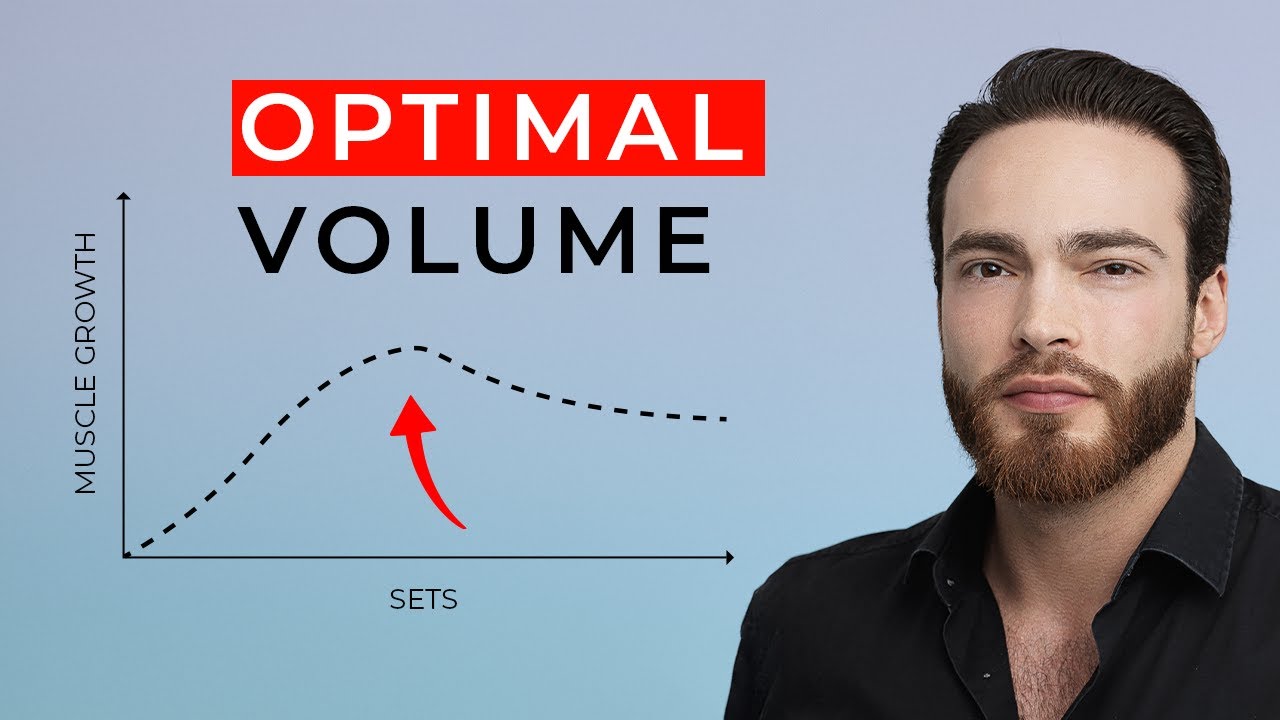
did find that that relationship resembles diminishing returns so in other words as you go from zero sets per week to five sets per week you're going to see the greatest return on investment as you go from five sets to 10 sets per week you're still going to see robust hypertrophy but the net benefit is going to be slightly less than that previous interval more is more get your 8h hour arm walkout ready we're going to the Moon that's because while we usually think of volume as having an inverted U relationship with hypertrophy this study the
most comprehensive metanalysis on trading volume yet hasn't found that ceiling more is more importantly that seemed to apply whether they were looking at the short versus long rest times at trained lifters versus untrained lifters and even when looking at every study that took all sets to failure now I don't expect everyone to just start doing 30 sets for every muscle all at once there's a potential recovery question there can we train every muscle with high volume at once we just don't know that yet these findings may be best applied to specialization phases where you take
certain muscles and treade them with very high volumes and take other muscles and reduce the volume for those just be aware that you're treading off high return sets for low return sets for The musle Who specializing on more singly though there's a more practical barrier to training with high volumes time most people don't have the time to do that many sets fortunately there are a few studies that came out this year that can help you make your workouts more time efficient too we'll get into that in a bit personally this volume research just makes me
way more comfortable pushing volume for all muscle groups to around 20 to 30 weekly sets and I've been just fine I've been training to consistently and I've been recovering just fine I likely grow more muscle using this approach but what about frequency how often should you train each muscle for maximum hypertrophy higher frequencies appear to have a neutral to slightly positive effect at a given training volume so if you're doing 10 sets for a given muscle if you were to do all of those sets in one session versus all of those sets spread across two
sessions so five sets per session spreading it across two sessions might have a positive effect but it's probably not a primary training variable or something you need to overly stress about importantly Josh and his colleagues are also working on a meth analysis on per session volume which suggests that the best training frequency May scale with how much volume you're doing basically just like with weekly volume per session volume has a diminishing returns relationship with hypertrophy so when you're specializing on arms you're likely better off spreading out that volume across the week instead of just doing
one or two 8h hour on workouts as a result I think you should aim to train each muscle twice a week from there you can tweak things further for every 5 to 10 sets you do for a muscle in a given week add an extra training day if you're aiming to train your biceps with say 15 to 25 sets a week for example that would land you at 3 to 5 days for your biceps a week that's why when specializing you're best off using a full body routine and why the push pull leg split is
surprisingly impractical I have a whole video on routines you can check out here fun fact back when we first got these results from Josh Pand the first thing we ever did was integrate them into my adapt my adapt is constantly being updated by the latest findings and exercise science so you'll always get Cutting Edge workouts to make your physique improve as fast as possible my adapt is the coach in your pocket it's smarter than anything on the market right now and already better than many coaches it's launching very soon go to my.com now register your
email and you receive a free trial when it launches as well as a lifetime discount if you sign up in 2024 we were graced with one of the first studies looking at training past failure full disclosure I was one of the authors on the study but the main man was Ste lson up in Norway so this study compar two calf race conditions to see how they affect medial gous grows so over 10 weeks we had 2300 men that performed spit machine C races unilaterally twice a week so they trained one leg to failure using full
range of motion and they stopped when they could not longer lift fully a full repetition whereas the other leg also train to fil but added extra partial repetitions in the more lengthen position after reaching full range of motion failure so participant performed for set of 10 to 20 repetitions and had a double progression method it also around 30 seconds rest between L and 2 minutes between set and then measured the muscle thickness of the medial gastrus with ultrasound both pre and post intervention so that was the design of the study what about the results did
train past failure actually increase muscle growth what happened was that the that train with past failure partial and Incorporated this into the set after reaching full range of motion fil grew their gastricus around 99.6% compared to around 6.7% for the condition that terminated the set that just momentary failure in the plant hard Flex position also what interesting here was that where that the participant were capable of doing around 8 to n repetition with past pH partial after reaching full range of motion failure which I speculate could parly explain the fining St there are two ways
of looking at these results on the one hand you could consider the additional hypertrophy was caused by focusing on the stretch those reps past failure took place there after on the other hand there might have been something about training past failure in 2023 the most comprehensive metanalysis on trained to failure for muscle growth they find more muscle growth as we approach failure which makes you think that the same could hold true as you train past failure to my suspicions it's both but see that's actually great news for many of us most of you hate doing
just length and partials so if you can get most of the benefit by doing length and super sets where you do four range of motion first and then partials and you can get most of the benefit of Leng and partials that's a sweet deal plus this is one of the approaches that might make sense when you're short on time and trying to squeeze more muscle growth out of your gym time doing that LinkedIn super set doesn't take any additional time but you get more growth from each set once you head for into motion failure just
keep the step going doing partials until you can't even get another partial just don't take a lift where you can get pinned and then someone has to bail you out and you're embarrassed for the rest of your life this next study might be the one that surpris me the most only a year and a half ago I went on record saying that short rest times much less than 2 to 3 minutes were substantially worse for muscle growth well it turns out I was probably wrong I even made a video saying as much once again I
was a co-author in this study one of my roles was to look at all the individual studies and extract the results for analysis my colleague Brad shenfeld was also involved we took all the studies that manipulated rest times and measured muscle growth we found that shorter rest times were worse for growth but only if they were under 60 seconds resting just 60 to 100 20 seconds between sets was sufficient to maximize growth going past this didn't increase muscle growth any further after receiving the results of our meosis I've been resting just 60 to 90 seconds
for upper body exercises or isolation exercises and closer to 90 or 120 seconds for lower body exercises or compound exercises in all likelihood I'll grow just as much muscle that way but I'll be saving time common robotto my viewers had in response to these findings was that there was no way they would get the rest hypertrophy from only resting one to 2 minutes between sets since they were so much more advanced than the subjects in these studies do you think recommendations would be much different for advanced lifters versus less well train lifters so it's very
speculative CU we just don't have that again I said there was limitations in the research um I do think from a logical standpoint if you're using very heavy loads that would be another uh caveat to this that might demand more recovery but I think also you have to balance that with the fact that in general Advanced lifters tend to recover better uh they build up a stamina there is some evidence that when you consistently train with somewhat shorter reps that your recovery enhances that your you get greater buffering capacity I think that is a fair
comment or a fair point to me but I don't certainly don't think you can just take that for granted and say that's the case we need evidence we need research on that and that just hasn't been done yet my viewers also made a similar critique when it comes to paired super sets in a traditional superet you take two exercises for the same muscle and perform them back to back with a paired superet you take two muscles that do not have the same functions and super set them instead of really hammering one muscle the aim ha
is instead to get more training in less time the idea is that since you're targeting different muscles with the two exercises performance shouldn't be impaired and you should be able to get the same muscle growth but in far less time earlier this year three studies to date had already found this to be the case compared to just performing training the traditional way doing these period super sets allowed lifters to gain the same amount of muscle but in 30 to 50% less time spend training however the comments got to us so we decided to run a
study in train lifters with an average of over 3 years of theing experience superet study uh aimed to look at uh we we did Agonist antagonist suets which is probably the most common form of super and for those who perhaps don't know it's when you're looking at muscles on the opposing sides of the body that function in what are called an Agonist antagonist relationship whereas one is working the other is gxing so we we looked at biceps trips and uh quads and hamstrings and we had subjects do either training with traditional sets where they just
did three sets of each uh leg extensions leg curls biceps curls triceps press Downs or they did the these exercises in superset fashion one was immediately followed by the other the results we observed similar bicep triceps quads and hamstring hypertrophy when super setting versus performing traditional train there is a potential calat here though I think if you're going to add on value that could become problematic over time with doing Suess particularly if they do increase the perceived exertion that's involved which conceivably would affect recovery certainly I think with um selectively using them you can selectively
say all right I'm going to do them for my biceps and triceps today or or maybe just uh I'll do squats and then the leg press and then I'll do a super set of leg curls since the study came out I've been super setting exercises a lot more after all we now have four studies showing superpets can build just as much muscle while saving up to 30 to% time even in train lifters there's even more data on performance that shows that super setting usually doesn't harm performance pick two muscles that don't interfere with one another
the biceps and triceps the quads and the hamstrings chest in the back do a set of one exercise rest for about 30 to 45 seconds or however long it takes to no longer be out of breath do a set of the other exercise repeat until all your set with up you commenters commonly complain about practical feasibility especially in a busy gym pick exercises for each muscle that you can easily access you can pick exercises with similar equipment requirements every major muscle usually has one good exercise that you can do with a given piece of equipment
let's say you have dumbbells on the bench or even just a barbell or even just body weight there's going to be something you can do for any two major muscles using just that one piece of equipment I'd be remiss not to mention our own study we tested length imp partials against a full range of motion for muscle growth focusing on the stretch has been the most controversial Topic in the fitness industry for a while now the detractors will say that it does nothing for anyone except beginners I have a whole video on that topic you
can check out at any rate it is true that studies and train lifter are few and far between especially looking at length and partial specifically we coulded the most highly trained participants we could to take part people needed to have at least 6 months of training experience but many of the people we got in had it far more than that for an average of around 3 to 4 years of training experience why don't all studies examine trained lifters progress is slow you'd be lucky to gain 2 pounds in a year let alone see much progress
in 8 weeks or be able to tell whether length and partials or 4ange em motion caused more growth in just 8 weeks to remedy this issue we'll be using within participant design where in each trained lifter is assigning their left and right arm to do either for range of motion or lengthen partials if their left arm was randomized to before range of motion for instance their right arm would be Link in partials and we're counterbalancing this to wash out any effect of limb dominance on hypertrophy because we're comparing the effect of different training interventions on
two sides of the same people we can ensure the differences aren't due to for example sleep stress nutrition or anything else that could otherwise impact hypertrophy specific Al we used ultrasound technology to look at the thickness of the elbow flexors the biceps the brachialis the brachio radialis and the elbow extensors the triceps Breaky before the intervention and after the intervention to see how much growth partial range of motion and full range of motion really caused we had lifters do different chest press variations bicep curls tricep extensions and both pull downs and rows for 8 weeks
the only difference was that while one arm was trained exclusively with a 4 in motion the other arm was trained exclusively with l comms importantly for both arms they still got a good stretch and paused in the stretch our results let's ask the lead author so what happened which arm GW more muscle thank you for asking me Dr Wolf first of all we observed 49% of an increase in muscle size over 8 weeks in the arms but I'm of true minds about these results on the one hand it's entirely possible that 8 weeks just wasn't
low enough to really observe a benefit to lengthen partials over a 4 in of motion the second possibility is that by using a variety exercises pausing in the stretch controlling the Ecentric and even using some exercises that emphasize the stretch may have been enough stretch Focus to maximize hypertrophy even in the full range of motion condition Beyond this one study there's been more studies on the stretch that came out this year there's still generally supportive of there being a benefit to a stretch or at the very worst you see similar muscle growth I see focusing
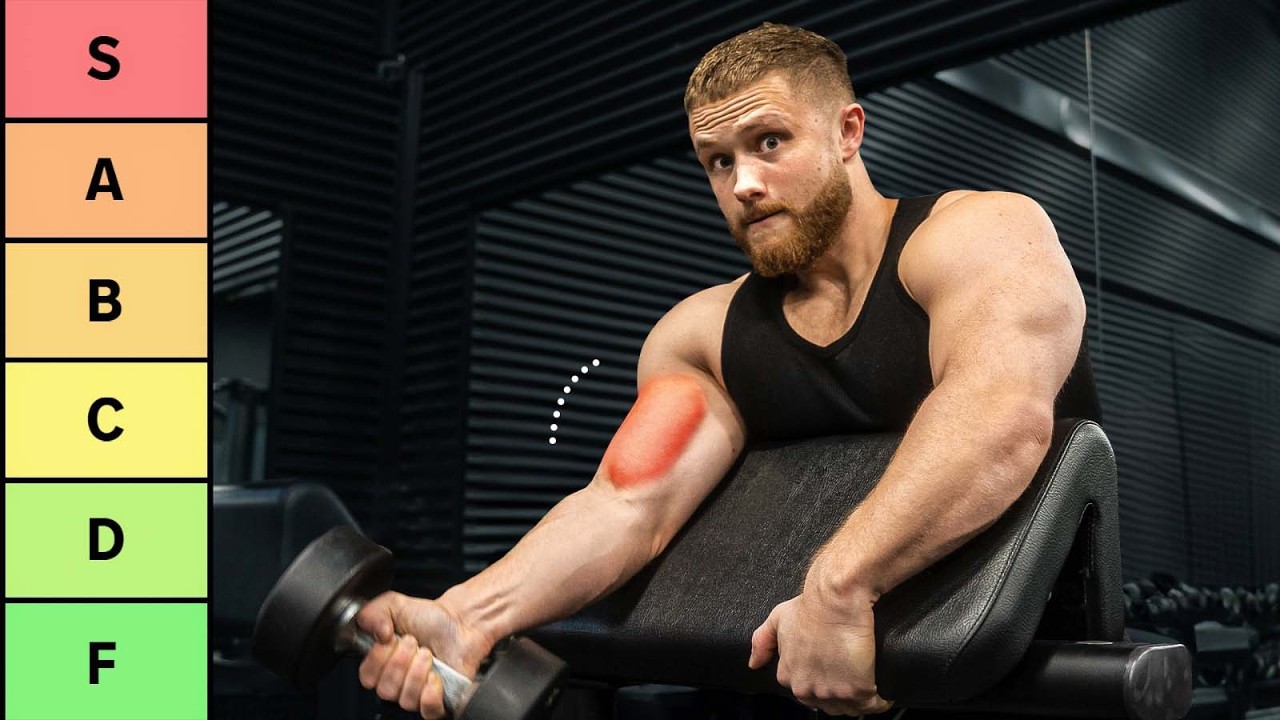
on a stretch as a winning strategy and there's a fair bit of evidence to suggest you grow more muscle by doing so I've been doing L partials on basically all movements with a few exceptions I've still been picking stretch focused exercises if you want to see the best exercises for each muscle check out my ti list series if you'd like a full update on the stretch research leave a comment below I'm currently involved in about half a dozen more studies on the stretch that will be preprinted and I'd be more than happy to talk about
them yes these studies results will only work in 2025 will high volume get nerfed will the stretch be good for building muscle but before you go don't forget to Culp Rascal apparel drip if you don't your friends will make fun of you all year for your whack fits Rascal is durable stylish and squat proof Go to Rascal apparel.com and use code wolfa checkout for 10% off happy New Year go get them