Do you find it hard to create good habits and break bad ones? Then stay because in this video you will learn two simple systems for habit formation. The first is based on the neuroscience of brain states, and our ability to perform certain tasks in different phases of the day.
And the second system focuses on the formation and consolidation of habits in periods of 21 days that favor neuroplasticity. And towards the end, we will also see a system to eliminate bad habits that will surprise you with its simplicity and effectiveness. All the content of this video is based on the work of the great Andrew Huberman.
Neuroscientist, professor of neurobiology at Stanford University and director of the Huberman Lab at Stanford Medical School. Specifically, I will summarize the key points of his podcast number 53 entitled The Science Of Making and Breaking Habit. It lasts almost two hours, but I recommend you to watch the whole thing because it is fabulous.
I leave you a link in the description. Habits organize our behavior into reflex actions that we can execute without thinking about them. In fact, 70% of our daily behavior is habitual.
Actions that we repeat day after day. When we talk about habits, we are basically talking about our nervous system learning something through repetition. For which the connections between neurons are modified.
Neurons are nerve cells that in order to communicate with others emit electrical and chemical signals. If a set of neurons is kept very active electrically, it is probable that these neurons communicate with each other more easily and form routes that work in a habitual way. However, not all people have the same facility to form certain habits, and the reason is that we do not all handle in the same way something called limbic friction.
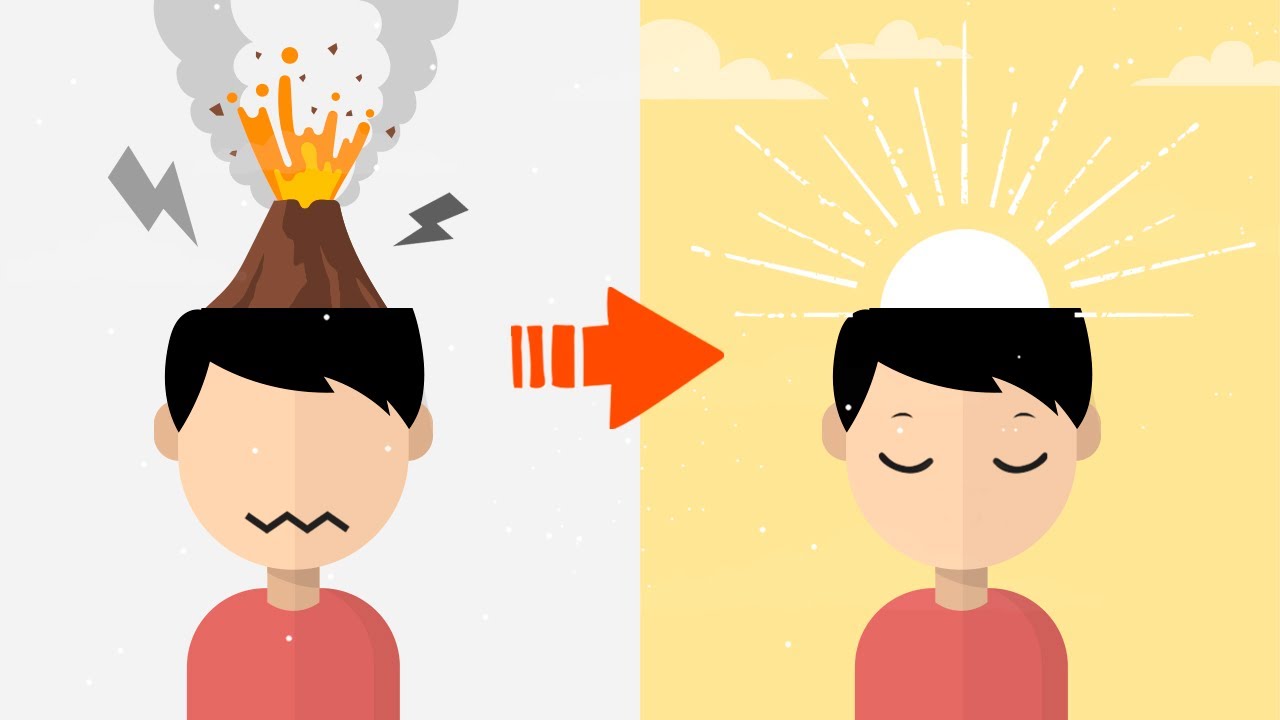
Limbic friction is a term coined by Huberman himself to refer to the tension that arises when overcoming one of these two internal states: Anxiety, a state in which you are so agitated that you cannot engage in the behavior you would like to. And tiredness, or laziness. Which would be the opposite state.
When you feel too alert or too calm, you need a great deal of energy to overcome this limbic friction. And in the initial phases of a habit, this friction is especially vigorous. Let's say you are trying to acquire a habit that you want to perform right after you get home from work.
But when you get home you feel agitated because you still have a lot to do, so there's a lot of limbic friction to overcome if you want to get down to doing what you said you would do. That is why when creating any habit the goal is to get into what is called automaticity. That is to say, that the neural circuits work automatically so that the limbic friction is minimal, and you don't find it difficult to do it.
That does not mean that the behavior you want to perform does not require effort as such. Rather, we are talking about starting to execute it. If you want to do strength training in the gym, even if it is a habit, it will still take a tremendous effort.
The weights are not going to lift themselves. But the act of going to the gym will not. It is something that no longer generates a high degree of limbic friction because it has become habitual, automatic.
And to create this automaticity that leads to habit, Huberman proposes two systems that, as we will see later with clear examples, we can combine to maximize results. The first is a system of dividing the day into three 8-hour phases. The first phase encompasses the first 8 hours after waking up.
The second phase is the next 8 hours. And the third is the remaining 8 hours. Let's say you go to bed at 10 o'clock at night and wake up at 6 o'clock in the morning.
In the first phase that goes from 6 a. m. to 2 p.
m. , your whole system is action-oriented and focused. And the neurochemicals that are naturally released in your brain and body allow you to overcome any limbic friction more easily.
That is why the habits that you have the hardest time incorporating, that is, the ones that generate the most limbic friction, you should place them in this first phase. Do the hardest first. This way it will cost you much less.
Phase two would go from 2:00 pm to 10:00 pm. During this phase of the day due to circadian changes in our biology, the amount of dopamine, norepinephrine and cortisol circulating in our brain and bloodstream tends to decrease and a different neuromodulator, serotonin, begins to increase. It is an excellent time to execute habits that you already have incorporated.
Things you are already doing, and therefore it does not require much energy to override the limbic friction. And it is also an excellent time to incorporate habits that are not so hard for you to do. Things that you think are easier.
And phase three is the sleep phase. That's where the neuroplasticity really occurs. Neuroplasticity is the basis for habit formation.
And this rewiring of neural circuits occurs in deep sleep states. If you don't give phase 3 what it needs, which is deep, restful sleep, you simply won't be able to consolidate those habits that you've worked so hard to execute in phases 1 and 2 of the day. That is why you should avoid at all costs certain things that prevent you from sleeping well.
Such as caffeine, bright light from screens, and actions that increase your stress levels. And let's look at Huberman's second habit-forming system, the 21-day system. And we will also see how to combine it with these three phases of the day.
The idea of this second system is very simple. You have to choose 6 new habits, which you should do every day for a period of 21 days in a row. However, the expectation is that you will only complete 4 to 5 of them each day.
Why? Because some of those activities you probably won't have to do every day. If we take the example of going to the gym, it's something you may not need to do 7 days a week.
So it is assumed that of the 6 habits you choose, you will only do 4 or 5 of them every day. And if one day you fail to perform even one of the 6 habits you set out to do, there is no punishment. You should not make up for it in any way.
You just continue as normal the next day. According to Huberman the lack of compensation for missed days, the fact that it is a fairly high intensity program for 21 days in which you test yourself, and the fact that the 6 habits can be rotated, makes this system very easy to integrate, helps us overcome limbic friction and keeps the dopamine circuit vigorous. So we feel the urge to get involved.
How do we combine these two systems? The one of the three phases of the day and this one of the 21 days. Very simple.
It is simply a matter of dividing these 6 habits between phase 1 and phase 2 of the day. Let's see an example. Let's imagine that I have proposed to incorporate these 6 new habits during 21 days.
Exercise at the gym. Read a minimum of 10 pages of a book. Meditate 10 minutes.
Go for a walk for half an hour. Keep a record of expenses. And play the guitar.
It's just an example, obviously you choose what you want. The first thing we do is to divide these 6 habits between phase 1 and phase 2. The habits that require more physical reinforcement and concentration, I will assign them to phase 1.
And the more relaxed ones and the ones that cost me less, I will put them in phase 2. For example, exercising and meditating I assign them to phase 1, and the rest to phase 2. And the execution could be something like this: Monday, when I wake up, I meditate 10 minutes, and then I go to the gym.
I have already fulfilled the habits of phase 1, so I go to work. When I come back from work, I am already in phase 2. The first thing I do when I get home from work is to go for a walk for half an hour.
From there, I continue with my day as normal, and before going to sleep I read 10 pages and write down the expenses I had that day. And on Monday, for example, I don't play the guitar because I have decided that I will only play the guitar 3 or 4 days a week. So on Monday I have completed 5 of the 6 tasks.
The next day, Tuesday, maybe I don't go to the gym because I decided to train 3 days a week, so I get to rest, but I do meditate. I go to work and after work starts phase 2 where I walk, play the guitar, read before I sleep, and write down my expenses. That is, again, I execute 5 of the 6 habits.
But they are not exactly the same as the previous day because they rotate. And so on, day after day So you have enough to start with. First, write down the 6 habits you would like to incorporate.
Then assign those habits to phase one or two, depending on what we have seen so far. And finally decide when to start those 21 days that Huberman proposes. And let's go to the last system.
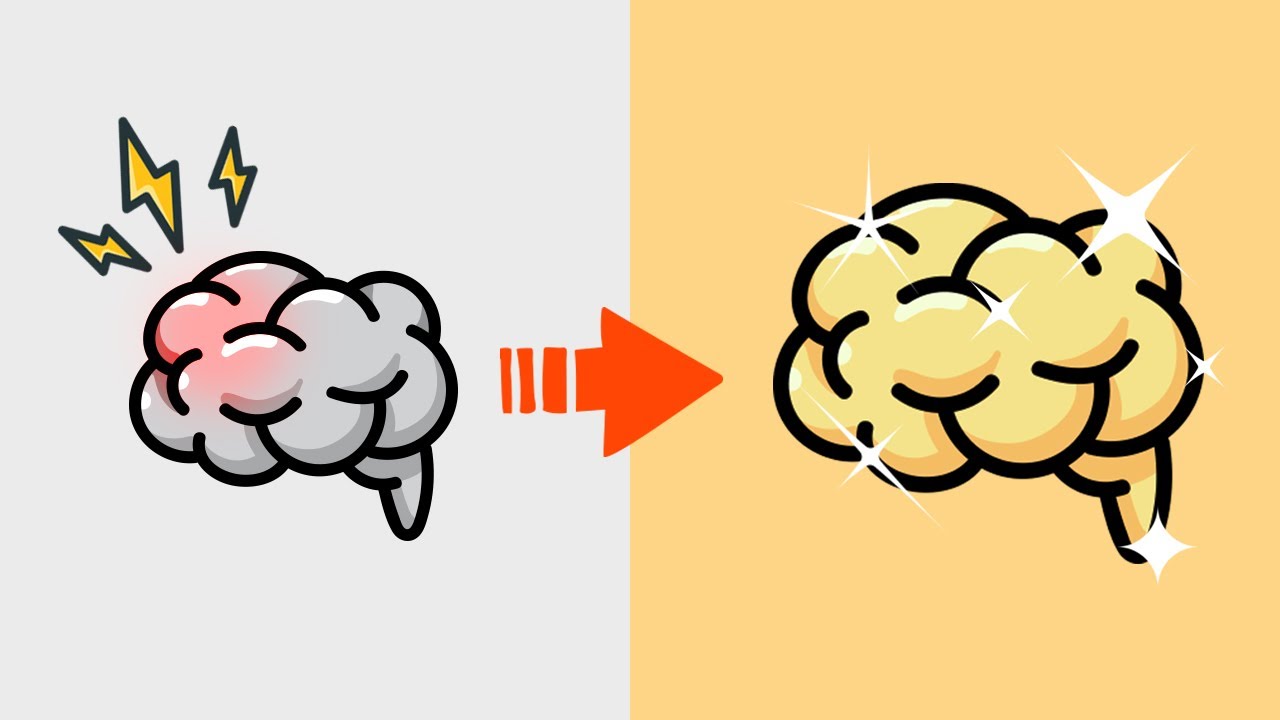
Which in this case we will use to break habits that we no longer want to reproduce. Breaking a habit is basically to break the synapse or connections between neurons, so that they stop communicating with each other and the automatic patterns are broken. Heather Fritz, conducted a meta-analysis where she showed that an extraordinarily effective way to achieve this is to use the period immediately following the bad habit to perform a replacement behavior.
Right after the bad habit, the neurons involved in that behavior are still active and right there we have to make a small positive habit. Let's see it with an example. Let's suppose that you have decided to focus on your work to the maximum without being distracted by the phone.
Until you are done, you don't want to know anything about the phone. But before you know it, there you are again, with the phone in your hand. It's such an automated behavior that you simply couldn't avoid it.
But just at that moment, when you realize that you have fallen into the bad habit, immediately afterwards you perform a positive habit, short and easy to execute. It can be something as simple as 5 minutes of meditation or 5 minutes on that language learning application that you find so hard to use even though you really want to do it. What happens is that your brain starts to link the execution of a bad behavior with this other good behavior.
And in doing so, you begin to recruit other neural circuits that begin to break the activation sequence associated with the bad behavior and insert themselves on top of it. In other words, what starts with a bad habit, ends up becoming the seeds upon which a good habit is built. It seems contradictory, but you create a kind of cognitive and temporal mismatch between the initial bad behavior, which functioned as a kind of closed circuit, and set in motion another replacement circuit.
You modify the sequence of neurons that are triggered by the bad habit and use it to your advantage to create a good one until, with repetition, the bad one disappears by itself. It is something you must repeat over and over again, obviously. If you know English and enjoy a good podcast, I recommend you watch Huberman's entire episode.
It is full of very valuable information, and besides being a world-class scientist, he is a great communicator. I leave the link in the description. And I also leave on screen other videos that will surely interest you.
I'm sure you will love these recommendations. See you around. Bye.










![I Tried Andrew Huberman's Morning Routine - [30 Days + Blood Tests]](https://img.youtube.com/vi/roK4g1e28mM/maxresdefault.jpg)