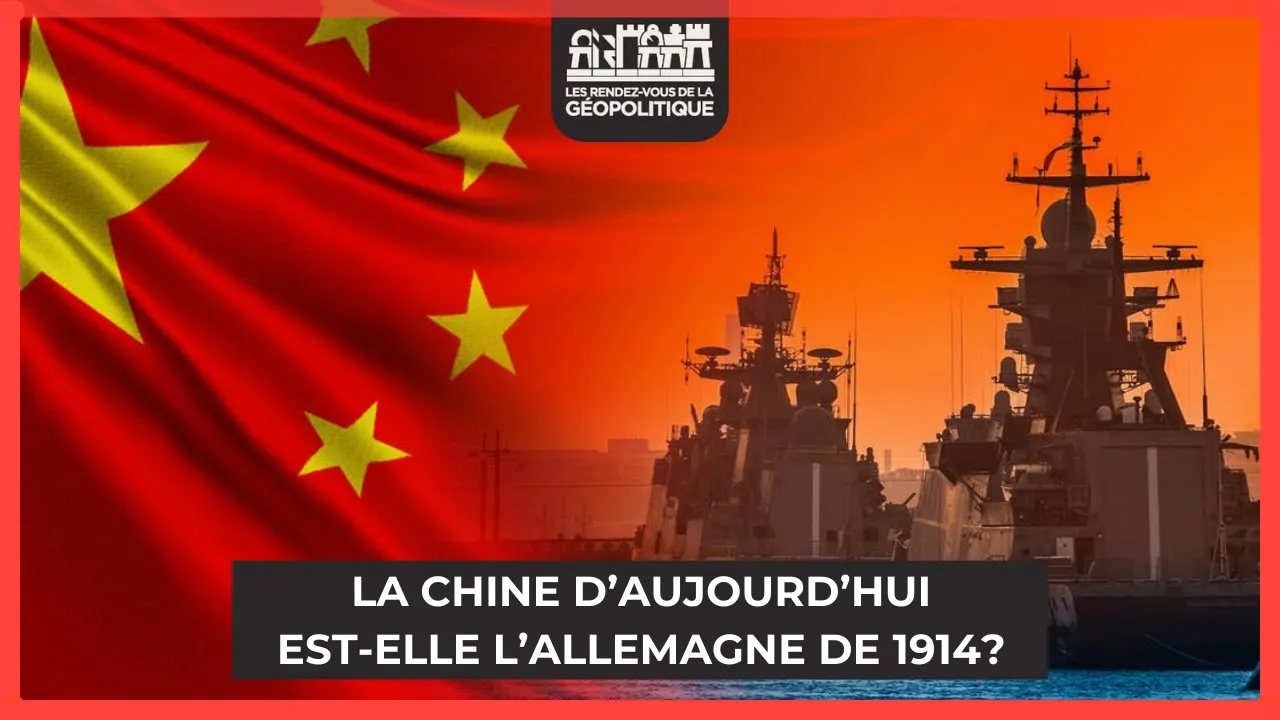
Hello everyone! Welcome to this new episode of Geopolitical Rendez-Vous, where I have the pleasure to meet up again with Fabrice Ravel. Today we're going to take a look at two countries.
Two unique countries, very different from each other, in an approach that is deliberately. . .
. . .
comparative. We have often used this approach, but this time we're going to push and pull to. .
. . .
. the limits as the two countries are both unique and very different: China and Germany, in a historical. .
. . .
. period which is also different in each case. We're going to talk about China in 2020 and Germany in 1914.
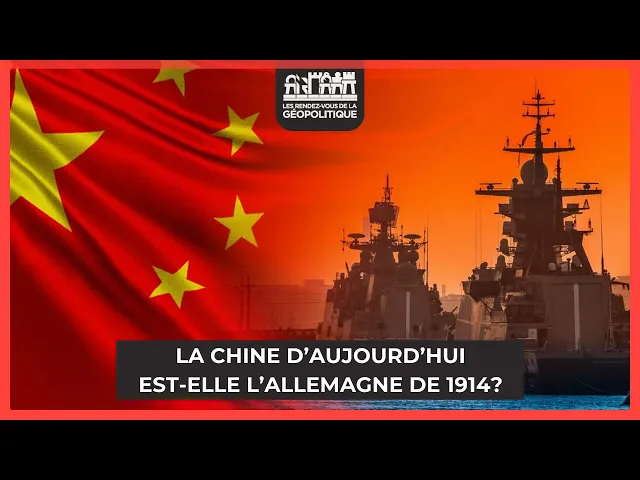
Is China in 2020 what Germany was in 1914? Hello, Fabrice. Hello, Olivier, hello everyone.
We're quite traditional in our comparative approach. We've done this in particular to analyse. .
. . .
. the present of a situation and anticipate the future. But in this case we've taken on an additional challenge as we are.
. . .
. . dealing with two very different periods, 1914 and 2020.
We are dealing with two different continents: . . .
Europe and Asia. We have two extremely different political systems: Imperial Germany in 1914 and the communist Popular Republic of China today. We are in two.
. . .
. . extremely different technological contexts, because apart from the revolutions.
. . .
. . in communications, there is also the invention of nuclear weapons, which had a fundamental impact.
. . .
. . on geopolitical relations.
And of course, international relations are not at all in. . .
. . .
the same situation today as they were in 1914. So despite all these differences, how. .
. . .
. can we try to find what points these two countries have in common? Yes, this is a very valid question, because we get into the problems as you.
. . .
. . have want us to, and it's true that this is immediately quite interesting, I think.
We should. . .
. . .
start by getting rid of any ideas that might make us think that this kind of comparison. . .
. . .
is incongruous, given that the differences you just mentioned seem. . .
. . .
so obvious (. . .
). So in fact, to my mind, there are three similarities that might be surprising. .
. . .
. because of their extent, and which will justify, and lead us to justify the fact that this comparison is. .
. . .
. in fact quite appropriate. I'm going to start by quickly listing the three things and then I'll try to.
. . .
. . use them afterwards.
Firstly, there is an extraordinary economic progression, which. . .
. . .
China has seen from 1980 to today, and which Germany saw from 1871 to 1914. Then, in a similar kind of way, and we might say following on, there is, and this is very important - we'll come back to it - . .
. a notable growth in Geopolitics, we might say an appetite for maritime adventure and the building up. .
. . .
. of a huge fleet, in particularly in the military sense, both in China in the period we've just defined and in. .
. . .
. Imperial Germany. There is another point which is related to what we are talking about - because here,.
. . .
. . in response to both cause and consequence at the same time - there is, I think, in the two countries, even though it is in.
. . .
. . different centuries, and in circumstances which you are quite right to point out are very different, there is a will to be.
. . .
. . more acknowledged, and this desire is born of the frustration of not being sufficiently acknowledged on the international stage.
. . .
. . at the level that both countries think they should be, despite the fact that it is legitimately their situation.
This is a very. . .
. . .
significant driving force in Geopolitics. Now if you like, I can come back to each of these three key similarities. First of all, economic growth.
We shouldn't forget that Germany was born on 18 January 1871. This is all too often. .
. . .
. forgotten in Geopolitics, because in our collective subconscious in Europe, and especially in France, in fact,. .
. . .
. there is permanence, but it's only from the last 150 years, especially in Germany, which is very. .
. . .
. important in Geopolitics, we shouldn't forget that the Holy Roman Empire was in existence until 1806,. .
. . .
. when Germany was broken up into over 350 states. These are things we have talked about in.
. . .
. . previous episodes, that it was more or less held together with different ideas, and.
. . .
. . there was no time or chance to develop until 18 January 1871.
So Germany is a new country. . .
. . .
and what surprised people at the time - this is really very important, we'll have to go into more detail about it - . . .
was the extraordinary dynamism of the German economy. We're not going to repeat too many figures. .
. . .
. because it would be too time-consuming. But in this period, in these 40 years, the GDP, the gross domestic.
. . .
. . product of the German Empire was in general 2% higher than in other countries.
What is quite interesting. . .
. . .
is that total German production from 1871 to 1914 went up in general from 13 to 16%, when. . .
. . .
in the United Kingdom, which was at the time the foremost industrial power in the world, something that is all too often forgotten, it went. . .
. . .
down from 32 to 16, almost half, and in France from 10 to 6. So people at the time really did. .
. . .
. have exactly the same impression as we have today. Because here, for China today,.
. . .
. . the figures are even more incredible, to be honest, as we are dealing with figures that have been.
. . .
. . multiplied by 37 in terms of production, Olivier.
This really is exponential growth if we take into account. . .
. . .
that we are dealing in terms of the trade balance, gross domestic production, and above all the proportion in. . .
. . .
worldwide production, where the figures in China are even higher. So here we have a similarity. .
. . .
. in impressions. It's important because in this comparison, there is an effective comparison, but there is also.
. . .
. . how others see you, and this enables us to establish this comparison.
We can see and understand. . .
. . .
this comparison very clearly. Now there is a very significant extension in Geopolitics that we devoted an episode to,. .
. . .
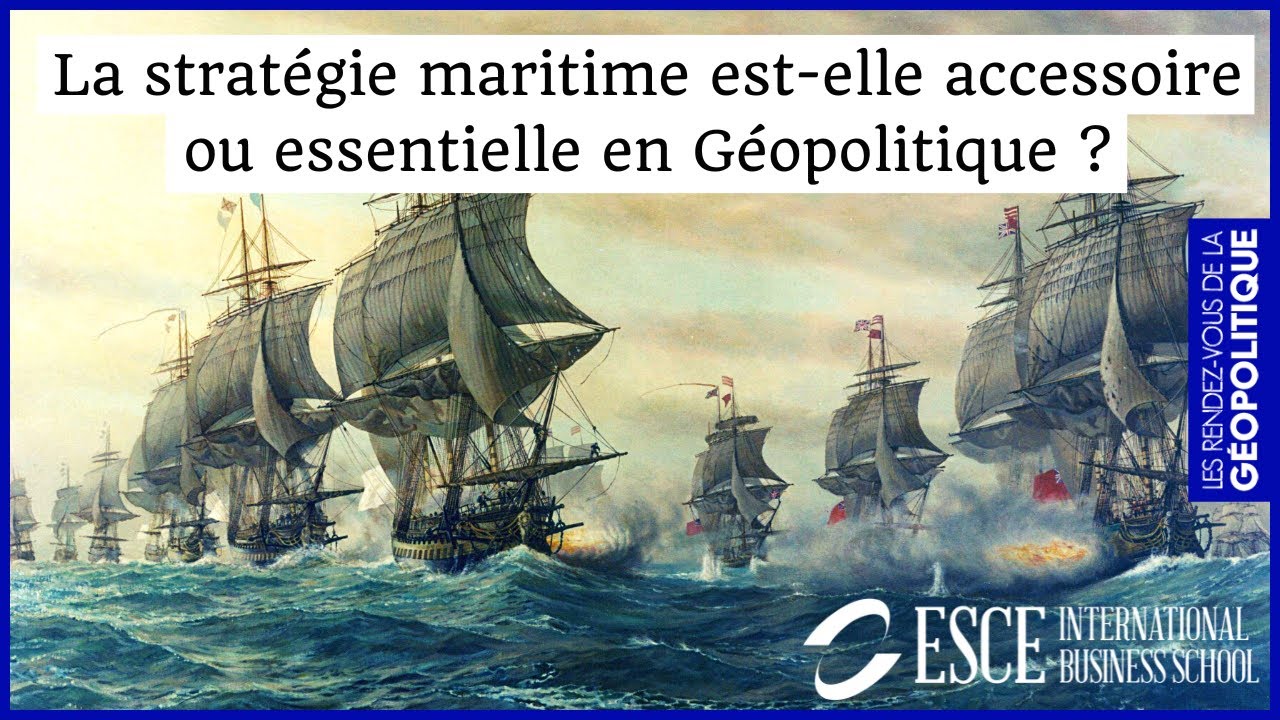
. namely maritime strategy in Geopolitics, we showed how important the sea and. .
. . .
. the oceans are. Both powers wished to take hold in the world with a new maritime policy.
This is really interesting. In this case I think I'm going to start with China, because it's true that. .
. . .
. China, when you look at its maritime fleet, especially the military fleet in the 1980s, it was much more of. .
. . .
. an offshore fleet, whose purpose was to ensure the safety of the Chinese coastline, although the truth is that it's quite clear. .
. . .
. that over the following twenty years, we are talking much more about an oceanic fleet. The figures really make you think because in fact, China today has over 600 ships, which are.
. . .
. . military ships.
According to the reports which have been drawn up, the official report by the National Assembly in France,. . .
. . .
it is believed that in the last five years China has built as much tonnage as the whole tonnage. . .
. . .
of the French fleet. This is very significant. There is maybe a third index which is quite revealing,.
. . .
. . namely that in the 1980s, Chinese maritime power wasn't among the top ten maritime.
. . .
. . powers, whereas today it comes in second in terms of tonnage - the overall tonnage.
. . .
. . of a fleet is still a very important figure - without forgetting that there is an emblematic figure.
. . .
. . in a modern fleet today - the aircraft carrier, and China launched its second aircraft carrier in December 2019.
What's more, it's an important aircraft carrier, called the "Shandong", because it was built exclusively with Chinese. . .
. . .
technology, which wasn't the case with the first one. So here we can see China's desire to form part. .
. . .
. of a worldwide maritime strategy, and this is really very important for a power that wishes to be acknowledged. .
. - I'll come back to the term acknowledged - and here we have a real similarity, Olivier, because regardless of the fact that. .
. . .
. Bismarck's frame of reference was purely European, in a European context, this was the. .
. . .
. major turning point that Wilhelm II introduced. At a given time he had this wish for Germany, especially.
. . .
. . in the 1880s and 90s, to implement a true world policy, this was the difference with.
. . .
. . Chancellor Bismarck, to build a fleet that was first started by.
. . .
. . Rear-Admiral Von Tirpitz.
This is well known. And then, I find that what is even more revealing is the biographer. .
. . .
. of Wilhelm II, or one of his biographers, who shows this very clearly in the book he wrote about him, Christian Baechler, who. .
. . .
. says that in a speech on 21 August 1911, Wilhelm II said something that became quite famous and which. .
. . .
. reinforces our theory, a bit like an echo: "Thanks to its fleet, Germany will have its place in the sun". So here, in fact, that's a really powerful sentence because it highlights a third point or.
. . .
. . a third similarity between China today and Germany in 1914, there is a deep desire.
. . .
. . to be acknowledged.
I think Westerners should take this into account. It's not so much. .
. . .
. a show of power for power's sake as the desire to be acknowledged again. .
. . .
. as a power which legitimately holds its place in what we might call the Concert of Nations. We shouldn't forget that in the 19th century - we have a tendency to cover this up in the West -.
. . .
. . there were unequal treaties that were signed with China and China suffered in any case - we should state this.
. . .
. . clearly - in the setting of the 19th century.
Then there were all the wars, the civil wars, the war with Japan. Then we have the Chinese wish for a. .
. let's say self-sufficient economy, which was definitively. .
. . .
. abandoned with the reforms by Deng Xiaoping in December 1978. China wants to declare,.
. . "Look out, China is back".
The Chinese people don't think of themselves as an emerging power. They are a returning power. What Napoleon said is well known.
In fact, the Chinese took the sentence,. . .
"Let China sleep! " They think that China has woken up and that they are the Middle Kingdom, . .
. in other words a country that holds a legitimate place. This is quite interesting because when you look at a book by.
. . .
. . Catherine Clay: "King, Kaiser, Tsar".
. . .
. . it might seem a bit unrelated because of what it says, because in fact.
. . .
. . the author does her best to unravel the relations between three cousins - the British, German.
. . .
. . and Russian monarchs.
You realize that Wilhelm II suffered greatly from a kind of complex of ambiguity. . .
. . .
regarding the English. He admired them deeply and at the same time he really suffered as he had the feeling that in the end. .
. . .
. it was as if the British were condescending towards him. They were like the new cousins or the.
. . .
. . newcomers in Geopolitics.
His relations with England were very ambiguous because - we'll come to this - . . .
in the end England was very concerned to see that in just 40 years Germany had built the second-largest fleet in the world and. . .
. . .
I think it is clear here that there are three points that let us make a suitable. . .
. . .
comparison. A comparison that is neither harmful nor negative as you might think at first. Yes, because if you look at the current geopolitical situation, the concerns that are building up, if you.
. . .
. . compare it to Germany in 1914, we tend to think of a warlike Germany, which is possibly.
. . .
. . a mistaken image, or at least an over-simplified one.
This would be the image of. . .
. . .
Germany in 1939 to 45. It is the image from the Second World War that we have projected. .
. . .
. onto the First World War, so it's a retroactive reading that would give the wrong impression in our comparison. Yes, what you are saying is quite right and I think it's very important so that we can still validate the.
. . .
. . accuracy of our topic - if you don't mind, before I go into this in depth - because you are.
. . .
. . totally right, it's a bit of a paradox.
We have an initial reading which projects a more recent event onto. . .
. . .
an older one, it is something of a paradox. It's true that today, we know more about all the. .
. . .
. . horrors of Nazism, about the Second World War, there is proof for everyone that it was Nazi.
. . .
. . Germany that triggered it, wanted it and reaped it.
Nobody would even think of arguing with that. But the First World War is much more ambiguous. What's more, this confusion was even more.
. . .
. . possible at the time, and especially after the defeat of Germany in 1918, when many people tried to show.
. . .
. . that only Germany was responsible.
This is not the interpretation that most. . .
. . .
historians share today. We have to be honest about this. Germany bears a share of the responsibility, but.
. . .
. . no more than the other countries, because all the European powers were nationalist, imperialist, they were.
. . .
. . convinced deep down inside that they could win the war, that it was bound to be short, we shouldn't forget this.
So. . .
. . .
the image of a Germany limited to the caricature of Prussians with their famous. . .
. . .
spiked helmets, is to my mind totally unfair. It is also very damaging initially for our comparison. This is why what we are saying is really important.
To my mind, it's not very fair, and. . .
. . .
it's actually just plain unfair, but this tendency still exists today. It's very far-reaching. .
. . .
. because if you watch a film called Sarajevo, it's quite interesting. The film was.
. . .
. . made in 2014 or the script was written in 2014.
Why am I mentioning this film? I ask this because it might seem. .
. . .
. a bit unrelated to our initial topic. In fact, the film shows Austria-Hungary through the assassination in Sarajevo.
. . .
. . on 28 June 1914.
It's very good from an aesthetic point of view. It's exciting because it includes a police mystery with. .
. . .
. a fictitious character. There is a search going on to see what the origin of this was.
This is where the film falls. . .
. . .
into fiction because you get the impression that it was a plot hatched by the Austro-Hungarian general staff. . .
. . .
that only spoke German, which is not so. We pointed this out in an. .
. . .
. episode we had about Austria-Hungary and we arrived at the conclusion that in the end there was. .
. . .
. a misrepresentation of young Serbs; Princip, the Black Hand, etc. to bring about a war that was desired.
. . .
. . by Austrians and Germans.
Today, everyone agrees that if you reread the. . .
. . .
books - I'm thinking of John Keegan on the First World War - it is a reading that it is not entirely. . .
. . .
true. Our comparison shouldn't suffer from this harmful reading because. .
. . .
. it is no longer relevant. What's more, there are certain similarities.
On the other hand, it's true, we should. . .
. . .
admit that even if there are similarities, there are also some great differences. So if I just recap the similarities, we saw that there is the economy, an economic boost,. .
. . .
. a desire for projection over the sea, and also a wish for acknowledgment. There is a veil that we have just lifted,.
. . .
. . the veil on the pejorative vision we might have of Germany in 1914.
Even so, once we have seen all these points,. . .
. . .
there are still significant differences, and in particular, if we focus on the strategic history of China,. . .
. . .
both from the purely historical point of view and from a philosophical standpoint too, there is a huge difference. Yes, we have to be very honest about this. I think to be fair, some of our listeners might already.
. . .
. . be saying, "Wait a minute, there are some huge differences too!
" and thinking of those. . .
. . .
to come - it's true that in our comparison, there are a certain number of differences which we. . .
. . .
have to point out. First of all, throughout the history of China, there has never been a projection. .
. . .
. like that of Europeans, in a global sense, we might say, from the Renaissance in the 16th century to the end of. .
. . .
. colonialism in the mid-20th century. China never tried to expand in a military sense so directly.
. . .
. . or on such a scale.
That is not part of their history. Then China started mapping or. .
. . .
. meeting up with companies and countries in Africa. The intention was never.
. . .
. . to physically take over these territories.
We have to give this to China. It's very important. .
. . .
. if you wish to understand China in the 21st century, because you have to remember that this is really something. .
. . .
. that never happened in all their history. China is quite right to remind us of this.
It's quite. . .
. . .
interesting because then this is explained as it is not in Chinese strategic philosophy. . .
. . .
either, or in their cultural approach. There are numerous writers who talk about this. I'm sure you won't mind.
. . .
. . if I mention the most emblematic, even if it is a bit overused: "The Art of War" by Sun Tzu.
We explained this in detail in our episode about Liddell Hart, who worked on this. It's the indirect approach that is favoured, not at all a frontal or aggressive approach. .
. . .
. that would lead to subjecting the country you wish to dominate. Knowing this, I find it really very important to emphasize.
. . .
. . because in the 21st century there are some observers who often seem a bit - possibly.
. . .
. . because they want, we might say, to create a buzz, to use a modern term - to say that China might.
. . .
. . be a military threat.
So we shouldn't forget that here, as it happens, there is a real difference. . .
. . .
with Imperial Germany, which wasn't like this at all, and which clearly adopted. . .
. . .
a Prussian approach - we've spoken about this earlier too - much more. . .
. . .
of a military approach. It would be unfair to say this about China and it would also mean we know nothing. .
. . .
. about its history and its philosophical approach. On top of this, there are two further elements which could add to.
. . .
. . our topic.
When you listen to observers - I mean today's observers of China, especially. . .
. . .
western ones - what is quite interesting is that most of them objectively believe that we can't. . .
. . .
classify China as a heavily armed power today, Olivier, in 2020, because of course, we could. . .
. . .
come to a reading that would be, how could I say this, quite original, saying that they have. . .
. . .
considerably increased their military expenditure, although there are quite a few things. . .
. . .
that are interesting here. It's true. But if we compare the population of the United States, we see quite clearly that the.
. . .
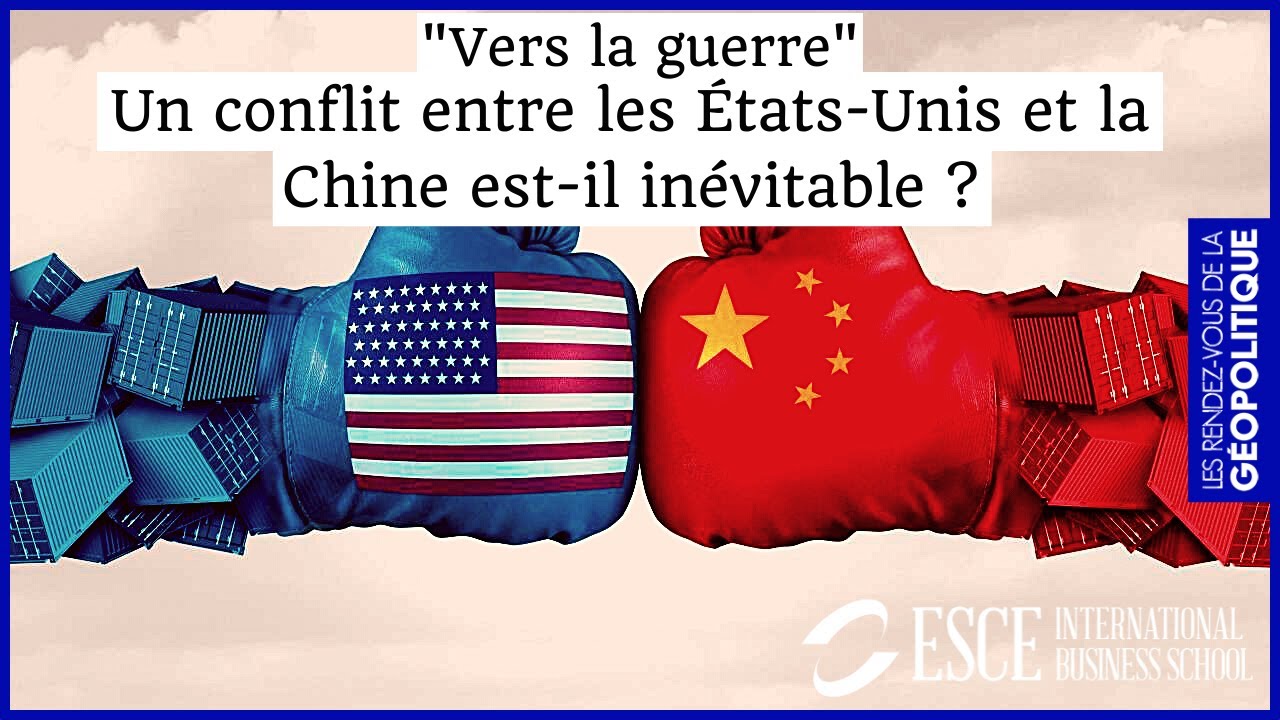
. . comparison - Graham Allison says it in a book we have spoken about, "Destined for War: Can China and America.
. . .
. . escape Thucydides' trap?
" - the United States has around 330 million inhabitants, it depends but this is a. . .
. . .
measurement of size. China has 1 billion 450/500 million inhabitants. So overall we are talking about a.
. . .
. . population that is 4 or 5 times bigger.
For the moment the military budget is 2. 5 to 3 times. .
. . .
. lower than that of the United States. So this is the first relativization, if you like.
It would be much more interesting if we could see military expenditure per. . .
. . .
capita, because then we would see that there is a fundamental difference. Then. .
. . .
. there is another aspect I think we should add. We should look at the starting point, because this.
. . .
. . lets me dive back into the visual and military encyclopaedias for the general public just as they were published.
. . .
. . back in the 1980s.
I'm thinking in particular, this gives me the chance to talk about a book about China's. . .
. . .
military power, published by Éditions Elsevier-Séquoia, in Brussels. It's quite interesting because the subtitle is. .
. "Will China become a future power? ", because you could see that in terms of.
. . .
. . technology, modernity, equipment and even modern communications and organization,.
. . .
. . China was incredibly backward in comparison to other armies, whether Soviet.
. . .
. . or western.
So in fact, we are talking about a rebuilding and a re-equipping of China, getting back to where. . .
. . .
China once was - this is what the Chinese themselves say - which might also explain the fact that we are maybe dealing with. . .
. . .
budgets that might seem to be large, whereas they are actually just letting the country catch up again. So here, you asked me, you are right, there are some major differences and in. .
. . .
. terms of geopolitical projection in history, in terms of strategic design or strategic culture, and in. .
. . .
. military expenditure too, which when you look at it more closely and put it. .
. . .
. in perspective, it's not so much as you might initially think. So we can see everything that makes China today different from Imperial Germany in 1914.
Even so,. . .
. . .
despite these differences, there are certain parameters, especially internal ones in China,. . .
. . .
which might suggest a situation similar to that of 1914. Yes, this is where it gets interesting, in fact, because in the end, we have managed, I think, to justify. .
. . .
. our comparison by showing that there really are similarities, that they weren't necessarily pejorative,. .
. . .
. and that notwithstanding these similarities, there are also certain major differences, and these differences could. .
. . .
. make us think, because - we'll come back to this - the concern, obviously, is that Germany in 1914 went headlong. .
. . .
. into war all the same. We can see quite clearly that in this period, certain writers, like Graham Allison and the symptomatic.
. . .
. . title "Destined for War", ask questions about the future.
We can also see that the culture. . .
. . .
and the history of China don't lead to this conclusion. On the contrary, there are some factors that are more. .
. . .
. internal, paradoxically, and more political. I say "paradoxically" because in Geopolitics, we forget.
. . .
. . all too often that political quarrels, political debates or political conflicts can lead to.
. . .
. . external solutions.
From this point of view, there is a book by Yann Le Bohec about the Geopolitics of. . .
. . .
Rome and Roman strategy, which is quite interesting because when he analyses the Gallic War. . .
- I find this really exciting because we always have this image of imperialist Romans attacking. . .
. . .
the Gauls. But that isn't enough. In his book, Yann Le Bohec says, at one time, in a quotation,.
. . .
. . it's quite interesting, "Caesar is responsible for this war, not Rome".
The thing is, Caesar wanted. . .
. . .
to take over in Rome and he needed a victory to justify his control over Roman politics. So in fact, it was his quest for power in Rome that led him to make war abroad. Why is this related to what we are talking about?
Because in the end, there are. . .
. . .
2 major challenges Chinese society as a whole is going to come up against, and 2 quite paradoxical ideas. Firstly, we are dealing with a power that we would classify as strong, at the very least, with a significant. .
. . .
. population, 1 billion 500 million inhabitants, who are going to enjoy more and more access, no matter how long it. .
. . .
. might take, to the outside world, and, we might say, to a foreign discourse, or a different discourse. How will Chinese power manage to succeed in the long term in legitimizing its authority over a.
. . .
. . population which will become more and more aware of a discourse we could describe as foreign?
This is a serious question, I find it is all too often ignored, and what's more we're talking about 1. 5 billion inhabitants. Then there is a second question that is a paradox too.
China still officially promotes. . .
. . .
a discourse - the Chinese say it's Chinese socialism, but we'd have to look at the nuances. . .
. . .
in relation to a classical Marxist outlook, but they underline equality. Economic development in China. .
. . .
. is extraordinary, China is getting rich. The Chinese are getting rich.
The middle class is growing. . .
. . .
and the number of wealthy people is increasing - so how can they combine the emergence of these middle classes. . .
. . .
and wealthy classes with a society that is based mainly on the theory of equality? The combination of these two parameters is a major issue for the balance of China. .
. . .
. and for Chinese power and evolution. We haven't said that they won't be successful in it.
But it might just push Chinese power into - to try and get the Chinese people behind them - foreign. . .
. . .
projection. So, if you don't mind, I would like to say this perhaps by way of conclusion, what really defines. .
. . .
. the difference between Germany in 1914 and China in 2020 is their capacity not to get trapped. .
. . .
. in a conflict or rivalry, and to be more than this in a world that would remain - it would acknowledge China,. .
. . .
. but it would remain harmonious. And if you don't mind, by way of conclusion, Olivier: In Geopolitics, what is dangerous is not so much the comparison to.
. . .
. . Germany in 1914 as to Germany in 1918, because Germany in 1918 was defeated - we can imagine.
. . .
. . a military defeat or an economic defeat today, but Germany was ostracized from international.
. . .
. relations, banned from associations and nations, Germany was not included in the League of Nations. In the end, it was this that.
. . .
. . became one of the major roots of the imbalance in Europe in the 1930s, and the.
. . .
. . rise of Nazism.
The comparison to Germany in 1914 is not so damaging. On the contrary, no country. .
. . .
. should be in a situation as to be compared to Germany in 1918. That's absolutely true.
You can't get away with humiliation. Thank you Fabrice. Thank you very much.
Thank you everyone for following us in this new episode of Geopolitical Rendez-Vous.