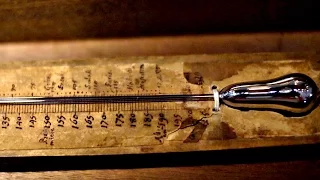
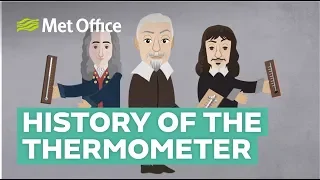
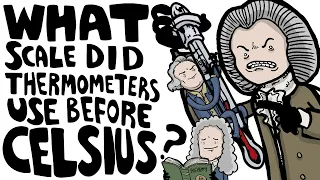
there are all kinds of different ways of trying to stick numbers to these degrees of hard and cold and they on the whole didn't agree with each other at all so one guy in florence makes one kind of thermometer another guy in london makes a different kind and they just don't even have the same scale and so there was a lot of problem in trying to standardize thermometers the challenge was to find events in nature that always occur at the same temperature and make them fixed points at the lower end of the scale that might
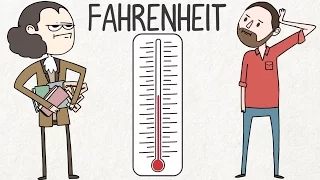
be ice just as it begins to melt at the upper end it could be wax heated to its melting point the first temperature scale to be widely adopted was devised by gabriel daniel fahrenheit a gifted instrument maker who made thermometers for scientists and physicians across europe he had several fixed points he used a mixture of ice water and salt for his zero degrees ice melting in water at 32 degrees and for his upper fixed point the temperature of the human body at 96 degrees which is close to the modern value one of the things that
fahrenheit was able to achieve was to make the momentous quite small and that he did by using mercury as opposed to alcohol or air which other people had used and because mercury thermometers are compact clearly if you're trying to use it for clinical purposes you don't want some big things sticking out of the patient so um the fact that it could make them small and convenient that seems to be what made fahrenheit so famous and so influential it was a swedish astronomer anders celsius who came up with the idea of dividing the scale between two
fixed points into 100 divisions the original scale used by celsius was upside down so he had the boiling point of water as zero and the freezing point has 100 with numbers just continuing to increase as we go below freezing and this is another little mystery in the history of the thermometer that we just don't know for sure what was he thinking when he labeled it this way and it was the botanist linnaeus who was then the president of the swedish academy who after a few years said well we need to stop this nonsense and inverted
the scale to give us what we now call celsius scale today