Sean I like to ask everybody likes to ask how did the universe begin what were the mechanisms how did it work but a more fundamental question that gws me is did the universe begin I think that's a better question because we still don't know the answer to the question did the universe begin you would sometimes get the impression that we know because cosmologists like myself talking to a wider audience sometimes pretend that we know the answer to this and there's a good reason why have a theory the theory of the hot big bang so we
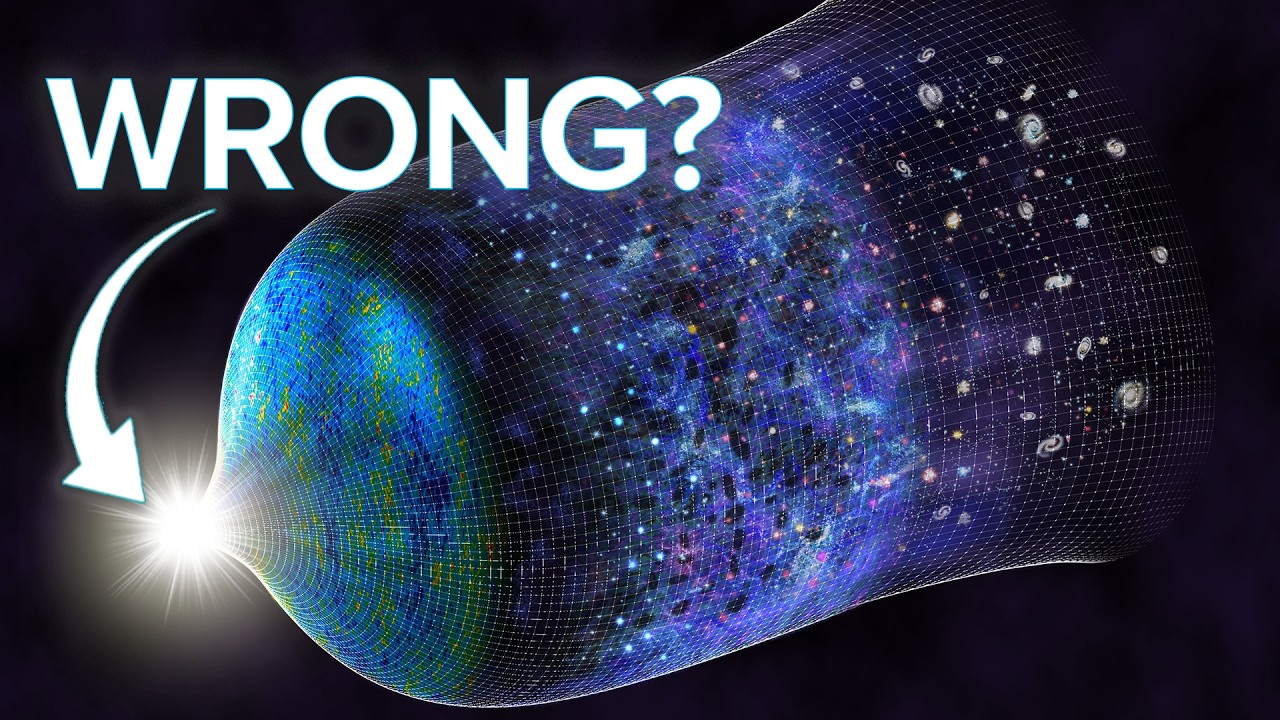
live in a big universe right now but it's getting bigger Hubble Edwin Hubble in the 192s discovered that everything is moving apart from everything else and we have a theoretical understanding of what happens if you take an expanding universe and play the movie backwards and go backwards in time everything was closer together you might say well did it bounce or does it all just crunch into one big single thing the answer is to our best understanding the theory of general relativity predicts that it crunch into one big single thing so that's theoretically where it started
that's right so general relativity says loud and clear the universe had a first moment which we call the big bang the Big Bang is not a point in space it's a moment in time it's a moment when the density of the universe was infinite when the expansion rate was infinite so a lot of cosmologists will say there was there was a beginning and the problem with this is that the prediction that there's a beginning or the understanding that there's a beginning is based on General relativity and we know general relativity is not right the reason
we know it's not right is because for one thing it predicts a singularity it predicts that things are infinite and we don't think that that can be true also general relativity is not compatible with quantum mechanics which we do think is right so basically we have a prediction that the Universe began based on a theory we have no right to trust so the right answer is we don't know yet and if you look at sort of the cosmological models that professional cosmologists are baning in about some of them feature a beginning a true first moment
in time but increasingly many of them don't feature a beginning at all they have an eternal universe that lasts infinitely far into the past and will stretch infinitely far into the future so this is different than the steady state model which was popular maybe in the 1950s and in that range of time uh because that was sort of a universe that was always the same and kind of making new matter in some way versus the big bang and then when the Big Bang won by the data the steady state went out of business there's no
question the Big Bang beat the steady state model Based on data theoretically the Big Bang was always a little prettier actually than the steady state model but there was a philosophical consideration that made steady state very attractive you look at space you look at the distribution of galaxies in the universe and it's uniform on large scales the universe is the same in every place Einstein says that time and space are closely related to each other so a natural conjecture is the universe is the same at every moment in time so how can it be true
that the universe is expanding but the same at every moment in time so the steady state people knew and accepted the universe was expanding but they said that as it was expanding new matter was being created so the density the average amount of stuff was actually the same and that makes predictions that means that the universe is going to look similar billions of years ago to how it looks now since then we've looked at it it does not look similar the density of the universe was enormously High there's the remnants of the hot stages that
the big mag model predicts okay so what that would mean is that the argument at that point at least really favored that the Universe had a beginning that's right yes then then what happened this is a detective story that's right so we are trying as scientists to push our empirical understanding of the universe further and further back so in the 1960s we finally discovered the predicted Relic radiation from The Big Bang if the Big Bang is a hot dense State hot matter glows it gives off light it was so hot and dense that it was
an opaque plasma but there's a certain point of which it cools enough to become transparent and then it just releases light into the universe so that's about 380,000 years after the big bang that this light gets released into the universe and in 1965 we found it Nobel prizes all around penius and Wilson found it so we since then have done even better because now we can push our understanding standing back to 1 second after the big bang that's because the early Universe was so hot and dense it was a nuclear reactor it was doing Fusion
turning hydrogen into helium and other Light Elements we make a prediction using nuclear physics and our theoretical understanding of the expansion of the universe we match with the data it's a perfect match so we have a story to tell about the universe from 1 second to 1 minute old and that story fits the data we have right now so there's no question universe is not the same at different moments of time it changes the question is before the Big Bang before the moments that we would call the very earliest seconds of the universe was there
something else out of which our universe arose right and so that's the question I mean because all the data was pushing more and more towards there was a beginning and we're now within one second of that and and and the question now is was there something before that that's right we use the phrase the Big Bang to refer to that earliest moment of the history of the Universe where we don't understand what is going on it's a placeholder for our lack of understanding so I can sensibly talk about one second after the big bang even
though I don't know what happened at the Big Bang at the Big Bang maybe things just came into existence Stephen Hawking for example would say that the Universe came into existence at the Big Bang but it's also a fluctuation out of nothingness so it was not pre-existing nothingness that turned into the Big Bang it's just as you would say talking about what is before the Big Bang is like talking about north of the North Pole it's a nonsensical idea in this scenario what are some other ways there's lots of other ways you think that there
is a pre-existing universe that somehow creates a big bang out of it my favorite idea is that the pre-existing universe is empty that there's really nothing there except for empty space and then the obvious question is why why does anything happen in empty space what is there to do the happening this is real kind of space this is real space yes it's just it's in fact think of it this way way our universe right now is expanding and emptying out we are headed toward empty space our future is empty space it'll take a long time
to get there because we have a lot of stuff in the universe but eventually will'll all dilute away and our current best understanding is that phase of emptiness lasts forever so empty space is a very very natural condition for the universe to be in you're full of good news today full of good news the universe is going to die out and happily the really good news is it will take a Google years 10 to the 100 years before it happens the question is uh is that the end is that why don't we just stay in
empty space if that's true the really good news comes again from Steven Hawking who in the 1970s with Gary Gibbons showed that even empty space is not perfectly quiet just like a black hole will actually radiate when you take quantum mechanics into account empty space radiates when you take quantum mechanics into account empty space has a temperature which is not quite zero and if there's a temperature then random things can happen a temperature means that particles exist and bump into each other okay so Rand so so Random virtual particles fluctuations in empty space is one
way that there could have been a prior activity before the Big Bang so empty space could have given rise to the Big Bang which you said you like the other way is that there has been a an eternal chaotic inflation and many universes being generated over infinite periods of time and we're just one of those infinite varieties there's more than one cosmological scenario that lasts infinitely far Eternal inflation is certainly a very popular one probably the most popular one but there's been a lot of push back recently from cosmologists who think that it's actually raises
more problems than it solves uh inflation is a wonderful theory invented by Alan Guth that explains how you start with a little patch of space and just through the Natural Evolution of the laws of physics it turns into a universe like ours the question is How likely is it you're going to start with a patch of space like that that's one question but the other interesting thing is that almost always if this happens at all if you get a little bit of inflation to make a universe like hours inflation never ends it makes an infinite
number of universes like hours and an infinite number of universes not like ours and then you would like to ask a question well what do you predict in such an ensemble of possibilities and the answer is it's very hard to predict anything because everything happens an infinite number of times right so putting it all together did the universe have a beginning my best guess is the universe did not have a beginning I worry that if the universe had a beginning then we're stuck being unable to solve some of the puzzles about why the early Universe
looks the way it does you would just have to say that's what we're stuck with there's nothing you can do about it that's our universe if our universe did not have a beginning if it came from something else then you can hold out the hope that the laws of physics will explain to us why our early Universe looked like it does