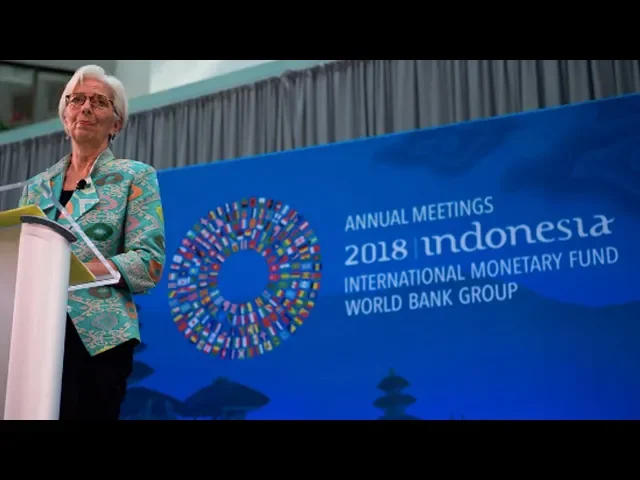
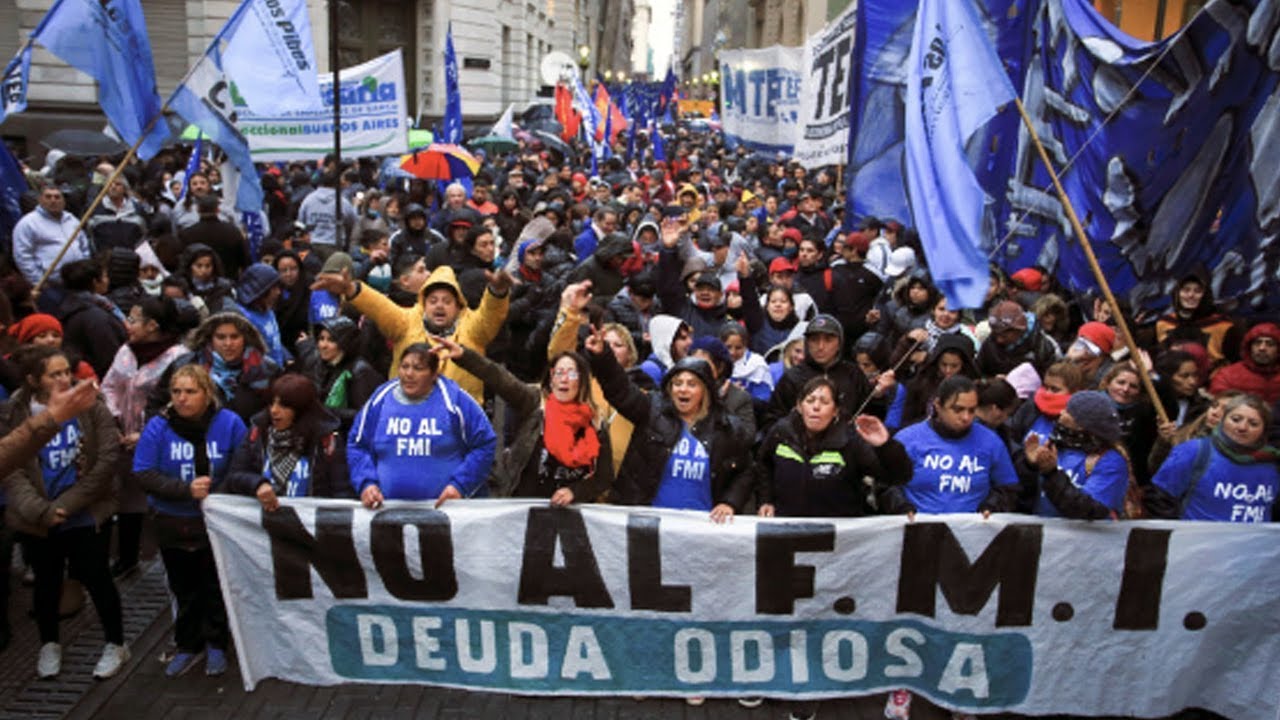
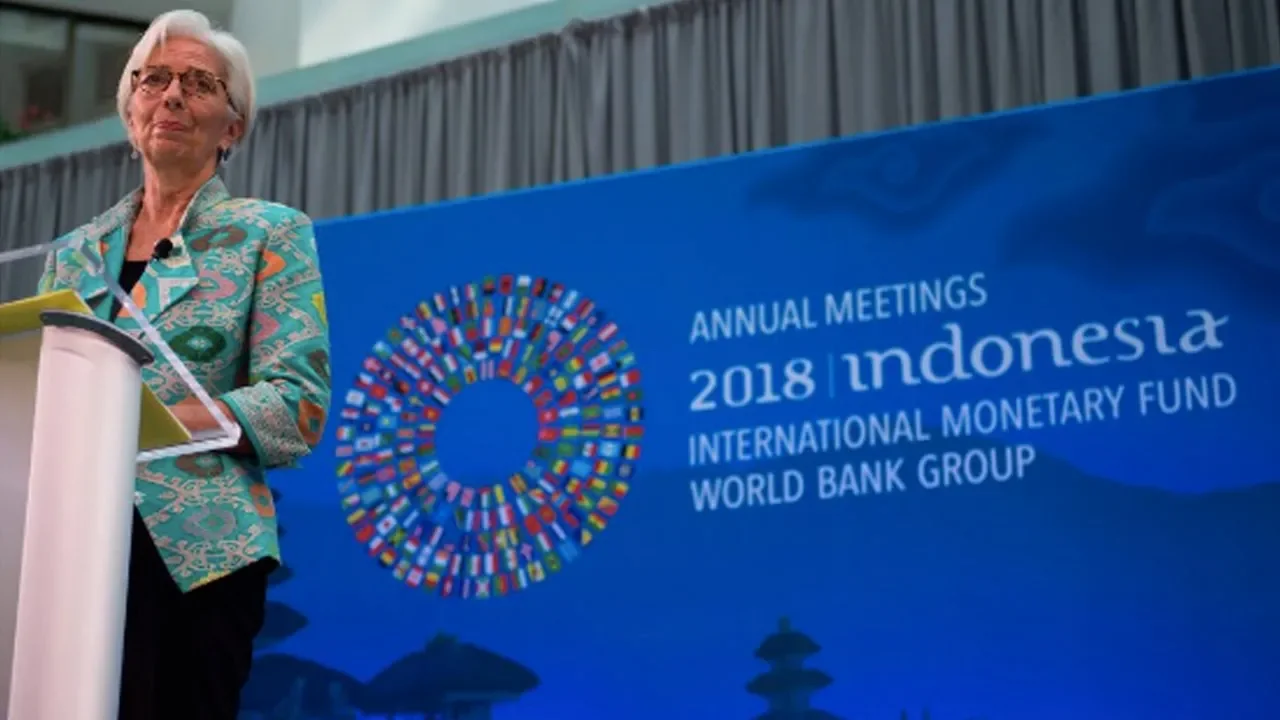
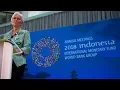
it's the real news network and I'm Greg wilpert joining you from Baltimore the International Monetary Fund the IMF has a mandate that prohibits it from intervening in the agricultural policies of sovereign countries however the IMF imposes conditions on loans that it provides to struggling countries and those conditions often include demands that the countries change their economic policies in ways that affect food production and agriculture a new report by the political economy Research Institute peri at the University of Massachusetts Amherst found that the IMF has directly and indirectly intervened in the agricultural policies over of over
100 countries in the world the report is titled spreading the Washington Consensus into food and agriculture sectors the case of the International Monetary Fund here to join us to discuss the report is one of the authors professor Lawrence P king he teaches economics at the University of Massachusetts Amherst thanks for joining us today Larry thanks for having so the study mentions various ways that the IMF intervened in agricultural policies such as demanding that governments cut subsidies to farmers or to consumers the dismantling of agricultural boards and the liquid ization or privatization of state-owned food production
companies what is the logic behind these demands and how do such conditionalities affect poverty and food security logic demands is to promote free-market policies the IMF for the most of its history has operated under the assumption that state activity is bad for the economy that it will lead to corruption and rent-seeking so therefore the best thing generally that governments could do is to stay out of the way of private actors operating on private markets so that's the logic these things affect food security I mean often quite directly because there are many instances in which the
IMF demanded as a condition the elimination of things like subsidies for basic food it's often to let the markets at the price of breads have for example bread in one case in Egypt they demanded that the the government's reduced the size of the loaf of bread rather than raise the price they demanded that government's raise the price people pay for water all sorts of things can directly affect the living conditions of people so what kind of accountability exists in the IMF when there is a hike in food prices for example as a result of the
policies that they impose can countries then sue the IMF and say that intervention in agriculture is not part of the IMF mandate it's very hard for countries to fight back against the IMF because they only go to the IMF in the first place because they're experiencing a financial crisis so they need the IMF resources they need the loans so they're in a very disadvantageous position so it's very rare for them to effectively strike back against the IMF they need another source of finance and if they have that source of finance they typically will not want
to go to the I meant in the first place you know the IMF is controlled by the donor countries the rich countries not by the poor countries it's not a democracy since so your study mentions the so-called Washington Consensus in its title which is the consensus between agreement between the IMF and the World Bank to impose what is generally known as structural adjustment programs or a saps in order to to force countries to adopt free-market policies to cut welfare and to privatize government property you found that in your study when it comes to agriculture the
IMF has pushed the Washington Consensus very strongly in the 1980s but did so less in the and less and less really in the more recent years now you even quote Christine Lagarde the current head of the IMF who said about structural adjustment programs quote we don't do that anymore has the IMF changed its ways and if so why the IMF we found another research hasn't really changed its ways they certainly do still issue conditionality on loans and we saw this after the financial crisis they have many conditions on loans that they made after the global
financial crisis so that was really disingenuous by the director of the IMF now whether the amount of so-called Washington Consensus policies have decreased and conditions you know they have but I think this is mostly because not exclusively but mostly because you know they've already reformed these economies once everything is privatized and liberalized you don't have to keep issuing the same directives over and over again they've already accomplished accomplished this neoliberal project largely I guess that's something that's Christine Lagarde said of that is when she said we don't do that anymore because we've already achieved what
we wanted to achieve but so one of the fascinating things of the study is also how in recent years the the they're not only reducing perhaps the conditionalities but are increasing other agricultural related conditionalities which your study classifies as neutral to the question of free market economics can you give us some examples of neutral policies and why does the IMF passion I pushed those policies and how would you characterize this new approach that is coming to the fore and IMF to replace neoliberalism yes not an entirely new approach and I wouldn't say it's replacing neoliberalism
the IMF has always been concerned with primarily having countries pay back their foreign loans and raising foreign currency and so some of the reforms that the IMF push pushes are you know technocratic reforms that make it more possible for countries to pay back their loans and to purchase you know of their balance of payment prices so some some of these loans actually build state capacity or things like increase in taxation occasionally very rarely where there's a real crisis they'll allow for the temporary increase of tariffs but mostly these things are sometimes they'll do things like
studying a sector sometimes they'll do things to try to protect an emerging sector that they feel could raise substantial foreign revenues so they might they might ban a destructive policies that will over exploit a resource if they feel that that resource can generate hard currency that those countries can use to pay back loans so they've always done this and as the the proportion of these so-called neutral policies that increase that's you know primarily because there has been so much substantial liberalisation and privatization previously okay well we're gonna leave it there I'm speaking to Professor Larry
King professor of economics of the University of Massachusetts Amherst thanks again Larry for having joined us today thank you very much thank you and thank you for joining the real news network