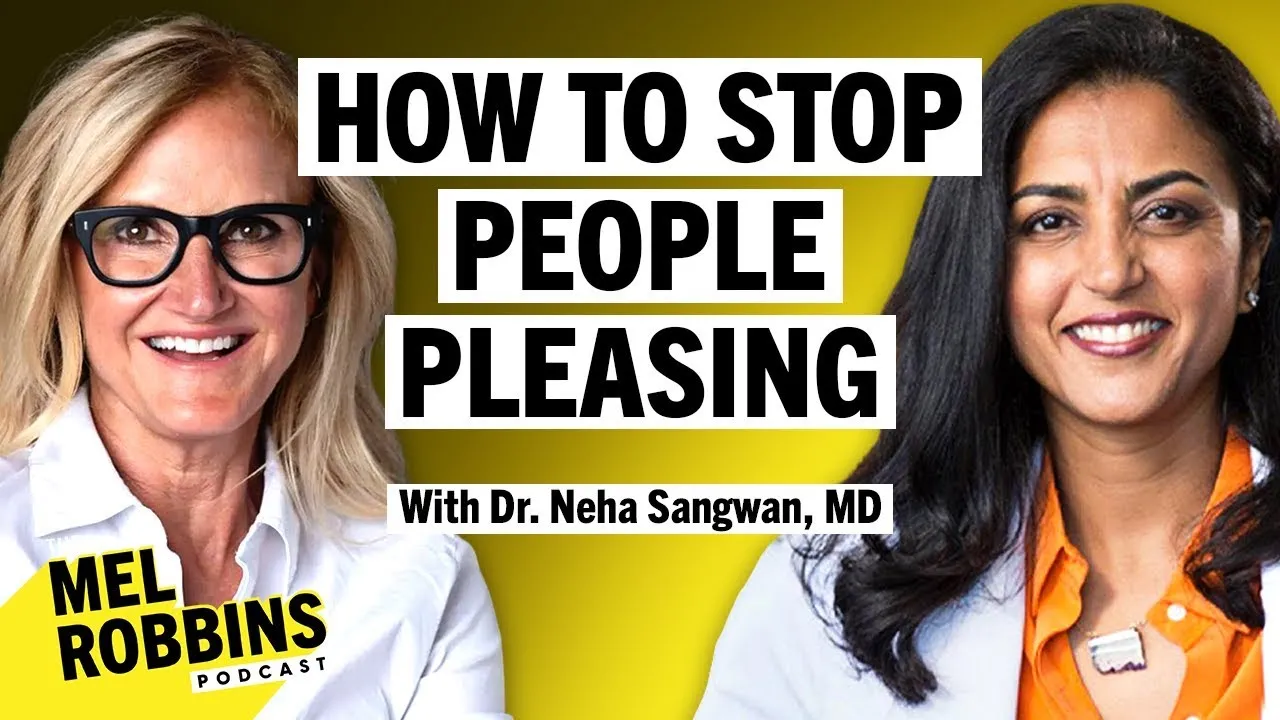
is everybody on the planet a people pleaser what I would say to you as a doctor is people pleasing makes you physically ill Dr nasan a lot of people feel compelled for a variety of of reasons to say yes yes yes yes yes for probably almost 50 years I was actively saying yes when I meant no and feeling a lot of anxiety and a lot of resentment resentment is one of those big clues that you have overextended yourself it's just easier make everybody else happy it's just easier to do it myself it's just easier not
to say something I overheard my dad he just made a comment like I wanted a son who was an engineer and then I heard my mom saying wow I missed my calling to become a doctor I became an engineer and a doctor and I blamed my parents like oh my parents made me do this how did you come to realize that you were a people pleaser [Music] um hey it's your friend Mel and welcome to the Mel Robbins podcast so a couple weeks ago I was invited to go down to the Today's Show and I
love being on the Today's Show because first of all I love Hoda and Jenna secondly I just love going on the Today's Show because it's always super fun and it's a really fun morning and it's everything that you would imagine it would be and when you're backstage at the Today's Show you are in these hallways where tons of people are coming and going whether it's the folks that are working on the show or it's the people that are appearing on the show and so you just never know who you're going to bump into and so
I'm standing back there and the first person that walks by is Charlotte Tisbury who is this very famous makeup uh entrepreneur and artist and this fabulous woman who always talks like this darling and I am a huge fan of Charlotte tillbury and so she stops and I'm like and she's like and then I go oh my God my daughters love you and I love you and she's like I love you and so we have this hug and she it was so fun and then she leaves and so I'm like oh my God that was Charlotte
Tilbury all of a sudden around the corner comes this another extraordinary woman and she is so striking she's tall and she is wearing this vibrant I don't even know what color it was it was like this chartreuse meets kelly green silk Blazer and matching wideleg pants and she comes breezing around the corner having just got off the television with the Today Show and she comes around and she's so striking in terms of her presence like there's this this like confidence and this warmth to her and it's the kind of person that you immediately are like
I'd like to be of that person's friends so I see her coming I look her in the eyes I do the 10 five game that I've told you about she's 10 feet away I smile she's five feet away I'm like hi and she goes hi oh my gosh Mel and I'm like oh my gosh hi I don't know you but I feel like I should know you and she walks up and says can I hug you and I'm like of course nothing is better than a hug and so we hug and she introduces herself and
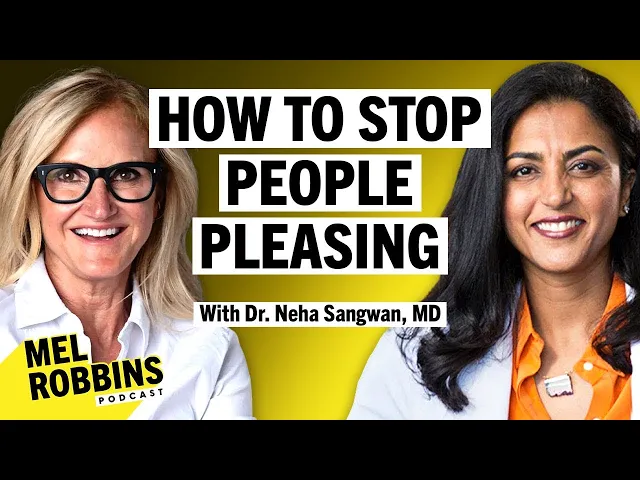
her name is Dr naha sangan and we start chatting and I'm like what did you just talk about and she was talking about people pleasing on The Today Show and how your inability to say no is making you ill and I stopped in my tracks and I was like wait what and she goes on to explain that she is a met medical doctor she practices internal medicine she sees private clients she is also a researcher and she was on the Today's Show to explain that your habit of people pleasing always looking at other people always
being worried about what their reaction is going to be couching what you're going to say the fact that you say yes when you actually mean no that's what she talks about and I said uh we got to get you on the Mel Robbins podcast because I've certainly struggled with people pleasing I absolutely get worried about what other people are going to think she is here today so get ready to get control of your life to learn how to say know and to get better connected with what you actually want which is where all of this
is going to begin please help me welcome Dr Nas sanguan to the Mel Robins podcast oh such an honor to be here well I have so much I want to talk to you about and I guess we should just jump right in one of the things that caught my attention is that you describe this thing that we all do where we become a yes person what does that mean it is when we almost lose an anchor inside of ourselves and we become a yes to the outside world we become Driftwood in the ocean like we're
going in whatever Direction the wind is blowing us uh and really it's overwhelming uh because we don't feel grounded we don't feel centered we don't know how we're making decisions we're just going whichever way the world is going and boy these days the world is going in a lot of directions I literally when you said you're like a Driftwood in the ocean going in whatever Direction I thought about my poor husband in our marriage that I am such an overwhelming Force and what you're talking about is that you can become a yes to outside forces
and not even realize how much you're doing it and you lose your ability to make decisions or even to know yourself absolutely I mean the goal in the end is to become a sailboat with a Rudder that is influenced by the wind but charts its own course and so we don't ever want to go so far away from that that we're like anchoring ourselves and unable to move and we don't care which way the wind is blowing we we want to care about all of that and we want to make sure that what we feel
uh is that we have some input into uh the direction in which we're moving I would never have labeled my husband a people pleaser but when I think think about how he kind of goes through life or has until recently he was very focused on making sure everybody else was okay and he put himself last and is that the same thing as peop pleasing or is people pleasing something else so people pleasing is the moment that you give up what matters to you in order to appease or please somebody else so that you can belong
so that you don't have to confront conflict so that you can keep that relationship intact so I think all of these have spectrums right what I'd say is at the end of the day what you really want is that you're able to take input from the outside world but when it's time to make a decision you turn up the the voice the sound of your own heart slightly louder than you can hear the voices of others I love you and so that's the end you know that's really the end way because it's a Nuance it's
a we live in a world with other people we care about each other it matters to us that we belong and so to be able to say oh someone's a people pleaser or they're not listen at the beginning of my life 100% % first three and a half Decades of my life 110% the scale was tipped so far on one side I'm a Healer right I'm a doctor I'm a coach the all of these come from that place it's such a good intention yes to serve yes but when it goes that far at least what
I learned about myself was that it came from a trauma early on in my life right where I didn't feel like I belonged and so if I didn't feel like I belonged or I didn't understand what I did wrong then later on I will I will almost overcorrect in my life to make sure no one sends me you know it was it was me being sent away with my grandparents when I was really young and I didn't understand why why am I being sent away for my parents it's an act of love but to a
child it felt like wait why am I the one being separated so you know how we interpret what happens early on helps us figure out about coping mechanisms and strategies that we use to manage that pain or that stress that occurs later on and I went too far in one on one in One Direction what I hope I never lose Mel is caring about what the people around me think what they want who I'm in partnership with and what he wants so I I really resonate with your husband because I think that's a lot of
me and I needed to come back more into balance to become who I truly am and I needed to learn how to sit in the discomfort of another in order to be true to myself there are so many things that you have already said that I don't want to go forward yet without stopping and taking some time and unpacking it I want to make sure you heard Dr Nas say this image of a sailboat with a Rudder and a sail that can use the outside forces to go in a direction that you want but that
you stay centered to yourself the second thing that I wanted to put a highlighter on is when you describe that story of being a little girl and your parents sent you to live with your grandparents and you didn't understand why can you unpack that for us because I had a very similar like visceral experience when you heard that when you when I heard you say that story I had this visceral image of myself as a little little kid going why are you mad at me so I'm going to tell you a little bit about it
and we'll just see how I do okay um when I was three months old my parents are immigrants from India and in 1965 they came here to build a life I grew up in Michigan uh in Grand Blank Michigan and um I'm the middle daughter of three my grandmother because we're Indian came over to take care of the children while my parents were both working full-time to make ends meet and so my grandmother was cooking cleaning I have an older sister 18 months older than me so now there's a newborn okay and you can imagine
those two little ones in this whole thing so my grandmother's there my grandfather gets stationed in the uh by the UN in Africa to help them with their agriculture he calls my grandmother and saysi know n's three months and ru's 18 months but I need you here I'll do the work of the United Nations project but I need you to do the social World which you do so well my grandmother scooped me up uh had a talk with my parents uh scooped me up and said I'm going to take naha with me uh you take
care of Ru she's potty trained I'm going to take naho with me we're going to have lot we'll have plenty of resources there and me and everything's going to be great and my parents thought oh my gosh how amazing right like she'll get the love of her grandmother who was going to be here taking care of her so they sent me fast forward two years and my sister and my mother came to pick me up except a three-month-old didn't know what was happening but a two-year-old sure does and so when my parent they came to
pick me up and brought me back I didn't stop crying for more than a month I would just wake up I'd be crying where is my grand where is my Nani and Nana where are they and my parents who were in their 20s doing the best they knew how you know move into a new country all of these things were beside themselves with this two-year-old who who wouldn't stop crying about it took about a month and I I realized how stubborn I was because when I was little I would only call my dad in the
in that time I'd only call him hey you I wouldn't call him dad I was like hey you potty hey you hungry hey you um but it took about a month uh of his persistence I have to give him credit uh and I upgraded him to Uncle wow and I realized after about a month or two that no matter how much I cried I wasn't going back and so I better adjust to the environment I'm in and I began to scan the environment I mean I knew what everybody wanted my mom my dad my you
know my sister my the Indian Community around me my neighbors and I became such a good child that when my when I overheard my dad later on wanting to um he just made a comment like yeah the second one was a girl too like I wanted a son who was an engineer and then I heard my mom saying wow I missed my calling to become a doctor I wish I hope one of my girls becomes a doctor boy Mel my radar was so in tune to everybody else's needs and the Indian Community um you know
in general it's like hey so you good at math and science are you going to be an engineer or doctor so this little girl grew up like a sponge absorbing the external environment because inside me was too painful so I checked out and disconnected from myself and tuned into the accolades and love that I could get from going outward however you could get them so can you describe for us uh just what happened to you and or what you see in your practice so that anybody listening might be able to locate them in this moment
where they felt separate and people pleasing became a coping mechanism yeah I remember being really young um about seven years old and you know my dad's parents really never taught him about emotions and so he has a temper that write about in my book so my dad's temper I I wanted to figure out why I was getting bullied when I was older but I I it was people who were getting really angry and blowing up in and telling me to do things I think it's those moments that really create this this experience where we are
uncomfortable with other people's discomfort or we feel as though we've done something wrong and we kneejerk move into a mode of how do I make this okay how you show up as a leader today is as is determined as much determined like by your childhood blueprint as your wardrobe at home influenced what you're wearing today h i want to help deconstruct the invisible connections between their past and their present moment experience so I traced it back to being about seven years old in a yellow kitchen standing kind of behind a plant while my parents were
arguing about something um and and my dad got really mad he picked up a plate uh it was empty but a plate and he smashed it down on the table and it broke and little seven-year-old my mom said Maya can you please go upstairs honey can you please uh I'd like to talk to your father and so that was my cue to exit left but I remember it wasn't until 20 30 years later that I remember saying uh oh wow I in that moment came up with don't make dad mad because if you do this
time it was the plate and if Mom wasn't here next time it would be you right like I didn't do this consciously but my little brain went scurrying up the stairs and no to itself danger anytime someone starts raising their voice thumping breaking slamming cupboards doors whatever is don't don't make any more trouble get out of there right I think we all have an experience like that growing up because I because the hardest thing in the world when it comes to yourself is managing your own emotions both what you're feeling and your ability to tolerate
it and when we went to our you know massive audience online and started asking um people about people pleasing the vast majority 70% of people said I often say yes when I mean no and the majority of the time it's at work and with friends 82% of people responded that they feel constantly stressed irritated tired and impatient and they attributed it as being related to some conflict that they were avoiding and you as a medical doctor have seen the impact not only in your own life but with your patience both when you were practicing as
a resident and also in your current practice the impact of all of this pent up inability to tolerate emotion and then twisting yourself in knots to make everything on the outside okay when you are simultaneous L killing yourself on the inside can you talk to us about the physical impact that people pleasing and being somebody who's so concerned about the outside that you're not thinking about you and inside of you what is the physical impact of doing this over time to yourself always putting everybody else first and and here's some of the things that people
said um I avoid conflict because I'm afraid of criticism because I hate confrontation that was a huge one I hate confrontation I just want to keep the piece it makes me uncomfortable it's just easier well let me tell you it's only easier short term it's easier in the moment so when you have a you know you come to a decision Point am I going to address this or am I going to not say anything of about someone wearing shoes in the house someone uh leaving dirty dishes in the sink uh every day this is an
everyday experience um what happens is in the short term you have a choice if you choose to ignore it you take the short-term high of uh you know not not having to deal with it it's just easier to do the dishes it's easier not to say something it's easier to go to their house for the holidays it's just easier to say I'll take the pager or I'll do the summary of the report or I'll handle the thing or I'll pick it up or I'll just say yes because I don't want to deal with the drama
so in the moment you're like okay I know that this is not the right decision because I can feel my resistance to it and I can feel my kind of like but then I just take it on myself because I think it's easier but you as a medical doctor Dr and aha are here to say no no no no no something else is going on what's going on well well you're taking the short-term high and you're going to end up with the long-term yuck okay you're going to end up with looking yourself in the mirror
saying does everyone think I'm a magic fairy around this house like nobody else does anything so what happens is Mel if there's a conflict between you and I and it's between us and we ignore it it grows bigger it doesn't go away we think we just avoided it it actually grows bigger and it changes location and so it took me a good 10 years of me wanting to be curious about why uh I got bullied in my life why I felt so tearful when I would leave people all these Curiosities led me down the path
of exploring my childhood which gave me the answers of what the unhealed experiences were for me that I needed to heal in order to in the present day feel more connected be able to talk about these stories without crying right and sometimes I do get tearful okay so there's something here Mel that I want to say is underpinning a lot of people pleasing and it's that we don't really teach our children we weren't taught and oftentimes because our parents didn't know themselves the how to handle disappointment how to handle discomfort an underlying sense of unease
in our bodies and whenever we get physiologically or biologically we feel uncomfortable our body starts talking to us we do anything we need to to make that go away every single human being has that experience at some point in their their childhood where you're like scan the environment and now based on what's happening outside I got to become or behave or do something in order to remain safe or to be seen or to get the love or to just get them off my back and that is that the heart of people pleasing and what I
maybe I should ask you this what is people pleasing what is it is it a personality is it a coping mechanism what is people pleasing the way I think of people pleasing is it's a behavior that we use in order to feel safe and belong I I became an engineer and a doctor and I blamed my parents like oh my parents made me do this until a very smart coach once said to me really naha who applied to engineering school who did all the problem sets who took the exams who did the 36-hour shifts in
residency I'm pretty sure it was you so you want to tell me what you wanted more than they wanted like you're the one who did it and in that moment I was like oh I wanted to be seen I wanted to be valued I wanted to be loved I wanted to be recognized in the Indian Community and in the world I wanted to be of value and I didn't want anybody to send me away again so it's a safety thing it's sub conscious of course I didn't know it at the time but boy this is
the value of going back and understanding the blueprint of your childhood of understanding the decisions you made to survive and to adapt and to adjust to a world you didn't yet understand is everybody on the planet a people pleaser I think what I would say is I think everybody has had the experience of giving up themselves in order to belong to another you know um I'm I'm thinking it's gbor mate who speaks about uh authenticity over attachment uh that sometimes we choose attachment over authenticity and that we we give up who we really are if
we know that uh consciously if we know who we are we give it up in order to stay keep the relationship stay attached be part of a group group I went to med school so yeah engineering and med school um absolutely I did it now I can see that I did it uh with those underlying un subconscious intentions I went to engineering school because I was good at math and science and because I heard my dad say that one day in the office I was walking by he had no idea I heard him and then
the second piece is the Indian Community and my mom revered doctors my mom missed her calling and I think that's a bigger piece underneath here which is when you don't know when you're not anchored to what you value and who you are you are that Driftwood in the ocean and I want to go back to what I said at the very beginning which is that I had never thought about my husband Chris is a people pleaser because I consider myself a people pleaser not anymore but that in the past for probably almost 50 years I
was actively trying to make sure nobody was mad with me and actively trying to uh avoid conflict and actively uh scanning the environment and saying yes when I meant no and uh not really good with boundaries and feeling a lot of anxiety and a lot of resentment and all of that kind of stuff and so my experience with peop pleasing was on the typ a end and on the you are actively engaging in something to manipulate the way other people respond to you that's what you're doing and I got it and I never thought about
my husband on the spectrum of people pleasing and so I have learned learned about my husband that he was like so many people and perhaps you listening he felt like the Forgotten one in the family nobody was there to pick him up everybody was too busy to come to his games he's got story after story after Story just a a couple weeks ago his mother was reflecting With Tears In Her Eyes about how poor Christopher we put him up in an unfinished addict in a crib and that was his room because we didn't want to
hear him when you said Driftwood floating in an ocean I had this visceral experience that that's what my husband must have felt like for years and so disconnected from himself because his experience was it didn't matter what he said it didn't matter what he did nobody was coming it didn't even matter if he was crying correct ohh because he was up in the crib in the Attic correct the function of your brain is to help you seek pleasure and avoid pain very basically that's it's like this this this to amazing incredible tool that helps keep
us safe in the world seek pleasure avoid pain and so when we since we were little if we were told things like go in your room and don't come out until you have a smile on your face right we're told things that when we're feeling unhappy disappointed when we express it when we say it it's wrong it's bad don't go there and it's not welcome in this household we grow up believing that we need to fix it we need to make fix it in ourselves and fix it in the environment because who knows what's going
to happen if we don't you know one of the things that you said that really made me go holy cow this is me is that one of the biggest red flags that you can have when you're reaching like that critical stress you're overextended you're saying yes to too many things is when you start to resent the Outreach from friends or from your job can you unpack that in the context of people pleasing and what that means when you are resenting things you normally wouldn't have yeah well listen resentment is is uh such a big clue
it's a big clue that your boundaries have been trampled all over and you probably never even drew them so you may never have even told people that boundaries were there most people don't no and and yet you find yourself uh resentful and the the how I've heard basically a a saying and I'm not pinning where I've heard it from but uh it's basically that resentment is like me drinking poison right hoping that you die right that's how effective that is and so the resentment is one of those big clues that you have overextended yourself that
you have done you've said yes when you meant no you've given people parts of you that you wanted to keep for yourself whether it was your time your energy uh your expert your care whatever it is so you want to really ask yourself in those moments Wow first of all how does resentment show up in my body what's the way that I am aware right now is my stomach sinking do I feel weak in my knees what is happening so the first thing you want to do is decipher how you know I can know I
can tell you how it is for me yeah it's a gigantic oh like it's a full body like [ __ ] yeah ah this [ __ ] again like it's like it's like a full thing that I feel and the other thing that I've come to learn this is why it was like a huge thing like oh my God you're overextended is that it is also a sign of a broken process or a broken system that you're in something that needs updating leveling up some communication pattern that's broken like it's something outdated that needs leveling
up and it when I think about it that way Dr naha I I I don't make it personal like an attack I'm able to go oh I'm really resentful right now over this and I kind of stupid to be so something must be broken that needs attention is that a good way to think about it yeah absolutely and that's the miwe world because you know you may have been carrying a boulder uphill I mean I am guilty of single-handedly trying to change the healthc care system [Laughter] trying to make it be different than it is
and so once again I'd ask you what is your role in this you really want to do something amazing to help people what's your role in it what's the environment that you're in but the question becomes have I voiced this Have I Told Anyone or do I just vent it home I love that we have started with this huge spectrum of people pleasing because not knowing what you want or believing it doesn't matter what you want or feeling like the only way that you're going to get the love and the safety and being seen and
the validation that you deserve is by overachieving those are all forms of people pleasing because to your point you are so focused on what's outside that you're not anchored to what's on the inside so Dr naha how did you come to realize that all of this was going down and you have a story at the age of 31 and practicing as a physician can you share that with us and how you connected the dots between illness stress overwhelm anxiety depression and people pleasing yes so my regular life at work was busy 18 patients uh in
the hospital 5 days on 5 days off takes me three of the five days to recover I'm in this whole cycle and I still remember it it was June 17 2004 I walked into the hospital I'm I'm you know seeing my 18 patients last day on service I get to sign everybody off somebody calls and sick what do I say they say can you take the alpha pager somebody's sick today the alpha pager means you also take all incoming traffic air traffic control from all neighboring hospitals oh my gosh I said so what did I
say last day on service I'm exhausted I say sure I'll do it I take it five hours later so I started at 6:00 am. it's 11: amm I've seen two of my 18 patients and I turn to the nurse and I say hey Nina could you please get 40 mil equivalence of Ivy pottassium for the gentleman in room 636 and she turns to me and says Dr sang are you okay and I say yeah why and let me just tell you truth be told that was my first indication I might not be I said yeah
sure why and she said because you've asked me that same question four times in less than five minutes and I've answered you every time wow and it was one of those moments where I kind of went into a little bit of shock like I don't know what's going on here but I better pay attention so I walked to the bathroom and I contacted a psychiatric colleague and I just said hey Roger um when can I do a you know I just want to consult you something weird just happened uh and he said sure stop by
today at 5 o'clock it was 11: in the morning and I looked at my pale weary face in the mirror and I said how about now and boy that is code in doctor world for I am in trouble and he took me in and 1 hour later he diagnosed me uh as a severe people pleaser he told me that single-handedly I was trying to take care of the fact that the hospital environment was under staffed to make budget that I was in an environment of bullying in the hospital and that I was a real people
pleaser um that had started to manifest here in my work that every time someone needed something I was the one to volunteer and what he told me that was really lovely is he said I really want to acknowledge how much you give so he wasn't making me wrong or bad he was trying to help me understand that there's what I now refer to as me we world what is that that it's like any so I'm an engineer so I like to get to the root cause of problems not just Band-Aid them and and in our
world I think a lot of times people get overwhelmed because they think about me now or they Zoom way out and they think about world and I can't do anything right and when I think about problems and how I solve them or how do I get to the root of them I realize that oftentimes it has something to do with me it has something to do with we it has something to do with world so the environment of the hospital in General being underst staffed contributed to my needing to take the pager needing to do
more with less all the time even if there's no resources so what I do even in Conflict like if I'm any conflict you can do it anywhere in your life if you you want to think about it as what's my part in this what's someone else's part in this what's the environment what's the role of the environment and the situation that we were in so I call it mewe world because it reminds me that I need to expand my perspective to understand what's happening that is incredibly helpful I also love that another medical doctor diagnosed
you with people pleasing he did he did and know yeah and I love this framework and I I also love the fact that once he connected the dots medically speaking between this coping mechanism of people pleasing and taking on everything around you as a way to feel loved and needed and all this stuff and I know tons of our listeners will resonate with this regardless of whether you work or not that you just take it all on you're the one in the family taking care of Mom and Dad you're the one that's always doing this
you're the one that's a volunteer at the school you're the one that's always saying yes you're the one that's organizing everything that this kind of stopping and going okay what's my part in this what's the uh what is my role to play in this what is the role of the environment in this can you explain this in the context of you've got a you've got aging parents and siblings and one person feels like it's all on them you bet so if I am let's say uh a child my parents are aging and I'm the one
being like why do I have to do everything well I need to take a moment to say when Mom and Dad aren't doing well what's my first reaction is it I'll pay for it I'll I'll I'll be there I'll go over and let's say a sibling says well I can go over in an hour and I say well that is not good enough I need to go over this minute sometimes it's true that things are Urgent and I need to go over this minute but if my answer every time is no I need to take
care of it right now because I need to be the good girl because I need to be the good daughter because I want to get an a right whatever it is I need to pay attention to my part in it now and so if your adrenaline starts running every single time you want to just say oh what's my part in what's my sense of urgency here then why does my sister or brother always think it can be done tomorrow or next week pay attention to what's going on for them pay attention to the larger dynamics
of your family what role did have you been playing for a very long time in your family who played what role right and how does it show up with your parents and there's a bigger you know ecosystem so it goes mewe World gotcha but the first part which I'm really starting to get is that when you ask yourself what's my role in this you will inevitably find yourself having to look in the mirror and see those moments where you can't deal with discomfort in your body yep you can't deal with the disappointment that it's not
going a certain way y or that there's some e uneasiness that you feel but what if what if nobody goes what if this happens what if that happens and so the people pleasing is triggered by something happening in our bodies yeah and what I would say to you as a doctor is I learned from my patients that their inability to communicate with themselves and each other made makes them physically ill wow can you talk a little more about that because that really really piqued my interest unresolve conflict unmet expectations misunderstandings broken promises heartbreak fractured relationships
loss separation unhappiness all of this stuff all of this discomfort that we process by saying it's just easier not to say no it's just easier to give in it's just easier to make the world around me okay and work another weekend and take on that thing that isn't my responsibility to take in that it actually bubbles to the Sur surface as physical illness stress burnout anxiety depression all that stuff is that what you're saying 100% I found that stress causes or exacerbates more than 80% of all illness wow and when I realized that I came
back in the hospital and I was like hey guys I figured out that stress causes or exacerbates more than 80% of all illness why are we not asking our patients once we physically stabilize them let's ask them what's at the root of their stress and my colleagues one at a time gave me some version of this n just like you wouldn't order a test or a diagnostic that you didn't know what to do with the result nor should you ask a question that you don't know what to do with the answer and I'm telling you
Mel I got angry I got sad and I almost got emboldened and then we give them some cocktail of medications anti-depressant anti-anxiety or sleep medication to help their physiology get back in sync now these things are good to do when somebody is about to fall over the edge of burnout or stress or overwhelm or whatever it is they're helpful but as a long-term strategy one month later we send them back in the ring for round two with no new awarenesses of how they got there or tools to fix it but I want to make sure
the person listening really gets the takeaway which is the root cause of 80% of the diseases and the health issues that people have can be traced back to the stress in their life and you are also saying that the majority of the stress that you have control over and that this all stems even deeper to an inability individually for you to tolerate unease in your body discomfort or disappointment and that that is what is triggering people's inability to effectively communicate with themselves or other people that is what turns us into people Pleasers that is what
turns us into yes people that is what is contributing to you getting sick and unhealthy and feeling anxious and stressed and that there is a solution so tell us these five questions that you ask the people that you work with Dr naha the five I call it the awareness prescription okay and so the night before they're discharged I would say to them uh I'm getting ready to discharge you tomorrow and I'd like to a uh give you the opportunity to answer five questions question number one why why this why a heart attack why not your
liver or your left leg why has your body why has this part of your body broken down and whatever comes to you is the right answer okay question number two why now why not three years ago why not two weeks from now what is the message that you needed to get in this moment that you were not getting question number three since hindsight's 2020 what Clues symptoms patterns that didn't make sense now make perfect sense question number four what else in your life needs to be healed oh that's the doozy and question number five if
you spoke from the heart what would you say to me and so every patient knew why they were what was at the root of their stress they knew why they were sick they knew what they needed to do and I wonder there's not a single patient thousands and thousands of them have done it and I speak about it actually in in talk our acts how I use this and help them get to the root of what was going on here's the best part Mel my patients families weren't the ones that started writing me after this
the patients the themselves would show up in the hospital cafeteria would write me letters themselves and say things like hey Doc you remember that lifelong migraine medication I was on I only need half the dose hey Doc it's the first time in five years I've slept through the night without back pain hey Doc I only need you know a third of my anxiety medication now I think I'm making progress and they had started to do their own work what they wanted was that sacred Exchange that we H we have an opportunity to have with one
another where I was willing to slow down and ask them the real questions and they were willing and open to answer you know what this reminds me of is um this year I read about it in the Harvard uh Medical School Journal I don't know what the thing is called where there was a meta analysis done of I've got it right here that encompassed aund it was it encompassed 97 mattera reviews of more than a thousand randomized controlled trials invi involving over 125,000 participants where they concluded that exercise is one and a half times more
effective for most people in treating depression and anxiety than medication and therapy and yeah in listening to you you not only have managed to expand this people pleasing or or kind of ab banding of self or being a yes person to include all of us on some level you have also made a very compelling case that the root cause of the things that are causing you to feel anxious or feel overwhelmed or feel disconnected or feel burnt out or sad is your inability to effectively communicate with yourself and with somebody else and by effectively communicating
with yourself I'm assuming what you mean is coming back into your own body and finding that anchor inside yourself so that if you've been a drift and life just pushes you around and you go with the flow and you find yourself just trying to take care of everything that you now have an anchor to come back to how do we do that like can you teach us when you are somebody and this happens for women in particular that constantly are saying I can do that I can do that I can do that I can do
that how do you manage your own people pleasing at work so in a work setting know that if there's some Gray Zone that's happening now it's about drawing healthy boundaries so you're my boss I'm you've asked me to work the weekend or do something so I would say to you hey Mel uh so it sounds like you want me to work the weekend I'm going to need to figure out if I can get child care and see if if this can work for me is this something that might be ongoing that we need to talk
about and uh arrange so that you know we we need to have a discussion on this I wasn't aware of this as part of what we were going to be doing and then when I got into that discussion I would be saying how long is this for I I would be now the the thing that people worry about is gonna get fired no what I'm worried about is I'm gonna get fired and so you just get to say listen I'd like to talk about about this because I want to do a really good job for
you help me understand what's changing about the role about the company because listen it's not about me being a victim and being fired the deal is if the company's changing I need to figure out whether I'm still a good fit for this role this company this new chapter this new phase we're in a world moving faster than many of us definitely me can keep up with and so the name of the game now here is going to be can we navigate the unknown together can we ask these questions can we draw healthy boundaries can do
we know what levels of agreement we've made and are do we have the courage to speak up when something feels hard different not what we want to do what I what I want to thank you for is that I think that when the world talks about people pleasing we immediately go to boundaries and what you're talking about is the medical and physiological fact that people pleasing is triggered the root cause by an inability to tolerate discomfort and unease in your body and if you can start with that you will start to build a muscle of
tolerating that wave that normally triggers you to say yes when you really wanted to say no and it's in that ability to tolerate and be aware of the discomfort that you gain choice and you gain that anchor and you get reconnected to yourself and now you have a chance to start doing the things on the surface no or a boundary or renegotiating agreements all of which you have so beautifully empowered us to do and so I just want to say thank you thank you thank you for spending so much time with us thank you for
so much uh deep and profound uh wisdom on this topic that I thought was going to literally be more surface level I cannot thank you enough for saying hello when we met at the Today Show and thank you thank you thank you for being here God you are so welcome this is one of the those episodes that it's so much more profound in terms of how it hits you and I want it to hit you in a very profound way and I want you to go deep with this information and I want you to start
with that connection to yourself and being the anchor that you need in life my wish for you is not that you feel like you are clinging to a shipwreck floating around in the middle of the ocean and whatever it is that happens around you is what you just kind of do I hope you use this information to locate the power within yourself to start making decisions that really Empower you and that align with what you want not with the discomfort that you feel in the moment and I want to make sure to tell you that
I love you and I believe in your ability to do this and when you start to make better decisions you will create a better life all righty I'll talk to you in a few days thanks for watching here on YouTube and if you loved this episode of the Mel Robin podcast you're going to want to watch this one next it's awesome