Neuromarketing is taking over the world, and almost every big business and university has used it in some way. Even though neuromarketing is so important in the marketing world, many people don't know what it is or how it can be used successfully. The next 15 interesting examples of neuromarketing in work are shown in the animations below.
1. Why eye gaze is important 106 It's no secret that ads with people in them work much better than those without. In particular, people tend to look at pictures and movies with babies for longer and pay more attention to them.
Advertisers have tried for a long time to sell more baby goods by showing close-ups of cute baby faces, but eye tracking technology has shown that this is not enough. Researchers found that when the baby looks straight at the camera, people pay much more attention to the baby's face and less attention to what the ad is about. But if the baby is looking at the object or text, the viewer will actually pay attention to what the ad is about.
Because of these findings, marketers now know that baby faces are popular with customers, but they also make sure that the baby is looking at what they want the customer to buy. Here is more information about the study. 2.
Having good packaging We all know what it's like to be pulled to something because of how it looks. Advertisers have always known that what's inside doesn't always matter, but neuroimaging has taken this to a whole new level. Neuroimaging has been used to redesign the packaging of brands like Campbell's and Frito-Lay.
In tests, customers were shown packaging and asked how they felt about it. Their answers were either good, bad, or neutral. Also, they were asked a lot of questions about the use of color, text, and images.
This study showed that customers didn't like shiny packaging but didn't mind matte packing. Then, Frito-Lay got rid of the shiny package and switched to the new matte look. 107 3.
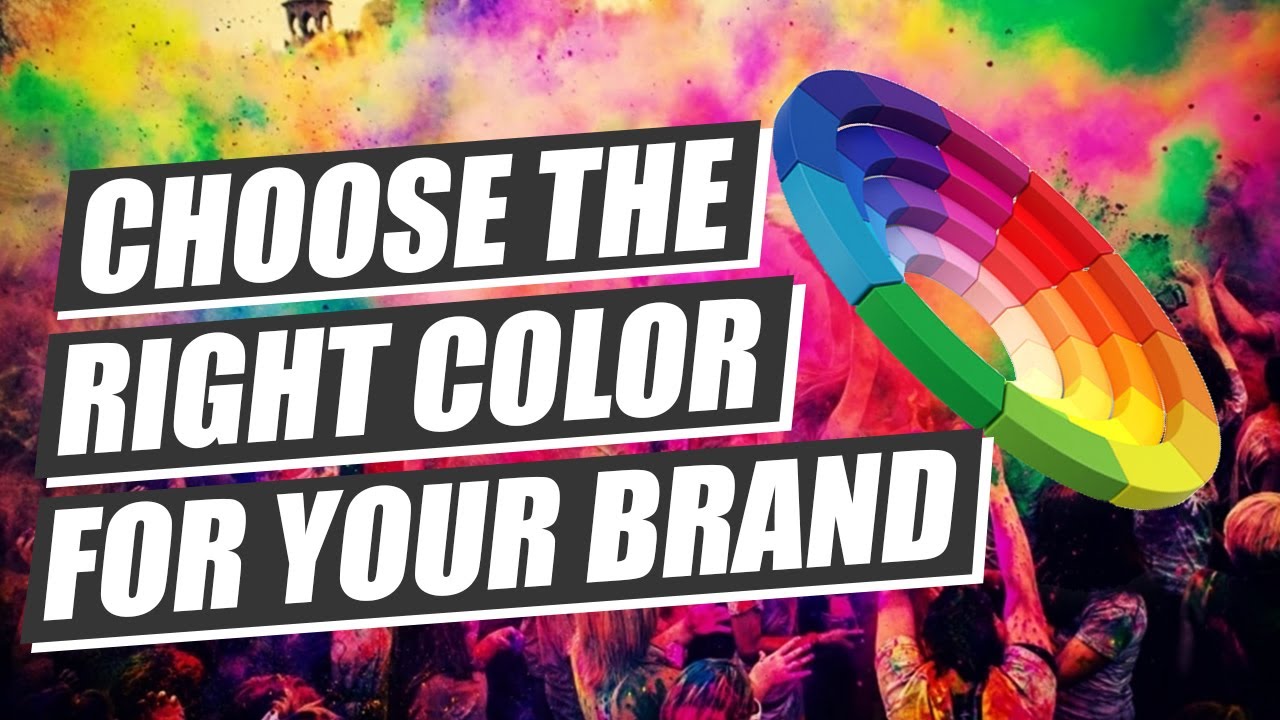
Color Matters Think about how the colors you choose might affect how potential customers feel. Colors can make us feel a wide range of feelings, and studies show that some colors are linked to certain emotions. When used right, color can be a powerful business tool.
Coca Cola's use of the color red is one of the most well-known examples, but there are many other companies that have also used color to great effect. Neuromarketing experts who study how colors work in advertising have put colors into subgroups to help people figure out how to use them effectively. For example, if you want to draw professionals, cool blues are a good choice.
4. How well ads work For a long time, studying the brain was something that only academics and scientists did. Neuromarketing, on the other hand, has used the amazing power of fMRI images to learn more about how people act and what they buy.
One way that fMRI is used in neuromarketing is to compare advertising efforts before they are shown to the public. In one study, the people who took part saw three different ads for the National Cancer Institute's telephone number. The ad campaign that made people think the most in a certain area was the one that got a lot more calls to the hotline.
This new way of doing things is a new way to find advertising efforts that will really get people interested. 5. Can't decide what to do 108 Research on how people act sometimes goes against what we may have thought before.
Columbia University did a study that showed that too many options might make people not want to buy. Using different kinds of displays, they found that customers were less likely to stop at booths with a lot of choices. 6.
Figuring out how happy you are EEG imaging is used in Emotion Response Analysis (ERA) to figure out how a person feels about a product, marketing, etc. How interested or passionate we are about a product is very important to the advertiser. If, for example, the customer gets very frustrated with your product, it's clear that there's a problem with how it works that you may want to fix.
EEG can be used to measure how happy a customer is. In one study, EEG was used to measure how happy people were with a treatment for skin problems. They found that customer happiness was linked to activity in the parts of the brain that are used to judge facial beauty.
7. The fear of losing Neuromarketing has found that people really don't want to lose out, which is an interesting fact. People worry about what they could lose as well as what they could win.
Because of this, "buy before it's gone" tactics work very well. When the other choice is presented as a loss, people are much more likely to buy. Because of this, "framing" is a very important idea in 109 neuromarketing.
With this method, ads help people make decisions in a way that makes them more likely to spend money. 8. Settling down The first thing your customer learns about you is very important.
It can help them make decisions in the future and set the tone for how they buy things. Neuroscientists have found a flaw in how the mind works and how it decides what to do. As individuals, we rarely know how much something is worth based on what it is in and of itself.
Instead, we compare it to other choices. Using the "anchoring effect" is a good way to use neuromarketing because it helps people make better decisions. If two hotel rooms are about the same price but one comes with free coffee in the morning, you are much more likely to choose the one with the free coffee.
You probably won't look into the quality of the rooms or any of the other features. Advertisers often use this to their advantage when comparing different deals or sets. In this way, we may often end up accepting contracts or making promises for a whole year.
9. The Need to Go Fast Neuromarketing is a good way to figure out what customers want. Companies often try to give the impression of safety and security, but customers may be more interested in speed and efficiency.
PayPal found this out when they did a study and found that the promise of ease got people more excited than the promise of security. They used this 110 information to get more people to use their online payment service by putting the spotlight on how fast it was. 10.
Revealing Hidden Responses In this ad, a woman played a joke on her friend by putting orange Cheetos in her white load of laundry. Focus groups said they didn't like the ad, but when the same people took part in an EEG study, it showed that they really liked it. People in the focus group were afraid to say that they found the ad funny out of fear that other people would think they were mean.
In this way, neuromarketing can show thoughts and preferences that have been kept secret. 11. Punishment and Reward Even video game design has started to use psychological principles.
For example, using rewards and punishments to make games interesting and keep people playing them is one way to use these principles. By making the game more rewarding, the action may also raise the amount of the chemical dopamine in the brain. This neurotransmitter is linked to happiness and good memories, which can make a person more interested in playing.
Now, game designers even hire psychologists to help them make games, and psychological concepts are built right into the way the games work. 12. Testing a model Even though ads are a big part of how people act, the design of the goods themselves can also be important.
111 Hyundai used EEG to test their prototypes in a well-known case of neuromarketing. They looked at how the brain responded to different design features and tried to figure out what kind of stimulation made people most likely to buy. Based on what this study found, Hyundai changed how the cars looked from the outside.
13. How to Set the Price How to price things in a way that makes people want to buy them is a question that has been asked and debated for a long time. We all know that putting a price of $9.
99 instead of $10 on something is a way to get people to buy it, but does it work? Several new discoveries are giving us more information about this age-old question. Neuromarketers are using a fascinating new piece of information that shows that rounded numbers are more likely to work when people are making decisions based on their emotions, while more complicated numbers work better when the logical brain is involved.
This is because complex numbers make the brain work harder, which may make it think that the product with the more complicated price is the better choice. 14. Layout of a website Neuromarketing methods are also used to help plan the layout of websites.
Neuromarketers are looking at our choices for everything from color schemes to layouts to font sizes and more on websites. There are now some hard and fast rules about how to make websites. For example, if you 112 use certificates, customer reviews, and social widgets, you're more likely to get customers than if you don't.
Another interesting finding is that websites that are laid out horizontally instead of vertically work less well. This is because reading from the top down uses the brain and makes people more likely to keep scrolling. 15.
Headlines That Stand Out Headlines are one of the first things people see, so it makes sense that they need to stand out. Because of this, they have been studied a lot, and a new neuromarketing method called "Hippocampal Headlines" has been created. What's the meaning?
Researchers at University College London found that our hippocampus is activated when a known phrase is changed in a small way. This makes us pay attention. Many writers have used Patron and their slogan "Practice makes Patron" as an example of this.
We hope these cases have been fun for you.