[Music] Hello friends welcome to another video tutorial from shus biology in this video lecture I'll be talking about the somatic hyper mutation and antibody class switching now there are two different terms and if most of the people find it complicated but I'll try to explain it in as simple as possible so normally we've been talking about the Immunology videos and we know that B cell once activated it convert itself into plasma cell because there are some uh cellular changes intracellular changes start to occur and that converts that cell into plasma cell plasma cell contains more
cytosolic component and less area for the nucleic acids or nuclear regions so those plasma cells are antibody producing factories and you know that in our body there are different types of pathogens infecting all the time and we want to fight against that pathogen so we produce antibody because antibody are very specific to interact with an antigen and can cause the antigen to go away and also kill the pathogen or the target pathogen that take entry into our body now the thing is to make this possible because there are so many varieties of pathogens that enter
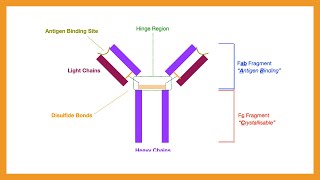
into our body all the different time we should have a huge collection of of antibody and if you look at the structure of antibody there are two different chains heavy chains two heavy chains and two light chains light chains are attached with heavy chains okay now if we if we now divide it in in perspective of whether they have variety or not the whole con there are two different regions of this antibody one is called the constant region another one is called the variable region so let me write it there this this is a constant
region this whole area this region is known as a constant constant region I draw constant region with red here also I draw I'll be explaining that thing in a few minute and there are some regions known as a variable region which is this this small area this is variable region now the idea of this constant and variable region is some part of the light chain as well as heavy chain makes the variable region some part of the heavy and light chain make the constant region although constant region is the maximum portion of the antibody but
there's this tiny regions called variable region this is where this variation take place as I told you that we should produce enormous variety of antibody to go against different types of antigen or pathogenic molecules for that we should change the structure of all those things change the proteins that make this area so that they can recognize different varieties of antigens right because in immunity varie is everything if you don't have variety you don't have anything to do that's the idea because all these antibody they recognize antigen with the help of this two region and this
region is known as the hand-like region of antib body that is known as f c that is known as the F AB region this region is known as faab region and the the little part here at the bottom known as the FC region of the antibody now the idea if you look this variable region or Fab portion of the of the antibody if we just zoom into that you'll find a structure like this and actually not only the variable part if I zoom into the whole structure of anti body and if we just make it
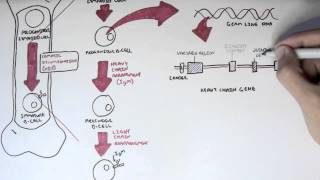
linearized to see the genes that are making these different portions of the antibody how it will look like because the all thing of this modification of the antibody is mediated during uh the transcription process and also there are different recombination events in the DNA take place and during recombination some part of the region can be cut out some part will be incorporated by that changing the fraction of the DNA we have different things it's not a post transational modification it is a modification at the level of DNA remember that so here what I draw is
the DNA for both the heavy chain and the light chain for one side of the chain if I explain in the heavy chain you see it's a larger one light chain smaller one in heavy chain we have three regions we have two different regions this is the variable region this part and this complete part is a constant region similarly in light chain this part is a variable region this is a constant region which is smaller because they have a very little constant region it's nothing much now if we look very carefully so let let me
erase this light chain because we not interested in light chain we'll be explaining this whole process in one of the chains which will be same for all these others so let me erase this light chain don't need to talk about that now here now focus on this thing as I told you we'll be talking about two things somatic hyper mutation and antibody class switching the term somatic hyper mutation somatic means inside the cell and Hyper mutation this is a term that explain a lot hyper means it's very reactive and mutation so it is mutation is
very active in this area of variable region okay it's also active in constant region but but less it's more active in the variable region and the idea of mutation it's hyper mutation means it's deletion mutation things are getting taken away from the genome it's called a deletion mutation if we just cut a gene out it's called the deletion mutation right that is a deletion mutation that we're talking about here and after the deletion there is a tendency of recombine the rest of the part of the genome so what we can do so let's say simply
like we have a gene we can cut a little part out then we take that two regions and join them together it's like that cleaving and recombination this recombination is known as vdj recombination because the variable region is consisting of the three different sub Region V D and J variable J for joining so these are the regions that are present over there so if I just make a line here this is the variable this is the constant now there are two part or two types of mutation two types of change that that has been uh
conducted there one change is a recombination in this vdj region which is directly in the variable region and that is very very sensitive and this area is very active to change and shuffle all the genetic content in between because it's not it like V DJ V is a region of the DNA it carries multiple different types of sequence D also carries that J also carries that so they start shuffling all those genetic sequences deleting the sequences and recombining them together because they're trying to produce something new it's like you have some uh some materials for
a recipe now you put them in different uh percentage to get a different type of dish the same thing they start making changes in this vdj this region Al together similarly the change also been made in the constant region but this change is not that active like the VJ combination VJ combination is hugely active so we'll see two type of recombination process that give arise to different varieties of antibod one is the VJ Rec combination another one is the recombination process in the constant region the recombination process in the constant region gives the broad idea
of what kind of antibody it will produce whether it will be IG G or IG M or IG a or IG e that thing is denoted by this constant region Rec combination event now the V reg Rec combination provides us the subtypes of all those antibody because you know IG have multiple types and variations because if you take two IGG they have different variable regions the constant region is the same but variable region will be different because when we are trying to provide as many varieties as we can so whenever there is a room Whenever
there is a chance of produce different type of antibodies different types of structures to find and bind with different antigens we make that change that's the idea so two different portions we'll talk about we'll talk about this vdj combination in an animated video because it will be much uh easy to explain through an animation but now first we'll talk about this change in the constant region so what we know is there is a event going through this vdj re combination in this portion that we will see after this so that a thing and there are
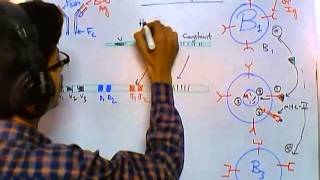
four different points I draw here with this dark blue dots these points are the point where the recombination will take place so potential recombination sites now this is a point between a variable region and constant region and recombination should take place always there always recombination should take place between this variable region and constant region so there will be Rec combination definite Rec combination there but among this three different dots three different recombination points recombination may take place in either of that but only one of that not all all of them together either of them okay
that is the idea so let's think about the idea there are events going on in vdj combination there are changing the different variable so they're making variable region like this like this like this like this so making different variable regions and recombination is going on now it depends on where the recombination will take place in the constant region that will change the type of antibody now if there is a recombination here let's say if the portion of let's say this area cut it out and then they join this variable region directly with this G region
here this portion this fragment is deleted cut out so what we have we have a variable region then we have a g e a and the idea is this G is known as a gamma region now the region which is followed by the region which is just present right after the variable region antibod is named after that got the idea so here as we see m and d these portions cuted out now we have G directly placed after the variable region the antibody will be known as imunoglobulin G that's all now let's say they CLE
this portion out this this large portion out and directly now they Place e after the variable region that antibody is known as imunoglobulin e because e means Epsilon this is the area of the DNA okay because it's a DNA level then it will be transcribed and translated into protein But ultimately that will be known as IG now normally when there is no recombination going on there's no recombination going on in that case we have M placed right after the variable region so by default if there is no recombination event going on then all the time
B cell will keep producing imunoglobulin M or IGM that's why IGM is the most predominant form or the first type of imunoglobulin not most predominant but the first type of imunoglobulin produced by the B cell when the B cell is not specific when the B cell does not know whether the pathogen is entered or not what kind kind of pathogens is there they don't know the specific pathogen but they blindfold LLY start producing imunoglobulin M because that is present right after the variable region okay so normally it is a very common to produce IGM so
normally when they start producing IGM it's fine but now when there's a pathogen enters B cells this antibody recognizes that pathogen T Cell activates the B cell and tells yes this is the right pathogen you recognized in that case t- cell signals this B cell with the help of interlukin 4 to start producing that type of antibody with which you recognize it in that case they start modifying the type of antibody let's say they fail to recognize the antibody with IGM so they try with IGG they try with IG e they try it IG and
not only they try with IG G A but also the variations of G and a which will be made in the vdj region by this fashion when there is something new they try changing and making different types of antibody and fighting against that antigen to find out a proper binding with the antigen whenever they find a perfect binding with the antigen that ensures that yes this is the antigen and this is the antibody I should produce now for example after trying with different varieties they find out that this this variety of variable region along with
IG G is capable enough for binding with a newly invading pathogen or antigen so that B cell will be guided to make more and more the same type of IG G molecules same type of antibody and they start producing the the population of this this type of IG start increasing in the environment in the body and then they'll fight against that pathogen that infection that's the idea of how they switch the class from migm to the rest of the classes and not only they switch class but also they change the variable region to further increase
the chance of finding a pathogen inside a body and by by the the achieve that by means of recombining this vdj region which we are going to see right now site specific recombination plays an important role in producing a diversity of imunoglobulin genes in the body's B cell an imunoglobulin heavy chain Gene consists of several families of coding regions called variable diversity joining and constant which is known as vdj and C regions in the mouse there are about 150 heavy chain V regions 12 D regions Four J regions and one C region the final imunoglobulin
heavy chain is encoded by one of each vdj and C region therefore the number of heavy chains that can be made is 150 multiplied with 12 * 4 * 1 = 720 so it's 7,200 possibilities of making different imunoglobulin the gene is rearranged in the random section and joining of the region each Family First the D andj regions join intervening DNA is discarded next the V and DJ region joins again intering region discarded as the imunoglobulin genes rearrange the B cell matures and the imunoglobulin genes are expressed note that the heavy chain Gene still contains
intermitting DNA between the vdj region and the constant region this intervening sequence are left in the DNA but spliced out from the RNA after the gene is transcribed with the help of RNs splicing the Mr is translated into imunoglobulin heavy chain light and heavy chains are then reassembled to make imunoglobulin that is unique to a particular B cell and which will fight against a specific antigen imunoglobulin geneses are composed of separate segments of the DNA that becomes joined together by a process called somatic recombination to make a functional Gene in heavy chain genes there are
three Gene segments the variable or V segment A diversity or D segment and the joining or J segment the light chain genes such as shown here have only two Gene segments the V and J Gene segments Gene segments that can be Rec combined have specific sequence motives adjacent to them called Rec combination signal sequence or RSS Motif a protein complex containing the product of the recombination activated genes or rag one and rag two bind specifically to the RSS motifs in this example flanking a v Gene segment and a j Gene segment the individual Gene segments
to those flanking RSS motives the rack protein complexes bind and select at random from the number of copies present at each gene Locus the rack protein complexes bring together the gene segment to be Rec combined and cleave the DNA exactly at the junction of the gene segment and it's adjoining RSS motive the cleavage creates a hair pin of the DNA at the end of the gene segments and double stranded braks at the end of the RSS motifs additional proteins DNA dependent protein Kines coup timis and the dimer of DNA lias and xrcc4 are incorporated into
a large complex with the rack proteins these RSS ANS are joined forming what is called as a signal joint to create a closed circle of the DNA that plays no further role in the recombination process the DNA hair pins at the end of the gene segments are then cleaved an additional enzyme terminal deoxy nucleotid transferase or tdt is recruited and adds additional nucleotide to the end of the DNA strands the other enzymes in the complex liate together the two ends of the gene segments thus completing the process of recombination