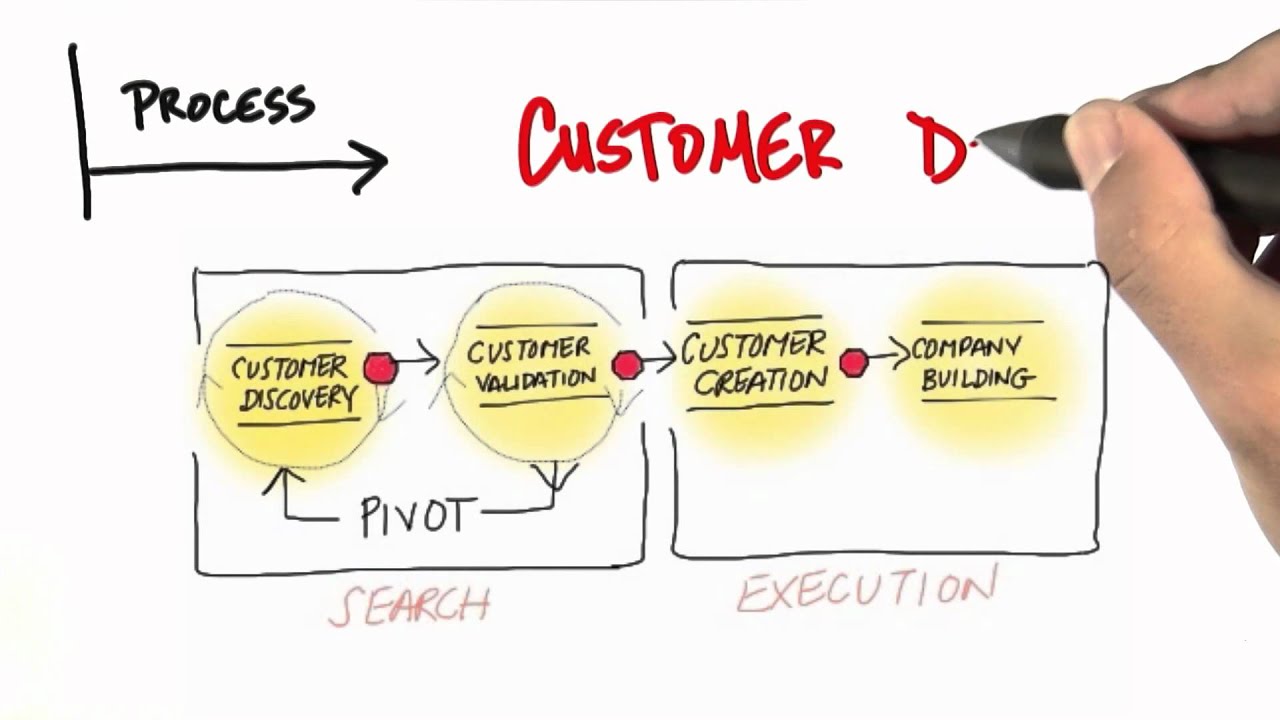
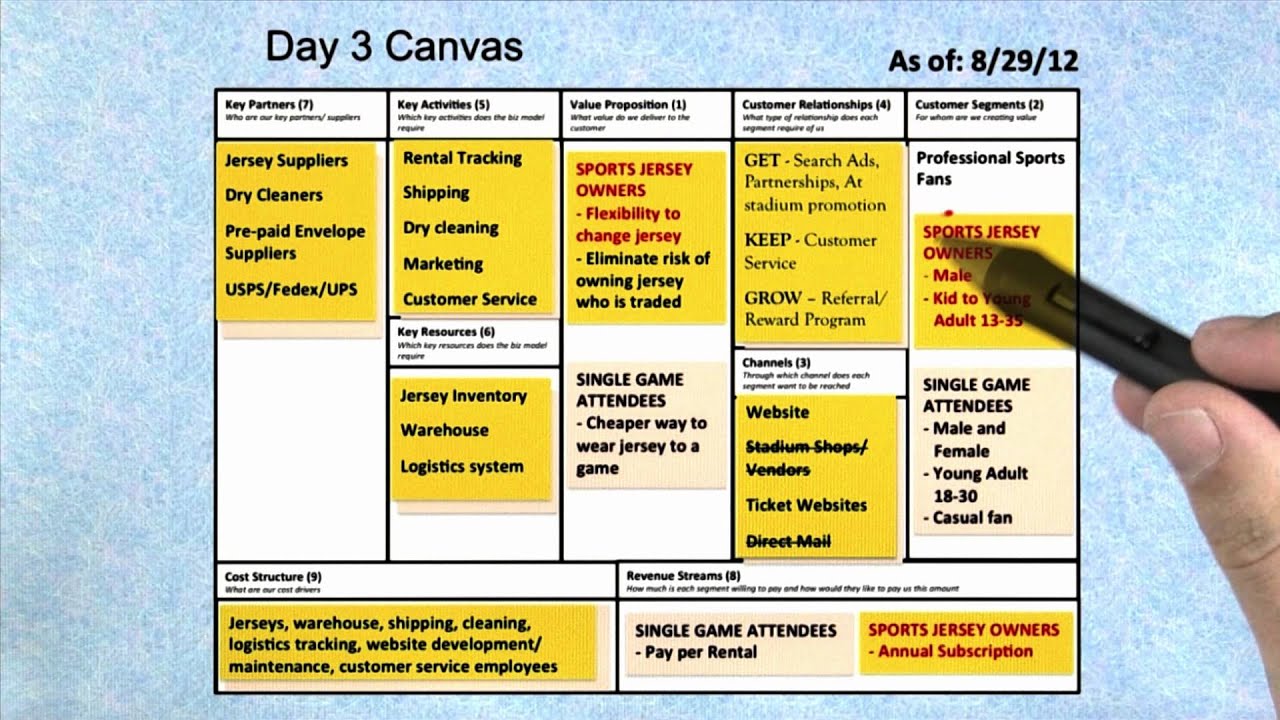
Let's take a look at the first step of customer discovery. You're going to be living this for the next couple of weeks if you're doing this for real. Phase 1 is you state your hypotheses and you draw the business model canvas.
And again, you put the canvas on the wall, you and your team get around and put up yellow stickies. But the next step is you get out of the building. You're going to test the problem.
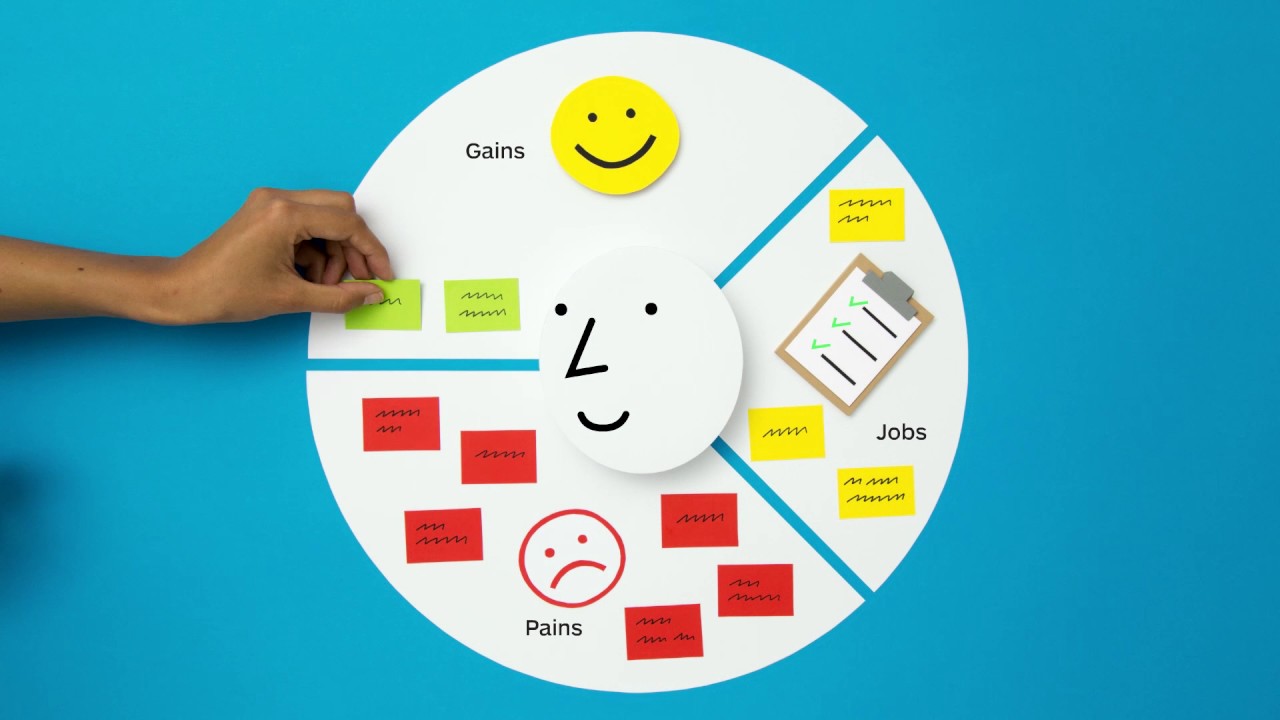
You're going to test your understanding of the customer's problem or need, and you're going to figure out how to build the prototype. The next thing is you're going to test the solution, and you're going to test the solution if you're on the Web by building a low fidelity and then a high fidelity prototype, and you're going to again test your understanding of the customers' needs and whether your solution matches this. And this match, again, is called product market fit.
That's the holy grail for entrepreneurs. Am I building something that people can't get enough of or are just willing to open up their wallet's and empty it in front of you to get their hands on? And the fourth phase in customer discovery is you verify your pivot.
Do people agree that you're solving a high value problem or need, and do you understand your business model enough to start test selling, which is the next step in customer validation. Now, what's really depressing to most entrepreneurs is the answer most often the first time you go through this is, "Heck no. " And what's worse is, "Well, they kind of, sort of like.
. . " Well, kind of, sort of is not a startup.
Kind of, sort of is people have been nice to you. The only time you know that you have something that's worth investing your time and money in is if people are literally trying to force their money on you or can't use your product even in its buggy, uninitialized form enough. This is what you're looking for.
And if you haven't found it yet, that's why the customer development process is an iterative circle. It assumes you will be going through this multiple times. And when you finally, finally think you do have something that matches customer needs, you get to the next step, which is customer validation.