[Music] Welcome to this Yungian life. Three good friends and Yungian analysts, Lisa Mariano, Deborah Stewart, and Joseph Lee invite you to join them for an intimate and honest conversation that brings a psychological perspective to important issues of the day. >> I'm Lisa Marchiano and I'm a Yungian analyst in Philadelphia. >> I'm Joseph Lee and I'm a Yungian analyst In Virginia Beach, Virginia. I'm Deborah Stewart, a Yungian analyst on Cape Cod. Many of you probably know that we're always interested and getting your suggestions for podcast topics. If you'd like to submit a topic, you can go
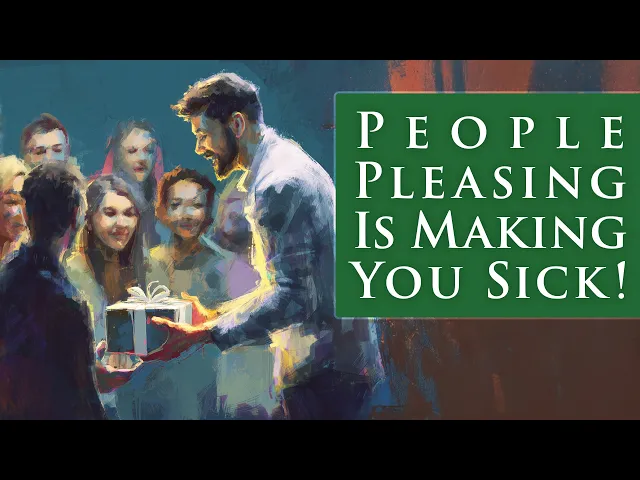
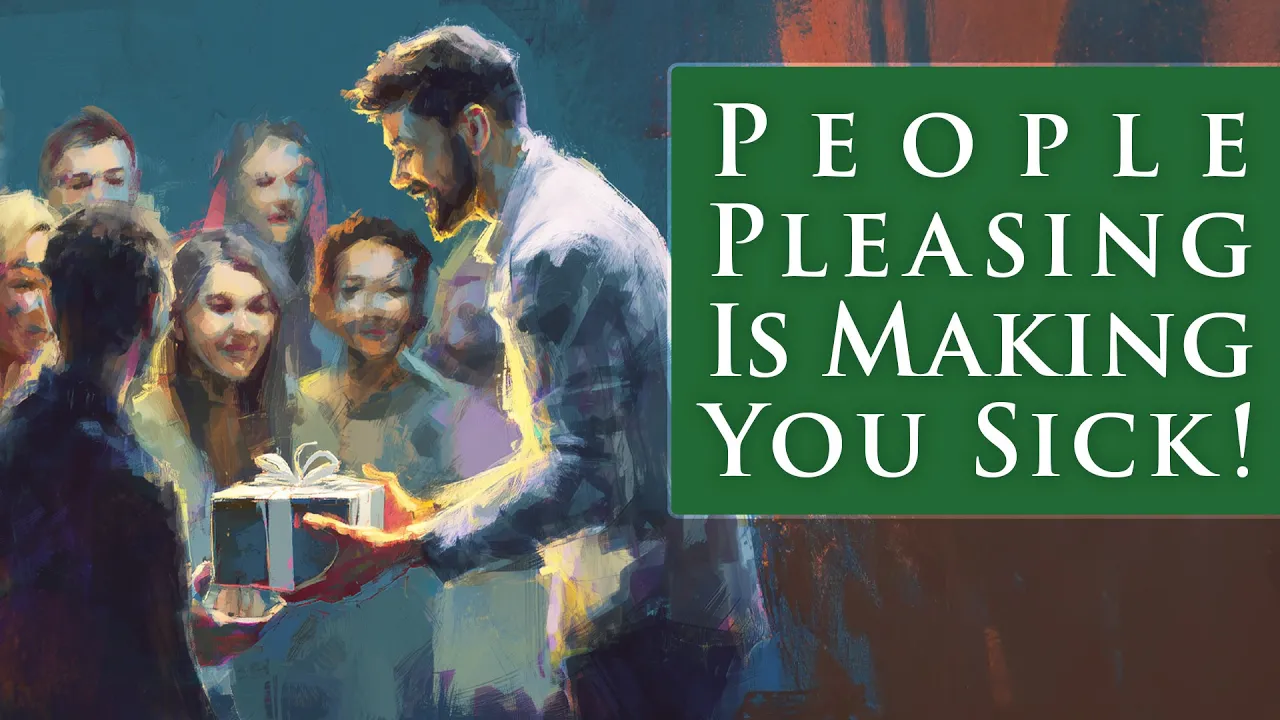
to our website and under the menu item podcast, there's drop- down menu. One of those is submit a topic. So today's episode is one that we took from one of your suggestions. We're going to be talking about people pleasing. I thought This was just a really terrific topic. So people pleasing is a pattern of compulsively overaccommodating, attending to other people's needs. Uh not attending to your own needs, looking for acceptance, approval to avoid conflict. And uh a little bit of it may be a good thing, but too much of it is certainly gets in our
way and uh prevents us from engaging our own individuation process. So we're going to be as we like to do Circumambulating that topic today. I think that key word there is feeling compulsed. Feeling that there are some psychological factors inside of us that are driving us to be people pleasing that may be fear driven or traumadriven or have some other elements inside of us that are not necessarily aligned with our natural way of being and therefore become something worth being curious about. What I think about often is the what is the feeling uh when you
know Somebody comes over or you have an obligation or whatever it might be. What is the feeling that you're having? Is it the feeling of oh my gosh I just have to do this or it's on my list or I need to run to the store. I need to manage. Check your stress level and check uh that sense of of obligation and duty and service and what you think you have to provide or be especially sure to be on time or whatever that might be. Where's that coming from in you? Is it coming From a
place of, oh my gosh, I can't wait to, you know, I'm going to make something. I'm going to cook something. I'm going to have fresh cookies avail. This is great. Or is it coming from, oh, you know, I got to get ready. I I need to straighten out the house. Um, I better I better dash to the store. Make sure everybody has something to eat and something to drink. Just just little litmus tests about what's going on inside cuz it's a clue Uh to whether you're orienting to the people and pleasing them. duty, obligation, should
must do it versus a a feeling of expansiveness or creativity or that this is going to be really fun. >> There's a valuesdriven kindness we also can find in ourselves that's coming from the soul and then there's these other intrusive demands whether they're coming from the outside or inside that that are that are something else. I'm thinking about all the different variations and and there is that more just kind of almost characterologic uh tendency to people please. It may for some of us it may just be the way we've always been. We may do it
very unquestioningly and unthinkingly. We may not even know another way. And uh it can be and I think this is to your point Deb. can really be depleting to do that rather than kind of giving us energy. So, it it could be that if we've always Been a people pleaser, at some point we sort of we sort of hit a wall and we realize it's really not paying off. But, you know, let's talk about this um idea of agreeableness because um and Joseph, I know you know more about this than I do. you know, scientists
have sort of cataloged major characterological traits and and one of the they've come up with the big five and one of them is agreeableness. Now, agreeableness is not exactly the same thing as people Pleasing, but I I think there's um maybe there's some overlap there or they're neighbors or something. So tell us about that >> in the evolution of that big five personality test and they were researching common traits and deciding which traits they would monitor and which traits they would set aside. As they were establishing this they noticed this co-actor of agreeable versus disagreeable
just seemed to show Up spontaneously as they were doing their calculations. And it happens so frequently that they stumbled into this realization that this is a trait that um really defines and influences a number of other aspects of personality. So a couple of ways that these particular researchers were looking at agreeability. They were saying that there's an aspect of trust in it, straightforwardness, altruism, Compliance, modesty, and tendermindedness. And this could be broken down into two different categories. One is just compassion. That people who are particularly agreeable may notice that they are deeply influenced by the
suffering of others >> and that makes them want to address it. and also carefully not add to the distress or suffering of another person that can make them adopt a very Agreeable stance. Another element which I think is more complicated is politeness. When somebody feels that they must be agreeable because that's the rule, that's the norm. The rule is to not come across as aggressive. The rule is to always appear fair. And these two ways of looking at it mix together to create a particular intensity of trait. I think that as a characteristic of personality,
it's Neither good nor bad. It's an observational thing. We see it in ourselves. We see it in other people. It's more or less dominant, but it seems to have a big effect on the individual. In my book, The Vital Spark, I have a whole chapter on agreeableness. Um, and you know, one of the things about agreeableness is that in that big five personality test, which is, you know, there's a lot of data there, and I Think it's been it's my understanding is that it's it's yeah, it's it's pretty it's pretty robust. And one of the
one of the really consistent findings is that in general and across cultures, women score higher in agreeableness than men do. And we could have this argument about whether that's nature or nurture. But there it is across cultures like not just here, you know, but in all kinds of different environments in general on a population level, women tend to be more Agreeable than men. And this um as you said, Joseph, it's kind of neutral. There's some great things that go along with being agreeable and maybe there's some not so great things, but it is interesting that
it tracks more with women. What I'm thinking about is agreeableness. I mean, we that's the price of growing up, being in a family, being inculturated. Uh we all have to develop a persona. We all have to develop a social veneer That serves us. It's like the cornea of the eye. It keeps out the dirt and the grit and the specks and allows us to see out safely. Gives us a safe place to be when we're interacting with, you know, classmates, workmates, heaven forend family. U it's a good thing that we develop it and we we
learn these things to be polite. you raise your hand in in class. Uh so to some extent we have to learn to be somewhat agreeable in order to be Socialized in a way that's rewarding and satisfying to us. So agreeableness is one thing and people pleasing is I think when we sacrifice something that is authentically ourselves in order to put the other person first or please or flatter or some other thing that there's something different whether it's just a little tinge of something or it's way over the top. We're giving something away of Ourselves, our
authentic selves. Is it judicious? Is it in the service of uh getting something done in the moment? Or is it a character or logical trait where I always do that? You know, whatever my boss wants, I always do that. I always stay late. I always work on the weekend. And that takes agreeableness into a slightly different territory. Well, it's almost like if you tend to be agreeable, you might have to learn how to sometimes be disagreeable, Right? I I um I tell this story in the Vital Spark about when I was in my 20s and
I had this older friend. She was um you know she was probably in her 50s at that point and she was a really great cook and she had this great apartment and she used to invite a bunch of us over and she would make these great dinners and we'd be sitting out on her roof deck eating and you know it's like great food and it's a great dessert and the first time I went over we had Finished dessert we're up on the roof deck you know the stars are out I'm having a glass of wine
and she comes up her name is Terry she comes up and she says with a smile on her She goes, "Okay, I'm going to bed, so it's time for you to leave." Oh. And I was like, "What?" I couldn't believe it. Like, she just kicked us out. But I was so flabbergasted. But then sort of after I got over my shock, I was like, "That is so cool, you know, that you could just She she wasn't really, to your point, Deb, like she wanted to to offer us this wonderful evening and she wanted to cook
for us. was so generous, but then she wanted us the [ __ ] out of there so she could go to bed, which I now so relate to. So I I loved her just being able to be not not feeling like she had to sort of think about us all the time. I think is that's a great uh little litmus test of here's this person that has the energy, The generosity, the expansiveness of spirit to invite you over and it was energizing, you know, for her to have company and we'll do this and here's this
and have some bounty. And uh then when it became depleting, she was able to say, "Sorry, you know, now my energy is going down. I got to go to bed. goodbye of when is it energizing and when does it start to become burdensome and depleting? And so in terms coming Back to some of the information around the big five is that agreeability um generally cultivates higher levels of trust, collaborative problem solving, less counterproductive behavior, stronger team cohesion, more pro-social acts. They're also in other environments that say very high conflict jobs or and you're in a
very zero sum kind of environment. You know, very high agreeableness can depress the individual gains and lower agreeableness can aid in Really tough negotiations and the enforcement of norms. So it's context dependent as to whether or not the agreeable or the disagreeable energy if we think about it that way is the right approach. But overall I think what we're saying is are we conscious of it? I mean if somebody is agreeable without even thinking about it and then at the end of the day they're asking themselves why did I agree to this? You know, I
said I'm going to do these four Things and I'm going to drive everybody and I'm going to cook this. How did I get to all of these yes statements regarding all of these things? And that can be a habitual agreeable attitude which can be costly. If we're choosing thoughtfully to align with someone or something, that can actually be a very positive experience. And as you were saying, Lisa, to be able to take hold of that energy inside of ourselves and to put out what's true. I'm not going to agree to this, but I but I
can agree to that. And and that allows everyone to be visible in this space. >> Yeah. Yeah, I mean it sounds you make it sound easy, but it isn't always easy if you tend to be a kind of agreeable person who's a little conflict avoidant. Doing that can be very very frightening, you know, but but I agree with you. It's something it's something to work toward. One of the things I think about and I Think I'm just amplifying what you were just saying, Joseph, is what's your point of reference >> when you're making a decision
about what you're going to do or how you're going to answer someone? Are you just focused on that other person or are you checking in with yourself and finding out about how you feel? And um this is where uh I think we can think about this in terms of individuation because if you are taking the time to Check in with yourself and it goes to the consciousness part, where is your compass about how you want to spend your time, what your values are, what matters to you? Are you taking that into account or are you
only referencing what the other person wants? I mean, of course, in the short term, it's it it can be a real pleasure to meet another person's needs. It can further a goal. Like you said, there's all these potential Benefits, better relationships, but over a lifetime, if you never step back, take stock, what is it I want? What feels right for me? Does this reflect my true feeling on the subject? Is this in line with my values and beliefs? Am I compromising uh myself in a seeding to this or in meeting this other person's needs? Then
then we're really not following our own path. And you know, and Jung Jung kind of talks about this in a sort of Indirect way in in Memories, Dreams, Reflections, his autobiography, he basically says at the end, I I was not very agreeable. I did whatever I wanted to do. I was pulled along. And I know I hurt people, but I I had to do my own thing. I had I simply had to do it. And and it the the truth is that if you're not going to be agreeable all the time, if you're not going
to be a people pleaser, you're going to piss some people off. You're going to hurt people. You're going to inconvenience people. And that's just something that you're going to have to take on board. And for some of us, that's hard. >> Yeah. I think that's such a a really good point. I liked your reference. I'm going to go back and reiterate it of what is your point of reference. Is it what I need, how I feel, what my values are? Am I here in in my interior or am is my point of reference the Exterior
of what my family members want and expect and need uh or my boss or anyone whoever it is that I just automatically kind of fall over. I think of it as leaning forward so far you sort of fall in to the other person's uh field and automatically agree where's your point of reference and it can be both. It doesn't have to be one or the other. What this other person wants and needs does matter. I hear it. I'm listening. I'm taking it in And considering it. And then what I want uh what I have to
give today or should I work this weekend? All those things. Can you step back and and really kind of think about it? But I also want to kind of uh take this our conversation into the realm of what can happen in a family where maybe things aren't so great. that there's a kind of relational dynamic and even relational trauma that can spark a kind of people pleasing that is deeper maybe tinged more with need And uh a kind of automaticity >> etc. And in that context, I just read a wonderful book that's coming out in
March called The Littlest Princess >> or The Princess Who Found Her Name by Dale Kushner. So, uh, keep an eye out for that. It will be published by Chiron and it's this is a woman Dale Kushner who wrote a fairy tale about a princess uh who became princess please her because her mother the queen uh wanted another child in order to Preserve her own feeling of vitality and youth and being you know a wonderful needed young mother. Uh, the littlest princess's older sister was uh very jealous because mom paid more attention to the new the
new baby and the little girl than the older girl. And then she says the littlest princess grew more and more confused. It was unthinkable that her older sister did not love her, so she didn't let herself think it. Instead, another thought popped into her Head. My sister is displeased with me. I must be displeasing. I must try harder to please her. I don't think this dynamic is unfamiliar uh to people. And to some extent there's a a reality base in it that we have to earn someone's love. We have to be pleasing. We have to
do what they want. And I think we all learn that very young like you know use your knife and fork. Don't don't eat with your hands or there will be interactional interpersonal consequences Uh from some parent at the table telling you to do that ver versus that place where it becomes self-lame. It becomes a habitual. It becomes a a retroflective thing that you just swallow and gulp down what you feel, what you need, what you want because uh the price of not doing that is rejection or abandonment of some kind from the other. Uh that
other that we all need uh early on and we're social Animals. So, I think um I'd like to talk a little bit about that of the desperation and how it gets kind of bread in the bone if that was the price that you had to pay for relationships in your family of origin. So when I'm listening to that, Deb, I'm thinking about the kind of family dynamics that cultivate a dependent narcissism That narcissism um I think is widely misunderstood by the Tik Tok pundits of the world. But narcissism is um a problem with the way
people perceive themselves. Their image of themsel becomes disconnected to the deep deep layers of their soul. And the image of the self becomes overly influenced by whether or not we are pleasing to our parents. And if we're raised in a home Where being pleasurable to the parent is the dominant demand, then the child loses contact with their own interiority, their own instincts, their own needs, and everything um is in orbit to the look or the voice of the parent that is making these demands. And so the child is trained to feel that they're only okay
when they are reflecting what the parent needs, demands, wants, approves of. And that sets up a context that later in life, I don't know who I Am. I don't know what I want, but I know how to stare at another person and just nod in order to have a sense of value in myself. All genders are vulnerable to that. That's an rather extreme circumstance, but it's substantial. And underneath it, to be honest, is a covert contract that I will provide whatever it is that pleases you and that you will then like me, love me, keep
me safe, and more pernitiously, you will anticipate my Needs without my having to say it. and meet those needs. Of course, it never really works out. So, the person who has a dependent narcissistic nature is often harboring a vat of anger and rage and resentment because the unconscious contract never gets executed. I'm doing everything that I think will please you, but I don't seem to be getting much back and I don't feel like I'm being taken care of or my needs Anticipated. And that creates a kind of war that erupts and leads to passive aggressive
behavior. >> There's a lot that he both just put out there. So, I I think I'm trying to to synthesize it. I think, you know, both of those dynamics are are very big dynamics. And um just to kind of go back to Deb for just a second, you're really sort of talking about a kind of um traumabased People pleasing that can look like fawning, you know, or or at least that's what I hear in in what you said, you know, that that um one of the trauma responses is is fawning. I'm going to bend over
backwards, make myself totally vulnerable to you, and do whatever you want. And and we can use that as a habitual style of relating when we've had um sort of relational trauma in childhood, which I think is what you're describing, Deb. And it's it's Heartbreaking. And it goes back to kind of where you started at the top today, Joseph, that you know, when we talk about the most extreme version of people pleasing, it's really um it is compulsive. It's a kind of compulsive behavior and I think it's often associated with dynamic that that Deb just lift
lifted up. Joseph, I just I feel like uh what you brought forward is so important and I think so familiar to many of us that that we've all probably Interacted with someone who seems like he or she is all about doing whatever we want but we feel something else in the field and it is the influence of that and I like how you put it that kind of that covert contract that we're not even conscious ious of and the other person's probably not even conscious of. So, it can be confusing to be around someone who
who has what we would say this kind of dependent narcissism um because they seem very lovely but but Really there is a kind of effort to control or manipulate that's implied in the interactions. >> Yep. You feel it. There's a kind of uh coercion uh going on underneath. But I also think, you know, if the relational dynamic early on has not really been in favor of a child supporting a child's coming into a sense of him or herself. And the price of parental or other adult approval uh is to be like this or to be
like that to perform well or to be cute Or to be quiet and sit over in the in the corner and not uh have any wants or needs. Uh it it goes in very deep because that is the price of relationship and a child needs that so badly. uh that that they'll do almost anything to get it because they're little, adults are big. At some level, they know, you know, they they depend on on connection, approval, care, safety, all the rest of it from adults. And when when that is missing, it can go into people
pleasing. And the historical variant on this that I have, I we're talking a lot now about COVID and what happened to kids who couldn't do what kids need to do of get outside and play and do peer relationships and all that stuff. They had to conform. They had to stay in. They had to do school online. Um a and so there's a kind of forced peopleleasing inherent in that. Um during World War II When London was being blitzed and thousands of kids were evacuated uh that's the you know what happened in that children's story the
lion the witch and the wardrobe. And when kids were interviewed, child after child after child who'd been sent away for their safety to live said, "It's because I wasn't a good enough boy or a good enough girl." So it goes deep in us that if I am good enough, Whatever that might mean in a in an individual context, then I will get the approval, the love, the care, the attention that I need. And sometimes the trauma as with the the blitz during of London during World War II is can't be helped. Co could not be
helped. But there is a price of having to having to find a way to connect that has to do with conforming, constricting um and being overoriented To the new external world circumstances. And then we have to take stock later on and start to reflect and become aware and engage in our own uh development and and individuation. So one piece that we could look at is an idea that Winnott brought forward that when we are in an environment where our truer nature is not being reflected to us that we develop what he called a false self
and then if this happens when we're Quite young we can come to believe that the false self is who I really am. And then we move forward through the arc of our life constantly as we were suggesting looking in other people's faces, listening for what they need, following other people's list of requests with the sense that that gives me a feeling of being real. Gives me a feeling that this is my purpose in life. But under the surface, people become Symptomatic. And this is something that was central to Jung's ideas that our waking personality must
be in a primary relationship to the self, to the deepest center. When the self has been replaced by our parents, the school system, siblings who are making demands or any number of other things, we become unwell. >> Yeah. And I think it it relates to, you Know, kind of what I was saying before about in in the union terms is you have to connect with the the self essentially. You know, where is that ego self access? Where do you have connection with your deep center? If you if you're too much wrapped up in Winnott's false
self, that's a different self, by the way. I'll use those terms so differently. But but then you don't have that orientation to your center, to your depth, and and you're you you can Simply be sort of batted about by the winds, you know, of whoever. Um, uh, you know, there was a really there was a there's an old Woody Allen movie called Zelig that's less wellknown. It was it must have been it must be from like the8s, but it's such a charming little film because talk about it starts with Zelig, the main character's at a
party and someone asks him if he's ever read Moby Dick and he and he lies. He pretends like he has even though he Hasn't. And from there, um, he he winds up in all of these situations where he just conforms to what anyone wants of him. And they, I mean, it was like the 80s, right? So, this was before like, you know, computerenerated animation and stuff, but somehow they did this really great stuff where he's at like a Nazi rally and he's, you know, he's giving a Nazi salute. just becomes who he's a he's a
chameleon, you know, and I and I think um and and the film I I literally Haven't seen it since the 1980s, so I should go back and watch it. But but um but but you know, of course, it it explores the film explores the downside of of not having our own sense of self and and simply conforming to what others around us want us to be. So I I guess maybe maybe that chameleon metaphor is perhaps another way of thinking about this. What I'm thinking about is uh how do we connect or build or find
if it hasn't Been supported and we haven't been encouraged and external world circumstances did not facilitate the development of who are you and what do you like and how do you feel uh what are your interests if that has not been encouraged and supported you know it can be a little difficult to say to somebody, well, you know, where's your authentic self and what do you really feel? Where are your values? What do you like? And that that's the process that That can be the place to begin is, oh my gosh, I don't know. I
I don't know what I like. And I've I've had people uh in the consulting room who say, you know, it doesn't matter to me. You know, when somebody says, you know, should we do A or B? Well, I don't care. It's It's either either one is fine with me. Yeah, I know. But I really want to know, would you rather go, you know, for for a walk or would you rather uh go kaying? Oh, well, you know, whatever you want. >> That's so annoying when people do that, isn't it? >> Yes, it is. >> It
is. And what I've come to appreciate for some people is they really truly honestly don't know and don't care. And it is almost unfair to say, you know, come on. um sit down and and tell me which one you prefer because it it has been inculcated in them to be agreeable. Yeah. >> And I'm putting little air quotes around It because that's not true agreeability. But if you've learned to define yourself in the context of a demanding controlling other or environment, then I think it takes a little patience on the part of other people even
to build the awareness of seriously though I really do want to know if you'd rather go for a walk or or get the kayak out. you know, sit, think, ponder because that's the very thing that has not been encouraged, supported, Nurtured, and then the poor person gets that backlash of, you know, why are you such a nebish? I asked you a simple question. Would you rather do A or B? And you're waffling around. >> I mean, there is a difference between not knowing and not caring, right? It's funny. I was I was uh with a
friend over the weekend. we decided to go see a movie and we had a couple to pick from and I I really couldn't I didn't I Didn't have a strong preference so we said let's flip a coin so we did but um but you know so there is not caring and then there's not knowing Deb and I think that's the heartbreaking situation that you're lifting up is that some sometimes we haven't we don't know what it's like to be in touch with our own desires and so we do just kind of go along with what
other people want and there can be a cost to having our own desires because as I said before you Right? You might Make someone unhappy. You might inconvenience someone. You might piss somebody off. And you never learned how that the automatic goto is what you, whoever that you happens to be, uh, want or prefer. Uh so I I think you know there's just a whole range here of that we're putting under the heading of people pleasing from you know something that's fairly subtle and and may veer into the agreeability category versus the thing That really
stems from uh not having been supported to develop enough sense of value self authenticity and and an internal reference point. So the only thing that a person has to ping off of is what the other person or the circumstances are demanding. >> So we're leaning a little bit into some of the solutions. Depending on one's typology, one is either going to discern what is Highly valuable based on feeling or thinking. And when we are trying to re-establish what our experience is, what is my task in a given moment? We can ask ourselves what do I
like and put that in some sense of a scale. So for instance, asking somebody what they want or what they desire can be very complicated because it sounds so big. But if I ask somebody, do you like This or not like it? Take everything else off the table. Do you like it or not like it? If you do like it, 0 to 10, how much do you like it? Or if you don't like it, 0 to 10, how much don't you like it? You don't have to make a decision upfront, but can you step away
and at least ponder, do I like it or not like it? Just that just that little bit. If you're a thinking type, it's not always quite so black and white. I think feeling types um have a little bit more Of a black and white quality to it. But asking somebody, what do you think about this possibility? How do you think that it will affect you? How do you think that it will affect the other person? What does that suggest to you? Those are two little ways to try to angle back into yourself and away from
staring at the face of the other person to see whether there's a flicker of anger or pleasure or Neutrality on them. Sometimes we have to honestly if you're in that situation just say excuse me and go to the restroom. Just sit alone for yourself and just without staring at the face of the other person. Do I like it or not like it? Just me all alone here in the can, you know, talking to myself. And sometimes we need that. >> I love that of you can always cut yourself a break and give yourself at least
a little time to consider it and Just kind of come home to yourself. >> Mhm. of like I I don't know of then now we're sort of like frozen. It's like I love that of like oh excuse me just to go to the restroom >> in just a second >> aka the room of inner reflection. >> Yes, the restroom. >> The restroom. >> But but it's such a powerful sentence. I I talk about this with my analysis a lot. It's such a powerful sentence to be Able to say something like, "I'm gonna have to think
about that." I mean, obviously, do you want to go see this movie or that movie? You know, maybe go to the restroom. But if someone someone calls you up and says, "Hey, can you blah blah blah or do you want to, you know, just I I it took me a while to realize that you can actually just say, I got to think about that. I'll get back to you." There are very few situations where you can't say that actually. And Oftentimes when I hang up the phone, I know right away. Oh, did you just see
that motion I made? Like I was hanging up one of those oldfashioned phones. When you hang up the phone, >> we're that old. >> I know. I definitely want to do that. Or no, I don't. Or maybe I'd like to do that, but only if something like that. So you it gives you just you just need you just need room. I remember when I was um uh I was in a position of Authority at an organization and I was probably about 30 and I had not gotten my hands around this stuff at all and some
guys came into the office. They they were a little bit older than me and I wanted them to like me and I wanted them to think I was doing a good job and they asked for permission to do something that was so clearly a hell no. And they put me on the spot. They asked me and I said yes. And I shouldn't have. And uh and and and I still think about that as such an example of this. Like I just was in kind of people pleasing mode. and I said yes, even though I knew
in the moment that it was like, why were they even asking? And if I had just said, I'll get back to you tomorrow, it would have all gone down differently. So, that's that's a that's a those are good tools, whether it's the bathroom for 5 minutes or just tell me you'll come tomorrow. Uh those are good tools to to break out of that compulsive Response. And that can be very much part of it is I have to give you an answer right this minute, you know. So sometimes I envision it as and have said to
people, you know, let's think about it on a range that somebody comes up to you and says, would you mind going to the bank? I'm really in a pickle. I, you know, I'll pay you back, but would you mind just take a break during your lunch hour? Go to the bank and get me $10,000. >> Sure. >> Most people Okay, thanks Joseph. Um, >> now you know, >> you know, most people go like, "Oh, no. I wouldn't do that." So, now we take it down to the other end of the scale of like your situation,
Lisa, of whatever those uh men wanted that you automatically might say yes. Or, you know, can you bring can you bring four dozen? Your brownies are so great. Can you bring four dozen to uh the school Fundraiser? Let me think about that. I'll get back to you tomorrow. >> And and having been in that position, my moment of liberation, uh always having been the one that grew all the little bean sprouts and the paper cups and all that jazz, uh was when I went out and bought a dozen cookies for the bake sale. Ooh. transgression.
Everyone knows. >> Oh, you're that kind of a person. I >> I didn't do homemade. >> Oh, dear. >> I Some things are so clearly it's a no. But others when it's But I love that idea of just interrupt your instinct to give an automatic reply, automatic yes, I'll get back to you. So, as long as we're talking about remedies, there is a fairy tale that uh that I talk about in the vital spark that I think is a really great example of the moment where Someone who has perhaps been socialized into being agreeable or
perhaps even being a bit of a people pleaser kind of gets her hands around um some appropriate uh aggression. Because if we've been socialized in this way, we can think about it in yian terms that our aggressive capacity has gone into the shadow. It's something that we haven't developed. We haven't let ourselves know about it. It's kind of over there. If we See other people being aggressive, we might think, uh, you know, that person's totally out of control. We we haven't claimed that capacity in ourselves. And of course, I'm using the word capacity because it's
a really important word because this is not about, oh yeah, you have to be able to be aggressive all the time. No, having an aggressive capacity means it's a skill that you can choose to apply. It's not a way of moving through the world. It's an ability. So, I am going to quickly read the Grim's fairy tale, The Frog Prince. Once upon a time, a princess sat at the edge of a well playing with a beautiful golden ball, her favorite play thing. She delighted in throwing it up into the air and catching it, but she
dropped it and it fell into the water and sank. The princess was distraught. When she looked into the well, she saw it was so deep that she couldn't see the bottom. She sat down at the edge of the well and Began to weep and lament. I would give anything in the world to get my ball back, she cried. As she cried, a frog stuck its head out of the water and said, "Why are you weeping?" "Oh," responded the princess, "you can't help me, you nasty frog. My ball has fallen into the water." The frog offered
to fetch the ball for her on the condition that she accept him as her companion, and let him sit next to her, eat from her plate, sleep in her bed, and promise To love and cherish him. The princess thought that the frog's demands were nonsense, and couldn't imagine that he would ever leave the water. So, she quickly promised him what he asked in hopes that he would retrieve her ball. The frog disappeared into the water and returned a moment later with the ball in his mouth. The princess quickly took it from him, delighted to have
her play thing back. Then, without pausing, she rushed off back to the castle. "Wait, Princess," called the frog after her. "You promised to take me with you." But she ignored him. The next day, the princess was sitting at the table when she heard something coming up the marble steps. Squish, squish, squish. Then came a knock at the door and a voice that cried out, "Oh, princess, open up, please." She ran to the door and opened it and saw the frog whom she had forgotten. Horrified, she slammed the door shut and returned to the table, as
Acting as if nothing was the matter. However, her father, the king, saw that she was alarmed and asked her what was wrong. "There's a horrid frog outside," she said. He fetched my golden ball for me from the water, and I promised he could come to live with me. But I never thought he meant it. Now he's standing outside and wants to come in. As she said this, there was another knock at the door, and she could hear the frog calling to her. "You must keep your Promise," said the king. "Go and open the door for
the frog." The princess opened the door, and the frog hopped inside and followed her to the table. She sat down and resumed eating. Lift me beside you," the frog called out. The princess loathed the thought of this, but her father, the king, ordered her to do it. With revulsion, she picked up his slimy little body and placed him on the table. "Now push your plate a little closer," he said to her, so that we Might eat together. The princess was forced to comply, and when the frog had eaten until he was full, he commanded her
to bring him to her bed as he was tired and wished to sleep. The princess was terrified of sharing her bed with a cold, wet frog. She started to cry at the thought of it, but her father became angry and ordered her to keep her promise. So, she picked up the frog with two fingers and carried him to her room. She was so enraged at the thought of Putting his slimy little body on her pillow that she flung him with all her might against the wall. Leave me alone, you disgusting frog, she said. The moment
the frog hit the wall, he transformed into a handsome young prince. The princess was shocked and then delighted. The two sat up talking, and she cherished him as she had promised. Then, in their delight, they fell asleep together. The next morning, a fine carriage arrived drawn by eight Horses and conveying the prince's servant, Faithful Henry. When Faithful Henry learned that his dear master had been turned into a frog, he'd had three iron bands placed around his heart to keep it from bursting from grief. The princess and the prince got into the coach to travel back
to the prince's realm, and as they rode, they heard three mighty cracks. The prince at first feared that the coach was breaking, but faithful Henry explained that the iron Bands around his heart had sprung open because he was so happy that the spell had been broken. So, I bet when you heard that it was the frog king, you were all thinking it was the French version where she's going to kiss the frog. No, no, no. It's the German version where she flings him at the wall. But um but it's such a great I think sort
of illustration of getting out of that um kind of I'm going to conform to the demands. I'm going to Follow the rules. No, I'm going to find something authentic and it might not be very agreeable of me, but actually that's the thing that is transformative. That's what breaks the spell is when she finds her own uh authenticity. And Joseph, I was thinking about your point about the dependent narcissist in the beginning of the story cuz she kind of is like that. She looks like she's so sweet and of of course little frog, but really she
has no it's, you know, it's Passive aggressive cuz she's not planning on keeping her her promise. She's, you know, she's behaving in this very um uh shallow way, isn't she, in the beginning of the story. >> Right. Right. She's willing to agree to something because she doesn't believe she can be held to it. >> Yeah. >> So that she can get what she wants. Lo and behold, as a princess, her word actually matters. And the king is teaching her something about keeping her word. >> I remember reading this uh we all have memories of reading
fairy tales or having them read to us when we were little and the meaning that we made of them. And I remember being so shocked and and then so totally perplexed. Why would that be rewarded? And so we have, you know, the the the king uh the force for law and order like, you know, you gave your word. You You have to honor your word. You made an agreement. You have to keep an agreement. And then she flings the little frog against the wall and it's rewarded. And it lit me up that oh my gosh,
she transgressed. She she did something terrible from the viewpoint of ego and rules, convention and all of that kind of thing. And I never forgot it. I didn't understand it, but I never forgot it. So there's something here about transgressing That serves oneself that is it was true for her and to her and it broke the spell. Sometimes that's what it takes to serve ourselves. And that's an interesting conundrum. And you talked in about memories, dreams, reflections, Jung's memoir, and how at the end he says, you know, that he hurt people and various other things.
And he said, "I couldn't do anything. This is just who I am, and this is how it was, and I could not do otherwise." >> Mhm. And that sometimes that's the truth. That the cost of being your authentic self is going to be disagreeable according to convention or how other people feel. And so it takes some grit in order to serve ourselves and be authentic. It's not like it always comes easy. >> Yeah. It reminds me of what became a really popular book called The Courage to be Disliked, which is um an exugesus on Adleran
psychology, which is a very Different approach, but I think the message is very similar that if one understands what one's selfchosen task is in a given moment, there is a need to Keep faith with what you know to be true about yourself, which inevitably means that some number of people are going to dislike you or dislike your actions. Conversely, if you are the kind of person that everybody approves of every action all the time, it suggests that you actually Haven't taken a position, but you are in that chameleon place that you were referencing earlier, Lisa,
that you're just changing all the time to get the calmness or the smile from the other person. But anytime we take a position on anything, let's just say you decide you're you're a vegetarian >> and some members in your family are going to like that or not like that, but if that's true to you, you're going to continue to move forward and eat what You want. I know this sounds like a small thing, but it isn't a small thing. You know, many people who are vegetarian have stories of having to really wrestle with their family
just to be validated that I don't want to eat bacon. Like, keep the bacon away from me or I don't eat things that have a face. I'm not going to do it. And the frustration that the family or whoever's cooking the meal might feel, but it's it's common enough. Can we bear that tension and and be who We know ourselves to be and to accept going into it that some number of people are just not going to like it or like us. Can we make peace with that even though it's not necessarily enjoyable to be
disliked and to grow into that strength which brings us back to a more yungian perspective of where do we get the strength? so that we can courageously occasionally be disliked. And the strength to be ourselves comes from that relationship to our inner world because that's the thing that nobody else can interfere with. You and your interiority, nobody can actually take that away from you once you discover it. One of the things I find interesting about this tale is we have the father who says you have to keep your word and you sort of read the
tale and you're like yeah you do and he's he is really Kind of a good king you know and then the fact that the answer is that she has to break the rules and I think I think it's true that both are sort of true right you have to live in the world where your word matters where you need to follow through on things and there are times when you have to break the rules. And I think the the question is holding both of those things that they're true at the same time. And then going
to your point, Joseph, of well, The discernment of knowing when is it right to break the rules. She didn't have a discernment process. It just welled up. And I think that also speaks to your question, Joseph, about like where where do you get the the strength? Because sometimes you just can't not. And if we put on this lens of um the feminine psyche and the anonymous, the frog being the anonymous, is that this young girl is introduced to her anonymous In this interesting way. >> Yeah. >> And that as she continues to interact with the
anonymous because she would like to flee from that and then remain young and little. But the king seems to know something else which is like no you are going to relate to the animus whether or not you like it whether or not you think it's pretty you're going to relate to the animus and as she relates to the Anonymous she gets in touch with her fire that we can almost say that the frog puts her in touch with her strength and her own opinions and what she likes and doesn't like. And when she finally says
with great strength, I don't like this, so to speak, all of a sudden the anonymous becomes um anthropomorphic and supportive and she likes him and he likes her and they go to the quote unquote bed together, but they come into a kind of union. And the principle of The king for me is saying now that you've discovered this psychological principle, you are not going to turn away from it. You are going to figure this out one way or another whether you like it or not and something good does come out of it. >> Yeah. Yeah.
I like that she wants to flee from the when she first meets him. You disgusting frog. But of course that's the part of her that has access to the golden ball symbol of the self And to the depths of the well. It's really such a beautiful story >> and the transition from the world of the child to the world of the young woman is to to take a partner, the young prince. >> And a lot of times when we're kids, we are in that peopleleasing mode. you know, when we're young, part of becoming an adult
is being able to have your own opinions that aren't necessarily going to be um pleasing to others around you. So, it is it really is about that sort Of transition to a more adult kind of space. I really like uh what you've said that she's introduced to her inner other uh the frog and and then the next step is the king part of her own psyche says rules and rags you made a deal's deal and then what happens is her own instinctual self reels rears up she doesn't have a conscious thoughtful think it out process
something just emerges is but one way or another she is interacting with Uh this part of herself the animus her inner other which takes me to this idea of people pleasing it's it really can be um automatic it can be transgressive it can be ugly it can be thoughtless >> of you did what you said that to Mrs. So and so. Yes. But something is growing and something is happening that has to do with with her own sense of agency that no me not you me over you. Uh that first she has no intention of
of honoring the deal she Made with the frog. But I I like this whole dynamic a lot of what a struggle it is and that it's not as simple as saying always. It's not always as simple as saying, "Let me think about it and get back to you in a day or so." But it gives us something to notice and to reflect on of I did that. Oh my god, I can't believe I said that. But what have I learned from that? What happened? Look what part of myself reared up out of nowhere Uh to
meet me and to be curious about that and affirm it in the sense of like well I did that versus only too quickly to censor ourselves for for not adhering to convention. Just look take a look reflect on it. Here's what I did. What happened? So here's a couple of ideas people might take away that we can be agreeable or pleasing as long as it's freely chosen, as long as it's context sensitive and we remember that it is reversible, >> that it's not an eternal contract. It's a moment in time. You've considered something. It's appealing
to you. And so there we are. If it's aligned with your explicit clear values, then it's good to go. And if this agreeable or pleasing behavior is paired with enough truthtelling and your own clear sense of boundaries, saying yes and up to what point, it can be a very pleasurable experience for you and the people with you. It becomes pathological Where we feel it's an automatic agreement because there is a low-level threat somewhere in the environment that we're saying yes and we're maintaining that even though it's harmful harmful to us or to someone else and
we're negating the fact that there's harm there. If we're saying yes in order to regulate the other person's mood, that's a tricky one. Mhm. >> That really is in the space a lot. I'll just say yes to avoid the conflict. I'll Say yes because I know how they get, you know, when I don't, that's a tough moment. If we're saying yes to reinforce this identity that I'm liked and I'm good, that's tricky. And then as as you were saying Deb earlier, sometimes being agreeable is part of an entire trauma process that there can be a
PTSD dynamic to it as well as other things like being depressed or having other kinds of dependency traits which Are very very young and require a deeper consideration. So being pleasing to another person is not inherently negative. It could be a wonderful beautiful experience as long as our core is aligned with it and it is a co-pleasure. I am pleased to engage this way. They are pleased that I'm engaging this way and we're both just having fun enjoying ourselves. It's balanced. Which takes me Back to, you know, something uh at the beginning that I said
and I'll just reiterate it. Your feelings will tell you a lot of like, oh god, just say yes. It's just much easier than to upset so and so. But you see what you're feeling is just even saying that is like this feeling of like, uh, okay. Uh, versus a feeling of this is a delight and I'm happy to do it. >> Yeah. Uh, or do I feel coerced? Do I feel was I on automatic pilot? Did I say Yes too quickly? Notice how you feel. Just notice. >> And I'd love everyone to notice how you
feel when I suggest Dream School because we're hoping that it will be as pleasurable for you as it has been for us. But Joseph, seriously, you were talking before about just finding your core and connecting with that core, and dreams are a great way to do that. So, we hope that you'll check out Dream School. We've just refurbished Everything. It's brand sparkling new. So, come on over to our website and take a look at Dream School. And uh you can learn to work with rooms the way we do and the way we're about to right
now as we transition to a dream. Today's dreamer is a 32-year-old female who works as a child psychoanalytic psychotherapist in training. And her title for the dream is my father coming home at night. And here's the dream. It's night and I'm alone in the entrance Hall of my childhood home. Through the glass panels on the front door, the light from two car headlights comes pouring in, refracted through the glass. The light then bends away as the car parks in the driveway. My father comes in through the door. He's drunk, but enjoyably soul, jolly, and pleased
to see me wanting to chat. We sit at a table, and he tells me stories about some of the people he met that night. We sit close and are smiling And affectionate with each other. He then suddenly asks me, "But who's going to look after me?" I say, "I will, Dad. I will." As I stroke his back to console and reassure him. For context, she adds, "I've just started the third year of my clinical training. Is intense as in the UK, we work full-time seeing patients in public health services while training. I've been struggling with
my morale and sense of resilience this week, which just Ended as I had this dream on Friday night. I don't know if this is significant and could be admitted, but my partner of 3 years has been dropping hints that he might propose to me soon, which I'm happy about. At the same time, my mom and her partner, now of 13 years, are going through something of a crisis, requesting their relationship in the past weeks, which has caused me to worry for her. As for feelings in the dream, she says, "I was very happy to see
my Dad. He was a drunk, but amusing, warm, and I enjoyed feeling him physically, the warmth of his breath and his skin, the bristles of hair in his face. At the same time, there was an undercurrent of worry about his drunken state, and that worry became the dominant feeling at the end when he asked who would take care of him. for associations. She writes, "My dad died when I was 13 of advanced cancer, which was only diagnosed a week before He died. I don't dream about him often, but when I do, it feels significant, and
each time he feels so tactile and real, alive in that way. In the dream, my dad is around the same age as when he died, 62, whereas I'm the age I am now, 32. We moved away from this childhood home not long after he died. There's been a question in the family since his death about whether he possibly drank too much, whether that might have affected his health. My dad was an adult Psychoanalyst, and so my own career now is calling me back home in a way. I'm unsure about the meaning of the light and
the glass. This is such an important example of where context provides a whole other layer of meaning. If we just had the dream, who knows what we might make of it, but knowing that the father died terribly and very quickly and in a shocking way and what the dream might be offering in terms of medicine, I think gives me just a sense that the the comfort of this visitation by the father seems relevant to perhaps some of the uncertainties and that she's dancing with at the moment. >> Yeah. Well, I'm I'm thinking about um you
know, having your dad die suddenly when you're 13 years old. So, all of a sudden, he gets this diagnosis and then he's dead in a week. >> No preparation for the family. >> And 13 is you're at such a crossroads, Right? you're just you're entering you're leaving behind the world of childhood. And then I'm I'm I'm struck by um by the fact that she's at another crossroads. You know, she's 32. She's um kind of going through this professional transformation and it looks like she's on the threshold of another very very major life transition, possibly getting
married. Um, and and so it it seems touching and fitting somehow that her Dad would come back at this time. It could be that that being on the precipice of such a major transition calls back this earlier time, you know, in in a way that that um kind of highlights uncertainty. I'm thinking about the the father image here and uh that it is sort of uh precaged by that it's at night and she's in her childhood home childhood complex and that the light which is often a symbol of consciousness is somehow Refracted through glass panes
on the door headlights etc of an an image of a real ambivalence here about the father that he's drunk, but hey, that's okay cuz it's enjoyable. He's jolly. He's a happy drunk. Wants to chat. We sit close smiling and affectionate. But in this state of inebriation on the part of her father complex, which then veers into something else, who's going to look after me? And the dream Ego says, "Oh, I will uh to console." So there's something here that looks like it's companionable, affectionate, and then also sort of duty bound. Our dream ego says, "So
don't worry, Dad. I I'll look after you. I'll take care of you." And I'm putting that in the context of what she says now. Her training is is finished. And then she says, "My partner of 3 years has been dropping hints that he might propose to me soon." So, um, I'm thinking about This and I'm thinking about it in the context too of our fairy tale about the frog prince and what does it mean to make an alliance with the masculine other in the waking world in the form of her fiance. the masculine other in
the form of her deceased father and her own interiority around her own animus and these images that these other males in her life uh can hold for her about that. Picking up on that Deb, I mean obviously we would wonder about sort of the nature Of the father complex and we might imagine that it could be very very complicated and I agree with you there's something ambivalent. I mean, it's so sweet that he visits her and there's it's he feels so real and it's such a comfort and yet it's there's this um undertone of worry.
I'm also aware that what we know from the dream is that the father has driven while intoxicated. So there's this sense of a little bit of danger, a little bit of unnecessary risk And um and and so I so and again she's to go back to my point earlier, she's training to be a psychoanalyst. Her father was a psychoanalyst. She's presumably about to get married. When you get married, often the next thing you start thinking about is are we going to have a family? So she is moving into this next stage of her life. and
which the father complex might be expected to play a significant role. The father complex has something to say About what happens when we get out into the world. And of course the father complex is implicit when we start creating a family of our own. So somehow you know what what I what I can say is that well I can only imagine that in a sense she was quite abandoned by her father not through any fault of his >> by fate >> but by fate yes she she was abandoned and and perhaps there's a just a
slight fear now that arises of uh you know is Is the inner father sort of sturdy enough to help her through these next challenges. It's a complex image. >> It makes me um ponder whether or not she feels that marrying will be a betrayal to her father because there's so much trauma in the loss of the father at 13. It can interfere with the progression of the father complex. And if there is that kind of frozen in time moment, she may feel as she's pondering the proposal from her husband That there's kind of an unresolved
allegiance in the background and that the dream may be lifting up this snapshot of perhaps excessive obedience or alignment with the father complex that just needs to be examined needs to be considered and opening the possibility that it may not be a betrayal for you to choose a spouse that the father it is possible the father might bless the union Upon further consideration. >> I like that Joseph and I want to just add to that that one of the part of the traditional wedding ceremony is the father gives the daughter away. So sort of psychologically,
symbolically, one of the crossing over into adulthood things that happen is the father kind of gives the blessing. And so if we if we don't have the father, if the father and I I do wonder about the the nature of the father, she Says the actual father, you know, that maybe he drank too much. So, so does she still feel well because of the nature of the father complex the way her father is living in here in her does she feel free to move forward into life or does that feel like a betrayal perhaps of
his memory but both both perhaps because of that relationship and how it's lived in her and because of the traumatic way in which he died she may not as you're saying feel like she has Permission in some sense to move forward ward and she has to stay back and take care of him. >> Yeah, I think you know maybe we're all circling around some of the the same thing, but I I am really paying attention in this dream to the fact that in the dream the father is drunk. Uh, so what kind of a relationship
is that when you're talking and visiting with somebody who's drunk and there it he's a happy drunk and it's cheerful and it's Fun and it's all that good stuff. And then uh she talks about uh in the dream she was happy to see him the warmth uh and and all that but there was an undercurrent of worry. >> Mhm. And it became the dominant feeling in the end when he asked me who would take care of him. And in the dream she says,"I will." And I would want to know about as you think about getting
married to the man who's hinting he's going to Propose. Is is that the paradigm for you around relationships somehow that when you're close the other person is drunk or somehow in an altered state but you have these moments of closeness and fun and warmth and physicality. Uh but there's an undercurrent of worry about you know are these the conditions? Are these the the terms and conditions as they say and and what's going on here? And and it relates to our topic of do you have to exceed to this? Is this The price of relationship? >>
This is just the way it is. And you exceed to this that he's warm and funny and affectionate and drunk. And underneath there's unacnowledged worry. And uh this is the first man in most of our lives is our our dad. And there's worry in the family that his drinking might have somehow contributed to his health condition and premature demise >> and the anger that you might feel >> and all that is missing in the context of of this. >> So I I think I would want to really um talk about that and it's a very
hard thing to have a parent die before time and before you're grown. I can well imagine that there are elements of this coming up now as unresolved loss in the face of another of another commitment. You know, I don't know, but that's, you know, it would certainly be understandable and even expected. >> Yes, Deb, I think you what you brought up right there seems so relevant that she has a father that, you know, fatefully disappeared at 13. the relationship between her mother and her domestic partner is shaky and she's considering going allin in this relationship
and I would imagine around the edges are these um fears about loss and instability of the relationship. What if my what if my husband dies or what if it doesn't work Out and and it becomes unstable? What if I'm all alone again? And and do I want to put all of myself into something with an uncertain outcome? There's a lot there's a lot of subtle things moving around that bears a gentle conversation. Thanks for listening. To submit a dream, suggest an episode topic, or join our mailing list, visit our website thisianlife.com. If you enjoyed this
episode, give us five stars and a good review on Apple Podcasts, Spotify, or wherever you get your podcasts. Subscribe to our YouTube channel, and make sure to click the notification bell to be alerted whenever we upload videos. And keep up with all things TJL by following us on Instagram, Facebook, X, and Tik Tok. [Music] [Laughter] [Music]